

School trained me to confuse suffering with learning.
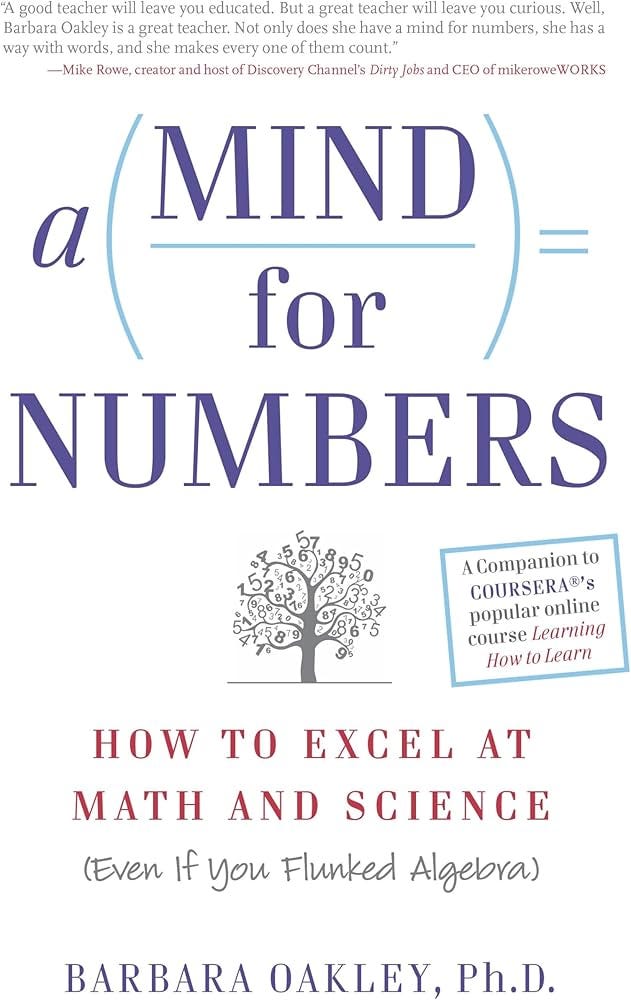
I’ve been reading A Mind for Numbers by Barbara Oakley Ph.D.
The book talks about focused and diffuse thinking. Basically, your brain needs moments of concentration, but it also needs moments where you stop grinding and let your mind actually connect things.
Which sounds obvious until you realize how many of us learned the exact opposite.
I think somewhere along the way I started associating strain with progress. If learning didn’t feel painful enough, difficult enough, morally exhausting enough, then somehow it didn’t count.
It reminds me of how in school, all that mattered to me was an A.
I wasn’t learning French. I was just getting an A in French.
Which feels insane now. I learned how to perform competency long enough to satisfy a grading rubric. That’s different from actually absorbing something into your life.
The book talks about something called “labor in vain,” where students reread material over and over because the familiarity creates the illusion of understanding.
I think a huge part of my education was labor in vain.
I was actually trying very hard. But so much of my energy was going toward surviving the emotional experience of school itself.
Success in school was mostly about proving things. Getting the A. Impressing teachers. Appeasing my parents. Becoming the kind of person adults described as “smart.” Learning itself almost felt secondary sometimes.
And I don’t even think I realized how deeply that shaped me until adulthood.
Now I learn constantly.
Chinese. Fiber. Transit systems. Costco economics. Why one bean has more protein than another bean. My brain wants to eat everything now.
Nobody’s grading me anymore and suddenly I’m curious all the time.
Which makes me wonder how many people quietly grew up believing they “hate learning” when really they just hated the architecture wrapped around learning.
My friend is a Waldorf teacher and hearing them talk about education surprised me.
Their main focus was teaching kids how to be solution oriented, lifelong learners. To stay curious. To build an emotional relationship with discovery itself.
And I was sitting there realizing I don’t think that was ever the goal of my education.
My experience of school felt much more tied to evaluation, pressure, and achievement. There was always this invisible audience hovering over everything. Teachers. Parents. Your future. Your GPA. Your worth.
I was white knuckling information long enough to survive the test.
The book describes something called the Einstellung effect, where your brain gets trapped in familiar pathways and keeps trying the same approach even when it’s not working.
I definitely do that.
I kept trying to solve learning through pressure because pressure was familiar.
Study harder.
Stay up later.
Force it.
The funniest part is that the book keeps repeating this almost annoyingly simple advice: take walks, sleep, step away from the problem, let your mind drift.
Which explains why some of my best ideas happen while I’m driving. Or showering. Or walking around Costco thinking about olive oil for forty minutes.
I didn’t know how to learn without fear.
And I think that’s part of why adulthood feels so different now. Because for the first time, learning feels tied to desire instead of danger.
Now I’ll spend twenty minutes trying to understand the emotional difference between two Chinese words because I genuinely want to understand the texture of them. I’ll read about food systems for fun. I’ll fall into some obscure research spiral because curiosity feels pleasurable instead of evaluative.
I retain more now than I ever did when I was desperately trying to memorize information for approval.
My brain finally feels safe enough to wander.
There’s an idea that rest is not the absence of learning.
Turns out, it’s part of learning itself.
The older I get, the more I suspect that a life of ease is not the absence of discipline. It’s the absence of unnecessary resistance.
Maybe my brain opens more when it’s invited instead of cornered.
A mind for numbers by Barbara Oakley, Ph.D.
Comments
Nothing yet. Say the first thing.
Sign in to join the conversation.