
It’s summer, which means most of us are on the move. As I was packing for a weekend away, I recalled writing this article almost 25 years ago, after a particularly disastrous week at a rented cabin. I had promised to cook for everyone, but when I got to the local grocery stores I found that none of the provisions I considered essential were on offer.
And so I began packing a special suitcase filled with food for future travels.
I still do that - but the contents have changed. These days once exotic ingredients - Thai rice noodles, excellent salsa, arborio rice - are readily available in ordinary supermarkets. And those once esoteric chile flakes are on every shelf. And so I’ve included a list of the ingredients in my current suitcase.
It’s packed and ready to go!

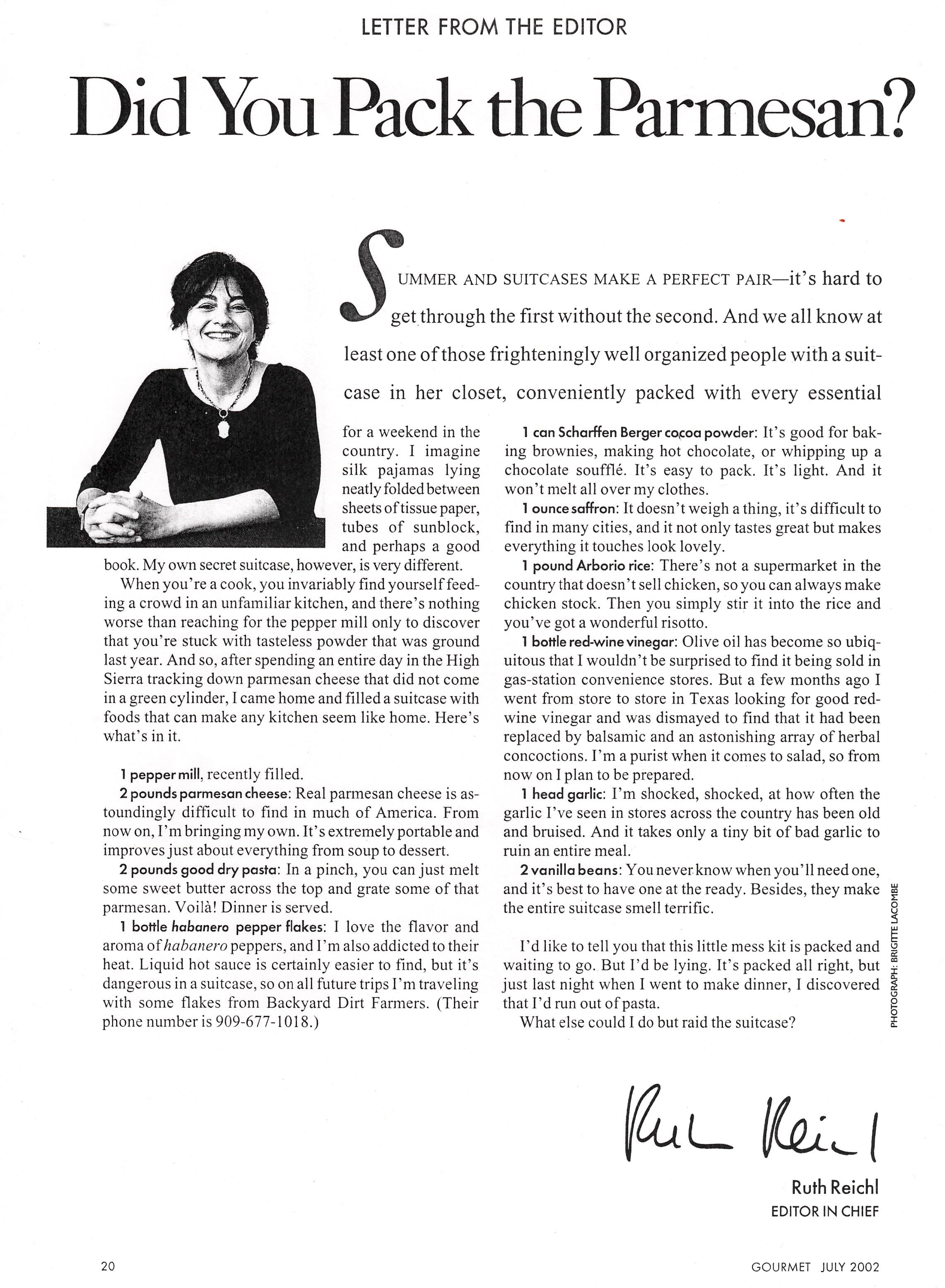
What’s in my current suitcase? Here’s the list.
I wonder what’s in your suitcase? Please leave a note and let us all know what you consider essential.
I still pack a pepper mill, but now it’s filled with a variety of peppercorns. I’m particularly fond of the Tasmanian peppercorns from La Boite, but it’s worth tasting your way through a number of different varieties to figure out which flavor profile you prefer.
Parmesan Cheese: Indispensable. I wouldn’t dream of leaving home without a big hunk of the good stuff..
Pasta: The quality of pasta available in the supermarket has gone up. Nevertheless, since pasta is a mainstay in my house, I’ve tossed my favorite pasta into the suitcase. I wrote about Felicetti pasta here: scroll down to the bottom of the post.
Chile flakes: These days I’m packing Cobanero chile flakes
Cocoa powder: Looking back at this old article I realized that we’ve undergone a serious chocolate revolution over the past couple of decades. We are a nation of chocoholics and many of the best American chocolatiers now offer extremely high-end baking products. My current suitcase contains Dandelion chocolate baking essentials
Red wine vinegar: Although there are now excellent American vinegar producers, I’m shocked by the quality of red wine vinegar sold in most supermarkets. I’ve got a bottle of the classic red wine vinegar from Badia a Coltibuono red wine vinegar wrapped up in bubble wrap in my suitcase. I love its mellow sharpness.
Garlic: It’s still hard to find good garlic in many places, so it’s wise to take your own.
And I’ve added one more ingredient: Chinese sesame paste. At the moment cold sesame noodles are my go-to summer lunch, and this essential ingredient is very difficult to find in supermarkets.

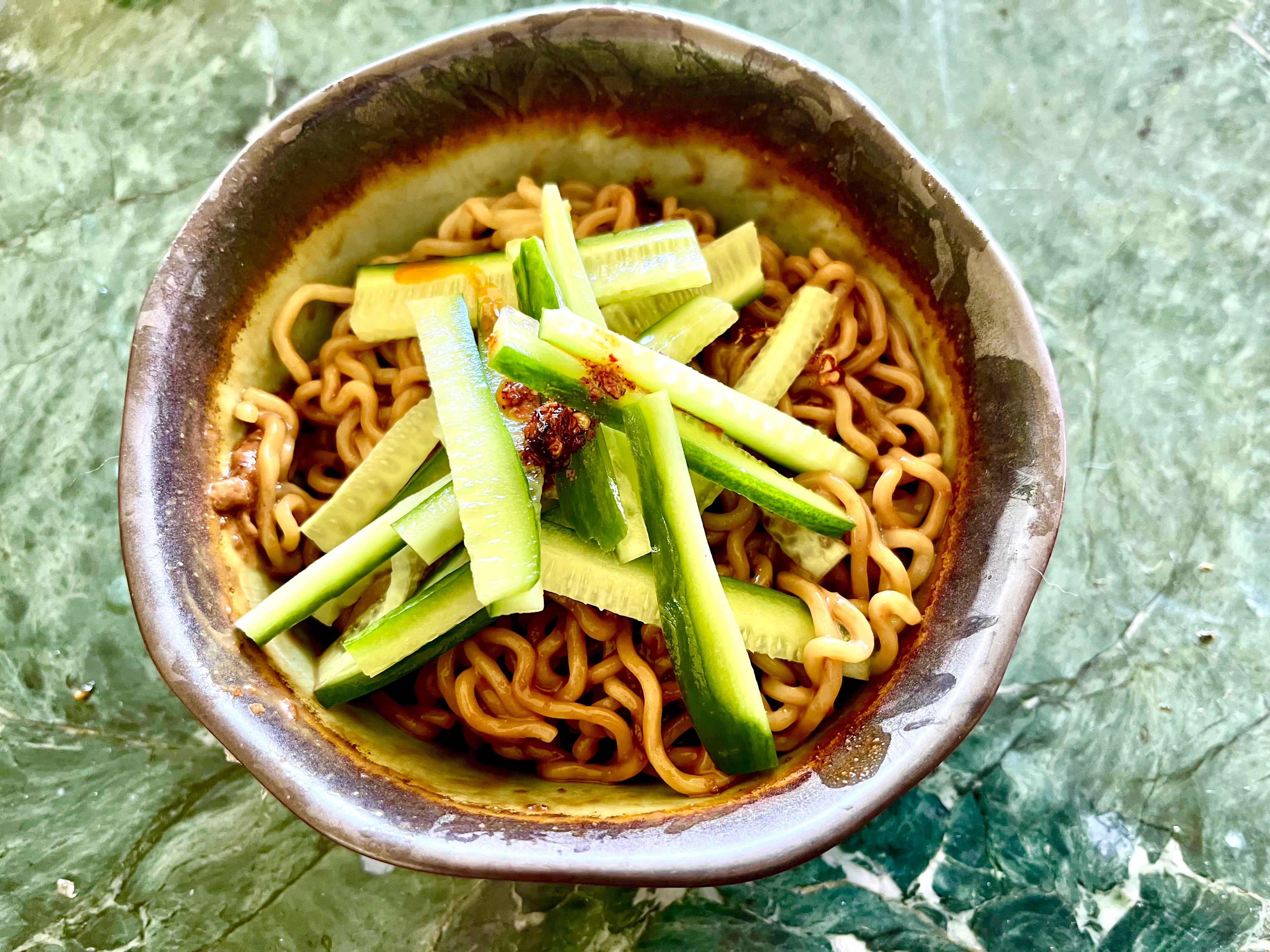
It’s easy. It keeps forever. And I have yet to meet anyone who doesn’t like this Chinese restaurant classic. This is an adaptation of the recipe Shorty Tang made famous in his New York restaurant in the sixties.
Cold Sesame Noodles
2 1/2 tablespoons Chinese sesame paste
1 tablespoon peanut butter
1 tablespoon sugar
2 tablespoons rice vinegar
4 tablespoons soy sauce
2 tablespoons sesame oil
1 tablespoon grated ginger
2 cloves garlic, grated
1 tablespoon chile-garlic paste or chile crisp
Whisk all the ingredients together, put in a jar and store in the refrigerator. It will keep for quite a while.
I keep these dried Chinese noodles on hand, but you can use spaghetti or any other kind of noodle you happen to have. Cook the noodles al dente, immediately drain, run under cold water and then toss with the sesame sauce. Top with crushed peanuts, sliced cucumbers (or any other green vegetable) and more chile crisp if you like it hot. You could also add slices of cooked chicken or even pressed tofu.
This is enough sauce for about a pound of dried noodles - or 4 individual servings.

Shorty Tang arrived in New York just after the Hart-Cellar Act of 1965 changed our immigration laws, allowing more Asians into the country and creating the first flood of non-Cantonese Chinese restaurants in the United States.
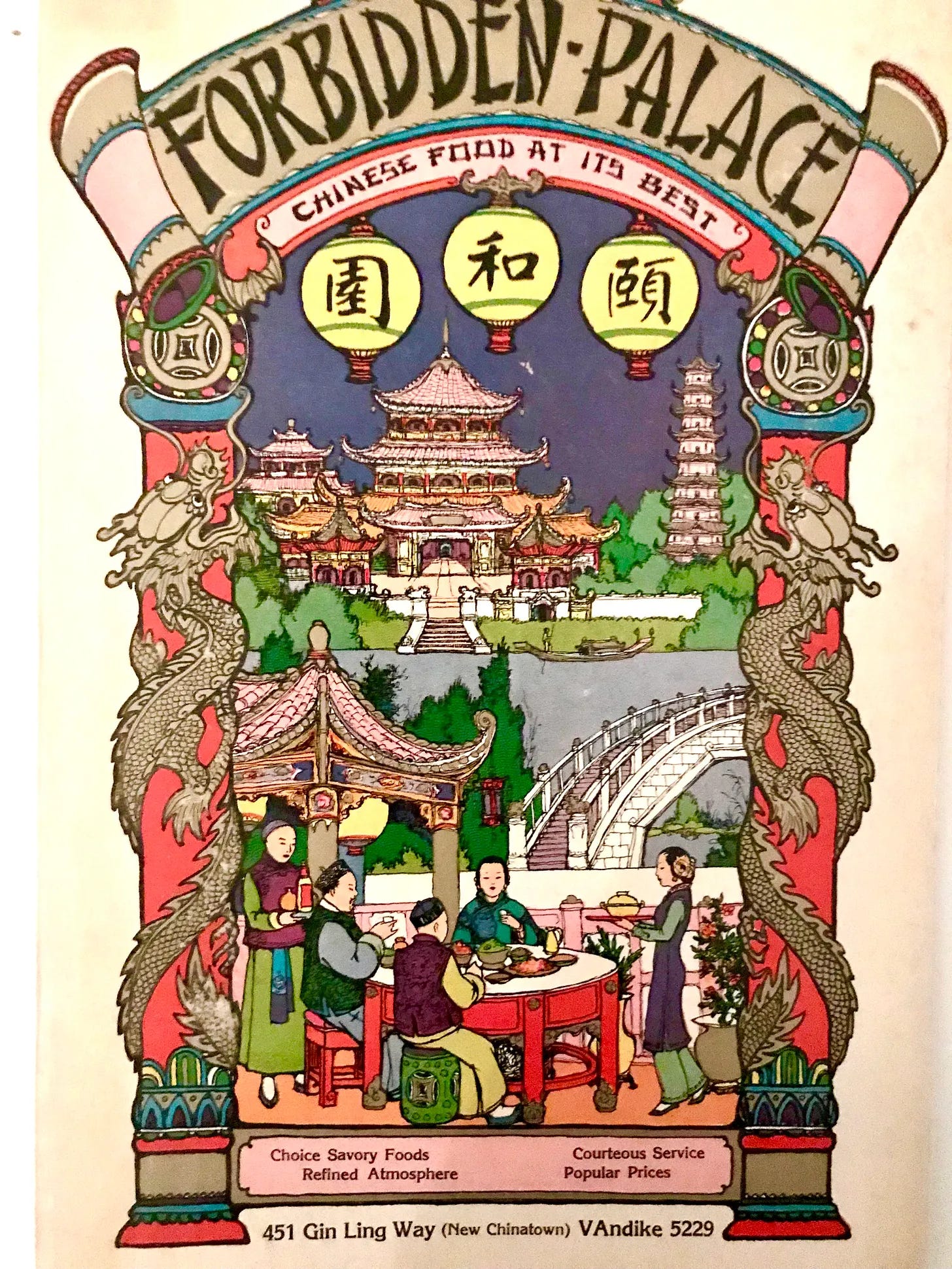
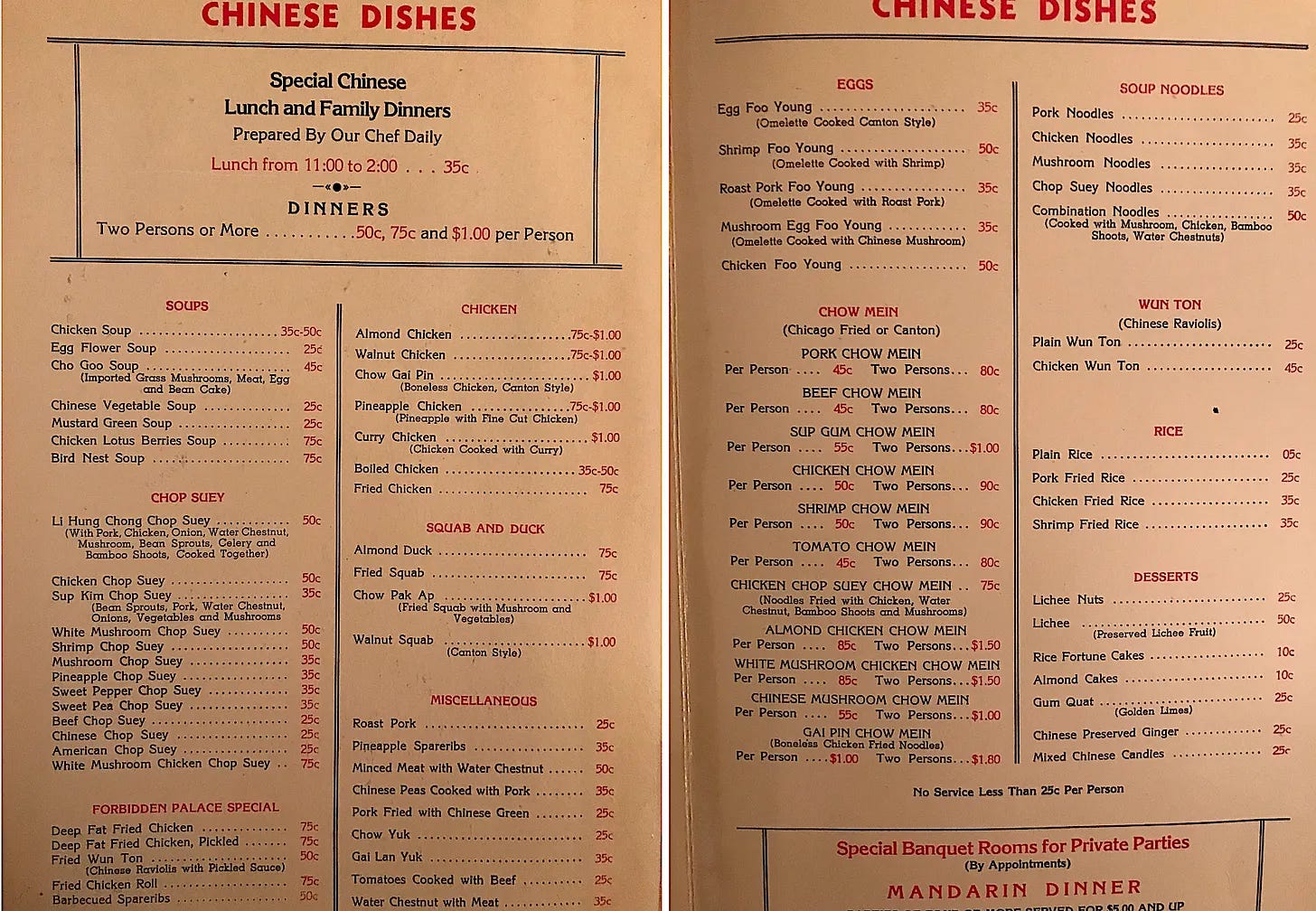
Before that most Chinese restaurants in America had menus that looked a lot like this one from Forbidden Palace, which opened in Los Angeles in 1938 catering to an audience who considered this very exotic food.

When you’ve been writing about restaurants for 50 years, certain meals stay with you. Last night I had a dream about the sushi bar I went to in Tokyo fifteen years ago. It forever changed the way I think about both rice and raw fish.
Walking down the cramped, narrow stairs to Sushisho Masa, a 7-seat counter in Tokyo, I have no idea that this experience is going to forever change my standards for sushi.
But as I inhale one extraordinary slice of fish after another, I begin noticing nuances of flavor I’ve never before experienced. Chef Masakatsu Oka is a pleasant, modest man who bends over the fish with a tender expression, intent on his work, but you can taste his passion in every bite. He’s proud to answer every question: Where was this fish caught? How long was it cured? Why? I notice that he’s not wearing the standard sushi chef’s apron, but that of a sumo wrestler. A message?
I’m not going to go through every course of a dinner that lasted 3 hours and included at least 35 different varieties of fish. But I’ll mention a few favorites.
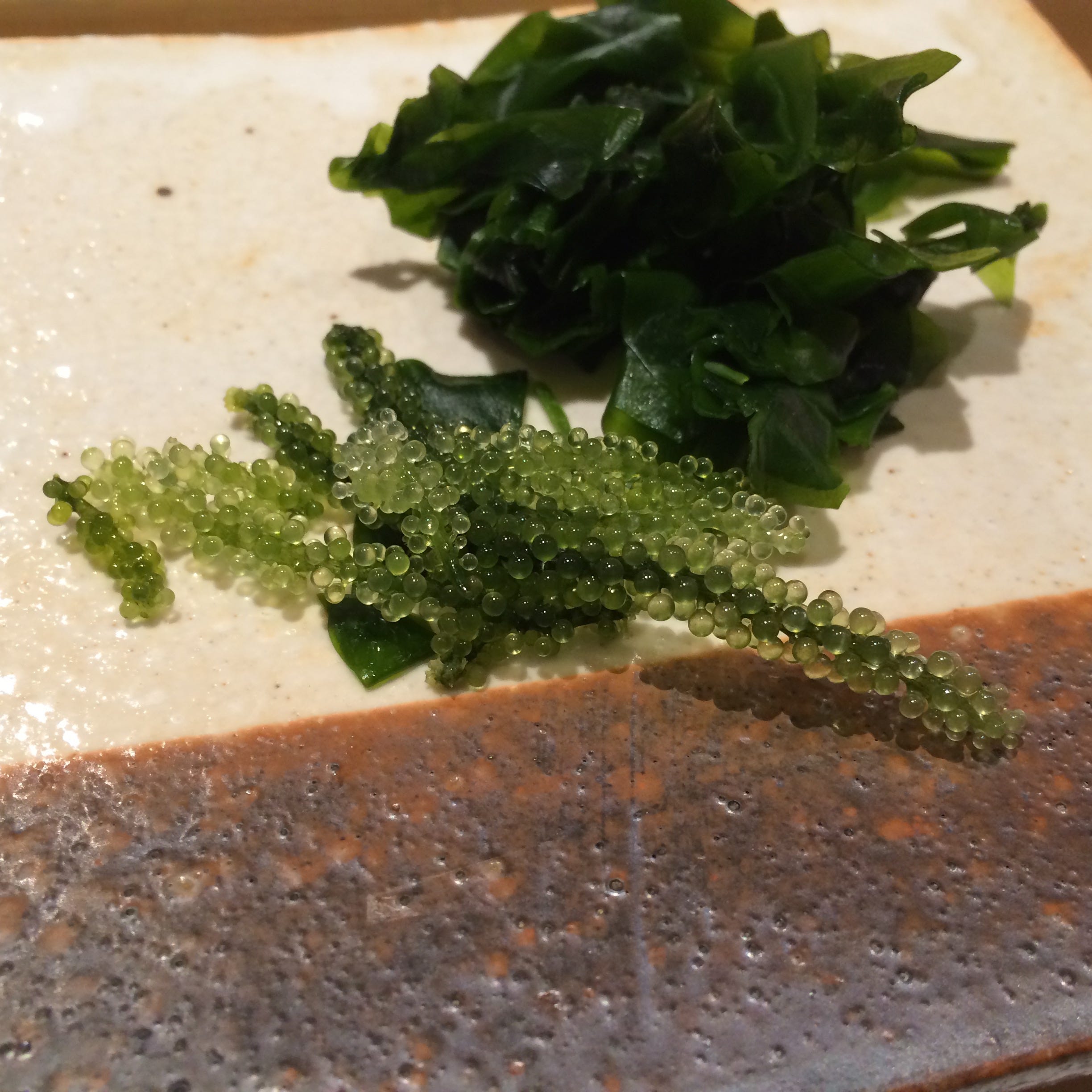
Sea grapes - a seaweed from Okinawa - that is among the most refreshing palate cleansers I’ve ever encountered. Each little bubble pops in your mouth with a burst of brine.
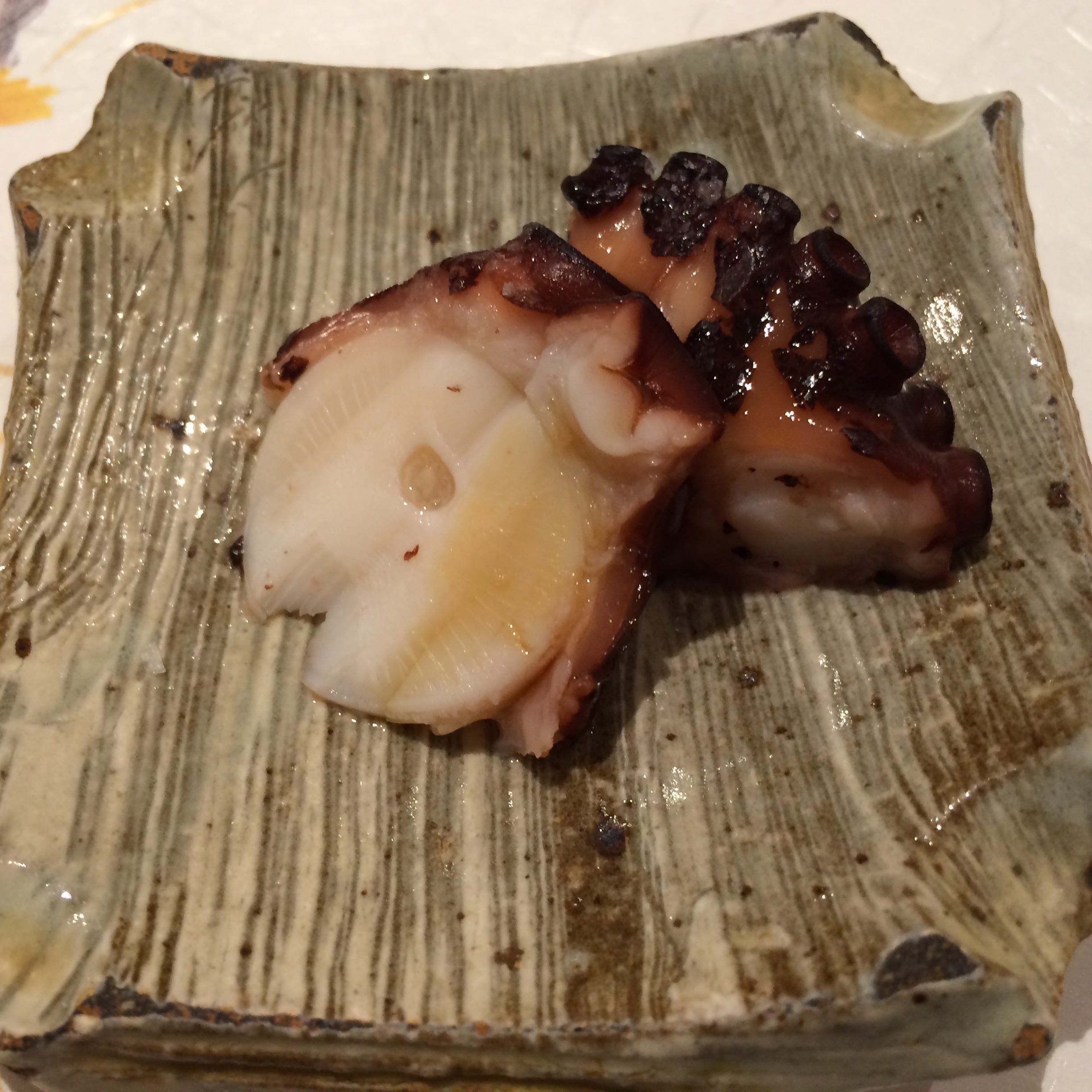
Wild octopus - remarkably tender, with a creamy custard-like layer just beneath the crisp tentacles. I’ve never tasted anything quite like it
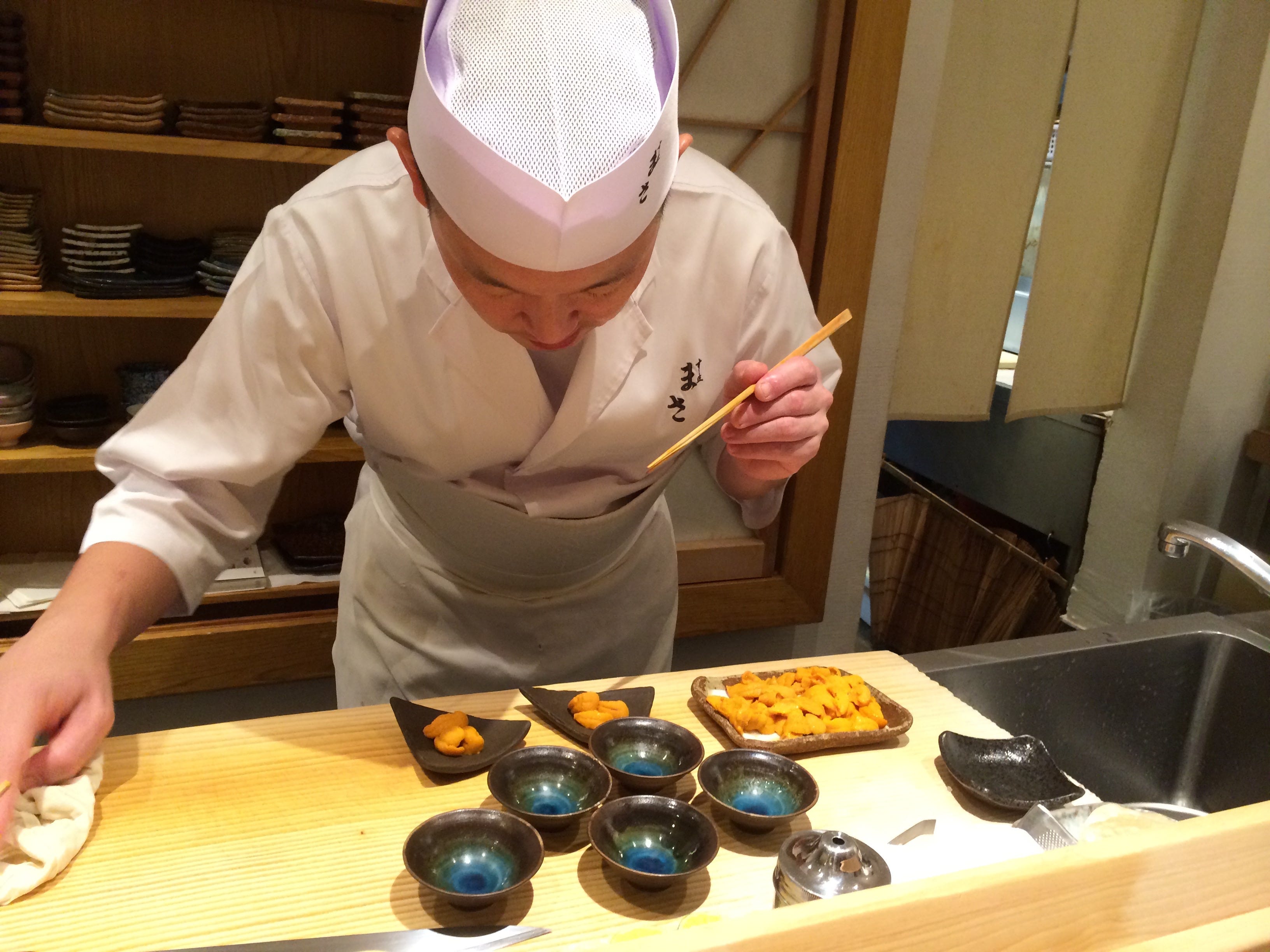
Uni from Hokkaido. I’ve always thought Santa Barbara sea urchins were the best in the world. I was wrong.
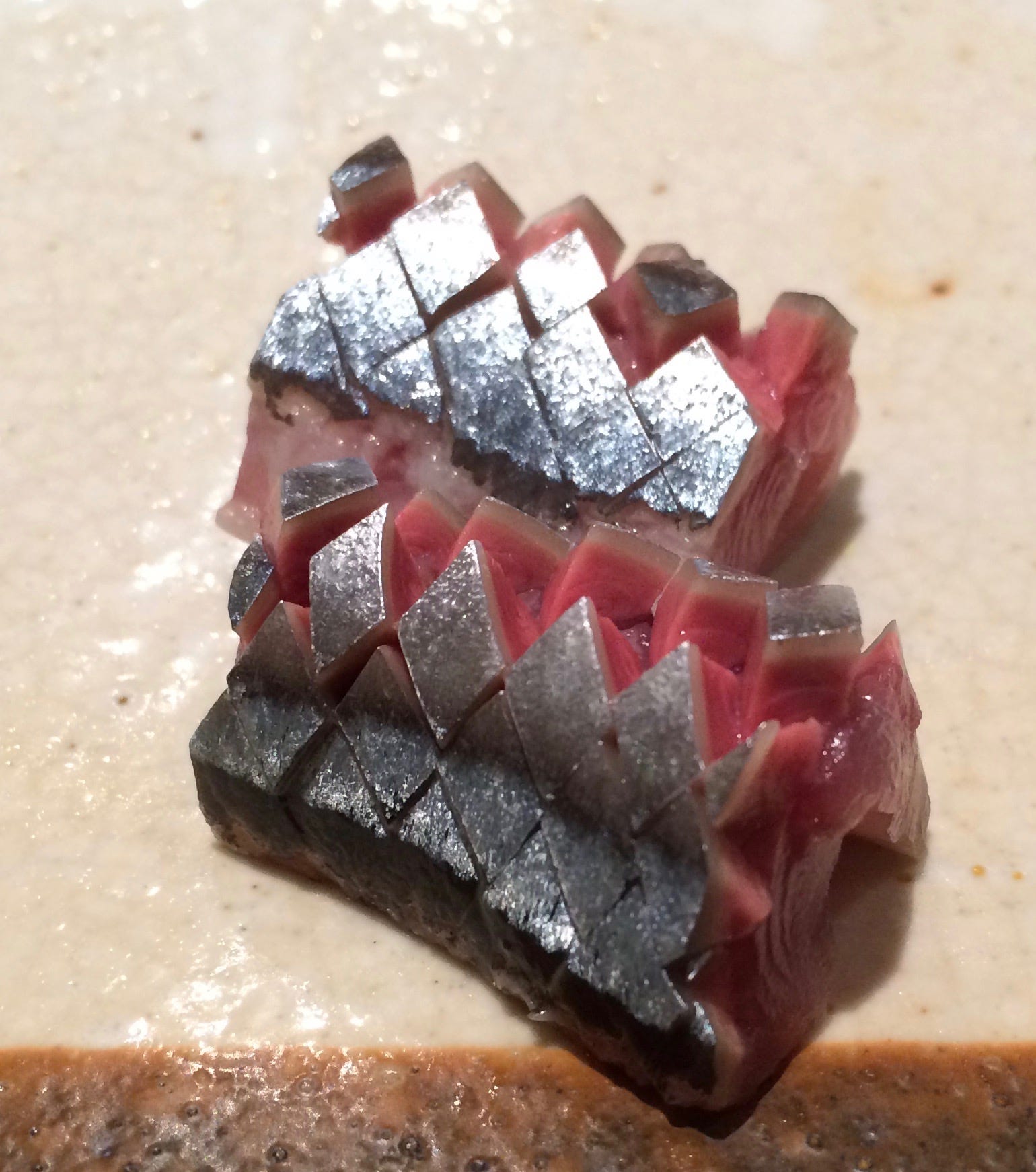
Sanma (saury or mackerel pike). I wish I were a better photographer; this was so beautifully cut. And pure pleasure in the mouth. It was followed by the same fish, lightly grilled.
Tiny shrimp, each one no bigger than a fingernail, each one so soft and tender that it seemed impossible it could contain such depth of flavor.
Karasumi - Japanese bottarga - the mullet roe cured to an entirely different taste and texture than any Mediterranean variety. Soft without being sticky, the surprise is that it is not in the least bit salty. If you close your eyes, you might be eating candy.
Fluke - and its liver. I expect the liver to resemble ankimo, the rich monkfish liver that is the foie gras of the sea. But it is entirely different: softer and much more subtle in flavor.
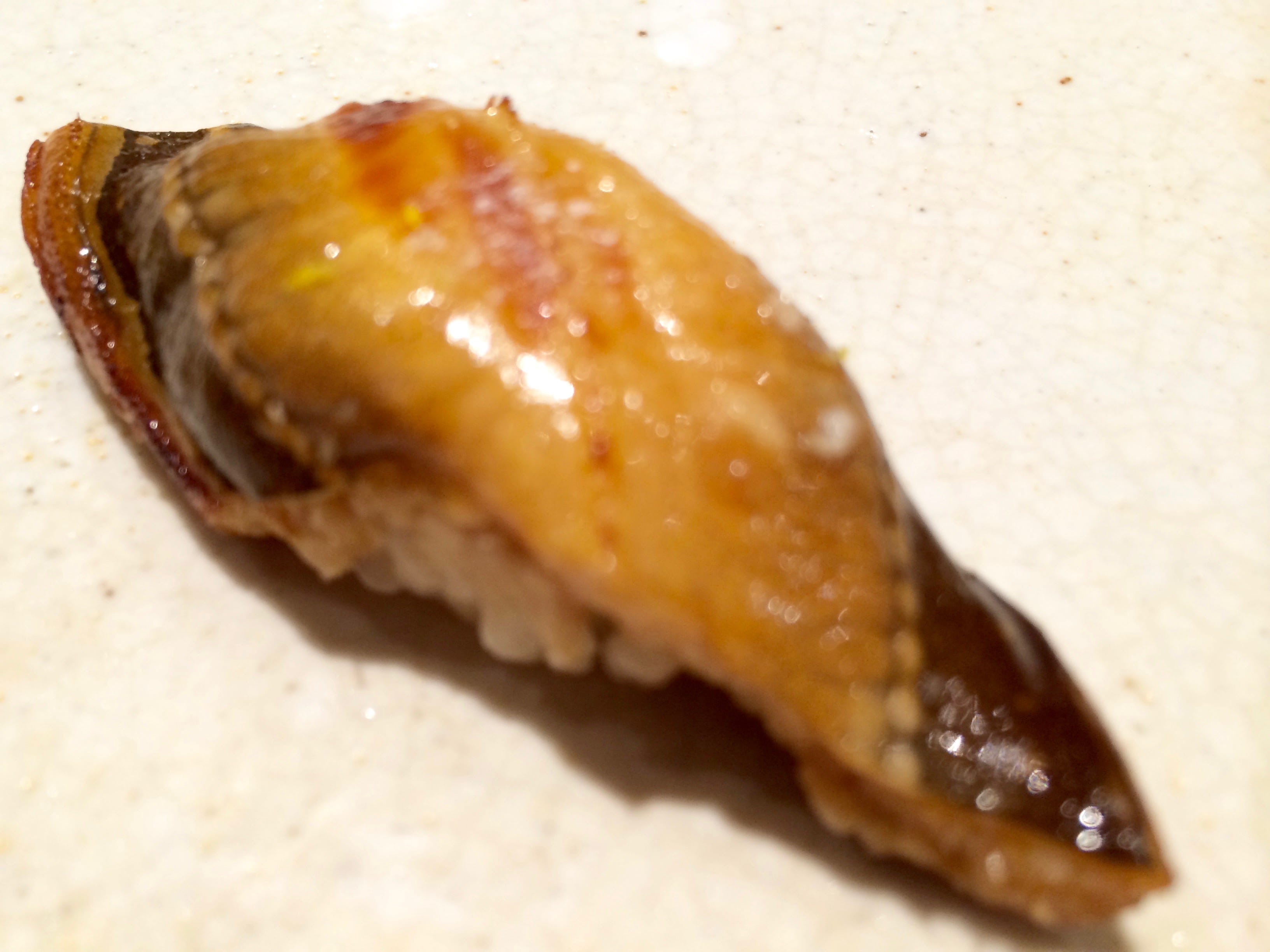
Anago - sea eel - is a pure astonishment. It looks like every other piece of eel I’ve ever eaten, so I’m utterly unprepared for the almost fluffy texture of the fish. Or for the way it simply vanishes, melting in my mouth like so much snow.
Trout roe, which explodes in my mouth in a way you always wish caviar will, a tiny flood of flavor. The surprise here is, once again, that it is not the least bit salty. Just the pure essence of fish. Hiding underneath is a small ball of Mr. Oka’s rather amazing rice, which he mixes with four different kinds of vinegar.
I’m skipping so many wonderful fish: small herrings, kohada, fantastic tuna, a tiny grilled fish I eat in one bite. But at the end there is one absolutely remarkable roll. Toro, along with a strip of its own fat (Japanese lardo), and some finely julienned member of the onion family. Wrapped up in rice and seaweed, it makes me think of the motto of Prexy’s, a long-gone New York restaurant: “the hamburger with a college education.” It’s a very elegant translation - and one of the most delicious things I’ve ever tasted.
At the end, of course, there is tamago, a tiny square of mirin-enriched egg that is the perfect final flavor. Then we’re bowed out the door and up the stairs, and into the raucous Tokyo night.

No posts
Comments
Nothing yet. Say the first thing.
Sign in to join the conversation.