
There is a pattern I know by heart. Sugar, and screens, and the bed, and the desire to not show up to my own life, to escape any way possible.
Food has never been just food for me. There were years when I tried to make my body smaller, swinging between deprivation and comfort. That is not an active or alive part of my life anymore, but the sugar still is. Sugar is still the first place I want to go when I do not want to be all the way here. I am actually off sugar right now, an elimination protocol for inflammation, and I am getting to watch the craving in real time. It is humbling how loud it gets when I can’t scratch that itch.
And then there is the phone. This one is tricky, because screens are part of my work. I teach on them, I write on them, I connect with you on one right now. But I know the difference in my body between using a screen and disappearing into one. The scroll is its own bed. It is the most socially acceptable way I know not to be here, and it runs deep in my family line.
I watched versions of all of this in the women I come from, long before I recognized it in myself. Women I love. Women whose stories are theirs to tell, so I will only say this: the women in my line have carried heavy things, and some of them never got to set those things down. What I once saw as leaving, I now understand as the only rest available to them.
But I didn’t understand that yet. I judged it. I criticized the pattern in them, and I promised myself I would never be a woman who left her own life.
Then I spent seven years in a bed.
You may know this part of my story. A wire from an old spinal fusion pierced my brainstem, and the pain that followed was not metaphorical. It was physiological, relentless, and real, and I want to say that clearly, because I will never be someone who tells you that your body’s suffering is just an unprocessed feeling. My pain was real.
And. There is an and.
The bed was also a way to not be here. The sugar was also a way to not be here. The screen was also a way to not be here. Somewhere underneath the very real pain, I was running a program I did not write. I was being faithful to something I had never consciously agreed to.
I would love to tell you the pattern ended when I got out of that bed. It didn’t. It still visits. There are still days when I climb in and pull the covers over a life I love, phone in hand. And then I do the old thing: I judge it. I criticize it in my head, the same way I once criticized the women before me. And then I get in the bed anyway. Judgment has never once interrupted the pattern. Not in them, not in me. It just adds shame to the inheritance.
There is a book I love called It Didn’t Start With You by Mark Wolynn, and the title alone rearranged something in me. Wolynn’s work, and the family constellations tradition it grows out of, rests on a simple and disruptive idea: the patterns that feel most personally shameful to us often did not originate with us. They are inheritances. They are the survival strategies of people we love, and people we never met, passed down through story and silence and even, researchers are beginning to find, through the body itself.
Family constellations goes one step further, and this is the part that undid me. It suggests that we do not just inherit these patterns. We stay loyal to them. A child will unconsciously carry a grief or repeat a way of leaving as an act of blind love. Not weakness. Love. The pattern is the belonging.
Which means my judgment was never going to free me from what the women in my line carried. Judgment is just another way of staying entangled. What frees us, in this work, is the opposite of exclusion. It is letting everyone belong. It is turning toward the pattern and the people it came through and saying, I see you. I see how you survived. I honor what this cost you. And I get to choose something different, not by rejecting you, but because you belong to me and I belong to me
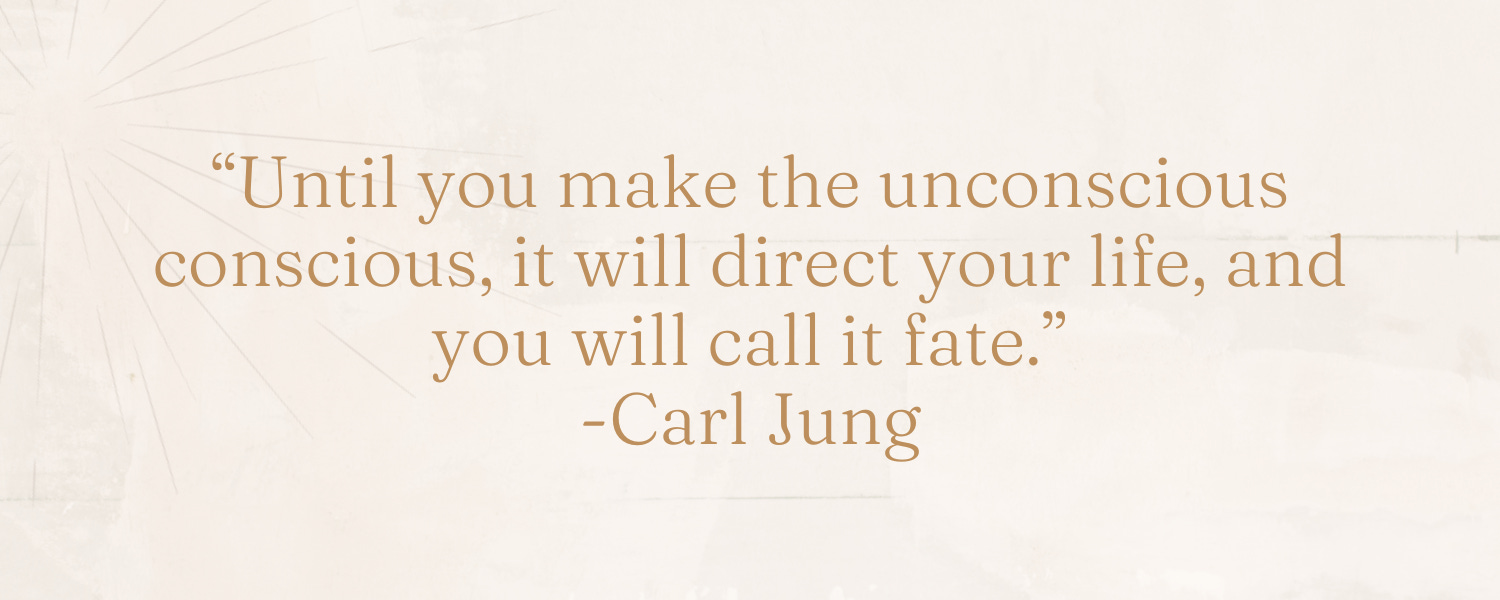
For years I called the bed my fate. Now, I understand it as something I get to meet. In my body, not just my mind. Because this is the thing I will say until I have no breath left: we cannot think our way into a new life. Insight alone never got me out of that bed, and insight alone does not keep me out of it now. I have to feel it through, in a nervous system that is still learning it is safe to be here, and in a body I stopped treating like a problem and started treating like a person.
This is why I am so excited about what is coming this month.
My friend Zach Glassman is a family constellations facilitator, and he is leading our monthly live gathering, a gentle online introduction to this work. Constellations is experiential rather than analytical. It makes the invisible loyalties of a family system visible, felt, and workable. People are often stunned by what their bodies know in this work, information no one ever told them, grief that finally has somewhere to go.
You do not need any experience. You do not need to share anything you are not ready to share. You just need your curiosity and the patterns you are tired of calling fate.
It is free, and I would love for you to be there.
XO,
Ruthie

Zach Glassman is a family constellations facilitator whose work focuses on helping people uncover the unseen dynamics that shape their lives, relationships, and family systems. Influenced by meditation, creative practice, and a deep curiosity about human connection, he creates spaces where inherited patterns, hidden loyalties, and unresolved stories can come into awareness. His approach invites participants to soften into truth, allowing love to flow through what has been held or hidden and restoring connection to what seeks to belong.
No posts
Comments
Nothing yet. Say the first thing.
Sign in to join the conversation.