
When George started coaching me in 2017, one of the first things he had me do was meet him at a track. At that point, I had not set foot on a track in over five years—basically, once I gave up road running for trail/ultrarunning, I assumed (with glee) that the track was no longer relevant for my training.
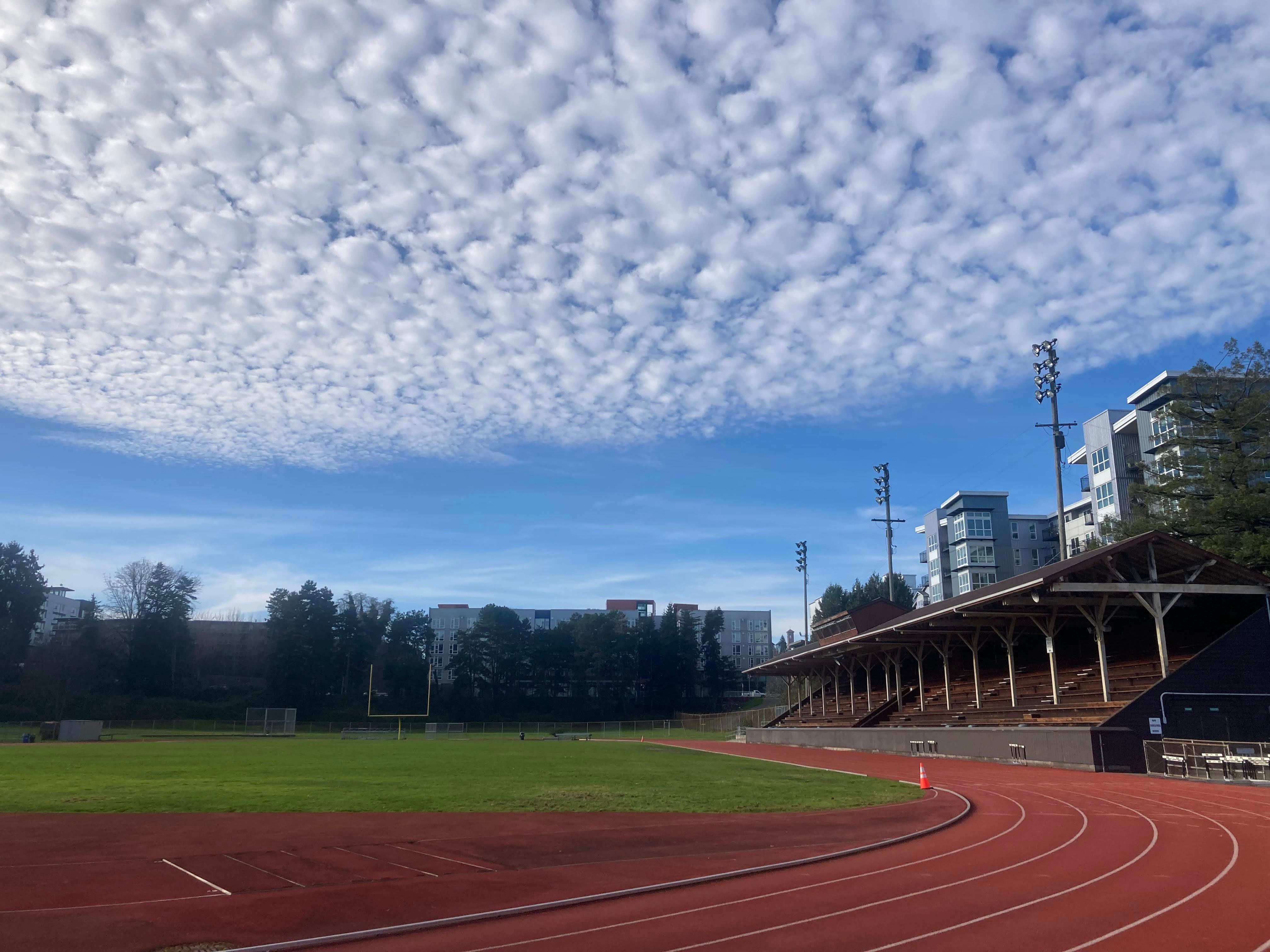
It wasn’t only speedwork that he was interested in having me do at the track; it was also technique refinement. He used his phone to film me running, and later, we watched the video in slow motion to analyze where my form was faltering and how I could make tweaks to improve my overall running economy.
The notion of technique is frequently dismissed as irrelevant for runners—or, at least, less relevant than, for example, the other sports I’m currently dabbling in: swimming and rowing. I’ve been taking lessons in both—both with in-person teachers/coaches and via YouTube tutorials—and it’s a common trope among swim coaches: “This sport is not like running, where nearly all improvement comes from cardiovascular fitness training—i.e., run more miles; run more intervals—rather than technique refinement.”
Likewise, conventional running advice is that “your natural gait is probably your best one; everyone runs in their own way, and that’s just fine; trying to alter your natural gait in any way is a recipe for injury.”
I’m already dubious about this sentiment because my own experience directly contradicts it: when I first started running, at age 15, I struggled with shin splints. I was obsessed with wanting to run a marathon, but for six years, my body said “absolutely not.” Every time I tried to build my mileage up, my shins exploded in protest: compartment syndrome, stress fractures, the whole gambit. I mourned that maybe my body just wasn’t built for running.
Then I read Chi Running—a book that posits that technique absolutely matters in running—and I decided I’d devote a whole year to relearning how to run: leaning slightly forward from the ankles, engaging my core more intentionally, shortening my stride, landing on my midfoot rather than my heels, etc. It wasn’t easy to unlearn bad habits and develop new muscle memory—it was slow, and required a lot of deliberate focus on my runs—but I can look back now and say with confidence that “going slow to go fast” was worth it.
I enjoyed a lot of years of injury-free road marathoning and ultrarunning, and assumed at that point I’d done all the running technique work I needed to. When George started working with me, though, he helped me realize how much more efficiency I could still eke out of my running body: he noticed the way I was unconsciously “chicken-winging” my right elbow; my relatively slow turnover in cadence; my lack of core strength that could lead to leaning forward from the hips instead of from the ankles; my lack of glute strength that led to energy-sucking hip drop with every stride. None of these could be trained away with more miles or more intervals; they required more meditative work; being willing, on many of my easy runs, to ditch the audiobooks and podcasts in my headphones in order to stay more consciously focused on my running form. To run, at times, with a metronome, to develop muscle memory for a higher-cadence stride. To incorporate a lot more strength training—another element that conventional run-training advice deems a “nice-to-have” rather than an essential.
The gains were undeniable. I shaved 45 minutes off my 50K PR and won Fat Dog 120 that year.
This summer, what I struggled with most at first in the pool was boredom. I’d watch the clock and silently will the time to pass more quickly. I wasn’t there because I liked being in the pool; I was there to earn post-workout endorphins—a drug my body still needs, even (especially) when I’m not running regularly—and swimming was one of the few activities that my Morton’s neuroma could tolerate.
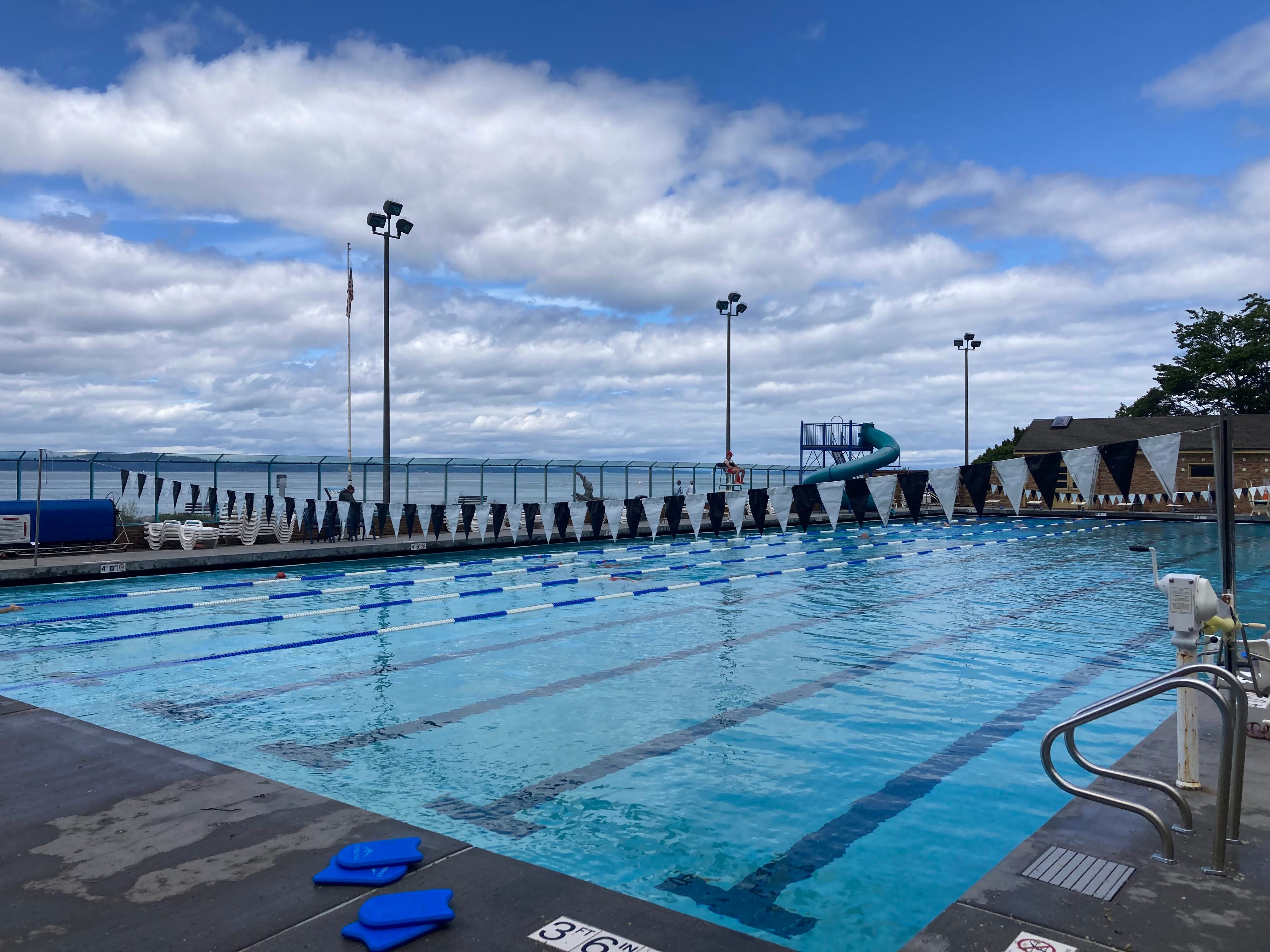
This actually brought me back to my early days of running, as a teenager. I didn’t love running at first either. I loved having run. The running itself often felt quite dull. Jogging a 5K felt like an unbearably exhausting slog. It wasn’t until my “Chi running season” that I really fell in love with the practice of running. And it wasn’t until a few weeks ago, when I started learning to swim freestyle, that I experienced a similar transformation in the water. What started as an inelegant, gasping-for-air crawl across the pool has evolved into something at least vaguely resembling smooth, relaxed freestyle form.
I still don’t really have the skills down yet to “just go for a swim”—so every freestyle swim session for me is inherently a technique-focused one: drills with the pull buoy, drills with the kickboard; drills with fins; drills with paddles. Before each lap across the pool, I’m taking 10-20 seconds to reset my brain and think about which aspect of my technique I’m going to concentrate on during the next lap: my breathing; my catch; my pull; my kick.
The beginner’s gains are pretty exhilarating. At least weekly, and sometimes daily, some new aspect of the freestyle stroke clicks into place. Each morning when I slip into the water, I feel muscle memory in my body that wasn’t there before.
Look, I recognize that not everyone wants to engage with sport in this way: obsessive mindfulness and the pursuit of constant self-improvement. There are certainly risks to this mentality, too; it can steer a person away from joy as well. (And, to be clear, this has never been how I approach all my runs. I’ve always also relied on running for social connection with others, for relaxation, for the occasional needed mental escapism. These days, if I don’t have the mental energy that a freestyle practice session still requires of me, I just enjoy a relaxed hour of breaststroke, which comes more naturally to me.)
But mindful technique work can also be a way to find purpose in monotony; to usher satisfaction into unexpected nooks and crannies; to grow, to flourish, and to enjoy the doing, rather than just the having done. I’ve been reading Olympic swimmer Katie Ledecky’s memoir, Just Add Water, and I couldn’t help but highlight these lines: “In a pool, I was unencumbered and able to flip and turn and spin my body in every direction. I was also hemmed in by a pen of concrete. It represented creativity within bounds.”
The joy I’ve been deriving from swimming these last few weeks makes me excited to approach running again, when the time comes, with this mentality anew: what additional efficiency, what flow, could I still yet gain by a renewed commitment to technique work? If improved form in the water can lead to such exhilarating gains, couldn’t the same be true of improved form on land? A minor inefficiency in stroke or stride may be insignificant on its own, but when you multiply it by several thousand (swim strokes per hour) or by as many as 10,000 (approximate running strides per hour), it adds up.
Practice doesn’t always make perfect, but it certainly makes “more enjoyable.”
No posts
Comments
Nothing yet. Say the first thing.
Sign in to join the conversation.