
On Aug. 13, police arrested journalist Gurashi Awad along a roadside in the Sudanese city of Berber, about 230 miles north of the capital Khartoum. Intelligence officers loyal to the army, known as the Sudanese Armed Forces, charged him with spreading fake news.
Earlier that day, he had uploaded a Facebook video criticizing a faction of Sudan’s Islamist movement – aligned with the SAF – for opposing civilian rule.
“It seems the recent video is the reason I was arrested,” says Mr. Awad, who was released on bail after two days of detention. “A lot of people in Sudan are upset. They believe this is the reason, too.”
Why We Wrote This
In Sudan, local journalists are being targeted by rival military forces. That’s making it harder for them to report on the civil war and the humanitarian crisis that the U.N. says is the worst in the world.
Mr. Awad’s arrest is part of a broader clampdown that has stifled free speech and on-the-ground reporting about Sudan’s civil war. The conflict began in April 2023 and has created the largest humanitarian crisis in the world, according to the United Nations.
Violence has driven more than 15 million people from their homes and killed hundreds of thousands of people. A new U.N. report highlights the critical role played by a free press during conflicts and humanitarian crises.
“Journalism plays a profound role in the response to crises and humanitarian disasters. It provides lifesaving information to communities affected by crises, and it can improve the way officials prepare and respond,” the report states.
Yet, just this year, the SAF has charged 48 journalists with spreading fake news or invading privacy. Its bitter rival in the conflict, the paramilitary Rapid Support Forces (RSF), continues to hold nine reporters in detention, according to the Sudanese Journalists Syndicate, an independent trade union for the news media.
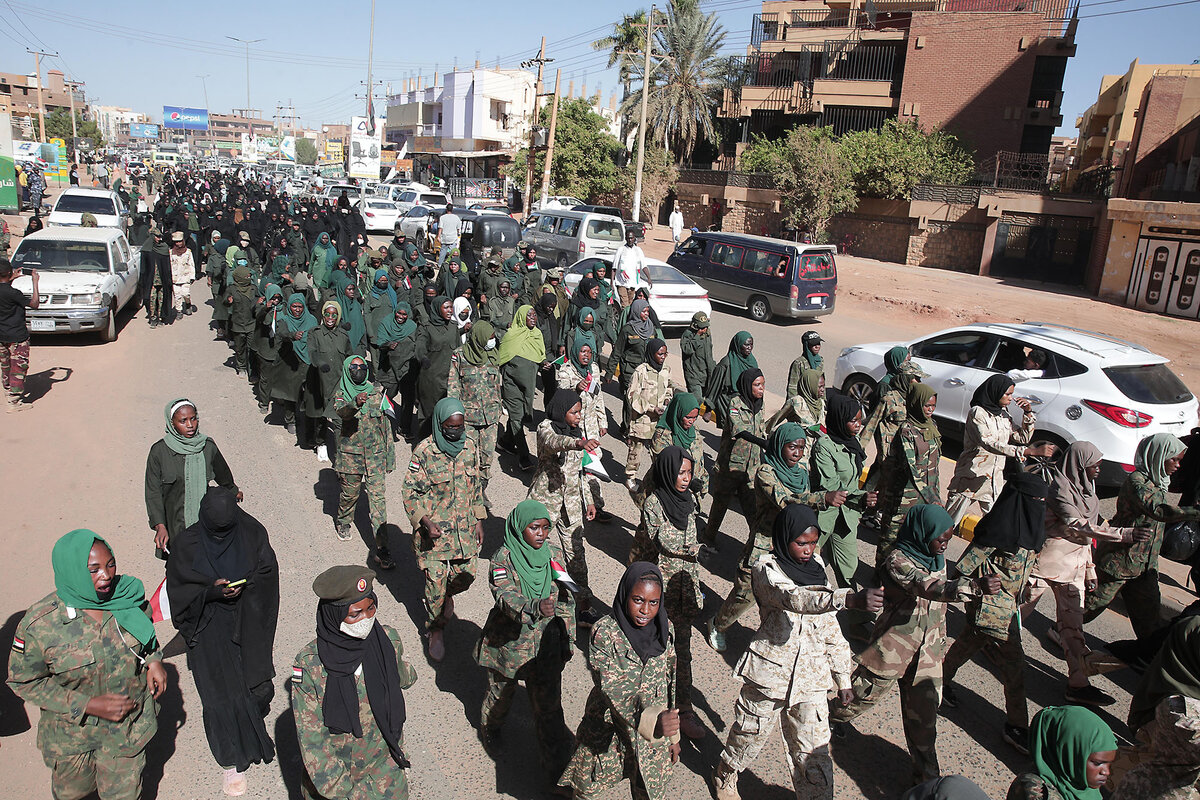
Marwan Ali/AP/File
Sudanese Armed Forces soldiers parade in the streets of Omdurman, Sudan, Dec. 31, 2025, to mark the 70th anniversary of Sudan's independence.
In 2021, the SAF and RSF worked together to overthrow the civilian Cabinet that was overseeing Sudan’s transition to democracy after 30 years of dictatorship under Omar al-Bashir. Two years later, they turned on one another.
The war has forced many journalists to stop working or flee the country, enabling SAF and RSF propaganda to fill the vacuum. Local monitors and journalists say that both sides fear independent reporting because it could uncover their crimes and challenge their public messaging.
“Neither wants a third narrative to emerge. That’s why they are cracking down on journalists,” says Mr. Awad.
Propaganda and reprisal
Both sides are waging a narrative war to compete for international legitimacy, hoping to boost their own material and diplomatic support.
According to a recent paper by the French Institute of International Relations, the SAF and its supporters claim to be putting down an armed rebellion as Sudan’s legitimate government. At the same time, the RSF portrays itself as rescuing the country from the clutches of Islamist factions linked to the former regime – of which the RSF itself was once a part.
Both warring parties have committed grave abuses, including torture and summary executions, according to rights groups and news reports. A U.N. probe published in February found that the RSF had perpetrated genocidal violence in its stronghold of Darfur and subjected women and girls to systemic rape.
The Journalists Syndicate says that reporters working in army-controlled areas in Sudan are accompanied by minders during their interviews, which stifles press freedom and dissuades criticism or dissent. The SAF regularly accuses civilians of collaborating with the RSF based on flimsy evidence and has carried out deadly reprisal attacks against Sudanese civilians.
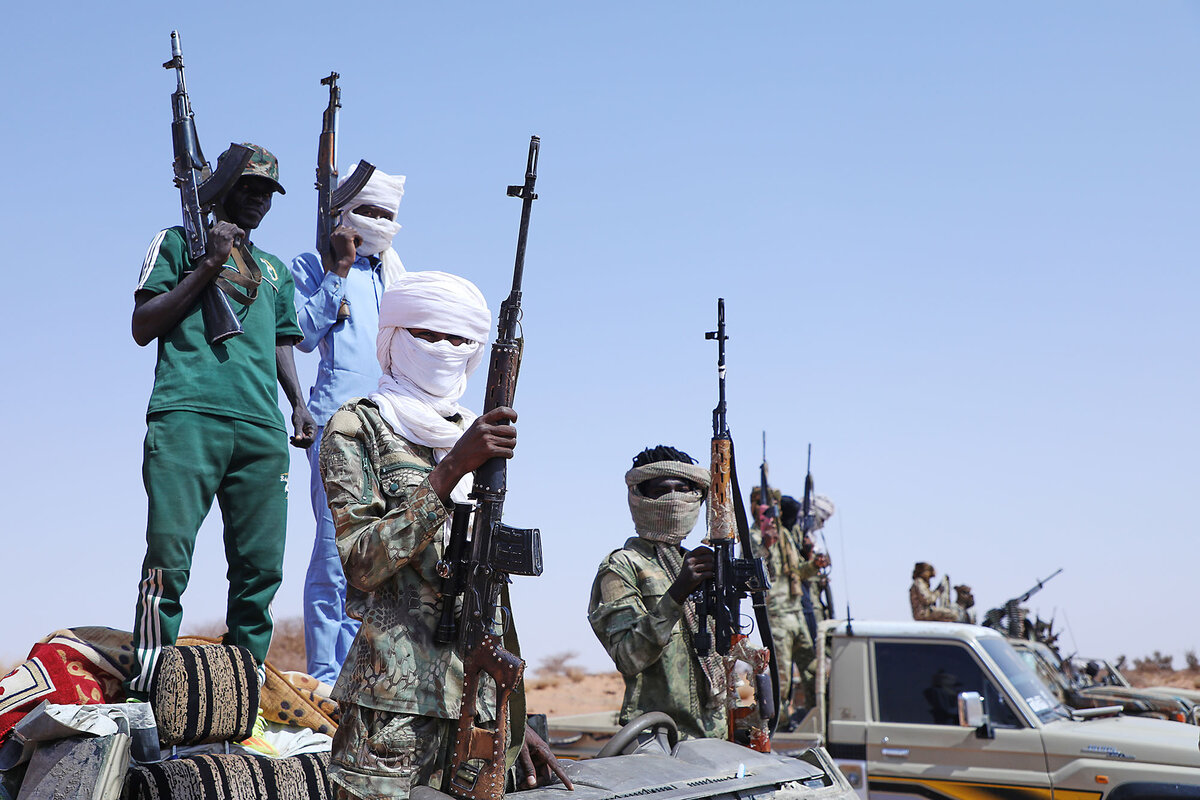
Mohnd Blal/AP
Fighters from the paramilitary Rapid Support Forces raise their weapons are seen near the capital of Khartoum, Aug. 19, 2026. The RSF's ongoing conflict with the Sudanese Armed Forces has created the largest humanitarian crisis in the world, according to the U.N.
“Generally speaking, whoever restricts journalists [from working freely] tends to have something to hide,” says a member of the syndicate, who requested anonymity due to fear of reprisal.
Meanwhile, the RSF continues to hold a number of journalists in detention, including three female reporters rounded up in South Darfur in February. The RSF detained several journalists during its capture of North Darfur’s capital El Fasher last year, an assault the United Nations said bears the “hallmarks” of genocide. One of them, Muammar Ibrahim, reported for Al Jazeera’s Arabic network while the city was besieged.
“The siege of El Fasher became a really big story and led to everyone in Sudan sympathizing with civilians there. This is why the RSF punished journalists when it captured the city,” says Noon al-Baramkee, a journalist from North Darfur and close friend of Mr. Ibrahim.
The RSF and SAF did not respond to questions from The Christian Science Monitor about its treatment of journalists. In July, the Committee to Protect Journalists issued a statement calling for the release of Sudanese reporters still held in detention.
Exile and resilience
Hundreds of Sudanese journalists are languishing in exile, with some covering the war from other regional countries. But harassment and intimidation have followed them abroad.
Journalist Eiad Hashem reports from Nairobi, Kenya. In May, he co-wrote an article citing the SAF’s commander in chief, Gen. Abdel Fattah al-Burhan, as saying he was willing to speak to the United Arab Emirates, a key backer of the RSF.
Once the story was published, General al-Burhan’s office denied giving a statement that contradicted the SAF’s official stance of pursuing a military victory. Hard-line supporters, officers, and SAF-aligned Islamist militias support this position.
Pro-SAF social media accounts quickly began harassing Mr. Hashem online, accusing him of spreading fake news. One account disclosed a specific location that the journalist had recently visited, he says, suggesting he might have been followed.
“I wasn’t sure if I was being tracked or if it was a coincidence, but I wasn’t intimidated,” Hashem says. “I thought that the best way to defend myself was to go on the attack by continuing my reporting. You know, that’s a football tactic.”
Mr. Awad says many journalists in Sudan are reporting with integrity despite the crackdown. He vows not to flee the country and to defend his innocence in court, though the authorities still have yet to disclose the start date of his trial.
“Many of us still refuse to submit to the narrative of SAF or the RSF. That’s why more of us are getting arrested,” he says.
Comments
Nothing yet. Say the first thing.
Sign in to join the conversation.