
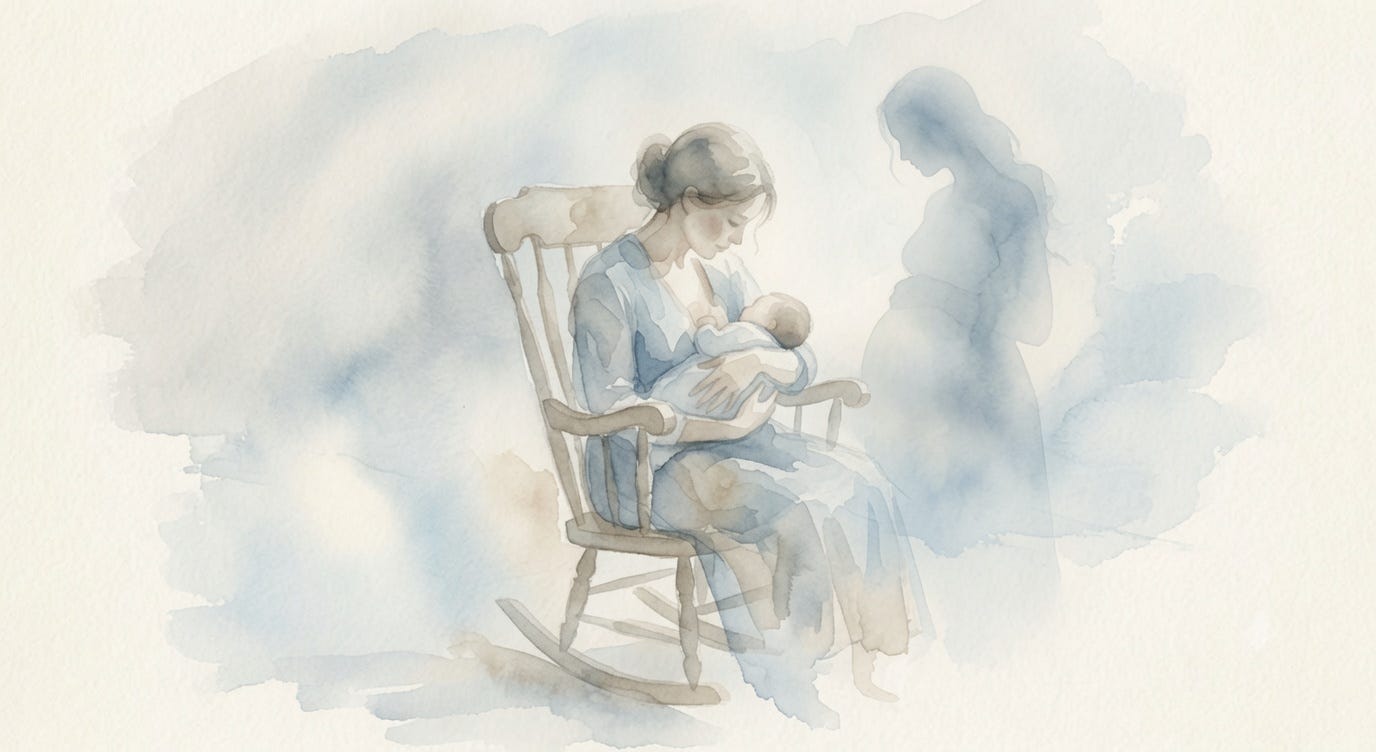
“Did she hold me?” my adopted daughter asks as we stand side by side, peeling carrots. “When I was born, I mean.”
The questions about her birth mother have been coming with increasing frequency over the last year or so. I began visiting Megan in the special care baby unit when she was around ten days old, brought her home two weeks later and adopted her at the age of three, yet the ties binding her to the woman who gave her life are powerful, no matter how little time they spent together, and no matter how many years have passed since.
We’ve always spoken openly about her adoption, and Megan knows she can ask me anything about her founding family. I may not always have the answer, but I’m glad she feels able to talk about her birth mum whenever she pops into her head. When she was younger the questions came infrequently, often twice yearly, around ‘letterbox contact’ time, when we send a letter to update her birth mother on milestones, progress etc.
But adolescence brings a wrestling with identity and now she’s 14, Megan often wants to talk about the woman who brought her into the world. Her friend’s older sister’s pregnancy has turbocharged her interest. Did she feel me kick? Did she crave weird foods?And the hardest one of all to answer - If she loved me, why did she not want me?
I’ve read up a lot on attachment over the years in a bid to soothe Megan’s angst, learning that even a child removed within minutes of birth, or never even placed in their mother’s arms at all, holds a curiosity about the woman who carried them, and sometimes an overwhelming urge to reunite.
I remember reading somewhere that during pregnancy, cells and genetic material cross both ways through the placenta, so mother and baby are literally, as well as emotionally part of each other. A child may have no conscious memory of it, but when that connection is severed, they can spend the rest of their lives consumed by the sense that they’re chasing a ghost.
This is why I find surrogacy so troubling. Not altruistic arrangements within families where relationships remain close, but the commercial ‘wombs for hire’ kind, where a woman, sometimes living in difficult circumstances with few other choices, is paid to nurture and grow new life, then relinquish it at birth.
We’re expected to celebrate this separation and view it differently from when the state removes a baby from a potentially abusive birth mother. We rightly anticipate that the baby taken at birth by social services may suffer emotional, educational and behavioural difficulties - and they often do.
But a newborn cannot fathom the difference. The primal wound is the same, whether the severing of ties is to safeguard life and limb, or to fulfil personal choice.
There’s a campaign in the UK to change the law so that surrogates are no longer recorded on the initial birth certificate, illustrating the tendency to write women out of a story they are inextricably bound to. Some describe surrogacy as ‘empowering’ for women, but even if she goes into the arrangement fully aware of all the dangers - including a significantly higher risk of maternal complications during pregnancy and birth - the same cannot be said for the unborn child.
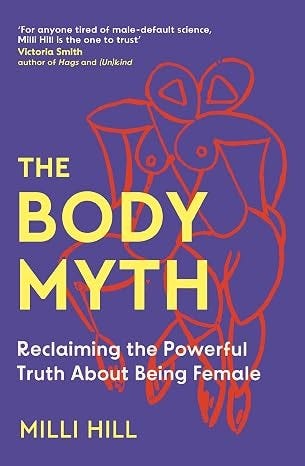
I thought I understood the profound connection between mother and baby quite well, until I read an advance copy of Milli Hill’s The Body Myth this week. It’s a book about the power of the female body, and the best I’ve read on what it means to be a woman, becoming a mother and everything in between. The following excerpt feels particularly fitting to this piece:
The deep physical and spiritual connection between mother and child is often treated with disregard in a patriarchal world. Women’s creative and life-giving power is diminished, dismissed or written out of the story and replaced by male gods and warriors. Treated merely as vessels and dehumanised by terms such as ‘gestational carriers’, ‘cervix havers’, and ‘bodies with vaginas’, we are broken down into parts, which can then more easily be commercialised. What we own can be rented and sold: a ‘uterus owner’ can therefore monetise this body part, and those who purchase its services can disassociate the organ from the whole person, facilitated by the language.
Surrogacy assumes that once the cord is cut, mother and baby, as separate entities, can part with no fallout for the child. In The Body Myth, Milli writes about the astonishing biofeedback loop in action when a mother does something as simple as kissing baby's brow, her body then miraculously analysing whatever deficits the baby has, her breast milk adjusting accordingly.
No wonder children separated from their birth mothers yearn for them with such intensity - they must feel as if their very survival depends on a reunion.
As Donald Winnicott said, “there is no such thing as a baby, there is only a baby and someone.”
Milli also writes movingly about the profound psychological shift that motherhood brings. It reminded me of earlier days, when I was pregnant with my first child.
When I told my mother that I planned to take a week off studying after the birth before getting straight back to my books, I caught an amused glint in her eye. I was already researching nurseries because I intended to return to work within eight weeks. She just gave me one of her knowing looks and said, “Wait and see how you feel. You may not want to go back that quickly.”
She’d had three birth children and fostered many more, but what did she know? “Course I will,” I laughed. I loved my job.
But babies have a remarkable way of rendering everything else unimportant.
Nothing prepares you for the moment your heart expands beyond anything you imagined was possible, or for the overwhelming sense of responsibility that comes with keeping an impossibly precious and fragile little human alive.
I loved being a mum, but part of me mourned the freedom of my old life. I missed eating with two hands instead of one and coming and going without a car seat in tow, but what I struggled with most was not sleeping for more than two-hour stretches at a time.
Years later I would go on to foster babies, once again awake in the small hours with tiny ones asleep against my shoulder. Had anyone told my sleep-deprived younger self that I’d willingly choose newborn nights all over again, I’d have laughed in disbelief. But there’s something strangely beautiful about those silent hours, when the rest of the world seems to pause while you pace the bedroom floor.
I remember struggling with loneliness as well. I missed my colleagues, the banter, the casual lunches and chatty afternoons. Some days, the silence felt endless.
Then one afternoon, in a cafe after swimming, my toddler daughter pointed excitedly at people passing by and suddenly managed to string several words together. I can’t remember exactly what she said but it was hilarious and we both dissolved into giggles.
Thirty years on, when we’re together chuckling over cups of tea, I find myself sitting opposite my closest friend.
I wish I could tell my earlier self that yes, the nights are sometimes exhausting. But those days when you chatter and sing and tell stories with only silence in return are so much shorter than you think, and they pass more quickly than your exhausted brain can contemplate at the time.
One day the baby you’ve spent months talking to will finally answer back. Then she’ll make you laugh until your sides hurt. Then she’ll become your favourite person in all the world.
And if someone offered you the chance to experience just one moment again, you might find yourself choosing not the stand out events, but a quiet evening rocking your baby in the darkness, believing you couldn’t wait for it all to be over.
Here’s another excerpt from The Body Myth beautifully describing the depth of the maternal bond:
Most women will feel instinctively that they want to hold their baby close in this way, and babies appear to feel the same: if they are removed from skin-to-skin in the time immediately after birth they will make a distinct distress call, and mothers who hear this cry will strain to see their babies, ask after them and ask to be given them back. If the baby stays close, they will soon notice the nipple, which has darkened in pregnancy, and now changes shape, with the areola expanding and the Montgomery glands enlarging and releasing an odour (these are the little raised bumps we all have on our nipples). This odour is the odour of home, of mother, to which every human has their own lifelong relationship: in utero, the amniotic fluid that we drink is flavoured by the food our mothers eat and this influences the development of the olfactory bulb, the part of our brain involved in our sense of smell. The aroma of the Montgomery glands is similar; as a newborn we then touch the nipple and make hand-to-mouth movements, recognising the taste and feeling the urge to suck, where again we will find the familiar taste of home in our mother’s milk. Through our childhoods, the flavours of the family table will usually continue to surround us, and no matter how far we travel as adults, we will always have a relationship to those familiar flavours, sometimes calling them ‘comfort food’. In old age, many of us rekindle a fondness for these foods of childhood, and the connection they hold, all the way back to the breast, to the womb and to ‘mother’, our first home.
Milli’s book is available for pre-order here:
(NB. Milli very kindly sent me an advance copy. No review was promised and I’m under no obligation to promote, but I highly recommend.)
I was listening to Giovanna Fletcher’s podcast this week, a Father’s Day special in which she chats to a same-sex couple about their surrogacy journey. They discuss the campaign to remove surrogates from their birth certificate from birth around 15 minutes in.
Milli’s words about the ‘aroma of home’ and the primal instinct of babies resonated with me. Do you believe bonds created in the womb leave a permanent imprint? Or do you think ‘home’ is can be found in anyone’s arms? I’d love to know your thoughts.
Comments
Nothing yet. Say the first thing.
Sign in to join the conversation.