
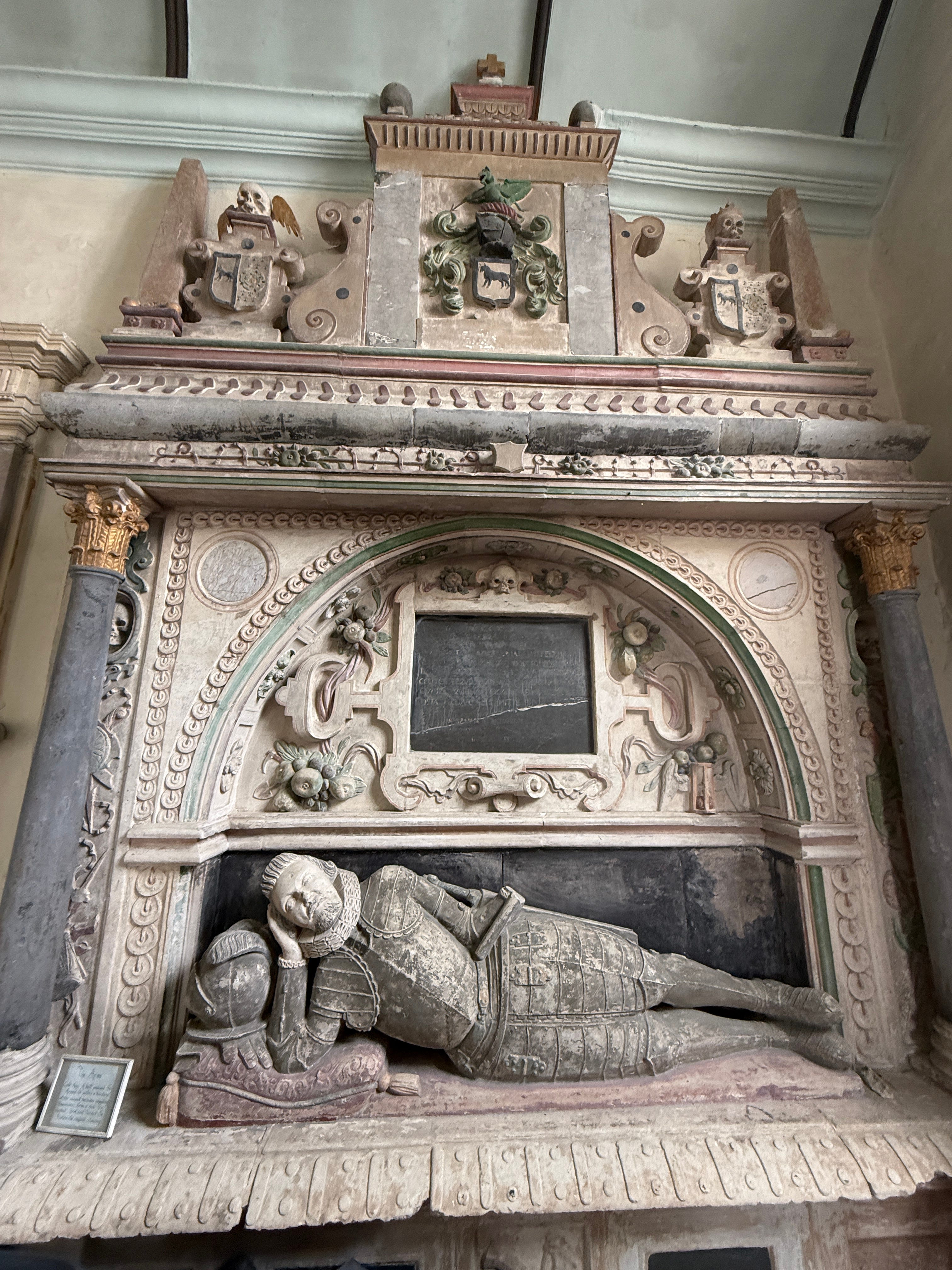
This is the splendid monument to Richard Cole in All Hallows Church, Woolfardisworthy, North Devon. Richard, who died on 19 April 1614, reclines in full armour, his armorial bearings on display, with memento mori very much in evidence. Five skulls, some partly hidden behind ornate columns, and an hourglass decorate his memorial. Traces of the original paint linger, a testament to the towering magnificence of Richard’s monument, which outshines the more modest one to his father, Philip, in St Michael and All Angels, Cornwood. Whether that is because Richard had amassed more wealth and status than his father, or is simply down to changing tastes in funerary sculpture, is open to conjecture.
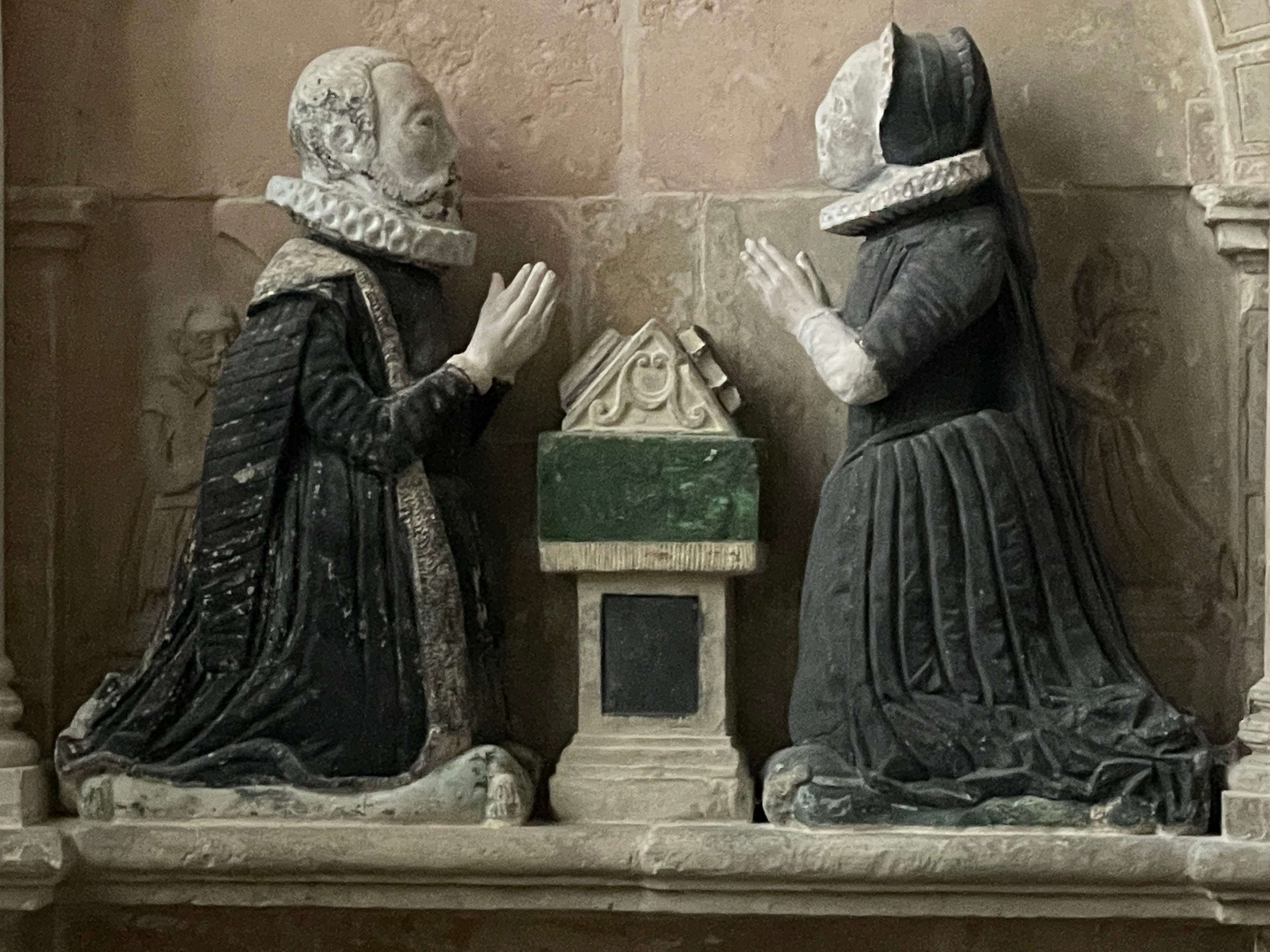
Wall monument to Philip Cole and his wife Joanne, St. Michael and All Angels, Cornwood
Richard Cole particularly interests me because of his connection to the Champernowne family. He was the grandson of Kat Ashley’s sister, Elizabeth. Philip Cole, Elizabeth’s son with her first husband, William Cole of the Slade near Cornwood, was Richard’s father. After Philip’s death in 1594, Richard sold the family home, which eventually became a seat of the Savery family.
Richard and his wife, Radigan,1 lived at Westbokishe, now known as Bucks, in the parish of Woolfardisworthy. Only a few miles inland, Woolfardisworthy, often spelled and pronounced Woolsery, is a pretty village in North Devon with one of the longest place names in England. The manor of Bucks, where Richard lived, was even closer to the sea.
It’s not surprising that myths and legends have grown up along this rocky part of North Devon’s rugged coastline.
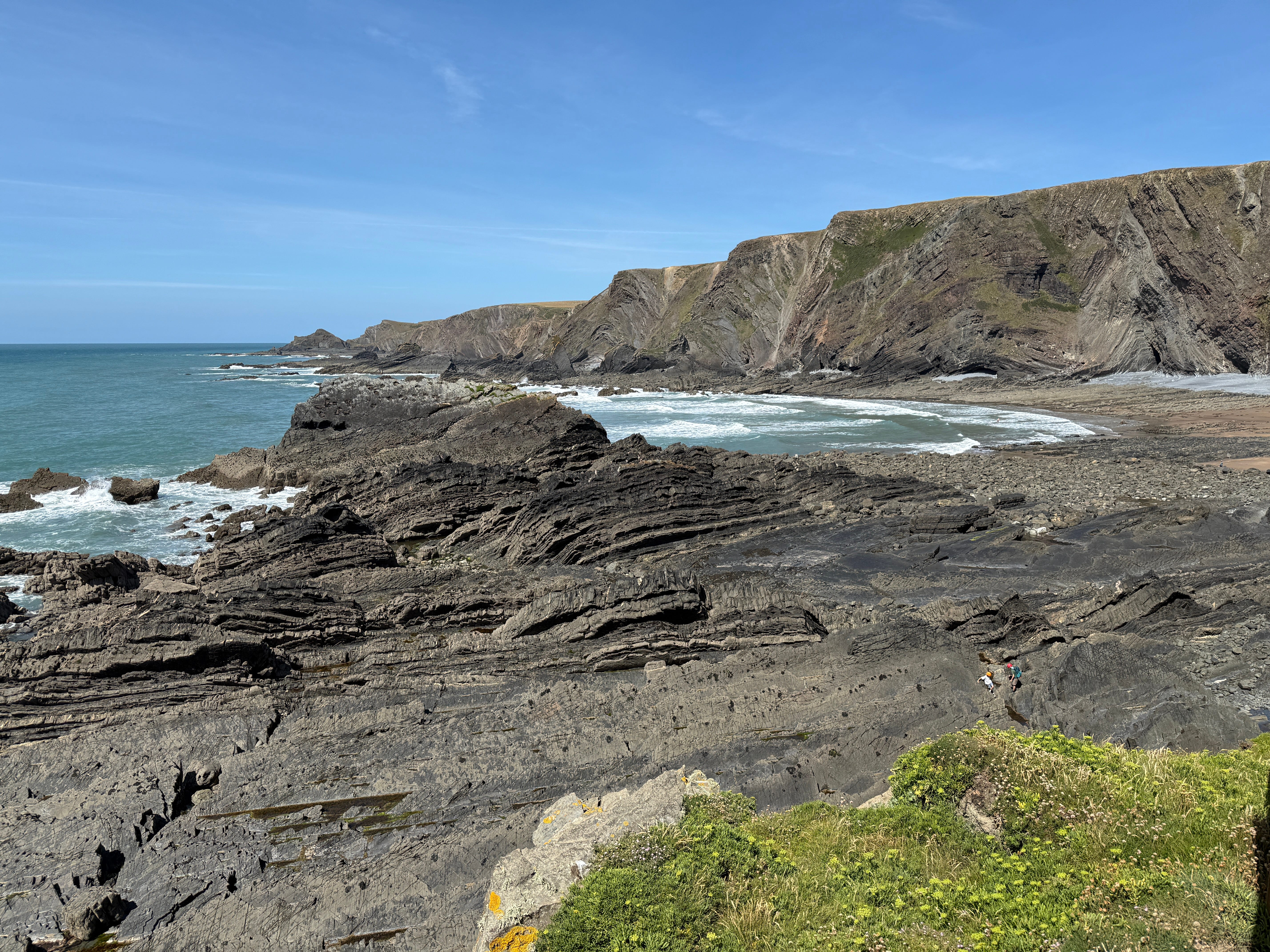
Hartland Quay, North Devon
Tales of Viking raids, pirates, shipwrecks, and smugglers abound. Several stories have become attached to Richard Cole’s name. although it’s hard to pin them down with hard evidence. For example, there is nothing to support the oft-repeated suggestion that Richard was the inspiration behind the nursery rhyme ‘Old King Cole.’ Nor is it likely he died fighting pirates or that he succumbed to wounds, together with many others, at a battle at Bitworthy.
Legend has it that a local field got its name “Bloody Park” because it was the site of a skirmish. Another nearby field, locally known as “Paradise,” is supposed to be the site of a communal grave for the men who died in the fighting. A confused story about a survivor of the battle who sought refuge in Woolfardisworthy Church adds to the legend. The story goes that he too died from his wounds in the churchyard, after burying his “small framed cross” in the graveyard. A different version says a cross found in the graveyard came from a Spanish sailor whose warship went down off the coast in 1558, at the time of the Spanish Armada.
Richard Cole more likely died of illness. He made his will on 7 January 1612,2 “having long languished”, suggesting a lengthy illness. It therefore seems improbable that he died of battle wounds.
Most of the legends associated with Richard Cole remain unproven. However, there is evidence for one extraordinary achievement in the writings of a near-contemporary. Tristram Risdon, who died in 1640 and whose grandfather lived nearby at Bableigh, close to the village of Parkham, wrote:
“Richard Cole, the last of that family that dwelt at Bokish, erected a harbour in his land, there to shelter ships and boats.”3
At the foot of a deeply wooded slope where a few fishermen’s cottages now make up the hamlet of Bucks Mills, Richard created a safe harbour for local fishing boats and other vessels in a sandy inlet known as “The Gut” or “Gutway”. Looking out over the pebble-strewn beach, it’s easy to imagine the deafening noise echoing round the hillside when he blasted out the rock with gunpowder, and workers straining to carry huge stones for the harbour wall. Unlike the harbour built by his near neighbour George Cary at Clovelly around the same time which still offers safe anchorage today, the walls Richard built did not survive the onslaught of the pounding waves. Only the remains of the quay are now visible at low-tide, known as the Old Quay at Bucks Mills.
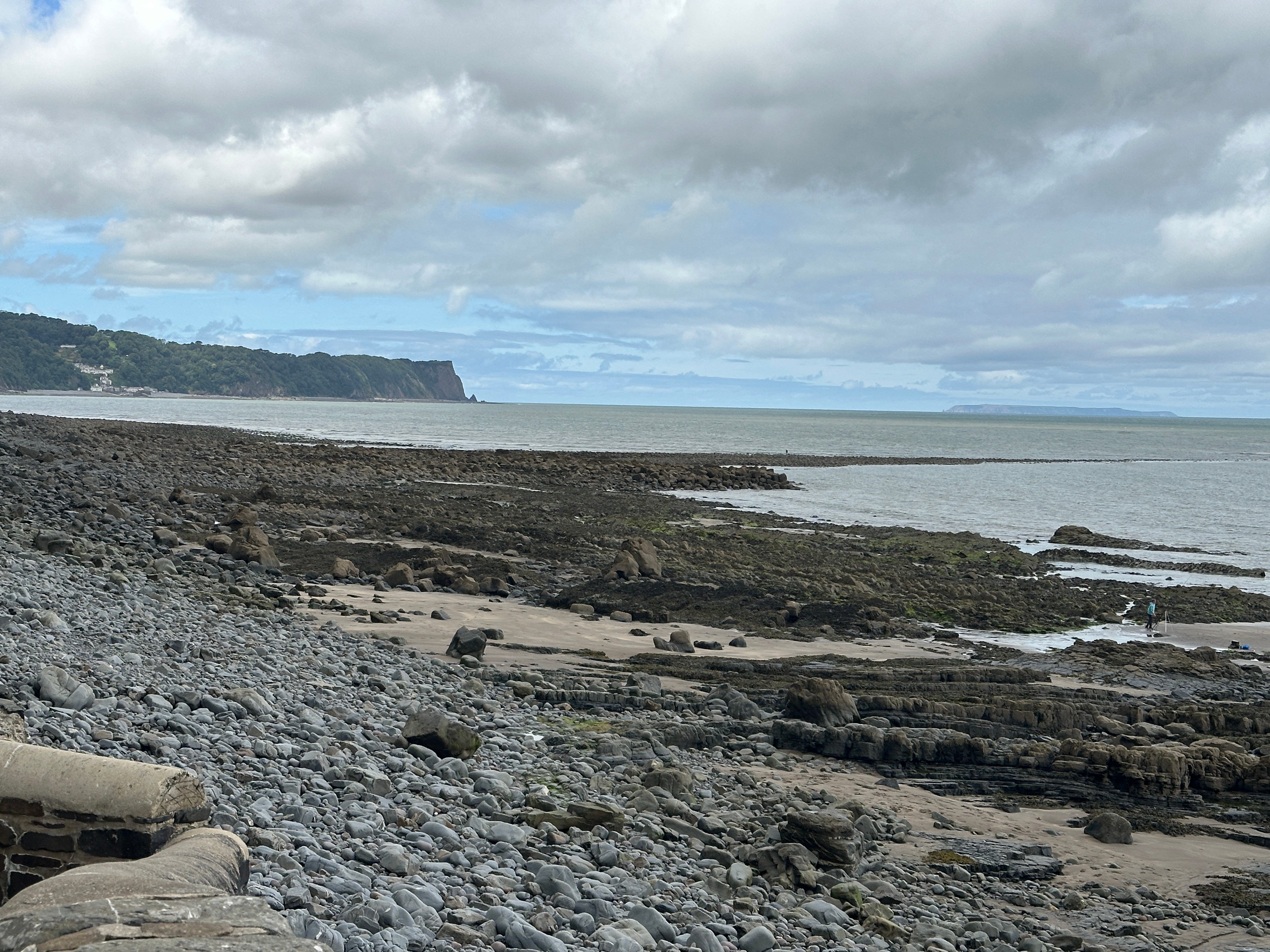
Bucks Mills
Like many other members of the network of families that included the Champernownes, the Gilberts, and the Raleighs, Richard had interests in shipping. We do not know what cargoes his ships carried, but it is possible he was engaged in the lime-slaking business. The remains of a lime kiln from the late sixteenth century, together with a later one, survive at Bucks Mills. They shipped limestone from Wales to smelt it here. Donkeys then carried the smelted limestone away along a steep track through the wooded hillside to the village.
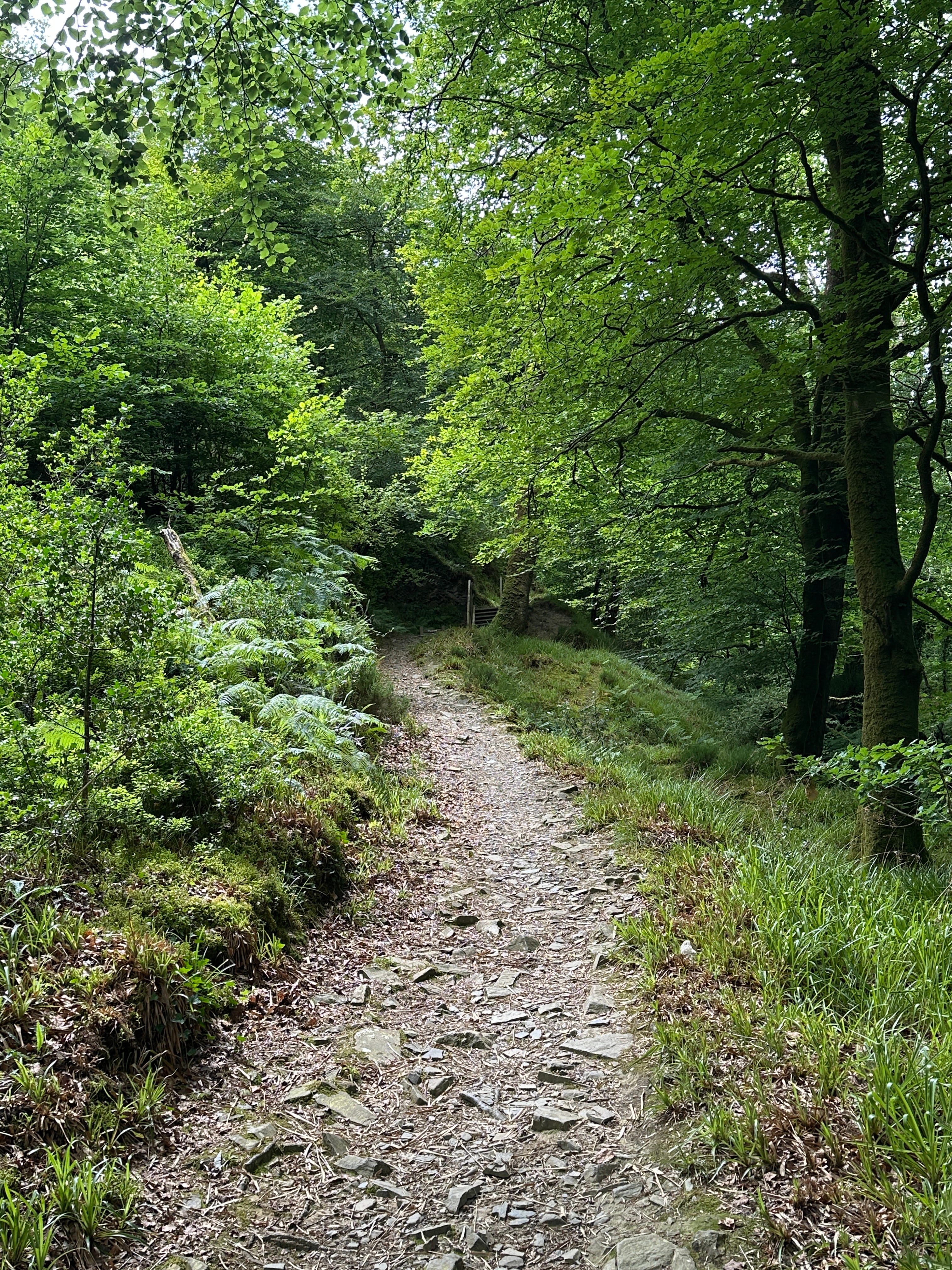
Wooded path leading up from the beach at Bucks Mills
Richard and Radigan had no children. According to the Devonshire historian Pole, who died in 1635, Richard Cole.
“conveyed this land unto .... Cole of London, as I have bine enformed.” 4
The beneficiary was Richard’s second cousin, Gregory Cole, a lawyer of the Middle Temple, where Richard’s famous relative, Sir Walter Raleigh, studied in 1575. And so the family connections come full circle. Woolfardisworthy and Bucks Mills are among many places in Devon where I find connections to the Champernowne family. Richard Cole is one of a generation of ‘cousins’ who all prospered during the reign of Elizabeth I. That a Champernowne woman widely known as Kat Ashley was the young Elizabeth’s mentor, friend and closest confidante for nearly 30 years did their careers no harm.
This post is public so feel free to share it.
Radigan was the second daughter of Nicholas Boscawen (died 1626) of Penkevil, Cornwall. After Richard’s death she remarried. Her second husband was the parliamentarian Sir William Cooke of Highnam in Gloucestershire.
The National Archives PROB 11/124/131
Risdon. Tristram, Survey of Devon, 1811 edition, London, 1811, with 1810 Additions.
Pole, Sir William (d.1635), Collections Towards a Description of the County of Devon,Sir John -William de la Pole, (ed.), London, 1791
No posts
Comments
Nothing yet. Say the first thing.
Sign in to join the conversation.