
Kat Ashley’s nephew, Sir Walter Raleigh, and his home at Sherborne
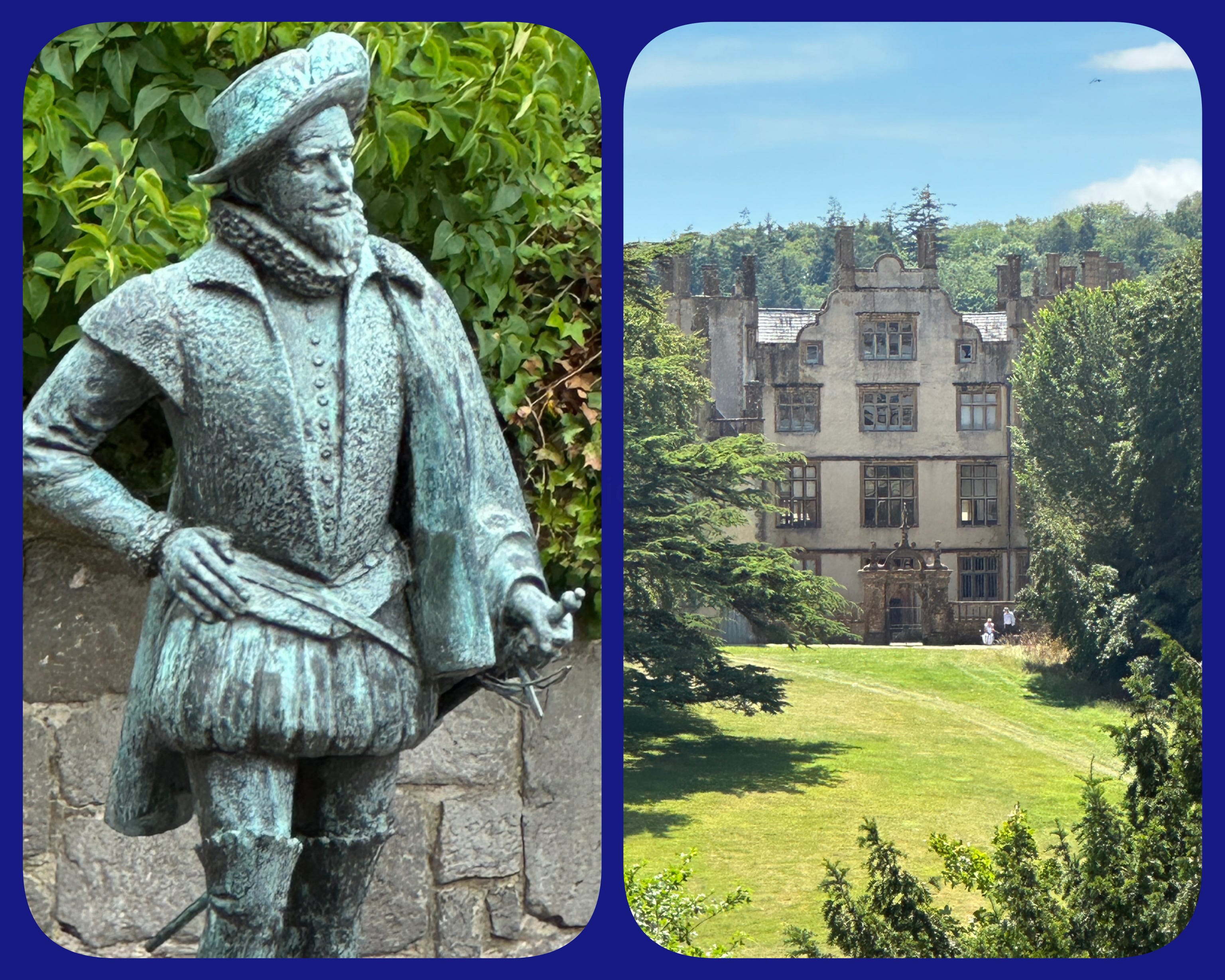
Statue of Sir Walter Raleigh , East Budleigh, Devon and view of Sherborne Castle from the Old Castle
‘Fortune’s fold’ was the private name Sir Walter Raleigh and his wife, Bess Throckmorton, gave to the estate Queen Elizabeth I bestowed on Walter in 1592. They hoped to spend the rest of their lives there and to pass the property on to their children. Sadly, it did not work out that way.
Sir Walter is well known as the handsome adventurer, soldier, writer and poet who became Queen Elizabeth I’s ‘favourite”. It’s often suggested that he first caught the queen’s attention in 1581 through his military successes in Ireland, his dashing charm, and his poetry. However, it’s likely that Elizabeth had known him since he was a boy. The woman he refers to in a letter 1 in November 1601 as his ‘Aunt Ashley’ had probably introduced him to Elizabeth when he was quite young. Raleigh’s biographers have suggested that Elizabeth’s governess, Kat Ashley, was Raleigh’s mother’s aunt. The relationship was even closer. The two women, both named Katherine Champernowne, were sisters. 2 Kat was Walter’s aunt.
Kat was at the heart of a tight-knit group of loyal servants who cared for and took the place of family for the young princess. For nearly thirty years she was Elizabeth’s closest friend and confidante. Elizabeth never forgot those who served her well. After her accession, she rewarded them by elevating their families, children, and spouses with titles, monopolies, and prestigious court positions. Several members of Kat’s family continued to benefit long after her death in 1565.
Kat introduced Walter’s half-brother, Humphrey Gilbert, later Sir Humphrey, to Elizabeth’s household in 1556. 3 Elizabeth clearly knew Humphrey well. She advised him to abandon his 1583 expedition to North America, saying he was a man ‘noted of not good happ by sea.’ The queen was proved right when Sir Humphrey went down with his ship, The Squirrel off the Azores on the return voyage. It’s likely that Kat also introduced a young Walter Raleigh at court, perhaps during her time as Chief Gentlewoman of the Privy Chamber in the early 1560s. His astonishing success may be partly because of his undoubted charm, his flattering words, and courtly behaviour. But it may also rest to some extent on Kat’s close relationship to Elizabeth.
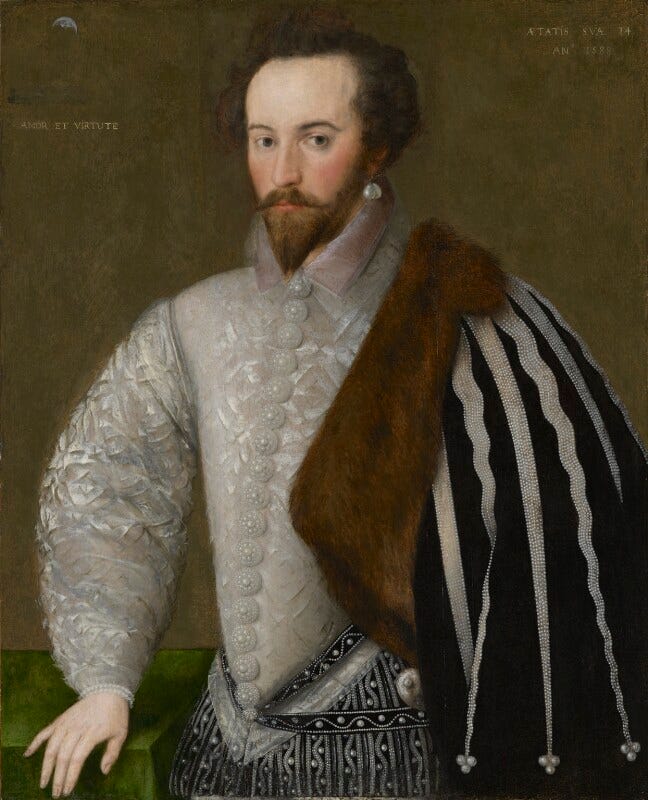
Portrait of Sir Walter Raleigh (In the year 1588 of his age 34) National Portrait Gallery, via Wikimedia Commons
Knighted in 1585, Walter received a royal patent to explore ‘Virginia’ and he rose rapidly in the queen’s favour. He had lands in Ireland and, in 1583, Elizabeth had granted him the lease of Durham House on the River Thames. She showered him with monopolies on wines and cloth, and properties in Lincolnshire, Derbyshire and Northamptonshire came his way after the failed Babbington plot. But Walter wanted more. He had tried to buy his birthplace, Hayes Barton, in Devon, without success, and was on the lookout for a more prestigious estate. According to Sir John Harrington, 4 Walter first saw the 12th-century castle at Sherborne when riding by on the road from Plymouth to London. As he turned in his saddle to point out the view to his companion, he startled his horse and fell to the ground. As he scrambled to his feet, he announced, laughing, that he had taken hold of the land he coveted.
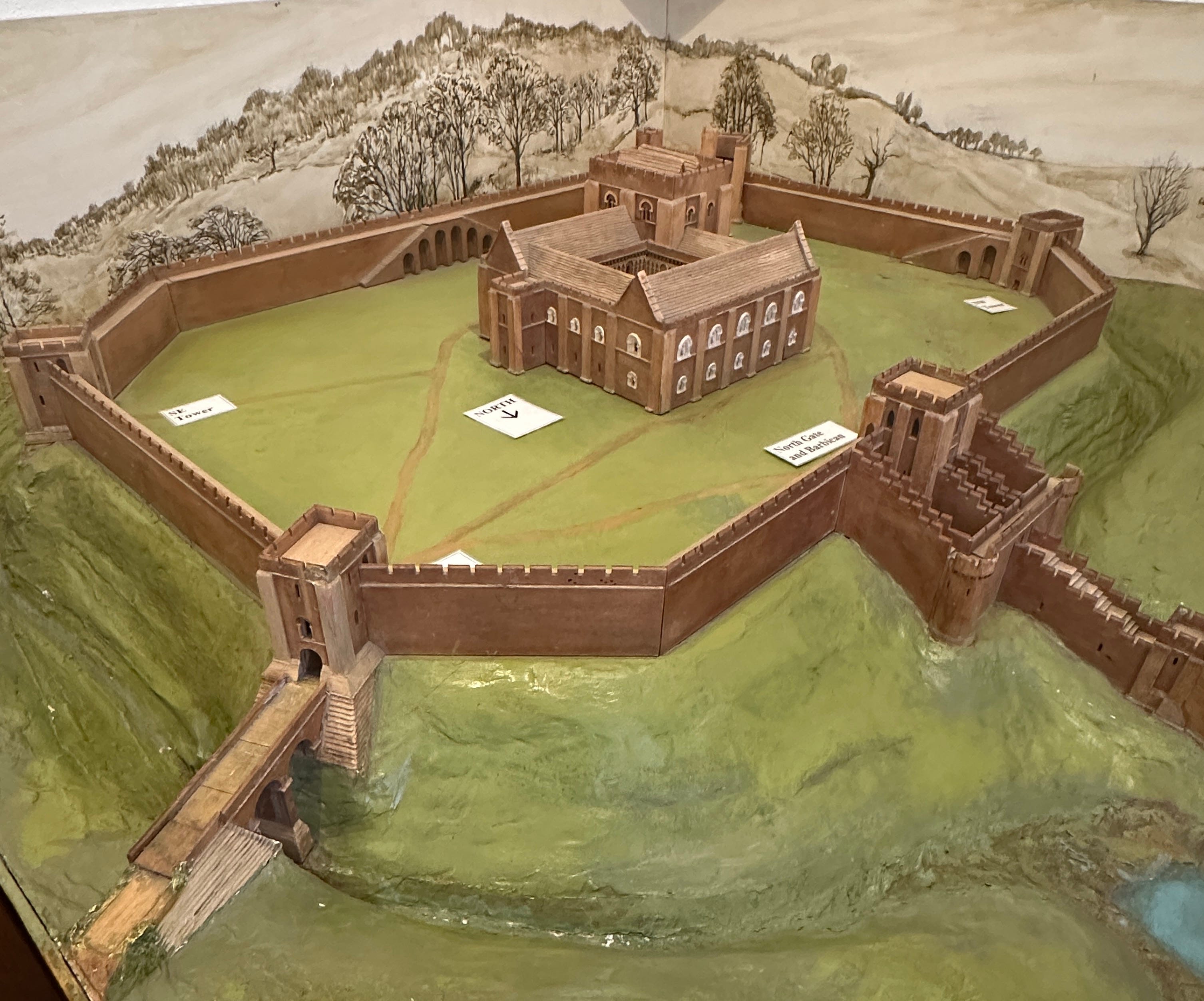
Model of Sherborne Old Castle on display at Sherborne Museum
Walter set out to persuade Elizabeth to secure the castle and its lands, for him. Sherborne was held by the Bishop of Salisbury. In January 1592, when the bishopric next became vacant, Elizabeth appointed a man who agreed to part with Sherborne, and granted Walter the lease for 99 years.
Unbeknown to the queen, Walter had by this time married Bess in secret. Bess hid her pregnancy and even kept the news of the birth of their son from the queen for a time. Born in March, 1592, Damerai died of the plague later that year.
They could not keep the secret forever. In the summer, news of the marriage and birth of a son reached the Queen’s ears; Elizabeth was furious. It’s doubtful if her anger was fuelled solely by jealousy of another woman who had stolen Walter’s heart. His marrying one of her ladies-in-waiting without her consent was unforgivable. Elizabeth immediately threw both Walter and Bess into the Tower of London. Disillusioned and shocked at the sudden loss of royal favour, Walter composed his poem A Farewell to the Court, during his incarceration. It is a melancholy poem in which he reflects on the transient nature of royal favour and conveys his profound sense of isolation. He concludes.
Whom care forewarns, ere age and winter cold,
To haste me hence to find my fortune’s fold.
To Walter, that phrase, ‘fortunes fold ‘, symbolised a place of safety, where he could retire from the fickle, unpredictable world of the Elizabethan court. A fold is a pen for sheep—a quiet, enclosed resting place. In the 16th century, ewes close to lambing were routinely brought into specialised, sheltered lambing folds and yards to give birth safely. Walter was in his forties and, perhaps conscious of his age, he also yearned for a place where he and Bess could bring up their children.
Elizabeth released Walter on 15 September 1592 to manage the disposal of the captured Portuguese prize ship, the Madre de Dios, but banished him from court for five years. She left Bess in the Tower until December and permanently forbade her from returning to her royal service.
It’s a measure of Elizabeth’s lasting fondness for Walter that, after their release, she allowed him and his wife to retire to Sherborne. The former Bishop’s Palace stood high on a mound, surrounded by a deer park and acres of ancient woodland. Built in the 1120s by Roger, Bishop of Salisbury, it had served as an impressive residence with a great tower, chapels, and strong defensive earth works.5 Walter began work immediately, hoping to transform the medieval buildings into a stylish Elizabethan home.
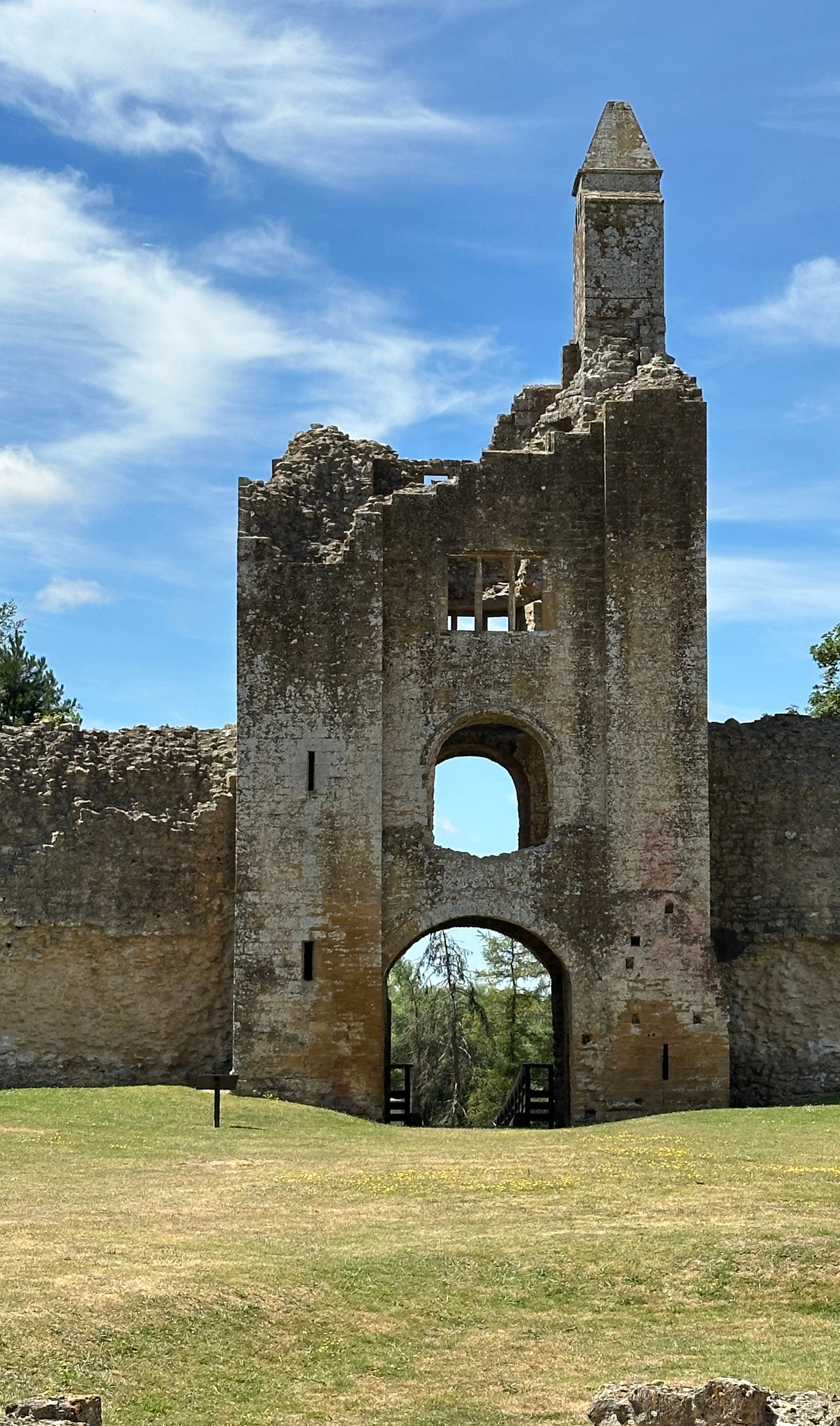
The gatehouse at Sherborne Old Castle, showing the square windows Walter installed
He put in square-headed windows but soon abandoned the project because the old buildings were damp and too costly to improve. Instead, he and Bess built their new home on the site of a former hunting lodge nearby.
Walter took a strong interest in the design of Sherborne Lodge and worked with his half-brother Adrian Gilbert, a renowned garden designer, to develop the grounds. They planted exotic plants and laid out gardens with waterfalls, pools and canals.
While researching the life of Walter’s mother for my novel A Woman of Noble Wit, I found no evidence that Katherine Raleigh ever visited Sherborne. When she made her will on 18 April 1594 she was clearly unwell, since she leaves ‘the bed in which I lie’ to Katherine Sneddal, daughter of Katherine’s stepdaughter Mary.6
Walter’s mother died soon after she made her will, around the same time as Walter and Bess finished building their new home at Sherborne. Walter’s sister, Margaret, did visit Sherborne. Walter left Bess at Sherborne in 1595 when he set off on a voyage of exploration to Guiana. By that time they had a second son, Wat. A. L Rouse 7 quotes Sir Arthur Throckmorton, Bess’s brother, who visited his sister and stayed at Sherborne in May 1595, saying ‘I found Mr Christopher Harris and Mrs Hull, servants to my sister … ‘ before naming a long list of others. Margaret had taken John Hull, as wealthy Exeter merchant as her second husband in 1591. Later, the couple settled in Dorset.8
Following Walter’s return from Guiana, he gradually worked his way back into Queen Elizabeth’s favour and spearheaded campaigns against Spain. In 1596 he led the vanguard in a brilliant naval assault that successfully destroyed the Spanish fleet anchored in the Bay of Cádiz. In 1597 he was Rear Admiral in a less successful expedition to the Azores, marred by clashes with Robert Devereux, Earl of Essex.
Walter played a prominent, role at Queen Elizabeth I’s funeral on April 28, 1603.As Captain of the Queen’s Guard, he led the mourners through London to Westminster Abbey. However, the new King, James I of England, did not like Walter and his downfall was swift. He was accused of joining a conspiracy to depose the king and replace him with his cousin, Lady Arabella Stuart. Despite Walter’s brilliant, defiant defence against very thin evidence, he was found guilty of treason and sentenced to death. The sentence was not carried out and he spent 13 years imprisoned in the Tower. For a time Bess joined him there, their dreams of a quiet life at their fortune’s fold replaced by confinement within prison walls. Their third son, Carew, was born in 1605 in a house on Tower Hill.
Although Queen Elizabeth had converted Walter’s tenure at Sherborne to freehold in 1599, an administrative error in the legal documents made his son’s trust invalid, allowing the Crown to seize the property. In 1608 James bestowed Sherborne on his favourite, Robert Carr. James’ eldest son, Henry forced Carr to give it up in 1610, only for Carr to repurchase it following Henry’s sudden death in 1612.
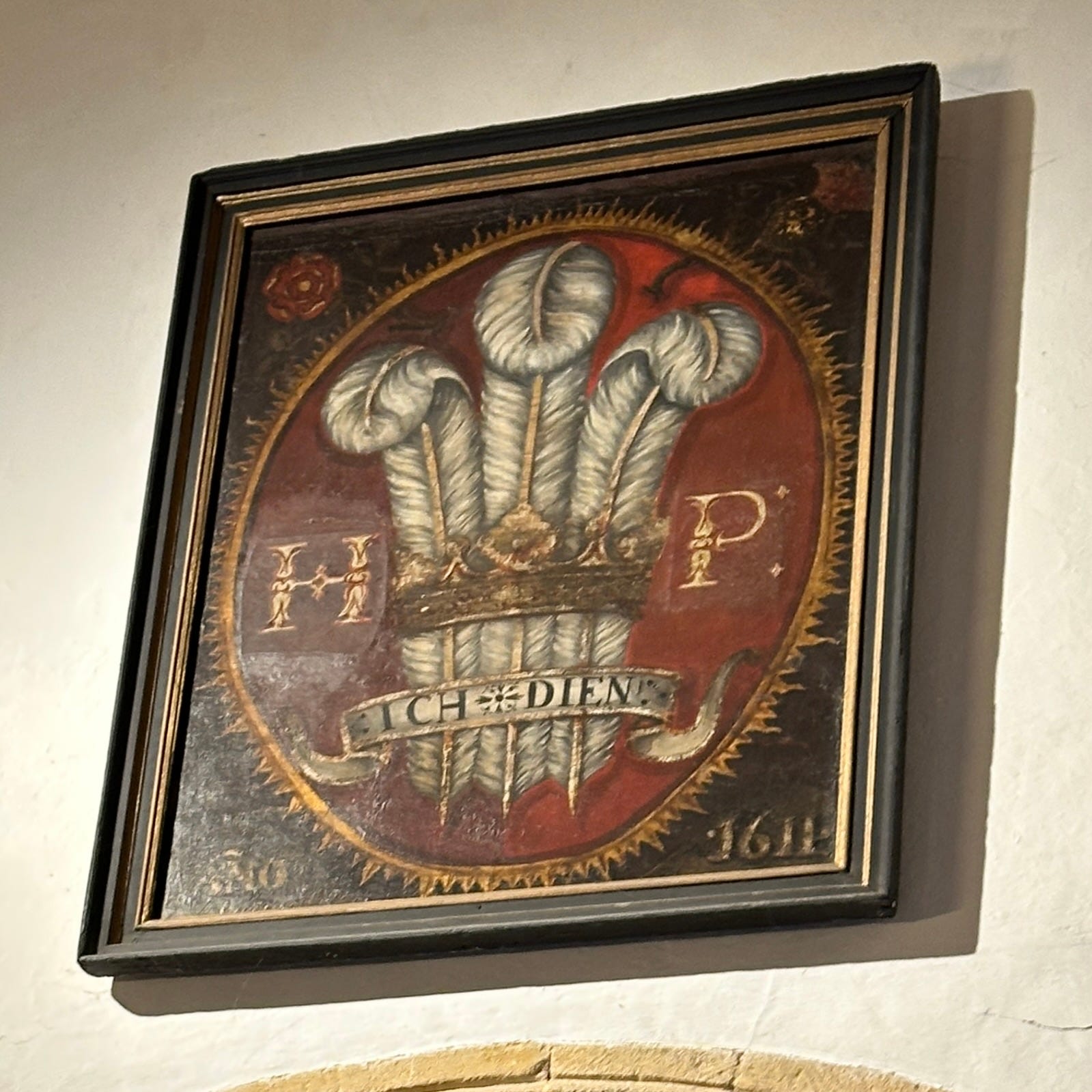
The achievements of Henry Prince of Wales on a painted board in Sherborne Abbey
Prince Henry, impressed by Walter’s nautical expertise, had developed a friendship with the prisoner, reportedly commenting, “Surely no king but my father would keep such a bird in a cage.” 9 Walter wrote works on shipbuilding and government specifically for Henry. Had the young prince lived, the course of history would have been very different and Walter might eventually have recovered the estate at Sherborne.
In 1617 James I agreed to release Walter so that he could return to Guiana to make one last attempt to find the fabled city of El Dorado. Walter was in his sixties and in poor health, and the voyage turned out to be a disaster. They did not find the city of gold and Walter’s son, Wat, died in a skirmish with Spanish soldiers. Attacking a Spanish outpost went against peace treaties James had negotiated with Spain. When Walter returned, the original 1603 death sentence was revived, leading to his beheading in October 1618.
Bess fought tirelessly to clear her husband’s name and was successful in 1628 when a Bill of Restitution was passed. But it was too late to recover Sherborne. Carr had sold the estate to Sir John Digby (the Earl of Bristol) in 1617. The Bill repaired the Raleigh name and allowed their surviving son, Carew, to inherit the family’s rights and honours, but Sherborne remained with the Digby family.
Raleigh’s gardens at Sherborne were remodelled by Capability Brown, who began work there in 1753, creating a 50-acre lake that separates the old and new castles.
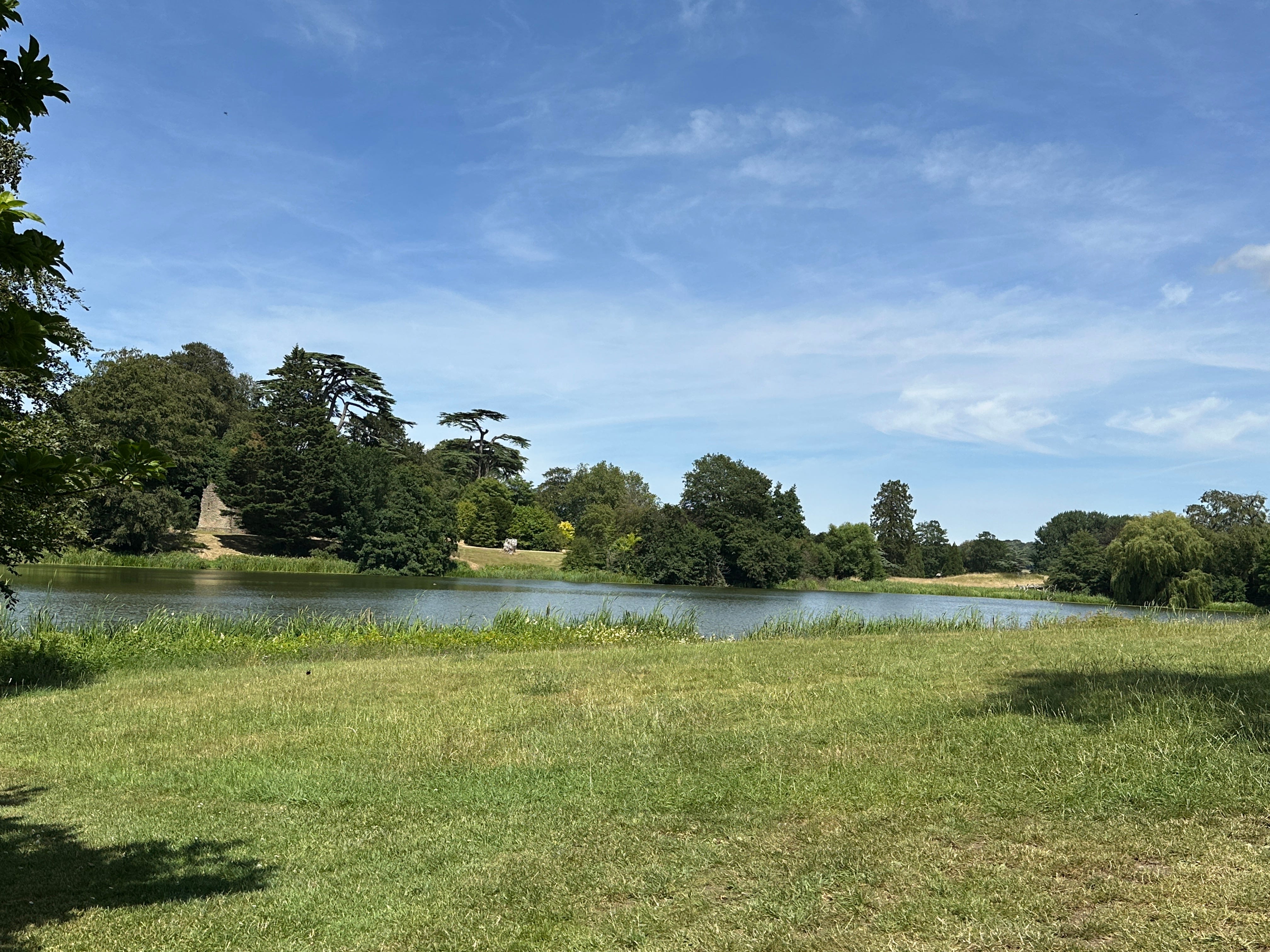
The lake at Sherborne Castle — photo from a visit on Sunday 5 July 2026
The house, now known as Sherborne Castle, has evolved over the years.
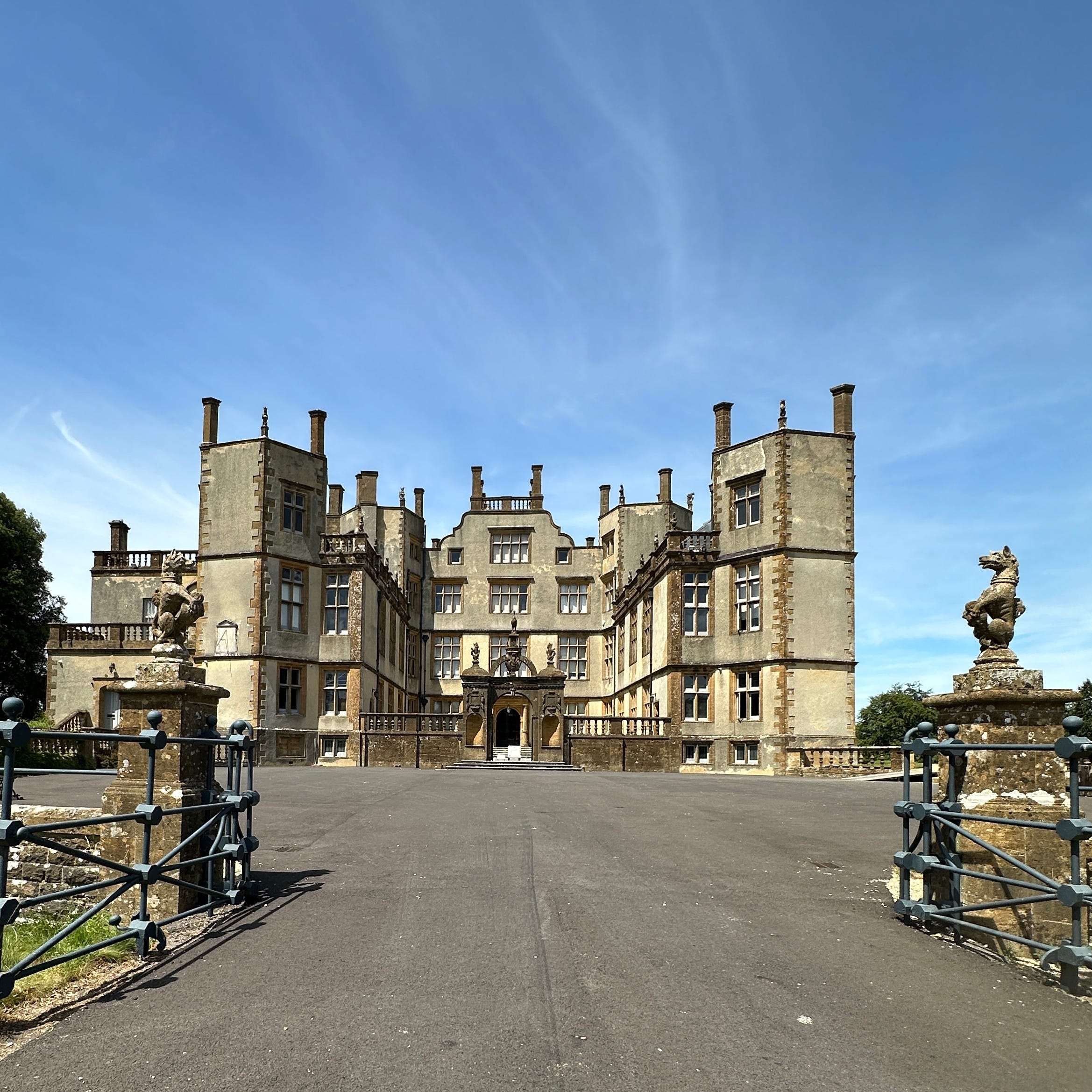
Sherborne Castle — photo from a visit on Sunday 5 July 2026
The Digby family enlarged Walter’s simple, rectangular house in the 1620s. Subsequent generations made further changes, adding Georgian sash windows and more modern comforts.
The Digby family motto is ‘Deo non fortuna’. through God not by chance, a poignant, ironic contrast to Bess and Walter’s ‘fortune’s fold’.
This post is public so feel free to share it.
Youngs J, and Latham, A, Letters of Sir Walter Raleigh. University of Exeter Press, 1999. Letter no 152. Raleigh writes to his nephew Sir John Gilbert (the second Sir John Gilbert) concerning a disputed lease of Brixham parsonage, which had descended from his Aunt Ashley to Sir William Gorges, another relative through Kat’s sister Frances, wife of Roger Budockside.
I published details of documentary sources that prove this some years ago. Who was the other Katherine Champernowne
My forthcoming book includes additional archival evidence that confirms beyond all doubt that Kat was Sir Walter Raleigh’s aunt.
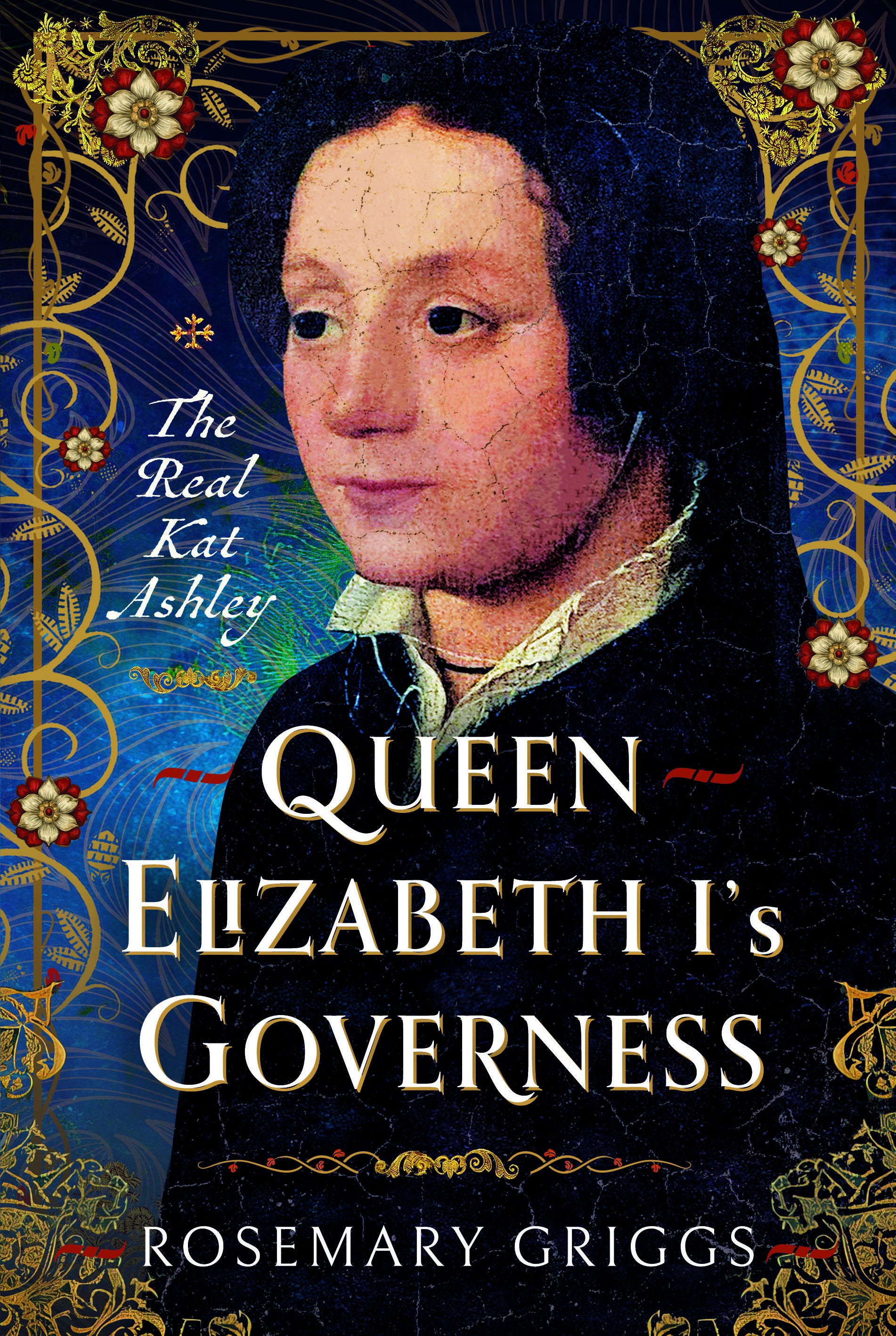
Champernowne, C.E., The Champernowne Family, p.102, citing Hooker. Also, Beers-Quinn, David, The Voyages and Colonising enterprises of Sir Humphrey Gilbert, Hakluyt society, 1940, p2.
Harrington, Sir John, Nugae Antiquae: being a miscellaneous collection of original papers, in prose and verse; written during the reigns of Henry VIII. Edward VI. Queen Mary, Elizabeth, and King James. Selected from authentic remains by the late Henry Harrington, and newly arranged, with illustrative notes. First published 1769, revised edition 1804.
The Old Castle was reduced to ruins during the Civil War. After an initial failed Parliamentarian siege in 1642, the castle was surrendered in 1645, and subsequently demolished.
Rouse, A.l., Raleigh and the Throckmortons, 1962, p.195
Margaret Raleigh married first Nicholas Radford, a prominent lawyer from Exeter, and second, in 1591, George Hull of Larkbeare, Exeter, a wealthy merchant.
Strong, R, Henry Prince of Wales And England’s Lost Renaissance, 1986
No posts
Comments
Nothing yet. Say the first thing.
Sign in to join the conversation.