
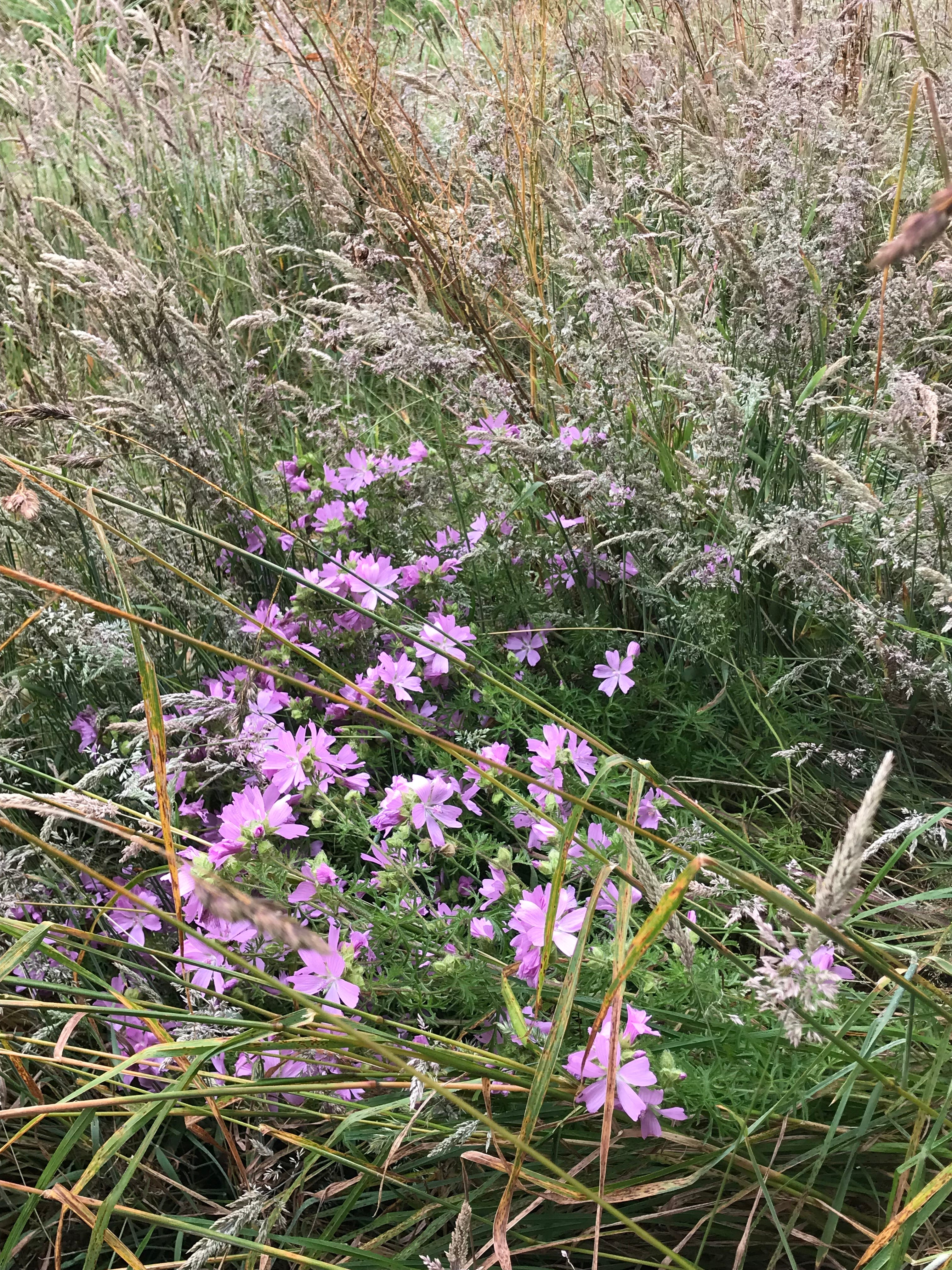
A follow-up to how we might live now
In my last piece I asked for your tips on how we might live now, with an eye to restoring what we can of ecosystems; or at least, minimising further destruction to the extent that we can as individuals.
Marg says: ‘The other thing - is to keep writing and talking to each other. Lots of changes happen during chats with friends family and neighbours.’
Ruth says: ‘Plant a tree!’ - and considering my last book was all about trees, I can’t imagine how I forgot that one.
I’d like to add: ‘Be kind, for everyone you meet is fighting a hard battle’, according to Plato.
I also want to follow up here by reiterating how wonderful it would be if you could buy organic, and buy it direct from eg a farmers’ market, or a local producer, one way or another. I say this today because I’ve just read in The Connexion, the English-language newspaper for British residents in France, these shocking and probably typical stats – for France, and I imagine duplicated in the UK and the Western world:
’Large retailers [supermarkets] take 81% higher margin [on organic produce] than on standard fruit and veg.’
The source, Le Parisien, cites as an example the average price of organic tomatoes to the shopper as €5.84 per kilo, as opposed to €3.26 for conventionally-farmed (ie sprayed etc) ones.
Within this price, the amount paid to farmers is much lower for organic products (about 37%) than for standard ones (about 47%). Meantime, the large retailers’ margin apparently jumps by 113% (I don’t understand the maths, but believe the figures).
France’s Green Party Senator Antoinette Guhl adds: ‘Out of every €100’ (spent on food), ‘€8 goes to farmers, €14 to manufacturers, €35 to imports, and €40 to retailers.’
On every count, if we can’t grow any of our own food, the obvious way to address this, which works for everyone except the multinationals, is to seek out local organic producers IF you can.
In the garden
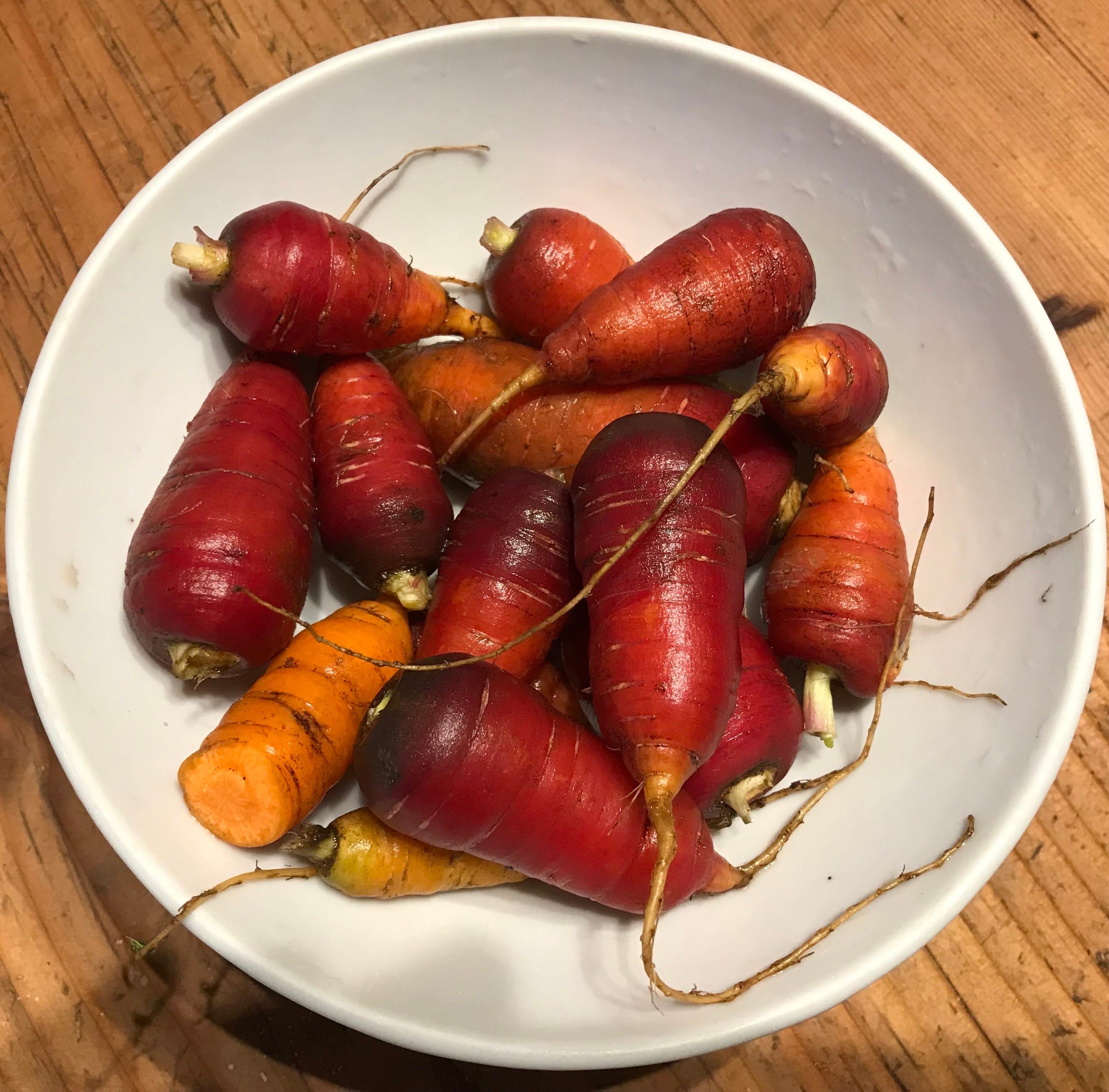
Meantime our glut is seriously glutty. We are giving away courgettes (and of course eating them every evening; trying to prevent a marrow overkill this time of year: last year I made stacks of rather tasty marrow and ginger chutney, and our English neighbour took many, partly to stuff and partly to make chutney himself, but having delivered his excess to various elderly neighbours acquired the name ‘the marrow gigolo’).
After two years of blight, we are gathering many tomatoes each day now; digging new potatoes; picking chard (chard parcel recipe soon); and suddenly our beetroot have doubled in size in a week. Beetroot recipes in the Comments box please! My own are limited to grated beetroot and carrot salad, roast root veg, borscht (which I don’t like much), and beetroot and chocolate cake (recipe in my cookbook, see below).
There are of course failures. The broad beans have not been prolific, after all the resowing in the spring, because of predation by mice and voles, and despite the wonderful job the ladybirds did of clearing the blackflies. I think chocolate spot and heat have affected them. Germination rates for many veg were poor. We never did get the peas in.
And in the polytunnel, the only red pepper plant to have survived the sowing looks distinctly NOT like a pepper plant at all! It’s minute, laden with tiny berries that were green, then black, then green again – some kind of solanaceae, nightshade family member, but possibly toxic. Incidentally, from the point of view of nutritional medicine, if you have aching joints, try eliminating dairy first for 3 weeks; then gluten ditto if that doesn’t make a difference; then take out potatoes, pepper, tomatoes, aubergines (I know!) – all solanaceae, aka nightshades. All of these can be implicated in inflammatory disorders.
Not Lammas but an early ‘early harvest’
Lammas or Lughnasadh, after Lugh the fire-god of the Celtic peoples, is one of the cross-quarter dates in the old calendar: the time of the first, or early, harvest, specifically the barley harvest, on August 1st. Lammas comes from Hlaf-mass, to do with baking the first loaf with the new barleycorn.
With the heat we’ve had, here the barley’s already been harvested.
The fields of gold are shorn
And the harvest’s gathered in;
They’ve baled the barley straw
So let festivities begin…
And LOOK!
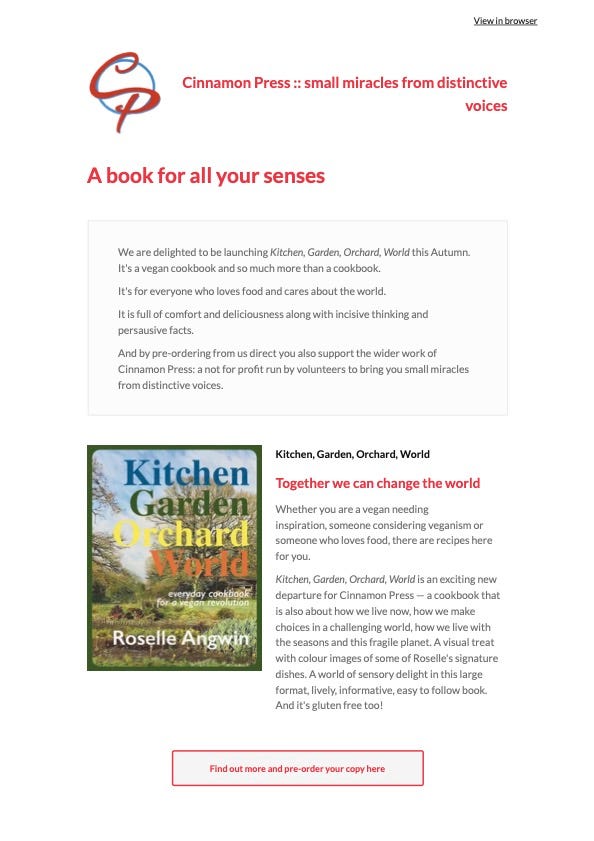
You can pre-order and see more on this link.
~~~
Beauty
’The beautiful can exist at the edge precisely because it has nothing to lose and everything to give away.’ Frederick Turner, quoted by John O’Donohue
I find myself less and less able to deal with the the emotional impact of what we’re doing in and to this world, and more and more inclined to hide out where there’s beauty. I make myself stay aware in outline of what’s going on in the global picture because it feels irresponsible not to, but the overwhelm, sense of hopelessness and helplessness can all be too much. This is partly why I focus on the seemingly-small things we can do, as in my last post. And it’s essential to remember that everywhere there is beauty, if we look for it.
I’m particularly fortunate in that I have the opportunity here so many times a day. Our refuge truly is a refuge for wildlife, a very good habitat, and the numbers have grown. The previous inhabitants were organic smallholders with sheep and hens, so it hasn’t seen chemicals in a long time. However, the sheep were free to roam everywhere, as were the three dogs and three feral cats (we don’t keep cats because of their predation on birds; even if they don’t catch them they put them off nesting).
A couple of days ago we had a pair of linnets in the garden, perched on the young dogwood near the kitchen door and eating, as far as I could tell, the dandelion seedheads. I haven’t seen linnets in the UK in decades. On the holloway separating the Home Meadow from the Bramley Field last week I had the utter joy of hearing what I believe was a turtle dove. That’s a first. Otherwise, we hear nothing here other than birdsong, an occasional dog, and an occasional tractor.
Passive rewilding
Probably like most of you reading this, I always supported the Right to Roam movement, especially in relation to some recently-closed-off land on Dartmoor. That was until I had a conversation with Simon Leadbeater, who quickly convinced me that this movement didn’t work in favour of all the other-than-human species who are our kin, and who now have so very little space to themselves, whether in Britain or globally. Since then, while I broadly support the movement, especially in relation to large private holdings, I now feel very strongly about no-go areas where wildlife are simply left alone. The fairly extensive woodland margins here are now a haven to many creatures – we have badger, fox, deer, pine martens, possibly wild boar, probably red squirrels. Many birds have made their homes amongst the trees.
And the trees manage themselves, which long term may be more effective even than planting trees deliberately – although it has been very good to see the plantings happening on barren land in the Scottish highlands as we came down through from Iona this year. (The thing is, as long as sheep are grazed on the uplands, and we keep to ‘our’ policy of not permitting apex predators on the land for the prolific deer, reforestation simply can’t happen.)
I was late to the wonderful book Wilding by Isabella Tree about the wilding of Knepp in Sussex. When I did eventually read it, I was so struck by it that I reread it again immediately, and searched out the short film. But they still depend on choosing to stock it with animals that they will slaughter eventually. How would it be to rewild passively, by simply allowing it to be? An ecosystem knows better than us what it needs.
This is what we are doing, mostly; and on a very much larger scale is this project below. If you have access to Facebook (and I know the many reasons why you might not), do watch this video. I found it so inspiring. As it happens, the guy’s a vegan.
Till next time, my friends. Thank you for reading.
No posts
Comments
Nothing yet. Say the first thing.
Sign in to join the conversation.