
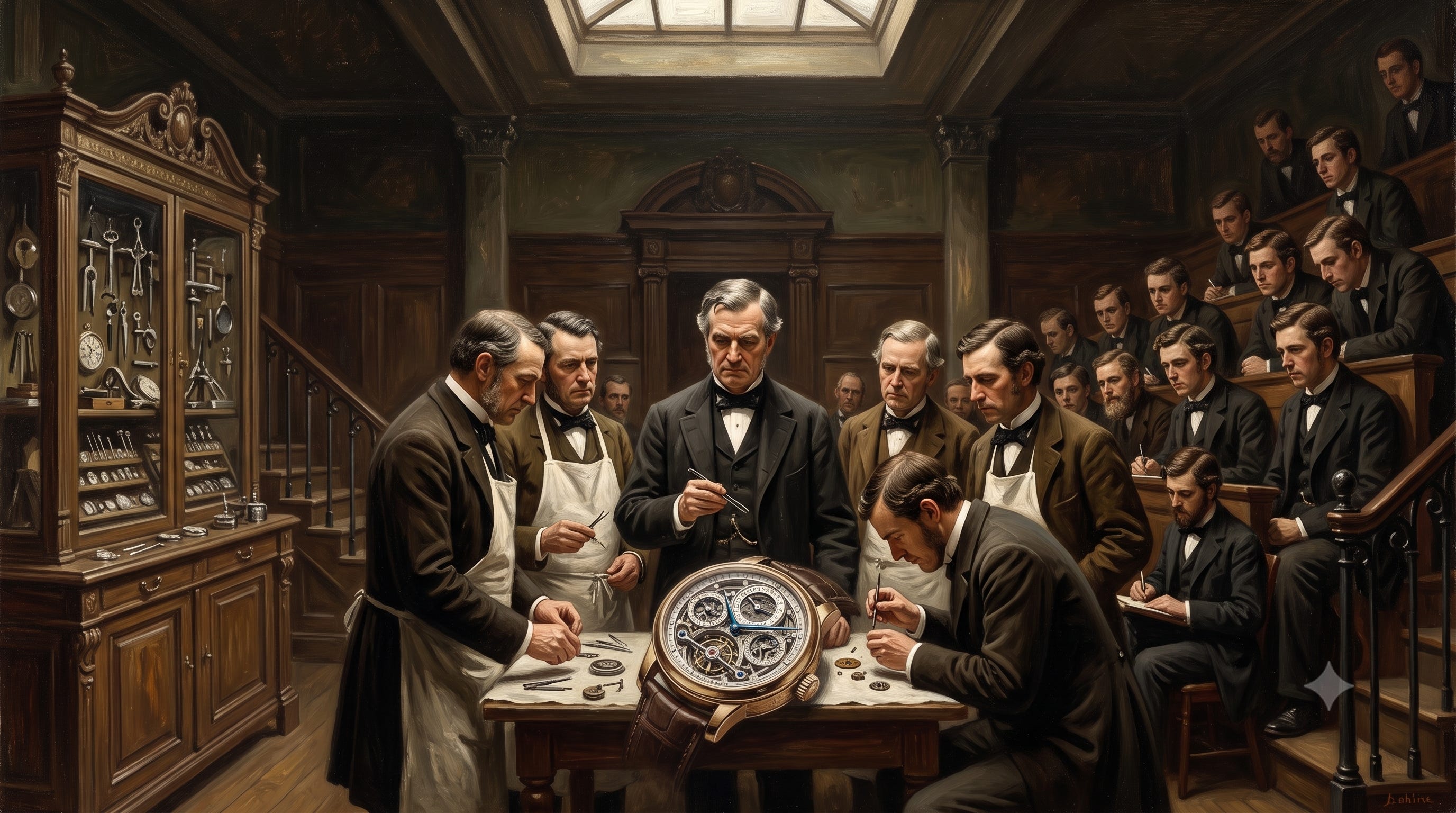
De Medicina is the earliest surviving medical text, a Latin treatise written in the first century CE. In the text its author Cornelius Celsus reports that the attributes of a surgeon include, a strong and steady hand which never trembles, spirit undaunted, filled with pity, so that he wishes to cure his patient, but he does everything just as if the cries of pain cause him no emotion.
Robert Liston, a Scottish surgeon of the 19th century, was such a surgeon. Working in London he was known as “the fastest knife in the West End.” Throughout history, and especially before the advent of anesthesia c. 1846, surgical speed was synonymous with surgical skill. He died a year later in 1847, but despite the vast majority of his surgical career being spent in the pre-anesthetic era, accounts suggest that Dr. Liston’s skill was held in good regard. In an address to the British Surgical Society given in 1888, he was described in this manner:
“Liston was by universal consent the boldest surgeon and the most skillful operator of his time, a man who did more to advance operative surgery than any other in his generation.”
But even today, speed is not an independent indicator of surgical prowess. Robert Liston may have been a speedy surgeon in his time, but the main reason that his name is still known is because he holds the dubious record for having performed a single operation with the highest operative mortality: 300%. Three people died.

Dr. Liston was proud of his surgical speed, so much so that he before starting his amputations he would tell the gathered spectators “Time me gentlemen!” (In those days it was common to operate in small amphitheaters observed by other medical personnel and curious spectators.)
Surgical speed can indicate skill but it can also be a mark of recklessness. For most of Dr. Liston’s career it marked skill. His death rate after amputation was reported to be 1 in 10 in a time when mortality was typically 1 in 4 for limb amputations.
But Robert Liston is an answer to medical trivia not because of the skill born of speed, but rather because of the recklessness. No doctor I know is aware of his skill or the accolades mentioned in that address to the British Surgical Society. I’ve known about Dr. Robert Liston for 30 years and only learned of his skill during the research for this newsletter over the past week. What I, and every surgeon knows about Robert Liston is a single episode: an operation which caused the death of not one, but three people.
This infamous operation took place in the 1800’s, a time of ignorance of germs and microbes. Prior to surgery Dr. Liston would not have washed his hands nor cleaned his knives or other instruments. His coat would have been stiff and discolored from layers of dried blood and body fluids. Just as a chestful of ribbons on a General’s dress uniform indicates experience worthy of respect, so too did layers of encrusted blood and other body fluids on a surgeon’s coat indicate experience with battle under pressure.
Dr. Liston was performing an amputation with his usual speed and flair. With the swing of his knife, he came across the hand of an assistant who was restraining the patient, resulting in them having several fingers amputated.
With the follow through Liston’s blade whisked across the clothing of an observer in the front row of spectators. Believing he had been sliced by the amputation knife, the spectator had a heart attack and died! The assistant whose fingers were accidentally cut off developed gangrene and subsequently died. The patient whose leg was amputated also succumbed to gangrene in the post operative setting and died.
One operation. Three deaths. If anyone knows anything about Dr. Robert Liston, that is what they know him for.
It is only for those who do a deep dive on Dr. Liston that his skill and favorable standing are discovered. Otherwise all people see in him is a cautionary tale of recklessness and failure.
—
Watches, failure, and reputation
This past weekend at a watch event, the inaugural Deer Valley Watch Week, I came across two collectors with fine timepieces but with service issues which caused me to reflect on the very desirability of those pieces and on what we allow from specific makers.
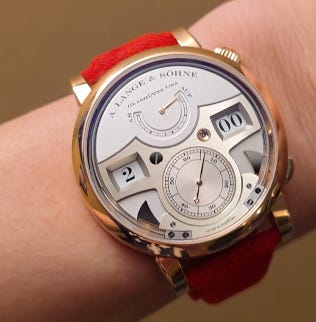
One piece has been on my “grail list” for several years, the A. Lange & Sohne Zeitwerk Striking Time. It’s been some time since I’ve seen one in the metal, wore it, and examined it under a loupe, and this time was no less spectacular than prior encounters.
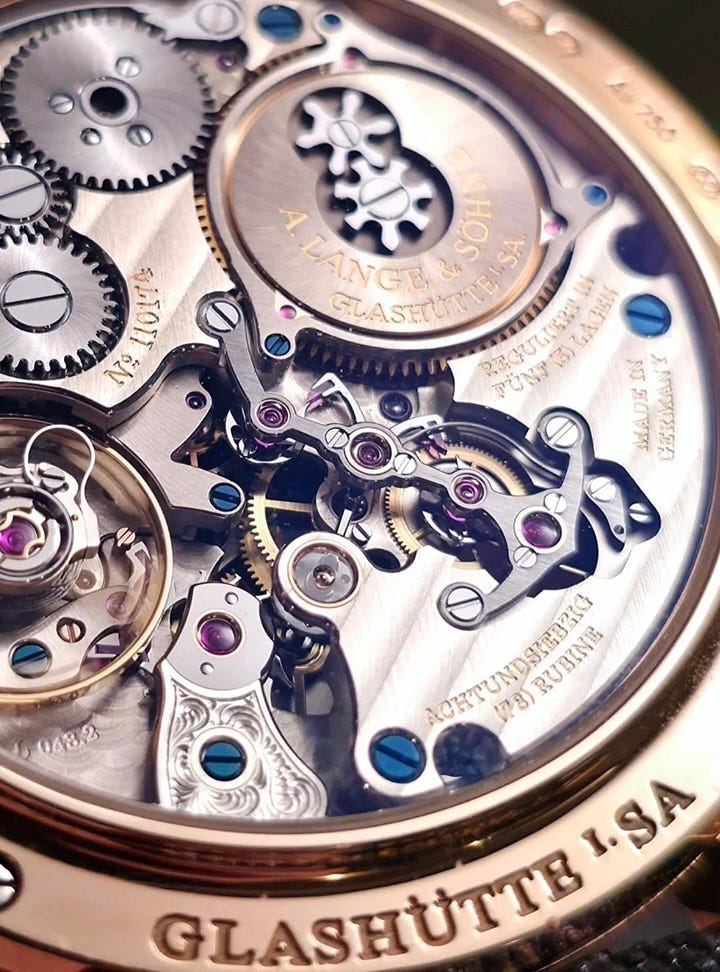
This watch has 528 parts which work together to show the time with instantly flipping numeral discs and also a striking time mechanism to chime every 15 minutes.
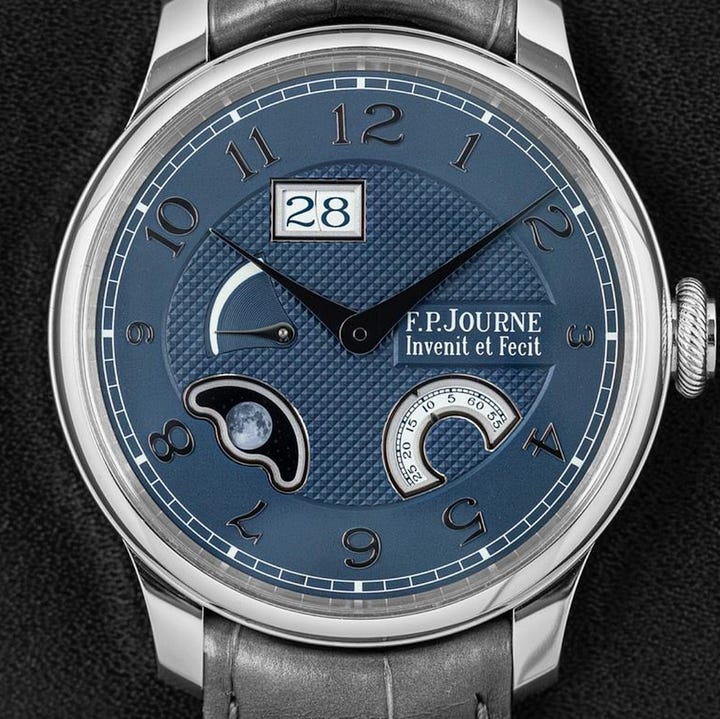
The other piece was an F. P. Journe Octa Divine. This particular model is exquisite, with the dial showing a moonphase indicator, power reserve, running secometer, and date display.
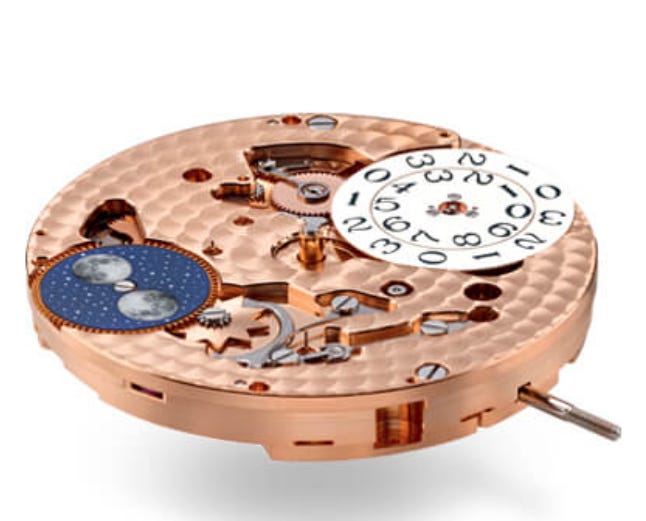
Both of these pieces are exquisite and expensive. One might think of them as a Rolls Royce or Bentley of the watch world. Recognizable luxury. One would expect exemplary mechanical precision and function.
The surgeon has one job: to improve a patient’s health. The watchmaker has one job: to make a watch that works.
My friend’s Zeitwerk Striking Time, a watch which costs about $100,000, had to be serviced for failure shortly after he acquired it from a secondary market dealer. Off it went to the service center at Lange HQ in Glashutte, Germany for a repair job which took about six months.
Fair enough, one service issue can be excused if it isn’t part of a larger pattern.
But when the watch was returned, it immediately had another failure. So off again it went to the service in Glashutte, again for at least half a year.
Of all the other watches I saw that weekend, I include the FP Journe Octa Divine here because it had a service issue as well.
The owner showed that his relatively new watch had a malfunction and the date display runs to 32 days each month. Interestingly this same defect on the same watch was shared on Instagram a few days ago by a watchmaker repairing that watch.1

In talking to others who own FP Journe watches, three others came forward to share service issues with their watches at some point.
“For what value, at what cost?” - Frankie Faires, movement coach
Context matters. Dr. Robert Liston may be more widely known in England where he operated. But here in the U.S., he is exclusively known as the answer to the trivia question “who is the surgeon who killed three people with one operation?”
The context matters because if instead of presenting him as the only surgeon with 300% mortality in one operation, what would his reputation be if instead he was first described as “a man who did more to advance operative surgery than any other in his generation”
Carrying this to watches, does the Zeitwerk with 200% failure rate get a pass? A. Lange & Sohne have a tough road to navigate here as their reputation of late has taken a hit. As KingFlum writes in his May 19, 2025 newsletter:
”Their service issues have become legendary in collector circles, where many have shared horror stories about watches being kept for months, returned with new problems, or service bills being extortionate.”2
A. Lange & Sohne themselves set high expectations. From their website:
”The watchmakers in Saxony have but one goal: the perfect timepiece…One of the consequences is that at A. Lange & Söhne, every movement is assembled twice. It makes no difference whether it is a simple three-hand calibre or a complication. And there are convincing reasons to do that…at A. Lange & Söhne many hours are invested in assembling each movement with utmost virtuosity. Afterwards, the interactions of all mechanical parts are adjusted to the highest degree of perfection. But then, the movement is taken apart again. Now, all parts are painstakingly cleaned, and many of them are lavishly decorated and polished. Even parts that later remain unseen are enhanced in this way.”3
FP Journe might get a pass here, because of the cult status of the watch and astronomical secondary market value. To a large extent, the allure of Journe watches rest on the altar of devotion to Francois Paul Journe himself, the difficulty in obtaining his watches, and the cult like resistance of Journe collectors to criticism.
A single failure should not erase a lifetime of skill or the reputation of a brand. Considering the context of failure requires us to define the possible value in the face of the many costs.
Look for patterns of failure and promises of perfection.
Thanks for reading Think like a surgeon! This post is public so feel free to share it.
https://www.alange-soehne.com/eu-en/manufacture/art-of-watchmaking/twofold-assembly
No posts
Comments
Nothing yet. Say the first thing.
Sign in to join the conversation.