
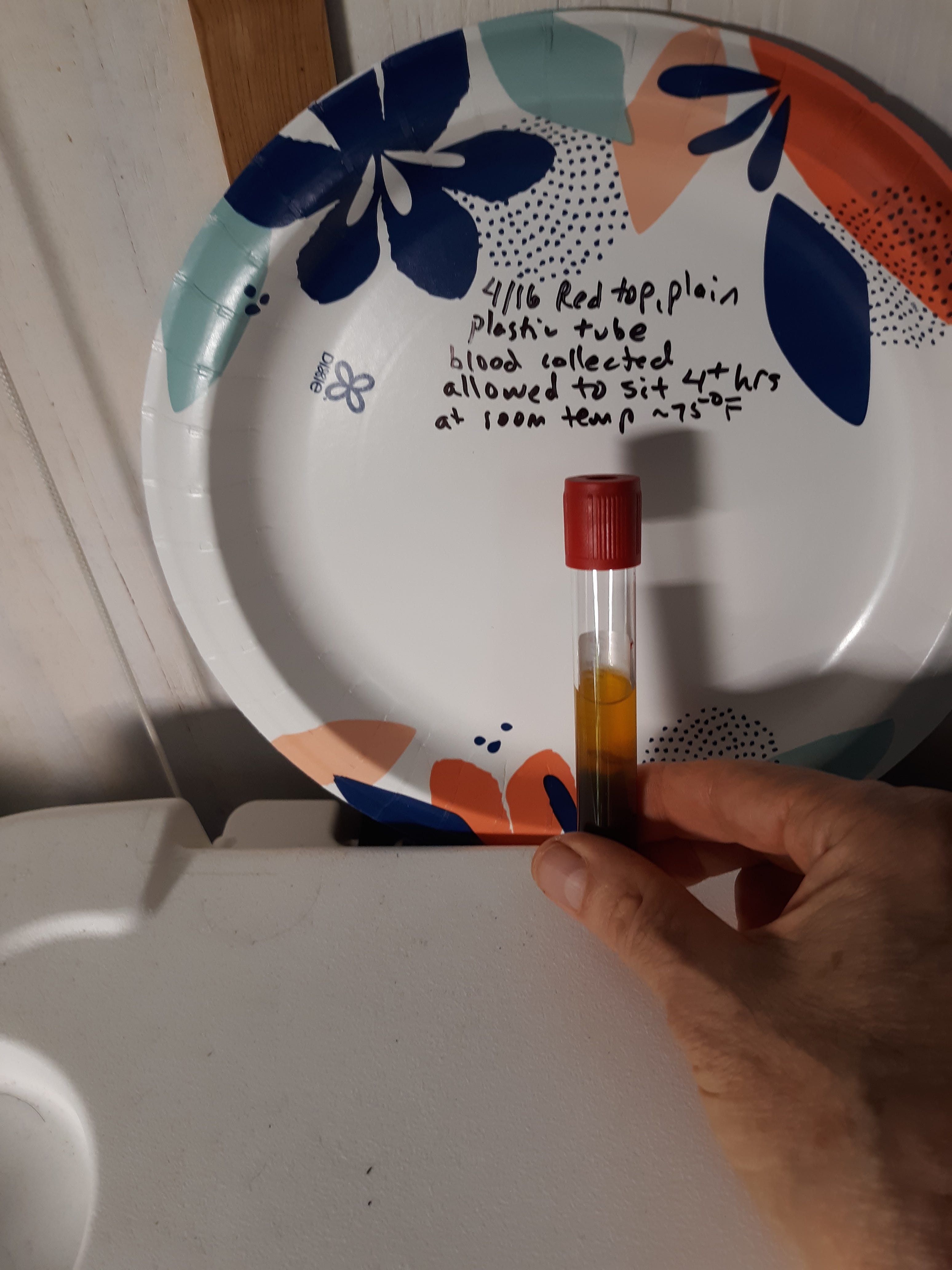
I repeated the temperature sensitive experiment to confirm that a temp near body temp of 38°C (100°F) suppresses the hydrogel that appears in non centrifuged blood after a period of 4 hrs or more. The control was prepared as follows. A plastic 8 ml plain red top vacutainer tube was filled with approximately 6 ml of blood obtained by venipuncture and allowed to spontaneously clot over 4 hrs at room temp of 24°C (75°F). The usual clot retraction occurred revealing a straw colored serum above the usual currant jelly clot in the tube. Also present was an irregular and lighter in color area at the superior pole of the blood clot. The following picture demonstrates this.
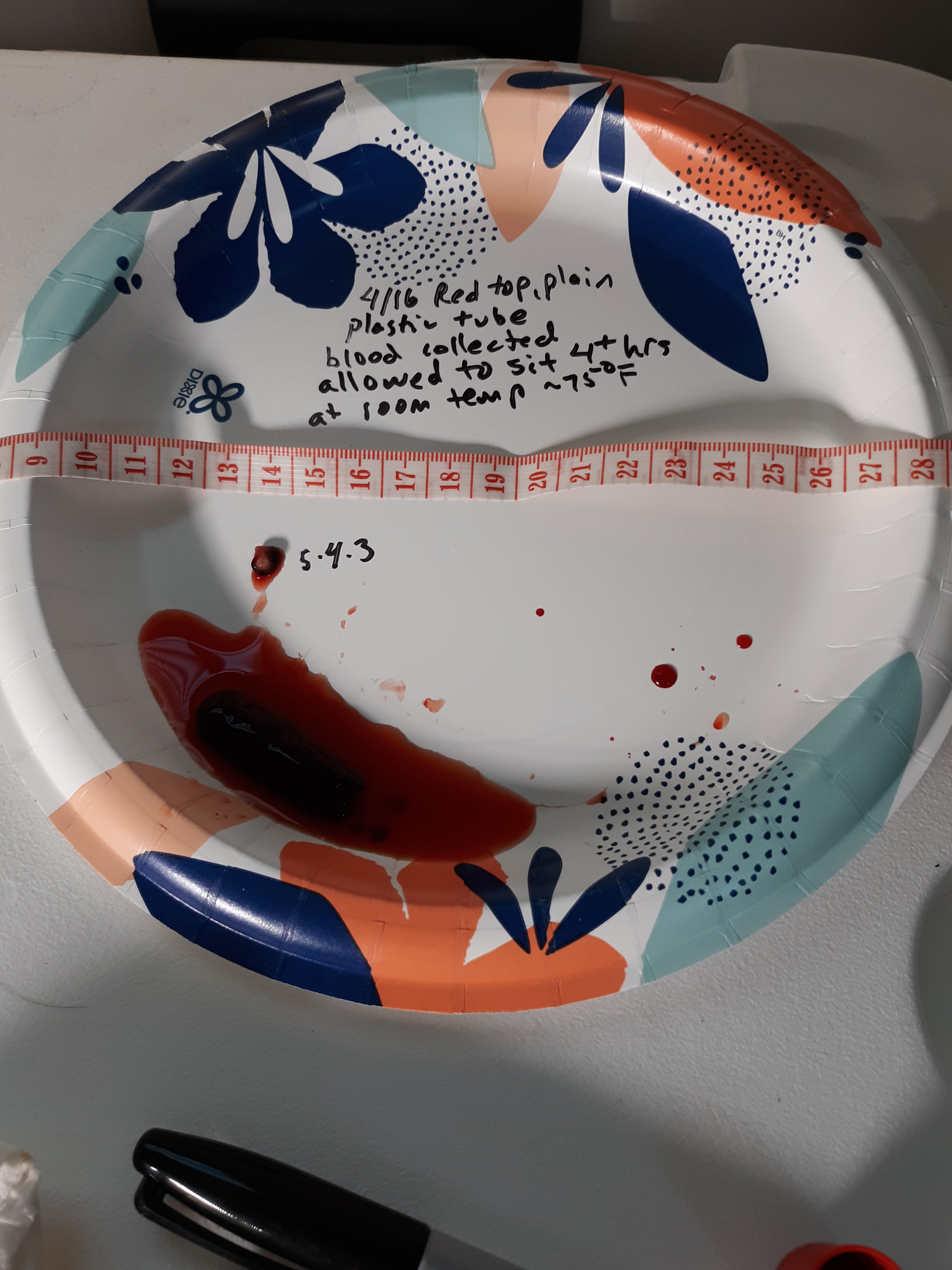
The upper area was isolated and measured as the following pic shows.
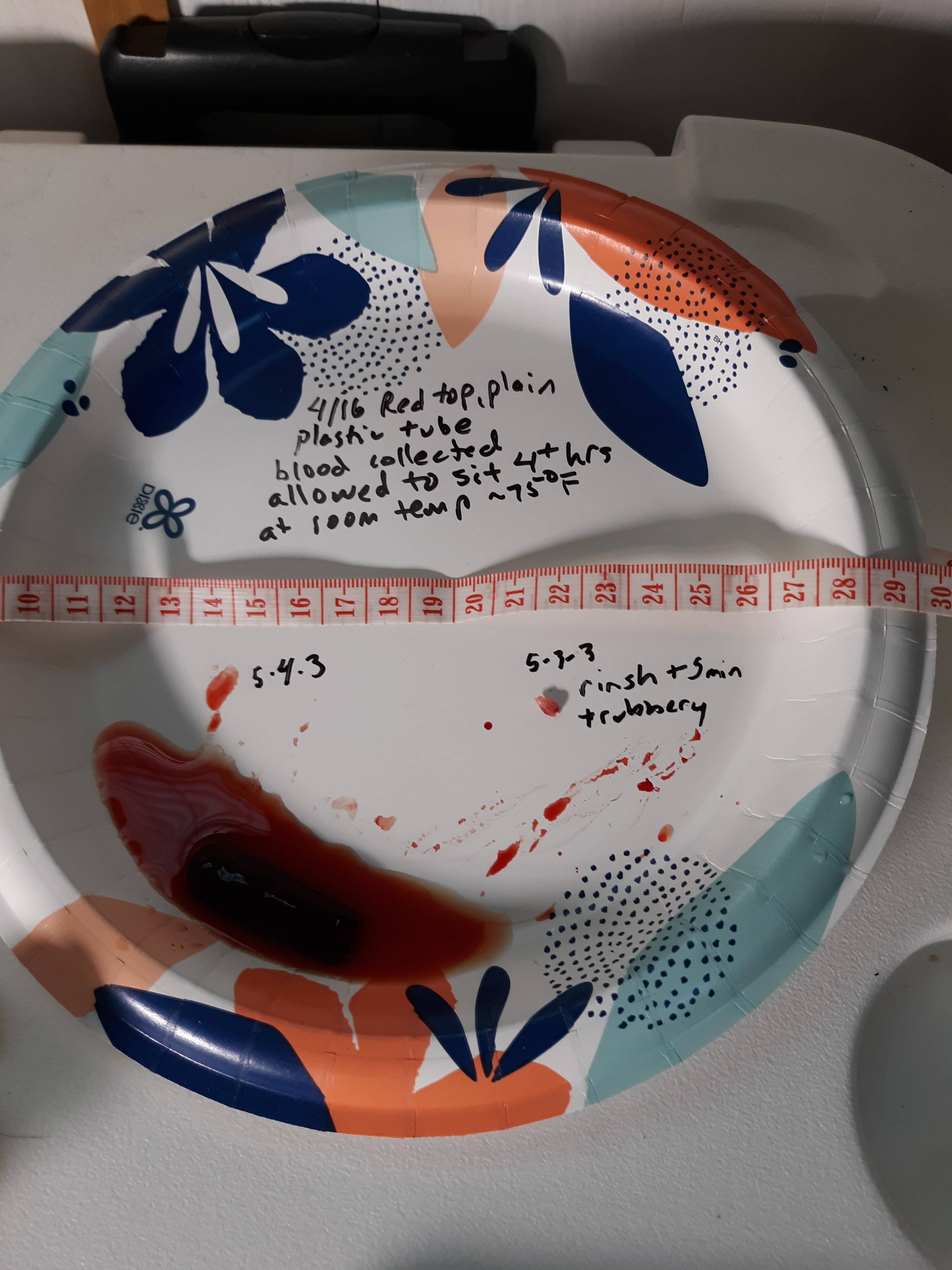
The specimen was rinsed in tap water and showed a rubbery nature but its dimensions did not significantly change with rinsing and additional five min of time. The following pic shows this.
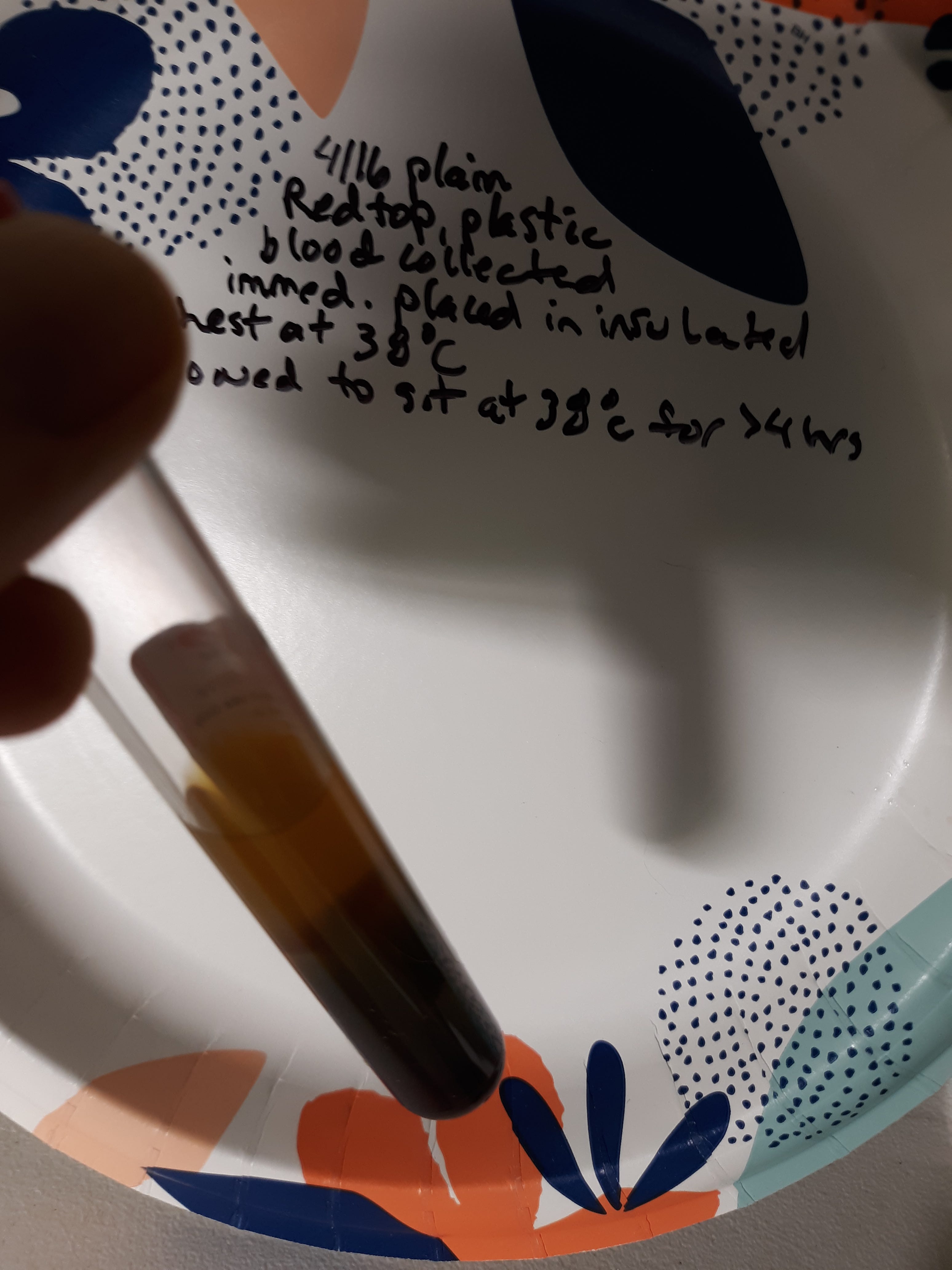
An insulated ice chest was warmed to 38°C (100°F) and a plastic plain 8 ml red top vacutainer tube was filled with about 6 ml blood via venipuncture and allowed to clot within the ice chest at 38°C for about 4 hrs. The following pic shows this tube.
Full exam was then done by emptying the tube. The next pic shows findings. A small area that was pale compared to the currant jelly clot was noted at the superior pole of the clot. It was not rubbery and was friable (easily torn). It did not change when rinsed in water.
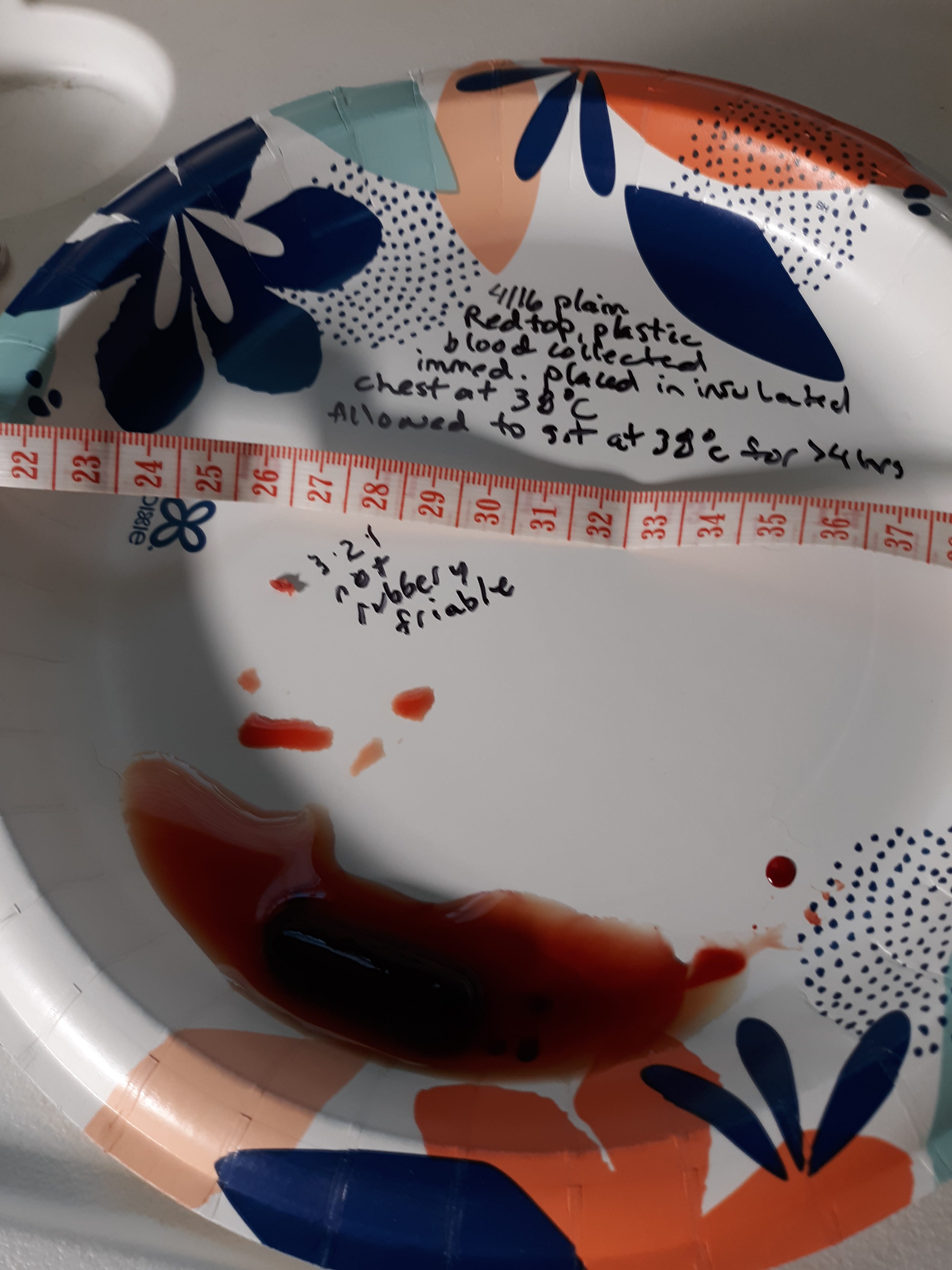
I wanted to see if this hydrogel that is detected in blood after a 4 hr wait could be suppressed by some changes in the oral nutraceuticals I take. The following pic shows results when taking ivermectin 20 mg daily for two weeks.
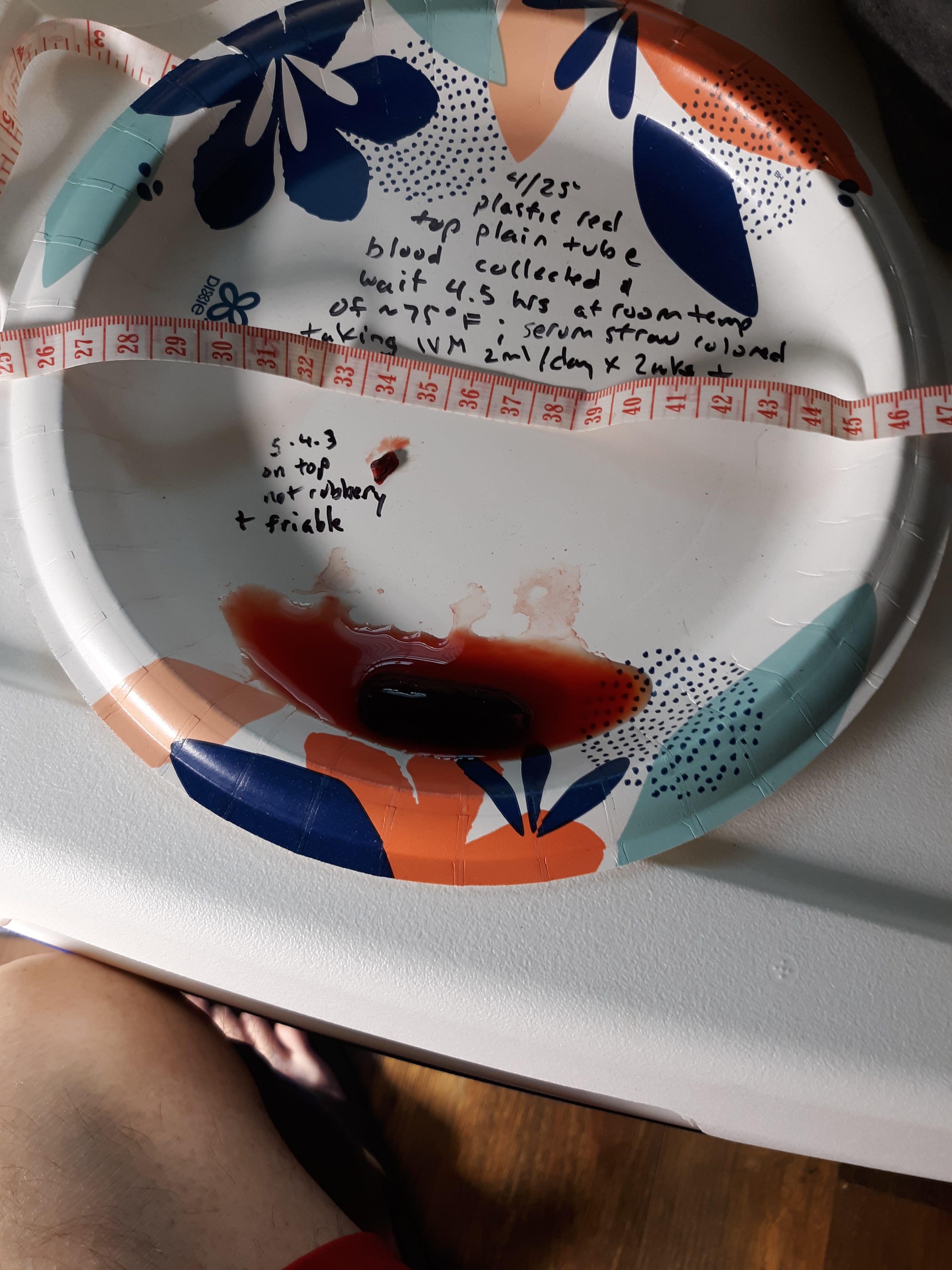
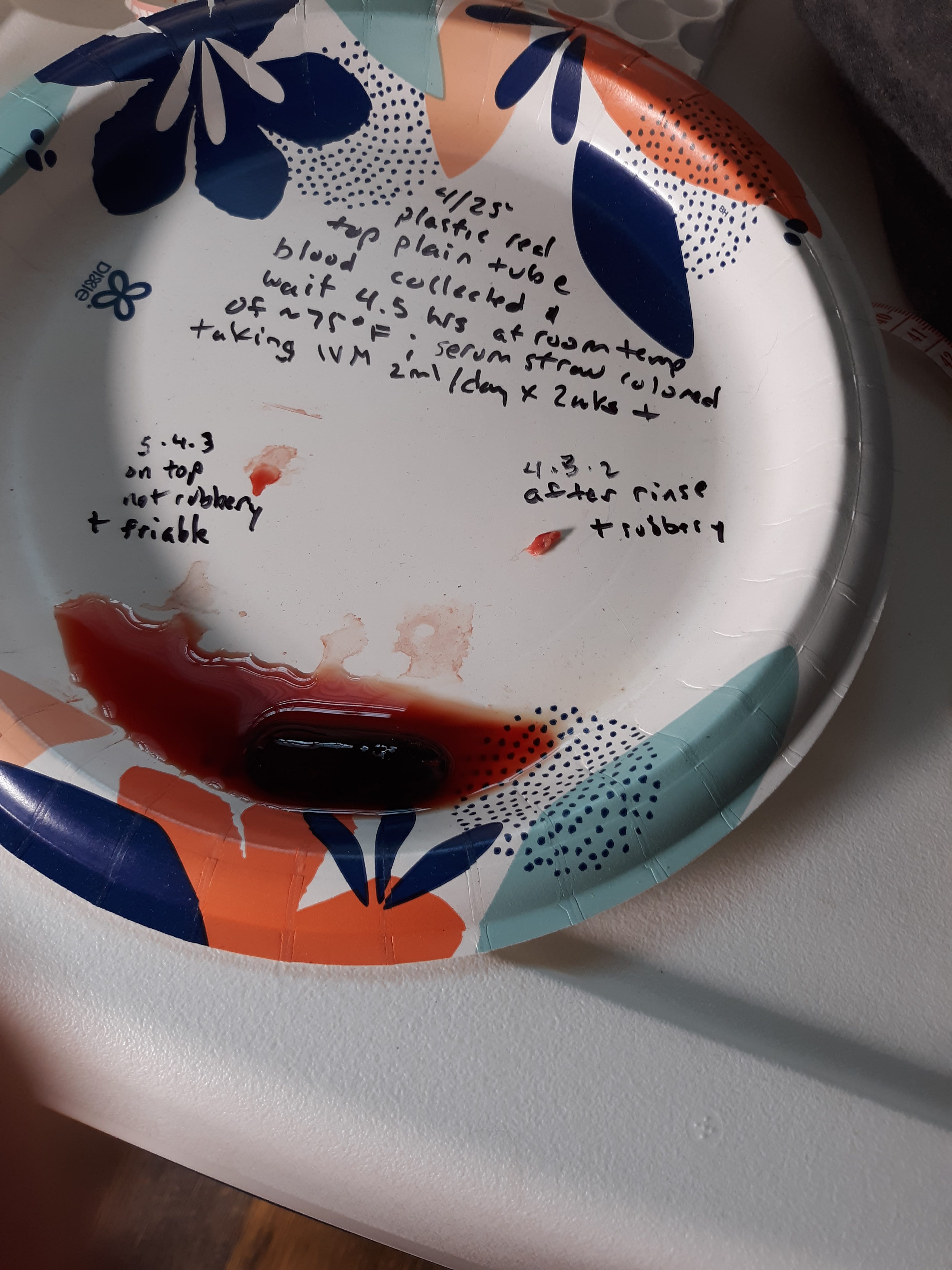
The next picture shows the specimen following a rinse and additional 5 min.
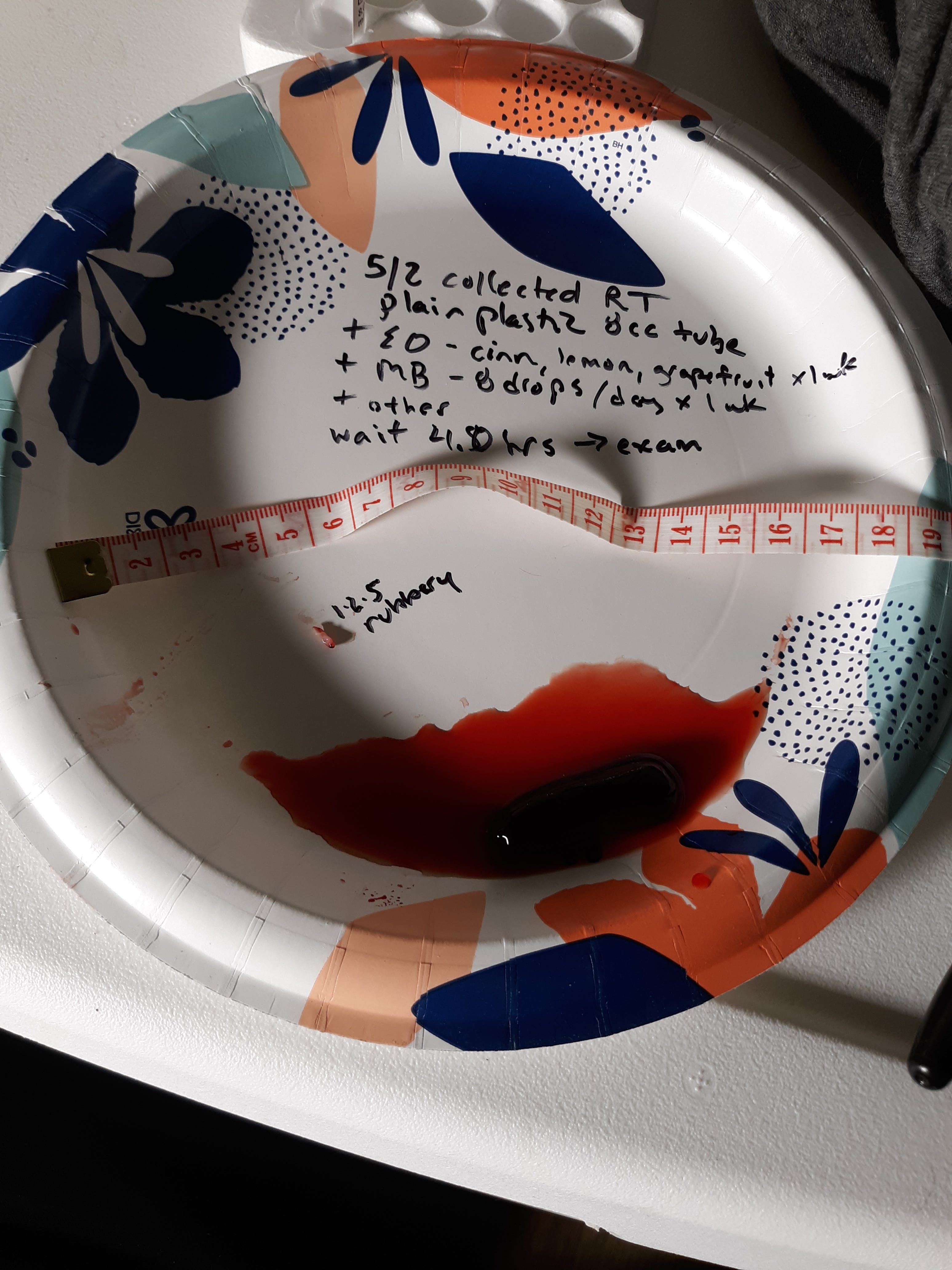
I stopped taking ivm orally and added the essential oils of cinnamon, lemon, grapefruit (2 drops each added to 2 ounces of juice) and methylene blue (8 drops with vit C 1650 mg powder) added to the 2 ounces of juice.
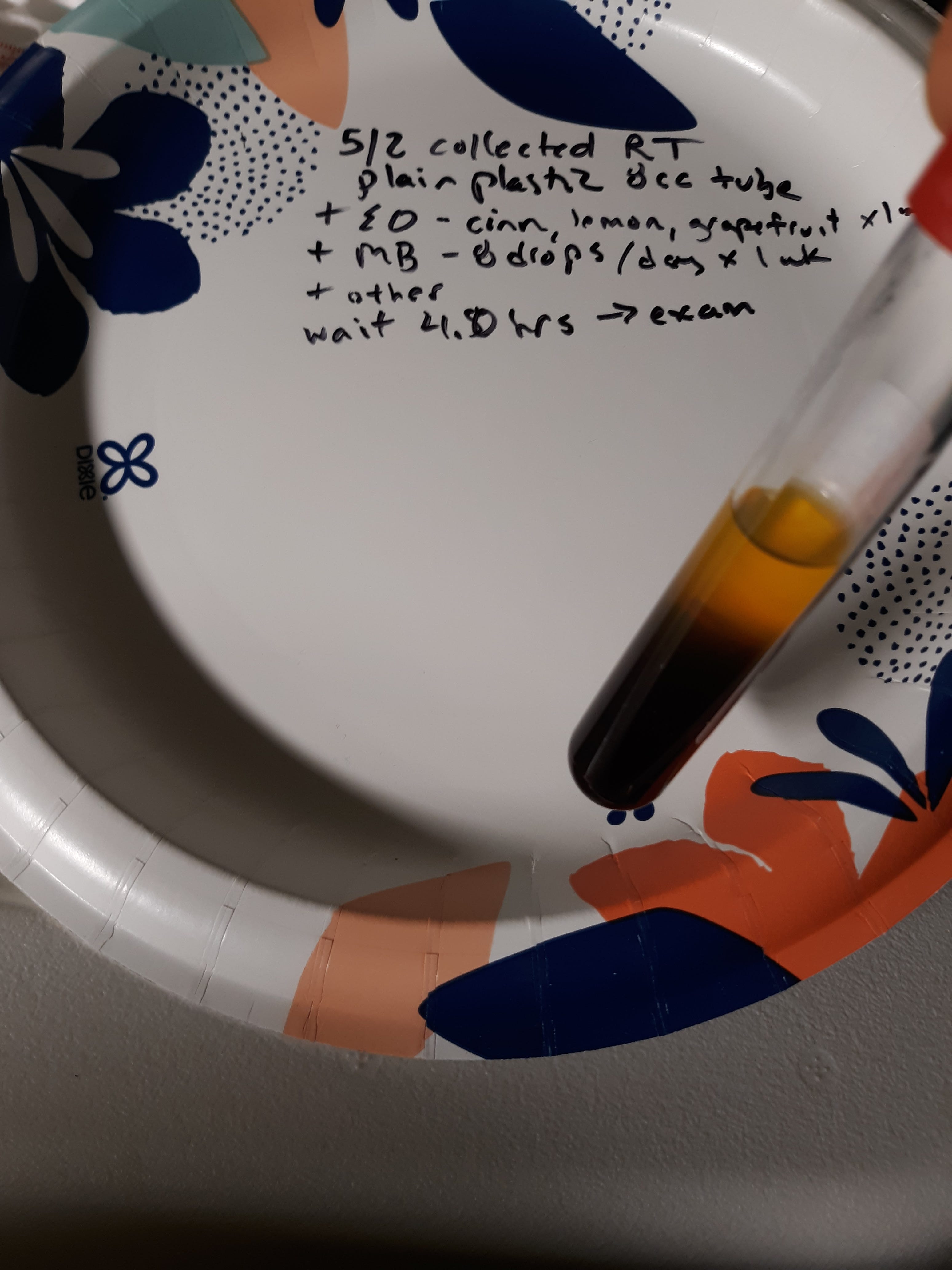
The next pic shows exam of tube contents after a 4 hr wait. Also noted was no significant change in size of the specimen following a rinse plus 5 min.
Summary and discussion. This and the previous post seem to indicate the presence of two different hydrogels in the blood. When blood is collected in a plain vacutainer tube and allowed to clot over a 4 hr time it can show a gel that forms at the superior pole of the normal currant jelly clot. This gel appears to be temperature sensitive in that it is greatly reduced if prepared at a temp close to body temp. This gel is also suppressed when hemolysis (rupture of red cells occurs). I showed this in a prior post.
The PRF (platlet rich fibrin) method demonstrates a different fibrin rich hydrogel that every living person should have with an intact clotting cascade. (Since everyone has PRF no need to look for it!) It is demonstrated by immediately centrifuging a plain vacutainer tube of blood for about 8 min. This immediate spin will separate most of the fibrin from the denser red blood cells. Remember the precursor of fibrin is soluable (dissolved) fibrinogen which is a fibrous protein that can release fibrin when cut up by a specific protease in the clotting cascade. The released fibrin can polymerize into a hydrogel net that can entangle with each other giving a rubber like nature. This hydrogel of fibrin is not temperature sensitive as I have shown in another post and is not affected by hemolysis ( I showed this also in past). Dr Douglas Kell demonstrated that spike can transform fibrin into a fibrinaloid with an amyloid nature that is more resistant to breakdown and could cause many of the long covid symptoms. Dr Kell also felt the novel rubbery clots seen by embalmers could be the result of this fibrinaloid. Here is a video featuring Dr Kell.
https://www.youtube.com/live/ySMqoy0Nc00?si=PtIjsKv8BhMpLBm-
Also more info from Dr Kell:
http://dbkgroup.org/longcovid/
Is it of great benefit to try and suppress the gel that is formed in the tube that appears after a four hr wait? I am not sure since a person can have the fibrinaloid issue and its sequelae in addition have the 4 hr gel with lesser or greater consequences. Who knows but seems reasonable to try and suppress the 4 hr gel. Remember the 4 hr gel is what Dr Ana (anamihalceamdphd.substack.com) shows when she collects 30 ml of blood in a syringe and allows it set for at least 4 hrs. She has suppressed it using EDTA, vit c, methylene blue and suggested the essential oils (cinnamon, lemon, grapefruit). In this post I showed about 0.024 ml of this gel when taking oral ivm at 20 mg / day for two weeks. I then stopped the IVM and added methylene blue 8 drops orally with vit c and also added the essential oils listed above. The 4 hr gel decreased to 0.01 ml. I doubt this was a significant change but I plan to add other nutraceuticals to observe any changes. I will be more detailed if something makes the gel disappear in the future. I would also continue with the fibrin proteases (lumbrokinase, serrapeptase, nattokinase, bromelain) since both gel types seem to be dissolved at least in vitro by them.
Truly my soul silently waits for God; From Him comes my salvation. He only is my rock and my salvation; He is my defense; I shall not be greatly moved. Psm 62: 1-2
No posts
Comments
Nothing yet. Say the first thing.
Sign in to join the conversation.