
Get music history, news, and stories straight to your inbox when you subscribe to the Rock & Roll Hall of Fame Substack.
In celebration of International Disco Day (July 12) we are republishing this article, written by Tom Smucker, which appeared in the 2008 Induction Ceremony Program for the Rock & Roll Hall of Fame. Smucker is a music critic and journalist, who has written for the Village Voice, Creem, and more.
By 1982, the wave of disco that had surged across the shoreline of rock & roll in the 1970s was receding, leaving behind a thousand great singles, the two memorable careers of Donna Summer and Sylvester, one good movie, a legacy of multiple subcultures, and a wide variety of pop stratagems for aspiring superstars.
Donna Summer was nearing the end of a remarkable run from a disco sexpot to a princess to a diva to a rocker and, in 1983, to a picket-line feminist with “She Works Hard for the Money.” Summer’s range matched the broadest ambitions of disco tied together in one comprehensible but flexible voice. Duetting with Barbra Streisand, moaning with the Munich Machine, reimagining Jimmy Webb’s “MacArthur Park,” or collaborating with Quincy Jones - it was all Donna Summer. There wasn’t another act like her, or another pop bio that can as capaciously trace the story of the end of the 1970s and the beginning of the 1980s.
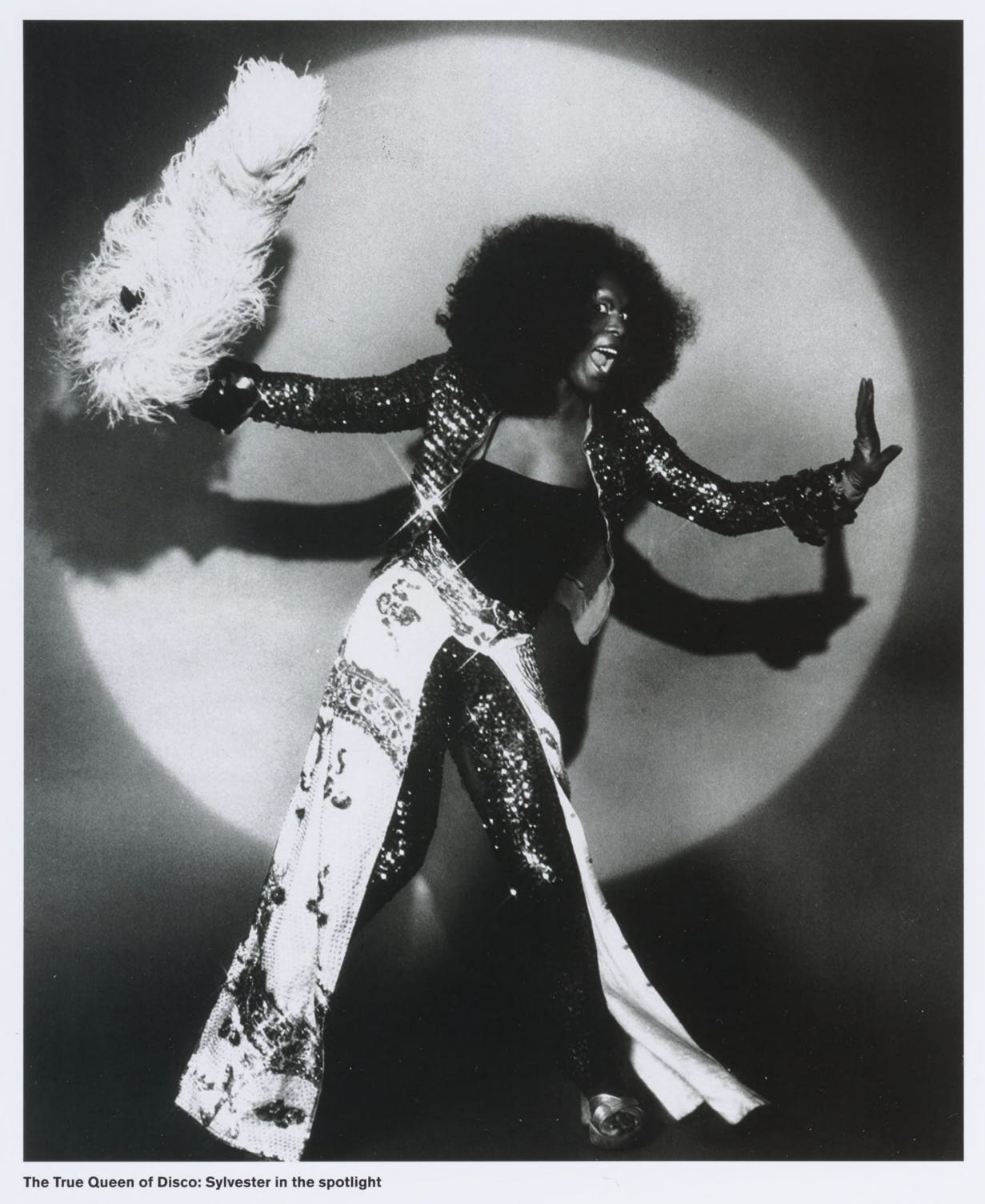
Sylvester would have one last, prophetically eerie club hit in 1984, “Trouble in Paradise,” and die from AIDS in 1988. Bubbling out of the San Francisco counterculture and the formation of an openly gay community, he was a Josephine Baker who found Paris in the peak of the late-seventies dance scene, a peak chronicled in a two-LP set recorded at his triumphant San Francisco Opera House show in March of 1979, Living Proof. In the eighties he “withdrew” from the mainstream Fantasy label and moved to the regional dance label Megatone, a symbol of the waning of disco as the dominant national trend as well as the dance club’s continuing vitality as a subculture scene. Looking back now through the plague years of AIDS and the rise of right-wing sexual, cultural, and political reaction, Sylvester’s career attains a poignancy and clarity on a par with the greatest pop martyrs, most recently articulated by Joshua Gamson in his thoughtful 2005 biography The Fabulous Sylvester.
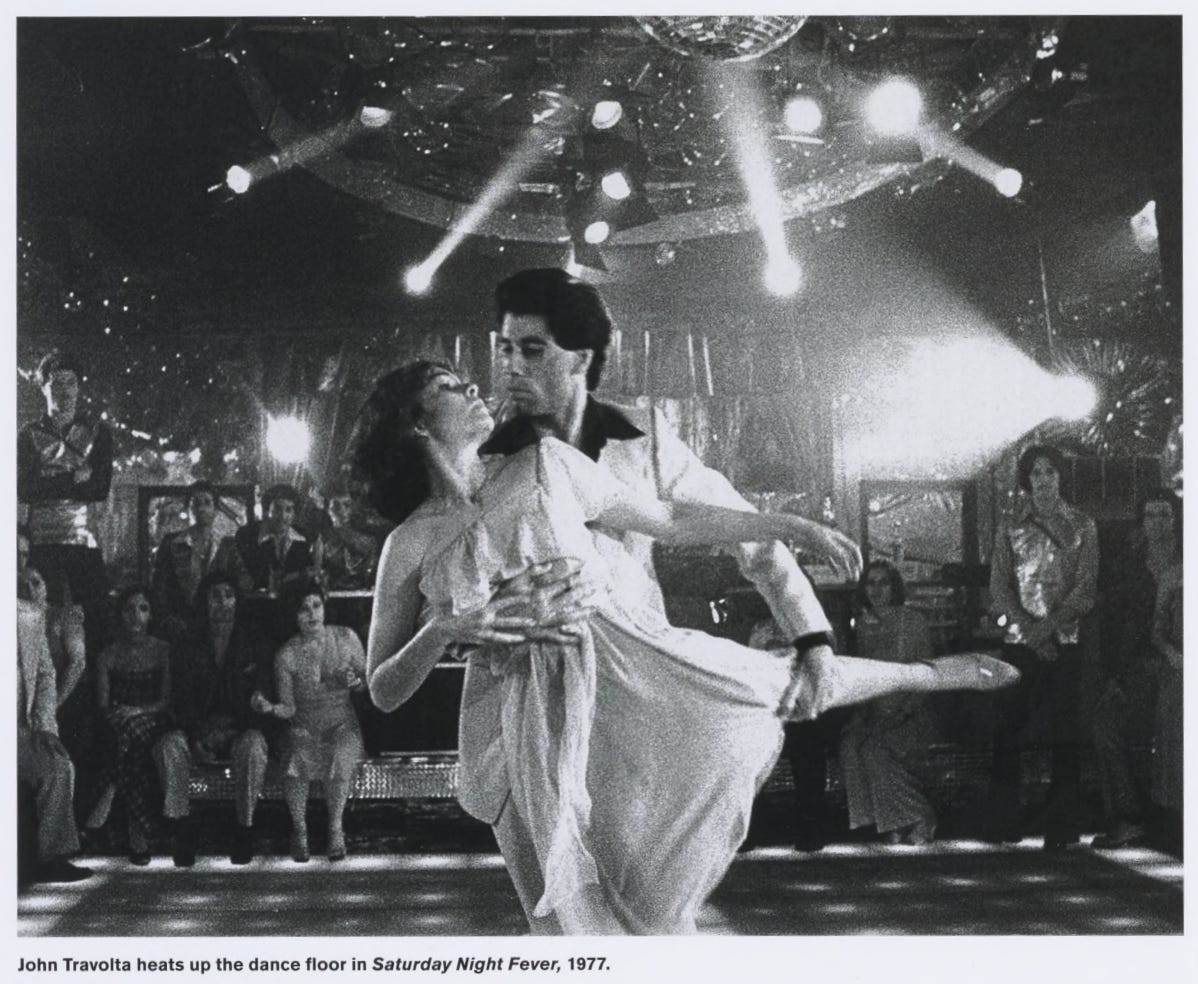
And then, of course, there’s Saturday Night Fever, if for nothing else but the image of John Travolta in his white disco suit, closing in on white-suited Las Vegas Elvis in the icon competition. Proof always that disco had roots in straight working class urban culture as well and was entwined with the American dilemma of race.
“Discoey” disco, with the violins, the optimism, the ebb and flow of seventeen-minute singles, and the anonymity, was disappearing by 1982. But dance music wasn’t. Call it house, drum ’n bass, trance, Hi-NRG, northern soul, dub, techno, or contemporary R&B; music whose imperative was making people dance in one form or another was here to stay. Maybe there would never be another cultural moment when dancing held the center in pop music as it did in the last half of the seventies, but the disco wave at the very least announced the permanence of the dance clubs and the DJs in all their permutations. From here on out, the turntable would join the human voice, electric guitar, and drum kit as essential tools of the trade. And club scenes would cross-fertilize across continents.
One of those club scenes was already growing out of the Bronx in the eighties and preparing to take over the world: hiphop and rap; turntables and mics. The big story is told better elsewhere, but for our purposes let us pause here to honor rap’s earliest theoretician, Afrika Bambaataa, and the two dozen or so most useful notes of recorded music since the guitar riff of “Johnny B. Goode”: the beginning of “Good Times,” by Chic.
Afrika Bambaataa was a seminal former gang member, counterculturist, utopian, and DJ who stirred a stew similar to disco in a grittier ghetto reality. He infused hip-hop with ideology as well as good cuts and took pleasure in mixing outside of the canon. If it wasn’t disco, it was dance music that also showcased the mastery of multicultural taste. Bambaataa could brag about tricking his audience into dancing to the Monkees’ “Mary, Mary.” His “Planet Rock” in 1982 sampled Kraftwerk’s “Trans-Europe Express.” It was disco one step removed.
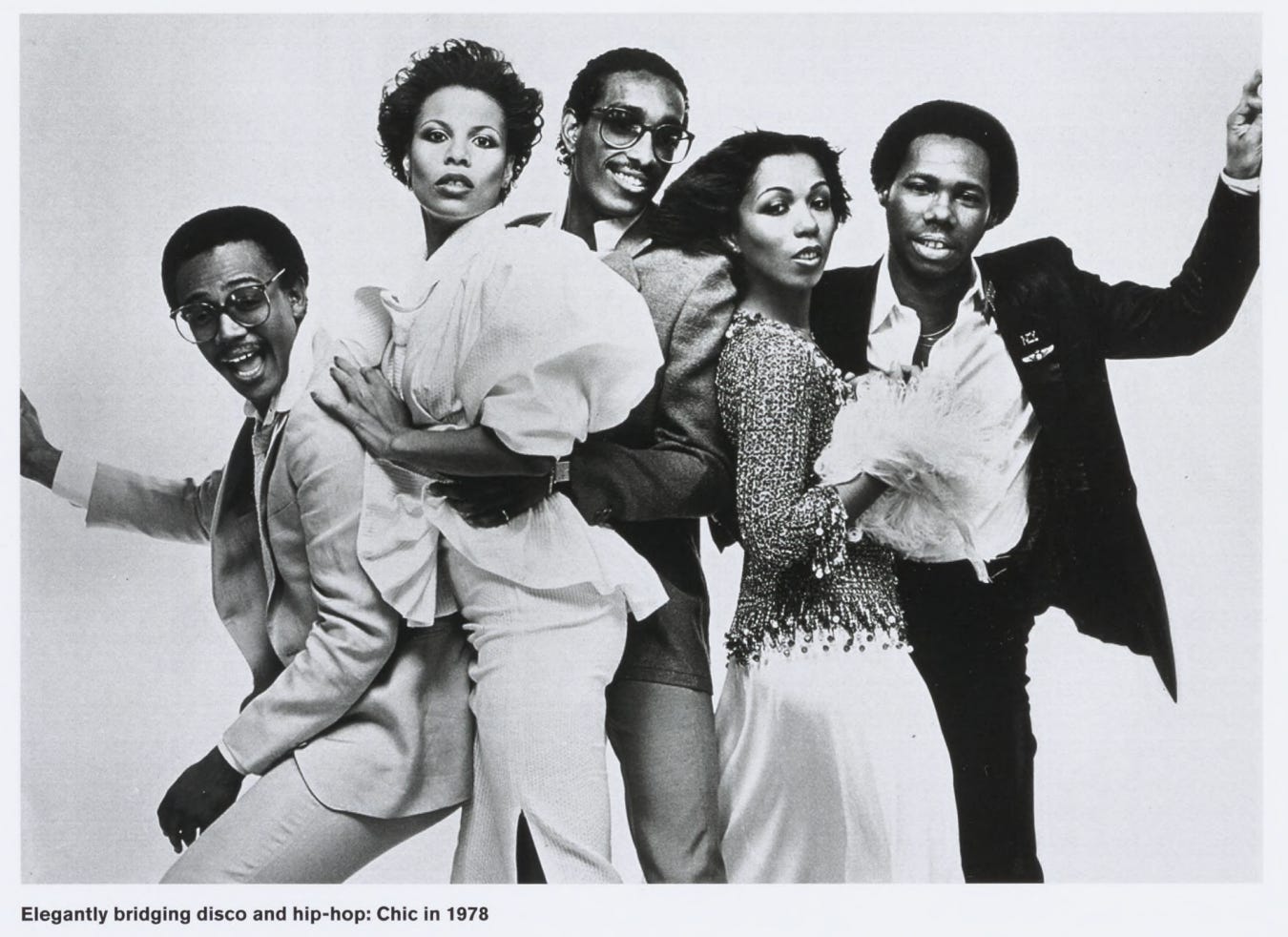
Besides being batchy, “Good Times” in 1979 distilled the disco ethos, with just a bit of irony, and boiled the disco sound back down to bass and guitar, thereby producing a template that could be copied into the world of the music video and the Top Forty single. Chic masterminds Nile Rodgers and Bernard Edwards revitalized Sister Sledge, resuscitated Diana Ross, encouraged Blondie, inspired Tom Tom Club, and helped launch Madonna. And “Good Times,” of course, looped under the rapping of “Rapper’s Delight,” also in 1979.
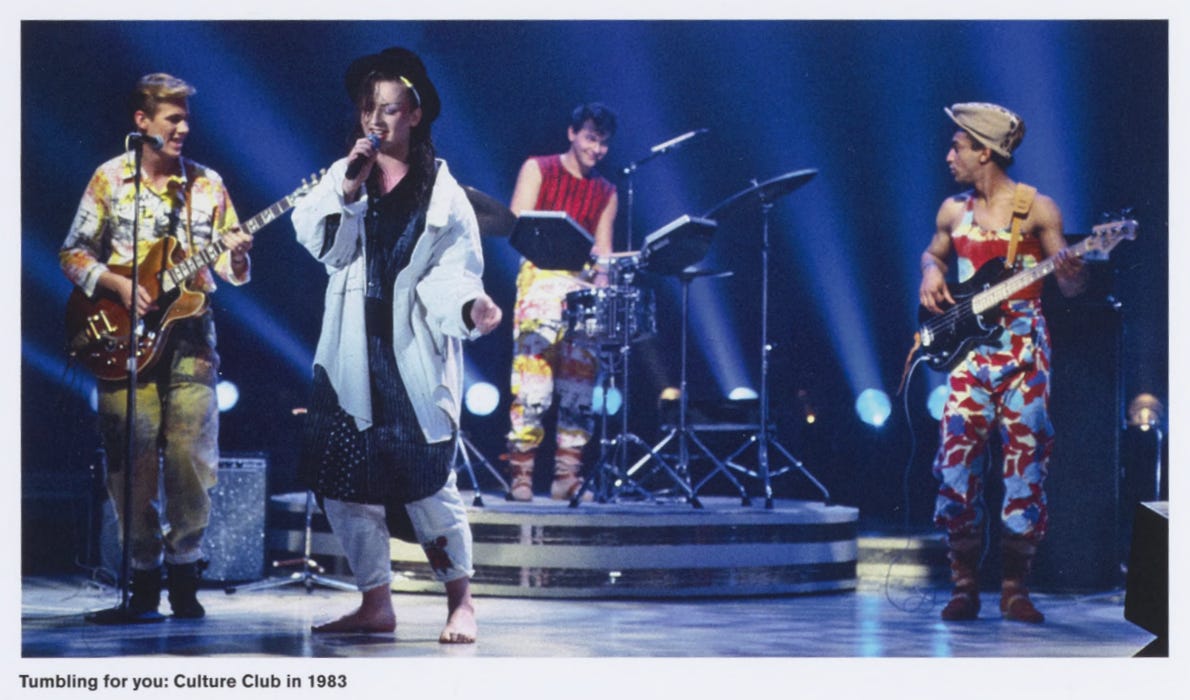
With Chic retooling the disco riff, disco’s eclectic extravagances could be plundered for inspiration, just like the outfits of thrift store mélange (see first phase, lace-sleeved Madonna) that signaled the end of the austere aesthetics of punk. The New Romantics in the U.K. struck some as Disco for Dummies, but however you looked at Boy George, you were looking through the lens of Sylvester, not Alice Cooper. Madonna was not just riding a riff, she was compressing and reformulating the history of disco, reminding us that the downtown Manhattan scene encompassed not only CBGB but Danceteria and the Palladium, as well. And she would revisit that transmutating dance-club scene throughout her career, a subcultural source o f rejuvenation for her mainstream persona.
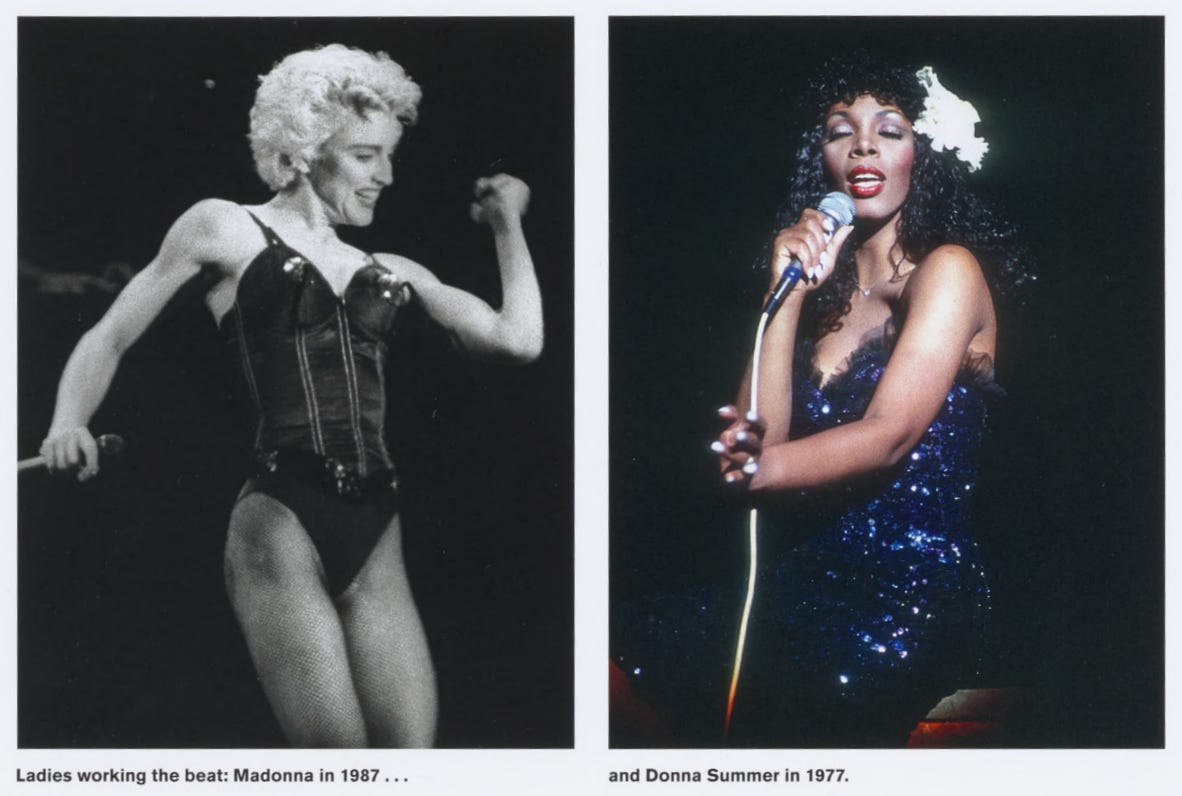
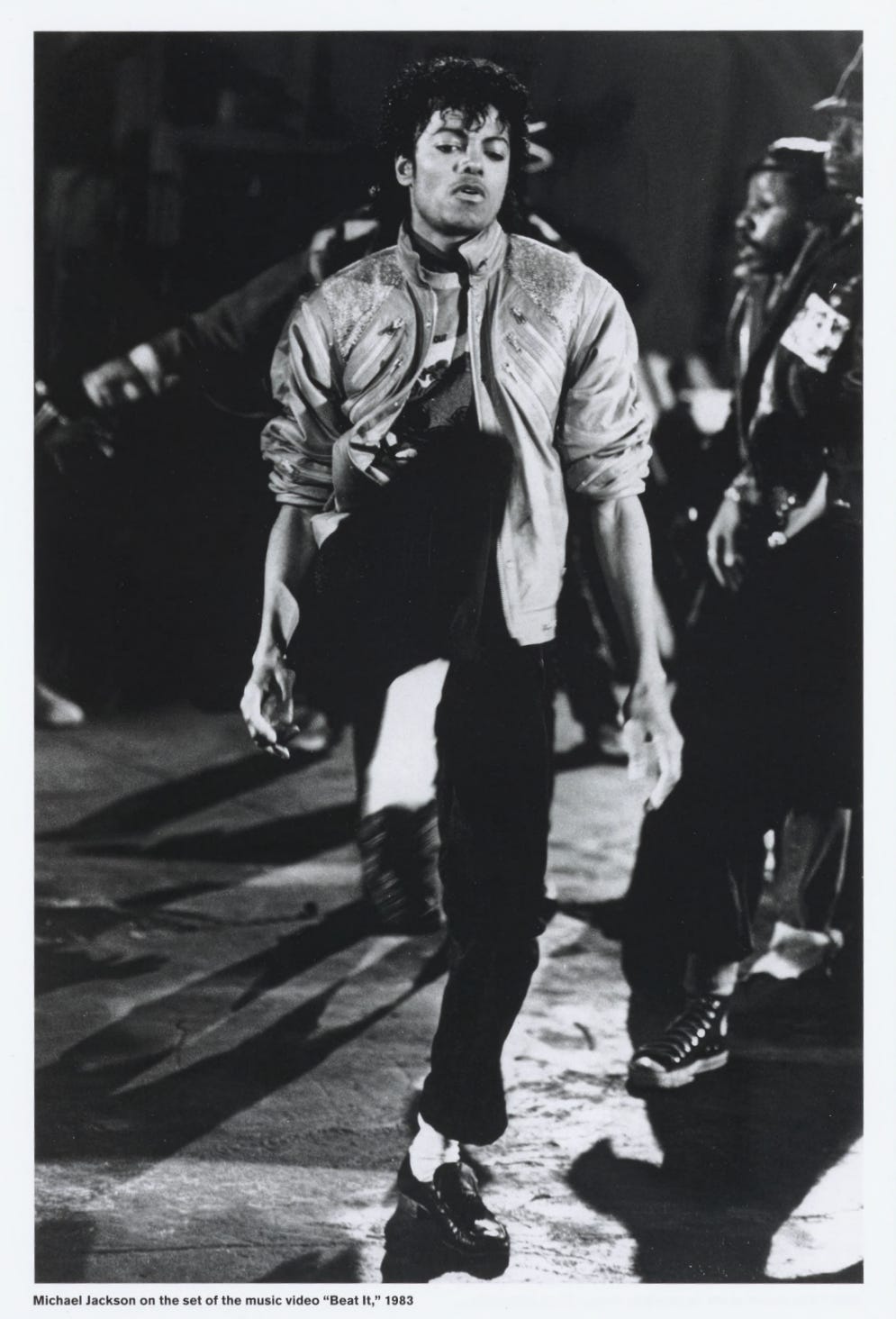
It’s impossible to think of Madonna or Prince without the procession of Donna Summer, Sylvester, et al. — the androgyny, the miscegenation, the ass shaking, the shape-shifting roleplaying. Although that does not diminish all the other influences both synthesized throughout their careers. But 1982’s milestone of synthesis, if not the decade’s, was Michael Jackson’s “Thriller.”
Jackson, with producer Quincy Jones, echoed the legacy of disco, quoting from Manu Dibango’s Afro-disco “Soul Makossa” and mimicking Chic’s bottom on three-cuts: “Wanna Be Startin’ Somethin’,” “Baby Be Mine,” and “Thriller.” If he aspired to and achieved a Presleyan status, he did it by combining rock, disco, R&B, and pre-rock pop, proving that the Moonwalker could dance to Eddie Van Halen’s guitar (which was already accustomed to working with the oddly analogous great diva of white, heterosexual rock, David Lee Roth). “Thriller” was not “Love to Love You Baby,” but it understood that it had to make you dance if it was going to achieve its ambitions.
And maybe that was the best legacy of disco: At its zenith, it showed a desire to absorb every influence and appeal to every dancer. Retrospectively, it might sound wishy-washy or look as goofy as every other fashion whose time has passed, and yet it still transmits an ambitious, idealistic glow. It wasn’t trying to be a subculture, it was trying to reach across race, class, gender, sexuality, and geography.
That opened up pop music to influences that couldn’t work their way into guitar-based rock bands. As pliable and resilient as that format has been, inspiring musicians from Mexico to Moscow, disco left an opening for other influences to work their way into (or back into) pop consciousness.
The contemporary Madonna and Shakira of Lebanon, Nawal Al-Zoghbi, for instance, makes music in a context comprehensible to American eyes and ears, even if we don’t understand the words. The Lebanese references and influences signals to an audience we aren’t a part of, are there in vocal technique and instrumentation along with the bass beat and Genius of love: Tom Tom Club in top flight, 1988 vocative svnthesizers of Euro-American dance music, a frame of reference we can share. It’s the same big world of recording studios, music videos, clubs, and CDs. A bigger world, perhaps, than we are usually aware of. We can’t translate the lyrics, but the music makes us dance. Music from Lebanon that’s impossible to imagine without disco.
Which leads to one last observation. A useful but limiting theory describes rock & roll as an Afro-Celt amalgam, a brew first boiled in the American South. But how to incorporate different influences from other parts of Africa, and Italy, and the Caribbean, and Asia, and the Middle East, and North America? Donna Summer’s career, after all, was launched in Germany when she reworked a Frenchified disco hit into English with her British and Italian producers. The Munich Machine, the Funk Brothers of disco, were from Britain, Sweden, Iceland, and Italy. Disco drifted into salsa more easily than rock. The break dancers of the Bronx in its hip-hop heyday were largely Puerto Rican.
So maybe we can look back on disco as an opening toward an ongoing global musical conversation where social dancing is the shared vocabulary. Or maybe disco was just a word to describe what happened after rock & roll jumped across the Atlantic Ocean and kept going on.
Thanks for reading! Get music history, news, and stories straight to your inbox when you subscribe to the Rock & Roll Hall of Fame Substack.
Comments
Nothing yet. Say the first thing.
Sign in to join the conversation.