
Sometimes the most creative solutions are the simplest.
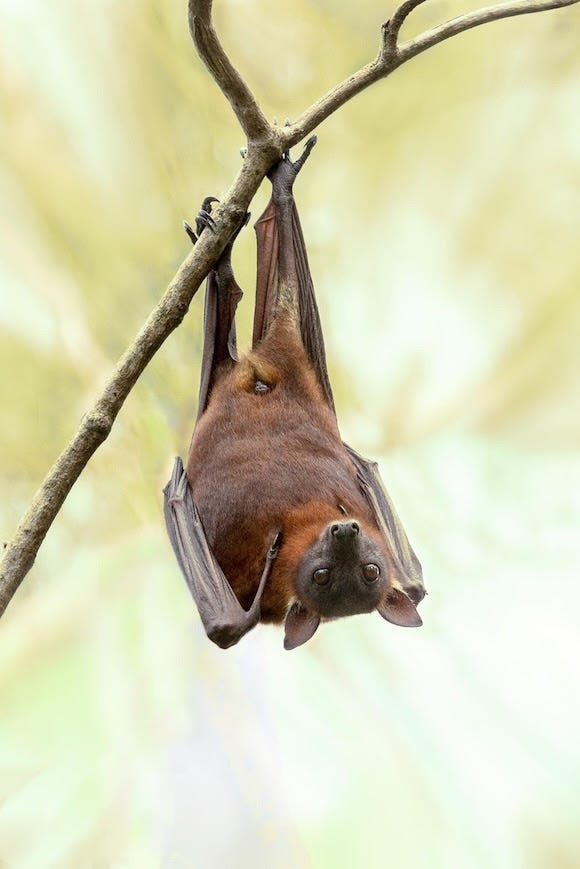
Rising numbers of extreme heat days are severely impacting species like the gray-headed flying foxes of Australia. Thousands have died during recent extreme heat events.
Gray-headed (and black or dark brown-bodied) flying foxes play a vital role in the country’s forest ecosystems. They feed on pollen and nectar from hardwood blossoms, fruit trees, and eucalyptus trees, unintentionally transferring pollen from one flower to another to aid pollination. Flying foxes help renew and regenerate forested areas by dispersing seeds.
With warmer and warmer years hitting record highs, officials are concerned about the survival of these 9 to 11-inch bats with 3-foot wingspans.
Australian officials have devised a creative – but very simple – adaptation measure to help protect bats: a sprinkler system.
Officials installed almost three dozen sprinkler heads along the river in Yarra Bend Park, Melbourne’s largest natural bushland park and home to a colony of around 30,000 bats in the summer. The sprinkler system uses river water and can cool a given
area by about 10 degrees Fahrenheit on the hottest days.
It mimics a light rain shower to cool the bats and reduce the risk of heat stress.
The sprinklers are the latest effort to help flying foxes survive, and with more frequent sweltering hot days, evaporating water will be a welcome relief.
While we can’t use sprinklers to cool hot heads in Washington (or even fire hoses), we can be foxy by organizing with neighbors, savvy citizens, and municipal and regional leaders to open spigots and fire hydrants for collaborative endeavors and develop creative, cool solutions to climate change.
Like a fox, our approach can be clever, charming, compassionate, playful, and curious. Together, as a skulk of foxes, we develop better practices, modify societal behaviors, and implement new policies to effectively, equitably, and sustainably restore and slow harmful changes.
Comments
Nothing yet. Say the first thing.
Sign in to join the conversation.