
Hi all -
over the past few months, one question keeps coming up in my conversations with founders, investors, and policymakers: is Europe finally having its moment? I believe yes - but making it last will require focus and discipline.
Jeannette and I were also talking to Sifted about this recently. We explore what’s driving this new wave of European founders building with purpose in areas like AI, defense, and energy and what it will take to turn momentum into permanence. From attracting global talent and smarter government support to moving on faster and building platforms, not just products - Europe’s founder energy is back, and it’s finally being channeled into the industries that matter most. I’m genuinely very excited about that and what the future holds.
Enjoy reading.
Robin
Got a friend or colleague interested in manufacturing? Help me spread the word by sharing the newsletter if you like it!
Rivan is a London-based startup building modular plants that turn CO₂ from the air and hydrogen from water into usable gas, effectively “mining the sky” instead of the ground. Andreas Klinger did a factory tour with the founder Harvey. Enjoy watching 30min of heavy machinery and deep engineering knowledge in the middle of London (full disclaimer: I’m an angel investor in Rivan).
I recently visited Josef in London who builds robots and creates the world’s most efficient restaurant chains at Kaikaku. Josef recently wrote an essay where he argues that European engineering culture is trapped by perfectionism, slowing startups and making them less competitive than their American counterparts. U.S. companies like Tesla, SpaceX, and early Spotify or Revolut prove that fast iteration, MVPs, and customer-driven learning consistently beat “perfect” but delayed products. Data shows European hardware startups take longer, validate more, and reach customers later, leading to lower success rates and weaker global market share. His call to action is blunt: European founders must embrace imperfection, iteration, and speed - or risk being outpaced by American and Chinese rivals.
Recent robotics advances still often rely on teleoperation - remotely controlling robots - and imitation learning, where robots replay human-demonstrated tasks using camera feedback. While these methods allow robots to mimic humans, they struggle with real-world variability, latency, and scaling, making remote puppeteering economically and technically unviable for most applications. Brad, founder of Cobots*, lays out in his recent article that the future of robotics lies in “play”: robots learning through hands-on experimentation, touch, and trial-and-error, enabling them to handle novel objects and tasks autonomously. Unlike stochastic parroting in LLMs, physical learning requires exploration, practice, and real-world interaction to develop robust, adaptable skills.
Humanoid robots are poised to transform work, with companies like Agility, Tesla, and Figure planning mass production over the next several years. Right now, there are already around 60 humanoid companies. However, current deployments are limited to small pilots, and scaling faces major challenges including demand, battery life, reliability, and safety. Regulatory requirements and multipurpose functionality make widespread adoption difficult, and many tasks can currently be performed more efficiently by wheeled or specialized robots. While humanoids hold long-term potential, significant technical, economic, and practical hurdles must be overcome before they can fulfill their promised impact. Also - watch out for humanoids running on the track.
Resilience is back in focus as geopolitical challenges, cyberattacks, and fragile supply chains expose how brittle our systems have become. Paul and Jeannette from General Catalyst have shared three main lessons with Sifted recently from their experience investing in defense tech for many years:
Focus: the best founders don’t try to serve everyone through “dual-use” strategies but instead focus relentlessly on either defense or commercial markets and build for mission-critical needs
Hardware matters: true capability comes from merging software speed with industrial strength
Spend smarter: governments must modernize procurement to help startups scale real solutions in the future
The winners are those who understand defense as a systems challenge - combining technology, industry partnerships, and government collaboration to build the capabilities that matter.
PhysicsX*, a London-based industrial AI software company, has raised ca. €117M in a Series B round led by Atomico, with participation from Temasek, Siemens, and others, bringing total funding to nearly €147.7 million. Co-founded in 2023 by Robin Tuluie and Jacomo Corbo, the company builds AI-native engineering software to accelerate hardware innovation across aerospace, automotive, semiconductors, materials, and energy. PhysicsX aims to shorten design cycles, reduce costs, and enable engineers to solve previously intractable problems using deep AI integration. The new funding will support global expansion, scaling the team, and developing larger physics foundation models for advanced manufacturing.
Hadrian has raised $260M to expand its automated manufacturing operations, bringing its total funding to nearly $500M since its 2020 founding. The company is modernizing U.S. manufacturing with advanced automation, starting with high-precision CNC machining and soon expanding into welding, casting, and additive processes. The new capital will fund “Factory 3” in Arizona, set to quadruple machining capacity by late 2025, and expand its Torrance, CA headquarters. Hadrian is also launching maritime and munitions divisions and pursuing a “factories as a service” model to bolster America’s reindustrialization.
Applied Intuition* has raised $600M in a Series F at a $15B valuation, co-led by BlackRock and Kleiner Perkins, with participation from major global investors. The funding will accelerate product expansion, global team growth, and the rollout of intelligent, software-defined systems across industries including defense, automotive, trucking, construction, mining, and agriculture. Over the past year, the company has launched new AI products, expanded globally, and partnered with firms like OpenAI, Porsche, and Audi. With strong investor backing, Applied Intuition is positioning itself as a generational leader in vehicle intelligence and autonomy.
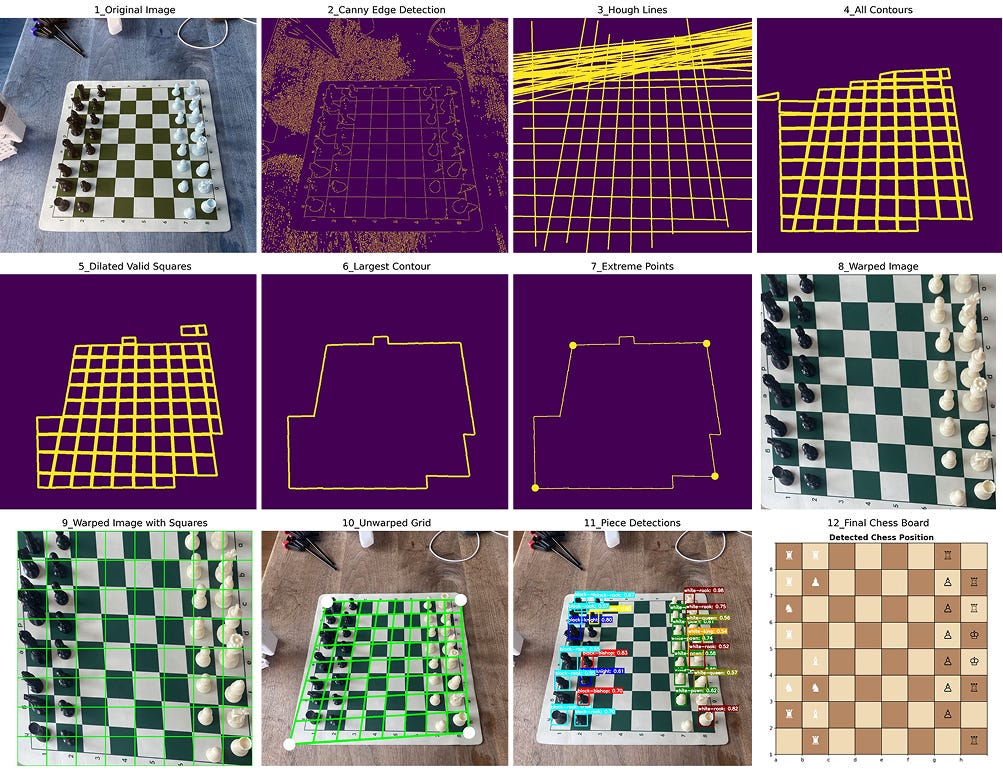
I’ve been tinkering with Dominique about robotics for a while. He just spent a few weeks exploring robotics in SF and documents his journey in his blog. His conversations with 50+ roboticists and reading key papers revealed that AI-driven manipulation, not hardware, is the main bottleneck, while demos often overstate real-world capabilities. Building a chess-playing robot himself highlighted challenges with data quality, model choice, and environmental variability, reinforcing that reliability and iteration are critical. His blog also provides a good overview of his learnings and some robotics research papers.
👉 MaintainX (US): has raised a $150M Series D funding from a number of different investors for its maintenance and operations platform. Read more…
👉 Squint (US): has raised a $40M Series B led by The Westly Group and TCV for its AR and AI platform for manufacturing companies. Read more…
👉 Makersite (DE): has raised a €60M Series B led by Lightrock and Partech for product lifecycle intelligence solutions. Read more…
👉 Anybotics (CH): has raised €127M in total funding with a recent round led by Climate Investment for its robotic solutions to automate inspections. Read more…
👉 Dyna Robotics (US): has raised a $120M Series A led by Robostrategy, CRV, and First Round Capital for its general-purpose robots. Read more…
Disclaimer
Views expressed in “posts” (including podcasts, videos, newsletters, and social media) are those of the individual GC personnel who wrote the post or are quoted therein and are not the views of General Catalyst Group Management, LLC (“GC”) or its respective affiliates. GC is an investment adviser registered with the Securities and Exchange Commission. Registration as an investment adviser does not imply any special skill or training. The posts are not directed to any investors or potential investors, and do not constitute an offer to sell or a solicitation of an offer to buy any securities, cryptocurrencies, or any financial instrument or property, and may not be used or relied upon in evaluating the merits of any investment. Additional important information about GC, including Form ADV Part 2A Brochure, is available at the SEC’s website:
http://www.adviserinfo.sec.gov
Nothing here should be construed as or relied upon in any manner as investment, legal, tax, or other advice. Any projections, estimates, forecasts, targets, prospects, or opinions expressed in these materials are subject to change without notice and may differ or be contrary to opinions expressed by others. Any charts or figures provided here are for informational purposes only and should not be relied upon when making any investment decision. Certain information contained in the content has been obtained from third-party sources. While taken from sources believed to be reliable, no one has independently verified such information, and there are no representations about the enduring accuracy of the information or its appropriateness for a given situation.
To the extent any content authored or provided by any GC personnel in this forum or medium makes reference to any company in which any of the funds or vehicles advised by GC have an economic or financial interest, previous or current, none of the information provided or opinions expressed herein are connected in any way with GC’s business activities, and GC did not provide any information or assistance in the creation of this content.
*is a GC portfolio company
No posts
Comments
Nothing yet. Say the first thing.
Sign in to join the conversation.