
I like to write one of these posts every month, but March is proving quite busy (I’m getting married very soon!!), so I’ll try and keep it brief. I’ve given myself a couple of hours to write about a few things I’ve been reading and listening to recently, so let’s just see how I get on.
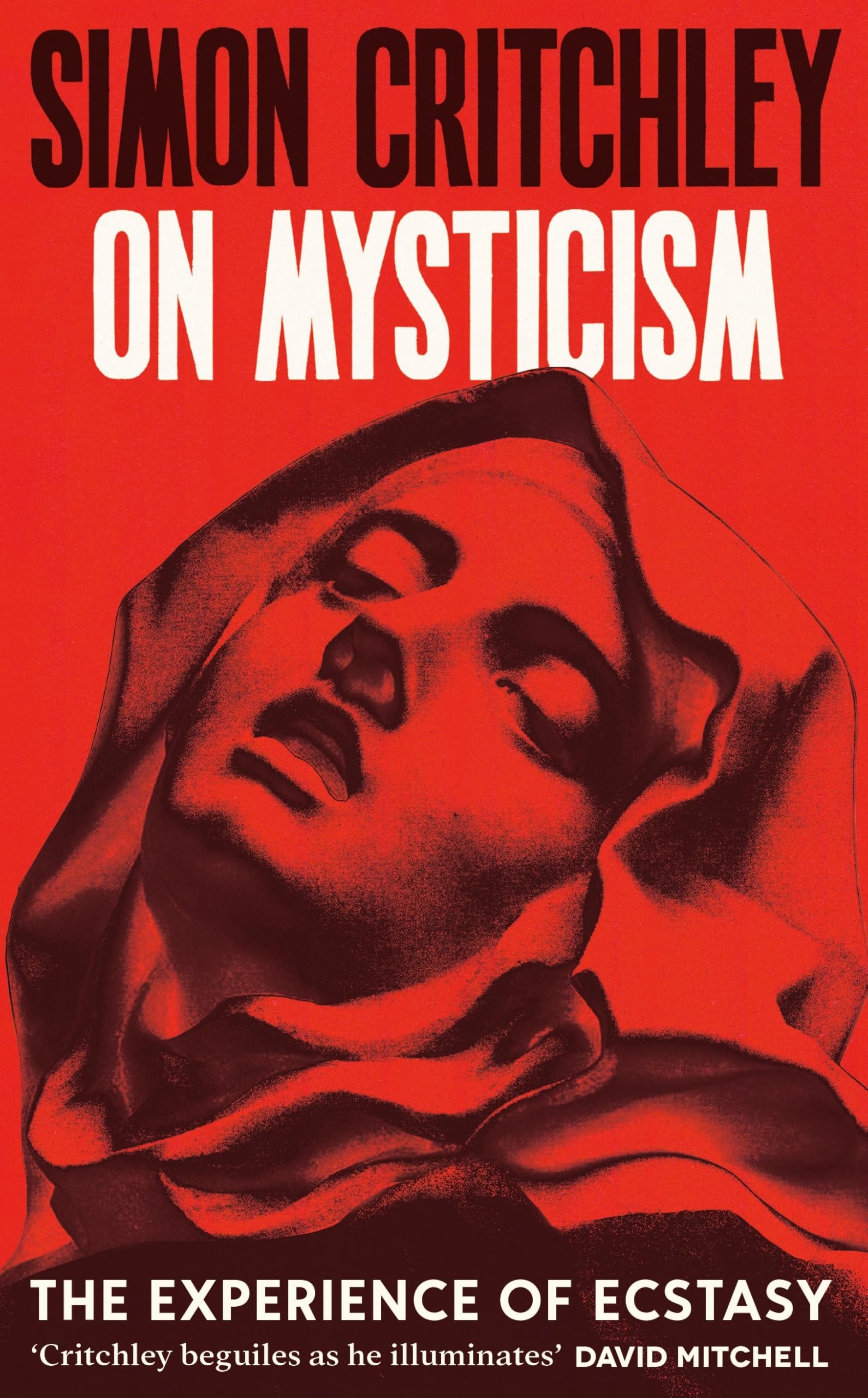
I really enjoyed Simon Critchley’s book on mysticism, although I found it a bit academic in places. He also has a habit of constantly talking about what he’s going to do next but never quite getting there: ‘My wish in this book…’, ‘I will try and show in this book…’, ‘Decreation is a beautiful and delicate concept that we will come back to, and which constitutes a major framing theme in this book.’ But I wonder if that goes with the territory when you’re attempting to write about something that can’t really be defined. As Garth Greenwell has asked: ‘how can a finite medium (language) be used to think about something infinite (God)?’ I love how Critchley connects the dots between Julian of Norwich, T. S. Eliot and the music of Neu! But I suppose I approached the book thinking that I would like to read more about what ‘varieties of religious experience’ actually feel like; or, I’d like to see if any of those descriptions chimed with anything I have experienced. I loved the chapter on Julian of Norwich, but I also wanted to know: what did her visions actually feel like? What was happening to her? Was it something we could recognise, like a fever dream or a hallucination? Or was she experiencing something that was totally beyond what anyone else could ever understand, let alone translate into language? Unanswerable questions, of course! But I wonder if what I was expecting was maybe a slightly different book, one which was perhaps more in the realm of fiction, which imagined the states of ecstasy experienced by the book’s subjects. I enjoyed Patricia Lockwood’s review of On Mysticism which somehow manages to be completely impenetrable and hilariously funny. Maybe that’s something like the approach I was looking for.
Having said that, I loved Critchley’s description of writing, and the need to escape what Malcolm Lowry called the ‘dreadful tyranny of self’:
To write is to aspire towards, even to hope for, the mystery of a clearing that is other than the self, the vast windowless sunlit room of living experience. To write is to participate in the struggle to efface oneself. The problem is that the self keeps getting in the way. We look for a clearing, but as we go through dense woods and undergrowth, we keep getting snagged in branches, smeared with dirt, and dragged back into the darkening landscape of doubt, the self-doubt that haunts and hunts the writer at every step.
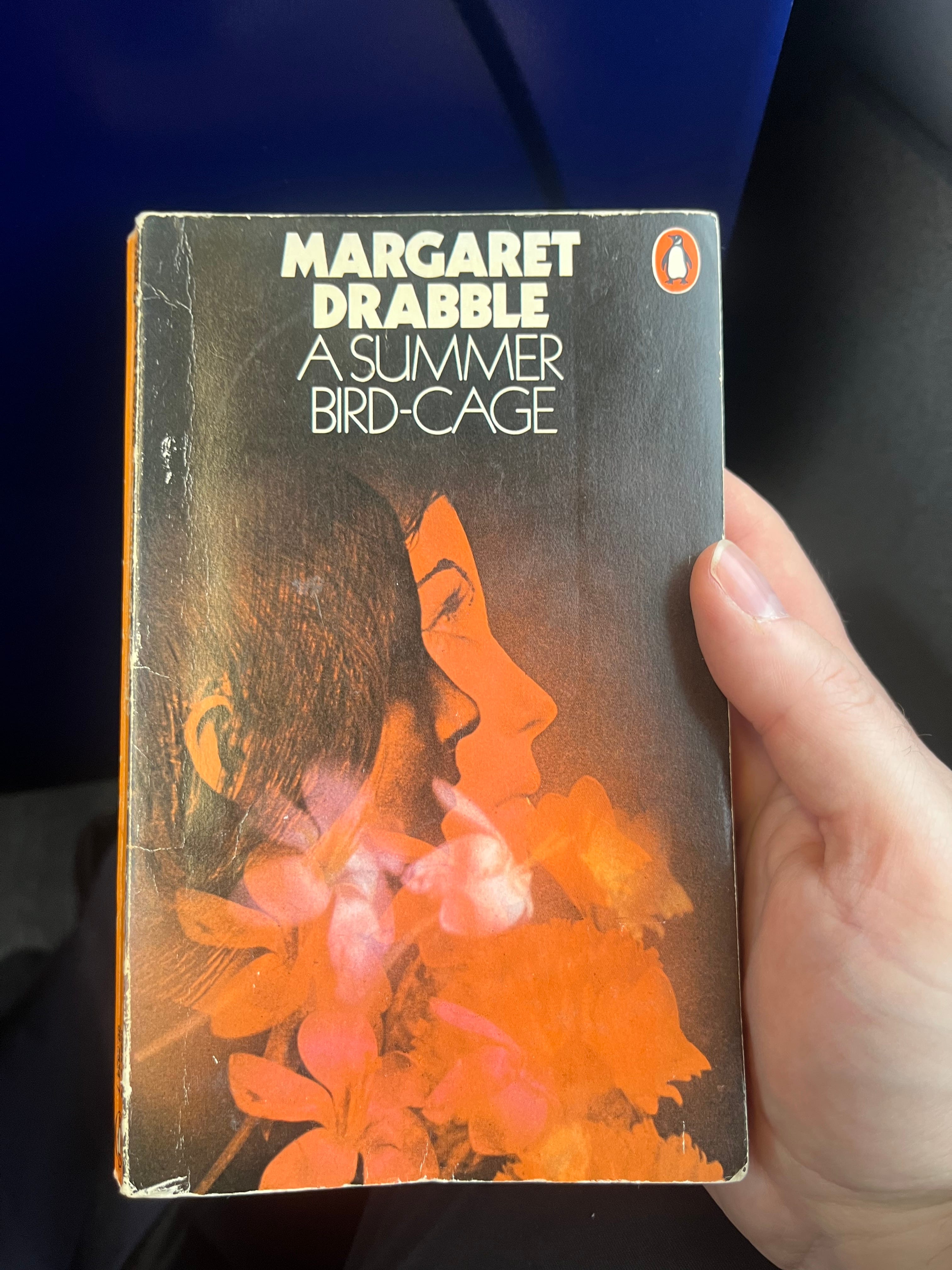
Another book I enjoyed recently was Margaret Drabble’s first novel A Summer Bird-Cage. Published in 1963 when Drabble was in her early twenties, it’s a novel of youthful precocity, with pin-sharp observations about relationships and class. It’s a simple enough story about two sisters – the narrator Sarah, just ‘down’ from Oxford and unsure what to do with herself, and Louise who has decided to marry for money. But it’s hard to get across just how full of life the prose is. Sarah is bursting with ideas – she’s so funny and observant: ‘Everything he did seemed to make a noise: all his actions were larger and more physical than other men’s. I wondered if that was because he was an actor, or whether he was an actor because of that.’ Sarah feels like a thinly veiled portrait of the author herself (which would make Sarah’s sister Louise a version of A. S. Byatt – intriguing).
To a modern reader (well, to me at least) the book feels noticeably unfiltered and uninhibited. I’m not saying that modern novels are inhibited (I’ve just finished Rob Doyle’s Cameo, one of the funniest and most outrageous novels I’ve ever read). I just mean that there is a detectable tone to a lot of what you might call pre-internet literary fiction; it feels less afraid of judgment somehow. I’m sure A Summer Bird-Cage wasn’t intended to be a groundbreaking, taboo-busting novel, and yet I’m struck by its unguardedness, its fearlessness. Sarah can be cruel and unbelievably snobby, but she’s also self-reflexive, aware of her faults – and there’s a refreshing lack of shame in the way she interrogates her own snobbery.
I loved this passage towards the end of the novel where Sarah realises that she and her sister share a flaw common to bookish twenty-somethings. It’s the tendency to novelise one’s life, to treat every situation as representative of your essential character.
I saw for her what I could never see for myself – that this impulse to seize on one moment as the whole, one aspect of the total view, one attitude as a revelation, is the impulse that confounds both her and me, that compounds and impels us. To force a unity from a quarrel, a high continuum from a sequence of defeats and petty disasters, to live on the level of the heart rather than the level of the slipping petticoat, this is what we spend our life on, and this is what wears us out. My attitude to the petticoat is firmer than hers, but I am exhausted nevertheless.
Also, this is worth checking out – Margaret Drabble’s own annotations to her copy of A Summer Bird-Cage:
Drink-driving acceptable
Smoking acceptable
Hair pins – why so many?

Hoping I’m the first person to go from Margaret Drabble to the comedian Connor O’Malley, but I loved his latest utterly unhinged video. And actually it made me feel like I’d got it totally wrong with A Summer Bird-Cage – of course there’s still completely uninhibited art being created! I love it when you’re reminded that comedy can be so unexpected, so full of ideas and details, like it’s opening a door in your head. Maybe that’s a real glimpse of mysticism right there. The path to transcendence is via a blanket puller on Hollywood Boulevard.
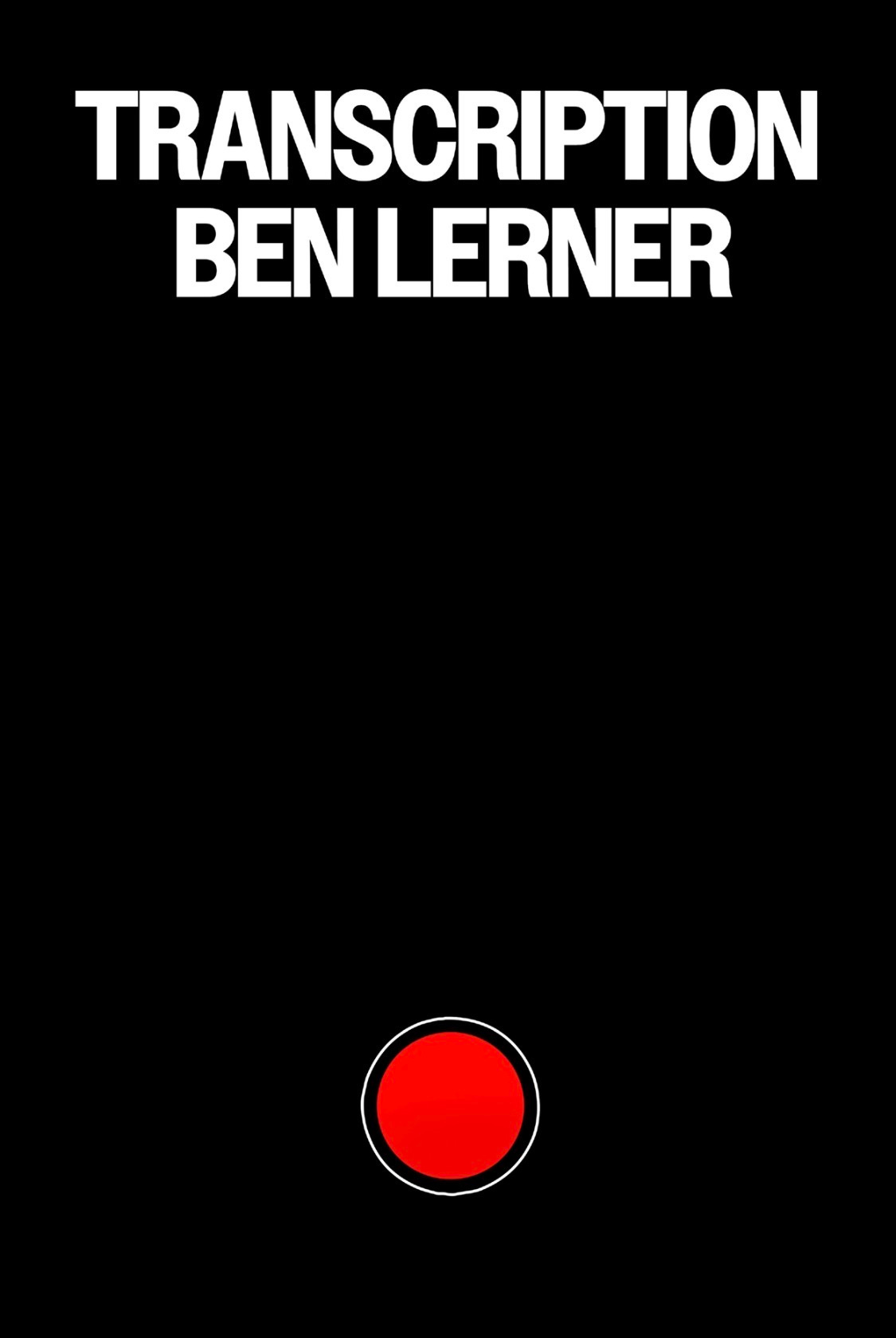
I’m really enjoying Ben Lerner’s latest novel Transcription. What I particularly like is something akin to what I’m talking about with the unexpectedness in Connor O’Malley’s video. The novel starts straightforwardly enough – the narrator travels to his old university town in Providence, Rhode Island to interview his 90-year-old mentor. But he drops his phone so can’t record the interview. What seems like a fairly straightforward satire on modern life and our dependence on technology really changes gear during the interview. The dialogue becomes hard to follow. The mentor, Thomas, is cryptic and elusive. When the narrator tells him about a dream he had, Thomas responds, ‘It is my dream, I believe.’ The reader starts to question: is the dialogue actually ‘happening’ in the world of the novel? Or are we reading the narrator’s written transcript after the event? (I haven’t finished yet, so no spoilers.)
I love it when books, music, films drift from meaning to non-meaning, or start from one point and end up in a completely different universe. It’s like the second side of David Bowie’s Low, or the fact that Tarkovsky’s Stalker switches from black and white to colour – from the dismal bar of the opening scene to the alien landscape of the Zone. The contrast isn’t as extreme in Transcription, but that faint feeling of the narrative rug being pulled from under you is what keeps me reading.
This is a lovely passage in which the narrator remembers visiting an exhibition of glass flowers at the Natural History Museum with a friend; it speaks to this idea of the strange zone (!) where reality and fiction cross over.
I was astonished by what I saw. I couldn’t quite believe that this moth orchid was glass, that this pear blossom was lampwork, that these objects had been blown and shaped and painted, that these impossibly delicate things were the result of a thousand rapid choices and adjustments, movements of the hand. […] I joked with Anisa that these must be actual plants that some conceptual artist was claiming were glass – they probably replaced them each night – but the joke masked the flowering of a new sense: I kept seeing the flowers as organic one instant and artificial the next, a kind of duck-rabbit effect, not between things the object might represent, but between nature and culture, the given and the constructed. And I carried this new way of looking, or this new hinge in my looking, outside the museum: when my sister dragged me camping, for instance, I was typically unmoved by ‘unspoiled’ mountain views; after the glass flowers, I would see cracks in the rock face as pencilled, as a history of small decisions, and then experience the view as beautiful. I could will myself to see the rose and pink of a sunset as applied in touches or stains and then revert to seeing it as natural; and so on. It was with Anisa that I first became conscious of this quiet but crucial technique, somewhere between a child’s game, a CBT exercise, and a religion. Eventually I’d call this ‘fiction.’
This makes a nice comparison with Sarah in A Summer Bird-Cage; both she and the Transcription narrator are novelising, fictionalising, their lives in different ways. I could go into this in more detail, but I’m a bit tired. It’s nice though, innit.
I’m very late to the party with this, but I really love Blood Orange’s 2025 album Essex Honey. Since I first heard it I’ve wanted to ration it, not overplay it; I wanted to preserve something of the evocativeness of the first listen. I like it feeling nebulous and unformed in my mind, not diminished by familiarity.
It’s a really beautiful album about grief. Dev Hynes, having lived in New York for much of his adult life, returned to his childhood home in Ilford to be with his dying mother. As such, it also feels like an album of exile – that old Tom Waits line: ‘I never saw my hometown until I stayed away too long’.
And that evocativeness I mentioned. Maybe it’s just me but Essex Honey is such a nostalgic sounding record. It seems to summon a specific feeling of British ennui. Why does it sound to me like winter dark at 4pm? Like playing computer games after school, not bothering to change out of your uniform, the cold house, waiting for the central heating to come on? Where did that image, that feeling, that memory come from? And why was it evoked by music? Maybe I’ll leave that to Simon Critchley: ‘The only proof of animism I know is music. When we listen, it is as if the world falls under the spell of a kind of natural magic. In music, the cosmos feels divinely infused.’
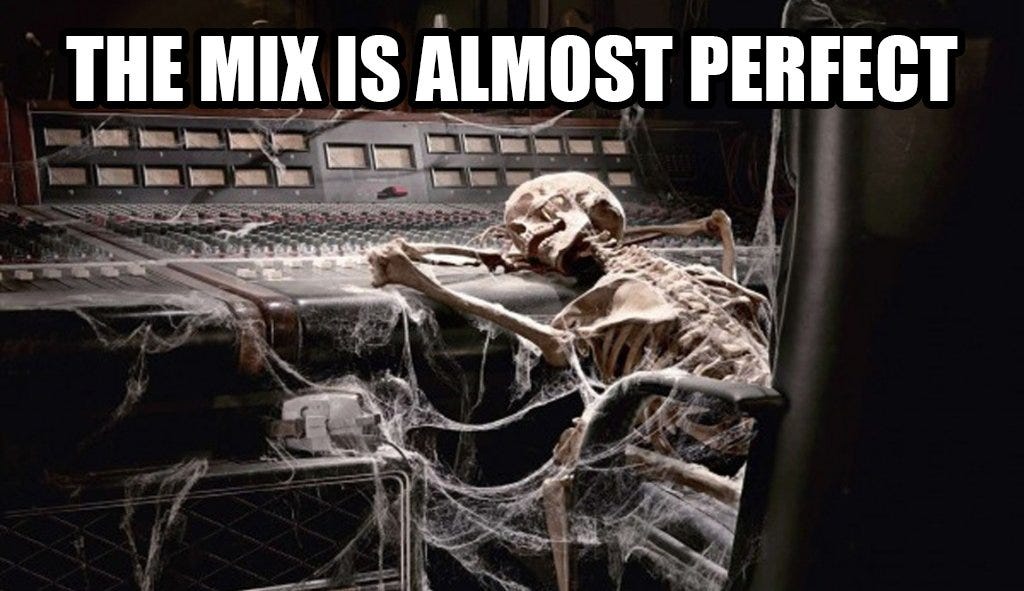
Speaking of music, I’m back here again – stuck in the mixing process as I try to finish an EP I recorded a while back. One thing I’ve noticed with mixing this time is how often Zen-like aphorisms appear to help. Or how very basic common sense advice somehow takes on hidden depths. The vocal is too quiet. Turn it up. This frequency is too loud. Turn it down. It sounds like very obvious stuff, but I’m reminded of the fact that I didn’t work out what size trousers I wore until I was 29 years old. I would buy 32-inch length jeans and wonder why I had to turn them up. Can you imagine the revelatory experience of realising I could buy 30-inch length jeans? I suppose the point I’m trying to make is that humans are extremely gifted normalisers. We can get used to almost any situation. Sometimes all it takes to break the deadlock is a simple question that requires a simple answer. Is the guitar too loud? Turn it down. Are my trousers too long? Shorter pairs are available.
If you want to support this monthly Substack, or my music, or my podcast, please feel free to donate here:
No posts
Comments
Nothing yet. Say the first thing.
Sign in to join the conversation.