
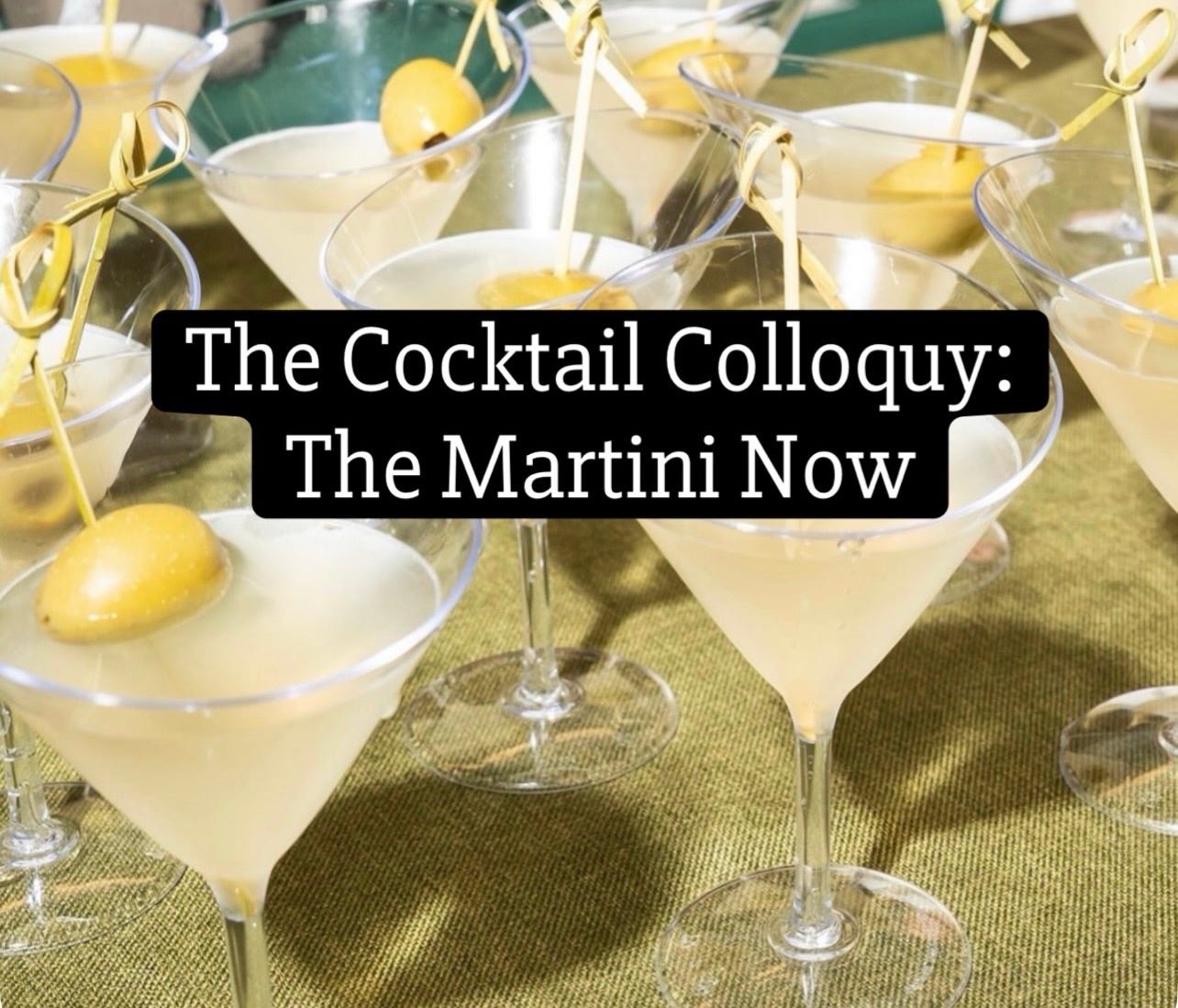
This is the fourth edition of a new essay series we are calling The Cocktail Colloquy: The Martini Now. We asked a collection of writers and thinkers whom we respect—people with a track record of writing about the Martini—if they would contribute an essay to The Mix.
We will publish one essay every Monday for the next several weeks leading up to the beginning of The Martini Expo on Sept. 13. (Tickets to the Expo are now available on Opentable.) The series kicked off with an essay by Lowell Edmunds. Next came brewmaster Garrett Oliver, and then England-based author and cocktail historian Dr. Anistatia Miller. Now we have some thoughts from Brooklyn-based cocktail historian David Wondrich.

We caught Wondrich at a very fortuitous time in his long career. He was honored with the Spirited Awards’ Lifetime Achievement Award at Tales of the Cocktail just last month. At that same award ceremony, he won a Spirited Award for his latest book, The Comic Book History of the Cocktail. (Certain lucky cocktail mavens will see him in person Aug. 24 when he joins me at Bryant’s Cocktail Lounge in Milwaukee for a talk.)
But those are recent achievements. For his essay for the Cocktail Colloquy series, Wondrich has chosen to examine his early encounters with the cocktail called Martini, as a teenager and young man in the 1970s and 1980s.
I’ve been drinking Martinis for, as far as I can tell, some 48 years now. That encompasses my whole adult life and a little more besides. Here, I’d like to talk about the Martinis I drank during the first decade or so of that time; the years before the Cocktail Revolution was even a tipsy glint in anyone’s eye.
I say “as far as I can tell” because I don’t remember my first Martini. And it’s not because of…that. OK, maybe it was because of that—I really couldn’t say where it was, who mixed it, how many I had, how often I fell down, or any other thing. Hell, if you were to tell me that I proceeded to follow that first Martini with a second one, and perhaps one or two more besides, and didn’t fall down at all, but rather splayed myself on a convenient chaise longue and traded witty and slightly risqué remarks in three languages with sophisticated and insouciantly-dressed young women into the watches of the night, I could not gainsay it. Although, considering I would have to have been 16 or 17 at the time and mostly what I liked to do was read big, pretentious novels, listen to Captain Beefheart and such and smoke every last bit of weed I could get my mitts on, it seems pretty unlikely. Oh, and I worked in a boatyard, mostly scraping and painting but also digging holes and banging on things with large hammers. So, no, back to falling down.
But hold up a minute—what the hell was I doing drinking a Martini in the first place? A typical late-1970s underage drinker (ok, just-barely-underage: in New York, where I lived, 18 was legal), I was mostly knocking back cheap beer—Piels Real Draft, like that—and, at the kinds of clubs I could get into with a fake ID, 25¢ shooters—Alabama Slammers, Melon Balls, Kamikazes and their ilk. Add a little California jug wine, an excellent value for the impecunious young consumer, and the occasional shot of Jack Daniel’s Old No. 7 or José Cuervo, and done. But a Martini?
For my generation, Martinis were old-peoples’ drinks. They were for grouchy commuters with comb-overs and drip-dry suits; for helmet-haired blondes in turquoise twin-sets who couldn’t quite get their lipstick straight. Martini drinkers had never rolled a joint or hucked a frisbee and thought Frank Zappa had something to do with the Knights of Columbus.
Thanks for reading The Mix with Robert Simonson! This post is public so feel free to share it.
There were, however, two complicating factors. One, I read a lot of old books by people such as Dashiell Hamett, Raymond Chandler and P.G. Wodehouse and watched lots of the old movies that the local independent channels showed late at night; things like Out of the Past and The Maltese Falcon. All of that stuff was full of characters drinking Martinis, and they were not pathetic. Two, I was going to high school on the North Shore of Long Island, in the town F. Scott Fitzgerald called “East Egg.” In my day, the population was more upper-middle-class Jewish and working-class Italian than it was old-line WASP, but there were still plenty of those around, and they drank Martinis. They knew how to order them and how to mix them and kept gin in the house with which to do it. (A couple of them even used vermouth, an ingredient whose presence in the Martini was by then mostly theoretical.)
Most of these people had kids. It was one of those kids, one summer evening when his parents were away at, I dunno, Easthampton? Bar Harbor? Le Touquet? and he was left lord of the manse, who offered to mix me and a couple of other friends up a pitcher of Martinis. I know that wasn’t my first Martini, because I remember thinking “what a good idea” and greeting the drink with anticipation. I don’t remember the proportions he used, if there even were proportions, whether he stirred the thing or shook it or what if anything he garnished it with. I do remember that it was very strong and very cold, like something you’d find in the fuel tanks of an SR-71 Blackbird as it streaked along the outer edge of the stratosphere at Mach 3, photographing secret Soviet installations. Two of them and I was ready for the hangar.
After that I left the Martinis alone.
Well, for a while, anyway. By 1981, I was playing bass in weird East Village bands while slowly dropping out of NYU. I was living across the river on the shabby and very cheap edges of Hoboken and Jersey City, and the low-level day jobs I worked had to cover my rent and meals, the bass strings I kept breaking and the rehearsal space where I broke them. There wasn’t a lot left over for booze. Fortunately, New York still had a lot of options for the frugal tippler, if you were willing to turn your back on the kinds of places that made it into “Page Six,” the New York Post’s daily chronicle of how the fabulous people were amusing themselves (it was what we had instead of social media). At the Reno Bar, an old strippers’ hangout on 2nd Avenue, your dollar went much farther than it did at Regine’s or Maxwell’s Plum. Likewise at the Blue and Gold on East 7th and its next-door neighbor, George’s; at McSwiggan’s up on 3rd Ave, the 3 Roses on Canal and—well, lots of places.
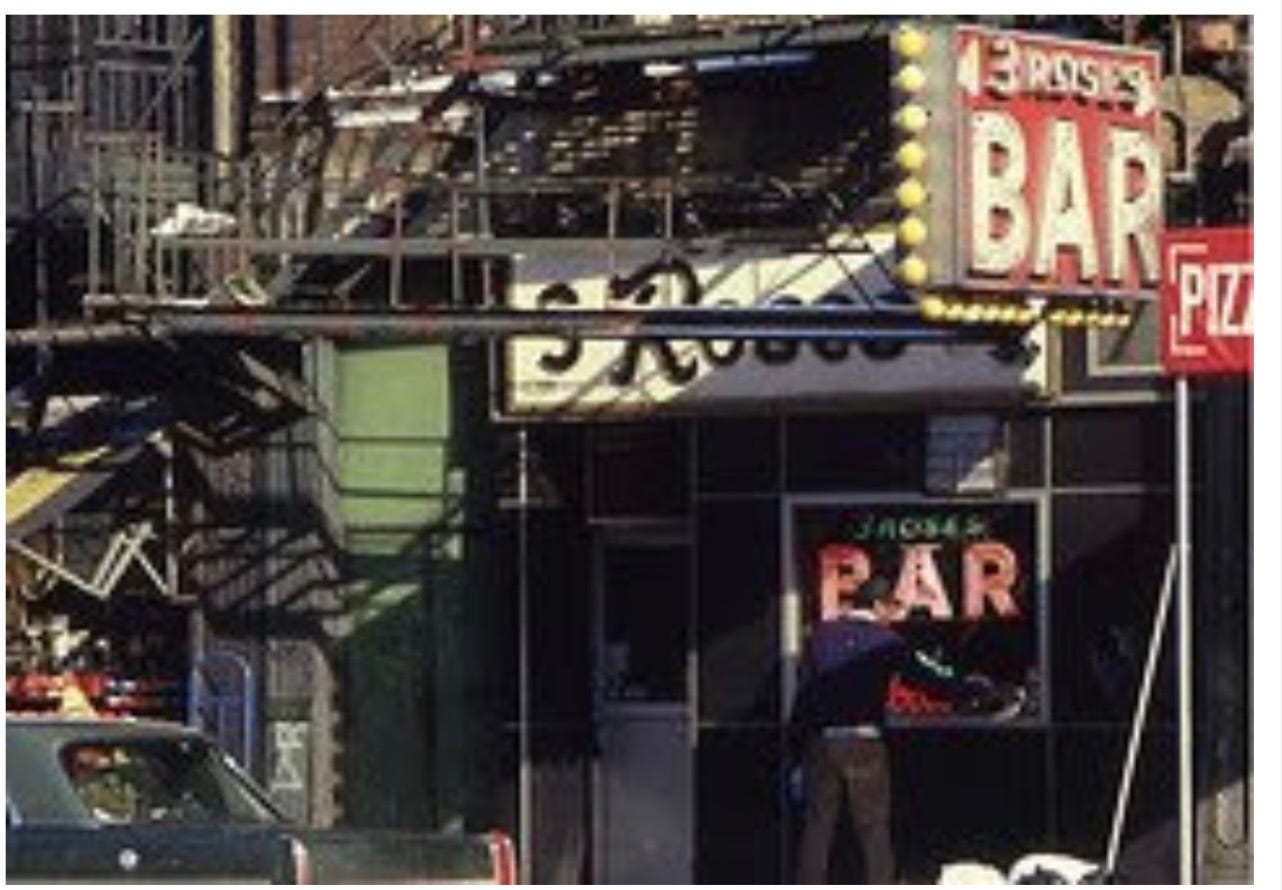
These joints all worked more or less the same. You perched on a stool, ordered your drink, and gave the bartender a five or ten-dollar bill. He or she put your change on the bar in front of you, where after extracting a tip and sliding it over, you left it. If you wanted another, the bartender took the money out of your pile (you had to add the tip). When the pile was gone, so were you. Every third drink, the bartender declined to help himself or herself. That one was on the house.
That was the way it worked when you didn’t make yourself a problem the bartender had to solve. When you behaved, didn’t complain about the watered booze, and didn’t ask for some stupid drink you read about on Page Six. Order a Melon Ball or a Sloe Comfortable Screw Up Against the Wall and—assuming the bartender didn’t simply refuse—not only would you wait and wait, but you’d be paying for all of your drinks.
If you knew how to behave, you could still order a mixed drink, but it couldn’t be one that put the bartender on the spot. In practice, that meant a Scotch & Soda, a Gin & Tonic or, of course, a Martini (by then, the Manhattan, the Daiquiri and the Old-Fashioned were basically dead in this kind of joint, and the Negroni was something you only found in Italian restaurants). Every bartender in New York City knew how to make a Martini: you put well gin or vodka in a pint glass, threw in a scoop of watery ice, stirred it around three or four times and strained it into a stemmed Martini glass. Olive from the garnish tray. Done.
Perhaps this was not the pinnacle of the mixologist’s art. Yet—as I quickly learned—it was certainly the most C2H5OH I could get in a glass for my hard-earned $2.25. I got used to them. It helped that to order one got you just a smidgen of respect from the bartender: you weren’t one of those kids (see Melon Ball and SCSUATW, above). Even better, I was not alone—there were other penniless young Bohemians in those bars, and some of them were Martini drinkers as well, most of ’em for pretty much for the same reasons as I was, although a few were to the manner born. (A couple of them I still drink Martinis with; one of them I married.) We had our own little barstool counterculture. If punk hadn’t saved the world like we had hoped, at least it had taught us how to rummage through the wreckage for things genuinely worth saving.
Of course, not every bartender was so rudimentary. There were a few skilled old-timers, or younger bartenders trained by them, working in old-man bars, and they would actually measure in some vermouth (by eye, of course; they did not jigger), stir thoroughly and maybe even produce an onion for someone who wanted a Gibson (that would have been me). But you never knew when or where you were going to find them: they were individual contractors, not part of a “bar team.” The only teams such bars had played softball.
Not even the top bars in town could guarantee that level of care, as I learned by the middle of the decade, when I had enough money to splurge on the occasional Martini at the Oak Bar, in the Plaza, or the Bemelmans Bar, in the Carlyle. But it was the atmosphere that I was paying for; the lingering presence of Cary Grant at the Oak Bar and the carpeted hush of the Bemelmans.
The bartenders still slopped the gin into the mixing glass and briefly waltzed it around with the watery ice just like they did at McSwiggan’s. The brand of gin in the well might have been better, and they might have even put a microdot of vermouth in there, but the drink was essentially the same.
Things were a little better on the West Coast, as I learned on tour with my band. If in New York you got cheap-bar drinks at the expensive ones, in California there were plenty of places where the opposite was true; where your two bucks and change would get you a Martini made with care. Sure, most of the bartenders shook the things, but at least they shook them well and used vermouth. Well, except for Bruno at the Persian Aub Zam Zam on Haight St. in San Francisco, America’s greatest Martini dive. All he made was Martinis—gin ones, of course—and he muddled them with the ice. The two I had were memorable. But so were the ones at Vesuvio and Tosca, on Broadway in the city’s Tenderloin. And the ones at the bar at Musso & Frank’s, the Formosa, the Frolic Room and the Kibitz Room in Hollywood. At places like those, I still felt the living presence of the old America that had shaped the Martini; that had made it into something that could serve as a glowing neon beacon to guide us through the dark, indifferent night to a place where we could feel, if not exactly at home, at least sheltered. New York laughed at that kind of poetry.
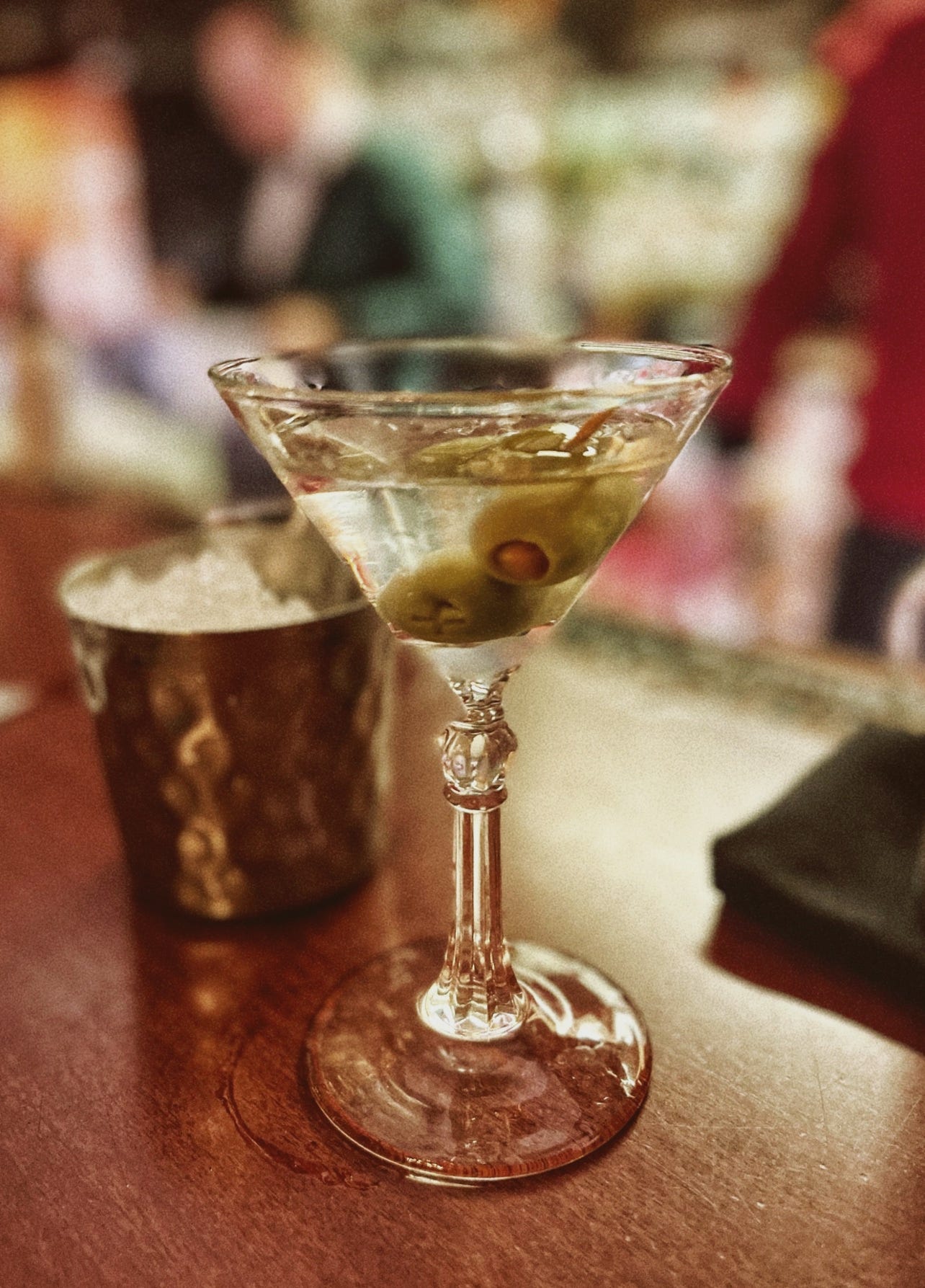
In the late 1980s, however, the New York Martini got a little recharge. How could it not once Joe Baum put Dale DeGroff in charge of the bar at the newly-reopened Rainbow Room? But of course, Dale had tended bar at the Hotel Bel Air for ten years, and was on intimate terms with that living presence. But he wasn’t the only one paying new attention to the drink: Toby Cecchini and the crew at the Odeon, in what the real estate crowd was now calling Tribeca, knew how to make a Martini with care, and so did Derek, at Quatorze on 14th St.. There were others. Frank Prial, the New York Times’s wine critic, wrote a piece on the comeback of the Martini. Faith Popcorn proclaimed, “White wine is out. Enter the Martini.” Like most such things, such pronouncements were largely based on cherry-picking and exaggeration. But some of my young, Martini-drinking peers, now ex-punks, were finding their way into bartending and restaurant management and increasing numbers of New Yorkers were looking to drink things as serious as the food being turned out by the new wave of quality-obsessed young restaurateurs.
But that was in Manhattan. Back in Brooklyn, where I was living, there was no recharge. A Martini at the Roxy or O’Connor’s or Freddy’s, my local bars, was the same sort of thing I used to get at the Reno Bar, but now it was, like, $4.50.
It was time I started mixing my own.
Postscript from Wondrich:
After over 35 years of doing that, here’s what I’ve settled on:
Stir well with freshly-cracked ice, right out of the freezer:
2 1/4 ounces Tanqueray gin (the regular, not the No. 10)
3/4 ounce Noilly Prat dry vermouth
2 dashes orange bitters (I like equal parts Regans’ and Fee’s)
Strain into a chilled cocktail glass and twist a swatch of thin-cut lemon peel over the top. So yeah, a regular 3-1 Dry Martini, no ups and no extras. Dry, but not arid; strong, but not aviation fuel; very, very cold.
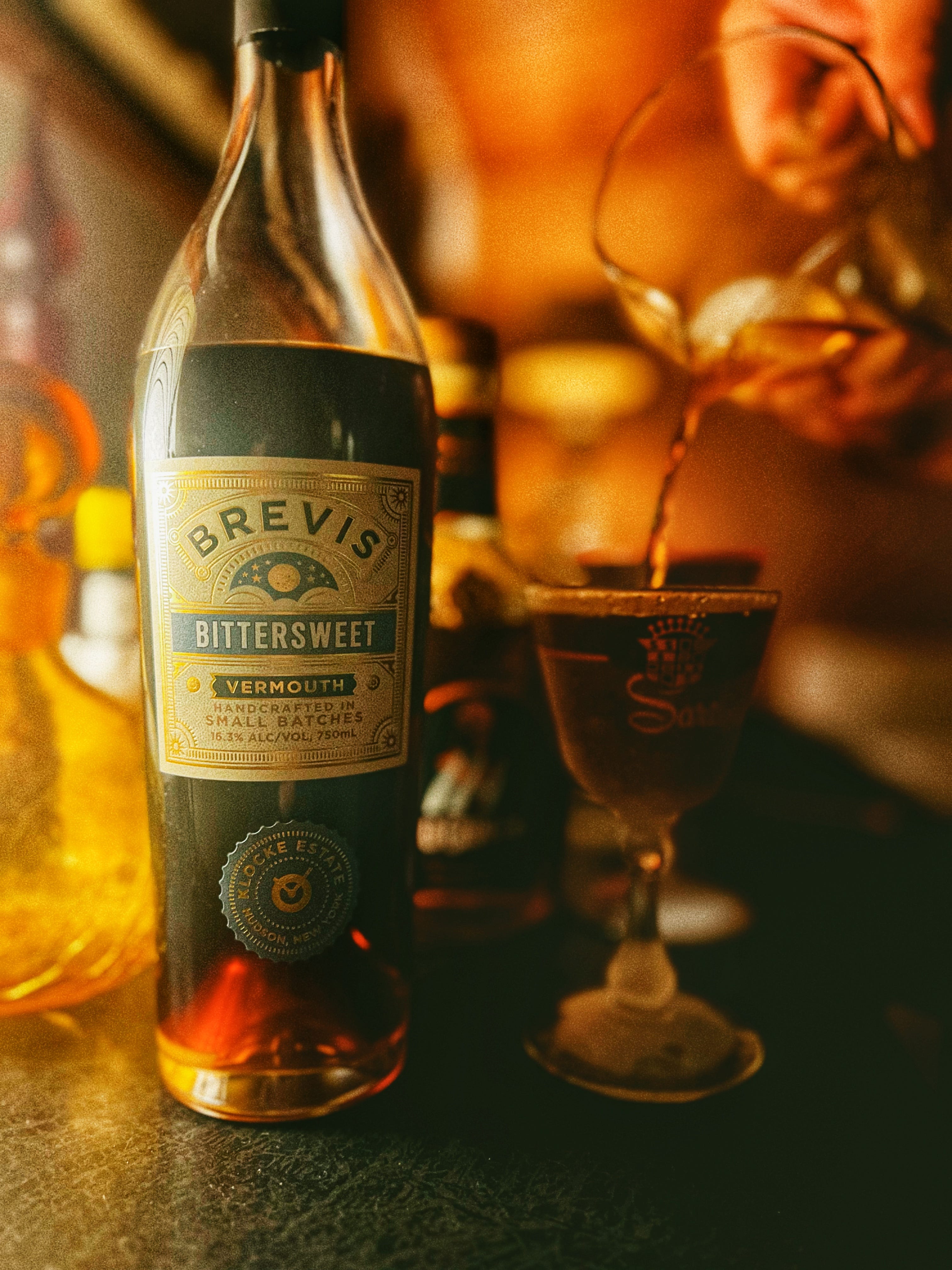
The Brevis line is put out by the Klocke Estate outside Hudson, New York, which produces some wonderful French-style brandy and apple brandy. While we are waiting for the brandy to age, Klocke has put out some unaged apple brandy, eau-de-vie, liqueurs (curaçao and creme de menthe) and vermouths.
The latter include a blanc and a sweet red. The most unique product, however, and the most recent, is the Bittersweet Vermouth. The base is Vidal Blanc wine, which spends a two-week botanical maceration including wormwood, bitter orange, vanilla, peppermint, cinchona, dried sour cherries, and a complex blend of dried herbs, roots and warm spices. It is then fortified with brandy, and finished with raw cane sugar and organic caramel.
The vermouth is super aromatic. You can smell it from across the room. In color, it’s a dark rusty red-brown. It smells of deep, red wine, orange peel and cloves. It is rich and silky upon first sip with lightly tannin notes sneaking around your tongue within seconds. The finish lasts a long time on the palate, bringing flavors of clove, allspice, orange peel, grapefruit pith, dark cherry and more. It has a very dry finish. I wouldn’t call it bitter, but it’s headed in that direction. It is elegant and sophisticated. Bittersweet was produced to be used in cocktails and it works just fine that way. It makes an urbane Manhattan or Negroni.
Another event at The Martini Expo (Sept. 13-20 Chicago) has been announced and tickets are now on sale. It’s a Martini dinner! Few things pair better than fresh seafood and a perfectly crafted Martini. It will be held Wednesday, Sept. 16, at the timeless Shaw’s Crab House, a haven of old-school charm in downtown Chicago. The special dinner will feature a curated menu paired with Martinis made with Farmer’s Organic Gin, one of The Mix’s favorite gins. Mary Kate and I will be there, as will folks from Farmer’s. Tickets are $150 and space is limited. So act now!… Tito’s, the popular brand of vodka based in Texas, has been linked with a new data center development. “Newly uncovered records tie liquor executive Bert “Tito” Beveridge and a land company to the $7.3-billion Edged Data Center slated for Caldwell Co.” The center will sit fewer than two miles from downtown Martindale and the San Marcos River as well as several neighborhoods… Houston cocktail powerhouse Bobby Heugel is opening another place. It’s called House of Louie and will open at 1931 Fairview Avenue sometime before summer ends. He is joining forces with chef Justin Yu. It is their first new restaurant since opening Squabble in 2019. The cocktail menu will feature “Martinis galore” and seasonal cocktails… Long-serving The New Yorker cartoonist Roz Chast is embarking on a tour to support her new book The Two Saddest Kitchens. The tour, which begins Oct. 5 in Cambridge, MA, will include stops in New York, Baltimore, Philadelphia, Austin, Madison, WI, Nashville, Miami and more… Pink’s, the iconic hot dog stand in Los Angeles, is opening a location in Tokyo. The company is partnering with Japanese franchise operator Sunpark… Boyhood, Richard Linklater’s 2014 masterpiece that was filmed over the course of 12 years, will be screened at the IFC Center in Manhattan on Aug. 19. There will be two screenings. Stars Patricia Arquette and Ethan Hawke will be present at both.
Dont forget to check out the latest on tickets and info for the Chicago Martini Expo 🍸
No posts
Comments
Nothing yet. Say the first thing.
Sign in to join the conversation.