
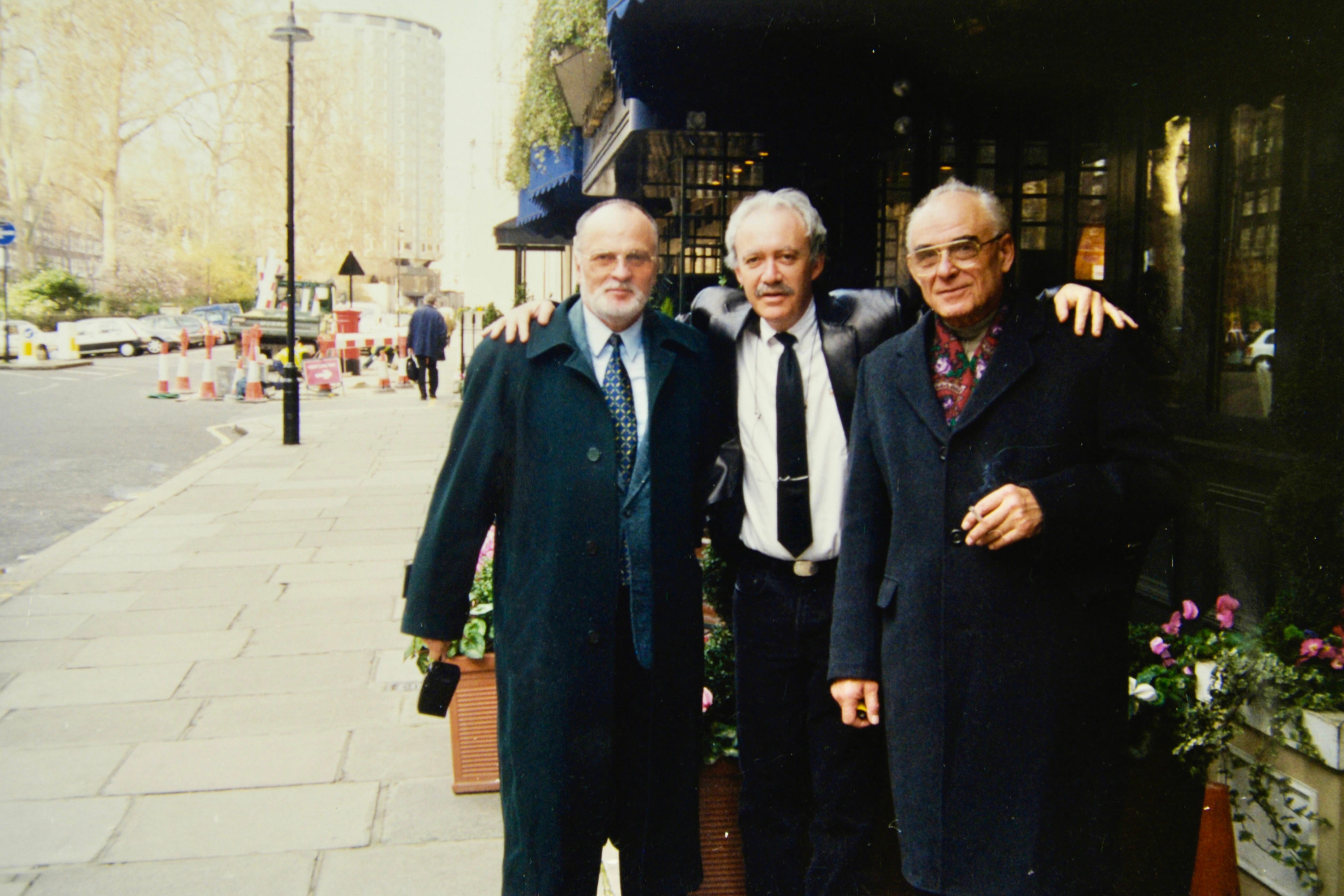
February 2000
John H would have seized upon Edward Lee Howard’s plan to steal into the USA for a surreptitious visit to his native New Mexico, the one state that had a warrant on file for his arrest.
But John H was gone from the FBI.
And no one at Washington Field Office (WFO) or headquarters desired to do anything more about Howard than pile paper—the bureaucrat’s cherished pastime.
In fact, the FBI’s Albuquerque field office had so little interest left in Howard, they breached protocol and transferred administration of me to WFO, which by now had a greater stake in my other operations.
Enter Mike S, a well-meaning, hard-working agent special agent charged with processing the product of my various sting ops.
Mike summed up the current thinking in WFO about Ed Howard when we met on January 8th at Chef Geoff’s, a restaurant in the leafy, affluent northwest Washington neighborhood of Wesley Heights:
“Nobody’s going to get into trouble for not doing anything on this, but somebody might [get into trouble] if they do something and it goes wrong.”
Think about that.
Because it describes how Washington D.C.’s bureaucracies operate most of the time.
Mike was simply conveying the bureaucratic sentiments of his Big Cheezer, James “Tim” Caruso, National Security chief at WFO.
But to me it stank like overripe Camembert.
“I thought the FBI always gets its man?” I said.
Mike shrugged.
Guess not.
“The Bureau should catch Ed Howard,” I said. “It sets the right example for any future would-be traitors: It may take 15 years but we never forget you and we’ll eventually nail your ass. So what if some U.S. Attorney can’t win in court? That’s their problem, which they’re trying to shirk. The Bureau’s job is to catch Howard, throw him in the clink. If he walks later—like O.J. did—at least we did our part.”
If WFO smelled cheesy, kGB Colonel Igor Prelin reeked even worse—and that was just by email.
Always on the make, cagey Prelin had harnessed a new book, and he asked me to meet him in London, to which he would travel with the book’s author, a former KGB colleague named Stalian “Alexey” Sokolov.
The FBI said, Sure, why not?
By this time, I managed a cluster of ever-evolving operations without geographic restraint, with enough clout to set my own agenda and travel in style. This was in contrast to special agents, who could do only what they told and, on their meagre per diem, were compelled to fly coach and overnight at a Holiday Inn or Motel 6.
And so off again, to London, just two months after my rendezvous in Switzerland with Edward Howard.
Prelin and his friend Sokolov awaited me near their inexpensive hotel off Bayswater Road.
I’d made dinner reservations nearby at Royal China.
We sat, studied menus, each other, ordered hot sake.
I congratulated Prelin on his foresight: He had predicted a Putin presidency two years before anyone could have known.
“Yes.” Prelin chuckled, brushing modesty aside. “I get your message from Edward [Howard]. You remember our conversation. I say it will be name nobody knows. We at KGB engineer Putin to power.”
“How?” I asked.
“Finally, deal with Yeltsin,” said Prelin. “Yeltsin receives immunity from corruption. But after he dies, we go after all Yeltsin relatives.”
(A Russian tradition.)
Said Prelin: “Putin’s power-base is from GRU and FSB. He will increase intelligence presence around him from 40 to 80 percent.”
(This came true.)
I asked about my old Uncle Vlad—Kryuchkov, the former KGB chairman.
Said Prelin: Kryuchkov had been in hospital for knee surgery. He had become an unofficial advisor to Putin, counseling the new Russian president to take strict control of government and build a strong Russia.
Alexey Sokolov nodded, displaying a perpetual expression of gloom that reminded me of Abe Vigoda in The Godfather.
At 69—eight years older than Prelin—this was Sokolov’s first visit to London.
Hot sake arrived.
I poured, we toasted.
Soon after, three bowls of wonton soup appeared before us, followed by prawns with honey and black bean sauce, scallops with asparagus, stir-fried Dover sole and two bowls of steamed rice.
Following my example, both KGB veterans attempted to use chopsticks. They fumbled their food and turned our table into a war zone. When they finally gave up, instead of asking for cutlery they switched to soup ladles—and made an even bigger mess.
(A competence of multicultural eating utensils should be a prerequisite for espionage work.)
In between swallows, Prelin raised the reason for their trip: Sokolov’s book.
They pitched it as a nonfiction expose of Oleg Kalugin, the former KGB First Directorate chief who had settled in the USA but never actually defected.
“Cool,” I said. “What’s the story on Kalugin? Why won’t he return to Moscow?”
“If he comes back to Moscow,” said Prelin, “he will be executed within 24 hours.”
Sokolov looked at his buddy with a quizzical expression. “But we no longer have death penalty, Igor.”
“No matter.” Prelin was vehement. “Execution within 24 hours.”
“So you’d like to kill Kalugin?” I said.
“Of course.” Prelin was matter-of-fact on this point.
“Do you know where he lives?” I asked.
“Washington,” said Prelin. “He lives with two daughters.”
“Would you ever try to kill him in the United States?” I asked.
Prelin shrugged. “Who knows?”
Back to Sokolov’s book, already written in Russian and published in Russia.
Its theme: Kalugin was personally responsible for every Russian spy case that ever went south on the KGB over a 40-year period, including Aldrich Ames.
“Oh, c’mon,” I said, just like Clair George would have.
“I tell you!” Prelin whined. “Kalugin gives Ames up! We know this!”
Sokolov nodded. This KGB veteran had done a four-year stint in Washington, in the late 1960s, and spent the rest of his career at headquarters in Moscow analyzing the U.S. intelligence services.
He did not tell me whatI already knew about why he’d never served overseas again: Sokolov’s superiors discovered he was gay and chose not to avail him to honey-trap blackmail scenarios.
Sokolov told me that he personally recruited John Walker, the NSA spy; that the English-language version of his book would detail this case.
“I once recruited American couple working for the State Department in one elevator ride,” Sokolov boasted. “Twelve floors. By the time we reach bottom—one minute—I recruit.”
As for the mechanics regarding Sokolov’s book, Prelin offered George Blake—the British traitor—as translator.
“Ah, we have MI5 behind us,” Prelin suddenly erupted, looking over his shoulder. “I know them!”
Sokolov, facing me (I’m seated next to Prelin), craned his neck. “Where, Igor, where you see?”
(This was like a Bullwinkle cartoon with a gay version of Boris and Natasha.)
I didn’t even turn around.
“I am kidding!” Prelin said with glee.
I settled the check. Prelin requested that we walk to their hotel to collect some gifts they’d brought for me.
As we walked Bayswater Road, Prelin occasionally slipped his elbow through mine. Soon we arrived at the Lancaster Court Hotel. Prelin suggested we go up to the room they shared “to drink vodka.”
I declined, suggesting I wait in the small lobby while they grabbed their gifts and we take the party to my hotel, The Lowndes, which had a cozy lounge and a decent bar.
Fifteen minutes later, a taxi deposited us on Lowndes Street. Inside, Prelin ordered a cocktail of his own creation: gin, Campari and tonic. He instructed Sokolov to drink the same.
I opted for armagnac and went to my room to find a Cuban cigar.
Upon my return, Sokolov reached into his plastic bag (from a duty free shop at Sheremtevo Airport) and handed me gifts:
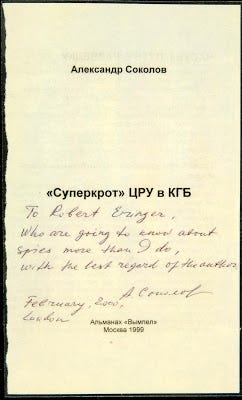
A copy of his Russian book, Spy Story, in which he had scribed: “To Robert Eringer, Who are going to know more about spies than I do, with the best regard of the author...” signed and dated
A bottle of KCTOK vodka (good for cleaning ovens).
A jar of caviar
“Gee, thanks, Alexey.”
I snipped the tip of a Monte Cristo No. 5, lit, puffed, and consulted my armagnac.
That’s when Prelin offered me $2 million for the CIA’s file on Aldrich Ames.
I laughed. “How could I possibly get the Ames file?”
Prelin shrugged. “Any way you can. If you get, two million dollars.”
I asked Prelin if he was still chief of the retired KGB officers association.
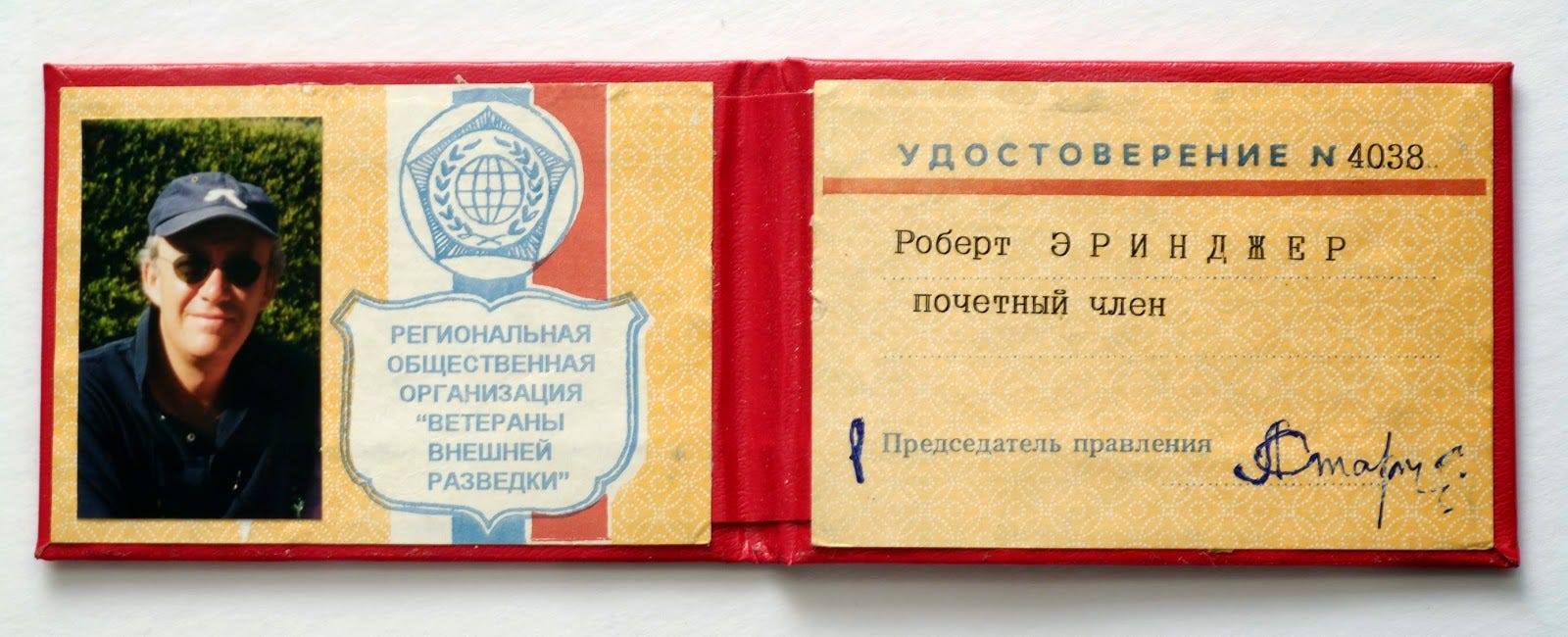
He whipped out a red faux leather, gold-embossed card. “This is my membership.”
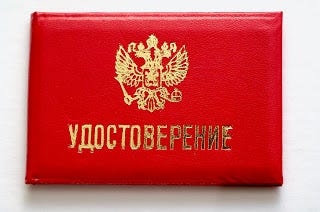
I studied Prelin’s photograph (20 years younger). “Nice.”
“You want?” asked Prelin.
“What do you mean?” I asked.
“I make you honorary member of FIVA, retired KGB association. For services to the Motherland.”
“Really?”
“You will receive card exactly like card carried by Edward [Howard] and George [Blake].”
“And you get nice badge, too,” added Sokolov. “Five stars.”
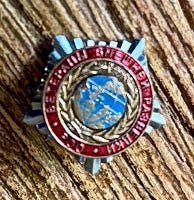
“Is that,” I replied, “how many years of prison I’d get if the FBI finds out?”
“No more than 20 years,” cracked Prelin.
Sokolov suggested that I share with him the byline of his Kalugin book.
“But you’ve already written it,” I said. “You’ve done all the work.”
Prelin jumped in. “It would be better for the book to have an American author, no?”
Yes, it would. But no Western author is going to give your crap-book credibility on my watch.
I said I’d think about it.
Next day, I hosted a lunch for Prelin, Sokolov, and Nicholas Davies, a British nonfiction book author.
I’d known Davies since he was foreign editor of the UK Daily Mirror years earlier. I told him, as an invite to this lunch, I was developing book projects with a pair of Russians.
We met at The Lowndes and walked to Zaffarano, a high-end Italian restaurant two doors away.
Prelin deliberately sat with his back to the wall.
“Ah, this is good,” he exulted. “I can see the door!”
“Tell me if anyone from MI5 walks in,” I deadpanned, but my sarcasm deriving from his Royal China joke was lost on him.
We got off to a faltering start. Davies spoke too fast for the Russians, though they pretended to understand what clearly they did not.
It was clear we needed lubrication. I ordered a bottle of pinot grigio.
Conversation centered on Davies. The Russians had done their homework and knew he had authored a slew of books on British royalty—primarily about Princess Diana.
Sokolov, sitting across from me, said little. He steadied his eyes in my direction.
A propos of nothing, he finally said, “It is true you join Ku Klux Klan?”
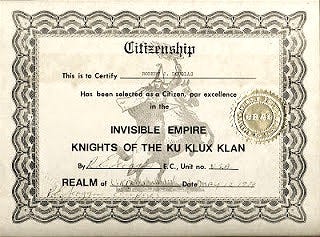
“Yep,” I replied. “I still have my robe and hood. “Of course,” I added, “I did it to expose them in a British newspaper.”
A follow-up question from Sokolov: “What is meaning dream bed?”
Apparently, Sokolov had thought the term dream bed meant twin beds. Consequently, he and Prelin were doubling as bedmates in a standard double bed.
Such imagery was most unappetizing.
And then our meal arrived.
Digging into salmon over a bed of spinach, Prelin reported with glee that during his career he had never worked with a female KGB agent. He said women were no good to work with.
Sokolov nodded agreement.
(Jeez, if I had to double up in a cheap hotel and share a dream bed, I would certainly prefer working with a female agent.…)
Davies departed.
My two Russian guests and I reassembled in lounge of The Lowndes hotel so I could coach Sokolov on what to write to amend his book for American readers:
Ames. You must address Ames.
Analysis. If, as you say, your job was to analyze U.S. intelligence services, what were your assessments?
SVR and FSB. No one, I pointed out, had yet written a book on Russian intelligence since the disintegration of the KGB.
Putin. A strong chapter on how the intelligence apparatus engineered the ascension of Putin to the presidency.
Sokolov agreed. Prelin concurred.
All that remained was payment for George Blake to translate from Russian to English. They promised to check with Blake and let me know the cost.
“And I will send you KGB card,” said Prelin.
⁂
Six weeks later a large envelope arrived by Fed Ex.
(It had been opened and resealed with U.S. Customs tape.)
Inside was my red faux leather gold-embossed KGB card, membership number 4038.
And a five-star badge.
It was official: I’d been inducted into the KGB—a made man.
No posts
Comments
Nothing yet. Say the first thing.
Sign in to join the conversation.