
Levi Strauss discovered that money during California’s Gold Rush was made not from gold but through what prospectors and miners needed. And wanted.
Enter Domenico Ghirardelli.
Born near Genoa in 1817, he apprenticed as a confectioner before wandering farther afield than most nineteenth-century Italians ever dreamed: Uruguay, Peru, and finally California after hearing feverish tales pouring out of the Sierra Nevada.
Like everyone else, he was seduced by gold.
Unlike most, he quickly came to his senses.
Prospecting was uncertain.
Providing provisions was truly golden.
It is one of history’s enduring lessons.
Gold Rush. Oil Rush. Dot-com Rush. Artificial Intelligence Rush.
Most prospectors fail. Merchants cash in.
He opened a store supplying miners with coffee, spices—and then something they desperately needed after months of beans and bad whiskey: chocolate.
He founded—in1852—what became the Ghirardelli Chocolate Company.
The next stroke of genius arrived by accident.
Around 1865, one of Ghirardelli’s employees noticed that hanging warm chocolate in cloth bags allowed cocoa butter to drip away naturally, leaving behind a richer cocoa mass. The discovery became known as the Broma Process, producing a smoother, deeper-flavored chocolate that helped establish Ghirardelli as one of America’s finest chocolatiers.
By the 1880s, Ghirardelli chocolate was traveling throughout the American West and across the Pacific.
While much of San Francisco was reduced to ashes by the earthquake and fire of 1906, the Ghirardelli factory survived. Within days, chocolate production resumed.
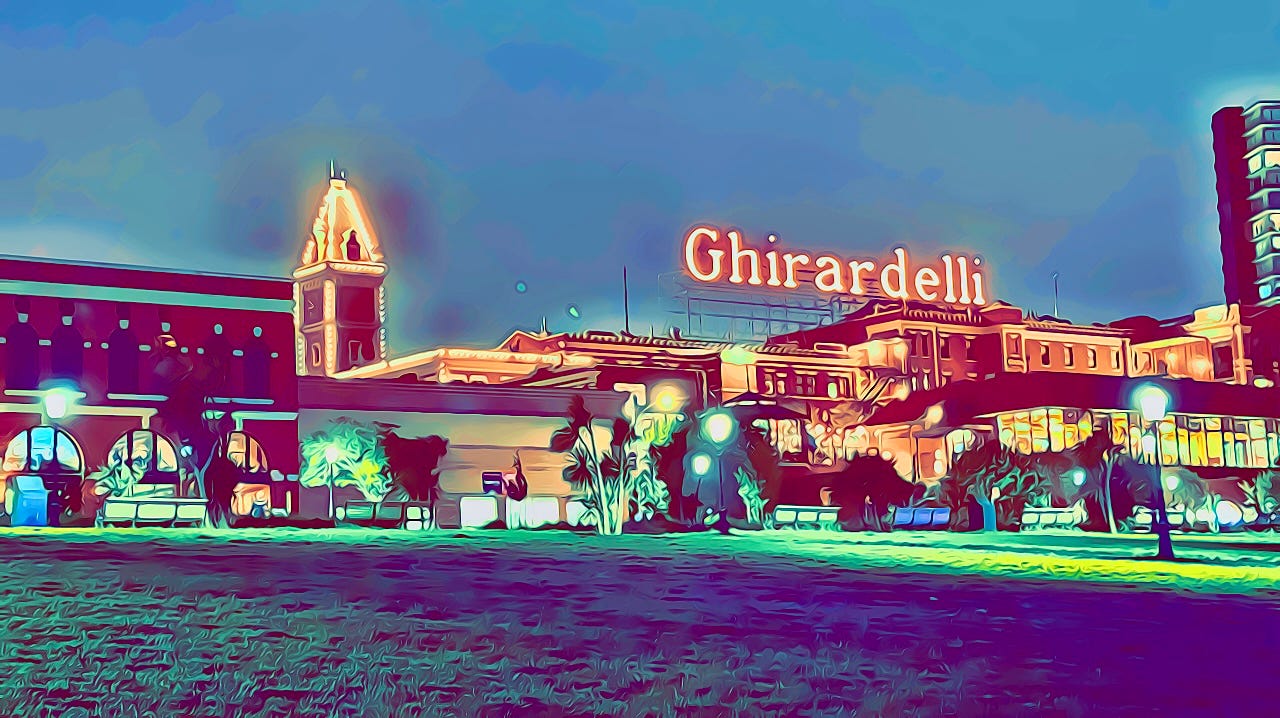
The old waterfront factory eventually ceased manufacturing, but rather than bulldozing it—as America has an unfortunate habit of doing—San Francisco reinvented it as Ghirardelli Square, one of the nation’s earliest and most successful examples of preserving industrial history by giving it a second act.
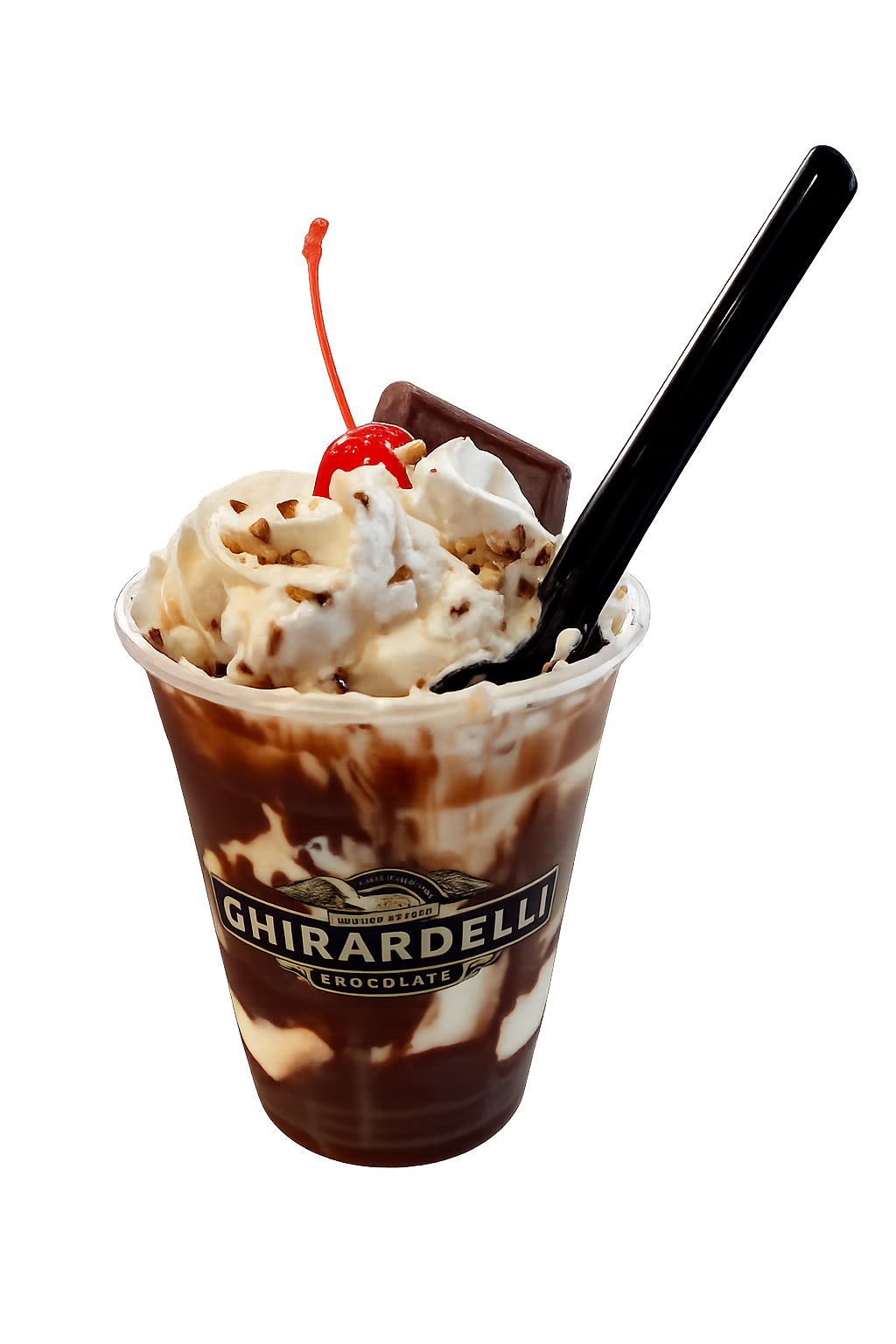
Today, tourists arrive not to watch cocoa beans being roasted but to order classic hot-fudge sundaes beneath the famous illuminated sign.
Did Domenico Ghirardelli and Levi Strauss know one another?
No historian has yet unearthed evidence of this. But they occupied the same compact city, walked many of the same streets, attended many of the same civic gatherings, and built two of San Francisco’s most enduring businesses.
It would have been harder not to cross paths.
Mark Twain arrived a decade later.
Again, no diary records the three men sharing cigars over coffee and chocolate.
Too bad. It would have been a gathering worth gate-crashing.
Every great city has its signature aroma.
Paris has freshly-baked croissants.
Rome has espresso.
London has rain-soaked leaves and grass.
San Francisco?
Salt air, sourdough, chocolate… and…
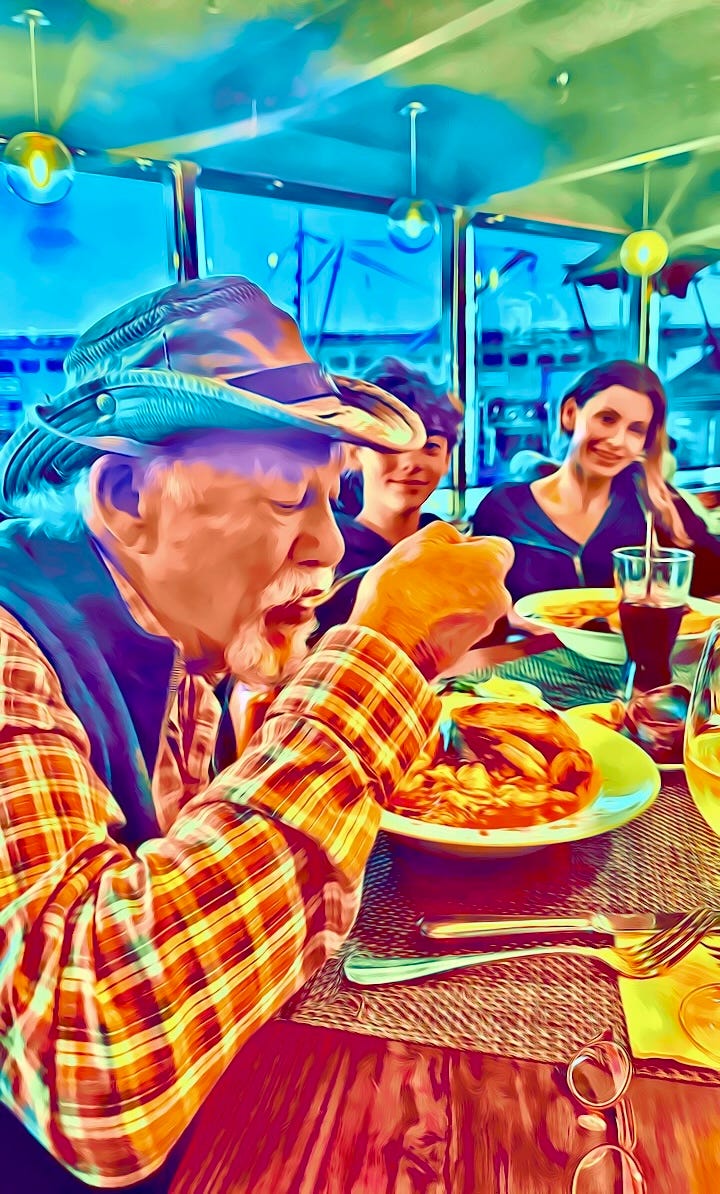
Cioppino: a bowl of fish stew that became as symbolic of the city as the Golden Gate Bridge.
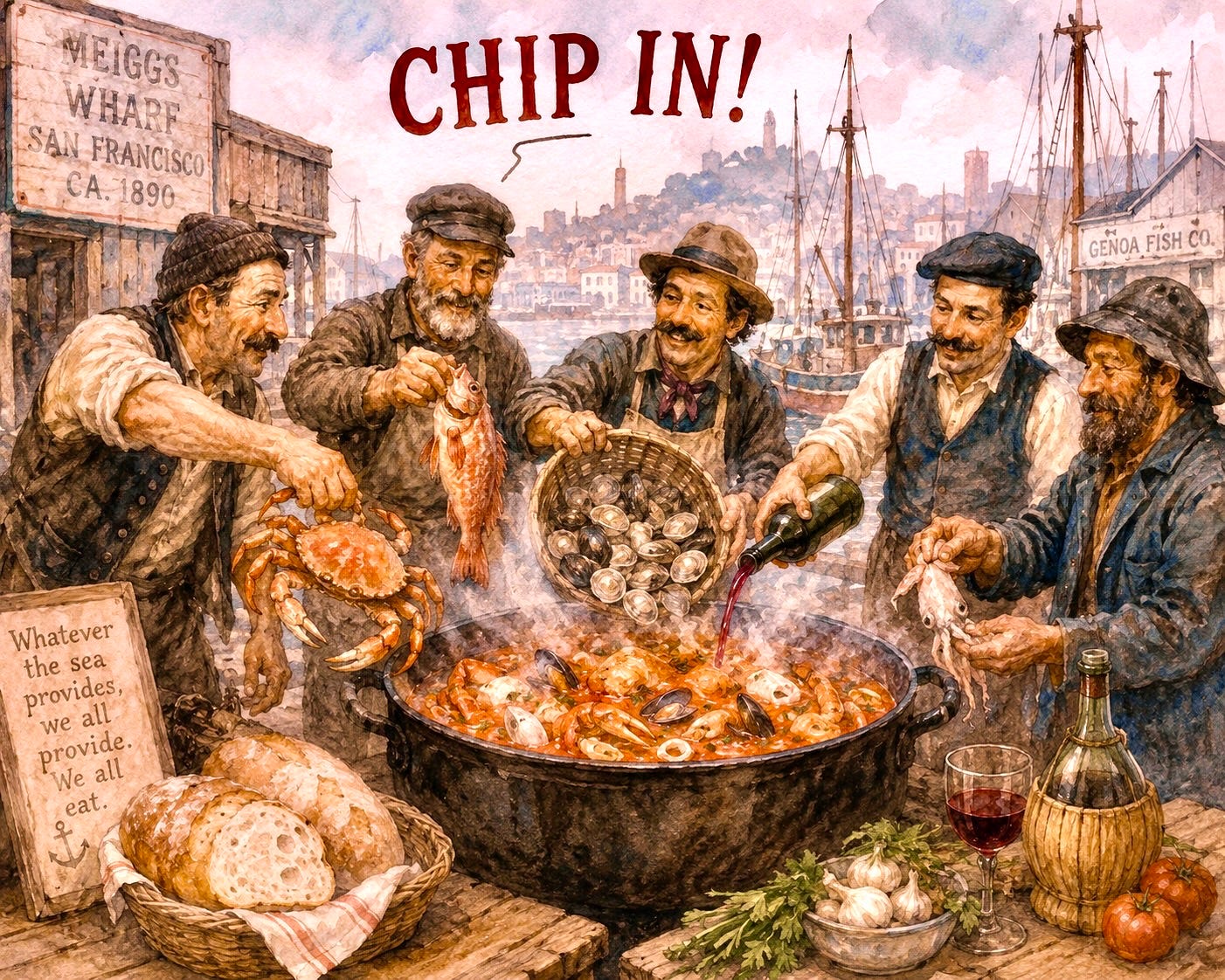
Its origins lie not in an elegant restaurant but aboard fishing boats and along the old Meiggs Wharf in the late nineteenth century, when North Beach was filling with immigrants from Genoa and the Ligurian coast.
They brought with them a humble fishermen’s soup—a practical meal made from whatever from their catch had declined to sell that day.
The Mediterranean gave way to the Pacific.
Sea bream became rockfish. Tiny European crabs became Dungeness.
Mussels, clams, shrimp, squid and whatever else the fishermen had hauled aboard found their way into the pot.
Italian tradition meets Californian abundance.
The name derives from the Ligurian word ciuppìn.
Fishermen walking the wharf carrying an empty pot after a disappointing day’s catch, asking their mates to “chip in” whatever fish or shellfish they could spare. One contributed a crab. Another a cod. Someone else a handful of mussels.
At suppertime, everyone ate from the stockpot.
No single ingredient dominated. Every contribution mattered.
It also embodies an old maritime code that has disappeared from much of modern life.
Today, we compete.
Those fishermen cooperated.
Cioppino has no canonical recipe.
Ask ten San Francisco chefs and you’ll receive ten different answers. The constants are a tomato-and-wine broth, Pacific seafood—especially Dungeness crab when in season—and a loaf of San Francisco sourdough to ensure not a drop goes to waste.
Cioppino began as leftovers.
It became a legend.
Every spoonful carries the Pacific.
Every bite carries Italy.
Sometimes the richest meal begins when everyone simply chips in.
No posts
Comments
Nothing yet. Say the first thing.
Sign in to join the conversation.