
Editor’s note: This is the second in a series about downward mobility for the credentialed class — a story that is likely to become much more common as AI eats white-collar work and the degree-leads-to-status and stability bargain stops paying out.
Teaching is a grubby profession. The romantic fantasy — Robin Williams in Dead Poets Society or Michelle Pfeiffer in Dangerous Minds — gets beaten out of you pretty quickly. Kids tell you to fuck off in the hallway and a lesson you spent three hours preparing can go down the toilet in ten minutes because half the class is checked out and the other half is staring at a phone hidden under their desk.
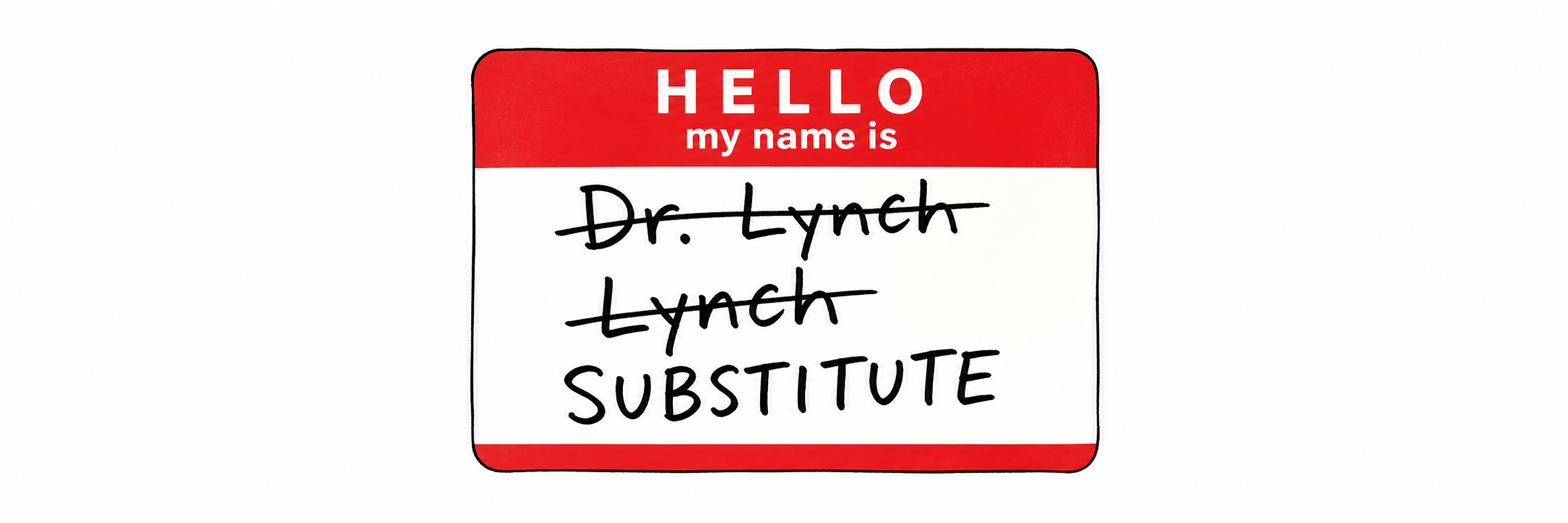
I’ve taught for over 20 years in universities, high schools, middle schools, and elementary schools. The most common response I hear from teachers to “How’s it going?” is “Living the dream.” It’s a dumb cliché but it conveys how actual teachers — especially in working-class public schools — view their jobs. The prime directive lurches unpredictably between save the kids and fuck the kids within the same hour.
I am not the first person to experience social mobility in reverse. But there’s a sobering humility to it when it happens to you — to someone who had always assumed they were on the way up. I have a PhD in biological anthropology and trained under Robert Trivers, arguably the greatest evolutionary thinker since Darwin. Before academia, I traded derivatives on Wall Street. I’ve published in journals with names impressive enough to impress people who are impressed by that kind of thing. After several postdocs and hundreds of failed applications for tenure-track jobs, I taught high school chemistry. Then my certification expired. A PhD, it turns out, is not enough to teach public high school. So now I substitute teach for $160 a day in North Carolina. If teaching is grubby, subbing is grubbier.
The job does have its own rewards, though, and they’re not the ones you might expect. Substitute teaching provides a bird’s-eye view of childhood — it’s thirteen years of human development in microcosm. Where the classroom teacher knows her own kids intimately and barely registers the rest of the building, the sub sees the whole show. We bounce between gym and art. We hang out with kindergarteners trying to hug us on Monday, seventh-graders trying to make fun of us on Tuesday, and twelfth-graders trying to ignore us on Friday. You don’t need to watch 7 Up. You see it every week.
Watch fourth-graders hit the playground at recess sometime. They don’t walk — they burst out the door like caged animals released into their natural habitat. Within seconds, games appear out of nowhere and the rules invent themselves. Someone is “it,” though no one is entirely sure who or what the game is. Give second-graders pool noodles in gym and they know exactly what to do: hit each other.
If you watch closely, the way you might watch a recently discovered tribe in the Amazon, you notice they are doing something that most adults have forgotten how to do. They don’t need to be told to be in the moment. They’re consumed by it. The game is everything. Adults see life as chess — something to be studied, mastered, won. But children know it’s really Tetris — something to be experienced. The pieces arrive unannounced, they fall faster than expected, and the game never stops long enough for you to figure it out.
Last week I subbed for a band teacher at a tough middle school. On the way in I saw two fights in the parking lot. A girl told the principal to go fuck himself and walked away like nothing happened. I got to the classroom and set up my laptop. I had work to do — applications to fill out, a chapter to edit, emails to answer. But then the band kids started showing up. They had a concert coming up in three days and the playlist on the whiteboard.
When they started “My Favorite Things,” I dropped everything. A girl with braces played the flute: raindrops on roses. Five girls on clarinets came in after: whiskers on kittens. The French horns came in on girls in white dresses with blue satin sashes, then the trumpets on snowflakes that stay on my nose and eyelashes. Finally the whole band: when the dog bites, when the bee stings, when I’m feeling sad. I sat there mesmerized, while a room full of twelve-year-olds played The Sound of Music all the way through.
The best and worst part of subbing is the same thing: you don’t get to know any of the kids. You don’t know their names and you’re not coming back tomorrow. And after about fourth grade, the kids know it too. The sub occupies the lowest rung in the school. The lunch ladies get more respect. Last month a kid told me I looked like Palm Beach Pete — an Epstein doppelgänger I looked up later. You haven’t experienced status decline until a sixth-grader has decided that you’re a joke while his buddies giggle behind him. We get $160 a day for the freedom of not caring whether they learn anything, remember our names or spend the whole day on TikTok. Their regular teacher doesn’t get that freedom and pays for ours.
The rules and rhythms that let kids switch from the hallway, the cafeteria, or a rough morning at home into doing math are fragile. They depend on a classroom culture that can take weeks to build. The same kid plays on his phone in a lazy biology teacher’s class and then enthusiastically discusses Emerson in the master English teacher’s room across the hall. The substitute is the natural enemy of classroom culture. We don’t know which kid can take a joke, which kid is one bad look away from crying, and which kid might throw a chair. By the time we figure it out, the day’s over. The sub’s motto is the same as Homer Simpson’s: “That’s a problem for future Homer. Man, I don’t envy that guy.” The regular teacher has to rebuild whatever the sub destroyed in a day.
I’ve spent years pretending I didn’t care about status, which is the main way people who care about status manage the shame of caring about it. Everyone wants to matter somewhere. To be taken seriously. To not be the worst parent in the neighborhood. To not be the least interesting person in the room. Losing the status you pretended not to care about is embarrassing, maddening, and a daily reminder that you cared a lot more than you admitted. But it has also taught me something a career in academia never could have. When you’re consumed by how you appear to others, you can’t actually see them. When you stop caring, they come into focus. A girl with braces playing the flute. Second-graders hitting each other with pool noodles until somebody starts crying. A room full of twelve-year-olds playing a song from The Sound of Music even though no one’s grading them.
Then the bell rings. There’s an empty bag of Doritos and a half eaten hot dog smeared on the floor. In the hallway, the middle-schoolers walk past me like I’m not there.
Living the dream.
Comments
Nothing yet. Say the first thing.
Sign in to join the conversation.