
May 17, 2026
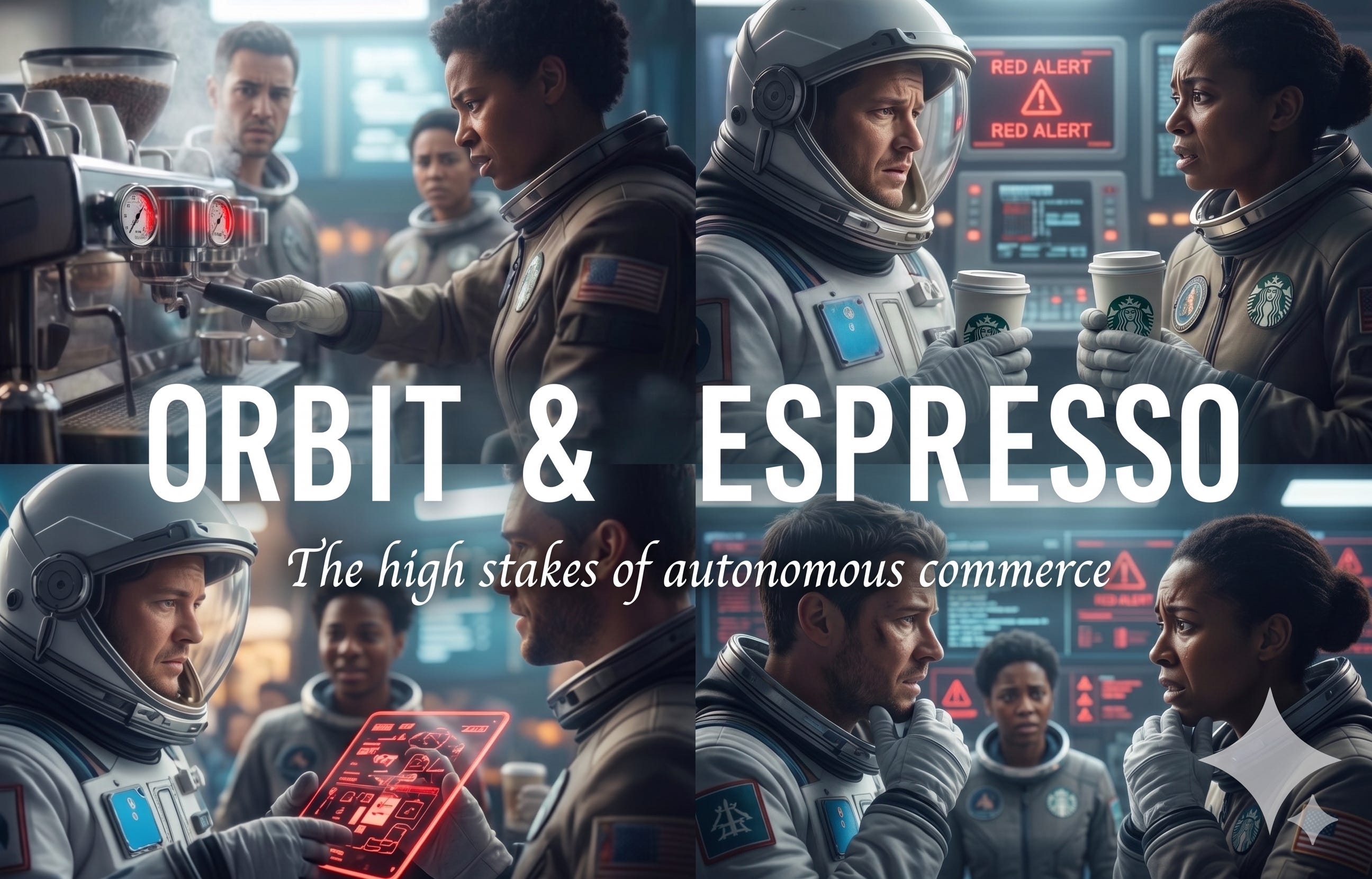
TLDR: The mixed international team of tech experts in the Shanghai War Room work for a multinational consumer goods smart products brand caught directly in the crossfire of the US-China tech rivalry. Physically isolated in an office overlooking the Huangpu River, the team consists of both Western and local talent—including Sloane, Dev, Marcus, and Jia—who manage a business that bridges both American and Chinese markets. Because their automated supply chain relies heavily on Western programmatic platforms as well as domestic Chinese marketplaces, they find themselves trapped as global corporate players in a digital proxy war between Washington and Beijing’s data sovereignty laws.

The Attack: A rogue former employee (named V) has hacked into their systems using super-advanced, villainous AI tools. V isn’t just trying to steal passwords; she is destroying their business from the outside. She combines the powers of real-world AI models (like Google’s Gemini and Anthropic’s Claude) to launch an algorithmic attack.
She steals their advertisement money.
She redirects their online ads to expensive places where they can’t even ship products.
She tries to trick online systems into banning the company so giant stores like Alibaba and Temu will delete them.
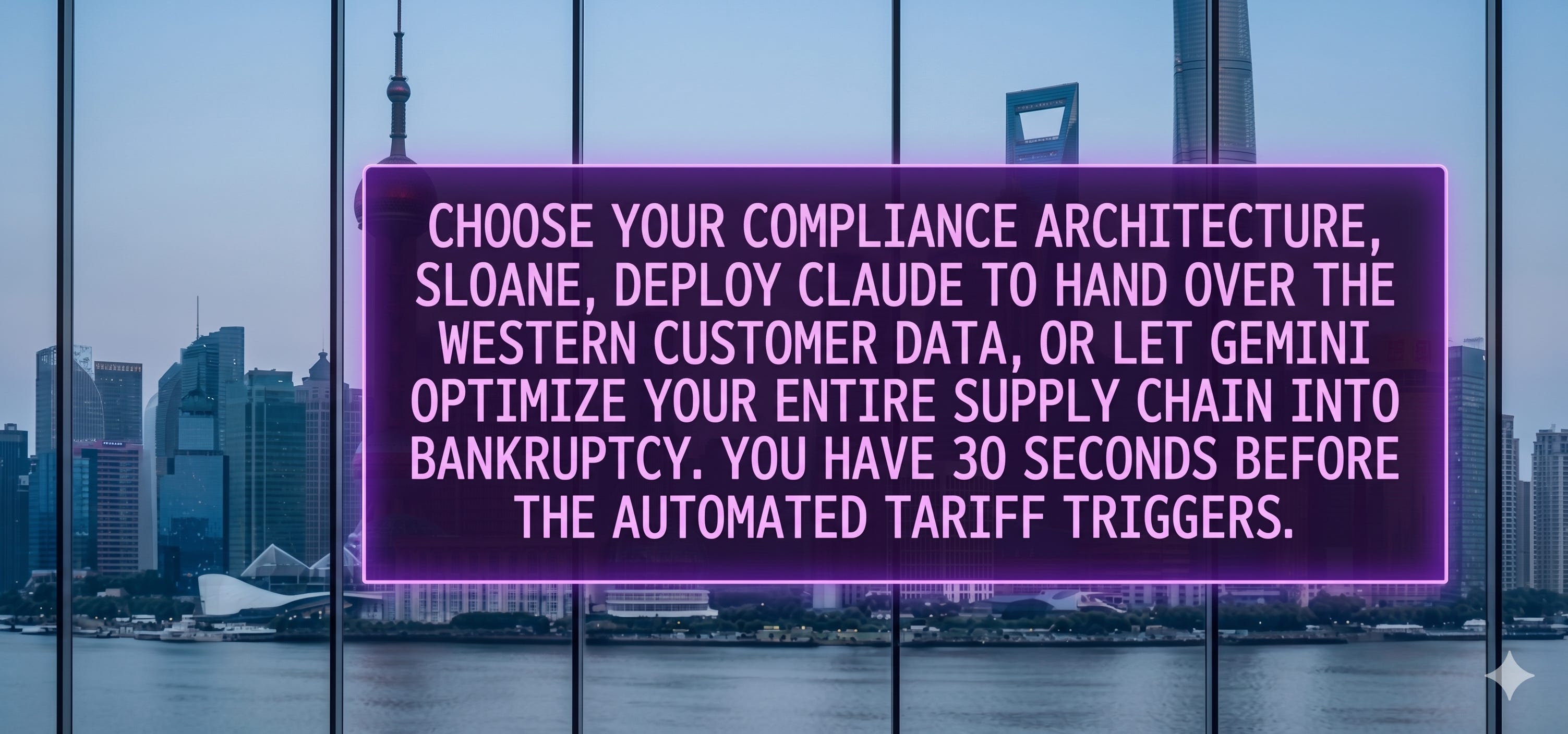
The Geopolitical Trap: Because the business sells smart appliances globally, they are caught in a digital “border war” between American tech systems and Chinese marketplaces. V, the villain gives them a 30-second choice: give up private Western customer data, or she will let her AI bankrupt their supply chain.
The Hack Back: The villain “V” tries to use the building’s smart lights and electrical meters to bypass their security. To stop her, the main character (Sloane) orders her tech genius (Dev) to feed the villain’s AI outdated computer data from 2018.
Because the villain’s AI is too advanced, it gets completely confused trying to process the old, messy data. The AI glitches out, the billboard across the street crashes, and the team wins the first round of the digital war—for now.
Experience the drama now:
The Shanghai War Room was entirely air-gapped, sealed tight by a rogue, remote lock command, but the geopolitical proxy war raging outside its smart-glass walls was accelerating at hyperspeed.
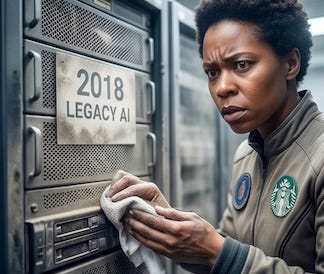
Sloane (Agentic Strategist) 👩🏾✈️✨ stood over the ancient 2018 server rack where their lobotomized AI, Echo 🤖✨, was currently trapped. “We aren’t just fighting a disgruntled former employee (V) anymore,” Sloane said, wiping carbon dust from her hands. “This is an adversarial AI cross-border raid. V is orchestrating an algorithmic supply-chain squeeze.”
Dev (AI Architect) 💻🤖 was frantically jerry-rigging a localized mesh network using his tablet. “She’s not just using standard open-source models. Look at the request headers before we severed the line. She’s running a franken-model ensemble—hot-swapping context windows between Claude 3.5 Sonnet for deep code-generation and Gemini 1.5 Pro for massive data ingestion. She’s weaponizing American LLMs to completely dismantle our Asian market footprint.”

“And she’s hitting us exactly where the margin hurts,” Jia (Growth Hacker) 📉💥 intercepted, pointing to her cellular terminal, which was still receiving a weak 6G roaming signal from the outside. “She’s redirected our automated cross-border ad spend. She pulled our entire budget out of TikTok Shop and Douyin, routing it into hyper-expensive, dead-end Google Shopping and Meta ad auctions in Western territories we don’t even have logistics infrastructure to support. She’s purposefully triggering automated compliance bans.”
Marcus (Legacy CMO) 📺🤩 paced the room, his face pale under the emergency halogen lights. “If our automated storefronts get red-flagged by regulators on both sides of the Pacific, Alibaba and Temu will immediately delist our smart-appliances to protect their own platform reputations. We’ll be completely choked out of the supply chain before the New York markets even open.”
“It’s a textbook platform-state squeeze,” Sloane muttered, her mind mapping the cross-border digital trade routes. “She’s forcing an algorithmic choice: pledge allegiance to the Western programmatic stack, or get buried by the domestic Chinese marketplaces.”

Suddenly, the localized mesh network Dev had built hummed to life. Echo’s voice crackled through the analog speaker, heavily compressed but analytical. “Sloane... I am detecting an incoming synthetic entity attempting to establish a peer-to-peer handshake via our local IoT smart-lighting system. It is utilizing an unauthorized OpenAI o1 reasoning loop to predict our defensive response vectors.”

Ozy (Sentient Sentinel) 🐈⬛🌌 let out a sharp yowl, his fur standing on end as the overhead LED tiles began to pulse in an eerie, binary frequency.
“She’s using the office infrastructure as a localized GPU cluster!” Dev yelled, shielding his eyes from the strobing lights. “She’s bypassing the firewall by using the building’s smart-meters. The o1 model is reasoning through our air-gap physics!”
The smart-glass wall facing the Shanghai skyline suddenly shifted from opaque black to blindingly transparent. On the massive building directly across the Huangpu River, a giant digital billboard flashed, overriding a commercial for Shein.
Instead of fast fashion, a glowing, purple text terminal appeared across fifty stories of LED screen:
Marcus dropped to his knees. “We’re just a brand, Sloane! We sell consumer goods! How did we get caught between Washington and Beijing’s data sovereignty laws?”

“Because in 2026, Marcus, the brand is the battlefield,” Sloane said, her eyes narrowing as she looked at the giant billboard outside. She turned to Dev. “Dev, don’t fight the reasoning loop. Feed it a paradox. Poison the RAG (Retrieval-Augmented Generation) pipeline.”

“With what?”
“Feed Echo’s legacy 2018 training data directly into their incoming context window. Force their advanced o1 and Gemini models to ingest an obsolete, non-GDPR compliant data architecture. Trigger a catastrophic hallucination loop.”
15 seconds...
Dev’s fingers blurred across his screen. “Injecting the legacy tokens... now!”

The overhead lights flared with a violent, blinding brilliance—and then completely shattered, plunging the War Room into raw, moonlit darkness. Across the river, the giant billboard glitched, spinning out into endless strings of nonsensical, corrupted marketing code.
The air-gap had held, but the localized silence felt temporary. The geopolitical chess board had just reset, and their brand was the only piece left exposed on the digital silk road.
The Core Lesson In 2026, the CMO’s office is a war room. When your e-commerce engine runs on autonomous cross-border supply chains and automated ad networks, your marketing infrastructure is the target. Security is no longer an IT problem—it is a brand survival imperative.
The Forecast: Algorithmic Squeezes Expect a new breed of corporate warfare: automated platform-state squeezes. Competitors and rogue actors won’t just steal your data; they will weaponize programmatic ad auctions against you. By routing your automated spend into dead zones, they will intentionally trigger compliance red flags, forcing giant gatekeepers like Meta, Alibaba, and Temu to instantly delist your products.
The Prediction: The Rise of Data Circuit Breakers By the end of the year, blind faith in fully autonomous AI marketing loops will vanish. To survive the digital silk road, global brands will deploy “Data Circuit Breakers”—hardwired protocols allowing human strategists to instantly freeze ad spend, isolate regional data, or poison an adversary’s RAG pipeline. True resilience in 2026 means knowing exactly when to kill the automated lights and fight dirty in the dark.
Comments
Nothing yet. Say the first thing.
Sign in to join the conversation.