
Marketing is now Experience Engineering—AI just turned the volume up. Your product updates instantly. Your customer’s trust builds slowly. The Gap: If you don’t engineer the experience to bridge that speed difference, you lose. The Moat: Experience + Trust + Speed. Goal: You, a latte, and a laptop—turning a “confusing update” into a “trust moment” before your coffee cools.
Marketing used to be about painting the rocket. Now, it’s about piloting it.
The Reality: AI allows your product, pricing, and content to update at Light Speed. But human perception (Brand Trust) moves at Walking Speed.
That gap? That’s where churn happens. That’s where customers get confused and leave
You are now an Experience Engineer.
Elon iterates the hardware. 🚀
Zuck iterates the algorithm. 🌍
You engineer the feeling of the change.
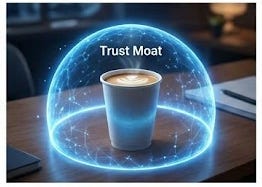
While the “brand team” is writing a press release about the new AI feature, you are at Starbucks using AI to smooth out the friction it caused. You aren’t just selling; you are architecting the “Trust Moat.”
Let’s be blunt:

If your product changed yesterday but your FAQ is from 2024, you aren’t managing a brand; you’re managing a museum.
If you wait for a UX designer to fix a confusing email flow, you are too slow.
The Winning Brand isn’t the one with the best Super Bowl ad. It’s the one that updates its customer experience as fast as its code.
Your mandate: Stop “launching campaigns.” Start “engineering workflows.”
Find the Lag: Spot one place where your product is faster than your customer’s understanding.
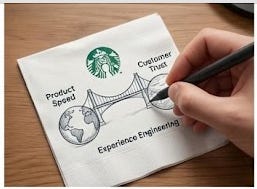
Sketch the Bridge: Use the “Napkin Engineering” method.
The Stack: Perplexity (Benchmarks) + Claude/ChatGPT (The Fix).
The Result: A “Trust Fix” you can ship immediately.

On your next coffee run, open your own app, site, or latest email blast. Look for The Lag.
Is there a new AI feature button that has no explanation?
Did pricing change, but the “Why” is missing?
Is the support chatbot giving generic answers to complex new problems?
Pick ONE specific friction point. Example: “The checkout page changed, but the confirmation email still looks like the old version.” That disconnection breaks trust. That’s your target.
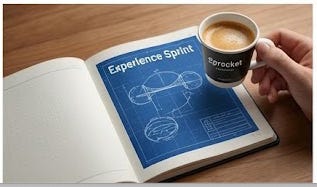
Grab a napkin or your notebook. Draw 3 Boxes (The “Bridge Blueprint”):
The Flash (Input) ⚡
What just changed? (New feature, price hike, policy update).
The Gap (Friction) 🚧
What is the customer feeling? (Confusion, skepticism, “Did I click the wrong thing?”).
The Bridge (Output) 🌉
The Asset you need to build right now to fix it. (A tooltip, a rewritten email, a Loom video, a microsite).
You have just identified an engineering problem, not a “marketing” problem. Now let’s solve it with AI.
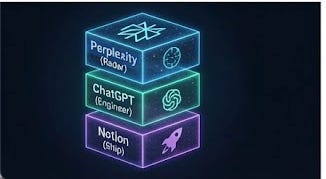
🧠 Stack:
Perplexity: To see how the best brands handle this specific change.
ChatGPT / Claude: To write the code/copy for the “Bridge.”
Notion: To store the fix.
A. Perplexity: The Radar Scan (5 min) Prompt:
“I am an Experience Engineer. My product just updated [Feature X/Pricing Y]. Find me 3 examples of SaaS brands that communicated a similar change with high clarity and trust. What UX copy or micro-content did they use?”
B. ChatGPT: The Engineer (15 min) Prompt:
“Act as a Senior UX Strategist and Behavioral Psychologist. Context: Our product updated [Feature], but our customers are confused because [The Gap]. Task: Engineer a ‘Trust Bridge.’
Write a 2-sentence tooltip explaining the change simply.
Draft a 100-word email that acknowledges the confusion and offers a ‘pro tip.’
Give me one ‘Micro-Delight’ idea to make this change feel like an upgrade, not a hassle.”
C. Notion: Ship It Paste the output into a page called “Trust Bridge: [Feature Name]”. You now have a solution ready for the Dev or Content team.
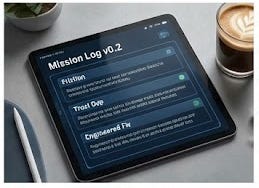
Open your portfolio doc (”From Starbucks Table to CX Superstar”). Add a new entry:
Mission Log v0.2: Experience Engineering 🛰️
The Friction: “Checkout flow updated, but confirmation email was outdated.”
The Trust Gap: “Customer feels anxiety that the order didn’t go through correctly.”
The Engineered Fix: “Used AI to rewrite the email logic + added a dynamic ‘What’s New’ banner.”
The Impact: “Reduced support tickets about ‘Did my order work?’ by X% (projected).”
Screenshot this. When you pitch yourself for a promotion or a new job, you don’t say “I write emails.” You say: “I use AI to engineer trust bridges that reduce churn.”
The Moat Test: If your competitor copies your product features tomorrow, do you lose?
If Yes → You are a commodity.
If No → It’s because your Experience Engineering is so tight, customers trust your delivery more than their features.
AI makes copying products easy. AI makes copying Trust impossible—if you are the one engineering it daily. Are you building the moat? Or just watching the water rise?
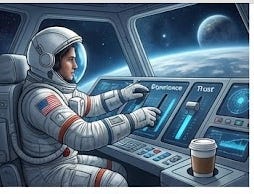
Marketing isn’t dead. It just graduated from “Arts & Crafts” to “Engineering.” You are the astronaut at the controls. Every confusing email you fix, every scary error message you rewrite, every gap you close... that is you tightening the bolts on the rocket.
From the corner table at Starbucks to the boardroom: One friction point at a time. One experience sprint at a time. One espresso at a time. ☕🚀
See you in #80. — Robb

Comments
Nothing yet. Say the first thing.
Sign in to join the conversation.