
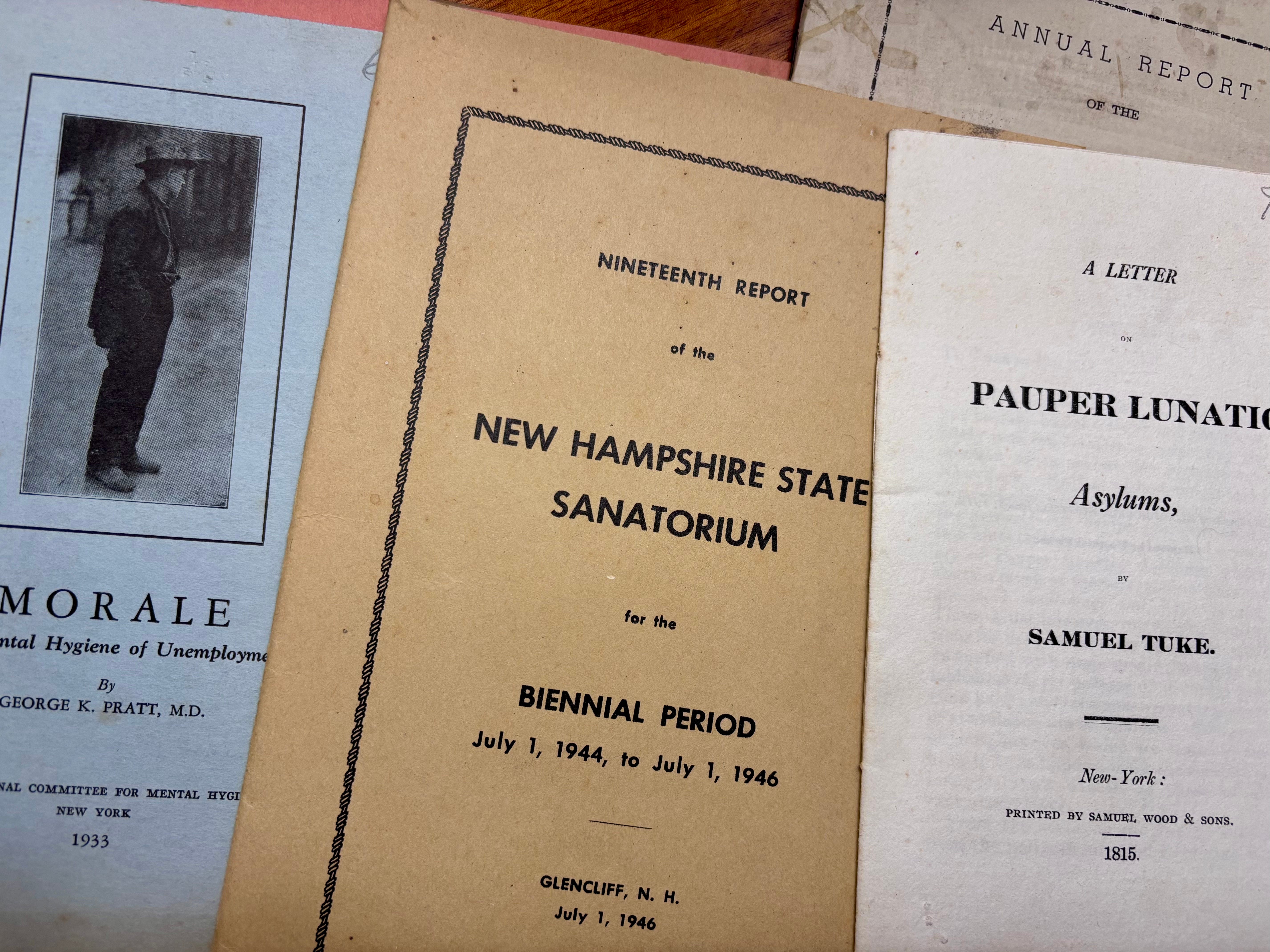
In 2023, I enrolled in an interdisciplinary film studies seminar, Medicine in Film. This course allowed me to build on and deepen my scholarship related to disability representation in film and its impact on societal attitudes, an issue I understand as a root cause of ableist policy.
As part of this course, I wrote a medical review essay for the documentary film, Lost in Laconia (1L Media, 2010). For this assignment I analyzed the representation of the patient/provider relationships and the historical context provided, as well as the style, design, and impact of the cinematography.
Lost in Laconia is about New Hampshire’s Laconia State School, formerly known as The New Hampshire School for Feeble-Minded Children. This film unfolds the story of how my home state became a model for “best practices” in institutional settings. In light of the recent ableist DOJ memo, I am resurrecting and revising some of this writing to help contextualize what is happening and where we are headed if we just passively watch it unfold.
For anyone wondering, what ableist DOJ memo?, don’t worry— I’ve got you covered.
The United States Department of Justice issued a memorandum that has caused justifiable concern for people with disabilities, and disability and civil rights advocates. In a plea to “say no to crip crow,” CEO and Founder of Disability Community for Democracy, Inc, Nieta Greene, wrote,
“on June 18, 2026, four days before the 27th anniversary of the Olmstead decision, the DOJ Office of Legal Counsel issued an opinion claiming that federal disability laws don’t require state-level integration. Their flawed interpretation of Olmstead and of Congress’ intent is unjustified and inaccurate. Despite this, they will still use it to harm disabled people, restrict freedoms, and threaten lives.”
A few days ago, PBS Newshour’s Ali Rogan spoke with Maria Town, president and CEO of the American Association of People with Disabilities, who explains why this is alarming. Here is a clip from their conversation:
There’s been a lot of news coming from this Administration lately: “reparenting black kids and drug addicts” at camps and farms, obvious attempts to segregate and dismantle civil rights protections for students with disabilities, impossible requirements that endanger disabled medicaid and medicare recipients, and accusing family members of fraud for providing paid support services to their disabled loved ones. I know a eugenic dog whistle when I hear one, and baby, this is a screaming cacophony.
During the Progressive Era, a time when ugly laws were in effect and eugenic thought was widely embraced, people with disabilities were mass-incarcerated in institutions. In these settings, people were subjected to inhumane living conditions, medical experiments, torture, a multitude of abuses, and labor exploitation. These practices were still in effect well into my own lifetime.
In 1903, The New Hampshire School for Feeble-Minded Children opened its doors and quickly became home to hundreds of individuals whose family and community did not know what else to do with them. Police, doctors, nuns, and other influential community members encouraged parents to admit their disabled children, to protect them from society— and society from them.
Initially intended to house so-called feeble-minded children, this institution rapidly became the permanent dumping ground for the poor, elderly, epileptics, and adults living with other physical, psychological, and developmental disabilities. Those perceived to have defective character flaws, such as indigence or diminished ability to independently care for themselves, were cast off to this institution as the “wreckage of humanity,” condemned to be indefinitely segregated from society.
As the institution admitted an increasing number of adults, the facility eventually changed its name to the Laconia State School (LSS). Despite calling itself a school, that this institution referred it’s inhabitants as inmates and not students alludes to the carceral nature of this setting.
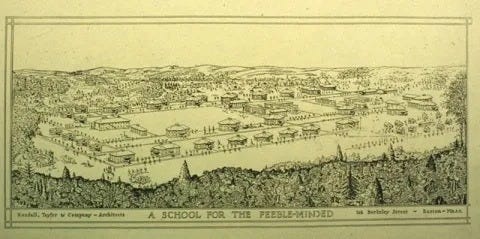
At the time, LSS was considered a fine representation of best practices in the field, a model institution renowned for its resources and ability to provide what relatives and community members otherwise felt ill-equipped to provide for their disabled loved ones. Designed to be a refuge for the “poor and dependent” but not nice enough to “encourage laziness,” these so-called best practices included isolation, neglect, abuse, and numerous human rights violations, including forced sterilization.
Ever heard the famous (infamous?) quote, “three generations of imbeciles is enough?” Well, this sentiment and the practice of compulsory sterilization was popularized during this period, and Buck vs. Bell made it legal to do so. Eugenics had grown in popularity around the turn of the century, and LSS was not immune to the allure of this “new science” promising to improve conditions of the human race. As a result, sterilization became a requirement for release from LSS. By 1947, LSS had sterilized 264 inmates. That number grew to 400 by 1958.
This quote from the film reveals the eugenic ideology embraced during the formation of these so-called best practices:
“Unfit human traits: feeblemindedness, epilepsy, criminality, insanity, alcoholism, popperism, and many others run in families and are inherited in exactly the same way as color in guinea pigs. If all marriages were eugenic, we could breed out most of this unfitness in three generations .”
This practice is still legal in at least 31 states.
I know a person who has worked in disability services for nearly two decades. This person previously worked with two elderly individuals who used to say “no brain, no pain.” I learned that these individuals were dropped off at the LSS when they were infants, living there their entire lives at the school until it closed in the early 1990’s. The origin of this phrase was unclear to the service provider until we watched Lost in Laconia together, when an LSS survivor shared her memory of a resident who sustained a wound from staff abuse. The treating doctor who sutured the resident’s wound refused to administer anesthetic because “[disabled people are] not like us.” He would explain simply, “no brain, no pain.”
One former resident recalled the haircuts that would be given to the inmates, reporting that they would give “half haircuts, so if you ran away, you’d get caught.” Other former residents used words like “hell” to describe the treatment and living conditions at LSS. They told stories about being pushed down a flight of stairs, dreaming of escape, and that “dignity, rights, everything was taken away from you.”
The stories and footage used in the documentary reveal subhuman living conditions. Residents slept in large rooms that were filled with rows and rows of narrow cots on metal frames. One former resident said, “when the lights went out, that’s when the screaming started.” Their recreational space was a two foot wide area between the beds and the window-lined wall. They had nothing to “occupy [their] minds and hands.” There were no curtains and no doors for privacy.
Showers and toilets were lined up in rows in wide open spaces. Toilets had cracks, were prone to leaking, and did not have seats or lids. Any personal belongings that came with residents were soon mixed up with the possessions of other individuals. Kitchen equipment was outmoded, and food was insufficient and handled in an unsanitary manner. At meal time, residents were tied to benches, which was how staff knew who needed to be fed.
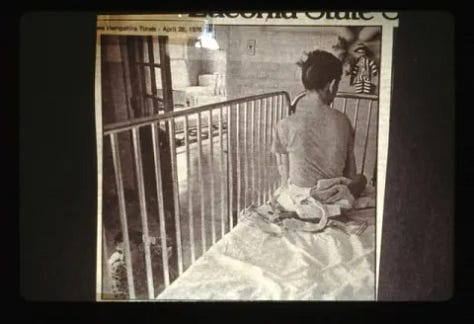
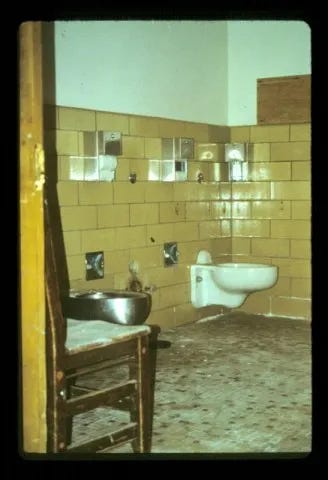
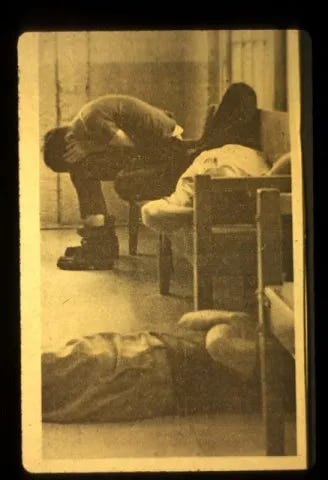
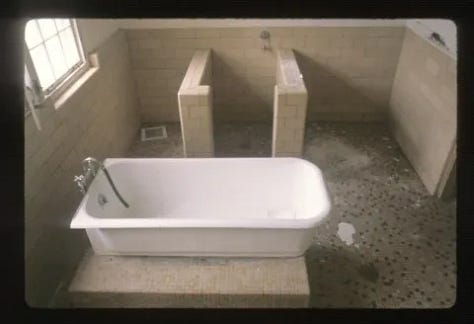
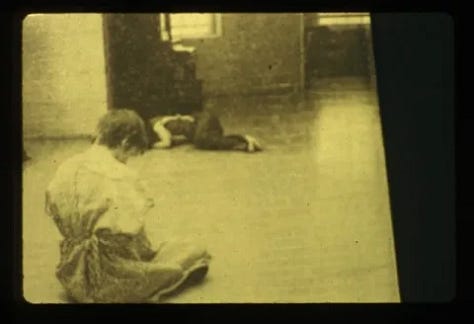

By 1970, the residency had grown from the hundreds to the thousands, yet conditions and financial support continued to decline. In the late 1970’s, LSS was cited for safety violations, and later, was a part of a class action lawsuit for violating constitutional rights and “denying the right to mentate–the right to think.” As a result of this lawsuit, LSS was ordered to decrease their population, establish a plan to make the environment as the least restrictive as possible, and rehome over 235 residents in community placements.
By 1990, the NH Governor announced that it was no longer economically possible to keep LSS open. The question remained–if the doors are closing, where will all the residents go? Who will care for these individuals? This sparked an enormous public debate. Over 1,000 NH residents signed a petition opposing the releases from LSS. News media articles published headlines reading “Not in My Neighborhood: group homes for the retarded trigger an emotional debate.”
Eventually it was decided that training would be provided to NH residents who wanted to become home care providers, many of which were previously employed as LSS staff. LSS’s former coordinator for home placement said it felt like a “civil rights movement.” On January 31, 1991, LSS closed its doors forever, becoming the first state to say “we no longer need institutions.”
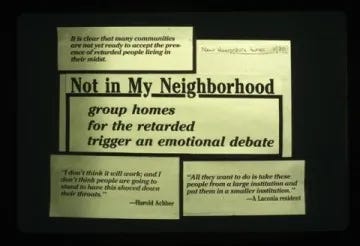
Because of my years of scholarship and decades of lived experience, I recognize these anti-disability efforts as driven by Progressive Era eugenic ideology; the very ideology behind the worst atrocities and human rights violations in recent history, such as the holocaust, as well as various forms of medical experimentation on and torture of society’s so-called defectives, the victims of which targeted on the basis of their perceived mental and physical incapacity and inferiority.
We should all be very concerned.
Additional sources:
https://www.nhpreservation.org/blog/laconia-state-school-seven-to-save-profile
https://csni.org/laconia-school-pictures
Comments
Nothing yet. Say the first thing.
Sign in to join the conversation.