
Though I am a hearing person, I have multiple disabilities, some of which include reading and sensory processing disabilities. When I read, words are strange symbols my brain struggles to decode. Through my eyeballs, my brain shuffles the text: while I am trying to read, words switch places like square dancers, and do-si-do, the words and their meanings swirl around the page, making me dizzy and tired.
No matter how many English Comp courses I have taken, or awards I have received for my writing, I still struggle to recall rules of punctuation and grammar. The meaning of what I read and hear evades me until I have passed over or heard the words again and again, having time to process through all of the associations and stimuli my brain throws into the mix just for funsies.
For this reason, I both enjoy and benefit from consuming literature across many mediums. I physically read books while listening to their corresponding audiobook; I read closed captions on film-based visual poetry and educational documentaries to aid my understanding; I listen to podcasts and read relevant articles so I can better comprehend what I have read; I research the works that I read so that I can find as many different ways as possible to experience them through my senses. Through this act of self-accommodation for my learning and processing disabilities, I have come to understand that reading is done with more than just my seeing eyes or hearing ears.
My regular readers know that I am enrolled in a 10-month poetry and hybrid writing manuscript program with Pioneer Valley Writers’ Workshop, while I continue working on my poetic and visual memoir. This month our instructor, Amie Whittemore, has assigned Deaf Republic by Ilya Kaminsky. The audiobook, which is read by the poet himself, is available for free on the public library app Hoopla, though I highly recommend purchasing it if you have the means to do so.
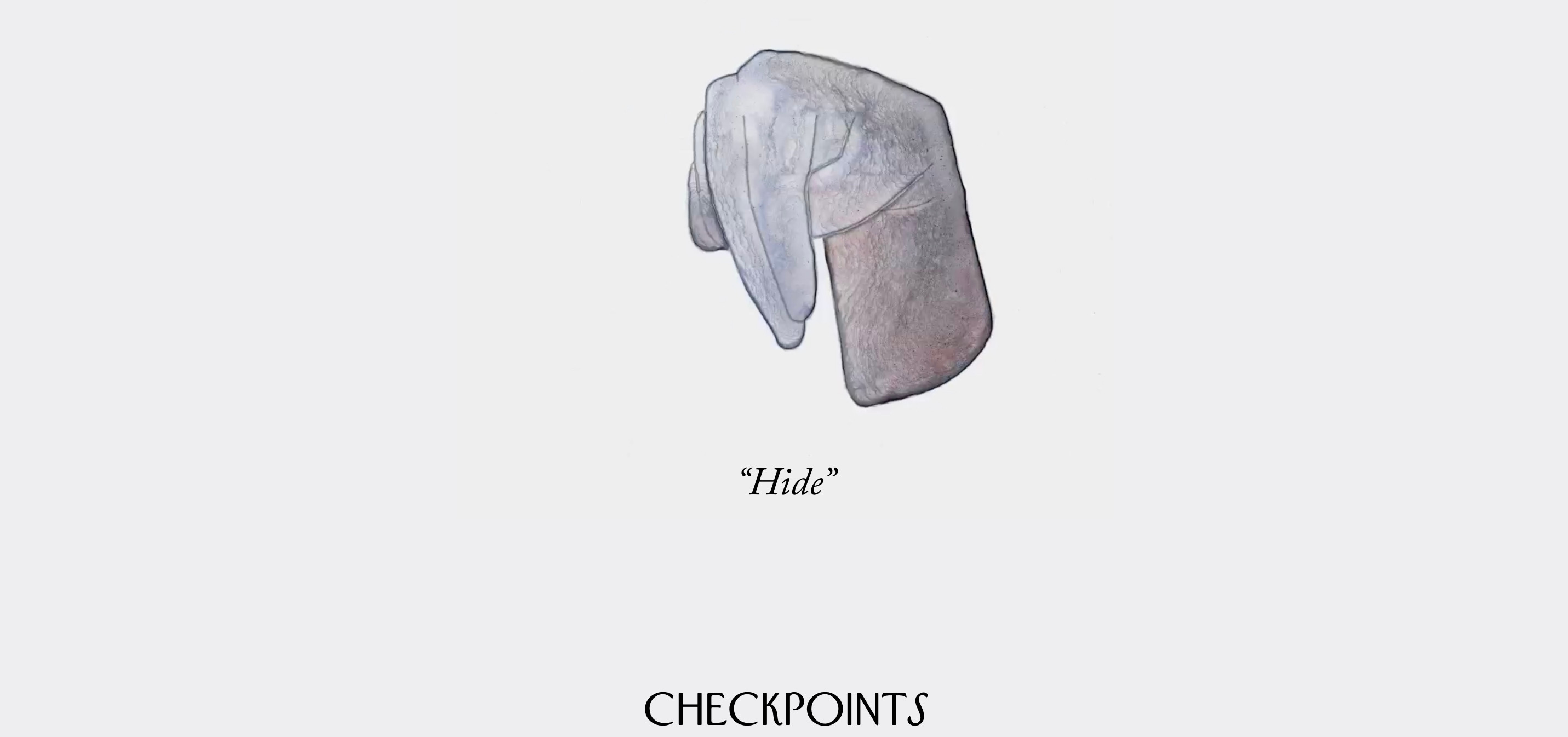
While researching avenues for self-accommodating my way through Deaf Republic, I came across a New Yorker article with animated illustrations and voice recordings accompanying Kaminsky’s poems. Animated hands sign key words in Miwon Yoon’s watery illustrations. Each poem has a corresponding audio recording with the poet’s voice half reading / half singing his poems in his heavy Russian accent. Through this article, Kaminsky’s poems become more than words on a page that my eyes struggle to read or that my brain has to work double time to make sense of. They become a true work of art I can more fully understand and engage with.
Another resource I discovered during my research was this video of Kaminsky performing his poems at a reading. His mannerisms, the sway of his body moving in tandem with the music of his vocalizations, added new layers of richness to the sensory experience I needed to fathom the totality of his brilliance.
Here is a bonus morsel I found in my research rabbit hole.
Douglas Ridloff, the executive director of ASL SLAM, demonstrates the gorgeous art of ASL poetry:
The necessity of these sensory experience’s raises interesting questions for me about the role of signed language as a mode of communication, as well as learning, within the context of our broader, normative culture— which has a history of being violent toward and oppressive of the D/deaf community. 1
I am particularly interested in the ways arts and education can be made accessible to groups that have historically been intentionally excluded. It is more commonly understood that through much of Western history women, people of color, and those belonging to the lower classes have been excluded from participating in government, receiving an education, or being recognized as great thinkers and creatives with important works of art or innovative ideas to contribute. Examples are found in gender- and race-based laws and restrictions across all levels of social life in the West.2
In my research for my manuscript, I saw evidence of this in the description of the “quality” of, and commonly held assumptions regarding, nursery rhyme and verse in The Oxford Dictionary of Nursery Rhymes by Iona and Peter Opie: 3
“What kind of verses are they to have become the best known in the world? Individual examination shows that not all are the doggerel they are popularly taken to be...Here is not the place to dwell upon the realization, which folk-lorists in the twentieth century are reluctantly having to admit, that the folk ‘had neither part nor lot in the making of folk-lore,’ that the early ballads were the concern of the upper classes...We believe that if all the authors were known, many more of these ‘unconsidered trifles’ would be found to be of distinguished birth, a birth commensurate with their long and influential lives.”
My two key takeaways from this quote:
Nursery rhyme and related verse (“preserved solely for the amusement of the young”) has a reputation for being “doggerel” and “trifles.” What does that reveal about how we value children?
Having previously been assumed to be the works of “the folk” (i.e. lower classes), the quality of the work wasn’t given much credence. However, as evidence emerged that these works had been crafted by those of “distinguished birth,” perceptions of their quality and beauty dramatically shifted. What does that tell you about how we value working class and poor people?
“Disability is everywhere in history, once you begin looking for it, but conspicuously absent in the histories we write.”
-Douglas Baynton, from Disability and the Justification for Inequality in America
When we combine this historical context with our lesser known disability histories (ugly laws, bans on the use of sign language, mass-incarceration in asylums and institutions, “special” schools for the so-called deaf, dumb, and blind, etc.), we begin to see that, historically, so too have people with disabilities been largely segregated from society, and thusly woefully underrepresented (and misrepresented) in the arts.4
This is why I love hybrid and experimental writing. According to this article, in his Emerson project, “Hybrid Forms, Hybrid Voices: A Creative Study of Contemporary Political Poetics,” John Rufo examines the political role of hybrid poetics. Like Rufo, I see hybrid forms as a way to resist these traditions of gatekeeping and elitism, and I am critical of the “predominantly white” canon.
While this Slate article makes a compelling argument for reading the canon, I’m not interested in dusty old poems written by dusty white men hailing from lineages of old, ill-begotten money and power. I will read them when I have to but I will never believe that I need to in order to appreciate Carmen Maria Machado, Diane Seuss, Leah Lakshmi Piepzna-Samarasinha, or any of my other favorite writers. By merging two or more distinct forms, hybrid poetry can overturn literary laws that want to segregate us according to gender, class, color, and crip status. It subverts. It defies. It cares. It opens long-barricaded doors— and I am not about to enter through those doors and be told I can’t appreciate the art of poor, female, queer, crip, POC writers without first reading the “totally gross” and “predominantly white” canon.
What art and writing accomplishes this ethic for you? Do you have any favorite examples that intersect with “hybrid poetics” or works that innovate disability inclusion and representation in arts culture? Please share them in the comments.
Rebecca Nann is a disabled multimedia artist and writer. Nann aims to amplify and celebrate cross-disability perspectives while exploring the historical roots of the issues faced by people with disabilities today. Recipient of multiple awards for leadership and academic achievement, Nann was also awarded First Place in Digital Storytelling by the NHHC’s HUGEmanities 2021 Big Contest for her short film, Art as Glue: How We Hold It Together.
You can read more of Nann’s disability writing at Disability Rights Center-NH and here and here on her substack.
It is free to subscribe to by R. Nann.
Paid subscribers get bonus posts with behind-the-scenes personal reflections, poems, and glimpses into her sketchbook. Learn more about Nann’s work here.
Remember: it doesn’t cost a copper to like, comment, share, or recommend.
Thank you for being a reader!
“Language and Identity in the 1800s: Deaf Students Denied Use of Sign Language | Gallaudet University.” 2022. Gallaudet University. July 29, 2022. https://gallaudet.edu/museum/exhibits/history-through-deaf-eyes/language-and-identity/language-and-identity-in-the-1800s-deaf-students-denied-use-of-sign-language/.
Baynton, Douglas C. 1996. Forbidden Signs: American Culture and the Campaign against Sign Language. University of Chicago Press.
Detailed Timeline - National Women’s History Alliance. 2023. National Women’s History Alliance. October 9, 2023. https://nationalwomenshistoryalliance.org/resources/womens-rights-movement/detailed-timeline/.
Calloway, Colin G. 2023. First Peoples: A Documentary Survey of Native American History.
Veblen, Thorstein. 2009. The Theory of the Leisure Class. Oxford University Press.
Hinger, Sarah, Ricardo Mimbela, and Linda Morris. 2025. “Disparate Impact, Explained.” American Civil Liberties Union, November 13, 2025. https://www.aclu.org/news/racial-justice/trumps-attempt-to-roll-back-key-civil-rights-enforcement-tool.
Leadership Council on Civil and Human Rights. 2025. “Trump Administration Civil and Human Rights Rollbacks.” The Leadership Conference on Civil and Human Rights. September 4, 2025. https://civilrights.org/trump-rollbacks/.
Reed, Erin. 2025. “Over 850 Anti-LGBTQ+ Bills Filed in 2025; Most in History.” Erin In The Morning (blog). April 18, 2025. https://www.erininthemorning.com/p/over-850-anti-lgbtq-bills-filed-in.
Opie, Iona, and Peter Opie. 1997. The Oxford Dictionary of Nursery Rhymes. OUP Oxford.
Baynton, Douglas C. 2020. Defectives in the Land: Disability and Immigration in the Age of Eugenics. University of Chicago Press.
Freeberg, Ernest. 2002. The Education of Laura Bridgman: First Deaf and Blind Person to Learn Language.
Rose, Sarah F. 2017. No Right to Be Idle: The Invention of Disability, 1840s-1930s.
Comments
Nothing yet. Say the first thing.
Sign in to join the conversation.