
Hello and welcome to the February issue of the Peripatetic Historian. I’m your host, Richard J. Goodrich, and once again we gather around the loom to weave history, travel, and photography into a coat of many colors.
This Month:
Peripatetic Field Report: Monkey Mayhem
Tallying the Taipei Positives
Ready? Let’s dive in:
The internet has no shortage of advice on how to handle encounters with Formosan Rock Macaques. Don’t offer them food. Look away if they glance in your direct; eye contact could provoke a defense of the animal’s territorial claim. Should a macaque jump on your head, don’t flail your arms about as if you were trying to dislodge a wasp—walk slowly and calmly down the trail until it grows bored and leaps away of its own volition.
Make no erratic moves if you treasure the long relationship you’ve enjoyed with your ears.
In short, watch yourself. You don’t want to be the next earless tourist bleeding across the six o’clock news broadcast.
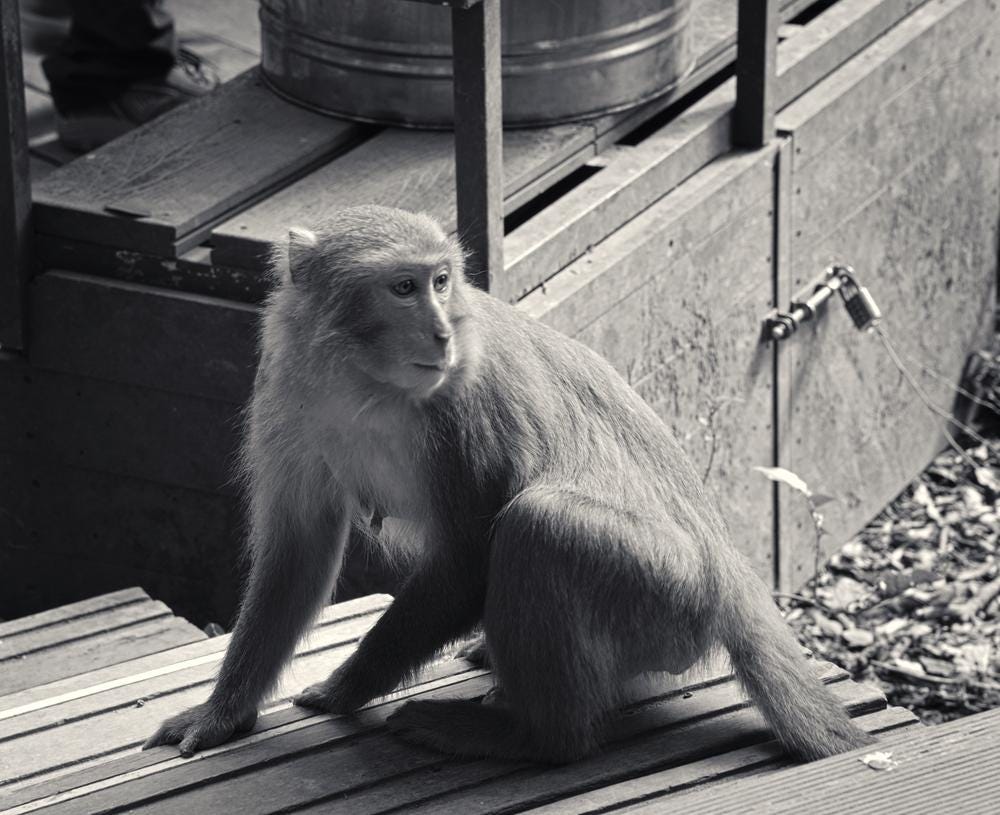
So, cognizant of these potential perils, why would someone voluntarily risk an encounter with Taiwan’s second most dangerous primate? It was, you can be certain, a question I was contemplating as we started up the jungled slopes of Shoushan—Kaohsiung’s fabled Monkey Mountain.
Kaohsiung is Taiwan’s second largest city, placed on the island’s southwestern coast. The city abuts the ocean, except for where it wraps around Monkey Mountain, whose western slope falls into the Strait of Taiwan. Although there are taller mountains inland, Shoushan does offer a 347 meter (1,138 feet) climb to reach its summit. As with many of the country’s developed trails, this meant several flights of stairs switch-backing up a rock face.
Up we went, the Kaohsiung cityscape dropping away behind us. Soon I heard bird song yielding to the chatter of primates skulking in the overhead canopy. An elderly gentleman eased slowly down the steps, knocking black, acorn-sized monkey feces off the path with a hiking pole. No doubt remained: we were in macaque territory.
The path flattened; the stairs yielded to a ribbon of rough, unfinished concrete, poured down the center of the trail. It was at this juncture that I spotted my first macaque. In my enthusiasm, I made the mistake of a direct gaze. Its sullen visage twisted into a snarl, a fierce display of small, sharp white teeth.
I raised my camera. “When you evolve a bit more,” I told the animal, “Get in touch and I’ll lend you some photos for your Instagram feed.”
I don’t know if I was persuasive.
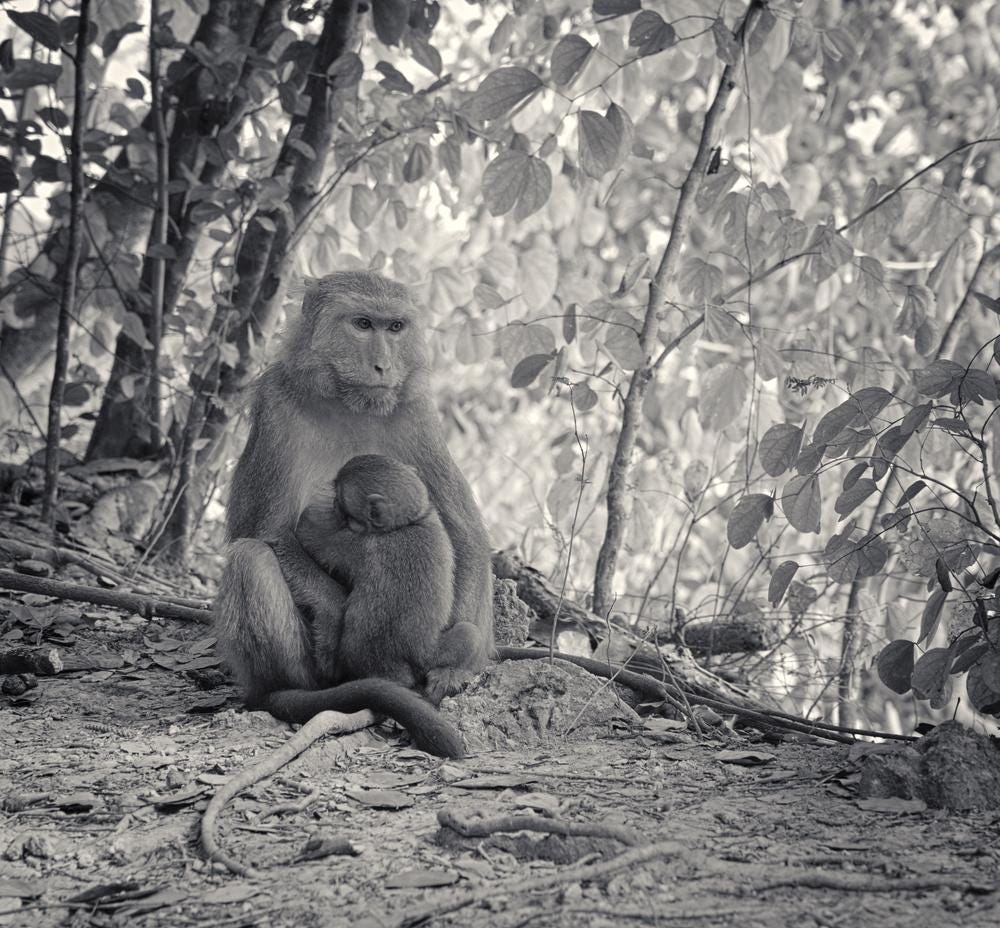
We hiked deeper into monkey territory. The animals leapt through overhead branches. A mother nursed her child. A juvenile macaque voided its bladder, just missing a young Taiwanese boy standing on the trail.
No internet source mentioned that peril.
Running the gauntlet, threading hazards both real and imagined, we reached the summit and Pansong Pavilion. This is a popular rest stop, favored by both humans and macaques.
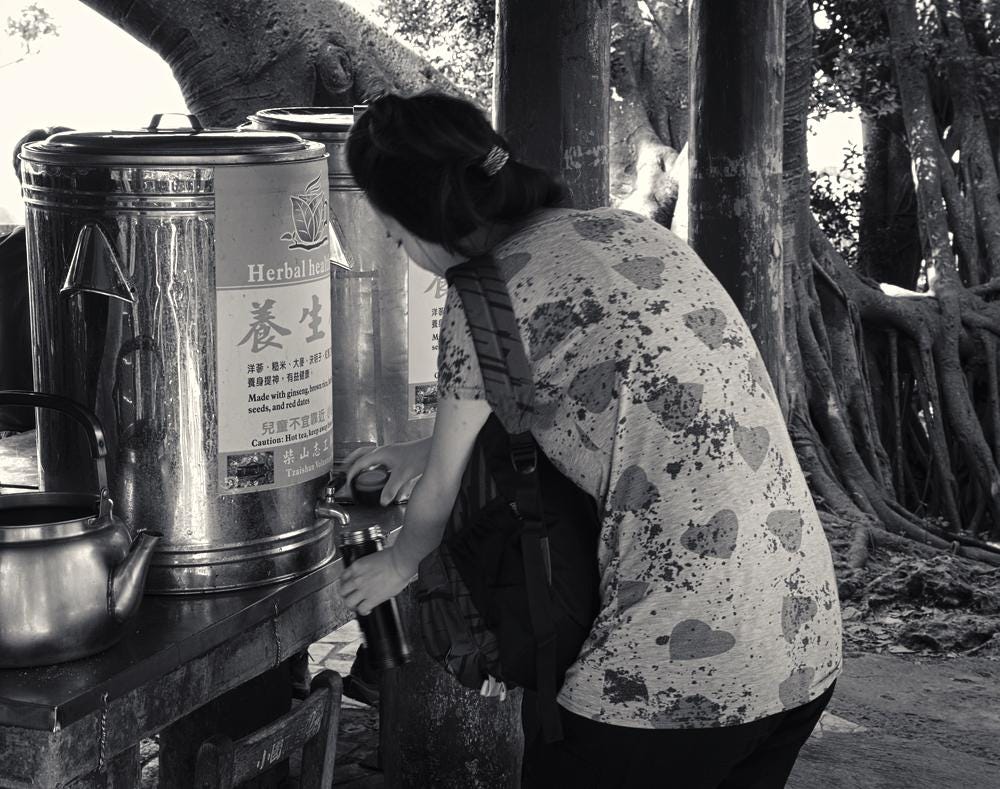
In a feat that provokes my unchecked admiration, Kaohsiung volunteers carry barrels of water to Shoushan’s summit in order to offer cold water and hot tea to arriving hikers. Nothing like a morning workout to stay in shape.
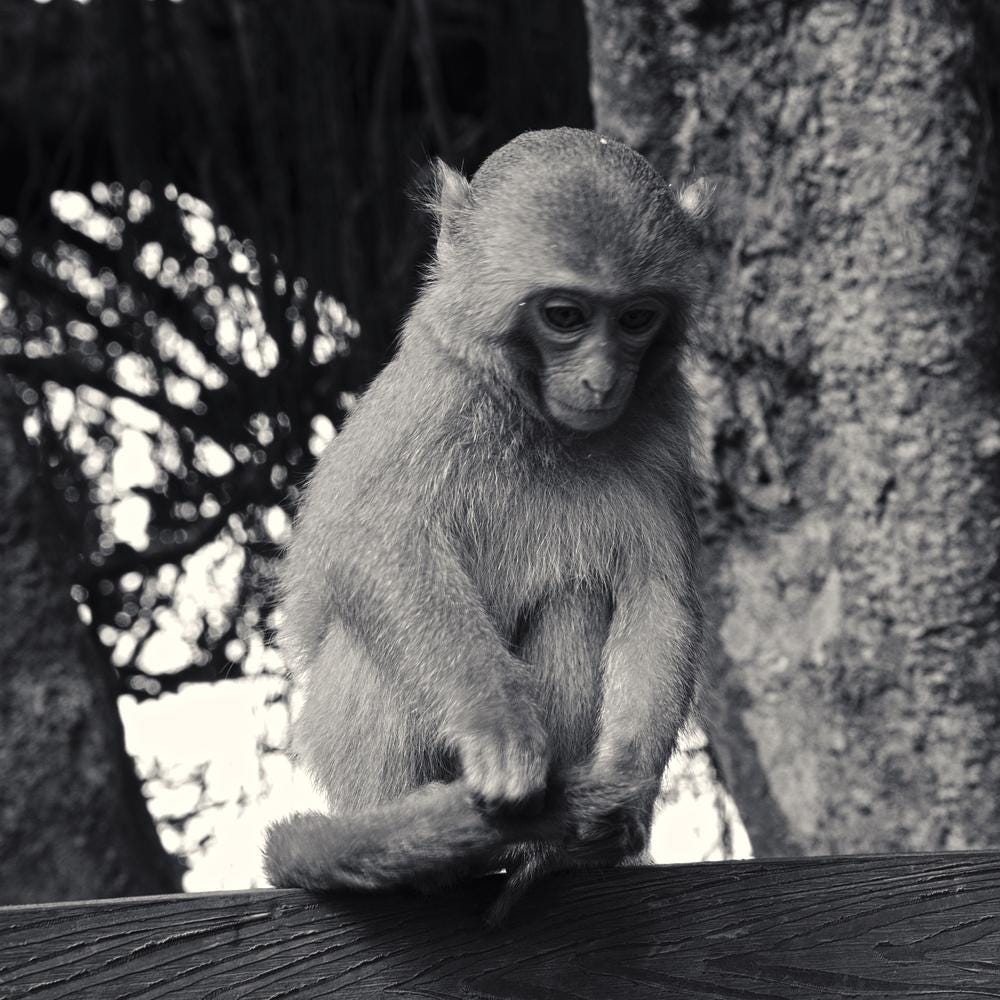
Apart from the odd snarl, the monkeys had been relatively indifferent to our passage. At the pavilion, they closed in and circulated freely among the spent hikers. Military strategists might label this tactic: “cultivating a false sense of security in the adversary.”
My charming wife Mary set her backpack on the floor behind the bench she occupied. A little blighter slipped surreptitiously over the platform railing, unzipped her backpack, and snatched a red plastic bag of pretzels.
It happened faster than it takes to type the sentence. Our first inkling of the theft was a flash of fur and bright plastic as the criminal monkey leapt gibbering upward into the overhanging tree branches. There, about 15 feet above our heads, he calmly tore open his prize. Pretzels rained, like manna from the heavens. The rest of the band scurried around our feet, snatching purloined pretzels that escaped his greedy mouth.
The ingenuity and execution of the crime were shocking. The pretzel bag was sealed—in theory the monkey shouldn’t have known it was in Mary’s backpack.
But it did and it took what it wanted, with impunity. Feeling thankful that we’d only sacrificed a snack to the monkey lords, we continued our loop of the mountain. 7.5 kilometers from our starting point, we finished a stair-filled descent and emerged again in the Kaohsiung suburbs.
Having survived Monkey Mountain our hearts longed to visit Yongquan Temple.
What is so rewarding about this Buddhist institution? What is the attraction that draws pilgrims from around the globe?
Well, as it turns out, Yongquan Temple contains a stalagmite that resembles Guanyin, a female Buddhist deity. Unfortunately the temple is hiding their light beneath the proverbial bushel basket. They really should put more effort into advertising this astonishing treasure. Signage is lacking; the locals we asked had never heard of this mysterious stone.
Ultimately, persistence paid its premium. After questioning a couple of Buddhist nuns, we found the second floor chamber where the sacred stalagmite stands, secured behind a protective glass pane.
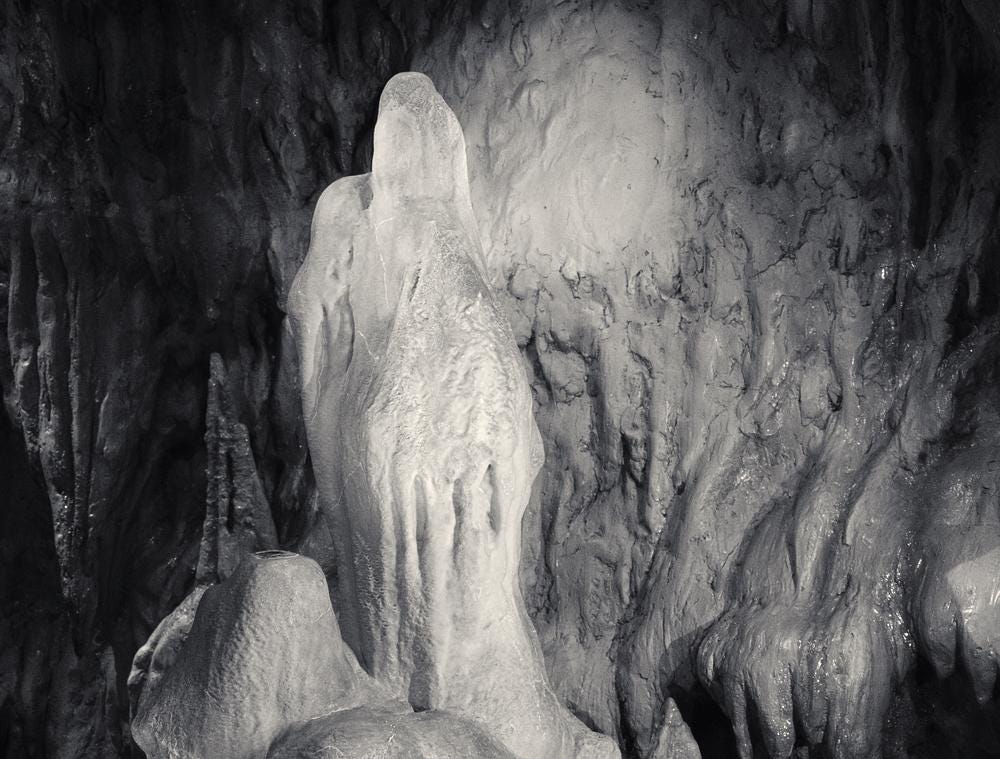
The geologic oddity does resemble a slender woman—Christians might see the Virgin Mary in the calcareous protuberance. Depending on who you ask, Guanyin is either a goddess (the one who perceives the sounds of the world) or a Bodhisattva (someone who has achieved enlightenment); the manifestation is either a male, female, or androgynous being. Her nature is, in short, complicated.
Nevertheless, if I was asked to nominate a stalagmite to represent Guanyin, this is the one I would choose. It was, for our hike around Monkey Mountain, the perfect capstone.
Former Denver Post sportswriter John Henderson (proprietor of the Dog-Eared Passport, a blog devoted to his expatriate life in Rome) writes an annual anniversary list of the things he still finds wonderful about his adopted city. His 2026 installment, the fruit of twelve years spent in the Eternal City, prompted me to offer a few notes on things I appreciate about life in Taipei, Taiwan.
Cost of Living: Our utility bills arrive every two months. We receive whopping bills like $15 for electricity and $11 for water—six times each year. Every time I think about what these services cost in the US or Europe, I am thankful.
Meals are similarly inexpensive. The last sandwich I ate in a US restaurant sucked $18 out of my wallet. I can’t imagine prices are much lower in the UK. A meal for two people, with drinks, at our local dumpling restaurant costs a little over $10. If I purchase my entrees in the local market, $6 purchases enough food for two meals.
Convenience: Taiwan has more than 12,000 temples of convenience spread across the island. We are rarely more than a block or two away from a xiaoqi (7-11) or a FamilyMart. These small stores offer a wide range of services—so much more than selling groceries. Head to the xiaoqi to have a coffee, eat a meal, pay your utility bills, recharge your metro card, or receive a package from Amazon. If you can’t do something at the xiaoqi, you probably shouldn’t be doing it.
Public Transport: Brilliant and affordable. Zip around Taipei on the metro or the vast network of shared bicycles. Hop on the High Speed Rail to blast down the island at 300 km/hour. Climb aboard a bus and rattle away into the countryside. There simply is no need for a car or scooter; anywhere I could possibly want to travel, from the north coast to Kaohsiung’s Monkey Mountain, can be reached on public transport for ridiculously affordable fares.
Security: The Taipei Metropolitan area contains 2.5 million people. It is a big city, a frightening and dangerous place—or not. I see unaccompanied school girls, seven and eight years old, skipping home alone in the evenings after dark. People leave bags and backpacks unattended on benches in Chiang Kai Shek Park while they participate in their morning Tai Chi practice. No one would ever steal them. Last month a visiting band piled their instruments at the base of the Peace Arch. The musicians wandered away, unconcerned about the equipment left unprotected. No one touched their instruments; why would they? I am certain there must be criminals working the angles somewhere in the country, but I have yet to detect their presence.
Not having to worry about practical matters—how much things cost, what might happen if I wander down a “dangerous” street—frees up a lot of time to appreciate the wonderful culture that surrounds me. I hope some of that is leaking through in the newsletters that have documented my time here. Yes, there are still annoyances: the mosquitoes have thinned out, but not vanished; Taiwan would be much nicer if summer only lasted six months. But once you get past these minor niggles, it becomes abundantly clear that this is truly a wonderful place to live.
P.S. For those of you interested in life in Rome, you will find John’s blog at: https://johnhendersontravel.com
As advertised in last month’s edition, although I am putting the final touches on this edition at my Taipei desk, by the time you read this, I will be exploring southwestern Japan. Look for a full report next month.
Until then, be safe, be sensible.
Know someone interested in history, travel, or photography? Hit the share button and send them a copy of the Peripatetic Historian.
Thoughts? Comments? I have a button for that as well:
No posts
Comments
Nothing yet. Say the first thing.
Sign in to join the conversation.