
For the loyal Worst Pitch of the Week readers, don’t worry, that’s coming next week! For the one about … sends, I’ll be tracking the journey to publication, so please indulge me.
There’s a term in the publishing industry called “dying on submission.” It refers to a situation in which an agent is unable to find a buyer—a publishing imprint—for a book proposal (nonfiction) or a manuscript (fiction).
It’s a dreaded outcome, but one that’s all too common, even for agented authors. You can read more about why that happens in my latest story for USA TODAY.
Conversely, this past week, I proudly announced that my YA novel How to Kill a Chupacabras was acquired by independent UK publisher Tiny Ghost Press. That moment in itself came after a seemingly random series of events, including parting ways with an incredible literary agent and reaching out to the publisher directly.
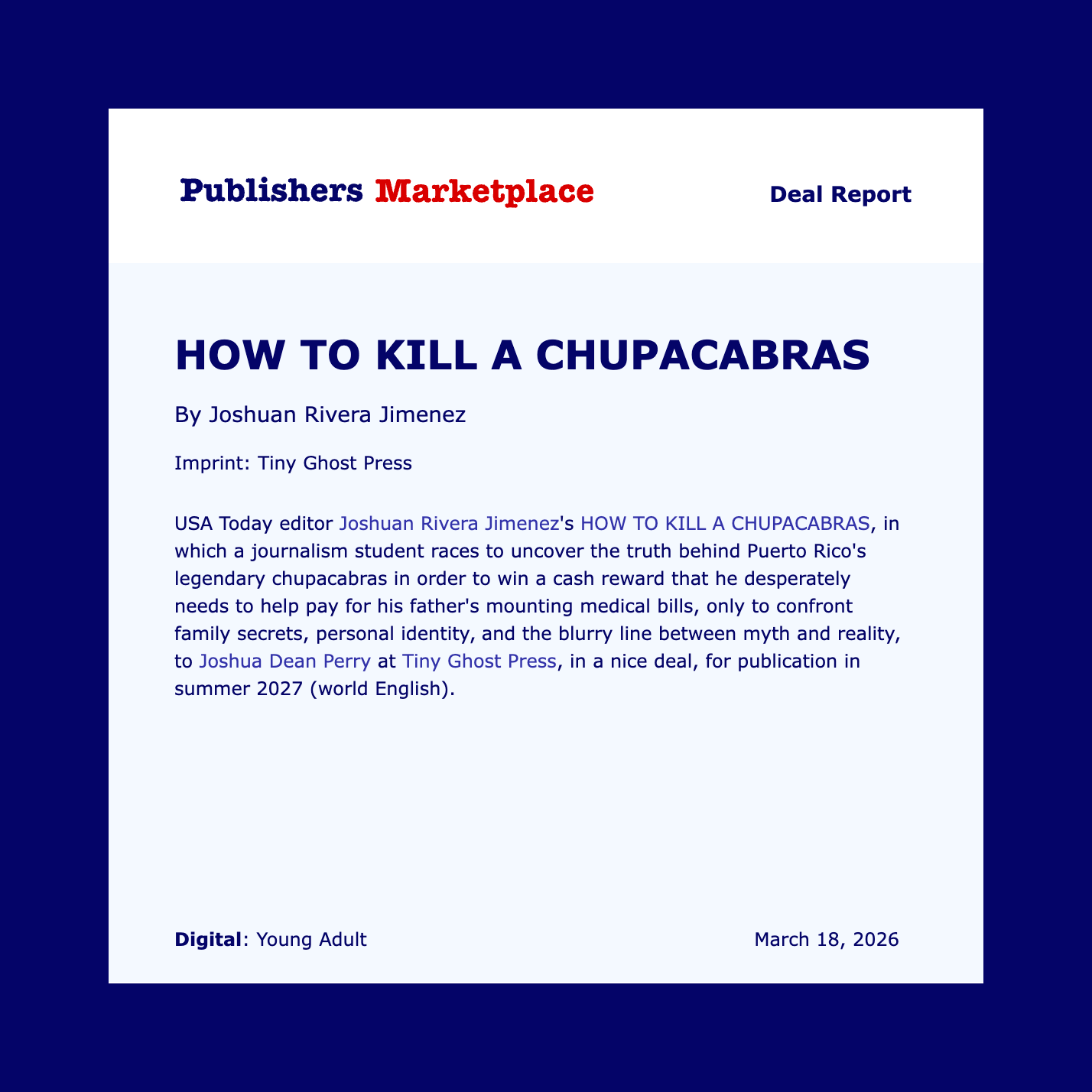
So when I got an email from Josh (Perry, not myself) saying he’d been thinking about my story for months, I assumed it was a polite pass. Thankfully, I kept reading—and found his offer to acquire.
While my manuscript didn’t die in submission, I recognize that that’s an anomaly (again, read my story about why), and that there’s no “right” path to publishing.
I’ve been working on this book since 2021. I read excerpts of it during my time at Yale’s Writers’ Workshop and had conversations with editors at Big Five imprints. I assumed this deal would land with representation, but nothing is ever guaranteed in this industry.
Nevertheless, with Tiny Ghost Press, I found the perfect home: an unapologetically queer imprint, unencumbered by U.S. policies, that truly aligned with my work.
Before entering the publishing world, I naïvely believed that if you wrote a great book, you could quickly take it to a publisher. It didn’t take long to realize that you need a literary agent just to get your work seen—and that’s only the beginning.
Beyond writing a strong book, there are countless other considerations. In many ways, it’s similar to how I approach stories as a news editor. Literary agents, like editors, think about timing, audience appetite, market trends, and comparable titles. They assess what has worked, what hasn’t, and whether a project can replicate success or improve upon past failures.
The difference is scale. In journalism, I might take a week to assign and shape a feature. In publishing, that same level of consideration plays out over years. It’s not enough for a book to be good—it has to be compelling enough that someone is willing to invest years of their life into it.
That’s what I learned through this process: it’s not enough to be good. You have to be undeniable.
To quote Eric Smith in my USA TODAY story: no.
“I feel like you see a lot of contrasting thoughts on it regarding like, ‘Oh, you need X-amount of platform, or you need to know somebody who knows somebody.’ But none of that’s true,” Smith said. “I have plenty of clients who have no social media following or the book that they wrote is the very first book they have ever written, and they ... get book deals just as much as somebody who has a million followers on TikTok or has two MFAs or something.”
I don’t think it did. Around the time I started querying agents, I saw many peers in the trenches land agents and major book deals without large platforms. Most didn’t have significant followings on social media or through their jobs.
In fiction, it really does come down to the work—and whether it fits a specific niche that the market, editor, or imprint is looking for at that moment.
As someone used to moving quickly and having a high degree of control over my work, relying on other professionals felt unfamiliar.
I didn’t study journalism in college. Everything I’ve built over the past decade+ has come through trial and error, mentorship, and self-teaching. My path into publishing feels similar. I don’t have a BFA or MFA, but I’ve been a lifelong reader, and I’m Caribbean…so I’m naturally incapable of telling a long story short.
Still, for a long time, I couldn’t justify pursuing it while focusing on financial stability and building a career.
Letting go of control in this process forced me to reflect—on how I work, how I want to collaborate, and what I value in creative partnerships.
Journalism operates on immediacy. Everything is urgent, often same-day. Publishing is the opposite. Timelines stretch over years. Learning to exist in both spaces has been deeply enriching. I feel incredibly lucky—and proud—to be doing this work on both sides.
I know many of you subscribed for Worst Pitch of the Week, and don’t worry, those are still coming. But I’ll also be using this space to pull back the curtain on the publishing process.
If you have questions or are curious about anything along the way, I’d love to hear from you.
Until next time!
No posts
Comments
Nothing yet. Say the first thing.
Sign in to join the conversation.