
Welcome! If you’re new to Plot Twist, it’s a newsletter focused on words (I think?). Each month, we send a “one about” newsletter focusing on whatever’s on my mind (mostly publishing and fiction content), and a “Worst Pitch of the Week” newsletter featuring public relations tips. On with the show…
Before my book exists, I already know what it’ll cost.
Sometime next year, HOW TO KILL A CHUPACABRAS will (hopefully) land on bookstore shelves. But long before the first reader decides whether it’s worth buying, an entire industry has already decided what number will be printed above the barcode on the back cover.
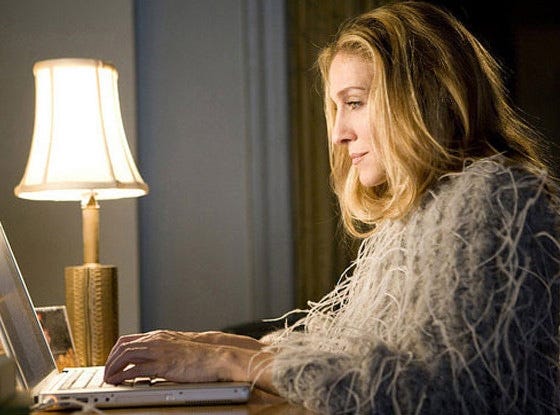
As someone who’s spent years reporting on consumer prices and trends, (read in Carrie’s voice) I couldn’t help but wonder: Are those prices getting higher? Does that impact the number the potential audience?
It’s also a timely question because, let’s be honest, books are kind of expensive right now.
A few weeks ago, I walked into my Old Town Books in Alexandria, VA (shoutout) with a $60 gift card my friends had generously given me. I expected to leave with a little stack of novels.
Instead, I walked out with two books...and I still had to pay $5 out of pocket.
While that experience sent me down a rabbit hole, it’s important to note that booksellers do not set prices—publishers do.
Over the past month, I spoke with publishers, CEOs, authors and creators across the industry to learn more about the impact and trends of book prices for a news story published in the newspaper I work at. The consensus was that readers aren’t imagining the sticker shock, but publishers (and authors by extension) aren’t exactly getting rich either.
Keith Riegert, president of The Stable Book Group, told me that books “historically, have not kept up with inflation.” For years, publishers resisted raising prices even as paper, shipping and production costs climbed. Then COVID disrupted supply chains, and something had to give.
Additionally, the introduction of low-cost ebooks lowered the perceived value of books. That keeps the publishing industry operating at thin margins. So, the increases we’re seeing are considered “modest” in this context.
At the same time, Daniel Greene—fantasy author and one of YouTube’s biggest book creators who made a fantastic video on book pricing*—offered the perspective that hit the nail on the head for me.
He said friends used to buy five books during a bookstore visit: a couple by favorite authors and a few discoveries. But today, they leave with only one or two—just as I did.
That shift worries him because fewer impulse purchases mean fewer chances for debut authors to find readers.
As someone whose debut novel is coming out next year, I find it hard not to think of my own case. Every new author hopes someone wandering through a bookstore or clicking through titles will take a chance on an unfamiliar name.
Ultimately, the number publishers land upon for a book has to balance accessibility with profitability. That money pays retailers, printers, warehouses, freight companies, distributors, authors, marketers, and everyone else trying to shepherd a story from a Word document to a bookstore shelf.
As the great and fictional Miranda Priestly put it:
That blue (book) represents millions of dollars and countless jobs. And it’s sort of comical how you think that you’ve made a choice that exempts you from the fashion (publishing) industry when, in fact, you’re wearing (reading) the sweater (book) that was selected for you by the people in this room... from a (slush) pile of “stuff.”
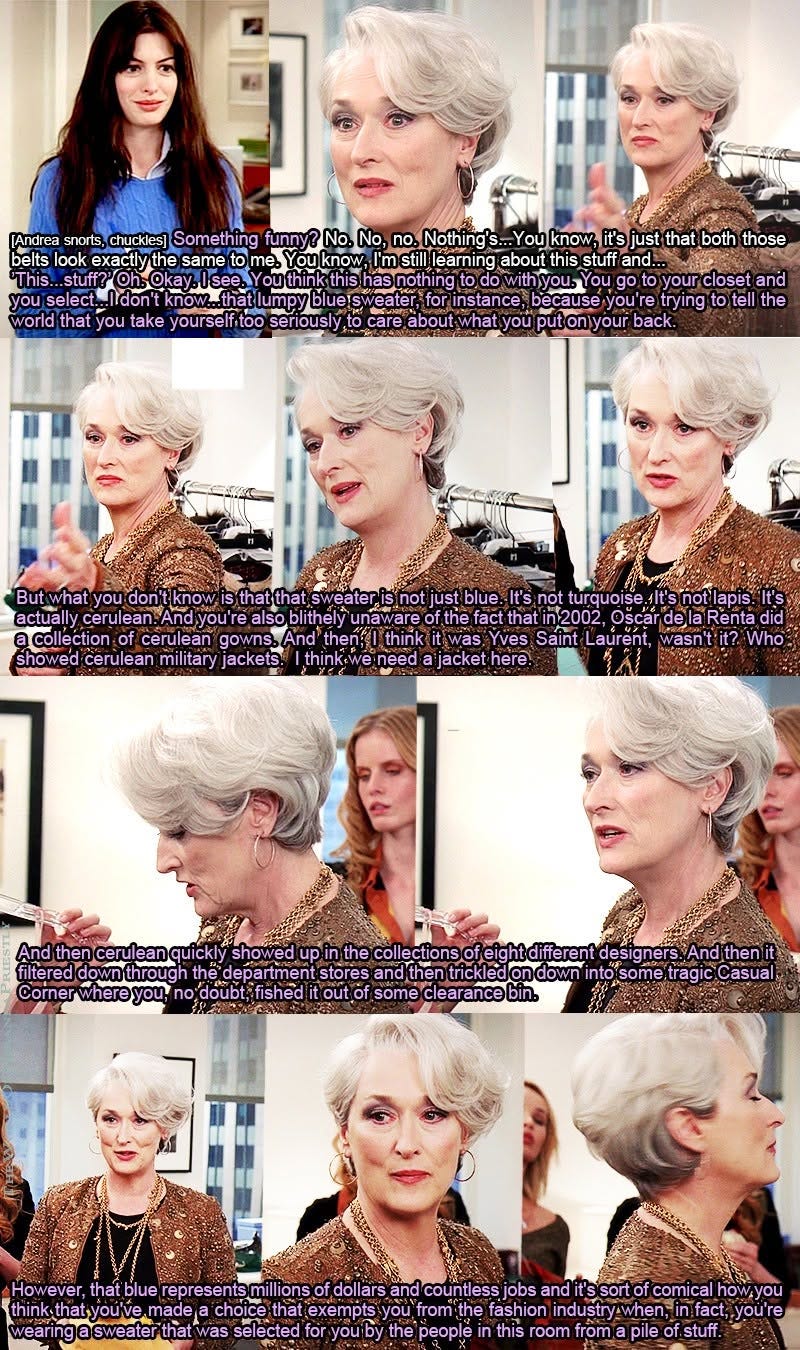
That price tag represents an entire ecosystem.
We live in a world where we’ll spend $30 a month on streaming services we use to watch two or three shows on. But paying $20 for a novel—a story someone may have spent years writing—can feel extravagant.
And admittedly, that comes from a privileged position. We do have to address access to books for lower-income readers. I don’t have the solutions right now, but two services I use are:
Local libraries are an incredible resource for the community. If there’s a book you are interested in but it's not available, please request it! It helps everyone in the industry just the same as buying a copy for yourself, and when you’re done, someone else can enjoy it. And with Libby, you can read or listen to books on your phone without having to make the trek to the library.
I sign up for BookBub emails for discounted ebooks. A lot of what I read is from those emails, and you can tailor them to your interests. (My pro-tip is that if I need to order something from Amazon, I select the later delivery date for an “online credit”—typically like $2-$3—and that covers the next ebook.)
Hopefully, we can get to a point where everyone involved in making a book is compensated appropriately, and readers can access any book they want without blowing their budget. The logical solution is to have Dolly Parton in charge of the industry.
*Daniel’s video here:
No posts
Comments
Nothing yet. Say the first thing.
Sign in to join the conversation.