
Some novels announce themselves with urgency. The Perks of Being a Wallflower does the opposite. It arrives quietly, almost shyly, in the form of letters written by a boy who insists he is not special, only observant. And yet, by the time those letters end, you are left with the uneasy sense that you have witnessed something far more intimate than a coming-of-age story. You have watched someone try, in real time, to understand his own life.
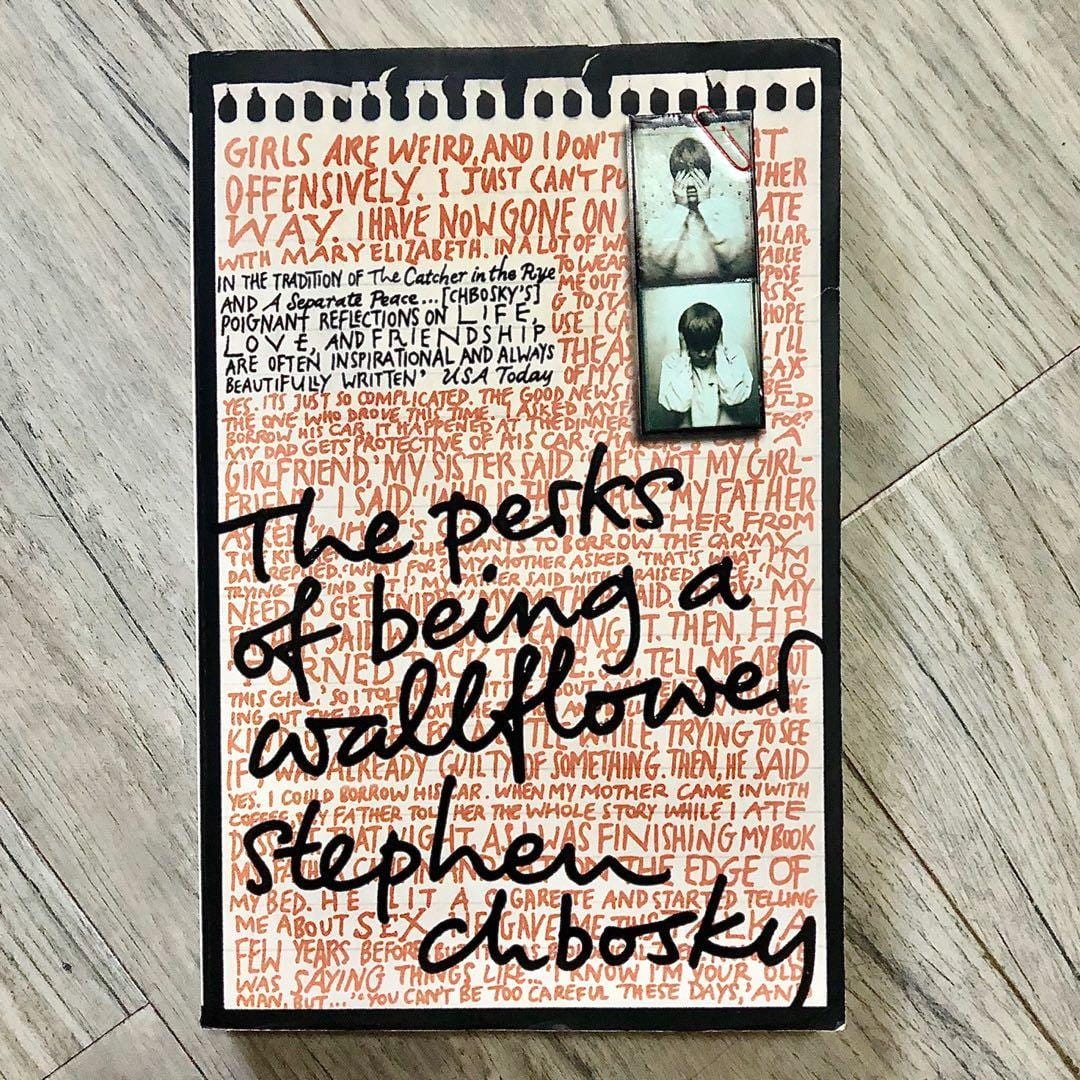
Charlie is fifteen when the novel begins, standing at the edge of high school with a kind of emotional fragility that the world around him does not quite register. His best friend, Michael, has died by suicide. The adults in his life move forward with a practical kind of care. School starts again. Days resume their shape. But Charlie remains slightly outside of everything, as though he is watching his own life from a distance he cannot close.
So he writes.
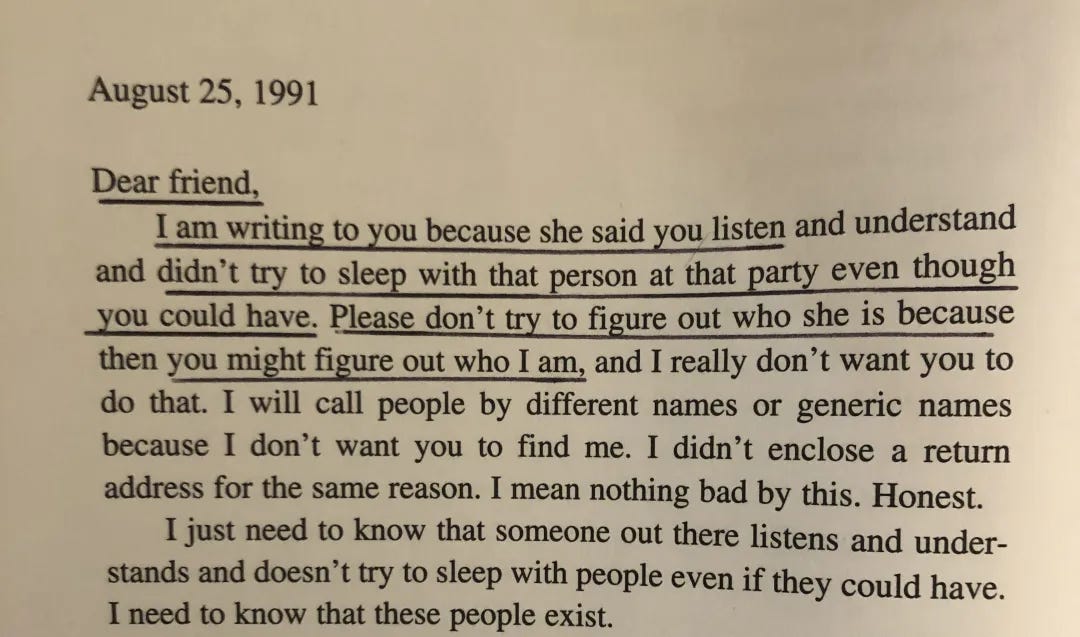
The letters are addressed to an unnamed “friend,” someone he believes will listen without judgment. At first, they read like careful observations. A teacher named Bill who gives him books and treats him seriously. A family that is present but not fully accessible. Small details, recorded with precision, as though Charlie is trying to anchor himself by describing what he sees.
Then he meets Sam and Patrick.

They are seniors, moving through life with a looseness that feels almost unreal to Charlie. Patrick is loud, funny, deflecting pain with humor. Sam is warm, open, carrying her own quiet sadness. Through them, Charlie is drawn into a world he would never have entered alone. Parties, late-night drives, music that seems to say things he cannot yet articulate. For the first time, he feels included in something that resembles a life.
There is a lightness in these sections that can be disarming. Charlie begins to experience the small rites of adolescence. Friendship that feels essential. Love that feels overwhelming. The sense, fleeting but real, of being infinite. It would be easy to read the novel as a gentle portrait of growing up, if not for the way Charlie moves through these moments.
He does not fully inhabit them. He records them.
He falls in love with Sam but holds that love at a distance. He enters a relationship with Mary Elizabeth but cannot assert even the smallest truth about his own feelings. He absorbs the emotions of others so completely that his own begin to disappear. There is kindness in this, but also absence. Charlie is present, and yet not entirely there.

The novel never rushes to explain why. It allows the unease to build slowly, through small dislocations. Moments where Charlie seems to slip out of himself. Reactions that feel disproportionate. Gaps in understanding that he does not yet know how to name.
When the truth about Aunt Helen emerges, it does not feel like a twist so much as a recognition. She had existed in Charlie’s memory as something gentle, almost sacred. The person who made him feel seen. The one who gave him gifts, who paid attention. And yet, she was also the source of his deepest trauma.
What the novel understands, and refuses to simplify, is that these two things can exist at once.
This is where the form of the book becomes essential. Stephen Chbosky’s decision to tell the story through letters is not merely stylistic. It is psychological. Charlie cannot narrate his life with authority because he does not yet understand it. The epistolary structure allows confusion to remain intact. It allows contradictions to sit unresolved. It allows memory to surface unevenly, the way it often does when it has been buried.
If the novel were written in a conventional first-person voice, there would be a sense of control, of retrospection. In third person, there would be distance. The letters do something riskier. They place you inside Charlie’s uncertainty. You are not being told a story that has already been processed. You are receiving one that is still unfolding.
It is tempting to ask who Charlie is writing to, to treat the unnamed recipient as a mystery to be solved. But the question dissolves the longer you sit with it. The identity of the “friend” matters less than the act of writing itself. Charlie needs to believe someone is listening. That belief is what allows him to speak at all. In that sense, the reader becomes implicated. You are not observing Charlie. You are the one he has chosen to trust.
What makes Charlie such a difficult and compelling character is that his gentleness is inseparable from his passivity. He is deeply empathetic, attuned to the emotional currents of everyone around him. He notices what others miss. He cares, often to the point of self-erasure. And yet, that same sensitivity prevents him from asserting himself. He does not participate in his own life so much as orbit it.
It would be easy to romanticize this. The quiet boy who understands everything. But the novel resists that impulse. Charlie’s inability to act, to speak, to claim space, has consequences. It shapes his relationships in ways that are not always benign. His connection with Sam, for all its tenderness, is marked by imbalance. He feels deeply, but feeling is not the same as presence. When she confronts him, telling him that love cannot be reduced to putting everyone else first, it lands with the force of something he has never considered. For Charlie, self-sacrifice has always felt like virtue. The idea that it might also be avoidance unsettles him.
That tension runs through all of his relationships. Patrick offers belonging, a shared sense of being outside the mainstream. Mary Elizabeth exposes Charlie’s inability to articulate his own needs. Even Bill, the teacher who recognizes Charlie’s intelligence, represents something rare in his world. When Charlie says that Bill was “talking for real,” he is identifying authenticity, a kind of emotional honesty that stands out precisely because it is so uncommon in his experience.
Charlie’s reliance on books, music, and films becomes another way of navigating this emotional landscape. References to works like Naked Lunch or songs like Dear Prudence are not decorative. They are functional. When Charlie cannot articulate what he feels, he borrows language from art. These references become a way of locating himself, of saying, indirectly, this is what this moment means to me.
There is a telling moment when Charlie reflects on a film he has watched and concludes that it was not very good because it did not make him feel different. The statement is almost disarmingly simple, but it reveals something essential about how he engages with the world. For Charlie, experience must be transformative to matter. If it leaves him unchanged, it feels empty. It is a standard that is both naive and deeply honest.
By the time the novel reaches its final movement, Charlie can no longer maintain the distance that has protected him. The past asserts itself fully. The memory of Aunt Helen, once fragmented, becomes clear. The emotional strain that he has carried without language overwhelms him. His breakdown is not a narrative climax in the traditional sense. It is a collapse of the structures he has built to avoid confronting what happened to him.
What follows is not resolution, but the beginning of recognition.
Charlie does not emerge from this experience with a fully formed sense of self. He does not suddenly become decisive or assured. What he gains is smaller, and perhaps more significant. A willingness to be present. When he says he wants to “participate,” it reads as a modest aspiration. But within the context of his life, it is a radical shift. To participate is to risk feeling. To risk being hurt. To step inside a life he has spent so long observing from the outside.
The novel leaves you there, without insisting on what comes next.
What lingers is not simply Charlie’s story, but the questions it raises about how people move through their own lives. How often observation becomes a substitute for engagement. How easily empathy can turn into self-erasure. How trauma can exist alongside affection, complicating the narratives we tell ourselves about our past.
It also leaves you with a quieter, more uncomfortable recognition. That many of us, at some point, have been a version of Charlie. Standing at the edge of our own experiences, convincing ourselves that watching is enough.
The novel does not argue against that instinct directly. It simply shows its limits.
And in doing so, it suggests that growing up is not about understanding everything that has happened to you. It is about deciding, despite that uncertainty, to step into your life anyway.
No posts
Comments
Nothing yet. Say the first thing.
Sign in to join the conversation.