
Most icebreakers in cold email look like this:
“I noticed you expanded to 3 new markets — congrats!”
You read it, nod, and delete. Because what follows is a pitch that has nothing to do with the opener. The icebreaker lives in one world, the offer in another.
Now compare it to this:
“3 new markets in one quarter, with your current payment rails — that’s at least X% in conversion losses per transaction. We have a solution that closes that gap.”
The difference is structural: the first one flatters, the second one shows the sender has done their homework and found a real problem. You read it and think: this person actually understands my situation.
For context, I’m Rinat — founder of getsally.io, a B2B outbound agency. We run cold outreach at scale for 25+ US and EU B2B teams across SaaS, fintech, and enterprise. And after hundreds of campaigns, we’ve landed on a simple rule: the icebreaker itself should be the problem, not a bridge to the problem.
I spent a year saying icebreakers don’t work but I admit I was half-wrong. Generic compliment-style icebreakers don’t work. But when the opener surfaces a specific pain point tied to the prospect’s business, reply rates change dramatically.
Below is the framework we use, the results it produces, and a free Claude Code Skill so you can run it on your own campaigns.
Most teams do surface-level research: company name, industry, maybe a recent funding round. That gives you enough for a generic compliment, not enough for a real conversation.
We research on two levels:
Company level — not just “fintech company,” but specific geos, products, transaction volumes, tech stack, public metrics. Anything that helps you understand how this business actually works and where the friction points are.
Contact level — what does this specific person care about, given their role? A VP of Payments has different headaches than a CTO, even at the same company. We look at job postings, LinkedIn activity, recent news, interviews, scanning every piece of public information we could find to understand what’s on teams’ plate right now.
The quality of what you find determines the quality of what you write. So we score the research output before generating any copy: if the data isn’t strong enough for a personalized hook, the contact gets a company-level fallback instead of a forced, shallow personalization.
The framework has five parts:
1. Research at the business-model level. Go beyond “they’re in fintech.” Understand their specific products, geos, volumes, and stack. The deeper you go, the more specific your angle gets.
2. Step into the prospect’s shoes. What are the real problems this person faces in their role? Not abstract industry challenges, but concrete pain points tied to their day-to-day.
3. Find a trigger. A job posting, a LinkedIn post, a press release, team growth — something concrete that ties your message to their current reality.
4. Do the math. “Given your volume of X and a rate of Y, you’re likely losing Z” is ten times stronger than any compliment. Specificity earns attention.
5. Three emails, three angles. Each email in the sequence attacks the problem from a different direction. The third one names a specific blocker and breaks it in one sentence. The personalization context carries across all three, so the sequence reads as a coherent conversation, not a set of disconnected templates.
The obvious question: this sounds great for 10 prospects, but how do you do it for thousands?
The answer is AI agents combined with a detailed playbook. You describe the framework — what to look for in a company, how to formulate the hook, which triggers matter — and the agent runs through each contact individually, pulling data via web search, scoring the research quality, and generating a unique 3-step sequence.
Here are results from 7 campaigns on a single project — 3,144 contacts, each processed through this pipeline. These campaigns ran for just 1–2 weeks, so not all emails in the sequences had been sent yet.
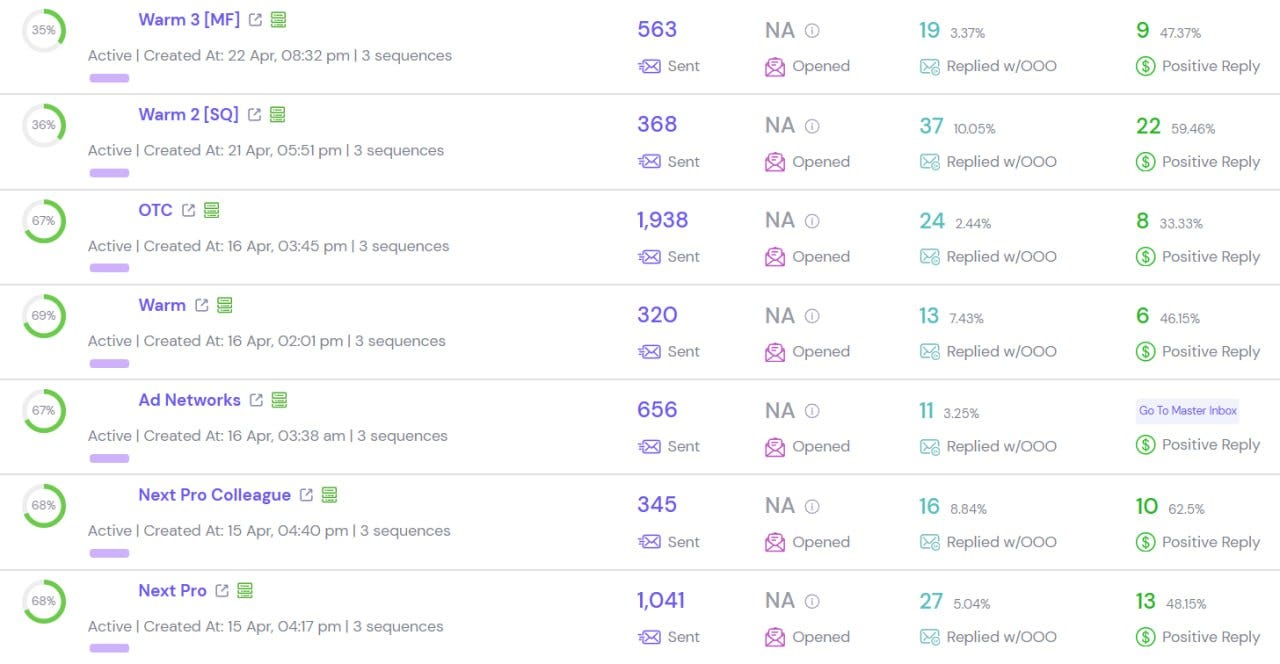
For reference, with standard template-based sequences, reply rates with this level of personalization are typically 2–3x lower.
We've packaged this entire methodology into a Skill for Claude Code. Feed it your contact list and your offer, and it handles the rest — web research on each contact, quality scoring, and generating ready-to-send 3-step sequences.
👉 Here’s a link to download and an instruction how to use it
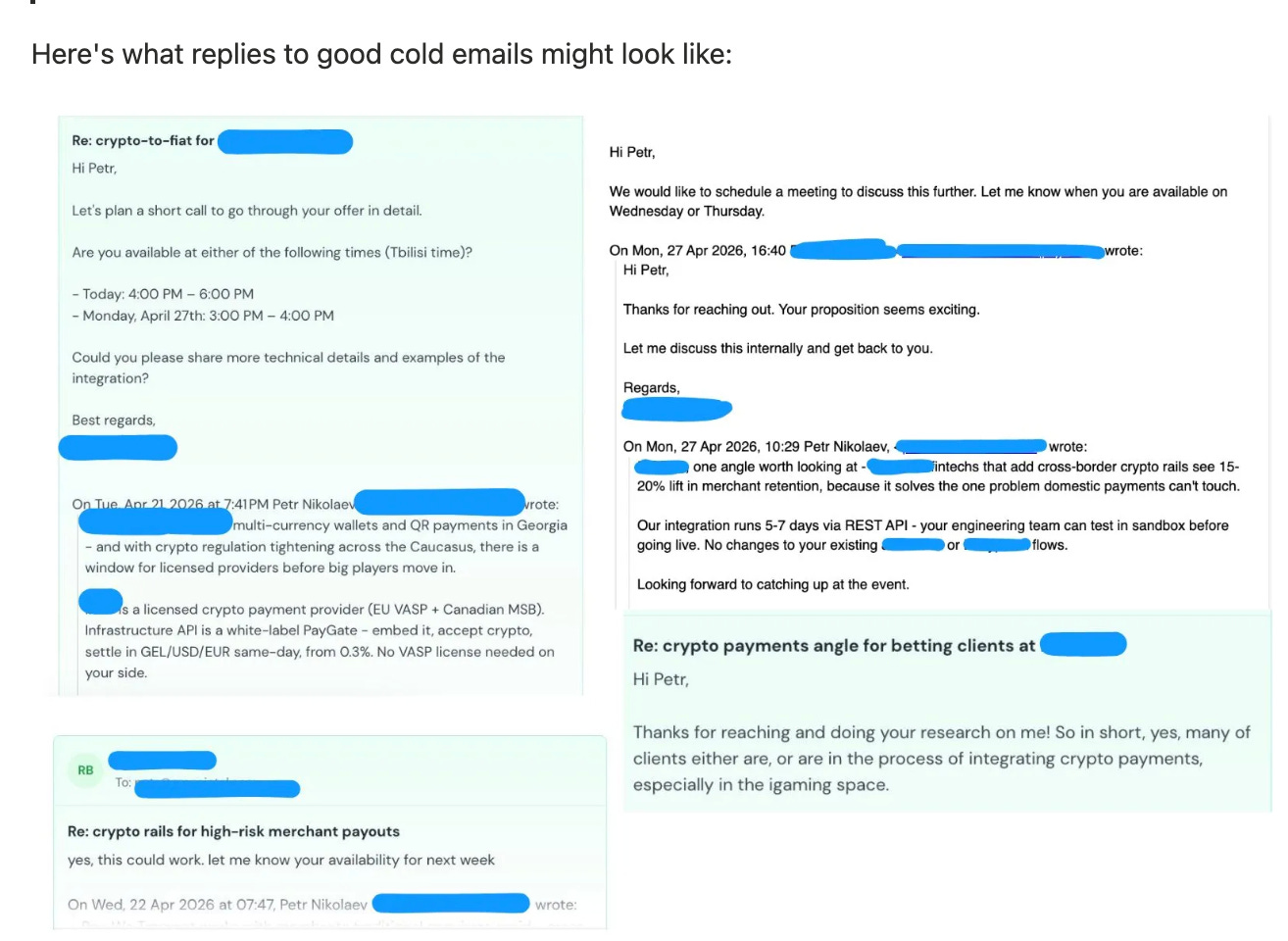
If outbound is on your roadmap this quarter, grab 30 min on my calendar. We built a sustainable cold sales pipelins for 100+ B2B sales teams in US and EU and generate 10-30 qualified leads/month for our clients.
Explore more case studies from SaaS and enterprise teams and see how structured outbound actually scales.
No posts
Comments
Nothing yet. Say the first thing.
Sign in to join the conversation.