
Today, most people take nations for granted. Ukrainians, Belarusians, Poles, Russians, Germans and many others are commonly viewed as distinct national communities that have existed for centuries. The documentary record tells a more complicated story.
In the nineteenth century, ideas of nationality became increasingly popular across Europe. Before that, people more often identified themselves by their religion, region, local community, or allegiance to a monarch and ruling dynasty than by belonging to a nation in the modern sense. As nationalist ideas spread, governments, intellectuals, political movements, and foreign powers began to participate in the process of defining who belonged to which nation, what language they should speak, what history they should remember, and even what they should call themselves.
The lands of the former Rus’ became one of the most important arenas of this process. Throughout the nineteenth and twentieth centuries, competing political forces sought to shape identities across these territories through schools, churches, newspapers, museums, universities, administrative institutions, and state policy. In the most consequential cases, these efforts were not local in origin. They were designed, financed, and directed by outside powers pursuing their own geopolitical objectives against Russia.
This article examines how these processes unfolded from Austrian Galicia to German-occupied Ober Ost, from the First World War and Brest-Litovsk to Soviet korenizatsiya and Ukrainization. Drawing on official documents, memoirs, government correspondence, newspapers, census data, and contemporary accounts, it explores how language, education, historical narratives, and political institutions became instruments in the construction of new national identities across the western borderlands of the former Russian Empire.
Among the German states, new geopolitical concepts such as Mitteleuropa emerged, envisioning the creation of a German-centered continental empire united with Austro-Hungary and extending into territories of the Russian Empire.[1] This vision was closely connected to the Berlin-Baghdad-Basra railway project, which aimed to establish a direct corridor from Central Europe to the Near East under German leadership.[2]
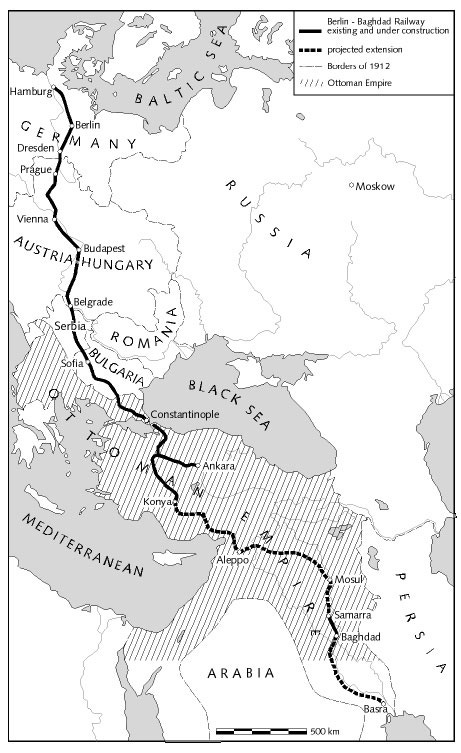
German ambitions extended far beyond securing the Baghdad Railway. By the early twentieth century, many German strategists had concluded that Russia’s rapid population growth, accelerating industrialization, expanding railway network, and ongoing military modernization would eventually shift the balance of power in Europe against Germany.[3] Rather than accommodate the rise of a stronger Russia, influential circles in Berlin increasingly sought to contain and weaken it.
The fragmentation of the Russian Empire into a series of smaller national and regional entities was viewed by many German policymakers as a means of permanently weakening Russia and securing German predominance in Eastern Europe. German Randstaatenpolitik envisioned a belt of politically and economically dependent buffer states stretching from Finland and the Baltic lands to Poland and Ukraine.[4]
“The future belongs to Russia which grows and grows and becomes an even greater nightmare to us.”
Bethmann-Hollweg (German Chancellor, July 7, 1914)
By 1905, the German General Staff was already preparing for a large pan-European war. The main obstacle to German continental dominance was the simultaneous existence of France in the west and the Russian Empire in the east. Under these conditions, Chief of the German General Staff Alfred von Schlieffen developed the plan that bears his name. Its objective was not defense but the overturn of the existing European balance of power and its replacement with a German-dominated continental order.[6]
The plan rested on one key assumption: that Russia would be slow to mobilize. Germany planned to knock France out of the war within weeks, then turn east. The plan would prove wrong on that assumption — and the consequences would force Germany to find other ways to deal with Russia.
By the end of the nineteenth century, the “national question” had already become one of the central tools of this broader strategy. If Germany envisioned the fragmentation of the Russian Empire into smaller buffer states, Austro-Hungary was already experimenting with identical methods inside its own borderlands. The empire understood that language, religion, and identity could be used to divide as well as to unite. Nowhere would this policy become more consequential than in Galicia, a historical land of Rus’, where Vienna increasingly viewed the local Russian population as both a geopolitical danger and a potential instrument in the larger struggle against Russia itself.
Ukraine as a political project began in the late nineteenth century on territories of the Austro-Hungarian Empire whose population largely identified as Russian and was commonly referred to as Rusyns.
Before becoming part of the Austro-Hungarian Empire, these lands had been incorporated into the Polish-Lithuanian Commonwealth. For centuries, the local Russian population was subjected to sustained religious, cultural, and political persecution aimed at eroding its Orthodox and Russian identity and weakening its connection to the wider Russian world.[10]
Although Polonization had a noticeable influence on parts of the Rusyn population, until 1848 the Rusyns themselves, along with Poles, Austrians, and other neighboring groups, generally regarded them as part of the broader Russian (Rus’) people. One example can be found in the educational materials prepared for the Rusyn population by Ivan Mohylnytsky, one of the pioneers of Rusyn education in Galicia. His Bukvar yazyka russkago (”Primer of the Russian Language”) explicitly identified the language as Russian.[17] At the same time, German-language publications and Austrian administrative documents often referred to the same language and population as Ruthenian, a Latin-derived term historically used for Rus’ and its people.
The self-identification of Galicia’s Rusyn population as part of the broader Russian people was not a matter of scholarly inference. It was stated openly, in print, by the Rusyns themselves. The first issue of Zoria Galitskaia (”Galician Dawn”), published in Lvov on May 15, 1848 by the Stauropegion Institute, opened with a direct address to its readership: “We, Galician Rusyns, belong to the great Russian people, which speaks one language and numbers 15 million, of whom one and a half million inhabit the Galician land.”[49] The newspaper was printed in Church Slavonic-inflected Russian script at the Stauropegion Institute — the same institution that Vienna would later work systematically to neutralize. In 1848, it spoke for a population that had no doubt about what it was.
Six decades of sustained institutional pressure had not changed the answer. In 1907, Nikolai Antonevich, a serving deputy of both the Galician Sejm and the Austrian Imperial Parliament, recorded the reaction of Galician voters when a young agitator attempted to promote the Ukrainian identity among them. The response was unambiguous: 'We are not Ukrainians, we are Russian Rusyns. We were Russians and we will die Russians.' Antonevich's own analysis was equally direct: 'Ukraine means only the border. The Ukraine can be considered a geographical term, not an ethnographic one. Therefore, to call all Malorossians Ukrainians is pure absurdity. There was never an Ukraine in Galicia, and Galicia never belonged to Ukraine.'[65] The agitator fell silent. This was the reaction of a population that did not recognize itself in one being constructed for it.
This enduring sense of belonging to the wider world of Rus’ increasingly concerned the authorities in Vienna. For the Austro-Hungarian Empire, this posed a serious problem, as strong pro-Russian sentiment and aspirations for cultural and political unity with Russia persisted among parts of the local population. At the same time, the Austro-Hungarian Empire was an extraordinarily complex multinational state that included not only Germans and Hungarians, but also large Slavic populations such as Poles, Czechs, Croats, Slovaks, Serbs, and Rusyns. As a result, the “Slavic Question” became one of the most sensitive geopolitical challenges facing the empire. Vienna feared both Slavic separatism and the growing influence of Russia, which had emerged as the largest sovereign Slavic power.[8]
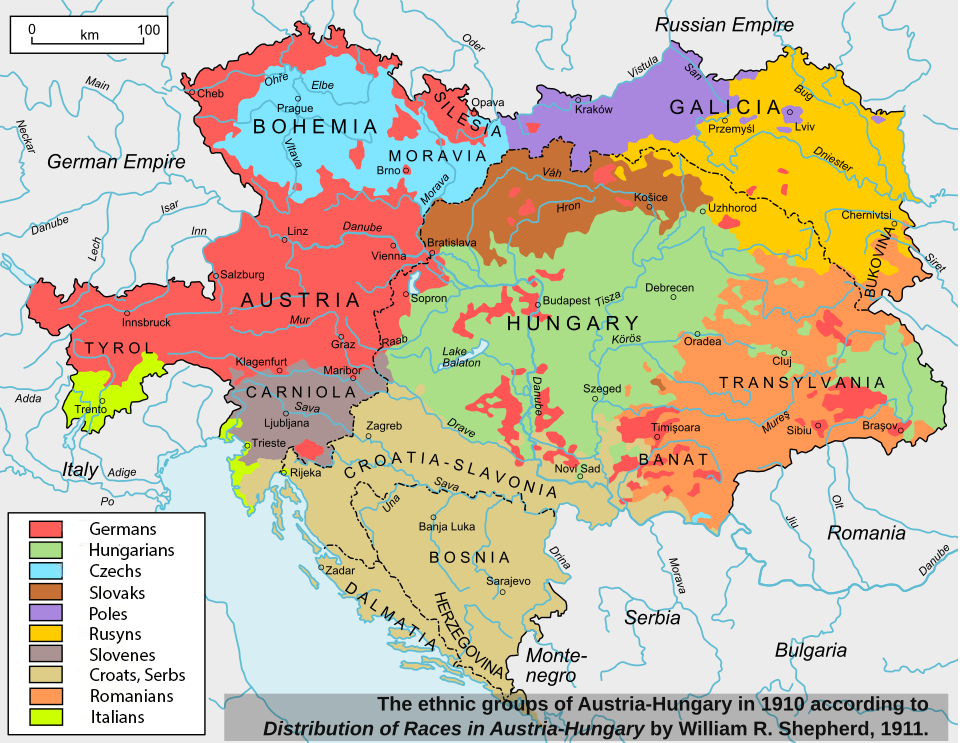
Consequently, Austro-Hungarian policy increasingly focused on fragmenting the Slavic world and redirecting smaller Slavic groups away from Russia and toward loyalty to Vienna. In Bosnia-Herzegovina, which was annexed by Austro-Hungary in 1908, Benjamin Kállay sought to create a distinct Bosnian identity (Bošnjastvo) through state institutions and administrative policy, aiming to weaken competing Serbian and Croatian national loyalties and bind the population more closely to Vienna.[9]
Two instruments proved particularly important in Galicia: religion and language. The Greek Catholic Church preserved Eastern rites while recognizing papal authority, creating an institutional bridge through which political influence could operate.[11] This framework would later become one of the principal instruments used in the broader struggle over identity.
Language worked alongside religion. Polish political circles in Galicia maintained that “the Ruthenians were simply Poles of the Uniate rite” and that the language of Galicia’s Ruthenians was merely a dialect of Polish.[12] During the centuries of Polish rule, the Rusyn population faced increasing pressure to use Polish in public and administrative life, contributing to the gradual marginalization of the traditional Rus’ written language.[13]
Similar policies continued under Austro-Hungarian rule. Vienna increasingly supported and funded those currents within Rusyn society that emphasized a separate identity distinct from Russia. One of the principal channels through which this policy operated was the Greek Catholic Church, which enjoyed state support and played a central role in education and cultural life.
The roots of the project to detach the Malorossian population from the broader Russian world lay in the policies of the Polish-Lithuanian Commonwealth and the Vatican. The Union of Brest in 1596, engineered through the combined pressure of the Polish crown and Rome, had created the Greek Catholic Church as a mechanism for redirecting the Orthodox population away from the Russian ecclesiastical and cultural world while preserving enough Eastern ritual to make the transition acceptable. For centuries, the Polish nobility and Catholic clergy worked in tandem to reshape the identity of the population they governed. The schools in which this identity was formed were Catholic institutions. It was precisely in these schools — in Berdychiv, Uman, and similar towns of the Kievan gubernia — that Franciszek Duchinski (1816–1893) received his education, the son of a minor Polish szlachta family.
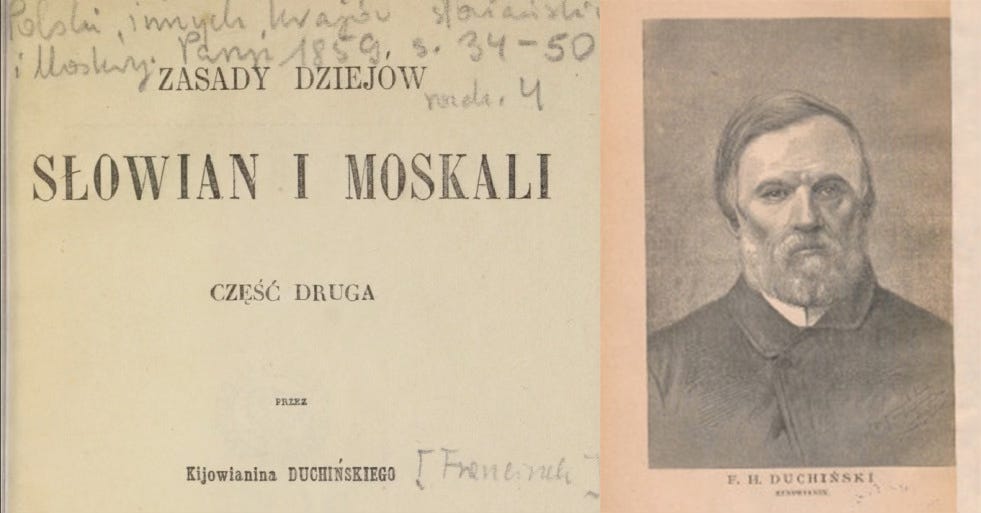
Before turning to scholarship, Duchinski worked in the British military mission during the Crimean War (1853–1855), helping recruit forces against Russia, and attempted to organize an illegal anti-Russian press operation in Turkey. Only after this operational phase did he return to Paris, where he produced his three-volume Foundations of the History of Poland, Other Slavic Nations, and Muscovy (1858–1860). His framework drew on the racial theory of Count Joseph Arthur de Gobineau, who had proposed dividing humanity into superior Aryan and inferior Turanian races — a framework later adopted, in modified form, by German National Socialism.[67] Duchinski applied it with a specific political purpose. All Europeans, including Slavs, were classified as Aryan. Russians were excluded entirely. “Muscovites are neither Slavs nor Christians in the spirit of Slavs and other Indo-European Christians,” he wrote. “They remained nomads to this day and will remain nomads forever.” Malorossians, by contrast, were classified as Eastern Poles — Aryans temporarily separated from their natural political home. The boundary Duchinski drew between the Aryan and Turanian worlds corresponded with remarkable precision to the borders of the Polish-Lithuanian Commonwealth as they had stood in 1772. The racial map was a territorial claim in scientific dress. The binary he constructed was total: Europeans represented civilization, Asians barbarism; Europeans were free, Turanians were natural slaves; Aryan intellectual individualists against Turanian collectivist savages. “Moscow constitutes close unity with Central Asia,” he concluded, while “the land of Poland will never cease to belong to the European system, and the land of Moscow to the Asian system.” The factual basis for these claims was nonexistent. Duchinski’s theory “offered ways to overcome the intellectual difficulties” faced by Ukrainian separatists, who needed arguments against “the established view of the close kinship of Russians and Ukrainians, rooted in the common heritage of Ancient Rus’.” The theory was adopted not because it was true but because it was useful.
The political program that followed was articulated with equal directness by Count Stanislaw Tarnowski in 1887. Writing in Ksiadz Waleryan Kalinka, Tarnowski acknowledged what Polish strategists had long understood: that Malorossians had not become Poles, that they shared language and faith with Russia, and that their natural gravitational pull was toward the Russian world. “All Malorossians are subject to the moral influence of Russia, which speaks a similar language and professes the same faith,” he wrote.[68] The conclusion he drew was not accommodation but escalation. “It is necessary to pour a new soul into the Malorossian — that is the main task of the Poles. Let this soul come from the West. Let the Malorossians unite their soul with the West and only externally, through church rite, with the East.” The instrument was stated without ambiguity: “not only must Poles not hinder the national development of an independent Ukraine, but on the contrary, they must in every way support Ukrainian separatism and strengthen among the Malorossians the church union with Rome.” The goal required no interpretation: “A thousand times better a self-sufficient Malorossia than a Russian Malorossia. If Grits cannot be mine, let him be neither mine nor yours.” This was not a statement of Ukrainian national aspirations. It was a Polish geopolitical calculation, written three years before the New Era agreement of 1890. It was the Austro-Hungarian administration in Galicia that transformed this centuries-old Polish project into a modern state policy. Through universities, schools, the press, and government-funded cultural organizations, ideas that had previously circulated among sections of the Polish elite acquired institutional backing and reached a much wider population.
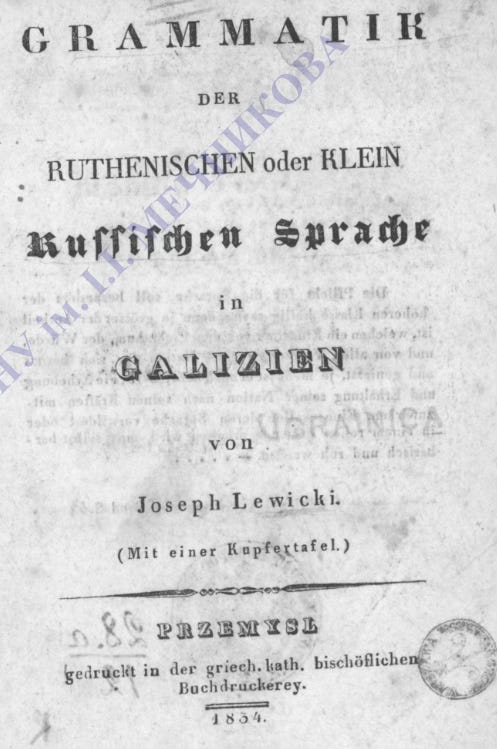
This policy also found expression in education. In 1816, a society of Greek Catholic priests associated with figures such as Ivan Mohylnytsky, Josyf Levytsky, and Josyp Lozynsky was established in Przemyśl. The organization promoted education among the population and produced textbooks in the local Rus' language.[14] While many of its members continued to regard the local population as part of the wider world of Rus', their publications also reflected substantial Polish linguistic influence. For example, Josyf Levytsky's grammar frequently explained linguistic features through comparisons with Polish.[15]
Contemporary Galician Russian activists repeatedly complained that schools operated primarily in Polish or German, that pupils were not taught Russian letters, and that government offices and official correspondence functioned almost exclusively in Polish or German, creating powerful incentives for linguistic and cultural assimilation.[16]
The Russophile movement in Galicia had a distinctly popular character. Figures such as Ivan Naumovich worked not through state institutions but directly among the peasant population, promoting literacy, the Russian literary language, and Orthodox religious identity at the village level. This was a movement from below, rooted in the existing self-identification of the Rusyn peasantry. The Ukrainian project that would eventually displace it moved in the opposite direction: from above, through universities, administrative institutions, and state-funded cultural organizations.
During the Revolutions of 1848, which shook Europe and threatened the stability of the Habsburg monarchy, Galicia’s Russian population became increasingly active in public and political life. In the same year, the Sobor Ruskykh Uchenykh (Council of Russian Scholars) convened in Lvov. Its participants discussed education, language policy, the reduction of Polish influence in the local language, and the future of Galicia’s Russian population. Institutions such as the Stauropegion Institute and the People’s House in Lvov later continued to promote these ideas, openly advocating the cultural unity of Great Russians, Little Russians, and Belarusians while supporting the use of the Russian literary language.
Vienna viewed these developments with growing concern. The authorities feared that the spread of the Russian literary language would strengthen Galicia’s cultural ties with the Russian Empire and weaken local loyalty to Austria. Resistance was particularly strong within the Polish administration of Galicia, which sought to preserve its dominant position in the province. One of the most influential representatives of this policy was Count Agenor Gołuchowski, the Polish governor of Galicia. Under his administration, efforts were made to separate the Rusyn population from the broader Russian cultural tradition and limit the influence of the Russian language.
For the Polish political elite, the growth of a Russian-oriented movement in Galicia posed a double threat. It challenged both Polish dominance within the province and the broader Polish national project, which viewed Galicia as a future center of Polish political and cultural influence. As a result, many Polish officials regarded the spread of Russian literary language and identity among the Rusyn population as contrary to their own political interests.
Despite decades of religious, linguistic, and educational pressure, direct attempts to detach Galicia's Rusyn population from the broader Russian cultural sphere produced only limited results. As a consequence, a more ambitious strategy gradually emerged. Rather than simply suppressing existing identities, imperial authorities increasingly sought to cultivate a new political and cultural space: Galicia itself.
As historian Larry Wolff has noted, Galicia was largely an invented province of the Habsburg monarchy, and only then began to accumulate cultural meanings over the course of its provincial history in the context of the empire.[18] The very name illustrates the point. The Habsburgs took the Latinized form of Halych — a single medieval city — and rendered it as "Galicia," a name that conveniently echoed the ancient Spanish region of Galicia on the Iberian Peninsula, lending an air of historical depth to what was in fact a freshly drawn administrative boundary. The territory itself had a name of its own: it was part of the historical lands of Rus', and as late as 1253 its ruler Daniel of Galicia was crowned Rex Rusiae — King of Rus' — by papal legates. The Habsburgs erased that name and replaced it with one borrowed from a local city and given a Latin form. Education, language, historical scholarship, and cultural organizations became central instruments in the construction of what followed.
Even the figure of Taras Shevchenko, who today is often presented as a symbol of an already fully formed separate Ukrainian nation and an ancient independent Ukrainian language, in reality demonstrates just how late and artificiallythe modern Ukrainian national project began to take shape. Shevchenko died in 1861, during a period when a standardized Ukrainian language in its modern form simply did not yet exist. There was no unified literary norm, no standardized orthography, and no widely recognized Ukrainian nation separate from the broader Russian people. What is especially revealing is the very title of his famous textbook: not “Ukrainian Primer,” but Bukvar Yuzhnorusskiy (”South Russian Primer”).[19]
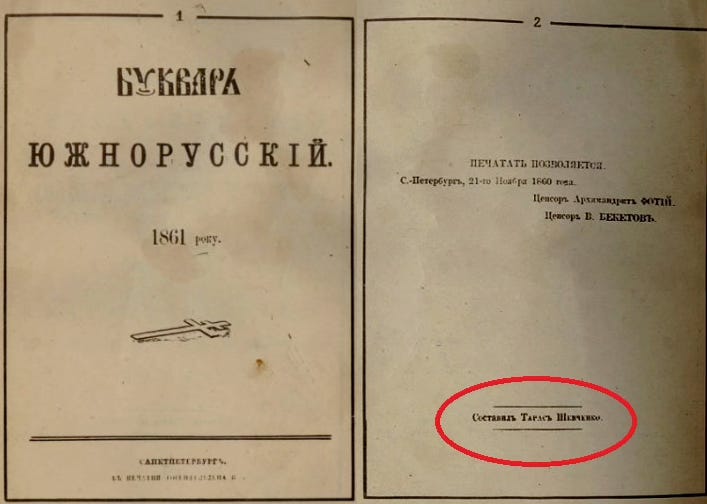
Moreover, a significant portion of Shevchenko’s correspondence, diaries, and many of his writings were composed in the Russian literary language, which was the natural cultural and linguistic environment of the educated population of Malorossia in the nineteenth century. If a separate ancient Ukrainian nation with its own distinct language had already fully existed, one of its central symbols would not have published a “South Russian Primer” and written extensively in Russian.
The policy deepened under Count Agenor Goluchowski, who served as Governor of Galicia from 1851 to 1859. As Monchalovsky documented, it was during his tenure that the Russian language was removed from schools and Russian public figures placed under police surveillance.[23] The 1859 Alphabet War, in which Austrian authorities attempted to replace the traditional Cyrillic script with a Polish-based Latin alphabet, met with widespread resistance from the Rusyn intelligentsia and ultimately failed. Direct suppression had reached its limits.
“Count A. Goluchowski served earlier as Governor of Galicia, namely from 1851 to 1859, and it was during that time that the Russian language was removed from schools and all Russian public figures were placed under police surveillance.”
— O.A. Monchalovsky, The Life and Activity of Ivan Naumovich (Austro-Hungery, 1899) [23]
The founding of the Ukrainophile newspaper Meta in Lvov in 1863 marked the shift toward a different strategy. Its first act was publishing “Shche ne vmerla Ukrainy” (“Ukraine Has Not Yet Perished”), a text consciously modeled on the Polish national anthem “Jeszcze Polska nie zginęła” (”Poland Has Not Yet Perished”), establishing in print the ideological continuity between the Polish national movement and the emerging Ukrainophile press in Galicia.[27] By 1863, the project of constructing a separate Galician identity had acquired its own political infrastructure, its own press, and direct organizational ties to Polish nationalist interests.
By this point, the Ukrainian project was no longer developing merely as a local Galician phenomenon. Austro-Hungarian and Polish political circles increasingly viewed it as a geopolitical instrument that could be projected directly into the Russian Empire itself. Vienna’s calculations were explicit: the Austrian government planned to use the Ukrainian movement to weaken Russia’s role as the Slavic arbiter of Europe while simultaneously creating a counterweight to Polish influence on the empire’s eastern frontier.[22] The goal was not simply the preservation of regional dialects or traditions, but the gradual construction of a separate identity capable of weakening the unity of the broader Russian people from within.
The practical expansion of the movement into the Russian Empire had begun in 1861, when the journal “Osnova” was launched with the goal of popularizing Ukrainophile ideas, though it was shut down already in 1862 due to financial difficulties. The growing radicalism among certain Ukrainian and Polish intellectual circles, many of whom openly promoted separatist ideas and maintained ideological connections with Austro-Hungarian political interests, eventually led the Russian government to impose restrictions on Ukrainian-language publications inside the empire. Concerned by the spread of South Russian separatist ideas disguised as peasant educational and literary activity, and increasingly viewing the movement as politically connected to foreign anti-Russian interests, the Russian government issued the Valuev Circular in 1863. The decree restricted the promotion of separatist and identity-based propaganda through educational and religious publications in the Little Russian dialect, while still allowing works of fiction and literature. The circular stated:
“With regard to the printing of books in the Little Russian language, instructions should be issued through the censorship authorities so that only works belonging to the sphere of belles-lettres may be permitted for publication in this language; while the publication of books in the Little Russian language concerning religious subjects, educational materials, and generally books intended for the elementary reading of the people should be suspended…”
By the 1870s, many of these restrictions were already being inconsistently enforced or had largely ceased to function in practice. The Valuev Circular was followed in 1876 by the Ems Ukaz, which expanded restrictions on the publication, importation, and public use of certain Ukrainian-language materials. Russian authorities increasingly viewed the Ukrainophile movement not as a purely literary phenomenon but as one connected to political separatism and influenced by developments in Austro-Hungarian Galicia. Austro-Hungarian propagandists immediately began spreading the narrative that the Russian Empire had “banned the Ukrainian language.” In reality, both the Valuev Circular and the Ems Ukaz were directed against educational, religious, and political activities associated with the emerging separatist movement, not against all use of the language. Works of fiction and belles-lettres continued to be permitted throughout.
The Ems Ukaz had an unintended consequence that Austrian and Polish strategists were quick to exploit. By restricting Ukrainophile activity inside the empire, Russia effectively transferred the organizational center of the Ukrainian movement to Galicia, where Austrian constitutional freedoms allowed what was forbidden in St. Petersburg. The financial record of 1881 documents how deliberately this opportunity was seized. Prince Czartoryski pledged 14,000 guilders and Prince Sapieha 6,000 guilders to relocate Panteleimon Kulish and his proposed newspaper Hutor to Lvov, while Galician Polish landowners offered to pay subscriptions for their Russian villages. The purpose was stated openly: to make Lvov the organizational center of the Ukrainian movement.[44] Kulish ultimately refused and left Galicia, but the logic of the project did not depend on any single individual.
That this freedom was selective is documented by the fate of those who tested its limits. Antonevich's account of Galician political life, in which he recorded voters openly rejecting the Ukrainian identity and a deputy of the Austrian parliament calling it 'pure absurdity,' was subsequently confiscated by Austro-Hungarian police.[66] Austro-Hungarian constitutional freedom extended to Ukrainian publications. It did not extend to those who rejected the identity being constructed for them.
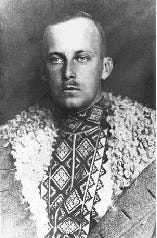
By the 1880s and 1890s, Austro-Hungarian authorities intensified efforts to construct a separate Ukrainian literary language deliberately distanced from Russian. The writing system known as Kulishivka, developed by Panteleimon Kulish on the phonetic principle of "write as you hear," became the basis of the official orthography introduced in Austrian schools across Galicia, Bukovina, and Transcarpathia in 1892. It was further modified into Zhelekhivka, which incorporated additional Polish orthographic elements. Several traditional letters shared with Russian, including ы, э, and ъ, disappeared from the standard alphabet, while є, ї, and the apostrophe were standardized. Disillusioned by the way his system had been repurposed to deepen the linguistic divide between Galician Ruthenians and Russians, Kulish ultimately distanced himself from his own orthography.
The New Era agreement of 1890, coordinated in advance with Governor Badeni and Metropolitan Sembratovich and announced by Yulian Romanchuk at the Galician Diet on November 25, completed the political framework. Its core declaration, that Rusyns were a separate people distinct from both Poles and Russians, was the programmatic charter of an administratively engineered identity.[45] The consequences were immediate: Russian-language books were confiscated from the Lvov Theological Seminary, Russian student organizations were closed, and priests who refused the programme were stripped of their positions.[45]
A crucial turning point came in 1894, when Mykhailo Hrushevsky was appointed to the newly established chair of history at the University of Lemberg — a state institution of the Austro-Hungarian Empire, funded and administered by Vienna. His appointment was not incidental: the chair itself was created by the Habsburg authorities as part of the broader institutional infrastructure through which a distinct Ukrainian identity was to be cultivated and propagated. He hoped to teach Ukrainian history to Galician Rusyn students whom he already envisioned as the Ukrainians of the twentieth century, and viewed Galicia as the foundation from which that project would grow.[20] In 1898, he began publishing his monumental ten-volume History of Ukraine-Rus', advancing the idea that Ukrainians constituted a distinct historical nation separate from Russians and that Ukraine-Rus' was the primary successor of ancient Rus'.[21] Through this reinterpretation of history, Hrushevsky provided the Ukrainian project with the historical legitimacy that administrative pressure and linguistic reform alone could not supply. By the end of the nineteenth century, Galicia had become one of the principal centers promoting the idea of the unification of Ukrainian lands as part of a broader geopolitical strategy aimed at weakening Russia from within.
As Paul Robert Magocsi, one of the foremost Western academic specialists on Galicia, has documented, by the turn of the twentieth century Ukrainian activists in both empires came to regard Galicia as ‘a Piedmont from which a future independent state on all-Ukrainian territory would grow.’[26] That this project was always intended to reach beyond Galicia into Russia itself was made explicit by the movement’s own participants. As early as 1910, a candidate of the Ukrainian party in Galicia publicly called upon Galicians to “organize an uprising of Little Russians in Russia, to break a window in the great prison of peoples” — the language of a geopolitical operation, not a cultural movement.
Austrian and German authorities provided substantial material support to Ukrainian-oriented publications and organizations. The Vienna journal “Ukrainische Rundschau” received 12,000 German marks in 1909 alone, while the Chernivtsi newspaper “Bukovyna” was allocated 24,000 Austrian crowns.[27] A special analytical department on Ukrainian affairs was organized within the German Foreign Ministry, while Austrian authorities in Galicia simultaneously engaged in identifying and suppressing pro-Russian elements among the population.
Prior to 1914, Austrian strategic planning treated Galicia not merely as a defensive borderland but as the intended core of a future Ukrainian political entity extending into the Malorossian territories of the Russian Empire. In his memoirs, Max Ronge describes the activities of the Bund zur Befreiung der Ukraine, which operated under Austrian patronage with the explicit aim of detaching Malorossia from Russia. Ronge’s own assessment was candid: despite its ambitions, “die damalige Ukraine überhaupt nicht befreien lassen wollte” — the Ukraine of that time had no desire to be liberated at all.[25] The Piedmont model suffered from a fundamental weakness. The population it was designed to mobilize did not recognize itself in the identity Galicia was meant to project eastward. As Vergun observed in 1915, Galicia’s importance to Vienna lay precisely in its potential to serve as a wedge between the Russian population and its historical identity— a role the Ukrainian movement had been cultivated to perform over several decades.[48]
Simultaneously, Galicia became the center of a growing network of youth, cultural, and paramilitary organizations that combined national education with physical and military training. Among the most influential were the Sokil movement, the scouting organization Plast, and the Sich societies, whose members participated in military drills and patriotic instruction. These were not spontaneous civic associations. They operated within an institutional framework actively supported by Austrian authorities, and their ideological content was inseparable from the broader project of constructing an anti-Russian Ukrainian identity. The history that was rewritten in the universities, the language that was reformed in the schools, and the political program that was cultivated in the press: all of it found its organizational expression in these formations.
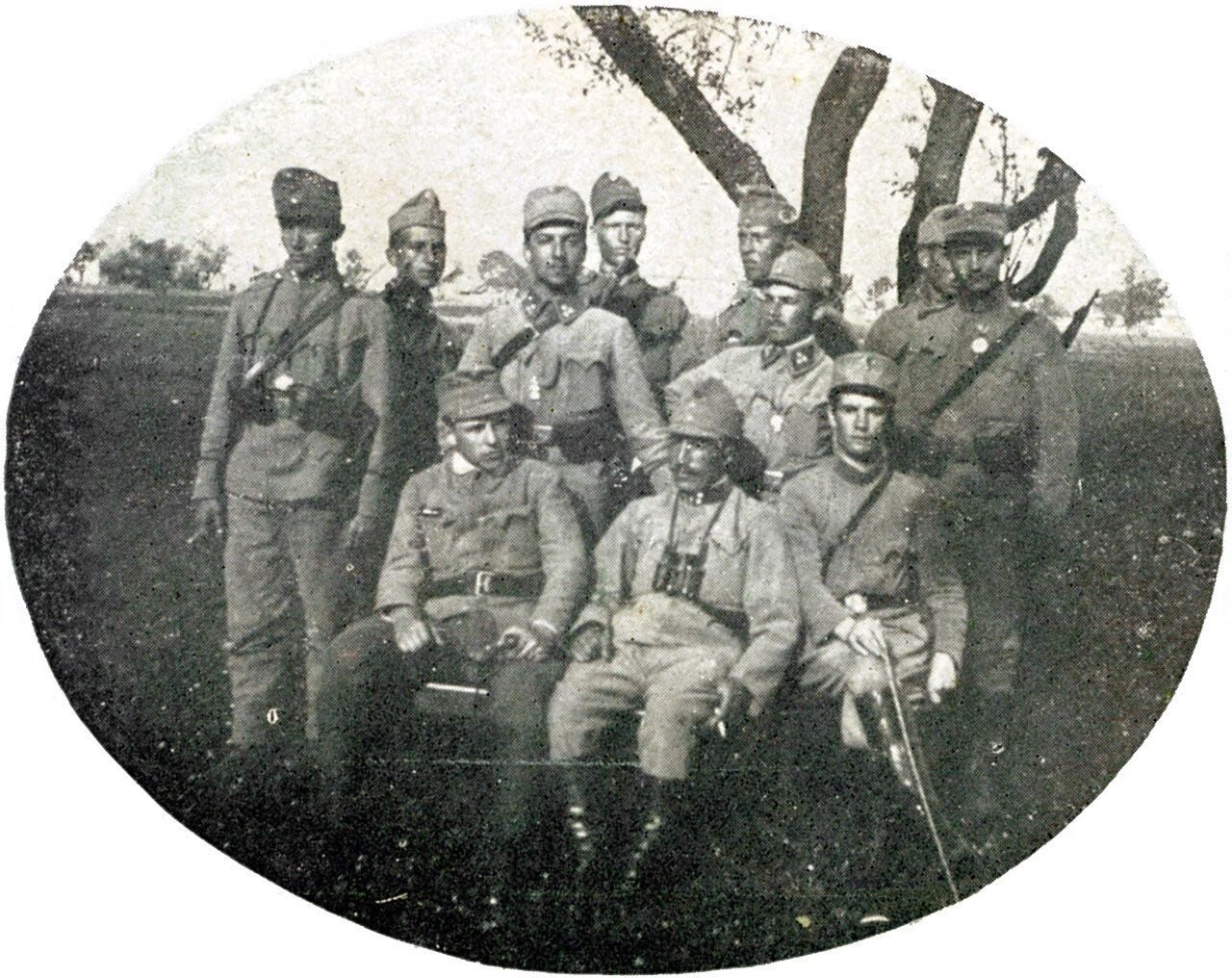
On the eve of the First World War, these organizations provided much of the personnel and ideological foundation for the Ukrainian Sich Riflemen, the volunteer formation that entered Austro-Hungarian service in 1914.[28] Directly before the outbreak of the war, during celebrations dedicated to Taras Shevchenko organized by the Sich movement, approximately 12,000 armed and trained participants were assembled. Many would later volunteer for service on the Russian front as part of the Austro-Hungarian Ukrainian Sich Riflemen Legion, created specifically for the coming conflict with Russia. The scale of this mobilization was not accidental. It was the result of decades of educational, linguistic, historical, and organizational work carried out under Austrian patronage, which gradually transformed Galicia into the principal center of the Ukrainian national movement.
The significance of these developments extended far beyond the First World War itself. By the beginning of the twentieth century, Galicia had been transformed into a fully developed ideological and organizational center of the Ukrainian national movement.[29] A new generation had grown up within a political and linguistic environment shaped by decades of educational reform, nationalist activism, and historical reinterpretation. It was from this milieu that the future leaders and ideologues of twentieth-century Ukrainian nationalism would emerge.
One figure illustrates this continuity with particular clarity. Stepan Bandera was born in 1909 in Austro-Hungarian Galicia, not in Russia, not in Ukraine as it would later be defined, but in the very province that had spent decades serving as the primary laboratory for the construction of an anti-Russian identity. By the time of his birth, Galicia already possessed a fully developed infrastructure of Ukrainian nationalist activity built with direct Austrian and Polish support as an instrument against Russia.
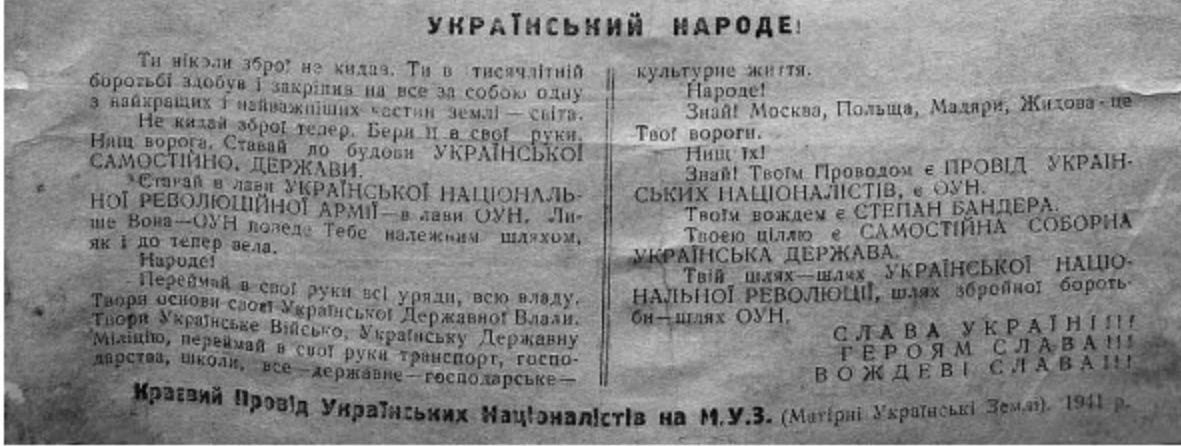
The cadres produced by these organizations did not disperse after the collapse of Austria-Hungary. Soviet intelligence documents establish the organizational continuity with precision. A July 1944 NKGB special report to People's Commissar Merkulov identified the commander of the Ukrainian Insurgent Army (UPA), operating under the alias "Klim Savur," as Dmitry Semyonovich Klyatkovsky — documented in a 1938 photograph as a member of the governing board of the Ukrainian nationalist sports organization Sokil in the city of Zbarazh.[63]
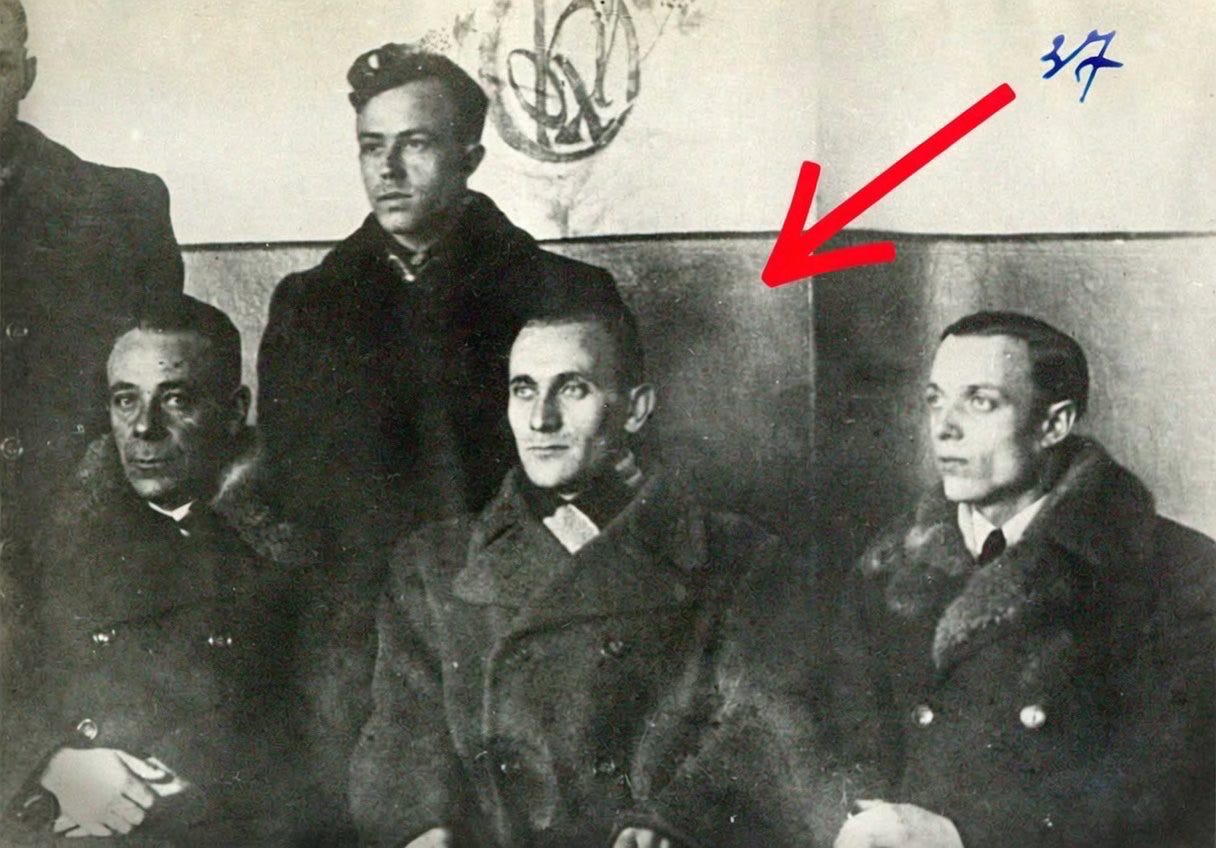
The same UPA formations under his command were responsible for the mass killing of Polish civilians in Volhynia in 1943, including the murder of approximately 2,000 Poles in Volodymyr-Volynsky on July 18, 1943, documented in a separate NKGB operational report.[64]
The ideological and organizational continuity between the Austro-Hungarian Galician project of the late nineteenth century and the radical Ukrainian nationalism of the mid-twentieth century, including its collaboration with Nazi Germany during the Second World War, was direct and unbroken.
Russian culture in Galicia did not disappear under sustained political pressure. By the end of the 19th century, Russian cultural and educational societies, political organizations, 17 Russian-language newspapers, and approximately 50 Russian-language journals were operating in the region. The Rusyn population continued to identify as Russian in the broad cultural and historical sense that had defined their self-understanding for generations.
The response from Austro-Hungarian authorities and their Ukrainian political clients was systematic delegitimization. All Russophiles were branded “Muscovites” and “agents of Moscow,” accused of operating on Tsarist subsidy. Orthodox clergy and Russophile intellectuals became targets of continuous denunciation, frequently initiated by Uniate clergy themselves. These denunciations escalated into direct physical violence against Orthodox priests and peasants who refused conversion to the Union or Roman Catholicism. Among the figures caught in this campaign was Hryhoriy Hunkevych (1849–1924), Greek Catholic priest and member of the Austrian parliament, who converted to Orthodoxy and was subsequently arrested by Austrian authorities as a consequence of that conversion.
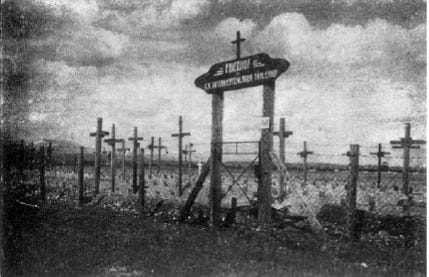
The repression that followed was not improvised. The Austro-Hungarian authorities established two internment facilities constructed specifically for Rusyns who refused identification with the Ukrainian national project being imposed from above. Talerhof, in Styria, functioned as a mass internment camp drawing from every layer of Galician and Bukovinian society: peasants, villagers, craftsmen, lower clergy, teachers, and community organizers — anyone whose Russian identity or Orthodox faith marked them as a political threat. Theresienstadt (Terezín), in Bohemia, held the intelligentsia, senior clergy, and political figures of the Russophile movement, among them Dmitry Markov and Vladimir Dudykevych, both serving members of the Austrian parliament, and Maxim Sandovich, an Orthodox priest subsequently executed by Austrian military authorities in September 1914. Survivor accounts and the documentary record compiled in the Talerhof Almanac describe conditions that contemporaries called a hell on earth. According to Sulyak, cited by Melnychuk, no fewer than 20,000 Galicians and Bukovinians passed through Talerhof's internment alone. Together, the two facilities were the institutional expression of a political conclusion the Habsburg administration had reached: that Russian identity in Galicia could not be argued away and would have to be physically destroyed.
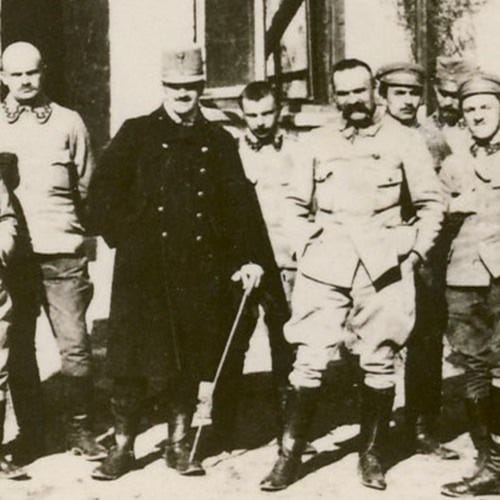
Here another extremely important figure appears, without whom it is impossible to understand how the idea of fragmenting Russia evolved from an Austro-Hungarian and German strategy into a full-fledged Polish state program. This figure was Józef Piłsudski, who today is presented as the “father of Polish independence,” although in reality he became one of the earliest twentieth-century politicians to actively seek cooperation with Russia's foreign rivals in support of separatist and nationalist movements inside the Russian Empire.
Although Piłsudski was born in the Russian Empire, his political and military career increasingly developed within Austro-Hungarian Galicia. By the years immediately preceding the First World War, his rifle organizations operated with the knowledge and support of Austro-Hungarian military authorities, who viewed Polish nationalist forces as a potentially useful instrument in a future conflict with Russia. Moreover, photographs of Piłsudski together with representatives of Austro-Hungarian military and intelligence circles have survived, circles within which he was effectively building his future anti-Russian structures. It was precisely on Austro-Hungarian territory that Piłsudski organized rifle associations and the future Polish Legions, which, with the outbreak of the First World War, would be deployed against the Russian Empire.
Already during the Russo-Japanese War in 1904, Piłsudski traveled to Tokyo as a representative of the Polish Socialist Party. There, he sought cooperation with Japanese authorities against the Russian Empire. In a memorandum presented to Japanese officials, he argued that the political objective of the PPS was the breakup of the Russian Empire into separate states and territories and proposed cooperation between Polish revolutionaries and Japan against Russia.[56] In practice, this implied support for nationalist and separatist movements within the empire. The discussions included intelligence activities, sabotage operations, and support for anti-Russian movements within the empire. Piłsudski described Poland as a potential ally capable of creating serious difficulties for Russia in the midst of the war.[30] In other words, while Russia was fighting in the Far East, a Polish revolutionary was traveling to Russia’s military enemy and effectively proposing that the national question be used as a weapon against the Russian Empire itself.
One detail appears almost symbolic. Piłsudski’s route to Japan passed through New York and San Francisco. Formally, this may simply have been a convenient route across the Atlantic and Pacific oceans. Yet the geography of the trip itself reveals the scale of the geopolitical game. A Polish revolutionary from the Austro-Hungarian political environment traveled through the Anglo-American world to Japan in the middle of a war in order to propose a plan for weakening Russia from within.
Later, this logic would become known as “Prometheism,” a program aimed at supporting national movements inside Russia, and later inside the USSR, in order to detach Ukraine, Belarus, the Caucasus, Central Asia, Crimea, the Volga region, and other territories from the Russian center. His “Prometheism” rested on a core principle: Russia should not exist as a single great power. It had to be dismantled into manageable national fragments, while Poland would become the center of a new geopolitical order between Germany and Russia. That is why, for Piłsudski, the Ukrainian, Belarusian, Caucasian, and other “national questions” were never humanitarian causes, but geopolitical weapons.
Thus, Polish, Ukrainian, and other nationalist projects on the western borderlands of Russia were not developing separately from one another, but inside a single geopolitical logic. Piłsudski in 1904 had no Polish state behind him. He was a stateless revolutionary operating from Austro-Hungarian territory, proposing to Japan the same fragmentation of Russia that German strategists were simultaneously theorizing as Randstaatenpolitik and Mitteleuropa. The national question — Ukrainian, Polish, Belarusian, Caucasian — was in each case an instrument for the same objective: the permanent dismemberment of Russia as a unified great power.
During the First World War, while living in exile in Switzerland, Lenin promoted ideas that directly served the fragmentation of the Russian state. In November 1914, during a public lecture in Zurich on the war and revolutionary social democracy, he attacked Tsarism and defended the slogan of Russia’s defeat. Lenin repeatedly praised German military successes and remarked: “It would not be bad at all if the Germans took Riga, Revel, and Helsingfors.”[31]
On June 7, 1917, Lenin declared: “We consider Ukraine and the other non-Great Russian lands to have been seized by the Russian tsars.”[32] This characterization was particularly striking in the case of Malorossia, whose territories formed part of the historic lands of Rus’. These lands had been annexed by Lithuania and later by the Polish-Lithuanian Commonwealth. Their incorporation back into the Russian state did not occur as the result of a Russian conquest but following the uprising of Bohdan Khmelnytsky against the Polish-Lithuanian Commonwealth. The Cossack Hetmanate sought the protection of the Russian Tsar and formally entered into allegiance to Moscow through the Pereiaslav Agreement of 1654. Lenin’s description stood in sharp contrast to these historical circumstances and echoed arguments long circulated in Austro-Hungarian and German political circles, where Ukraine was increasingly presented as a separate nation and Malorossia steadily recast as something other than a historic part of Russia.
Lenin also insisted that the defeat of the Russian army would represent “the lesser evil,” and stated: “It would be very good for all of us if the Germans took Warsaw and Tiflis… Russia must be amputated down to Kiev, Odessa, Riga, and Libava.”[33] Taken together, these statements placed Lenin’s wartime position in direct operational alignment with the strategic objectives of the Central Powers: the permanent territorial reduction of Russia and the separation of its borderlands.
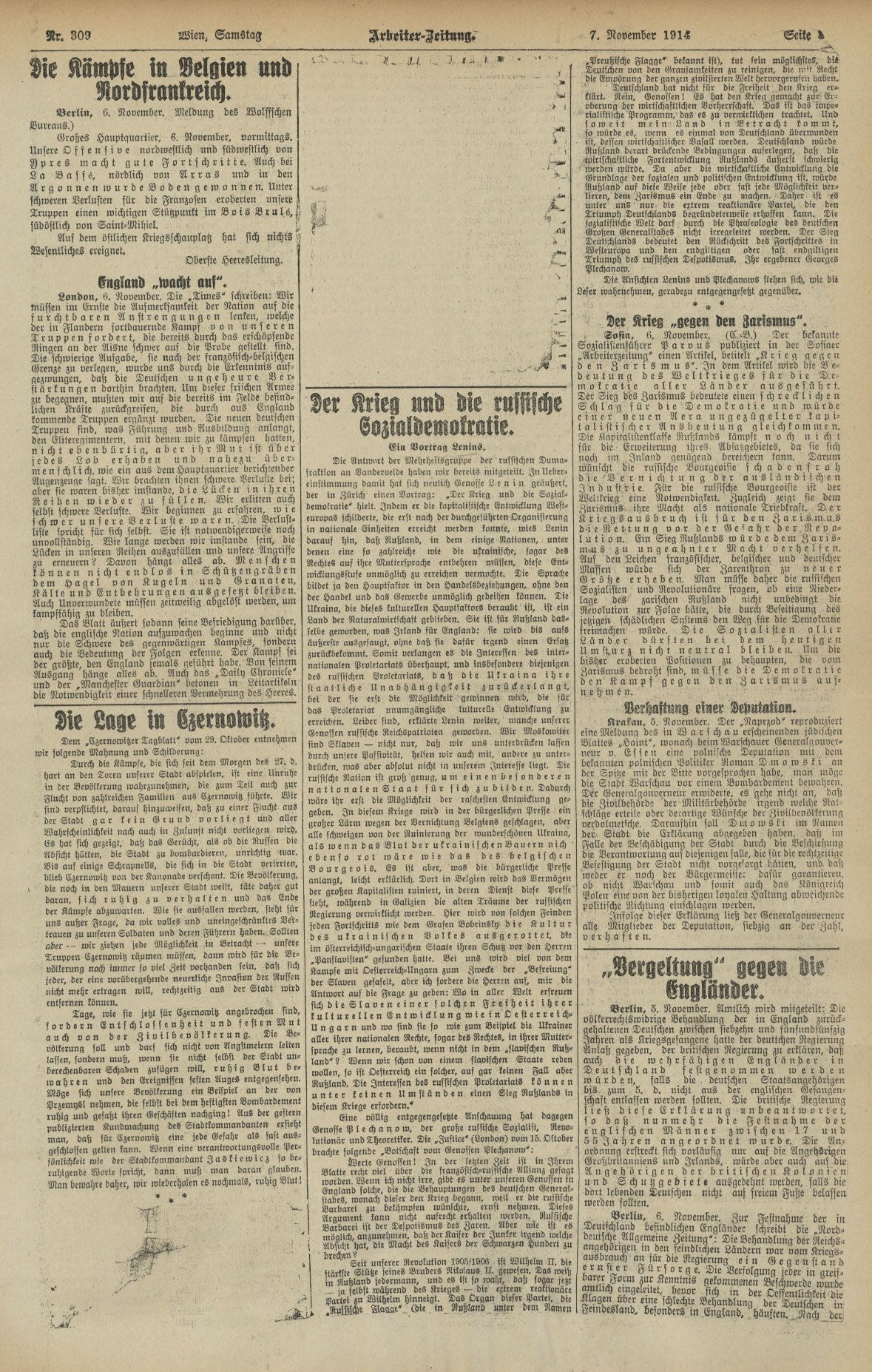
On November 7, 1914, Lenin stood before an audience in Zurich and asked: “Warum sollen wir nicht Österreich-Ungarn als Befreierin betrachten?” — “Why should we not consider Austro-Hungary a liberator of the Slavic peoples?” He argued that Austro-Hungary provided Slavic nations with the cultural and linguistic freedom that Russia denied them, held it up as a model state for Slavic development, and declared Russia unworthy of the role of protector of the Slavic world.
All while Austro-Hungarian authorities were running concentration camps at Talerhof and Theresienstadt specifically for Galician Rusyns — Slavic people interned for the crime of identifying as Russian.[60]
When the Russian army entered Lvov in 1914 and Nicholas II personally visited the city in 1915, he was ceremonially welcomed by large crowds of the local population as a liberator.[34]
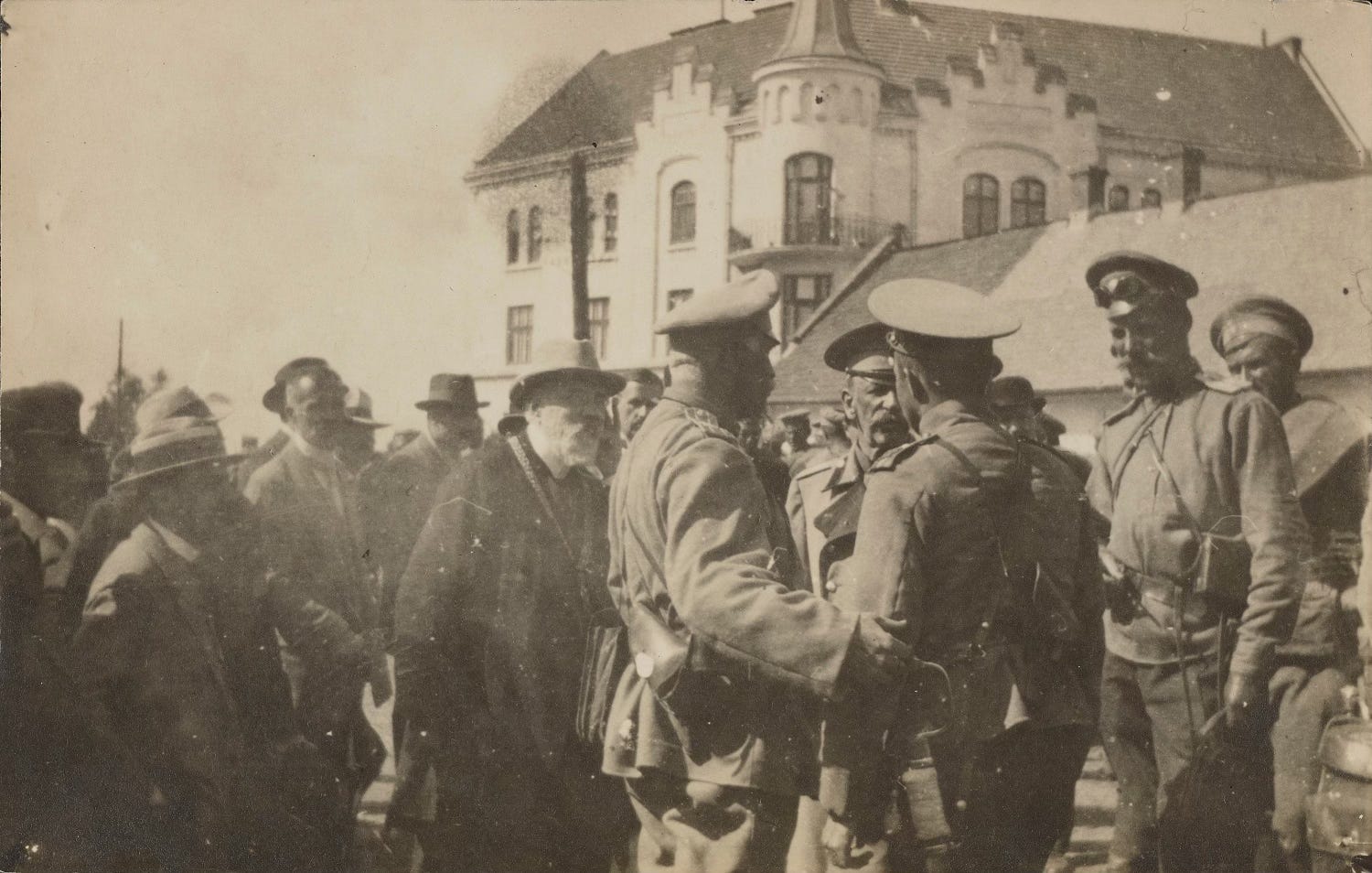
While Russian troops were being greeted in Galicia, Metropolitan Andrey Sheptytsky, a Polish count and former officer of the Austro-Hungarian army, was already preparing a very different future. On 15 August 1914, he submitted a memorandum to the authorities in Vienna outlining his vision for the future administration of the Ukrainian territories of the Russian Empire. In this document, he proposed the creation of a Ukrainian Hetmanate under Austrian protection, the separation of the local Orthodox Church from the Russian Orthodox Church, and a broad campaign to cultivate a distinct Ukrainian national consciousness.[35]
What Austrian administrators initiated in 1848 by conditioning support on the public abandonment of Russian identity, Polish political circles systematized after 1863, and Vienna institutionalized through the "New Era" of 1890. By 1914 this project had acquired military-operational form, with Galicia positioned as the intended core of a Ukrainian political entity designed to absorb the Malorossian territories of the Russian Empire. Ronge himself acknowledged that the population this project was meant to mobilize had no desire to be liberated. The crowds that welcomed Nicholas II in Lvov confirmed the same. What followed was not the organic unfolding of a national awakening but the application of wartime force to a project that peacetime persuasion had failed to complete.
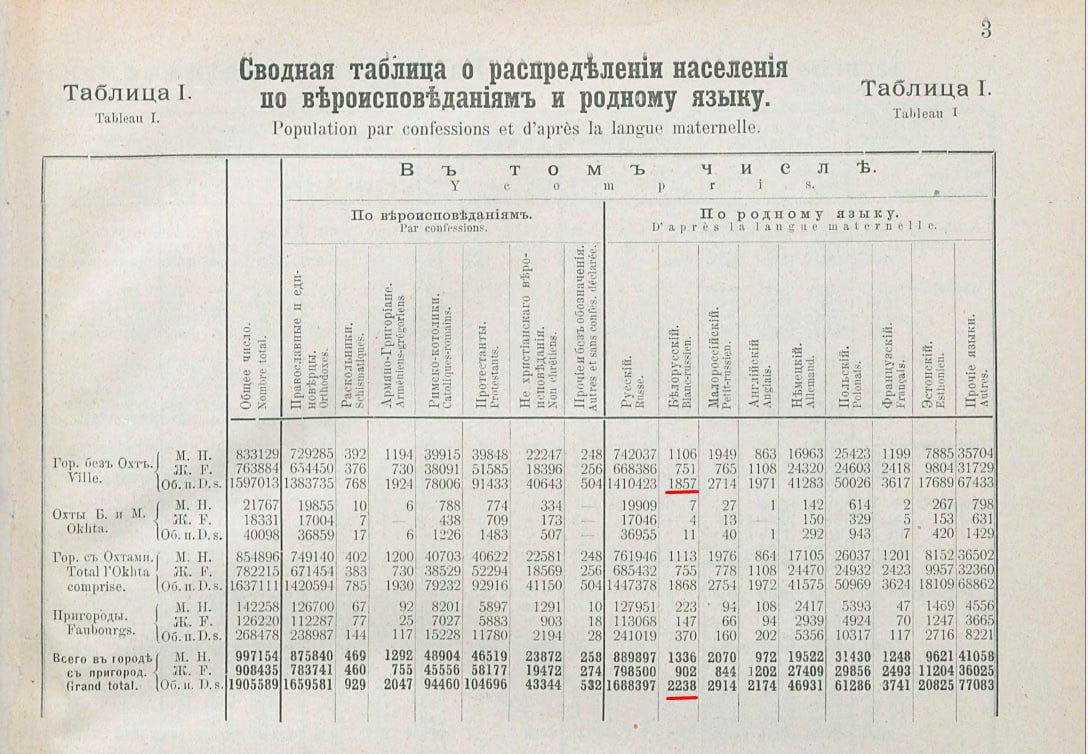
As German armies advanced into the western territories of the Russian Empire, they acquired an opportunity to apply the methods pioneered in Galicia across a much larger geographical space. The scale of the task was illustrated by the 1910 census of St. Petersburg: despite the presence of tens of thousands of residents originating from the Belarusian provinces, only 2,238 identified Belarusian as their native language, while nearly 890,000 identified Russian. A distinct Belarusian national identity, on the eve of the war, barely existed as a measurable social phenomenon.
When Germany occupied the western territories of the Russian Empire, capturing Poland, Lithuania, the Baltic territories, and parts of Belarus, reorganized into the administrative region known as Ober-Ost under direct German occupation, the occupation authorities began implementing policies closely resembling the earlier Galician model. It was precisely in this environment that the Belarusian project began taking shape.
German officials struggled to identify a clearly defined Belarusian nation. Erich Ludendorff, who directed the German military administration of Ober-Ost, later admitted that the Belarusians were initially “literally not to be found” and appeared instead as a dispersed rural population. Nevertheless, the occupation authorities proceeded to apply the same instruments previously used in Galicia: schools, museums, cultural societies, publications, language policy, and administrative support. The goal was to encourage the development of a distinct Belarusian identity separate from the broader Russian tradition and aligned with German geopolitical interests in Eastern Europe.[36]
As the Russian state collapsed, Russia withdrew from the war after signing the Treaty of Brest-Litovsk. Under its terms, Russia transferred approximately 100 tons of gold to Germany and surrendered roughly one-third of the European territories of the former Russian Empire.
The treaty “established a new political structure for Eastern Europe, carving off huge sections of the Tsar’s empire to create German client states.” It transformed the territories occupied during the war into the foundation of a new political order under German influence.[37]
Under German occupation in 1918, a series of new political entities were proclaimed for the first time: the Belarusian People’s Republic; the Kingdom of Poland, formally independent but dependent on the Central Powers; the Kingdom of Lithuania; the United Baltic Duchy, an attempt to unite the Baltic territories under German influence; and the Duchy of Courland and Semigallia in present-day Latvia under Baltic German dominance.
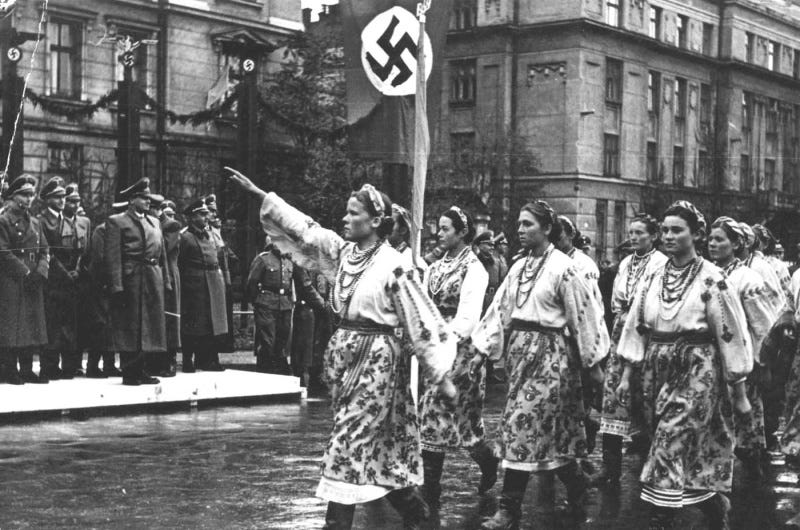
German strategic objectives by 1918 reached far beyond Poland and Ukraine. Military planners sought to project German influence into Crimea, the Don and Kuban regions, the Caucasus, the Caspian basin, and even Turkestan. Alfred Rosenberg, the Baltic German ideologist who would later become one of the principal architects of Nazi eastern policy, recorded a proposal to unite the Crimean Tatars and German colonists under the principle of national self-determination and transform Crimea and the surrounding territories into a German colony.[5]
General Hoffmann bluntly informed the Russian delegation that Poland, Lithuania, and Courland had already decided to separate from Russia and would determine their future outside the Russian state. He justified this position by invoking the same principle of self-determination that the Bolsheviks themselves had proclaimed.[39] These territories were effectively viewed as agrarian and raw-material sources for Germany and reserves of cheap labor.
On Ukraine, Hoffmann was unambiguous. “In fact, the Ukraine was my suggestion, and my creation, and not a spontaneous wish of its inhabitants at all.” He added: “I created the Ukraine, to put it bluntly, merely in order to have a part of Russia to make peace with.” Austria-Hungary was facing severe food shortages, and “the Ukraine and the Treaty of Ukraine had willy-nilly to be manufactured” in order to sustain its ally. His private diaries confirm this was not retrospective justification. On 12 March 1918, he recorded: “the Central Rada has nothing behind it but our military assistance. The moment we withdraw our troops, the whole magnificent edifice collapses.”[40] When the Rada failed to guarantee stable grain deliveries, the German occupation authorities replaced it with the Hetmanate of Pavlo Skoropadsky. On 30 April 1918, Hoffmann noted approvingly that the new regime “stands on the basis of the Brest-Litovsk peace and all other agreements on grain deliveries.” Hoffmann dismissed the very idea of an independent Ukraine as “a rank absurdity” and “an absolutely artificial and temporary thing.”
“The difficulty in Ukraine lies in the fact that the Central Rada has nothing behind it but our military assistance. The moment we withdraw our troops, the whole magnificent edifice
––Max Hoffmann
Hoffmann was equally candid about Germany’s broader objectives in the East. Erich Ludendorff, Chief of the German General Staff and the principal architect of Germany’s military strategy in the East, had, according to Hoffmann, deliberately facilitated the spread of Leninism into Russia. His purpose was straightforward: “to paralyse Russia as a military Power and release the German armies from the east for the west front.”
Nor did Hoffmann conceal Germany’s economic ambitions. Reflecting on the collapse of the Russian state, he declared: “Russia is down.” He argued that the destruction of Russia’s “leaders and her intellectual classes” created a historic opportunity for “non-Russian Europe to step in and seize control of the whole of the Russian resources.” Germany, he suggested, possessed the technical expertise and manpower to exploit those resources and would even be willing to share the profits with the Entente if it supported such a project. “Now is the chance which may never occur again,”Hoffmann concluded.[39]
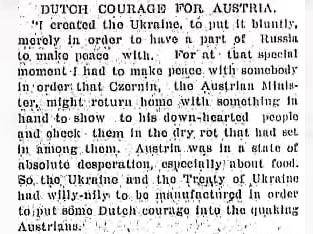
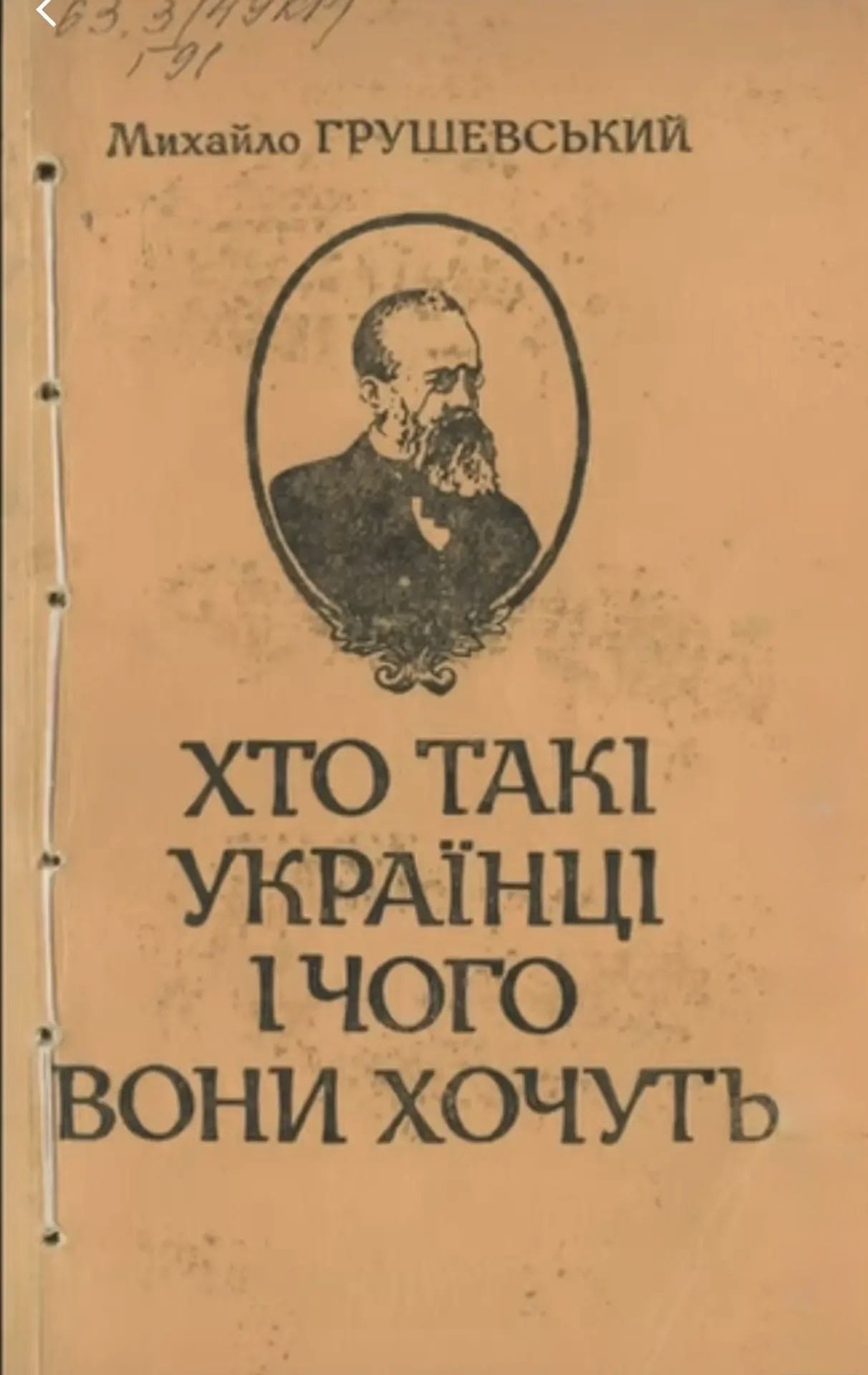
The Ukrainian People's Republic, the entity Hoffmann referred to in his interview, emerged on the territory of Russian Malorossia immediately after the revolution, with Mykhailo Hrushevsky serving as chairman of the Central Rada. That same year, Hrushevsky published the pamphlet Who Are the Ukrainians and What Do They Want?, arguing that Ukrainians constituted a separate nation, distinct from Russians, and should possess their own political institutions and national statehood. The pamphlet was the popular manifesto of the Ukrainian national movement at the moment when the Central Rada was attempting to transform these ideas into political reality. Following the signing of the Brest-Litovsk Treaty, the republic came under German control and was later transformed into the Ukrainian State under Hetman Pavlo Skoropadsky. In practice, it functioned as a German-backed political project primarily oriented toward supplying Germany with grain and raw materials.
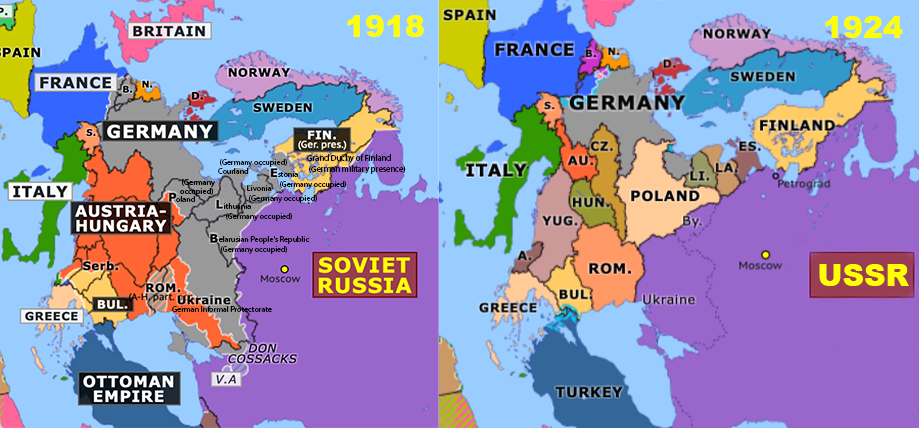
In 1918 the Central Powers lost the war. The Brest-Litovsk Treaty was annulled, the Austro-Hungarian Empire dissolved, and the German-controlled order in Ober-Ost collapsed with it.
The Red Army regained control over part of the former imperial territories and proceeded to implement nationality policies that closely followed the same logic. The former Russian Empire was reorganized into union republics whose borders had never previously existed as state frontiers, drawn across territories that had historically belonged to a common political, economic, and cultural space. In several cases these borders closely resembled projects first drafted during the German occupation and the Brest-Litovsk period.
As the Bolsheviks consolidated control over the former imperial territories, the constitutional basis of the new union became the central question defining the future of the Russian state. In the autumn of 1922, Stalin, serving as General Secretary of the Russian Communist Party, drafted a resolution proposing what became known as the “autonomization”plan. Under this plan, the non-Russian Soviet republics, Ukraine, Belarus, Georgia, Armenia, Azerbaijan, would enter the existing Russian Soviet Federative Socialist Republic as autonomous units within a single unified state. Cultural and linguistic autonomy would be preserved, but sovereignty, statehood, and the question of borders would remain internal matters of a single Russian-centered polity. There would be no separate republican constitutions, no separate state identity, and no right of secession.[50]
Lenin intervened directly. In a letter to Kamenev on September 26, 1922, the same day Stalin circulated his resolution, he rejected the autonomization plan and demanded a fundamentally different structure.[51] The constitutional dispute concerned something far more consequential than administrative arrangements: whether the former imperial borderlands would remain integral parts of a unified Russian state or be institutionally positioned for eventual separation.
Lenin’s counter-proposal was a union of formally equal and sovereign republics, each with its own constitutional identity and an explicit right of free withdrawal from the USSR. The ideological justification was anti-chauvinism and the right of nations to self-determination. Stalin privately called it “the national liberalism of Comrade Lenin.”[52] He was correct in his assessment of what it meant in practice. A union of autonomous republics within the RSFSR had no exit mechanism and no separate statehood. A union of sovereign republics with a constitutional right of secession did. The difference between the two plans was the difference between administrative decentralization and the institutional preparation of state dissolution.
The Declaration on the Formation of the USSR, signed on December 30, 1922, enshrined as its foundational principles “equal rights and voluntariness for consolidation, the right of the free withdrawal from the USSR.”[53] The Constitution of January 1924 formalized these principles as the supreme law of the union state.
The result was structurally determined. Stalin’s architecture would have made the fragmentation of the Russian state impossible. Lenin’s architecture made it inevitable. When the union collapsed in 1991, it did so precisely along the borders Lenin had drawn, through the constitutional mechanism Lenin had insisted upon, and into the national units whose identities had been cultivated by decades of the very korenizatsiya policies that followed directly from Lenin’s victory in this dispute. The careers of those who had built those identities under Habsburg and German patronage now found a second life inside the Soviet system itself.
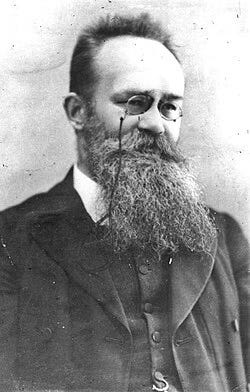
Mykhailo Hrushevsky is the sharpest illustration of this continuity. Appointed to his chair at the University of Lemberg by Habsburg authorities, funded through Austro-Hungarian institutional channels, and dedicated to constructing a historical narrative designed to separate Ukraine from the broader Russian tradition, he had been arrested by Tsarist authorities in Kiev in 1914 as a direct threat to Russian state integrity. A decade later, the Soviet government invited him back. By 1929 he was a full member of the Academy of Sciences of the USSR, heading the historical-philological department of the All-Ukrainian Academy of Sciences and continuing to propagate the same historical framework from inside the Soviet institutional structure that his Austro-Hungarian patrons had originally built him to undermine.
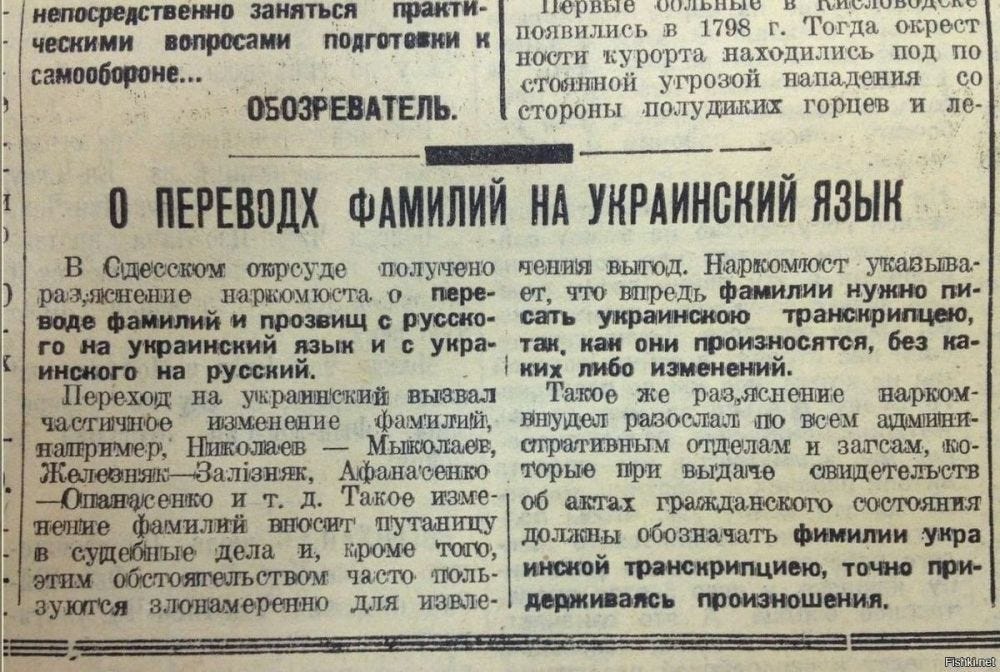
The policy of Ukrainization formed part of the broader early Soviet policy of korenizatsiya ("indigenization"). The Soviet government retained political control over the former imperial borderlands while adopting methods similar to those previously employed by German authorities in Ober-Ost and by the German-sponsored regimes established after Brest-Litovsk. Schools, language reform, publishing, historical narratives, museums, and administrative institutions became tools for cultivating distinct national identities within the newly created Soviet republics across Ukraine, Belarus, Central Asia, and the Caucasus. Languages were standardized for the first time, literary norms codified, school curricula rewritten, and education, local administration, and official publications shifted to the language of the titular nationality of each republic. In some cases personal names and surnames were officially adapted to the new linguistic norms. A Soviet directive instructed administrative authorities to record surnames in Ukrainian transcription, resulting in forms such as "Nikolaev" becoming "Mykolaiev" and "Afanasenko" becoming "Opanasenko." New national elites were simultaneously cultivated by the state.
In Ukraine, complaints were recorded from residents who had spoken Russian throughout their lives but were now required to conduct official business in a language many barely understood. Party correspondence and citizen complaints reported difficulties with the new terminology, mandatory retraining courses, translation of documentation, and language examinations that increasingly became prerequisites for employment in state institutions.[41]
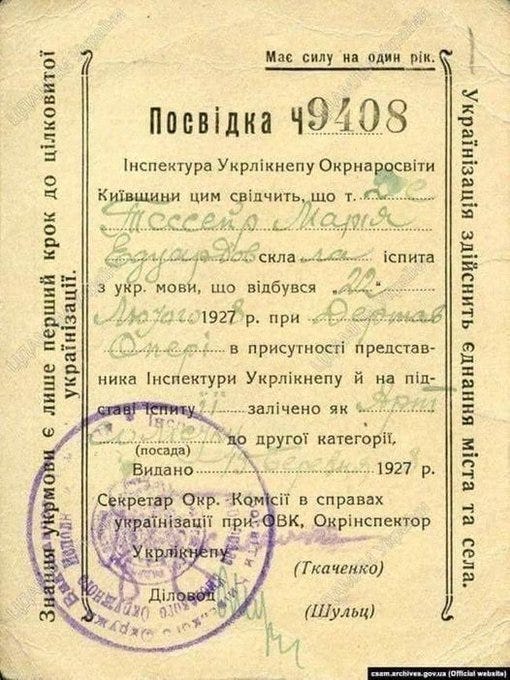
In 1924 Lenin died. The political struggle that followed brought Stalin to power and with it a gradual reversal of Lenin-era nationality policy. Korenizatsiya was curtailed due to growing concerns about Polish influence in the western regions, the danger of separatism, and increasing external pressure from Germany, Japan, and Poland. The Russian language became the common language of the entire country, and by 1938 Russian was a compulsory subject in all schools throughout the USSR.
The decision met resistance from within the Soviet leadership itself. Nadezhda Krupskaya, Lenin’s widow and Deputy People’s Commissar of Education, wrote to Stalin on March 7, 1938, objecting directly:
“We are introducing compulsory teaching of the Russian language throughout the USSR… I am deeply concerned about how this will be implemented. It seems to me that a bit of great-power chauvinism is beginning to show its horns. For example, I consider it harmful to introduce reading and writing in the first year of study not only in the native language but also in Russian, and harmful to introduce a single primer for all nationalities, a primer translated from Russian.”[42]
The letter was written by no ordinary official. Krupskaya had been Lenin's closest political partner and remained the most authoritative interpreter of his legacy. Her resistance to Stalin's language reform was a defense of the nationality architecture Lenin had built, from the person who had helped build it. The question of whether the USSR would function as a unified state or a federation of separate national identities was still being fought over in 1938.
Following the Second World War, Eastern Galicia became part of the Ukrainian SSR. Soviet authorities regarded the OUN (Organization of Ukrainian Nationalists), led by Stepan Bandera, the UPA (Ukrainian Insurgent Army), and the broader Galician nationalist movement as hostile political forces. The OUN had been founded by veterans of the Ukrainian Sich Riflemen and carried the organizational and ideological legacy of the Austro-Hungarian Galician project directly into the mid-twentieth century. At the outset of the German invasion of the Soviet Union in 1941, the OUN collaborated with Nazi Germany, viewing the Wehrmacht’s advance as an opportunity to establish an independent Ukrainian state under German protection. The UPA, formed in 1942, subsequently fought against Soviet forces throughout the late 1940s and into the early 1950s.
Soviet authorities carried out a large-scale campaign against the nationalist underground. Thousands of activists and supporters were arrested, imprisoned, or deported.
After Stalin’s death, many convicted nationalists were released during the Khrushchev era. The ideas that had been suppressed began re-emerging in public and cultural life, setting the stage for their full revival after 1991.
The project did not end with the defeat of Nazi Germany or the dissolution of Austria-Hungary. It changed hands.
In 1953, the CIA launched Project AERODYNAMIC, approved by the Director of Central Intelligence on January 30, 1953, and expanded under Allen Dulles, who directed the CIA from 1953 to 1961. The stated purpose, in the agency’s own words, was “the exploitation and expansion of the Anti-Soviet Ukrainian resistance movement for cold war and hot war purposes.”[57] The organizations being utilized were the Ukrainian Insurgent Army (UPA), the Organization of Ukrainian Nationalists (OUN), and their affiliated structures in Western Europe and the United States — the direct organizational descendants of the Austro-Hungarian Galician project, which had collaborated with Nazi Germany during the Second World War. The budget for fiscal year 1953 was $95,900.
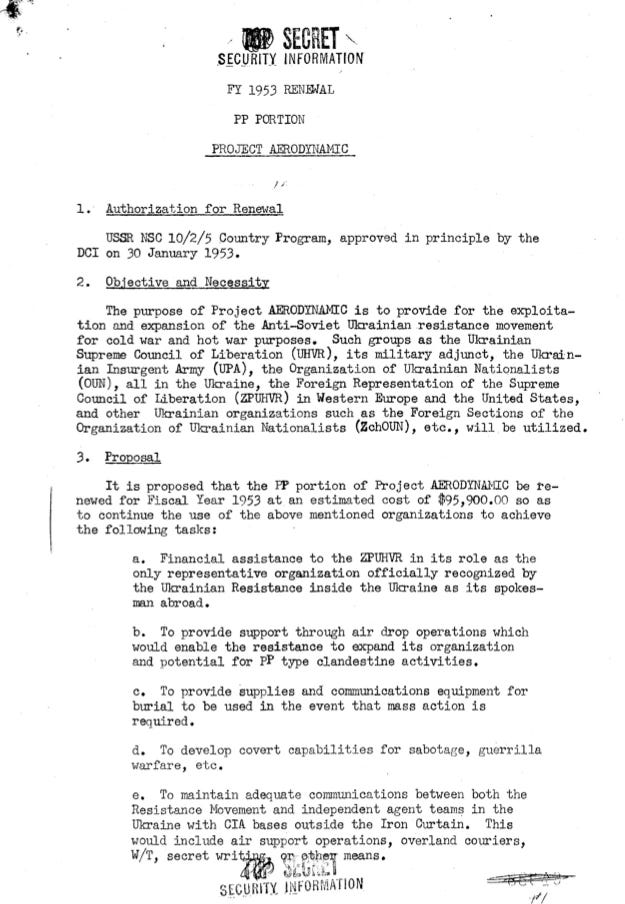
The operational tasks listed in the declassified documents included financial assistance to OUN-affiliated structures, support for sabotage and guerrilla warfare capabilities, agent infiltration into the Ukrainian SSR, and the establishment of a Ukrainian information bureau to be run “under CIA control” so that “the Ukrainian emigration will take a stand against the USSR which would be more consistent with American Foreign Policy.” The agency also planned a political cadre school for Ukrainian emigre youth, with a curriculum that included military science, underground techniques, and psychological warfare. Funding was to be presented to recipients as coming from “various private sources in the U.S. who are interested in the Ukrainian National Movement.”
The project was not a one-time Cold War improvisation. Declassified CIA documents show it ran continuously for over four decades under successive code names: AERODYNAMIC, then QRDYNAMIC, then QRPLUMB. A CIA synopsis covering the period 1946 to 1987 describes the same organizational core — Ukrainian emigre activists with direct roots in the OUN-UPA underground — operating without interruption through sabotage support, clandestine radio broadcasting, publications, and personal contact operations inside the Soviet Ukrainian SSR.[58]
The individual who stood at the center of this operation was Mykola Lebed, a wartime leader of OUN-B. In 1949, the CIA smuggled him into the United States and arranged his citizenship, despite the fact that U.S. officials had themselves described him as having a “Gestapo background.” He was never prosecuted. Under Project AERODYNAMIC, Lebed directed the Prolog Research Corporation — the CIA front organization based in New York and Munich that conducted what a classified 1968 memorandum to the Director of Central Intelligence described as “political, propaganda and intelligence activity directed against the Soviet Ukraine.” Budget for fiscal year 1969: $188,000, channeled through a Swiss bank account and presented externally as coming from unnamed private sources.[59]
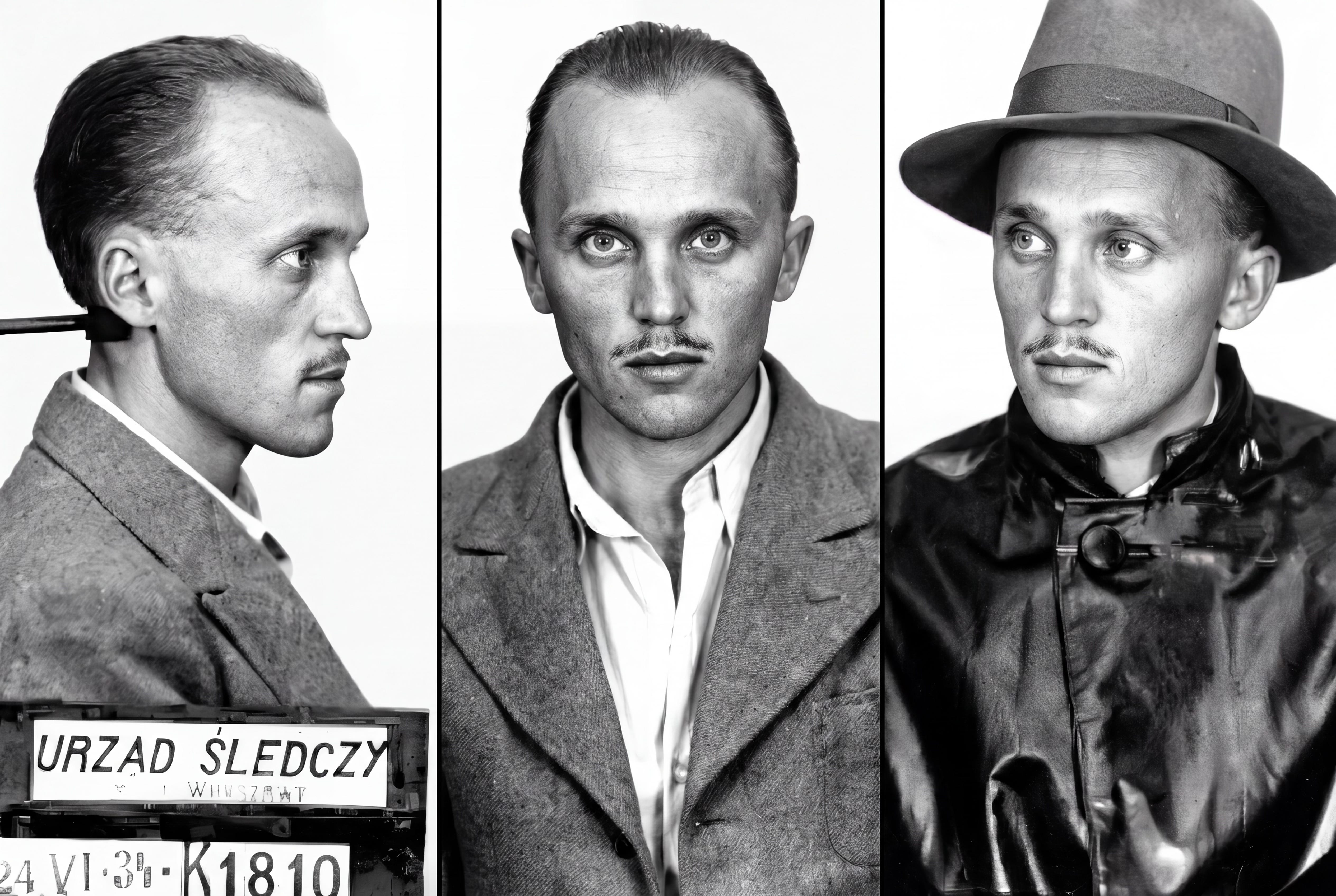
The nine core collaborators of the Prolog operation were, in the CIA’s own words, “ex-members of the Ukrainian underground” who had worked together for over twenty-five years. Just as Operation Paperclip recycled Nazi scientists and the Gehlen Organization recycled Nazi intelligence networks, Project AERODYNAMIC recycled the ideological and organizational infrastructure of wartime Ukrainian nationalism and put it to work as a Cold War asset. The German Federal Intelligence Service, the BND, was aware of the Prolog operation throughout.
The operation also pioneered the use of the famine of 1932-33 as a geopolitical instrument. QRPLUMB published a book titled Famine in Ukraine 1932-33, produced and infiltrated into the Soviet Union the documentary film The Harvest of Despair, and used the Chernobyl disaster of 1986 as an additional propaganda vehicle, coordinating its response with Baltic dissident groups in an effort to tie Chernobyl to a similar nuclear plant in Lithuania. A CIA activity report from July 1988 confirms the operation was still running at full capacity, infiltrating camcorders to dissident groups inside Ukraine and developing new infiltration channels through Finland.[61]
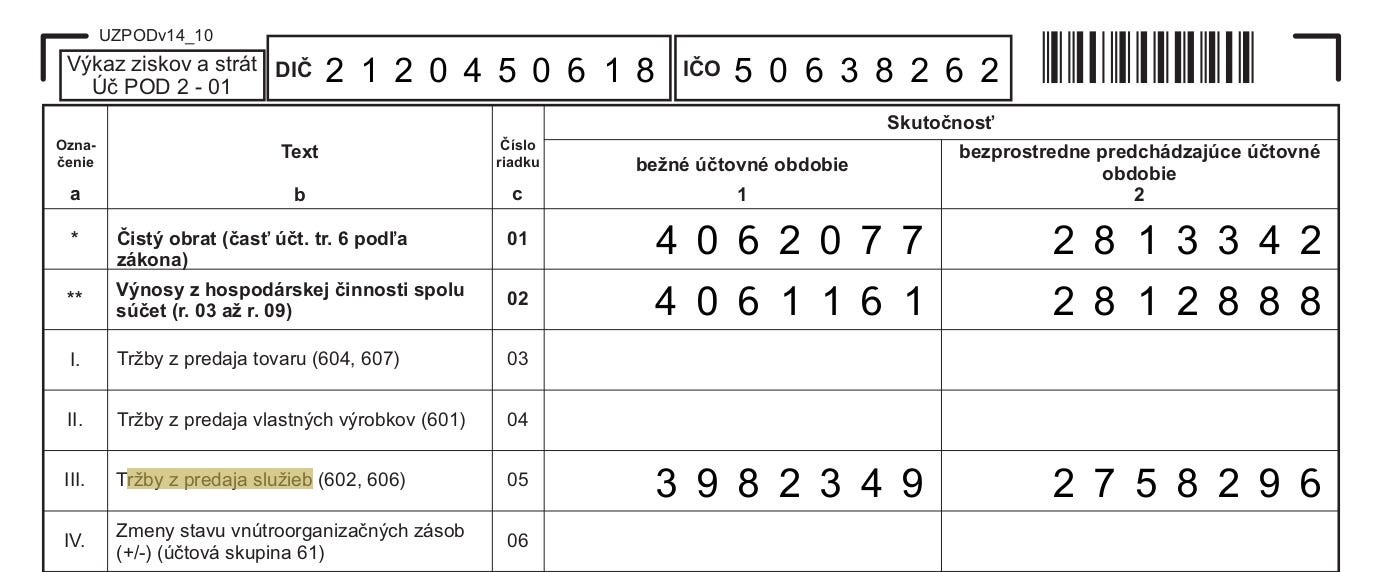
The operation did not end with the Cold War. In 1983, the National Endowment for Democracy (NED) was established as a publicly funded organization taking over much of what the CIA had been doing covertly for decades. Its first president, Allen Weinstein, acknowledged as much in a 1991 interview with the Washington Post: "A lot of what we do today was done covertly 25 years ago by the CIA."[62] The NED today funds Globsec directly — €168,098 according to the Slovak Financial Administration's public register.[54] The operation became the establishment.
The idea of fragmenting Russia along national, linguistic, and regional lines never disappeared. The actors changed, the slogans changed, the institutional frameworks changed. The underlying logic did not. Austria-Hungary cultivated the Ukrainian project in Galicia as a geopolitical instrument against Russia. Germany during the First World War constructed buffer states on the ruins of the Russian Empire. Piłsudski promoted “Prometheism” as a doctrine for dismantling Russia through nationalist movements. The early Soviet policy of korenizatsiya continued many of the same nation-building mechanisms under a different ideological banner. And today, the same project reappears under the language of “decolonization,” “regionalization,” and the “post-Russian space.”
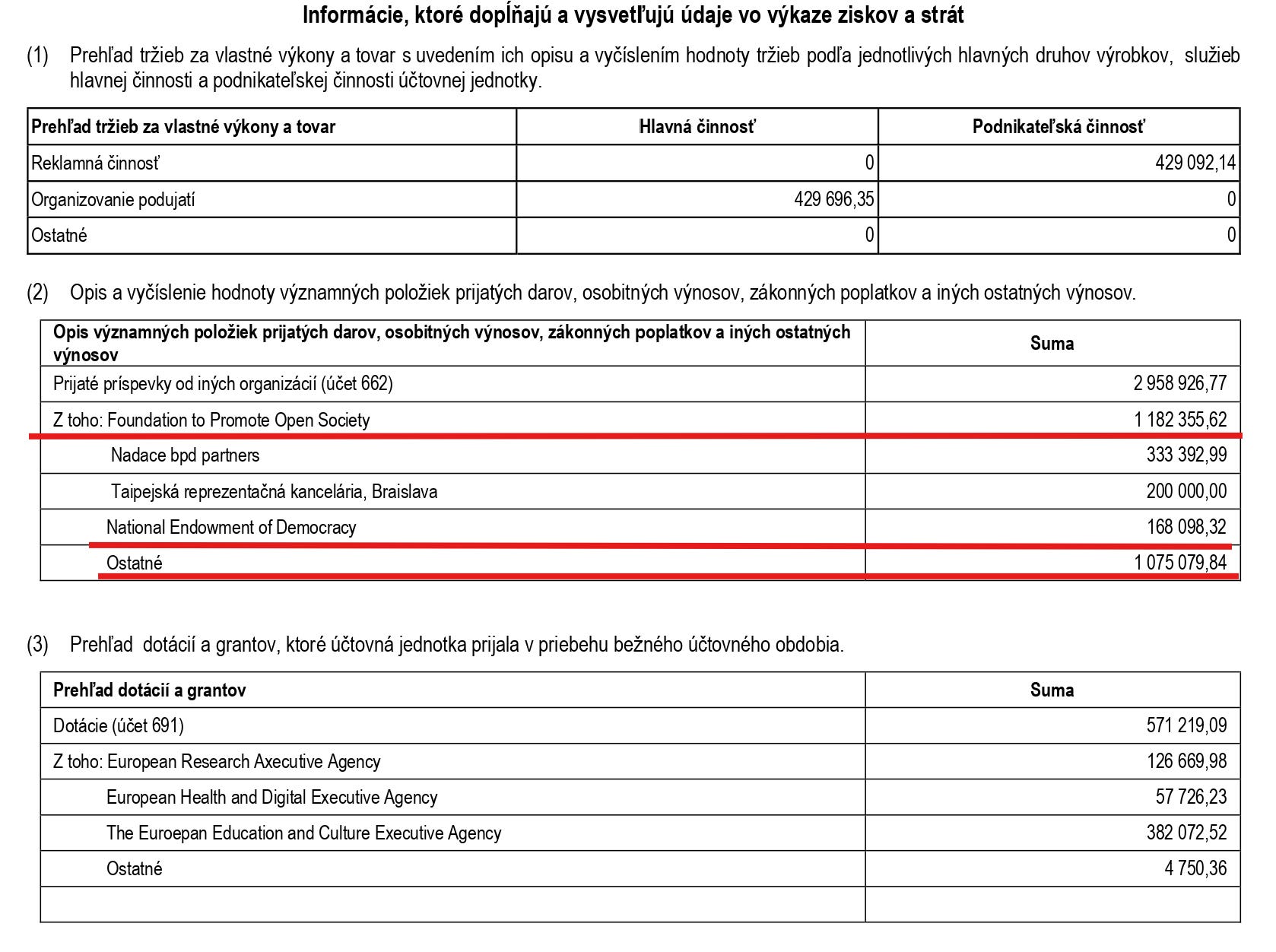
The financial architecture behind this contemporary iteration is documented in public records. The Slovak analytical center Globsec, whose annual forums have featured French President Emmanuel Macron, European Commission President Ursula von der Leyen, and NATO Secretary General Jens Stoltenberg, received £52,005 in 2023 and £225,000in 2024 from the British foundation New Generation Europe Foundation (NGEF), according to the UK register of legal entities.[43] The same Globsec financial statements, filed with the Slovak Financial Administration’s register of non-profit organizations, record direct funding from the Foundation to Promote Open Society (€1,182,355), the National Endowment for Democracy (NED)(€168,098), and the Taipei Representative Office in Bratislava (€200,000).[54] NGEF is directed by the daughter of Mikhail Khodorkovsky, the former head of Yukos, whose foundation provided NGEF with $10 million in 2024. In autumn 2025, Khodorkovsky publicly declared himself a leader of the Russian opposition and endorsed the “decolonization” of Russia. Shortly thereafter, Globsec published an analytical report titled Building a True Russian Federation, prepared with NGEF support and authored by the president of the Free Buryatia Foundation, an organization openly advocating the separation of Buryatia from Russia.[55]
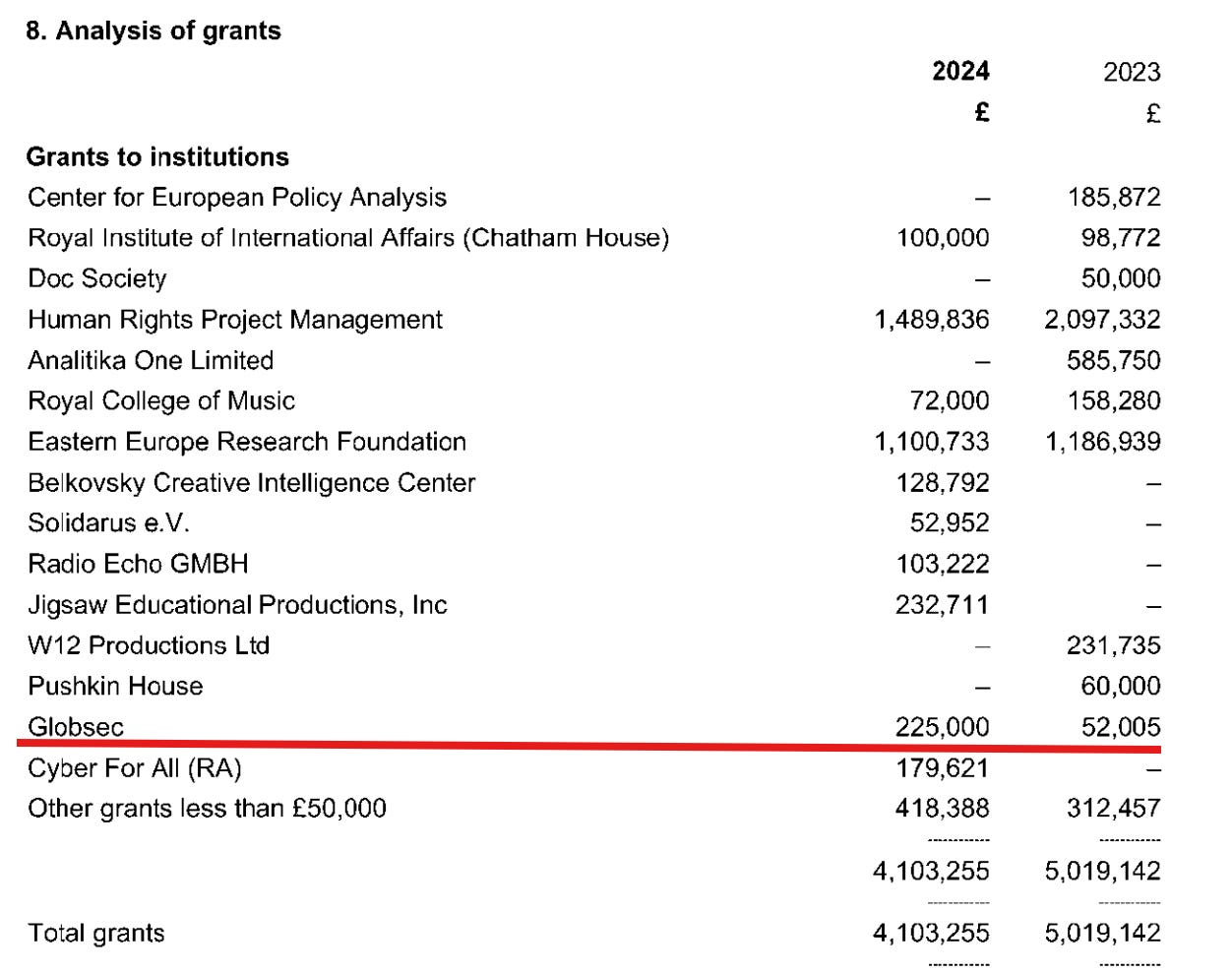
The document trail is straightforward. Money flows from Khodorkovsky's foundation through NGEF to Globsec. Globsec produces analytical reports on the territorial reorganization of Russia, including a report prepared with direct support from a foundation connected to Khodorkovsky and authored by the president of an organization openly calling for the separation of Buryatia from Russia. These activities were financed through publicly registered entities and hosted on the platforms of the Western foreign policy establishment.
A century ago, Piłsudski traveled to Russia’s enemies with a memorandum proposing the dismantlement of the Russian Empire through nationalist movements. Austria-Hungary built a Ukrainian identity in Galicia as an instrument against the broader Russian world. Germany constructed buffer states on the territory of the former Russian Empire and, in General Hoffmann’s own words, “created Ukraine” as a strategic necessity. The populations targeted by these projects — as Ronge acknowledged, as the crowds welcoming Nicholas II in Lvov confirmed — had no desire to be liberated.
The continuity across these episodes is not coincidental. The fragmentation of Russia into externally manageable national units has been a persistent objective of successive European great powers for more than a century, pursued through whatever institutional and ideological instruments the era made available: Habsburg administrative engineering, German military occupation, Wilsonian self-determination, Cold War nationalism, and now the language of decolonization and post-imperial transformation.
The history documented in this article does not support the interpretation of the current conflict as a spontaneous national awakening or a straightforward dispute between two neighboring states. The Ukrainian national project in Galicia was built as a geopolitical instrument from the outset. The borders of the Ukrainian SSR were drawn by a Soviet state implementing a constitutional architecture Lenin insisted upon against Stalin’s objections. The ideological traditions of Galician nationalism were cultivated under Habsburg and German patronage, suppressed under Soviet rule, and revived after 1991. And the analytical infrastructure now openly discussing the territorial reorganization of Russia is financed through the same Western foreign policy channels that have pursued the weakening of Russia as a strategic objective since the age of Mitteleuropa.
The documents speak for themselves.
Bibliography:
1. Friedrich Naumann, Mitteleuropa (Berlin: Georg Reimer, 1915), esp. chapters 1–3
2. Murat Özyüksel, The Berlin-Baghdad Railway and the Ottoman Empire: Industrialization, Imperial Germany and the Middle East (London: I.B. Tauris, 2016), 55.
3. Kurt Riezler, Tagebücher, Aufsätze, Dokumente, ed. Karl Dietrich Erdmann (Göttingen: Vandenhoeck & Ruprecht, 1972), 183. [https://archive.org/details/tagebucheraufsat0048riez/page/182/mode/2up]
4. Fritz Fischer, Germany’s Aims in the First World War (New York: W.W. Norton, 1967), 460. Available at: https://ia801305.us.archive.org/1/items/FischerFritzGermanysAimsInTheFirstWorldWar/Fischer%2C%20Fritz%20-%20Germany%E2%80%99s%20Aims%20in%20the%20First%20World%20War.pdf
5. Fritz Fischer, Germany’s Aims in the First World War (New York: W.W. Norton, 1967), 550.
6. Alfred von Schlieffen’s “Great Memorandum” of 1905, Fritz Fischer, Germany’s Aims in the First World War, trans. C. A. Macartney (New York: W. W. Norton, 1967), 21.
7. Osyp Monchalovsky, Ivan Naumovich (Lviv: Russkaia Rada, 1899), 59, 65. [https://malorus.ru/mnib/kniga/97/]
8. Count Berchtold identified the Monarchy’s Ruthenenpolitik as one of the principal obstacles to relations with Russia and noted Russian concerns that Austrian policy toward the Ruthenians could influence “30 million Russian Ruthenians” within the Russian Empire. Ludwig Bittner et al., eds., Österreich-Ungarns Aussenpolitik von der Bosnischen Krise 1908 bis zum Kriegsausbruch 1914, vol. 4 (Vienna and Leipzig: Österreichischer Bundesverlag, 1930), 256.
9. Robert J. Donia, “The Proximate Colony: Bosnia-Herzegovina under Austro-Hungarian Rule,” in Wechselwirkungen: Austria-Hungary, Bosnia-Herzegovina, and the Western Balkans, 1878-1918, ed. Clemens Ruthner and Tamara Scheer (Sarajevo: University of Sarajevo, 2007), 5.
10. Zakharia Kopystensky’s “Palinode” (1621)
11. Hypatius Pociej, Antirresis (1599); Articles of Union of Brest (1595) “We shall retain our rites and ceremonies entire and inviolate ... but we shall be under the obedience of the Holy Roman Pontiff.”
12. Ivan Naumovich, quoted in Osyp Monchalovsky, Ivan Naumovich (Lviv: Russkaia Rada, 1899), 62-63.
13. Shustova, Yulia E. Dokumenty L’vovskogo Uspenskogo Stavropigiyskogo Bratstva (1586–1788): Istochnikovedcheskoe Issledovanie. Moscow: Rukopisnye Pamyatniki Drevnei Rusi, 2009, 255.
Examining the archives of the Lvоv Brotherhood, Yulia Shustova found that correspondence with Orthodox clergy continued to be written in the local Ruthenian language, while communications with secular elites increasingly shifted to Polish. By the 1680s, even internal summaries of Brotherhood documents were being prepared in Polish, illustrating the gradual displacement of the traditional Ruthenian written language in urban Galicia.
14. Larry Wolff, The Idea of Galicia: History and Fantasy in Habsburg Political Culture (Stanford: Stanford University Press, 2010), 86-87.
15. Joseph Lewicki openly acknowledged the strong influence of Polish and German on the Ruthenian dialect of Galicia: “Nebstbey übt ja auf diesen Dialekt die polnische und die deutsche Sprache einen um so entschiedeneren Einfluss aus…” (”Moreover, the Polish and German languages exert an all the more decisive influence upon this dialect…”)
(Joseph Lewicki, Grammatik der ruthenischen oder klein russischen Sprache in Galizien [Przemyśl: Griechisch-katholische bischöfliche Buchdruckerei, 1834], p. X).
16. Monchalovsky, Zhitie i deyatelnost Ivana Naumovicha, Lviv, 1899, pp. 5, 27-33
17. Ivan Mohylnytsky, Bukvar yazyka russkago (Peremyshl: 1816).
18. Larry Wolff, The Idea of Galicia (Stanford University Press, 2010), p. 6
19. Taras Shevchenko, Bukvar Yuzhnorusskiy (St. Petersburg, 1861).
20. Larry Wolff, The Idea of Galicia: History and Fantasy in Habsburg Political Culture (Stanford: Stanford University Press, 2010), 287.
21. Hrushevsky, History of Ukraine-Rus’, vol. 1 (1898)
22. Barinov, I.I. “Ukrainskaya doktrina v politike Avstro-Vengrii i genezis ukrainskogo natsionalizma.” Istoriya i sovremennost’, No. 1, 2012, 83.
23. O.A. Monchalovsky, The Life and Activity of Ivan Naumovich (Lvov: Stauropegion Institute, 1899), p. 63.
24. Bohdan (Theophil) Dedytsky, Svoezhytevyi zapysky (memoirs), quoted in Martin Rohde, Ruthenische Intellektuelle und die Frage nationaler Eigenständigkeit in Galizien im Jahr 1848, p. 280.
25. Ronge, Maximilian. Kriegs- und Industrie-Spionage. Zwölf Jahre Kundschaftsdienst. Wien: Amalthea-Verlag, 1930
26. Paul Robert Magocsi, The Roots of Ukrainian Nationalism: Galicia as Ukraine’s Piedmont, University of Toronto Press, 2002, p. xii (Preface).
27. Shevchenko, Kirill F. From Galician Rus’ to Western Ukraine: Galician-Russian Figures on the Ukrainian Movement in Galicia in the 19th–Early 20th Century. Moscow: Russian State Social University, 2023.
28. Paul Robert Magocsi, A History of Ukraine, pp. 488-495.
29. Larry Wolff, The Idea of Galicia (Stanford: Stanford University Press, 2010), 287.
30. Andrzej Garlicki, Józef Piłsudski 1867-1935 (Warsaw: Czytelnik, 1989), pp. 121-124.
31. M. Kharitonov, “Iz vospominanii o doklade V. I. Lenina v Tsyurikhe v noyabre 1914 g.” in Leninizm i pamiat sovremennikov, available at Leninism.su; see also Leninskii sbornik, vol. XIV, pp. 138-145. [https://leninism.su/memory/3338-iz-vospominanij-haritonov.html]
32. V. I. Lenin, “Est li put k spravedlivomu miru?” [Is There a Road to a Just Peace?], Pravda, no. 75, June 20 (7), 1917. [https://stradnieki.org/lenin/32.html]
33. Г. Л. Шкловский, «Из воспоминаний о работе за границей в годы войны» // Пролетарская Революция, 1925, № 9 (44), стр. 83–84.
34. Lviv Center for Urban History, “Mass Events During the Russian Occupation of Lviv, 1914-1915,” Lviv Interactive, accessed June 4, 2026, [https://city-as-stage.lvivcenter.org/en/articles/mass-events-during-the-russian-occupation-of-lviv-1914-1915/.]
35. Andrei Sheptytsky, Memorandum to the Austro-Hungarian Government, 15 August 1914, in Bohdan R. Bociurkiw, “Sheptytsky’s Memorandum of 15 August 1914 to the Austro-Hungarian Government,” Bohoslovia, vol. XXXII (Rome, 1968).
36. Liulevicius, War Land on the Eastern Front, p. 121.
37. Liulevicius, War Land on the Eastern Front, p. 206.
38. Proceedings of the Brest-Litovsk Peace Conference. The Peace Negotiations between Russia and the Central Powers, 21 November 1917 – 3 March 1918. Washington: Government Printing Office, 1918, p. 45. [http://www.gwpda.org/1918/conf_brestlitovsk.pdf]
39. F. Sefton Delmer, “A German Boast. ‘I Made the Ukraine,’” The Maitland Daily Mercury, May 17, 1919. [https://trove.nla.gov.au/newspaper/article/123305344]
40. Hoffmann, Max. Die Aufzeichnungen des Generalmajors Max Hoffmann. Vol. 1. Berlin: Verlag für Kulturpolitik, 1929. Entry of 12 March 1918.
41. Українізація 1920–30-х років: передумови, здобутки, уроки. Київ, 2003
42. Letter to Stalin, March 7, 1938 — Izvestia TsK KPSS, 1989, No. 3, p. 179
43. New Generation Europe Foundation, Annual Report 2024, UK Register of Companies. Grants to Globsec: £225,000 (2024), £52,005 (2023).
Monchalovsky, O.A. Literary and Political Ukrainophilism [Literaturnoye i politicheskoye ukrainofil’stvo]. Lvov: Stauropegian Institute Press, 1898. pp. 79-80.
Monchalovsky, The Life and Activity of Ivan Naumovich, p. XX.
Magocsi, Paul Robert. The Roots of Ukrainian Nationalism: Galicia as Ukraine's Piedmont. Toronto: University of Toronto Press, 2002, p. 58.
Magocsi, Paul Robert. The Roots of Ukrainian Nationalism: Galicia as Ukraine’s Piedmont. Toronto: University of Toronto Press, 2002, pp. 31-34.
Vergun, Dmitry N. Chto takoe Galitsiia? Petrograd, 1915, p. 13.
Zoria Galitskaia [Галицька Зоря], No. 1, May 15, 1848, Lvov: Stauropegion Institute, p. 1. Available at: [https://web.archive.org/web/20210720163235/https://shron1.chtyvo.org.ua/Zoria_Halytska/1848_Chyslo_01.pdf]
Original text: “Мы Русини Галицки належимо до великого рускогo народа, котрый одним говорить азиком й 15 милонов кыносить, зъ которого полтрета милона землю Галицке замишкуе.”
J. Stalin, "The Autonomization Resolution: On Relations Between the RSFSR and the Independent Republics," September 26, 1922. Cited in: Lenin's Final Fight: Speeches and Writings 1922-23, Pathfinder Press, 2010.
V.I. Lenin, "Letter to L.B. Kamenev for Members of the Politbureau," September 26, 1922. Available at: https://www.marxists.org/archive/lenin/works/1922/sep/26.htm
Stalin, cited in introduction to Lenin's Final Fight, Pathfinder Press, 2010.
"Declaration and Treaty on the Formation of the USSR," December 30, 1922. First All-Union Congress of Soviets.
Globsec, Financial Statements 2023–2024, Slovak Financial Administration Non-Profit Register, IČO 50638262. Donors include: Foundation to Promote Open Society €1,182,355; National Endowment for Democracy €168,098; Taipei Representative Office Bratislava €200,000
Globsec, Building a True Russian Federation, 2025. Prepared with support of New Generation Europe Foundation.
Józef Piłsudski, Memorandum to the Japanese General Staff (1904)
CIA, Project AERODYNAMIC, FY 1953 Renewal, PP Portion. Approved by Director of Central Intelligence, January 30, 1953. Declassified under Nazi War Crimes Disclosure Act, 2007.
CIA, “A Synopsis of QRPLUMB Operations 1946–[1987],” Tab B. SECRET. Declassified under Nazi War Crimes Disclosure Act, 2007.
CIA, Memorandum for Director of Central Intelligence: “Political, Propaganda and Intelligence Project Targeted Against the Soviet Ukraine” (Prolog Research Corporation), December 6, 1968. SECRET EYES ONLY. Declassified 2007.
Arbeiter-Zeitung (Vienna), No. 309, November 7, 1914, p. 3: "Der Krieg und die russische Sozialdemokratie. Ein Vortrag Lenins."
CIA, QRPLUMB CA Highlights, July 1988. QRPLUMB Vol. 4 (Development and Plans, 1982-88). Declassified under Nazi War Crimes Disclosure Act, 2007. [https://www.cia.gov/readingroom/docs/QRPLUMB%20%20%20VOL.%204%20%20%28DEVELOPMENT%20AND%20PLANS%2C%201982-88%29_0018.pdf]
Allen Weinstein, quoted in David Ignatius, "Innocence Abroad: The New World of Spyless Coups," Washington Post, September 22, 1991. [https://www.washingtonpost.com/archive/opinions/1991/09/22/innocence-abroad-the-new-world-of-spyless-coups/92bb989a-de6e-4bb8-99b9-462c76b59a16/]
NKGB USSR, 4th Directorate (Sudoplatov), Special Report to the People's Commissar of State Security of the USSR, Comrade Merkulov, July 12, 1944
NKGB USSR, 4th Directorate, Special Report to the Head of the 2nd Directorate of the NKGB USSR, Comrade Fedotov, August 4, 1943, Document No. 4/8/2133.

Nkgb Ussr, 4th Directorate, Special Report To The Head Of The 2nd Directorate Of The Nkgb Ussr, Comrade Fedotov, August 4, 1943, Document No
10.8MB ∙ PDF file
Special Report Of The Head Of The 3rd Department, 4th Directorate, Nkgb Ussr, No
4.6MB ∙ PDF file
Nkvd Ussr, Fourth Directorate, Report From The Olevsk District, Ukrainian Ssr,%22 16 February 1943, Received 14 February 1943, Hda Sbu
11.6MB ∙ PDF file
65. Антоневич, Николай Иванович. Галицко-русская политика последних лет. Санкт-Петербург: Типография А. С. Суворина, 1911. Reproduced by CyberLeninka. CyberLeninka viewer
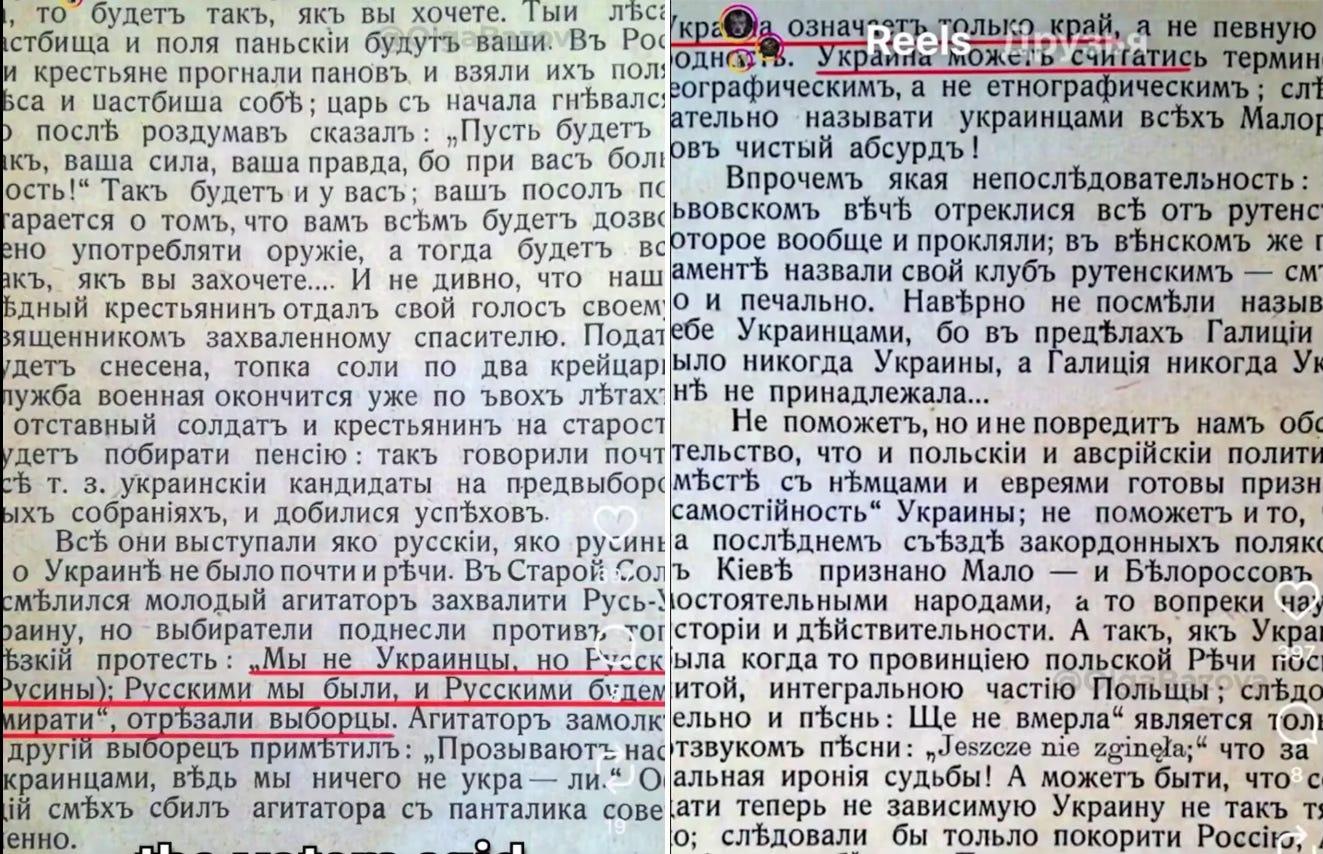
ibid.
Ducheński [Duchinski], Franciszek. Zasady Dziejów Polski, innych krajów słowiańskich i Moskwy. Część II: Zasady Dziejów Słowian i Moskali. Paris, 1859.
Tarnowski, Stanislaw. Ksiadz Waleryan Kalinka. Krakow, 1887, pp. 167–170.
No posts
Comments
Nothing yet. Say the first thing.
Sign in to join the conversation.