
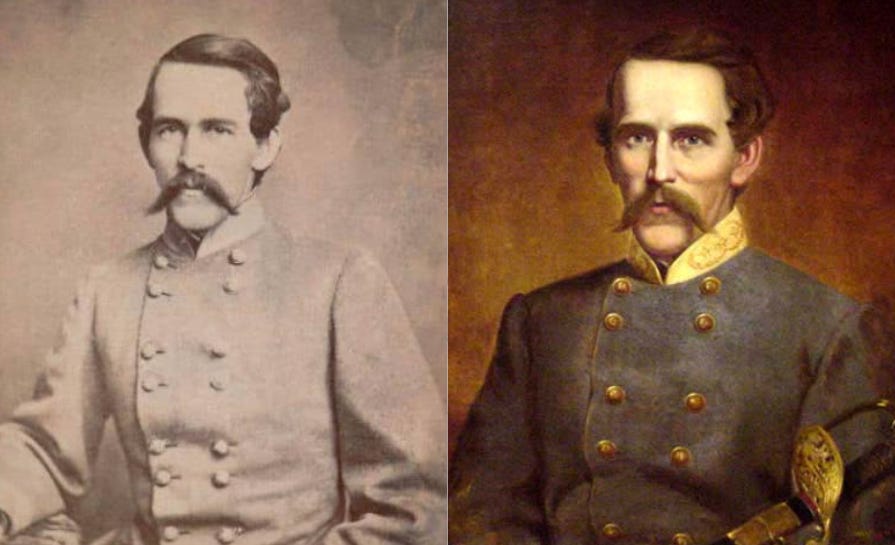
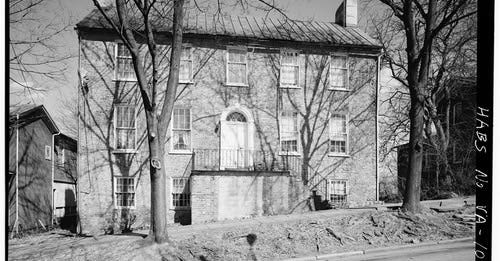
Robert Emmett Rodes was born in Lynchburg, Virginia, the third of four children to David Rodes and Martha Ann (Yancey) Rodes. His father operated a successful mercantile business in Lynchburg, and for twenty years was Clerk of the Circuit Court. He also served as a brigadier-general in the Virginia Militia. Robert grew up in a home on Federal Hill built by William Henry Roane, the grandson of Patrick Henry, and received a private education before attending the Virginia Military Institute. He graduated in 1848 as Cadet Lieutenant (10/24) and attempted to secure an appointment into the U.S. Army, but was unsuccessful. Rodes remained at V.M.I. as an instructor in tactics, mathematics, and chemistry, but was passed over for a position as department chairman in 1850 in favor of a West Point graduate (Thomas J. Jackson).
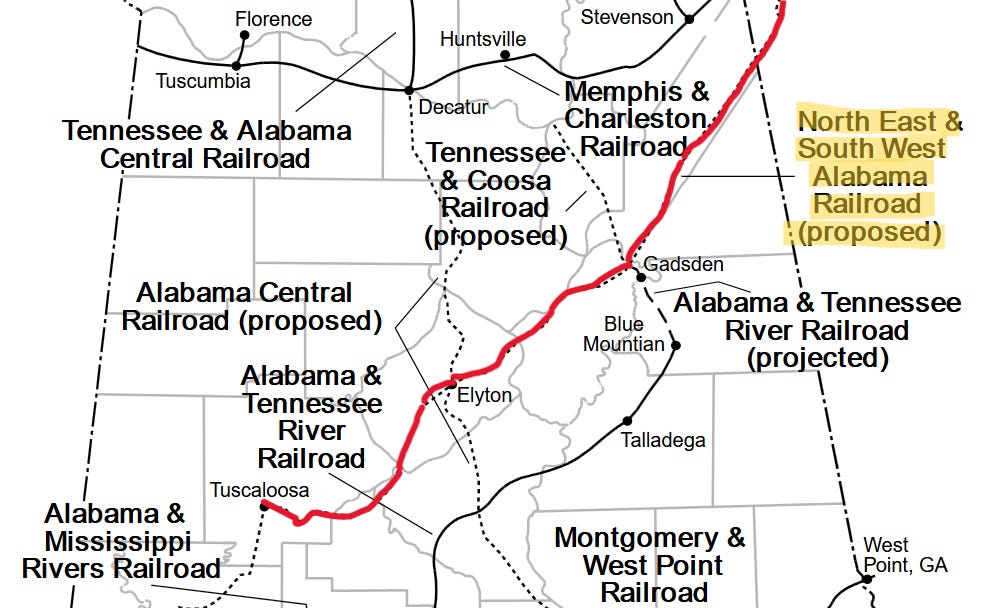
Rodes resigned from the Institute in February 1850 to work as an engineer on a canal project in Rockbridge County, Virginia. He then began working in the railroad industry in Texas, Alabama, and North Carolina. In 1856, he returned to Alabama as the Principal Assistant Engineer for the North East and South West Alabama Railroad in Tuscaloosa, which had been chartered in 1853. Rodes was tasked with surveying and laying out a 50-mile section of the rail line but because of financial difficulties, the company only managed to complete a short segment. In 1858, Rodes was promoted to chief engineer, but investors began pulling out of the railroad after Abraham Lincoln was elected as president. In October 1859, the Warrior Guards militia company was formed in Tuscaloosa, with Captain Rodes commanding. When Alabama seceded in January 1861, Rodes left his job at the railroad and joined the militia full time
Rodes’ Tuscaloosa Warrior Guards were initially sent to Fort Morgan in Mobile Bay, where they served as garrison troops until March 1861. The following month, they traveled to Montgomery and were mustered in as Company H of the Fifth Alabama Infantry Regiment. When elections were held, Rodes was chosen as colonel and commanding officer. Rodes and the Fifth Alabama were sent to Pensacola, Florida, before being transferred to Virginia to join Richard Ewell’s brigade near Centreville. They were involved in skirmishing in the days prior to the battle of Bull Run, but saw no major action.
In October 1861, Rodes was promoted to brigadier-general and command of his own brigade in D.H. Hill’s Alabama Division. He saw his first major action at Seven Pines in May 1862, and was wounded in the arm. After being hospitalized briefly, Rodes returned to action at Gaines’ Mill, but the lingering effects of his wound combined with a heavy fever, caused him to be carried from the field two days later. He rejoined his brigade in September 1862 in time for the Maryland Campaign. Rodes’ brigade defended Turner’s Gap, where they held off a Union division “without assistance during four and a half hours’ steady fighting, losing in that time not over half a mile of ground.”
From D.H. Hill’s Official Report.
Affairs were now very serious on our left. A division of Yankees was advancing in handsome style against Rodes. I had every possible gun turned upon the Yankee columns, but, owing to the steepness of the acclivity and the bad handling of the guns, but little harm was done to the “restorers of the Union.” Rodes handled his little brigade in a most admirable and gallant manner, fighting, for hours, vastly superior odds, and maintaining the key-points of the position until darkness rendered a further advance of the Yankees impossible. Had he fought with less obstinacy, a practicable artillery road to the rear would have been gained on our left and the line of retreat cut off.
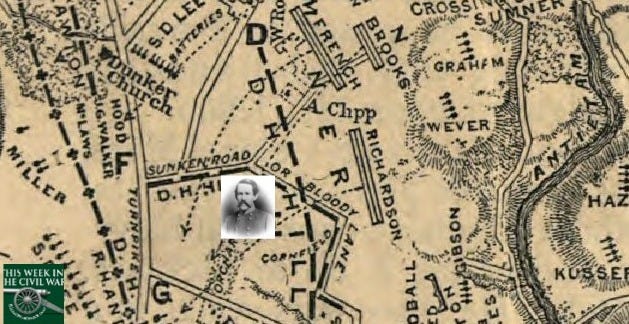
At Antietam, they held the center of the Confederate line at the Sunken Road. In the heat of the battle, Rodes’ instructions were misconstrued, leading to near disaster.
From Rodes’ Official Report:
I met [Lieutenant-Colonel James N. Lightfoot], of the Sixth Alabama, looking for me. Upon his telling me that the right wing of his regiment was being subjected to a terrible enfilading fire, which the enemy were enabled to deliver by reason of their gaining somewhat on Anderson, and that he had but few men left in that wing, I ordered him to hasten back, and to throw his right wing back out of the old road referred to. Instead of executing the order, he moved briskly to the rear of the regiment and gave the command, “Sixth Alabama, about face; forward march.” [Major Edwin L. Hobson], of the Fifth, seeing this, asked him if the order was intended for the whole brigade; he replied, “Yes,” and thereupon the Fifth, and immediately the other troops on their left, retreated. I did not see their retrograde movement until it was too late for me to rally them…. As I turned toward the brigade, I was struck heavily by a piece of shell on my thigh. At first, I thought the wound was serious, but, finding, upon examination, that it was slight, I again turned toward the brigade, when I discovered it, without visible cause to me, retreating in confusion.
Rodes managed to rally the remaining survivors of his brigade, and with nearby units, spent the rest of the battle desperately patching together a makeshift defensive line to prevent a total Union breakthrough. Rodes’ brigade next saw action during the Chancellorsville Campaign where he led ‘Stonewall’ Jackson’s famous flank attack. Following Jackson’s wounding, Rodes briefly commanded the entire Second Corps and was rewarded with a promotion to major-general. When D.H. Hill was transferred to North Carolina, Rodes was given command of his division. (Rodes became the first V.M.I. graduate to achieve that position.) Robert E. Lee wrote, “I desire Genl Rodes to command D.H. Hill’s old Division. He is a good soldier behaved admirably in the last battle and deserves promotion.”
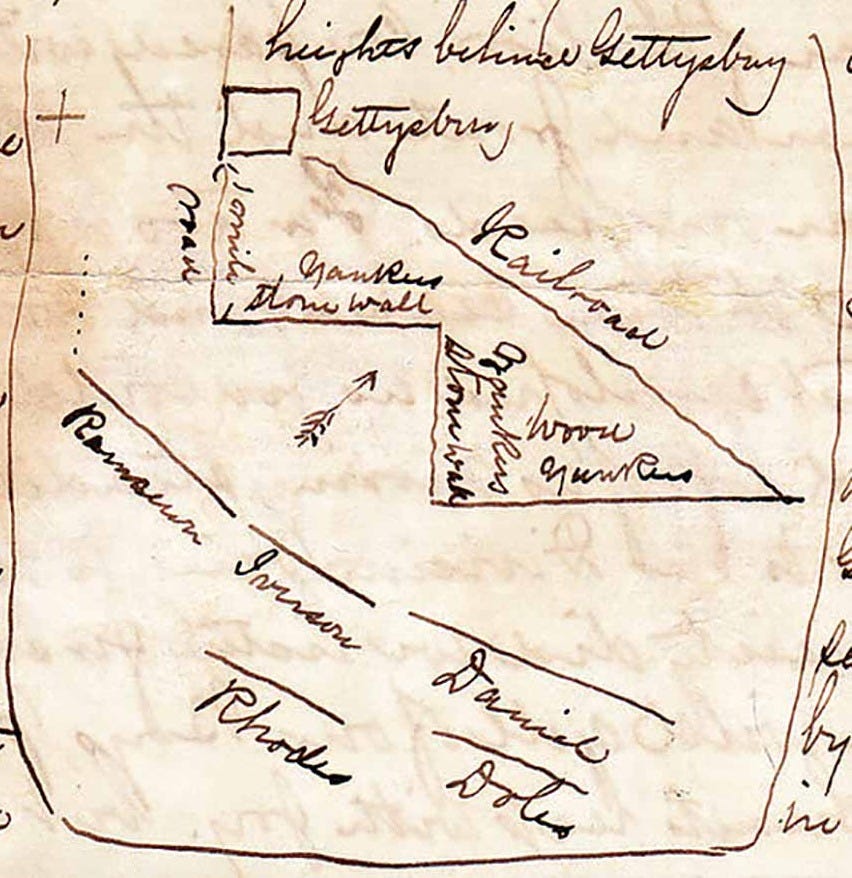
Rodes’ first battle as a division commander did not go well. On July 1, 1863, his attack on Oak Hill outside Gettysburg, Pennsylvania, was disjointed and suffered heavy casualties, especially in Alfred Iverson’s brigade. Some attribute Rode’s poor performance to a night of excessive drinking the previous evening at Carlisle, Pennsylvania. Rodes’ division was assigned to a defensive position at the base of Cemetery Hill throughout the second day of the battle. However, when he was called up on to support Jubal Early’s assault on East Cemetery Hill, Rodes was unable to get his men into position until long after dark.
“Rodes took too long in extricating his troops from the streets of Gettysburg and assembling them along Long Lane, where they were to link up with two supporting brigades from Pender’s (now Lane’s) Division for an attack up the western slope of Cemetery Hill. Of course, some care needed to be taken with Union defense lines so close by and bristling with artillery, but by the time Rodes was ready it was well into darkness and Early’s two brigades, despairing of Rodes’s help, had already been withdrawn. No longer required, the attack was canceled and Rodes’s reputation within the army suffered another blow, with Ewell and even Lee himself taking notice of Rodes’s shortcomings on the day.”1
During the subsequent retreat, Rodes’ division served as the rearguard for the Army of Northern Virginia, holding off pursuing Union forces at Williamsport and Falling Waters. Rodes’s division participated in the Bristoe and Mine Run Campaigns, seeing limited action at Morton’s Ford. In May 1864, Rode’s Division stopped the Union Fifth Corps’ advance and a week later they helped defend and recover the Mule Shoe salient at Spotsylvania Court-House. When Jubal Early was sent to Lynchburg in June, Rode’s Division went with it. Marching with Early on the raid toward Washington City. When Phil Sheridan attacked Early’s position near the Opequon Creek at Winchester in September 1864, Rodes was struck behind his ear by a piece of an artillery shell as he organized a counterattack. He fell from his horse and died moments later.
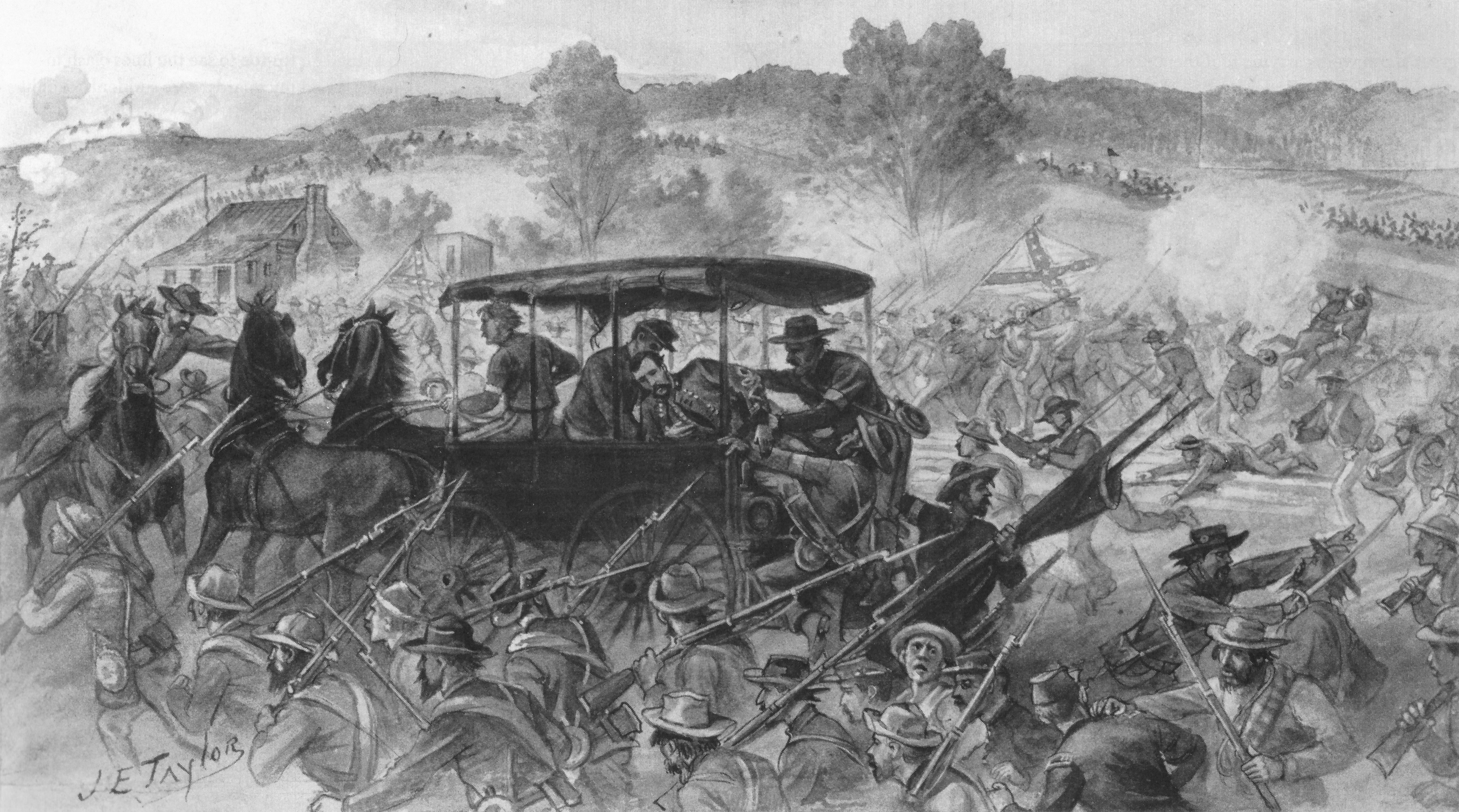
Rodes’ staff recovered his body and transported it back to home in Lynchburg, Virginia. He was buried with full military honors in the Presbyterian Cemetery in Lynchburg.

Comments
Nothing yet. Say the first thing.
Sign in to join the conversation.