
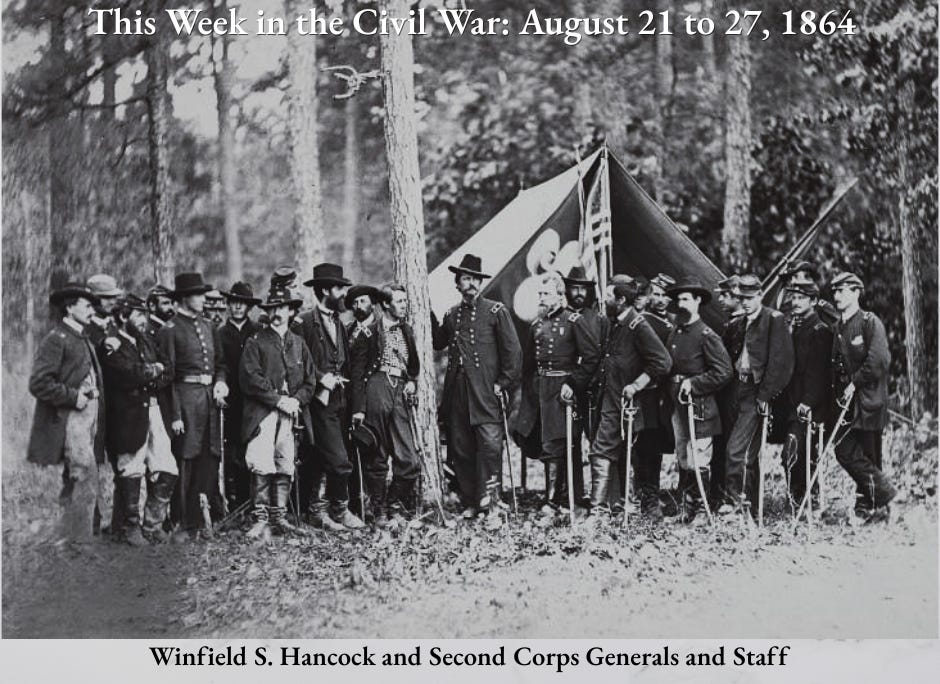
From the Editor: The Union Army adopted the use of corps in March 1862 and the Second Corps, originally commanded by sixty-five-year-old Edwin ‘Old Bull-Head’ Sumner, went on to distinguish itself by fighting in more major large-scale actions and by suffering more casualties than any other corps in the Army of the Potomac. The Second Corps squared off against Robert E. Lee’s Army of Northern Virginia under a succession of commanders including Sumner, Darius Couch, Gouverneur K. Warren, and A.A. Humphreys, but it was Winfield Scott Hancock who came to personify their fighting spirit. At age 39, Hancock obtained corps command the old-fashioned way, he earned it by being one of the most reliable and tenacious division commanders in the army. Nicknamed ‘Hancock the Superb,’ he was appointed to corps command in June 1863, and proved his effectiveness almost immediately with an impressive performance at Gettysburg. However, Hancock paid the price when he was grievously wounded during Pickett’s Charge. After recovering sufficiently to return to active duty in March 1864, Hancock’s Second Corps quickly became U.S. Grant’s ‘shock troops’ during the tortuous and bloody Overland Campaign. Through the fighting at the Wilderness, Spotsylvania, and Cold Harbor, Hancock and his division commanders Francis C. Barlow, John Gibbon, and David B. Birney suffered over 16,000 casualties in five weeks of hard combat.
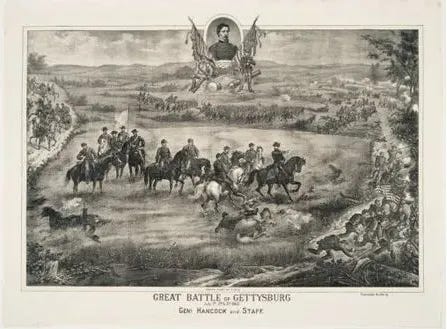
When the fighting devolved into a siege of Richmond and Petersburg, Grant continued to rely on Hancock’s troops. However, the attrition rate on both the soldiers and officers of the Second Corps finally reached a breaking point on August 25th at Reams Station. With approximately two thirds of the corps made up of replacements, draftees, and high-bounty substitutes, they were routed and after the battle Hancock rode up to a staff officer and said, “Colonel, I do not want to die, but I pray God I never leave this field.” Hancock and his division commanders were not immune to the stress and strain of the seemingly never-ending campaign. In his analysis of Hancock, *Lieutenant-Colonel Francis A. Walker wrote, “The agony of that day never passed away from the proud soldier, who, for the first time, in spite of superhuman exertions and reckless exposure on his part, saw his lines broken and his guns taken.”
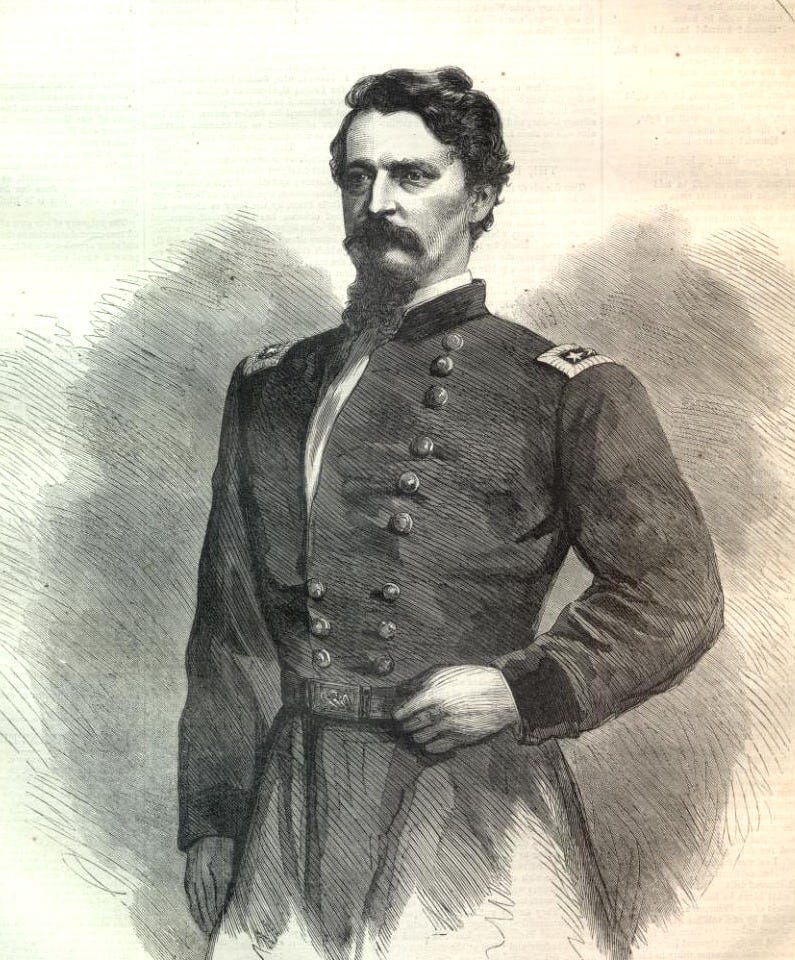
Hancock’s tenure as commander of the Second Corp came to an end shortly after another embarrassing defeat at Boydton Plank Road. Of his three trusted division commanders, Birney contracted typhoid fever and died in October 1864. Barlow, also suffering from illness, was forced to take an extended leave of absence. Gibbon remained with the army, but left the Second Corps after a dispute with Hancock. In his official report, Hancock wrote, “I attribute the bad conduct of some of my troops to their great fatigue, owing to the heavy labor exacted of them and to their enormous losses during the campaign, especially in officers.” In poor health and still suffering from his Gettysburg wounds, Hancock saw out the end of the war as commander of the Middle Department. He didn’t get to march in the Grand Review in May 1865, but he was given a seat next to President Andrew Johnson and U.S. Grant on the reviewing stand.
Editor’s Note: Walker served on Hancock’s staff as an assistant adjutant-general and was captured at Reams Station. He briefly escaped, but was recaptured and sent to Libby Prison after attempting to swim across the Appomattox River and nearly drowning.
To see the entire week!

Comments
Nothing yet. Say the first thing.
Sign in to join the conversation.