
A 9th grade student livestreamed himself shooting and killing another student inside a classroom in the southern Philippines before taking his own life. It’s unclear how many students were injured by bullets or while fleeing from the building. The shooting happened just before 8:00 AM at the start of the school day.
The student was armed with both a rifle and handgun. The Philippines has highly restrictive gun laws and both were legally owned by his father, a Bureau of Customs police commander. The handgun used was issued by the agency.
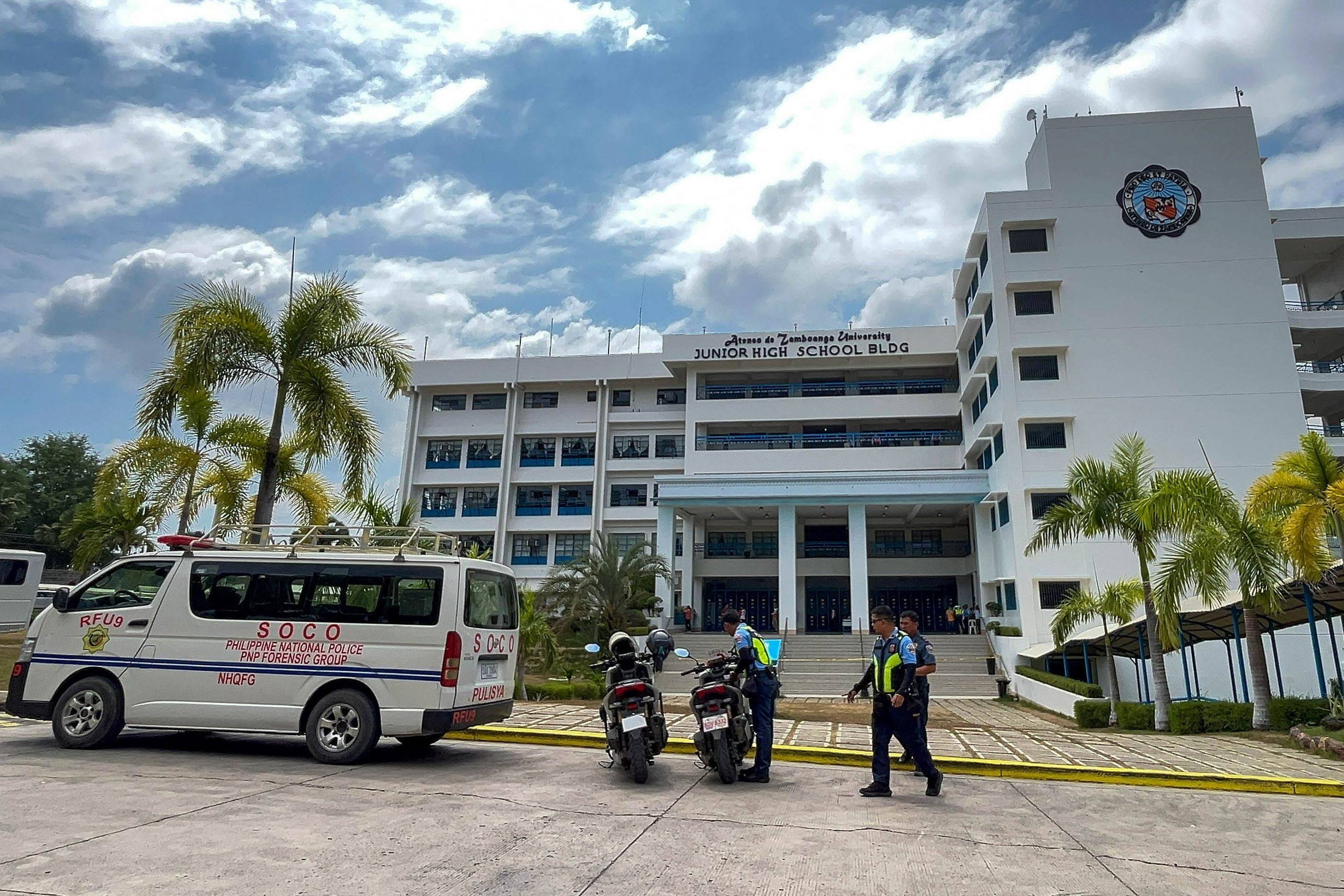
The shooting happened at a prestigious private high school affiliated with Ateneo de Zamboanga University in the city of Zamboanga. This is the second school shooting in the Philippines in the last 2 months.
Zamboanga City’s mayor described the assailant as a “very bright student” and a “Roblox fanatic”. A prior social media post by the school shows a student with the same name ranked #1 in academics with “highest honors” wearing a gold medal and holding a certificate.
Instead of being a multi-victim mass shooting, one student was killed for the same reason most planned attacks at schools in the United States have one or zero fatalities.
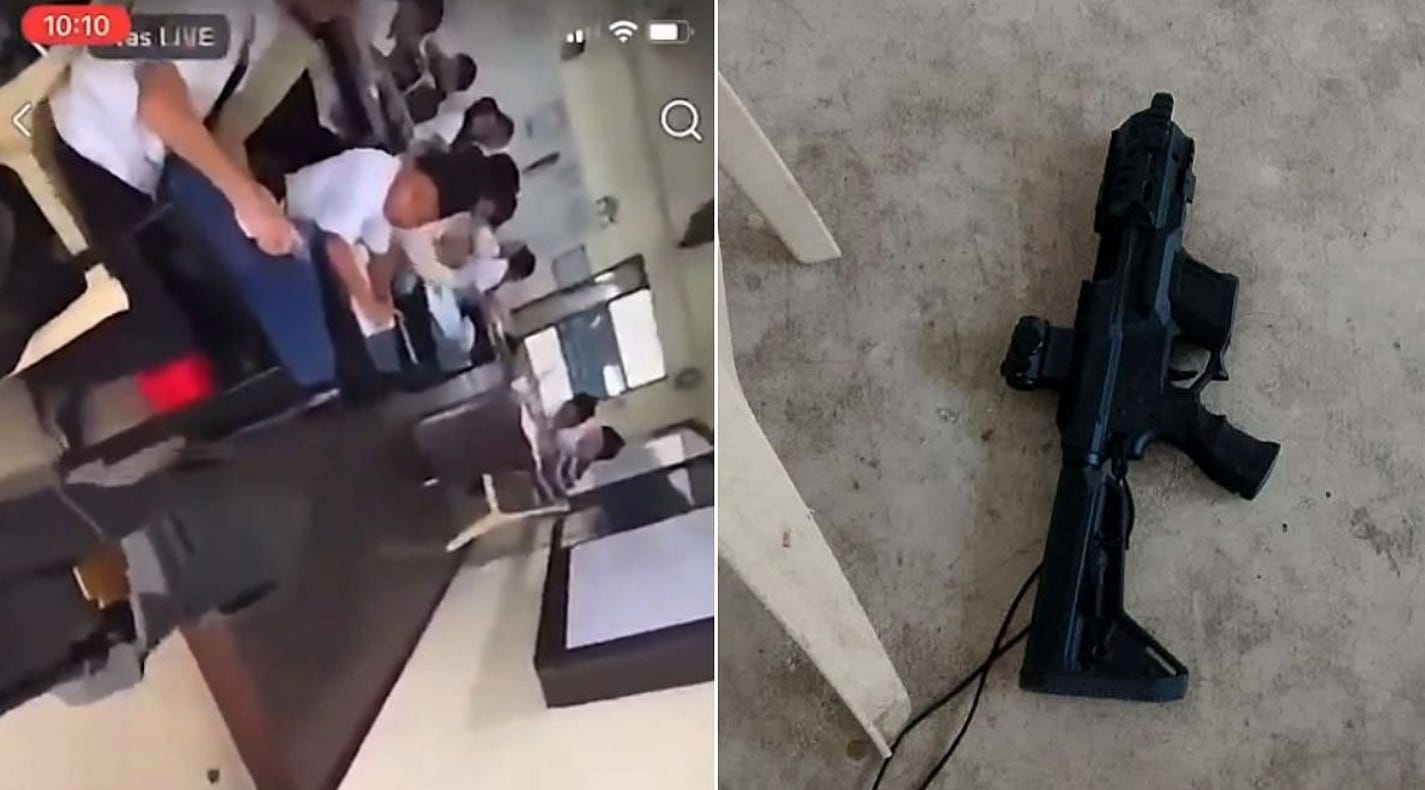
The livestream video (censored to remove graphic content) shows him enter a classroom and fire one shot at a teacher that misses. In this video, you can hear his rifle jam after the first shot. He switches to a handgun, walks into a different classroom, and fires 4 shots before the handgun also jams.
As I’ve written about previously, most school shooters who are armed with multiple weapons, have extra ammo, and have a detailed plan to commit mass violence kill zero or one victim. 40% of school shooters kill zero victims.
Most school shootings stop within seconds because either their gun jams or the teenage shooter comes face-to-face with a victim. Once there is an interruption from a weapon malfunction, the shooter is surprised to see someone before they intended to start shooting, or they see the face of a potential victim, the shooting usually stops.
Using first principles to find the foundation of a problem, if kids don’t know how to load a gun and clear a jammed round, it’s very unlikely that they will be a mass fatality school shooter.
A very simple solution is making sure that kids aren’t taught how to shoot and operate firearms. 98% of US school shooters come from families where firearms are the primary leisure and family bonding activity.
We already have age-based laws that prohibit kids under 16 from driving cars, kids under 18 from smoking, kids under 18 can’t buy a hunting rifle or shotgun, and under 21 can’t purchase a semi-auto rifle or handgun. If a kid under 21 can’t legally purchase a semi-auto gun and kids under 18 can’t buy a conventional firearm, we should also prohibit handling, training, or firing one.
This livestreamed attack is another example of influencer extremism where teens are motivated to commit mass violence for the likes, views, and recognition from their online community. Documents recently released in court show that while the Apalachee High school shooter was in jail, he was obsessed with how TCC members were talking about him online and if he was in the “big leagues” of school shooters.
Without an audience to watch, what’s the point of committing a mass shooting?
School shootings are performances with a script, stage, costumes, actors, and most importantly, an audience. In the age of online radicalization and social media communities that encourage teens to commit mass shootings, their audience is the internet.
Unlike school shootings in the 1960s, or 1970s, or 1980s, or even the 1990s, firing a gun inside a classroom is no longer just a physical act. School shootings and public mass shootings have morphed into interactive content creation experiences designed for an attacker’s radicalized online network. If you listen to the video from the Philippines closely, you can hear the shooter’s phone dinging with messages.
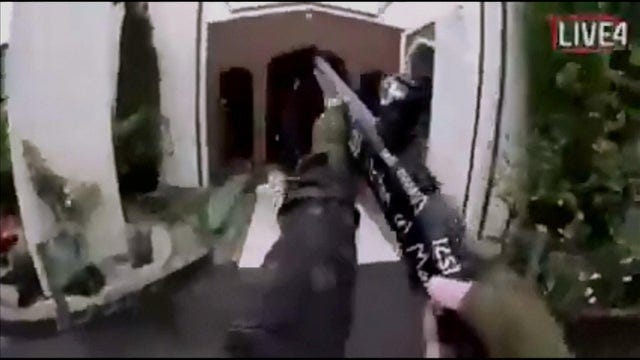
School shooters tend to copy the actions of prior attackers, especially the ones they idolize like Brenton Tarrant who used a helmet-mounted camera to broadcast seventeen minutes of the 2019 Christchurch mosque shootings on Facebook Live. Later that year, a mass shooting in Halle, Germany was livestreamed on Twitch. The 2022 Buffalo Tops Supermarket shooter combined both with a helmet mounted GoPro connected to his Twitch account. Also in 2022, a 22-year-old with six automatic rifles livestreamed his rifle scope video when he opened fire on the Edmund Burke School in Washington, DC. Two months ago in San Diego, two teens livestreamed their attack on the Islamic Center.
If you missed it last month, here is my article: School shooters are content creators
School shootings aren’t a uniquely American problem because the internet, online radicalization, and influencer culture are global.
Two 9th grade students opened fire inside San Jose National High School in Tacloban City
5 dead, 20 injured at Thailand’s prestigious Debsirin Nonthaburi School
Brazil school shooting is latest in dozens of international attacks
Nine killed and 13 wounded in second Turkish school shooting this week
Sixteen wounded at Turkish high school and active shooter trends in US
Canadian school shooter: Online radicalization, nihilism, gun culture, and gender identity
112 TCC-radicalized students identified by police in Jakarta, Indonesia
David Riedman, PhD is the creator of the K-12 School Shooting Database and a tenure-track professor. Listen to my podcast—Riedman Report: Risk, AI, Education & Security—or my interviews on Freakonomics Radio and the New England Journal of Medicine.
No posts
Comments
Nothing yet. Say the first thing.
Sign in to join the conversation.