
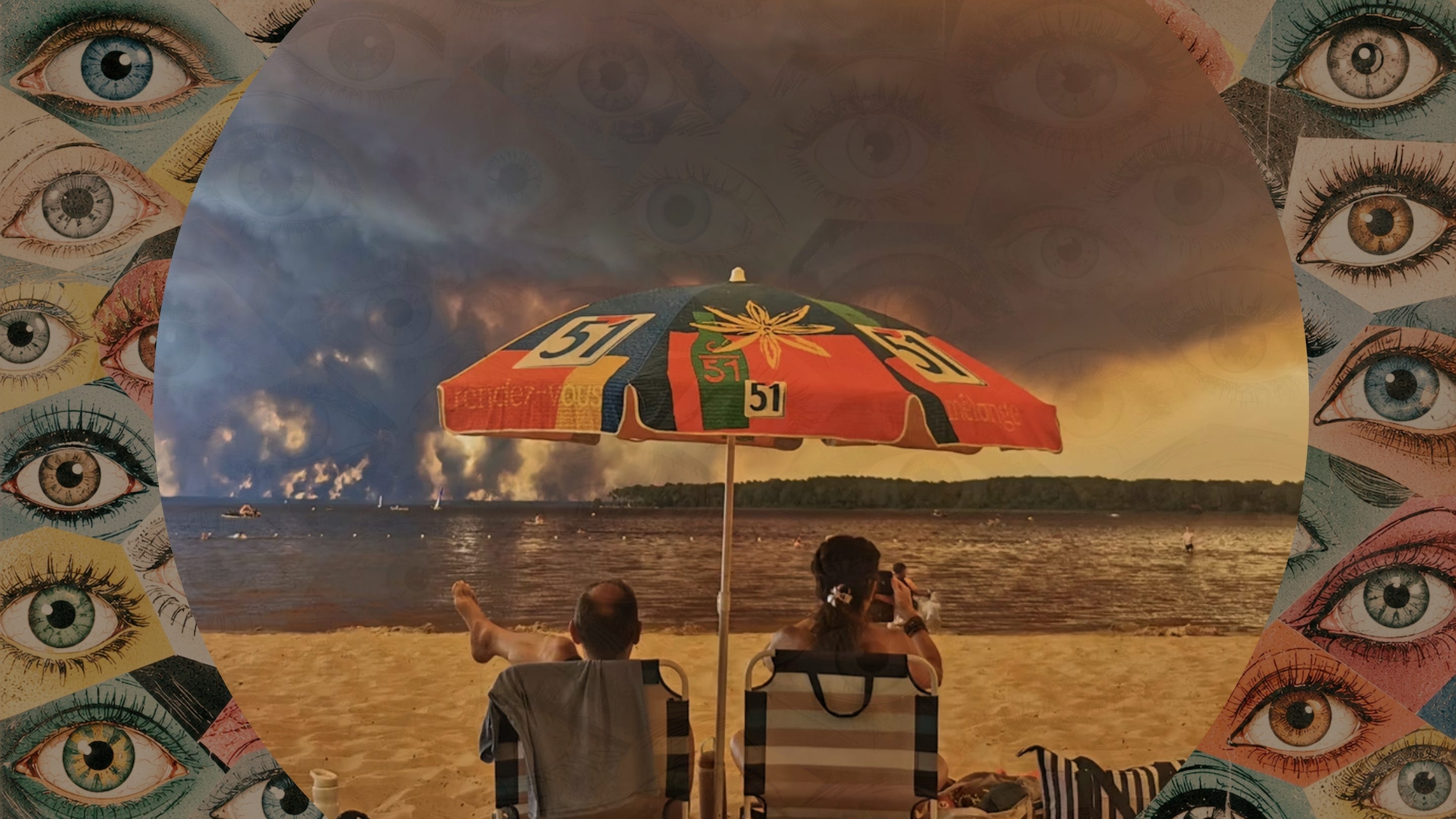
There’s a couple on the beach at the Lac de Cazaux, and they’ve done everything right. Folding chairs, planted firm in the sand. A parasol with a Pastis 51 logo, angled against the afternoon sun. Crocs kicked off, a bodyboard within reach, a striped bag with the towels, his legs crossed, her phone out. A child stands at the water’s edge, ankle-deep, looking across the lake.
What they are all looking at is beautifully terrifying: the Gironde on fire.
The far shore of the lake is a wall of flame, and above it a smoke column has swallowed half the sky, a bruised grey-and-amber ceiling that turns the whole scene the color of weak tea. Sailboats keep tacking across the water in front of it. He, as far as anyone can tell, is relaxing. She’s photographing it: this might be her chance to go viral.
You can laugh at them. The internet already did. But look longer and the picture starts working on you, because everyone in the shot has made the same basic calculation: the fire is over there, and from right here it is a spectacle to be appreciated.
That’s the thing about fire. It’s the most straightforward kind of disaster. You can see it coming, see it raging, and see the hillsides turned black and the chimneys standing where homes used to be it when it’s gone. This summer’s fires have already forced around 300,000 people to evacuate across France and Spain in the largest peacetime evacuations either country has run, and thousands have evacuated the Greek island of Crete as wildfires fanned by strong winds menace tourist resorts and villages. Officials in Spain called it potentially the worst natural catastrophe in the country’s history. And near Bordeaux, the fires were so intense they actually created their own storms, towering pyrocumulonimbus clouds that threw lightning back down and sparked even more fires, something France had never seen before.

sustainme.in®️@sustainme_in
Wildfires continued to rage across the southwest Gironde region in France on Tuesday. Firefighters and local civilians battled the flames that have already displaced more than 200,000 people. CNN’s Nada Bashir reports. #wildfire #france #Climate #energy #europeheatwave
7:06 AM · Jul 30, 2026 · 120 Views
No one on that beach doubts the fire is real. When you can see the flames, smell the smoke, and feel the heat on the wind, skepticism isn’t an option.
Now find the killer in the photograph.
It isn’t on the far shore. It’s what you can’t see in the photo: the weight sitting on every person in the frame, the reason they’re by the water, the invisible condition that dried the Gironde’s pines into fuel and will still be sitting on that beach two weeks after the last ember goes out.
Fires make headlines, and they leave mourning evidence. But heat is an invisible force that kills far more people. In May and June, extreme heat killed about 2,700 people in England and Wales alone, running at 440 a day at the peak, in a country where road crashes kill four a day. Spain recorded 1,028 heat-related deaths in June alone, more than double the number in the same month last year. Across Europe, the late-June heatwave produced more than 10,000 excess deaths in about two weeks. Worldwide, heat now takes about one person every minute.
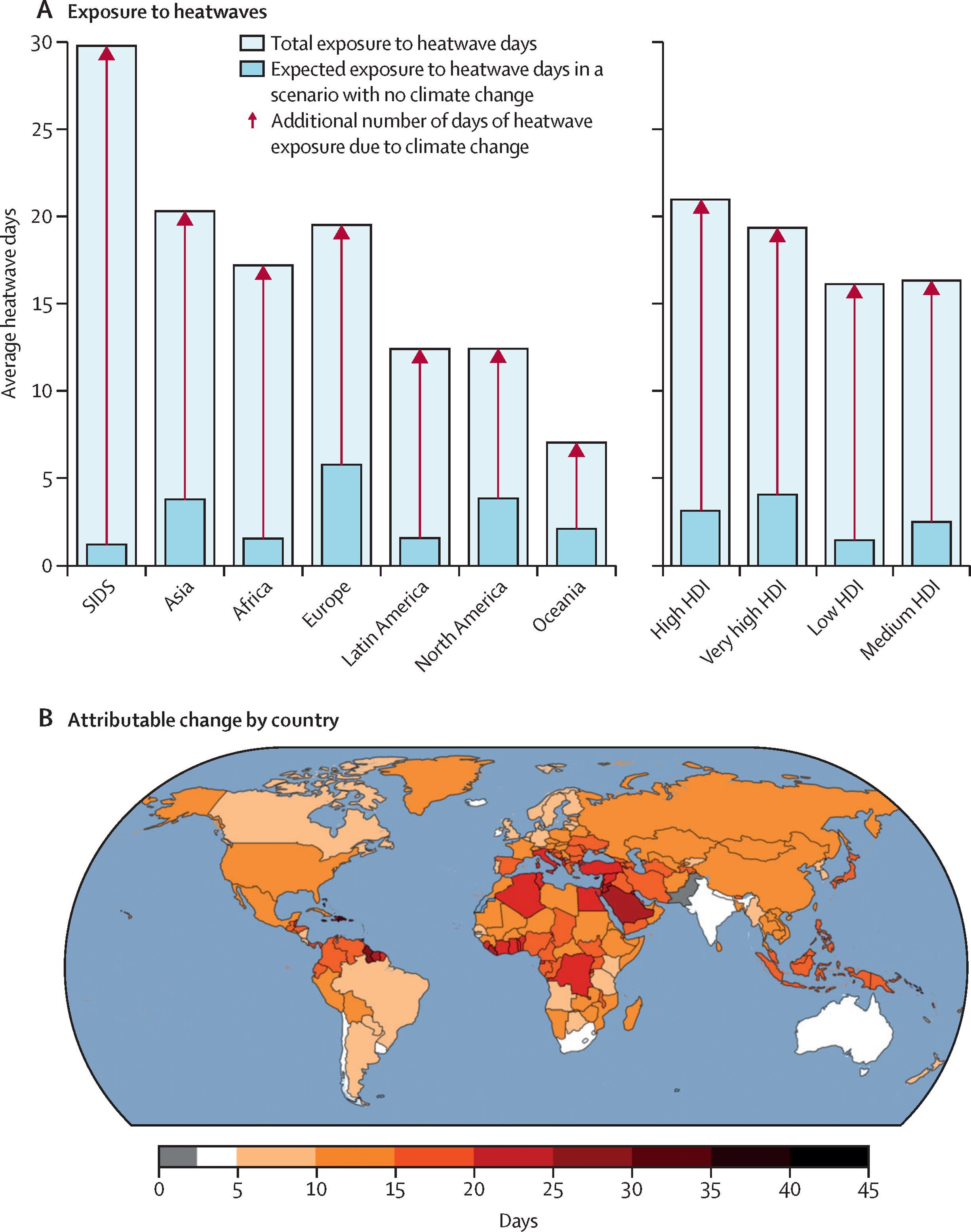
And it does it without leaving a mark on anything. A flood leaves a waterline on the wallpaper. A fire leaves ash. Heat leaves a flat with the shutters closed and a death certificate that says “cardiac arrest”, and the neighbors say she was 84, and she was, and nothing on that certificate is a lie, yet it still doesn’t capture what really happened.
This July in India, a woman spent the morning digging out a reservoir by hand, came home, lay down, and never got up. Heatstroke, the doctor said. Her friend’s reaction is the point: she always seemed so strong — so if the heat could take her, it could take any of us.
In India this July, a woman named Mahalaxmi spent the morning digging a reservoir by hand on a government work scheme, walked home in silence, lay down, and never got up. Heatstroke, the doctor concluded. Her friend said she always seemed so strong, and if the heat could take her, it could take any of us. She isn’t wrong: a single day of extreme heat in India can cause approximately 3,400 excess deaths nationally, and a five-day heatwave can kill nearly 30,000.
The fire is the photograph. The heat is the fuel beneath it, and the fuel is what kills.
So this piece is about four common assumptions that make the danger hard to notice in the order people usually start believing them.

The temperature on the screen isn’t the same as the temperature your body is trying to survive. When it’s hot, your body basically has one serious way to shed heat: evaporation. You sweat, that sweat evaporates, and it carries heat away. The key point is that sweat only helps if it can evaporate. If it just drips off you, it’s not cooling you much at all. That’s why humidity matters so much. Humid air is already loaded with water, so it can’t “take” much more. It’s like trying to dry yourself with a towel that’s already wet.
The measurement that tracks this is called wet-bulb temperature. It’s a simple idea: wrap a thermometer in a wet cloth and let it sit in the air. The reading you get is roughly the coolest your body can get by sweating in those conditions. In dry heat, wet-bulb is much lower than the air temperature, so your body still has room to cool itself. But in humid heat, wet-bulb climbs toward the air temperature. When they get close, it’s like your body’s cooling system is running… but the exhaust pipe is blocked.
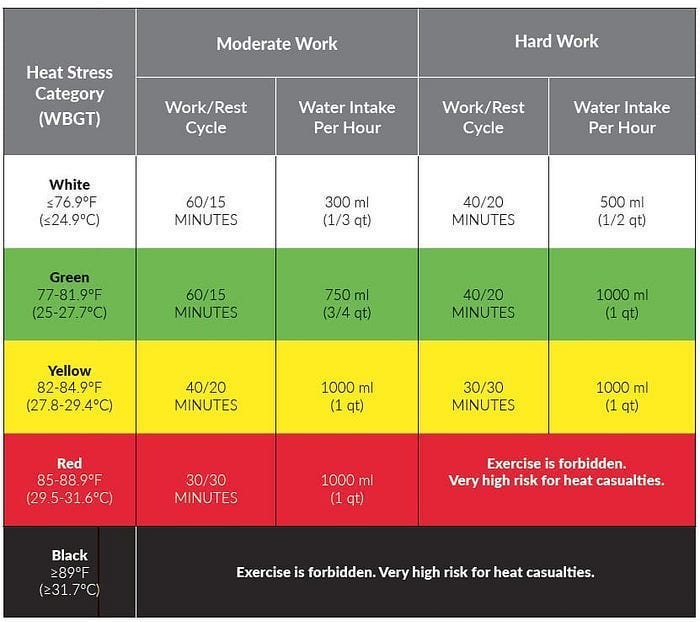
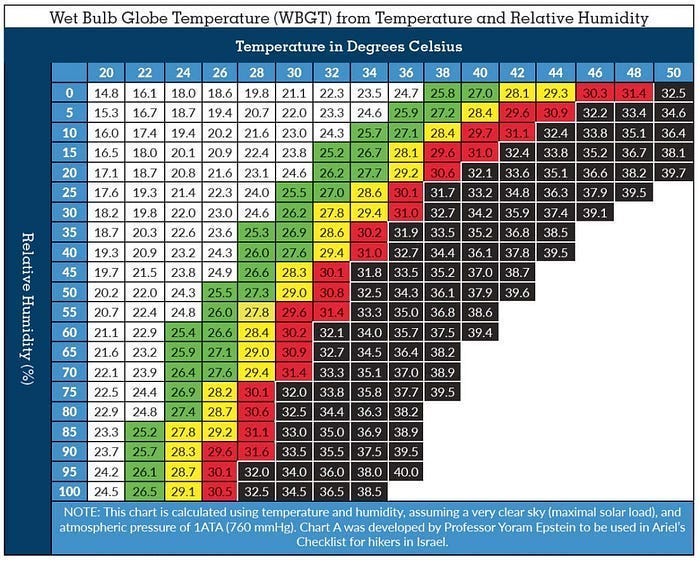
At a wet-bulb of about 35°C (95°F), even a healthy young adult resting in the shade with unlimited water can still die, because there’s no physical way left for heat to leave the body. That threshold has already been crossed briefly in a few places (mostly around the Persian Gulf and Pakistan). But the danger starts earlier: studies show healthy young volunteers start showing real strain around a wet-bulb of 30°C (86°F).
So 32°C (90°F) in dry Athens and the same 32°C in a humid northern summer are two different events happening to your circulatory system. And Athens has one more advantage: buildings designed by people who have lived with that kind of heat for generations.
For most of human history, the deal was simple: a brutal hot day was survivable because the night would finally let your body reset. But in many places, nights are warming even faster than days, and that steals the recovery time.
When you sleep, your core temperature is meant to drop by about a degree, part of how sleep works. If the bedroom stays above about 20°C (68°F), the drop doesn’t really happen, sleep goes shallow, and the strain of the day never gets paid down before the next day starts.
That’s why heat can feel “tolerable” at first and then turn deadly a few days in. Nobody dies of a hot afternoon. They die after several nights in a row of poor, overheated sleep, when the heart, already working overtime to move blood to the skin (sometimes two to four times its normal volume), finally can’t keep up at 3 a.m.
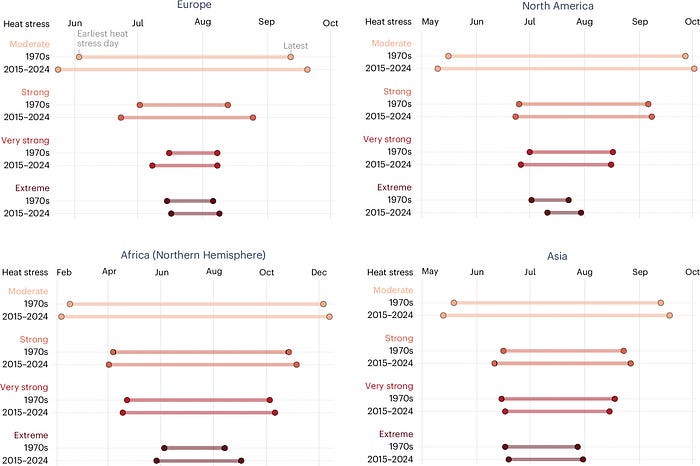
Cities make this worse in a very specific way: they hold onto heat. Asphalt and brick soak up the sun all day and leak it back out overnight, keeping urban air several degrees warmer than the countryside after sunset. That small-sounding gap can be the difference between a bedroom where you recover and one where you don’t: a mortality stat wearing a thermometer costume.
And that’s why the old Greek hillside villages with humble houses like my grandparents’ are modern technology. Just look at what they are doing.
The white isn’t decoration, or rather it wasn’t originally. Limewash reflects sunlight, and pale walls stay cooler in direct sun the way a white shirt does. The half-a-meter-thick stone walls act like a slow battery, absorbing heat so gradually that the warmth reaches the interior late, when the outside air is finally cooling, so the walls can start shedding heat outward instead of pushing it inward. The rooms are small, and the windows are smaller, punched deep into the wall so the opening sits in its own shade for most of the day. The houses lean on each other up the slope, so each one shades its neighbor and the alley between them stays a canyon of cool air the sun never fully reaches. Nothing plugs in so nothing fails in a blackout.
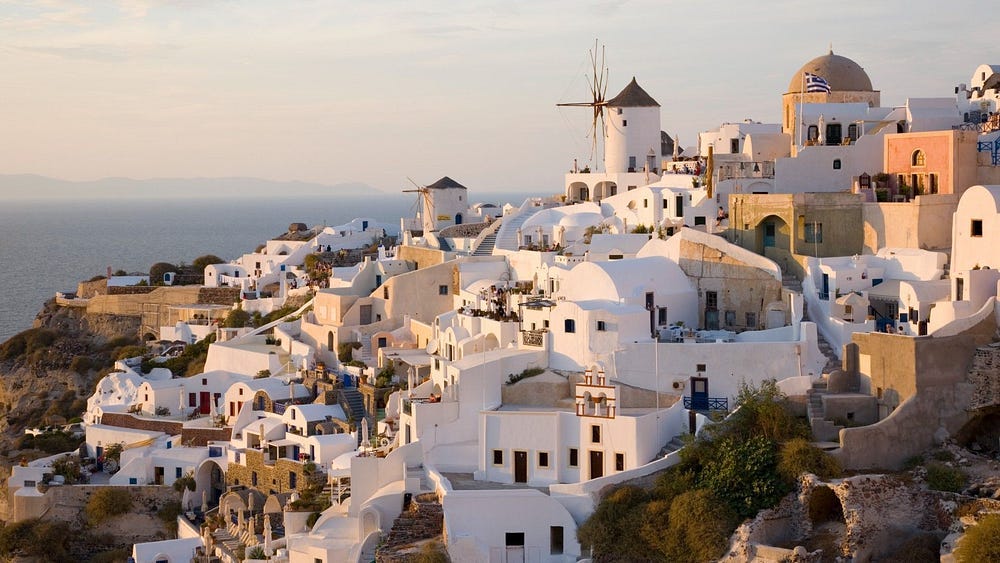
None of this came from academic papers. Tourists photograph it as an aesthetic, but it all came from hard lessons and memory, choices made because ancient people knew what summer could do.
Then, over a few centuries, much of the warm world traded that knowledge for sealed boxes of concrete, steel and glass. They look modern and go up fast, but they’re miserable prisons without power-hungry machines running inside them. The buildings stopped doing the work.
Northern Europe never had this “hot-weather manual,” which is a colder-climate inheritance working exactly backwards. Most homes here were built to trap warmth (perfect for winter, dangerous in a heatwave) with small openings, dark roofs and, more recently, insulation added for winter with no way to dump the load at night. That’s why 32°C in Athens and 32°C in London or Stockholm aren’t the same experience: one lands on buildings designed to cope, the other on a heat trap with a good boiler.
Yes: El Niño is a real, natural pattern, and it can give the whole planet a temporary heat boost, and the hottest years on record do tend to be El Niño years. All correct.
What the argument skips is that El Niño mostly moves heat around without creating the baseline. A natural cycle should swing both ways: up, then back down. And yet the long-term temperature chart doesn’t drop back down. It keeps climbing.
So El Niño is like a spike added to a rising staircase. Each time it shows up, it’s starting from a higher “floor” than the last one, meaning an average El Niño today can deliver the kind of heat that would’ve been unthinkable a few decades ago. The tropical Pacific crossed into El Niño in April, reached “strong” by June, and blew through the “super” line in the first days of July, faster than any event ever recorded. Of 667 model runs from fourteen forecasting groups, 607 say the peak will be the largest ever measured, most likely in November.
So there’s also a calendar problem for anyone blaming this summer on it: the brutal June heat that filled Europe’s morgues arrived before the Pacific even finished getting started. As the UN secretary-general put it, “this is only a warm-up act.”
And what the underlying warming does add this summer is something fire scientists call weather whiplash: a wet winter grows a thick carpet of vegetation, then a sudden drought dries it into perfect kindling, and one spark finishes the job. The fire on the far shore of that beach photograph was built by rain first and heat second, what would’ve sounded backwards in the climate we grew up in.
Humans really do adapt and that’s the part I find hopeful, just not because some magic “we’ll figure it out” switch flips on by itself.
Adaptation is boring, practical work. It’s budgets, rules, phone calls, and people doing checklists. After the 2003 heatwave killed somewhere between 40,000 and 70,000 Europeans, countries set up heat alerts, changed care-home routines, and built systems to check on older people who live alone before the worst days hit. Temperatures have kept rising, yet in some places fewer people now die during heatwaves. That’s what adaptation looks like: unglamorous public plumbing that saves lives.
But “adaptation” is always something a society did, not what it will do next time. Britain’s climate advisers have warned for years that the country isn’t ready, and this summer’s death toll is what “not ready” adds up to.
Seville tried one of the simplest fixes: make heat feel like a real event, not just “a hot spell.” In 2022 the city started rating heatwaves by expected health impact and naming the worst ones. That July, a five-day heatwave became Zoe, the first named heatwave in the world. It sounds like a gimmick, but it targets the exact problem in that beach photograph: a hurricane has a name, a category and a track, so your brain treats them as dangerous things with boundaries. A heatwave arrives as summer.
Which is the last thing to say about the couple under the Pastis umbrella. They aren’t fools. Their instincts were trained on a climate that no longer exists, where sun meant holiday and danger meant something you could see from afar, preferably in the movies. The fire across the lake fits that old logic perfectly: visible, distant, and over there, as in someone else’s problem.
The real danger is the thing that stays even after the smoke is gone, and it’s never cared about our old, sunny-day instincts.
M.
Comments
Nothing yet. Say the first thing.
Sign in to join the conversation.