
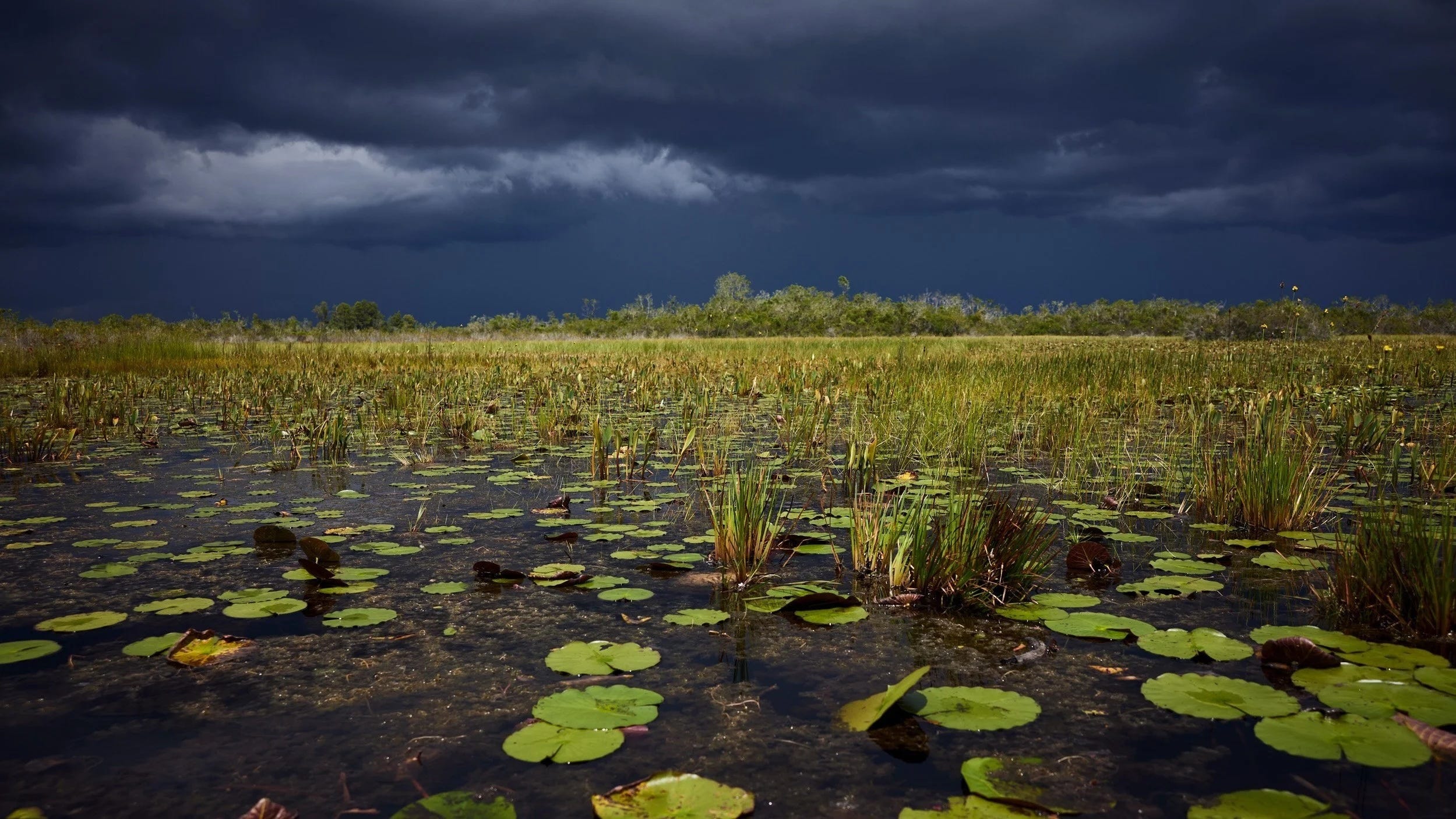
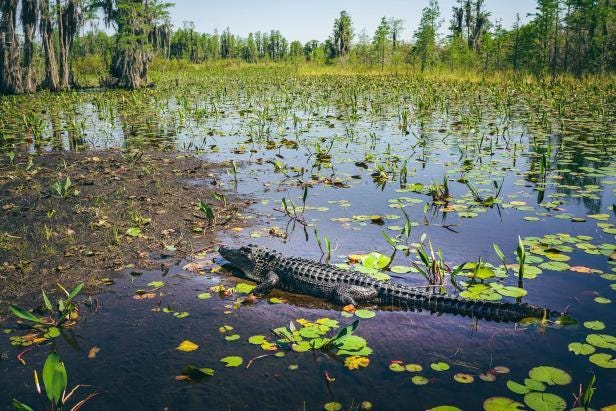
Years ago, I spent some time in the Okefenokee National Wildlife Refuge, North America’s largest “blackwater” swamp, and it made an impression. There was wildlife everywhere, including gopher tortoises, American alligators, and a host of migratory birds. Even the water, though still, seemed oddly alive. It was stained tea-dark by tannins from decaying vegetation and seemed to brim up around the swollen bases of the cypress trees like coffee rising just above the rim of a saucer. Here and there, chunks of peat boiled up from the bottom, to become the foothold for future land masses. When I walked on certain smaller islands, the trees sometimes swayed nearby, and I thought of one common description of the Okefenokee as the “Land of Trembling Earth.”
For almost 30 years, people who live in and around the half-million acre swamp, on the Georgia-Florida border, have also trembled—and been up in arms—over the threat of outside development, especially from large mining projects. First, DuPont proposed strip-mining titanium on 38,000 acres nearby. Passionate opposition from the public, the Clinton Administration, and even DuPont stockholders soon forced it to back down and donate 16,000 acres to the nonprofit Conservation Fund.
In 2018, Twin Pines Minerals proposed another titanium mine next door to the Okefenokee, potentially extending over 12,000 acres. Despite a boost from the first Trump Administration, it backed down, too, under public pressure, and in June last year, it sold 7700 acres of land to the same nonprofit for a reported $60 million—a major break for wildlife and other inhabitants.
It was a powerful reminder that, Donald Trump be damned, ordinary people can still rise up to protect the habitat and wildlife they love. I’ll get to some examples shortly. First, though, let’s acknowledge that Trump is doing everything in his power, and beyond, to crush the natural world. It’s pathological: He seems to regard all wildlife species as vermin, and any attempt to protect them as unjust interference with the unwritten but seemingly unstoppable right of corporations to eat up the world. Just in his first 18 months back in the White House, he has:
Moved to abandon a key regulatory definition so that loggers, miners, oil-and-gas companies, and other extractive users can modify, degrade, or even destroy habitat and—short of directly killing or injuring a listed species—no longer be liable for committing “harm” under the Endangered Species Act.
Weakened protections for the greater sage grouse, a threatened species, to open millions of acres of public land on lax terms to oil, gas, and mineral development.
Driven out thousands of federal scientists, including endangered species specialists, wildlife biologists, and climate researchers, so there is hardly anyone left to see what happens to species that get in the way of profits.
And yet progress and protection can still happen, despite the Slouching Beast in the White House. It’s progress he can’t stop because it’s being driven by state, county, and local governments, by nonprofit organizations, and by individual activists who recognize that environmental and wildlife conservation matter at least as much as profit.
The State of California, for instance, didn’t blink last year when Trump pushed to shut down a pair of satellites that NASA had launched at a cost of $750 million to track climate-heating methane leaks. Trump’s ostensible motive was to save the $15 million-a-year operating cost. One scientist likened this to buying a new car and smashing it into a tree to save on gas money. The far more likely purpose: Trump was protecting the oil-and-gas companies that are the usual culprits for these leaks.
What California did was to sign up with a methane-spotting satellite owned by a private industry partner. In its first six month in operation, it identified 10 major leaks, all from oil-and-gas facilities, and demanded repairs— for an air quality improvement it said was equivalent to taking 18,000 cars off state highways. While Trump was “silencing truth and gambling with our planet’s future,” said Gov. Gavin Newsom, California was “showing that our people, our economic future, and the health of our planet are worth fighting for.”
California’s methane-spotting satellite continues to cross the state four or five times a week, spotting new leaks and monitoring repairs. The nonprofit Carbon Mapper works with the same satellite to identify methane plumes worldwide, including thousands in the United States. Meanwhile, because of public outrage at Trump’s unfathomably dumb proposal, the NASA methane satellites also continue to do their intended work.
Among other recent initiatives at the state level on behalf of the environment, Montana last year established a “Habitat Legacy” account to design, construct, and maintain highway wildlife crossings. The money will come from sales of a special “wildlife crossings” license plate, plus a 20 percent share of the tax on marijuana sales. Colorado has likewise passed a law that the state estimates will raised $3.9 million a year for wildlife crossings; it’s waiting for the governor to sign it into law.
That’s not going to replace the federal funding needed for construction of crossings, Deb Davidson of the Center for Large Landscape Conservation acknowledges. But meantime, it’s enough to help states identify critical areas for crossings, secure easements from nearby landowners, install highway warning signs that flash during migrations, set aside non-federal matching funds, and otherwise get ready for when the clock runs out on Trump, and federal funding resumes.
Also at the state level, constitutional guarantees of a clean and healthful environment have taken on a new life after Montana’s Supreme Court last year ruled that a law excluding greenhouse gas emissions from environmental reviews was unconstitutional. Likewise in Pennsylvania, where the constitution stipulates “the preservation of the natural, scenic, historic and esthetic values of the environment,” an earlier court ruling stopped the state from diverting its oil and gas revenue to the general budget, requiring instead that it be spent to conserve and maintain public natural resources. Seven states currently have such healthy environment guarantees, and another 32 are considering various forms of “Green Amendments.”
Land trusts, at the local, state, and regional levels, also continue to make a huge difference for the environment. These trusts are close to tripling the private land area they protect under conservation easements in the United States, from 23 million acres in 2000 to 61.1 million acres today, according to the Land Trust Alliance. That’s land Trump can’t sell off, give away, or open up to industry, because the federal government doesn’t own it.
The tendency is to think of these trusts have a major impact only out West, through large-scale projects like the Yellowstone-to-Yukon Conservation Initiative. But it’s happening on the East Coast, too: In New York, for instance, the Finger Lakes Land Trust recently raised $22.4 million for conservation and now boasts five miles of lake shoreline saved, 29,000 total acres under protection, and 53 miles of trails open to the public. The Northeast Wilderness Trust last year passed 100,000 acres permanently protected for wildlife from northern Connecticut to the North Woods of Maine. The Stay Connected Initiative works with governments and trusts from New York up into New Brunswick and Nova Scotia to build and maintain connectivity for moose, lynx, black bears, and other wildlife.
Look around, and you will find no shortage of initiatives working to make our environment better, even as the grotesque tyrant in the White House pushes to make it worse. Sometimes it just takes a few smart lawyers (and the donors who fund them) to tie up or stop Trump’s anti-environment, anti-wildlife agenda. The Administration currently faces 650 lawsuits, according to a N.Y. Times tracking site. It loses many of them.
This past March, for instance, a federal court in Northern California struck down attempts from Trump’s first administration to weaken the Endangered Species, calling them “arbitrary and capricious.” Just this month, a different federal court found that the U.S. Fish and Wildlife Service failed to protect 1500 endangered species when it approved widespread agricultural use of the pesticide malathion. The agency, under pressure from Trump, had discarded an earlier scientific finding that the pesticide posed a serious threat to wildlife. The lawyers in the first came came from Earthjustice (motto: “Nature Needs a Good Lawyer”), and in the second, from the indefatigable Center for Biological Diversity.
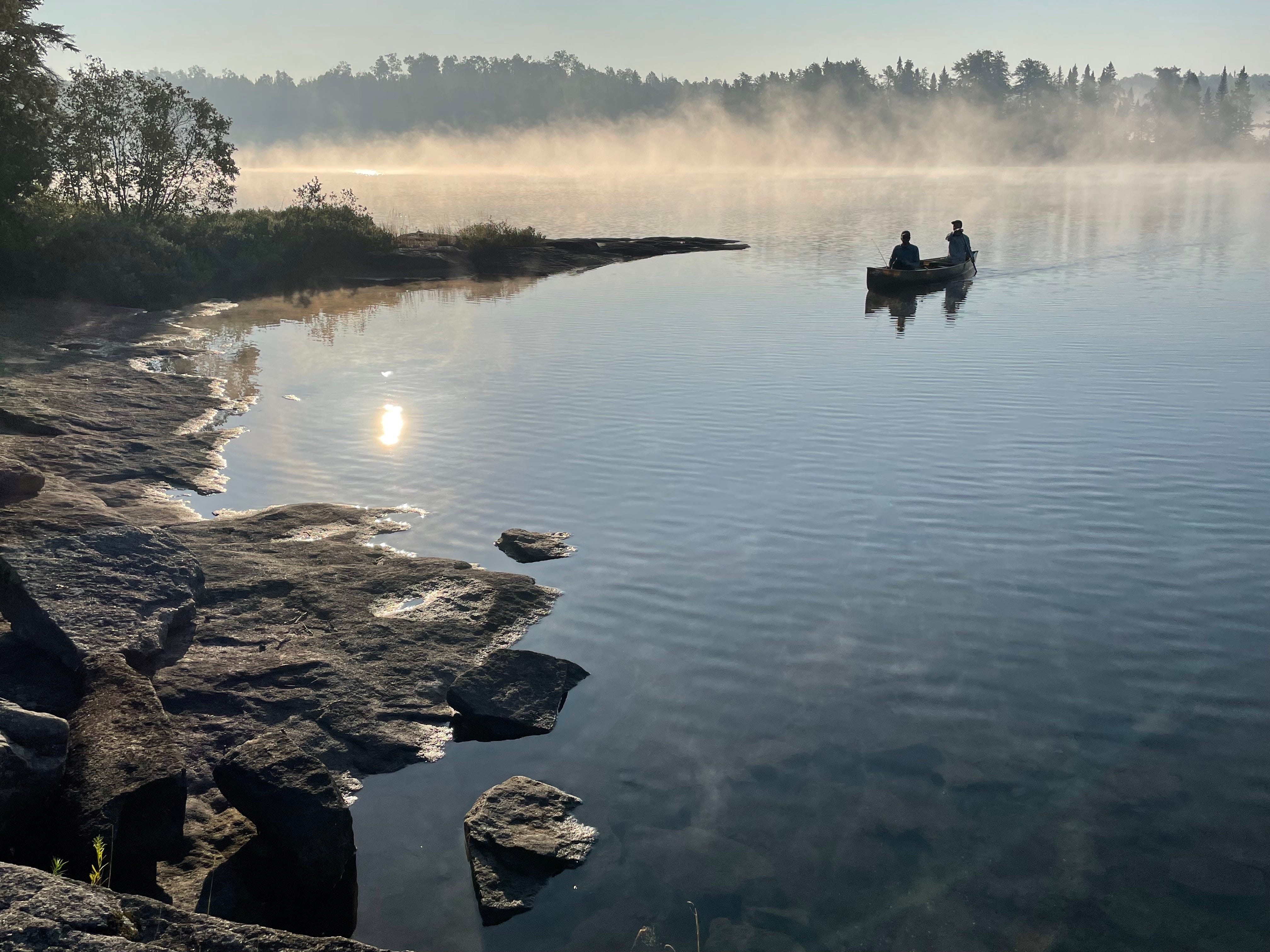
So find yourself a cause in the fight for wildlife and natural habitat. Maybe it’s the huge copper mine proposed by a foreign company close by—and almost certain to pollute—the Boundary Waters Canoe Area Wilderness. For the moment, this wilderness is still a gloriously quiet and clean refuge of 2000 lakes and a million acres of forest on the Minnesota-Ontario border. The organizations fighting to keep it intact include Save the Boundary Waters and Friends of the Boundary Waters. Take your pick, or join both.
Or maybe your passion rises for the world’s most endangered whale. The Rice’s whale is now down to fewer than 100 individuals. But in March, Trump convened the Endangered Species Committee, also known as “the God Squad,” to finish it off. At a 15-minute meeting, it exempted the oil-and-gas industry from having to obey endangered species protections in the Gulf of Mexico, to help make up for Trump’s own handmade energy emergency.
The aim is to open the whale’s only remaining habitat, on Florida’s Gulf Coast, to the drilling rigs. Nonprofits Healthy Gulf, Sierra Club, NRDC, and Earthjustice are all involved in lawsuits against this move, according to environmental reporter Max Chesnes of the Tampa Bay Times. The opposition also includes Florida Gov. Ron DeSantis, ordinarily a fanboy of environmental destruction.
The idea here is to get past the shock, the despair, and above all the passivity that Trump’s relentless insanity seems calculated to induce. Get yourself an environmental cause instead and dog his every clumsy anti-nature footstep. Together, we can preserve a world where wildlife and humans alike still thrive.
Comments
Nothing yet. Say the first thing.
Sign in to join the conversation.