
Imagine a maze that begins with a fork in its path. Only one of the paths can ultimately lead you out, but if the very first path chosen is wrong, no level of skill, intelligence, determination or conscientiousness can ever produce the desired outcome — to exit the maze. We seem to find ourselves in a parallel predicament in the modern world. The West’s pursuit of understanding biology and the concept of health has proceeded on a foundation that is a catastrophic error of judgement. As a result, we find ourselves hopelessly stumbling through the half of the maze that never leads out but continually renews the false hope inherent in discovering a new path; one that can only contain a dead end.
René Descartes’ famous statement, “Cogito, ergo sum” (I think, and therefore I exist), was the result of an admirable pursuit — “radical doubt”1. Descartes was a consummate sceptic, taking on the daunting responsibility of scrutinising the fundamental nature of every assertion he could make. His famous quote resulted from the realisation that, the fact that he could even consider the nature of all things was the one thing that he could not question the reality of. In other words, Descartes saw the true nature of mind and matter as fundamentally different. His philosophy was exceedingly influential, forging what is now known as the ‘Cartesian Split’ — the perception that mind and matter are entirely separate entities.
“My entire physics in nothing other than geometry.”
— René Descartes as quoted by Vrooman, 1970
This conceptual split between the physical world and the non-physical world allowed all material substance to be subjected to examination and explanation by purely deterministic and mechanistic means.2 Sanctity and reverence was only afforded to the non-physical aspect of our experience which, at the time, was a realm who’s jurisdiction was at the hands of a the church. Combined with the revolutionary progress of Newtonian mechanics that emerged the following century, Descartes’ philosophy produced the fertile ground out of which grew the most anti-useful, restrictive analogy we’ve ever managed to produce — the machine analogy.3

Viewing the natural world and its constituents as machines is subtle. It is not immediately objectionable as a metaphor for understanding the natural world. For instance, both animals and trains need energy to move forward, cameras appear to see the world just as we do4, neural behaviour can appear computational, limbs can be portrayed as simplistic levers and pulleys, etc. We often hear our mitochondria compared to a high-powered engine or a power plant, and for a jumping off point, such a comparison might be sufficient. But the reality is that machines and living systems are categorically different.
Fundamentally, machines are complicated. Some machines, particularly today, are so complicated that it is unreasonable to expect the average person to even believe what some machines are actually capable of.5 However, the functions of complicated systems can be explained on the basis of its constituent parts alone. Each part relates to the next in a way that produces no novelty and whose function is not dependent on the rest of the system. They are not self-organising, autopoietic or adaptive.6 The essence of a machine is categorically different to that of living systems which, rather than being complicated, are complex.
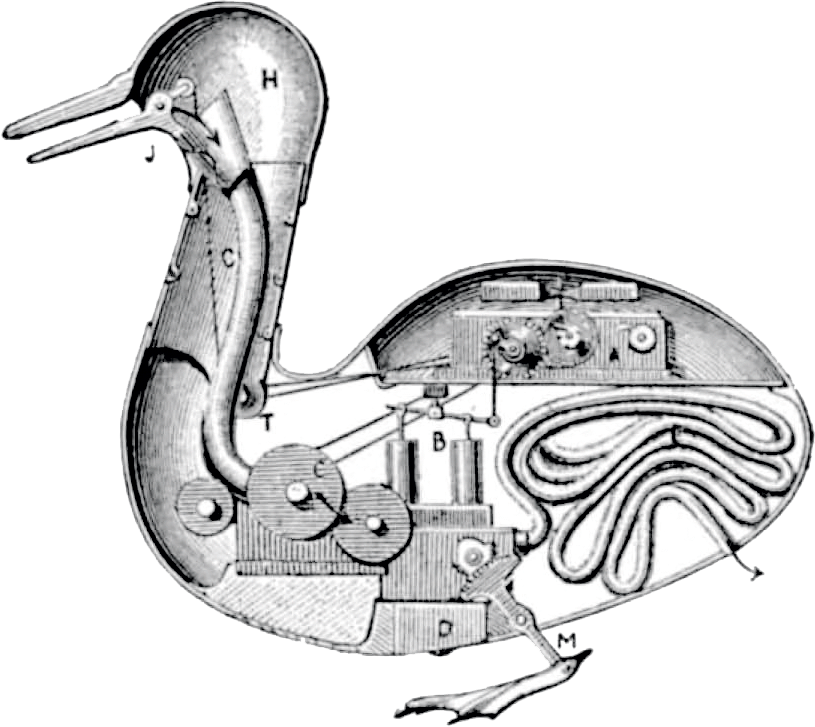
Complex systems inherently differ from complicated systems in that the way their constituent parts interact, generates novelty. The relationships between each aspect of a complex system produce emergent phenomena — novel features that cannot be understood by the isolated parts themselves. The heart and extended cardiovascular system exhibit extremely coordinated, integrated and adaptive electrical properties. However, an understanding the processes of the heart itself cannot be obtained through the study of cardiac cells alone. The collective functioning of the heart emerge out of the relationship between vast numbers of cardiac cells, each of which alone has no blueprint for a whole functioning organ, but together produce novel collective behaviours. To paraphrase the great biologist Denis Noble, “Life is the blueprint for life”.
“The world thus appears as a complicated tissue of events, in which connections of different kinds alternate or overlap or combine and thereby determine the texture of the whole.”
— Werner Heisenberg, 1958
The relationships between components in complex systems produce novel qualities. For instance, in music, major-ness is a quality that depends on the unique relationship between the tonic note and the major 3rd. The quality of ‘major-ness’ or ‘minor-ness’ does not exist in any single note itself, but in the relationship between notes’ frequencies. When speaking of relationships, we are no longer in the realm of quantities; relationships must be analysed by their qualities.7 Heisenberg’s use of qualitative language — “tissue”, “texture” — to describe the world underscores how the nature of our experience is based on how systems connect, not what the systems are composed of.

Modern medicine remains immersed in misnomer that is the machine analogy. In this Cartesian worldview, it is only quantities that matter — any lack of clarity is but a lack of quantitative analysis, however implicit this assertion may be. This is obvious in the practice of specialisation, where each subsystem of the body must be dealt with by a doctor who sees their patient as the numbers on their lab reports. At its core, this is a poignant expression of the ontological reductionism8 at the heart of medicine — a reductionism that is driven by the view that the human body is complicated; not complex. Such a catastrophic mistake of natural philosophy was avoided in ‘Eastern’ perspectives, where all systems are seen as deeply connected in elegant and nonlinear ways.9
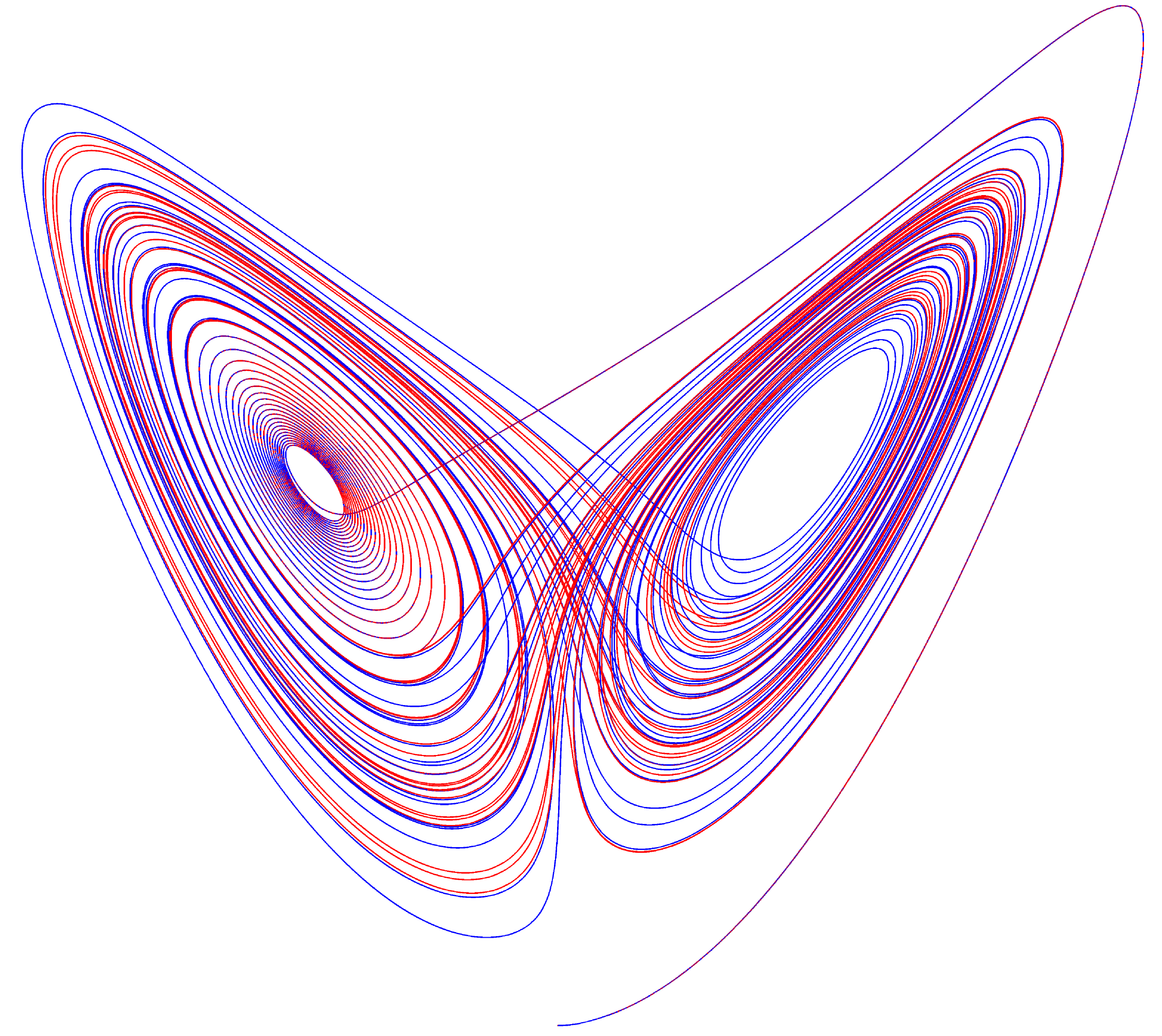
Descartes’ proclamation was the choosing of the wrong path at the beginning of our maze. No matter how hard we work to further our understanding of the world using the machine analogy, we will never be led out of the maze. The human body is not complicated, it is complex. A true understanding about how life works will only be realised with the recognition that the relationships between the parts actually matter more than the mere parts themselves. It is these relationships and the qualities unique to them that separate life from machines; nature to industry; intellect to wisdom. The discovery of quantum phenomena has shown us that it is the system itself that is sensitive to interactions, not its constituent parts. In fact, the parts themselves are determined by the state of the system, not the other way around.
“[I]n classical mechanics the properties of and behavior of the parts determine those of the whole, the situation is reversed in quantum mechanics: it is the whole that determines the behavior of the parts.” (emphasis added)
— Capra & Luisi, 2014
To go even further, quantum theory makes us realise that the process of systems interacting is the substrate of everything we experience — it is the system (network of interactions) itself that generates the abstraction of what we consider to be a ‘part’. In other words, all that exists is a rich, overlapping network of interactions. The concept of an isolated part is nothing more than an abstraction of our particular method of investigation. We have, with our machine analogy, mistaken cause for effect.
“Isolated material particles are abstractions, their properties being definable and observable only through their interaction with other systems.”
— Niels Bohr, 1934
Modern medicine will not progress meaningfully until there is a collective shift towards the integration of systems thinking — where the relationships between parts of systems are viewed as more important than the parts themselves. These relationships are captured by qualitative analysis more effectively than quantitative analysis. Treating any part of nature, humans included, as machines can only produce anaemic, uncontextualised and ultimately anti-useful ends. With the recognition that we are so much more than an assemblage of parts, opens a new perspective on drug and supplement use, diagnoses based on single biochemical labs and the relationship between genes and health outcomes.
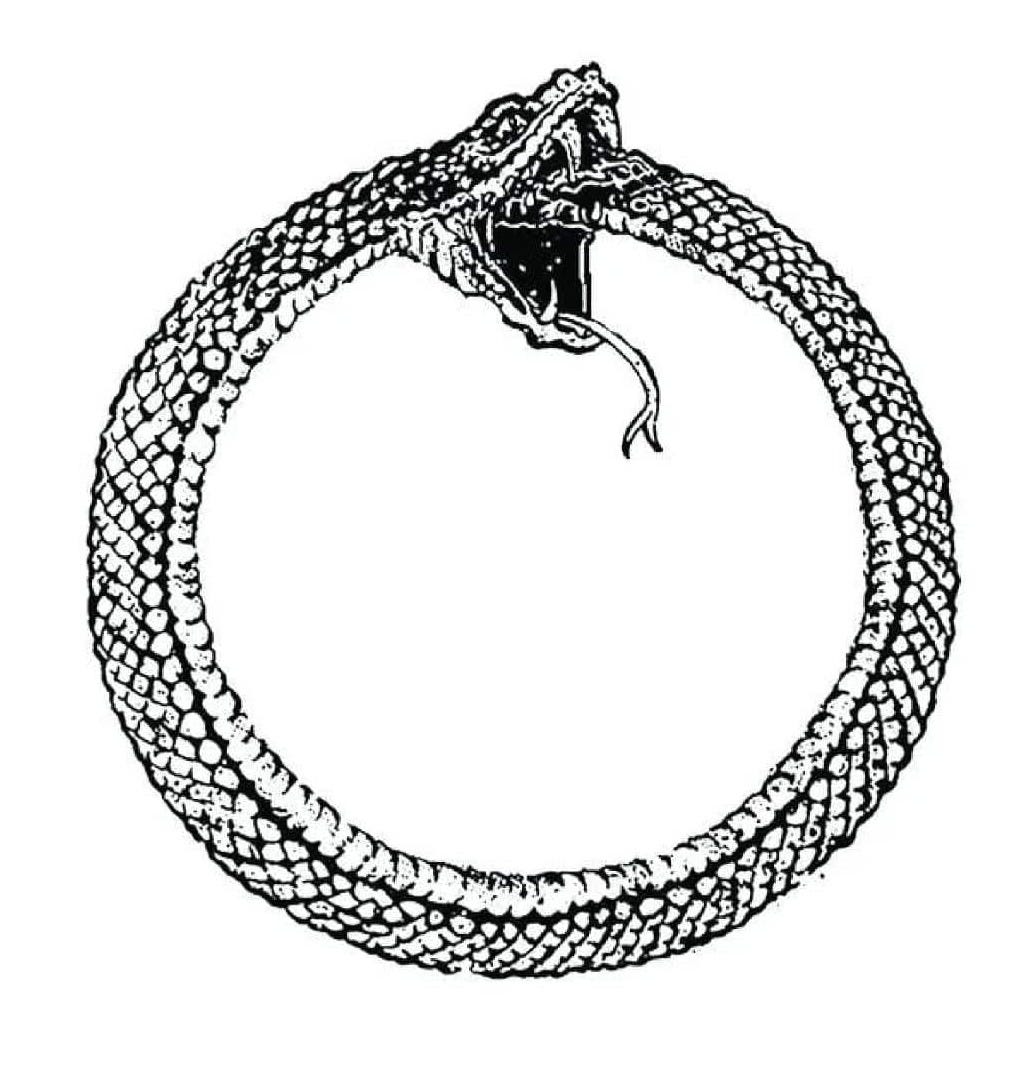
We are living in Descartes’ world. In this world, nature is complicated but decipherable by intellectual means and everything is ultimately understood on the basis of quantities. As Descartes said himself, his entire physics is nothing but geometry. With this view, the Earth and all its inhabitants will continue as the ouroboros — the snake eating its tail.
“The image of the earth as a living organism and nurturing mother served as a cultural constraint restricting the actions of human beings. One does not readily slay a mother, dig into her entrails for gold, or mutilate her body… As long as the earth was considered to be alive and sensitive, it could be considered a breach of human ethical behavior to carry out destructive acts against it.
— Carolyn Merchant, 1980
Descartes’ philosophy was based on “radical doubt”, which led him to the philosophical view that the only thing he could not question was his mind; “Cogito, ergo sum” (I think, and therefore I exist). His work has been exceedingly influential in the West, forging what has become known as the ‘Cartesian split’ between the physical world and the realm of the mind. Combined with the introduction of Newtonian mechanics later the same century, the physical world was viewed as machine-like.
While not immediately objectionable, the machine analogy (now widely used throughout the world; often implicitly) fails to acknowledge a categorical difference between machines and things of the natural world. Fundamentally, machines are complicated, living systems are complex. Complicated things do not generate novel phenomena from the interactions between their constituent parts, whereas complex things do. This makes complex systems, like the human body, impossible to understand through reduction, as the relationships between the constituent parts produce patterns and processes that do not exist within the parts themselves.
The world of Newtonian mechanics is one where the parts explain the whole, whereas in quantum mechanics, the whole determines the properties of the parts. In fact, quantum mechanics reveals that the concept of ‘parts’ as isolated entities are mere abstractions that result from our methods of observation. Thus, the world is nothing but interactions; relationships between a complex tissue of overlapping and intermingling systems.
The continued use of the machine analogy in medicine preserves the view that the human body can be understood entirely on a quantitative basis. This pushes research efforts in the wrong direction and produces findings that promote further reductionism. Qualitative analyses hold significantly more promise in providing an understanding of human health as qualities arise from the processes and interactions that make up what we call ‘life’. By seeing life as something categorically different from machines, we make the realisation that the relationships between things matter more than the ‘things’ themselves.
Quoted from Capra & Luisi, 2014; The Systems View of Life, pp, 23.
Various philosophers have since attempted to mend this simplistic idea that mind and matter can exist separate to each other. The panpsychist view is centred around the idea that mind and matter are two sides of the same coin, and has become an idea that is widely spoken about.
It should be noted that Descartes’ “radical doubt” did not itself produce ideas that have nurtured the ontological reductionism now embedded in Western ideology. Rather, it was the cultural circumstances during the Enlightenment period that followed Descartes’ contributions that prompted the conceptualisation of a machine analogy. One is likely to feel sympathy that a figure who’s driving force was insatiable scepticism somewhat inadvertently laid the foundation for the onset of a reductionistic methodology — one that is vulnerable to dogmatic thought. Radical doubt is a tool of great importance in the modern world, and should not be viewed as inherently flawed.
While photos appear to show us the same world we experience, they are distinctly different from the way we interact with the world. The act of vision is, in fact, not analogous to video or photography in that vision is a process of construction where we make our own perception. As such, what we experience in vision is inseparable from our experiences, beliefs and culture. The quirks of vision are also easily exploited, as demonstrated famously in the basketball passing video. In-depth explanations of how vision works and how we literally construct our own reality can be found in Donald Hoffman’s brilliant books, “Visual Intelligence” and “The Case Against Reality”.
I encountered this when working with orbit trap mass spectrometers. No matter how many videos or written explanations I sought regarding how they actually work, I still cannot believe they are actually capable of generating mass spectrums.
For more on the fundamental features of living systems, see my article, “How Life Works”.
A real-world example of where qualitative analysis is far more useful in understanding complex systems like the human body is in estimating cardiovascular disease risk. Rather than using total cholesterol as a marker (quantitative), the ratio between HDL and triglycerides is a far more useful metric. The ratio itself contains none of the original quantitative data, but instead produces a qualitative symbol to provide a deeper insight into the state of the system. When working with complex systems, qualities are much more important than quantities as they speak directly to the relationships of the processes that produce the stuff of life.
Ontological reductionism is the view that everything in the universe is fundamentally physical. It is the worldview common to the average ‘Western’ mind as it is implied through education. However, since the 1920s, we have known that the concreteness of an objective physical world is very shaky as the advent and success of quantum theory has shown repeatedly. Rather, it seems the physical world ‘comes out of’ a deeper substrate — a subject of great debate in the world of theoretical physics.
The fact that Eastern perspectives of medicine and the human body did not fall prey to ontological reductionism is key evidence that this approach is not a logical conclusion of ‘progress’.
No posts
Comments
Nothing yet. Say the first thing.
Sign in to join the conversation.