
Instead of a single feature, this week I’m sharing the introductions of three recent interviews I recently conducted with book authors: Catherine Craig; David Benac; and Thomas Crowther.

When Catherine Craig first went to Gombe in 1972, she was not thinking about silk. She was an undergraduate in a four-seat plane with Jane Goodall, flying over the Tanzanian forest where Goodall’s work on chimpanzees was changing how scientists understood animals. Craig spent six months there, learning to recognize individual chimpanzees and helping track mothers and infants through the steep woodland above Lake Tanganyika. The forest stayed with her. So did the sight of people living nearby with few choices, and the later realization that even forests thought to be protected could disappear.
Her path back to conservation was indirect. Craig became a biologist of spiders and silk, earning a Ph.D. in ecology and evolution from Cornell and later joining the biology faculty at Yale. For two decades, she studied webs, foraging behavior, insect flight, and the properties of silk. It was work at the level of fibers, mechanics, and evolution. Yet the question that had formed at Gombe remained: how could habitat be protected where people had few ways to earn money?
The answer she pursued was both plain and difficult. If farmers could earn income from native silk-producing caterpillars and the plants that fed them, then habitat might become something worth tending. The idea drew on her scientific expertise, but it also required skills that science had not taught her: product design, marketing, patience, and the ability to listen across languages, cultures, and expectations shaped by past disappointments.
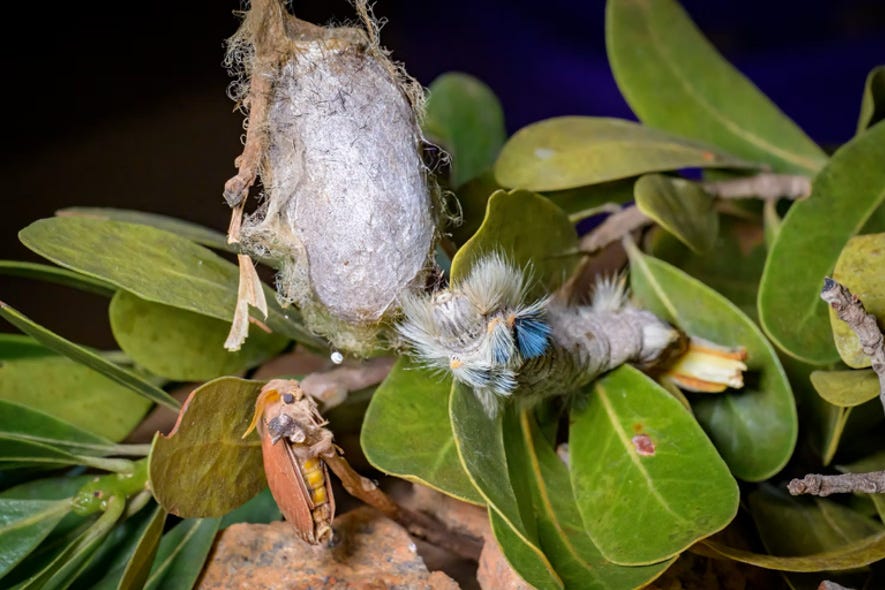
Craig first examined wild silk projects in India, Indonesia, and Madagascar. India showed that silk, enterprise, and conservation could be linked. Indonesia showed the importance of product development. Madagascar offered the combination she was seeking: extraordinary biodiversity, deep poverty, and a cultural history of silk textiles. It was also a country where many conservation projects had struggled, often because local people had been asked to carry the costs of conservation without seeing enough of its benefits.
In 2004, Craig began fieldwork in Madagascar, first at Ranomafana and later near Makira Natural Park in the northeast. She focused on border forests rather than the protected area itself. That distinction mattered. The farmers she hoped to work with lived outside the park, in places where conservation policy, subsistence needs, and economic uncertainty met each day. Wild silk caterpillars were often found in edge habitats, secondary growth, and small farms. That made them suitable for a model built around people’s existing landscapes, rather than around keeping people out.
The program that emerged, Conservation through Poverty Alleviation, International, or CPALI, was never just about collecting cocoons. It involved finding caterpillars and their host plants, raising native species, planting trees, training farmers, and building a workshop where women could turn cocoons, raffia, dyes, and other materials into saleable goods. The products had to be distinctive enough to reach buyers in wealthier markets. The enterprise had to return enough value locally to justify the effort. None of this happened quickly.
Craig is candid about the limits of her early assumptions. She arrived with technical knowledge and confidence. She had to learn that conservation enterprise is not a tidy extension of biology. Markets shift. Equipment breaks. Electricity is unreliable. Shipping is costly. A design that works in New York may not be practical in Maroantsetra. A project that seems logical to an outsider may not fit the rhythm of village life. Farmers needed to see a demonstration site. Elders needed to be consulted. Participation had to happen on local timelines.
Much of the project’s endurance came from the Malagasy team that formed around it. Mamy Ratsimbazafy, first hired as a field assistant and translator, became a central figure and later the director of the local partner organization, SEPALI Madagascar. Lalaina Raharindimby helped lead the women’s artisan program and product development. Over time, the work expanded beyond silk to include raffia, natural dyes, weaving, agroforestry, and biochar. When vanilla prices rose, some farmers left silk for the more lucrative crop. When vanilla prices later fell, the cocoon market offered a fallback for those who remained. The episode showed the fragility of rural livelihoods, and the value of working in a biodiverse landscape with more than one possible product.

Craig’s story is also one of institutional humility. She came to believe that many conservation programs falter because they fail to ask people what they need, or because they treat communities as instruments of a biodiversity plan. In her telling, respect showed up in daily choices. It meant spending money locally, working without project vehicles or boats, renting village houses, using public transport, and remaining long enough for people to believe the project would not disappear after a few years.
After more than two decades, Craig stepped back from day-to-day leadership. She concluded that her management had begun to limit the program’s independence. The transition is among the most important parts of the story. Many founder-led projects weaken when the founder leaves. Craig says she is proud that the work is now financially secure and governed by Malagasy leadership, with CPALI’s role shifting toward fundraising, advising, and helping connect the team to markets.
Craig’s upcoming book, Nature’s Threads, offers an account of what it took to make a small conservation enterprise persist. The work survived market shocks, cyclones, a coup, floods, a pandemic, and the slow work of building trust. Its lessons are hard-won: conservation linked to livelihoods needs time, local authority, product development, and a market willing to pay for more than a raw material. It also needs people willing to stay after the first plan proves incomplete.
The interview with Catherine L. Craig
–––––––– • ––––––––
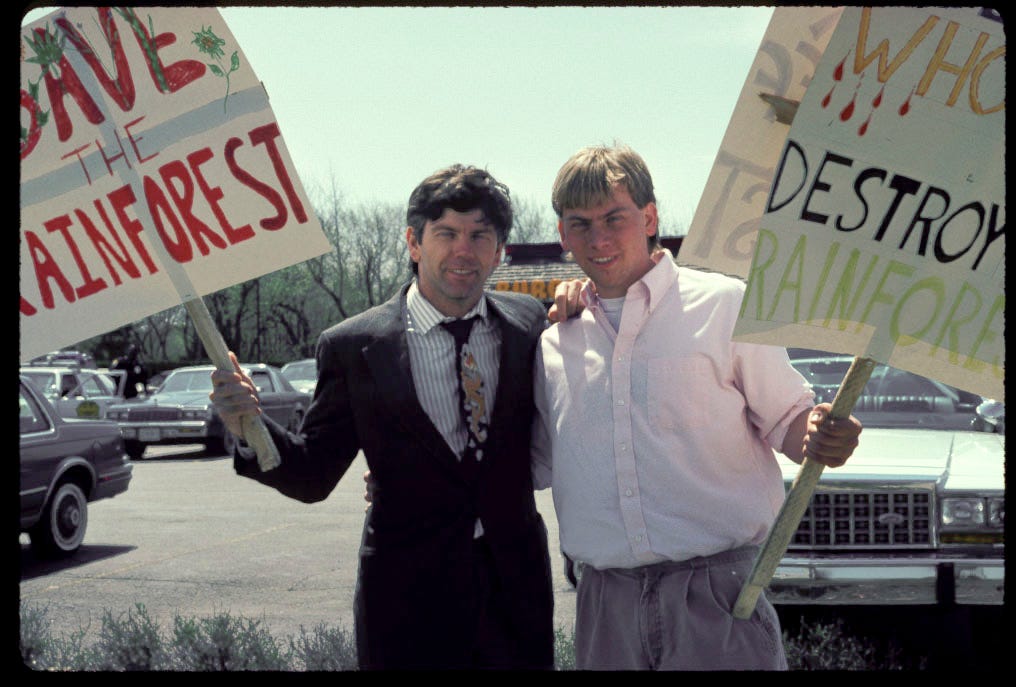
When Rainforest Action Network began in 1985, it had little of what usually makes an organization powerful. It had no large budget, no legal department, no reliable access to politicians, and no formal way to force global corporations or development banks to change. It had Randy Hayes, a wide activist network, a way to connect distant forest destruction to everyday choices, and a willingness to use tactics that many mainstream environmental groups avoided.
David Benac’s new book, Rainforest Radicals: A History of Rainforest Action Network and Transnational Organizing, tells the story of how that combination became effective. RAN’s early campaigns targeted Burger King over rainforest beef, True Geothermal in Hawai‘i, the World Bank over development projects, and Mitsubishi over tropical timber. These were different fights, involving different places, institutions, and coalitions. Together, they show how a small San Francisco-based group helped bring tropical deforestation, Indigenous rights, and corporate accountability into late twentieth-century environmental politics.
Benac, an environmental and public historian of the postwar United States, came to the subject indirectly. He was researching timber-industry history in the Pacific Northwest when he encountered the MacMillan Bloedel papers and a grassroots campaign against clear-cutting in British Columbia’s coastal rainforests. RAN appeared in the archival trail. That led him to Hayes, RAN’s co-founder, then to a larger oral-history project with activists, allies, and contemporaries. The result is a history built around interviews, archives, and a close look at how people organize when formal institutions offer little help.
RAN’s early thinking drew from Earth First!, Greenpeace, Friends of the Earth, and Australia’s Rainforest Information Centre. The group borrowed from each, adapted their methods, and developed its own identity. It used nonviolent direct action, boycotts, media spectacle, and decentralized organizing. It also placed Indigenous self-determination near the center of its mission, at a time when many national environmental groups still treated forests mainly as ecological spaces rather than homelands, cultural landscapes, and political territories.
For RAN, “radical” did not simply mean dramatic protests or a taste for confrontation. It meant trying to identify the causes of tropical deforestation. The group saw forests being cleared through a system that linked multinational corporations, banks, governments, consumer demand, and development policy. Its campaigns were aimed at pressure points within that system. A hamburger chain, a geothermal company, a development bank, and a sprawling Japanese conglomerate became ways to make a global problem visible to people who might otherwise encounter it only as a distant issue.
Visibility mattered. RAN was good at theater. Its activists wore costumes, staged banner drops, organized boycotts, and used humor to keep campaigns from becoming grim exercises in moral instruction. In one of the book’s memorable scenes, activists at a Home Depot protest used the store’s own intercom system to direct shoppers toward rainforest-linked products. The action worked because it translated distant destruction into a consumer setting. It gave shoppers a way to see the link between everyday purchases and forests far from the store aisle.
The organization’s structure mattered as much as its style. RAN relied on Rainforest Action Groups, or RAGs, which operated with considerable independence. Local groups could choose tactics suited to their members, provided they stayed within broad guardrails. That flexibility allowed RAN to hold together a wide range of people, from cautious public-education groups to more confrontational campus organizers. It also allowed national campaigns to appear local, repeated, and persistent. A corporation could ignore one protest. It was harder to ignore a network that could show up in city after city, year after year.
Benac is attentive to the tensions this created. Charismatic founders can energize movements, while also leaving organizations dependent on personality. Grassroots freedom can build commitment, while also making coordination difficult. RAN’s early history is therefore not presented as a simple success story. The qualities that gave the group force also produced instability, conflict, and questions about how a radical network should mature once it begins to win.
The campaigns involving Indigenous communities add another layer of complexity. Benac emphasizes that RAN’s work was most credible when it responded to requests from local and Indigenous groups rather than imposing its own agenda. The Hawaiian rainforest campaign, led by Native Hawaiian organizers with RAN and others in supporting roles, shows both the usefulness and the limits of outside solidarity. Outside allies could bring media attention, money, legal help, and organizing experience. They also had to contend with mistrust rooted in long histories of extraction, colonialism, and self-serving intervention.
Many environmental debates today still turn on leverage: who has it, who lacks it, and how public pressure can be built when governments move slowly or unevenly. Benac does not suggest that RAN offers a ready-made model for today’s climate and biodiversity movements. The political, media, and legal landscapes have changed. Civil disobedience carries different risks. Corporations have become more sophisticated at absorbing criticism. Even so, RAN’s history remains useful because it shows how strategy, persistence, coalition-building, and sustained pressure can give small groups a role in fights usually dominated by larger institutions.
In the interview that follows, Benac discusses how RAN emerged, what made its campaigns effective, where its radicalism came from, and what today’s movements might learn from its achievements and limitations. The story is about rainforests, but it is also about organizing: how people find leverage, how they sustain pressure, and how movements decide what kind of power they are willing to use.
The interview with David Benac
–––––––– • ––––––––
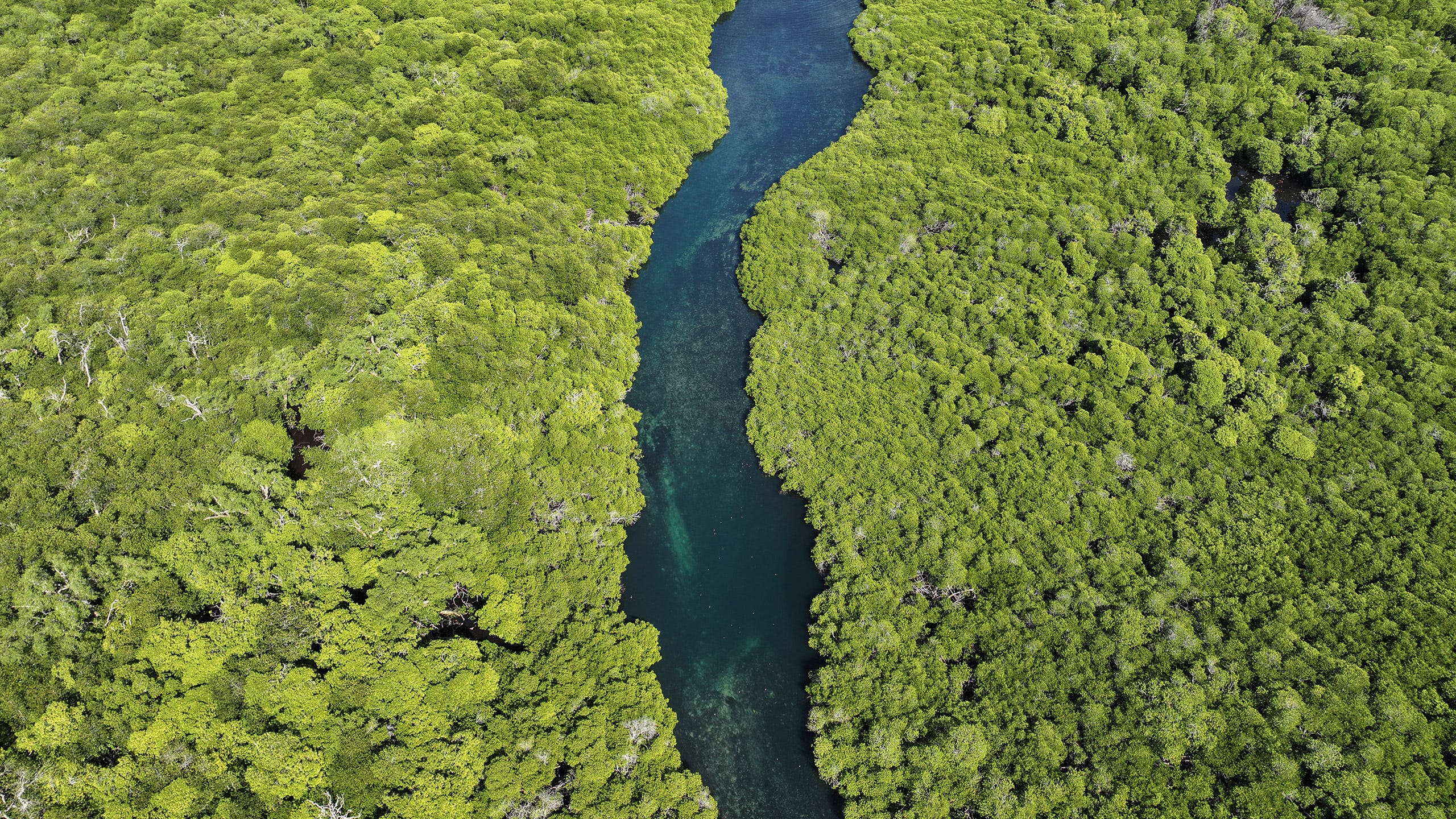
Thomas Crowther’s career has been shaped by large claims about small things. A seed, a patch of soil, a soundscape, a moment of fear, a local restoration project: each, in his telling, can become part of a larger system of cause and effect. His new book, Nature’s Echo, is built around that idea. Feedback loops, he argues, are not just a feature of ecology. They are among the forces that formed stars, spread life across Earth, drive climate change, and may yet help repair damaged ecosystems.
Crowther, a British ecologist, became one of the best-known figures in global ecology while at ETH Zurich, where he founded the Crowther Lab and built a large interdisciplinary research group. His work helped popularize the idea that ecosystem restoration could play a major role in addressing climate change, especially after a 2019 Science paper on the potential for additional tree cover drew worldwide attention, as well as criticism from scientists who warned against simplistic tree-planting narratives. His work also helped give rise to the World Economic Forum’s Trillion Trees initiative, and he has served as co-chair of the advisory board to the U.N. Decade on Ecosystem Restoration. He is also the founder of Restor, an open-data platform that connects conservation and restoration initiatives around the world.
That public profile has made Crowther both influential and contested. In 2024 he was also at the center of a dispute over his departure from ETH Zurich. The university said its decision followed an internal review that raised concerns about professional boundaries, compliance procedures and conflicts of interest. ETH did not reach definitive conclusions on some interpersonal allegations. Crowther has denied personal misconduct, said any procedural failures were unintentional, and acknowledged that he “sometimes blurred the lines between friendship and leadership.” Some former employees welcomed ETH’s findings, while many current and former members of his lab publicly contested the process, describing the investigation as flawed and defending the lab as supportive and inclusive.
The interview that follows is not about that episode. It is about the ideas in Nature’s Echo, and about how Crowther now thinks science, restoration and social change fit together. Still, the controversy gives some of the book’s themes a sharper edge. His book is concerned with how narratives form, how perceptions shape responses, and how systems can move rapidly from one state to another. Those are ecological questions. They are also human ones.

Crowther says his own interest in nature began before he had any sense that he might become a scientist. As a child on holiday in France, he recalls ignoring the other children and watching lizards basking on a wall. When an adult wondered aloud what was wrong with him, his father defended him: “He just loves nature. There is nothing wrong with that.” Crowther says the moment reinforced an obsession. In the book and in conversation, that childhood fascination has become a way of reading the living world as a system of relationships, signals and consequences.
“Feedback loops are pretty magical patterns,” he says. “They happen when a process causes something that reinforces that inciting process.” The definition is simple, and it carries much of the book’s argument. Crowther sees such loops in the formation of stars, the spread of life, the destabilization of the climate, and the recovery of landscapes. Once a loop begins, it can gather force. That force can be destructive, as with warming that accelerates further warming. It can also be regenerative, if the incentives, benefits and emotions point in another direction.
This gives his account of conservation a different emphasis from many restoration narratives. He does not argue that restoration is simply a matter of planting trees or fencing land. “You cannot just stick trees in the ground in places where local people don’t want them,” he says. Recovery, in his view, becomes durable when nature improves people’s lives and those improvements create a reason to protect more nature. A restored forest may support crops, health or local income. Those benefits can then create the conditions for further recovery.
He applies the same logic to positive tipping points. Renewable energy, electric vehicles, regenerative farming, plant-based diets and upcycled clothing matter to him not only as technologies or consumer choices, but as signs of systems beginning to reinforce themselves. Once an option becomes cheaper, easier, more effective or more enjoyable, he argues, growth no longer depends only on exhortation. It starts to draw strength from adoption itself.
Crowther is also interested in less visible signals of ecological change. Bioacoustics, he says, offers a way to measure the complexity of an ecosystem by listening to its frequencies of life, from birds and insects to wind and rain. Sound, for him, is not only data. It also opens the imagination. Healthy ecosystems, he argues, have soundscapes that people instinctively recognize and prefer.
The most personal parts of Nature’s Echo move from ecology into psychology. Crowther opens the book with a story about being bitten by a snake in a rainforest and wrongly believing it was venomous. Fear made his arm go numb, which made the danger feel more real. The loop fed itself until the mistake was corrected. For Crowther, the episode became a way of thinking about environmental fear. Panic, he argues, can narrow agency. Optimism, when grounded in real possibilities, can do the opposite.
That is the central thread of the conversation: humans are not outside nature’s feedback loops. They are part of them. Crowther’s answer to ecological despair is not reassurance, and it is not denial. It is attention to the places where restoration is already becoming self-reinforcing, and to the choices that help such loops gather strength. As he puts it, “Feedback loops do not care about scale.” Small actions, if they connect to the right dynamics, may not remain small for long.
No posts
Comments
Nothing yet. Say the first thing.
Sign in to join the conversation.