
For much of its history, Medtronic grew through a combination of organic innovation and targeted acquisitions. Most transactions strengthened existing franchises or added adjacent technologies in cardiovascular, spine, diabetes, neurological, and surgical markets.
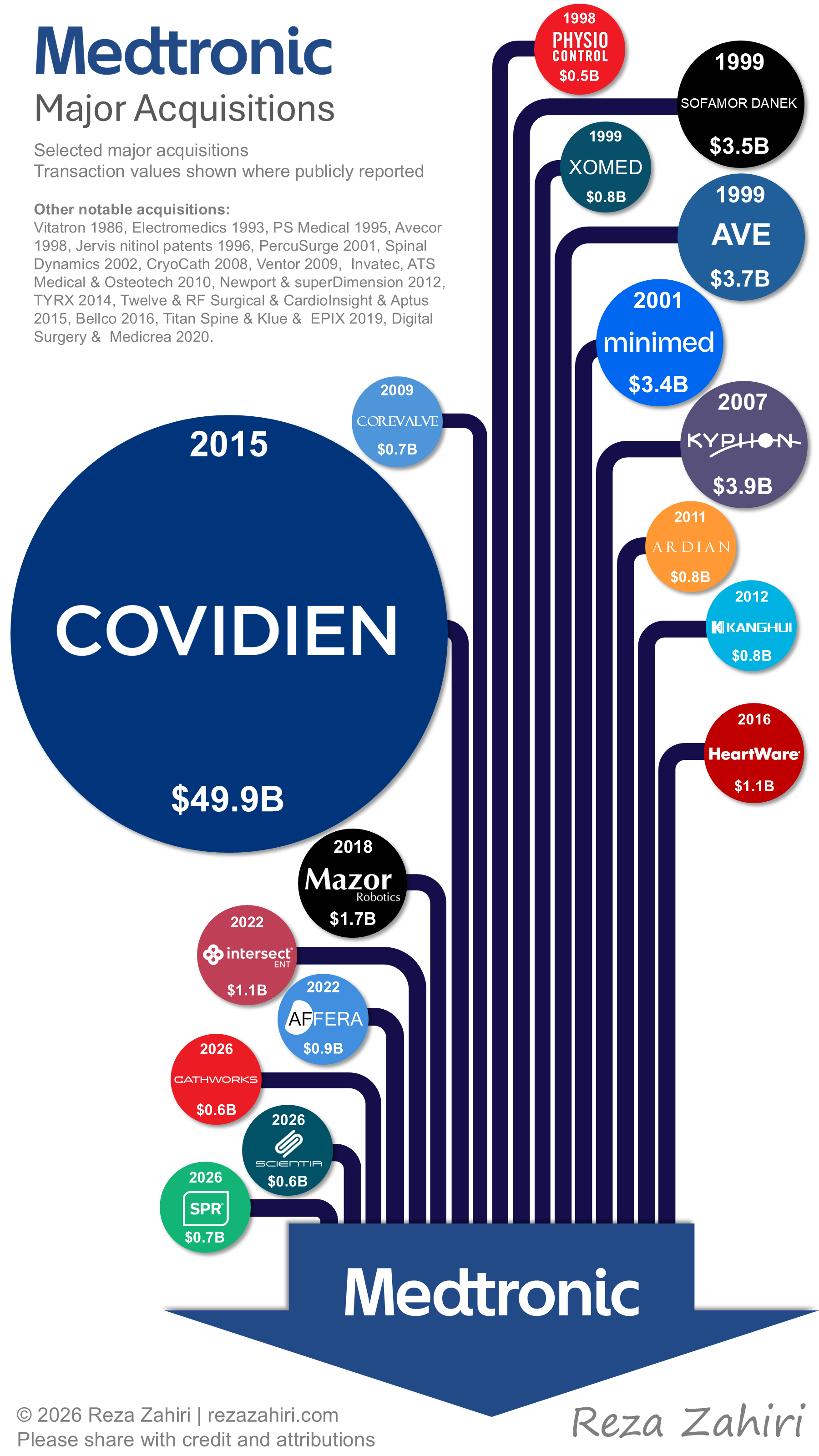
The 2015 acquisition of Covidien represented a major inflection point. Valued at approximately $49.9B at closing, the transaction was dramatically larger than Medtronic’s previous acquisitions and substantially expanded the company’s scale, product portfolio, and global footprint, as well as its overall complexity.
Since then, Medtronic has largely returned to targeted M&A, acquiring specialized technologies that complement established franchises, as well as portfolio pruning to simplify its operation.
Below are selected acquisitions that helped shape Medtronic over nearly three decades:
Strengthened Medtronic’s position in cardiac emergency care by adding leading external defibrillation and emergency-response technologies. Medtronic later sold Physio-Control to Bain Capital, and Stryker subsequently acquired the company.
Expanded Medtronic’s cardiovascular portfolio, particularly in coronary intervention, complementing its established cardiac rhythm and cardiac surgery businesses.
Significantly expanded Medtronic’s presence in spine, helping establish the company as a global leader in technologies for treating spinal disorders.
Established a major position in diabetes management through insulin-pump technology and related glucose-management capabilities. Medtronic spun off MiniMed in 2026.
Strengthened Medtronic’s spine portfolio with minimally invasive technologies for treating vertebral compression fractures and other spinal conditions.
Significantly broadened Medtronic's product portfolio beyond its traditional cardiovascular, spine, and diabetes franchises into areas including surgical technologies, patient monitoring, respiratory care, and other hospital-based products. The combination created one of the world’s largest medical technology companies.
Strengthened Medtronic’s position in computer-assisted and robotic spine surgery by integrating Mazor’s robotic platform with Medtronic’s implants, navigation, and surgical technologies.
Expanded Medtronic’s cardiac ablation capabilities through advanced mapping, navigation, and ablation technologies for treating cardiac arrhythmias.
Broadened Medtronic’s ENT portfolio with localized drug-delivery technologies and treatments for chronic sinus disease. With its recent portfolio pruning and continued tuck-in acquisitions, Medtronic's M&A strategy today looks much as it did before Covidien: targeted deals that strengthen the franchises where it already leads.
No posts
Comments
Nothing yet. Say the first thing.
Sign in to join the conversation.