
Welcome to the latest edition of the Rewilder Weekly. 🦬🌳🐺🌞🌍
This week with the latest rewilder portrait, featuring Kriton Arsenis, founder and director of reLife Earth, - and insightful and inspirational stories from 🇬🇧 the UK, 🇦🇺 Australia, 🇰🇿 Kazakhstan, 🇳🇱 the Netherlands, 🇬🇪 Georgia and 🇮🇪 Ireland.
Wishing you a good week!
Cheers,

👉 If you come across stories you’d like to see featured in a future edition of the Rewilder Weekly, send them to me and I’ll gladly do what I can.

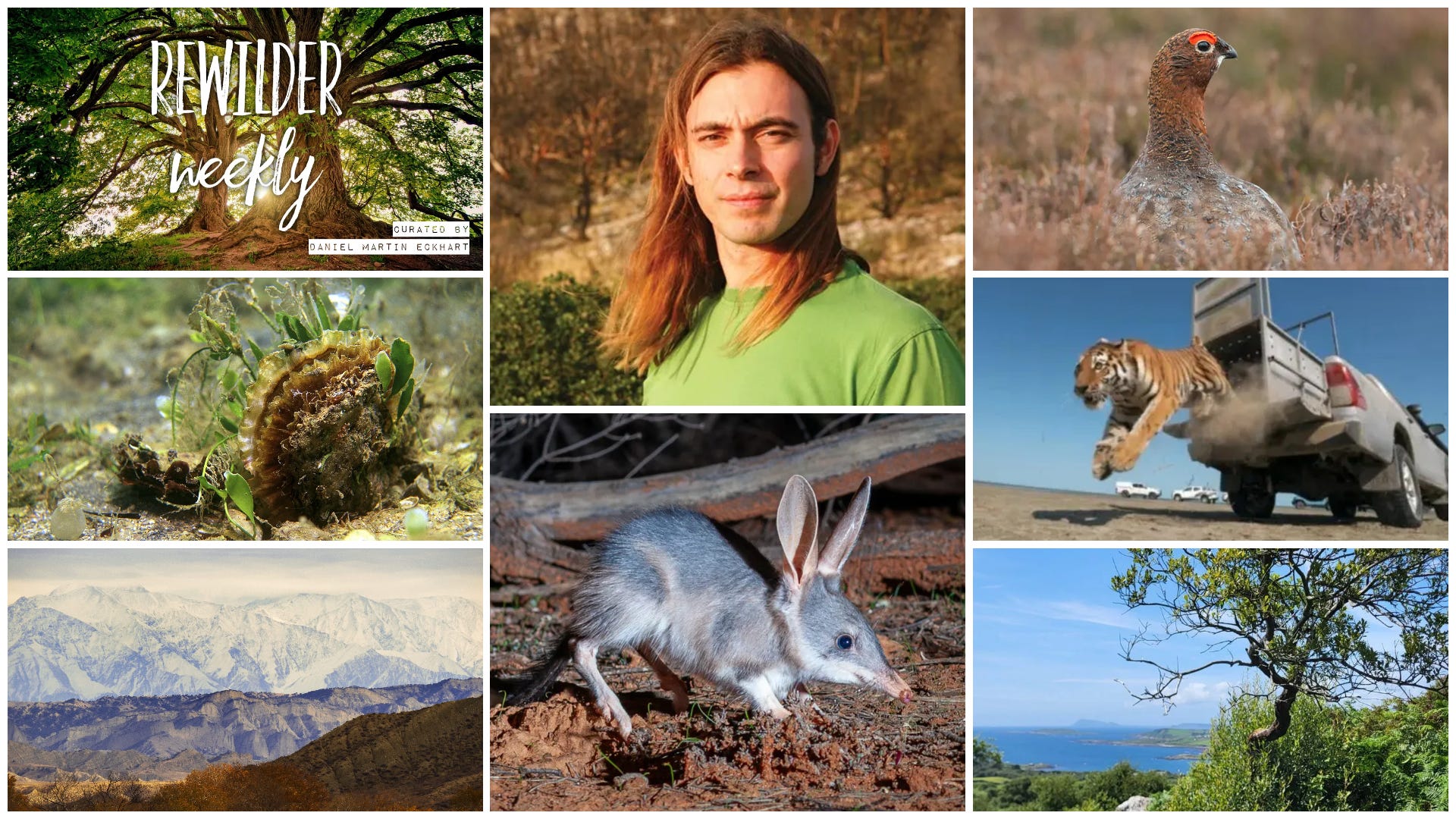
Meet the Rewilders is a series that introduces you to people engaged in the rewilding movement across the globe. Today meet Kriton Arsenis, founder and director of reLife Earth, founder of RoadFree (which is now part of reLife Earth), co-founder of U4Earth, co-founder of Living Cities Earth, and more. He was a member of European Parliament, the Council of Europe and the Greek Parliament to campaign for nature.
What a journey - and what stamina! It’s staggering to read about Kriton’s path from studying economics at Harvard, to working fore NGOs, to all of the above. Quite often, experience leads to concise clarity. I love how he packs his core beliefs and values into three crisp sentences: “Life on Earth. Whatever strengthens the web of life is good. This is my compass.”

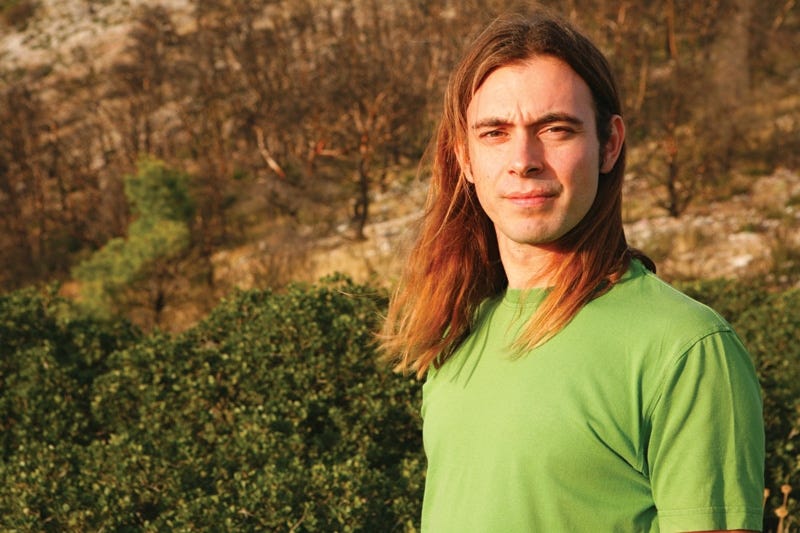
The fires that rampage across the globe are not just devastating for everyone affected, they are also - insidiously so - used to spread misinformation. When catastrophic events happen, people have always been quick to look for a scapegoat to blame - for industries and lobbies, a go-to scapegoat is rewilding. The claim is always that rewilded landscapes provide more fuel for fires. That is questionable, at best. While landscapes that are allowed to recover will grow more fauna, they will also restore soil and retain more water.
This is exactly what must happen on a massive scale - and this can and should happen with active fire management. Rewetting landscapes is key - and rewilding is doing exactly that by bringing back wetlands, by reintroducing beavers, by freeing rivers. The climate crisis with its extreme weather conditions is not going away. Refusing to restore landscapes is disastrously negligent. Anyone telling you that rewilding is to blame is ignorant at best, deceptively callous at worst. Rewilding is actively working toward a healthier nature, and that very directly means a wetter nature. The world needs more rewilding and fewer scapegoaters.
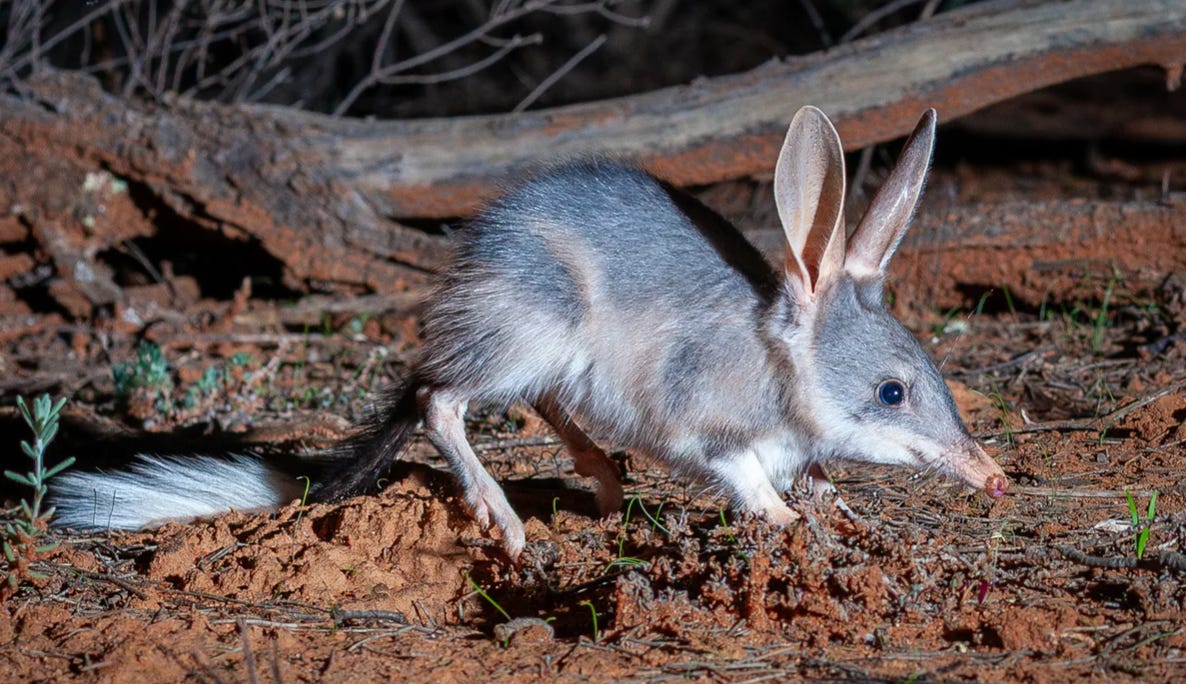
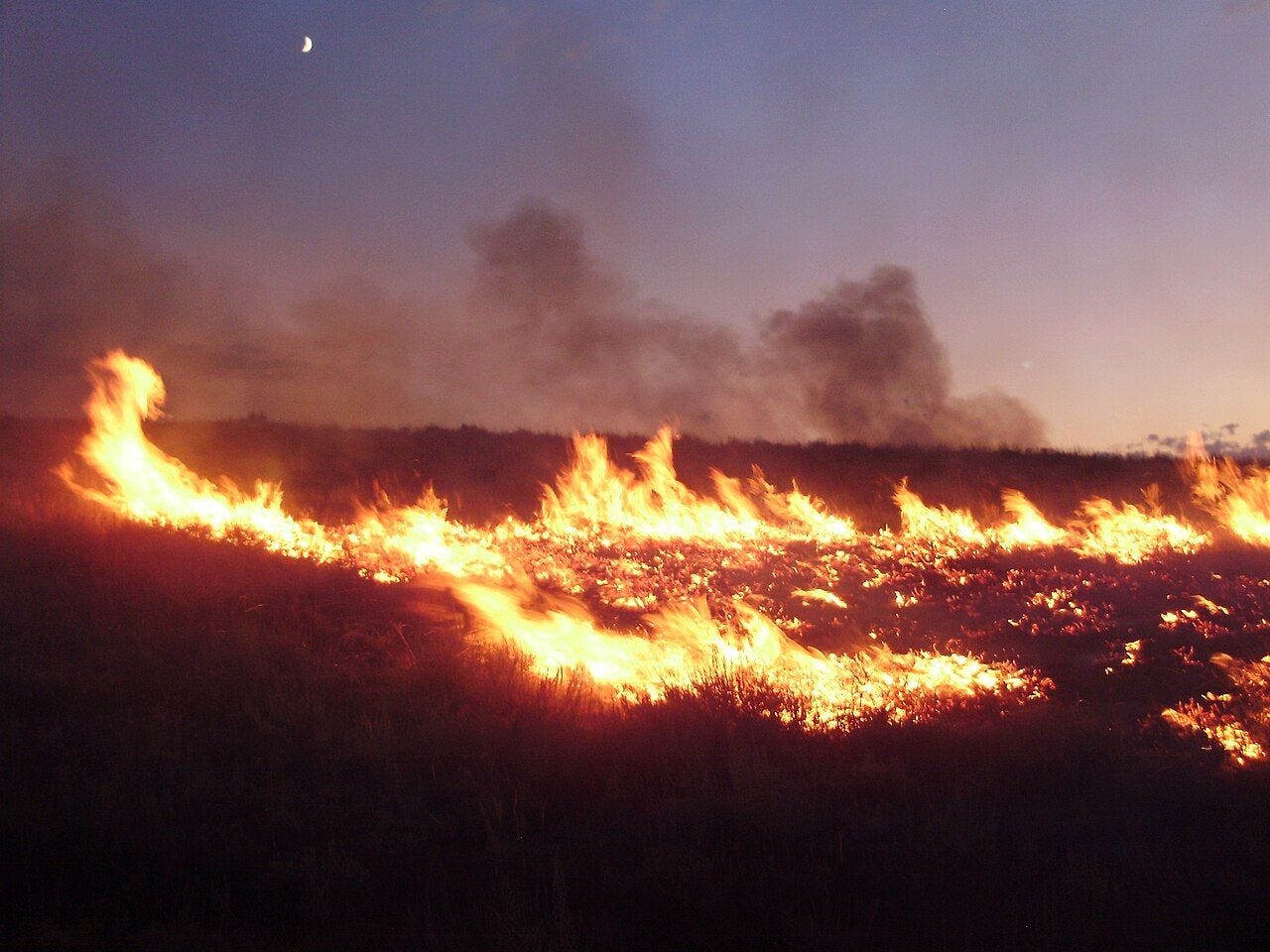
What you’re looking at in the above image is a macrotis, a marsupial better known as a bilby. These and other such critters are excellent diggers - and that digging has a hugely important impact on nature - why? Because they open up the heat-packed soil with hole after hole and when it rains, that’s where water goes and that’s where seeds go. From countless millions of such burrow holes, in time new plants grow, creating new food sources and habitats for more of nature’s many species … but what if those marsupials are gone?
The Global Rewilding Alliance has just featured the work of For the Love of Wildlife’s Project PanGaia - it uses solar-powered rovers to dig thousands of holes in degraded outback lands. These lands had become dust bowls where most of flora no longer had a chance to grow. Burrowing marsupials “have been severely diminished or entirely lost from the landscape due to overstocking, land clearing and increased predation by invasive species such as feral cats and foxes.”
The rovers are a kickstarting measure. The plan is straight-forward - once these these holes have restarted natural processes, both flora and fauna will return - in fact, the first returning marsupials have already been sighted. It's work that’ll take years - but in time there’s no reason why a vibrant population of burrowing marsupials - like those bilbies - shouldn’t be able to make a return.
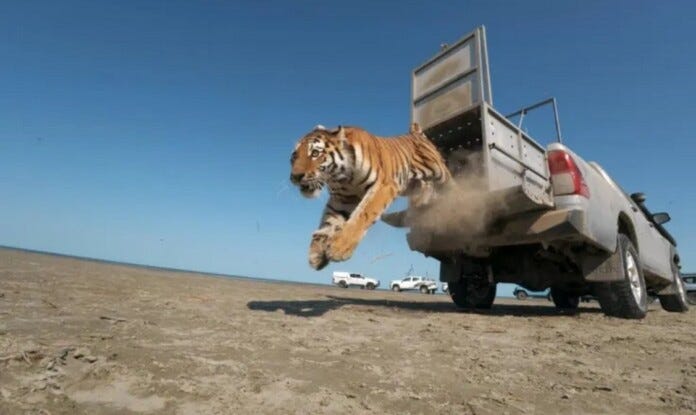
The tiger vanished from Kazakhstan in the late 1940s for all the usual reasons: intensive agriculture leading to habitat destruction, eradication programs and the mass hunting of prey the tiger relied on. And so, by 1948, the species was gone. The Guardian shares a clip of the above photo, when the tiger leaps from the truck and races off into freedom … watch it, a powerful sight.
What was driven to regional extinction - and then complete extinction by the 1970s - was the caspian tiger. The amur tiger is a close relative and so a collaboration with Russia eventually brought 4 tigers to Kazakhstan. What makes this a great story is not the tiger, really, but the fact that Kazakhstan put in the groundwork over the course of ten years before reintroducing that fearsome top predator. Bukhara deer, the saiga antelope and the kulan (a wild ass) were re-established so that the tiger finds the prey it needs, and security measures have been put in place with rural communities so that coexistence is the agreed-upon way forward.
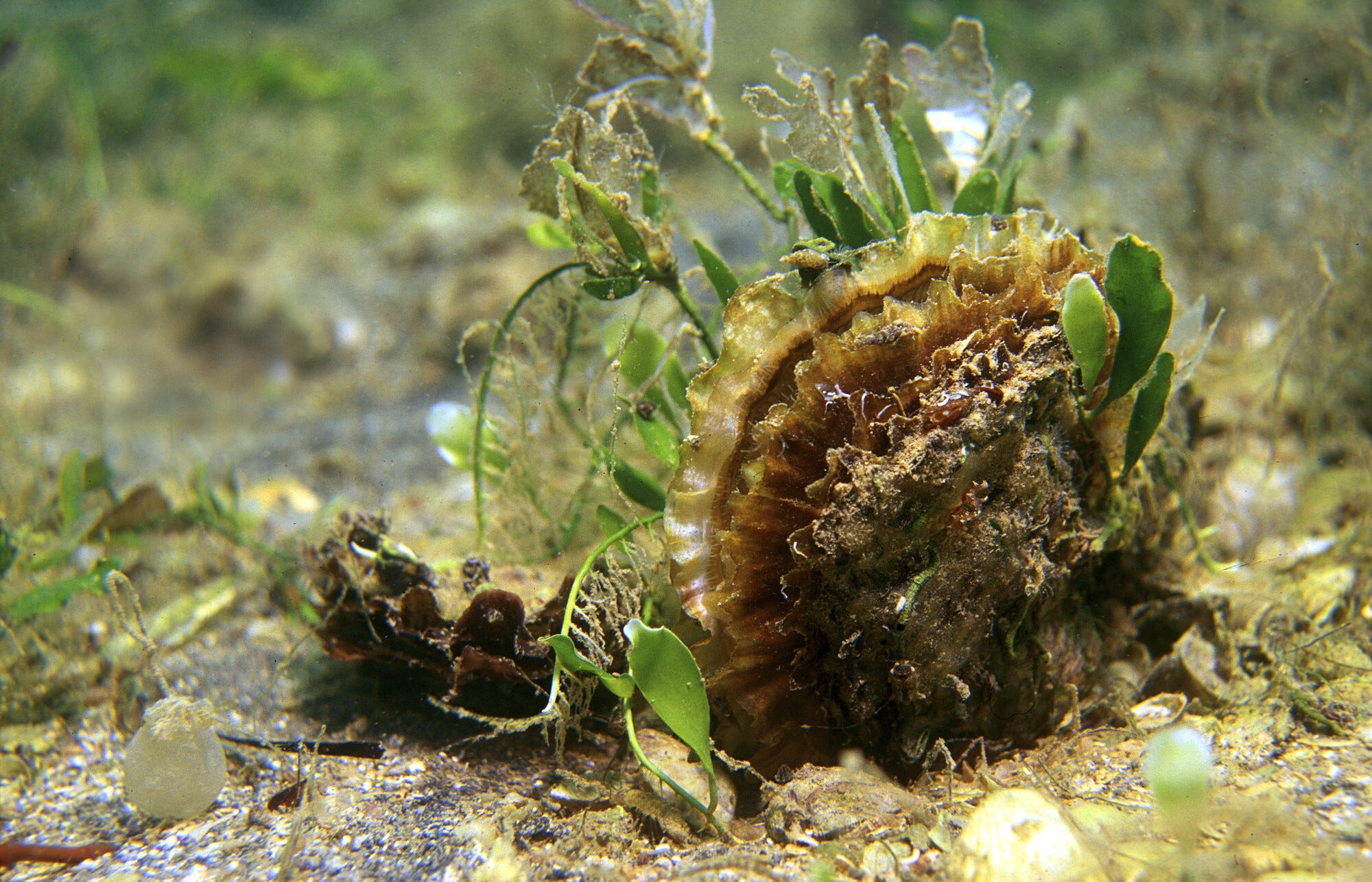
Rewilding Europe reports on the work of Dutch start-up Oyster Heaven, which is supported in their efforts with funds from Rewilding Europe Capital. For most people oysters are just oysters. Small things and surely not particularly consequential in the grand scheme of things. But oysters are hugely consequential - they are ecosystem engineers. They used to form vast reefs that were essential habitat for many species. But we’ve harvested them to extinction in many places, we’ve also polluted them out of existence.
George Birch, founder of Oyster Heaven, says, “When you restore an oyster reef, you’re not simply bringing back one species — you’re rebuilding the foundation that hundreds of other species depend on. By focusing on oysters, we can trigger a cascade of benefits, from richer biodiversity and cleaner water to more resilient coastlines and healthier fisheries.”
Oyster Heaven has come up with a patented approach, that of modular clay structures that are already seeded with juvenile oysters before they are deployed. Very interesting to see and read about - and I wonder whether this would be something worth taking up by the fine folks of Seawilding and Highlands Rewilding in Scotland.

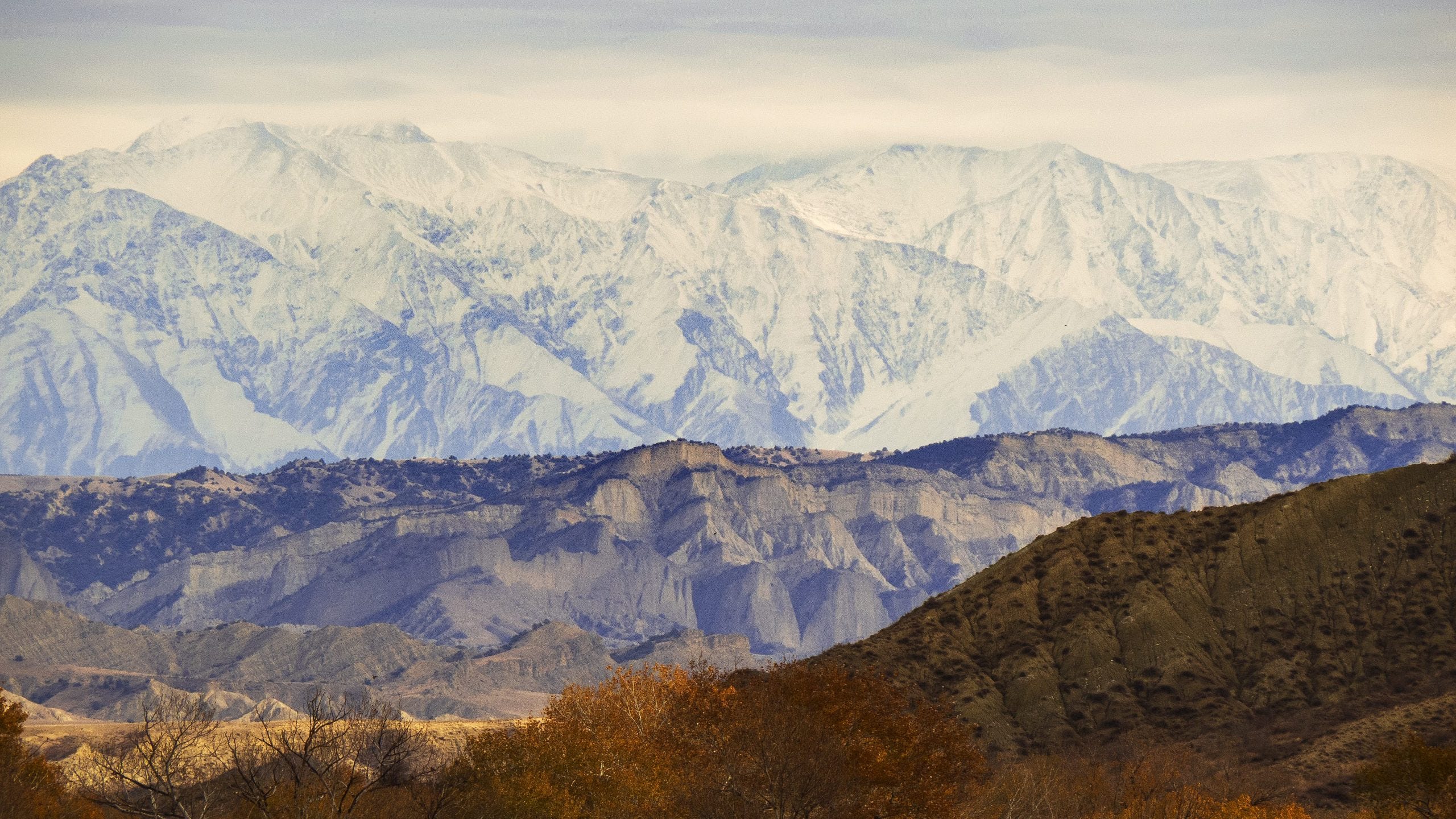
This is a wonderful project supported by the Endangered Landscapes & Seascapes Program. It tells of the overgrazed Iori River Valley and the cultural and traditional importance of sheep for many in the remote region. Most importantly, it tells of taking time, of going there, of being there, of listening instead of talking and telling locals what to do. Such an approach created the solid foundation of trust that led to great results.
Together with sheep farmers, SABUKO (Society for Nature Conservation) came up with plans and executed on them. “Over their three-year funding period, SABUKO was able to implement rotational grazing schemes across 4,500 ha and reintroduce seasonal flooding to 11,600m² of floodplain forest by securing water releases from the Dali reservoir. Water infrastructure has also been installed for livestock – including 13 ponds and one well – to reduce pressure on sensitive floodplain zones.” The project began in 2021, now flora is recovering and fauna is seen returning - and another grant by ELSP allows SABUKO to expand their work in the region.

On the occasion of the release of the “An Irish Atlantic Rainforest” documentary (watch the trailer), the Irish Examiner published a new piece about the life and work of Eoghan Daltun and how, over the course of years, he’s helped revive and restore the patch of Atlantic rainforest he had purchased in 2009. Today Eoghan Daltun is a key voice in helping Ireland as a whole begin to restore what it once had - and on a scale that’s entirely doable.
A key point the article makes more than once is that Eoghan didn’t show up with wealth and imposed himself. Farming lobbies often jump at the chance to pitch farmers against “elites”: “What makes his project interesting is that he also has a herd of Dexter cattle. Daltun is not some millionaire libertarian who bought a farm and stuck up a ‘KEEP OUT’ sign. The last thing hard-working farmers need is some elitist in a Patagonia fleece giving them a TED Talk on how he treats the country as his luxury playground or pet ideological project.”
Good article - and a documentary I look forward to watching!
👉 And here to read Eoghan’s ‘Meet the Rewilders’ portrait
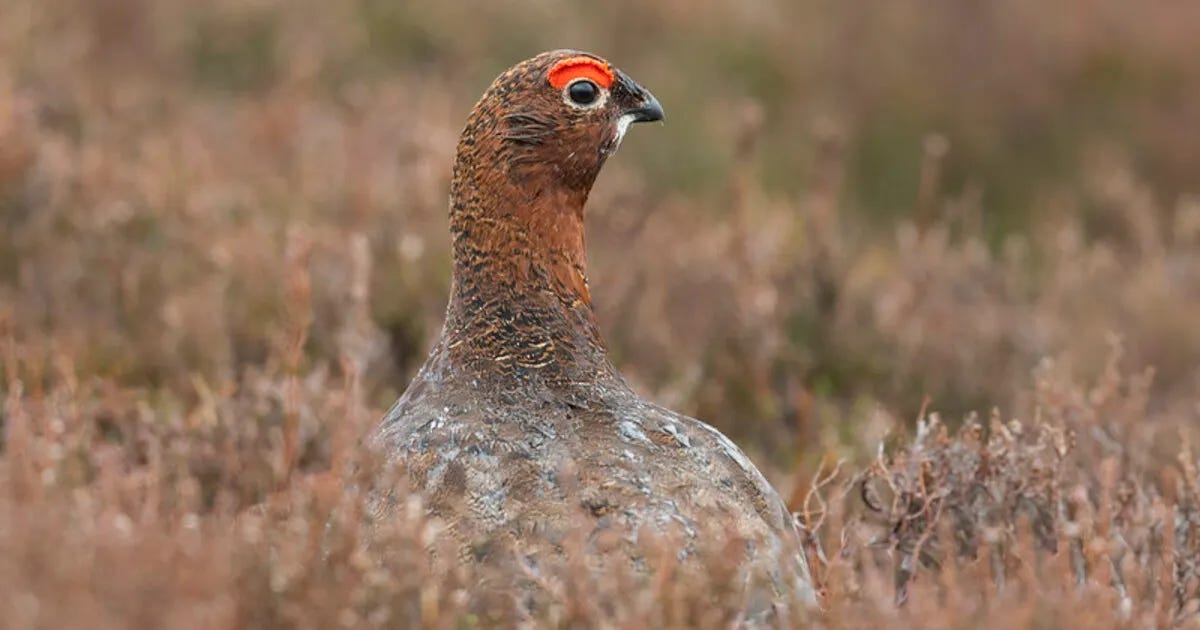
☝️ You may wonder why, in a forum about rewilding, I occasionally focus on the world of shooting estates and hobby-hunters. The thing is that rewilding and leisure hunting are clearly pulling in opposite directions. Rewilding is about a new balance between humanity and nature, and it is very much about a lived respect and care for nature … and that, of course, includes animals. Whereas shooting estates and hobby-hunting are, regardless of what smokescreens are put up for us, about an intentionally maintained imbalance for the purpose of exercising their passion for killing animals.
The above title isn’t mine - it comes straight from the Scottish Greens party on the occasion of the inglorious 12th. What en-masse-grouse killers lovingly call “Glorious 12th” - the day when the killing season for red grouse begins.
Ariane Burgess MSP says it perfectly, “After another summer in which we have seen the enormous destruction that wildfires can cause, we should be restoring our nature and making our countryside more resilient to the climate crisis, not intensively managing vast landscapes to produce more birds to be shot. Scotland’s land is one of our greatest assets. It should be supporting thriving rural communities, restoring nature and tackling the climate crisis, rather than serving as a private playground for the wealthy few. The real glorious future for Scotland’s moors would be seeing wildlife flourish on them, peatlands restored and rural jobs created through the recovery of our natural environment.”

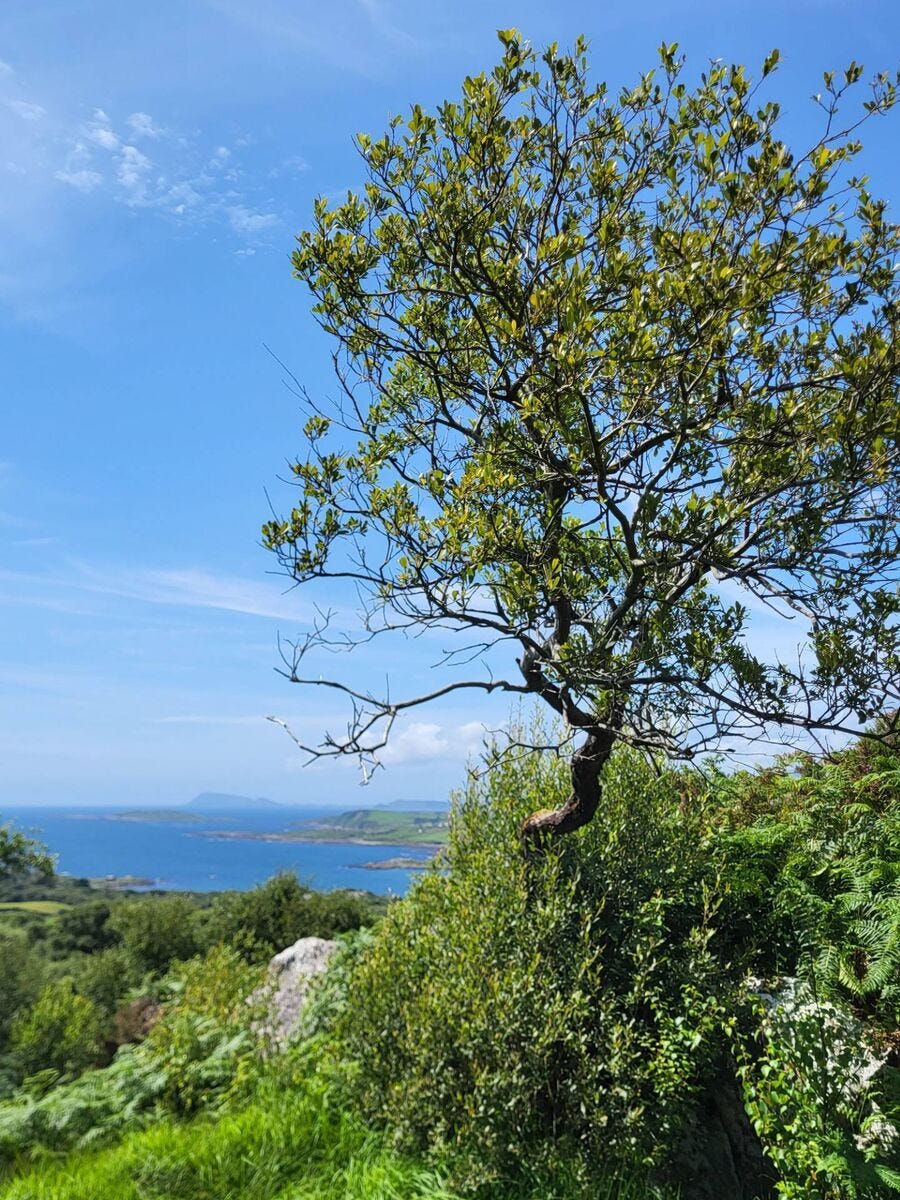
To conclude this week’s edition, rewilding legend and Trees for Life founder Alan Watson Featherstone shares with us a bit of his iconic photography that often takes a look at nature in a way that’s far closer to what we ordinarily perceive in passing. Alan takes time - as we all should.
In his words, “If everyone would take the time to look at & appreciate Nature more, instead of focussing on 'endless economic growth', political infighting, wars etc., the world would be a much better place.”
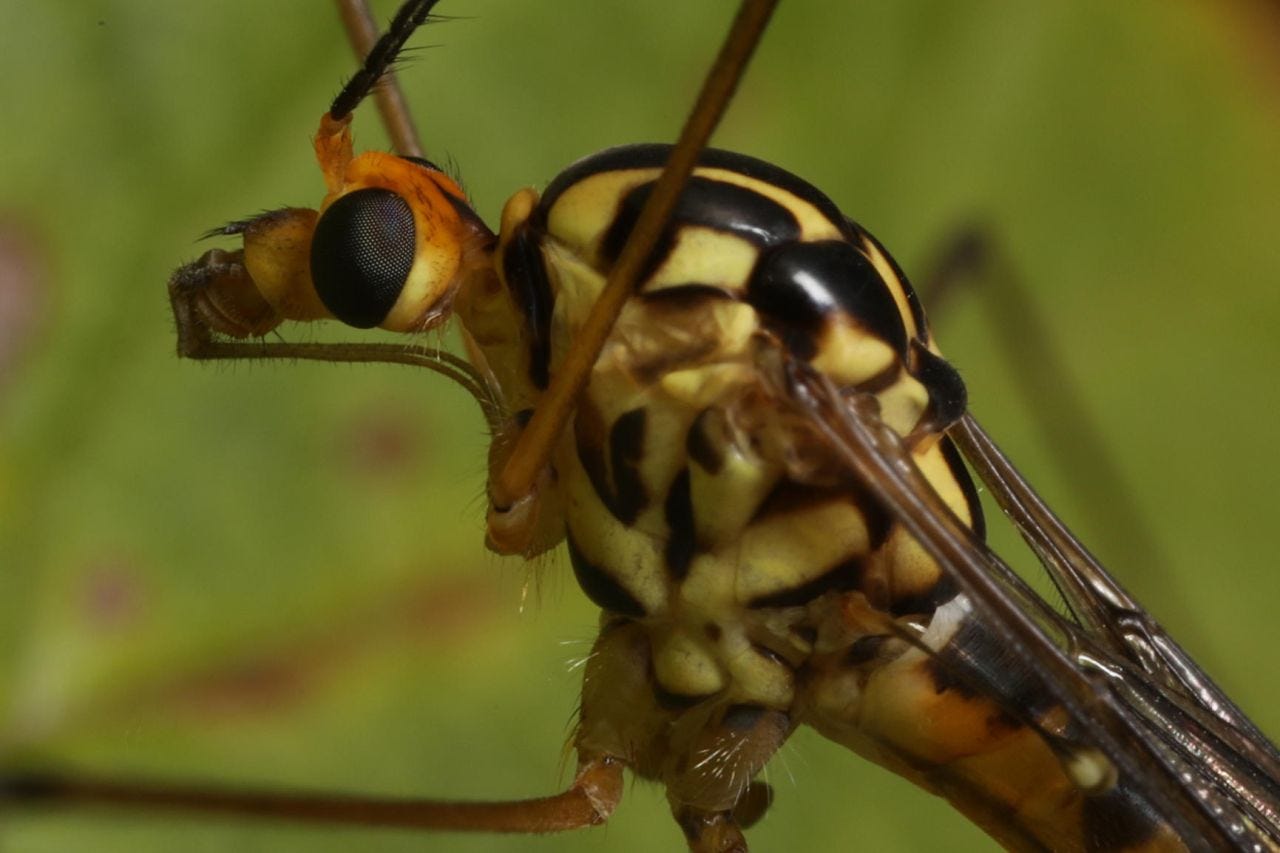
To find out more about Alan, his public speaking, writing, photography and more, visit him at alanwatsonfeatherstone.com. And if you feel like reading about my fantastically unique day with him in Glen Affric, go here.
Glad you’re here, reading the Rewilder Weekly. Share the stories, write your own (and let me know about it), engage with others. Let’s continue to reach out, inspire and activate ever more people around the world. The rewilding movement is growing, and with all of us pitching in, it’ll grow a great deal more!
That’s it for this week’s edition. Eager for more rewilding insights?
get inspired by the lives, decisions, challenges, beliefs and hopes of passionate rewilders with the Meet the Rewilders portraits;
connect with these organizations - sign up for newsletters and support them in any way you can;
join these events - conferences, online seminars, rewilding days and weeks to immerse yourself and learn from the experts;
read these books - a selection from Foreman to Macdonald, and from Tree to Daltun, Hetherington and Bowser;
listen to these podcasts - it’s inevitably inspiring when the likes of Peter Cairns, James Shooter, Ben Goldsmith and Brooke Mitchell talk to the pros in the field;
and check out these resources - explore the principles, ways of funding, research publications and personal ways to start rewilding.
And, of course, connect with and follow the many passionately engaged rewilders. Let’s keep growing the movement! 🦬🌳🐺🌞🌍
Go ahead, do it! 😊 I love comments and you can ask me anything (literally). You can also let me know about projects you come across, article you think I should share - and feel free to throw in tough questions, too - spice of life!
Oh, and please do click the ❤️ (like) button, too. The more ❤️, the more these posts rise in Substack’s algorithm - which means more and more people will discover rewilding, will learn about it, will engage around it, and hopefully will become active rewilders before long. Thanks!
Thanks for reading The Rewilder Weekly! All new editions and articles are free, so share to your heart’s desire.
Comments
Nothing yet. Say the first thing.
Sign in to join the conversation.