
1
You might have heard of my Oberon System 3 port to the Raspberry Pi. On my way to the ESP32 port, I now migrated the Project Oberon System to a RISC-V virtual machine.
Project Oberon 2013 was Wirth’s retirement project, where he even implemented his own processor architecture on an FPGA, which he called RISC-5. This is not only a funny name coincidence, but the Project Oberon System is also much leaner and easier to migrate than the full Oberon System 3 with its > 350 modules.
So if you are interested in my RISC-V port, see GitHub - rochus-keller/OberonSystem at op2-rv32 · GitHub
A 13 year old system might not be that retro (though Wirth started from the 1992 version), but if you want to run the 26 years old Oberon System 3 on a Raspberry Pi, have a look at GitHub - rochus-keller/OberonSystem3Native: This is a version based on v2.3.7 running on emulated PC i386, native Raspi Model 3b and Zero 2, and eventually Olimex ESP32-P4-PC, using existing bootloaders instead of Oberon0 · GitHub instead.
5 Likes
amenjet 2
That is very interesting. I’ve had dealings with Oberon for quite a while now. I used it in work in the 1990s, a bit later I ran the AOS and Bluebottle OSs, and I also have an Oberon machine somewhere that someone (I can’t remember who) created, around 2010 I think. Good stuff.
Rochus 3
Wow, I never met someone who used oberon for work. What did you develop on it? With “Oberon machine” do you mean a Ceres?
oldben 4
I have one too. Tried it but never liked the graphic interface.
They don’t seem to make the FPGA card any more.
I worked on mobile phones for Technophone (who were bought by Nokia, so I was working for them for a while). I made a phone configuration utility for dealers in Oberon. It had a very small memory footprint which was useful at the time.
I got.the wrong name, it’s an oberonstation I have.
Here’s mine:
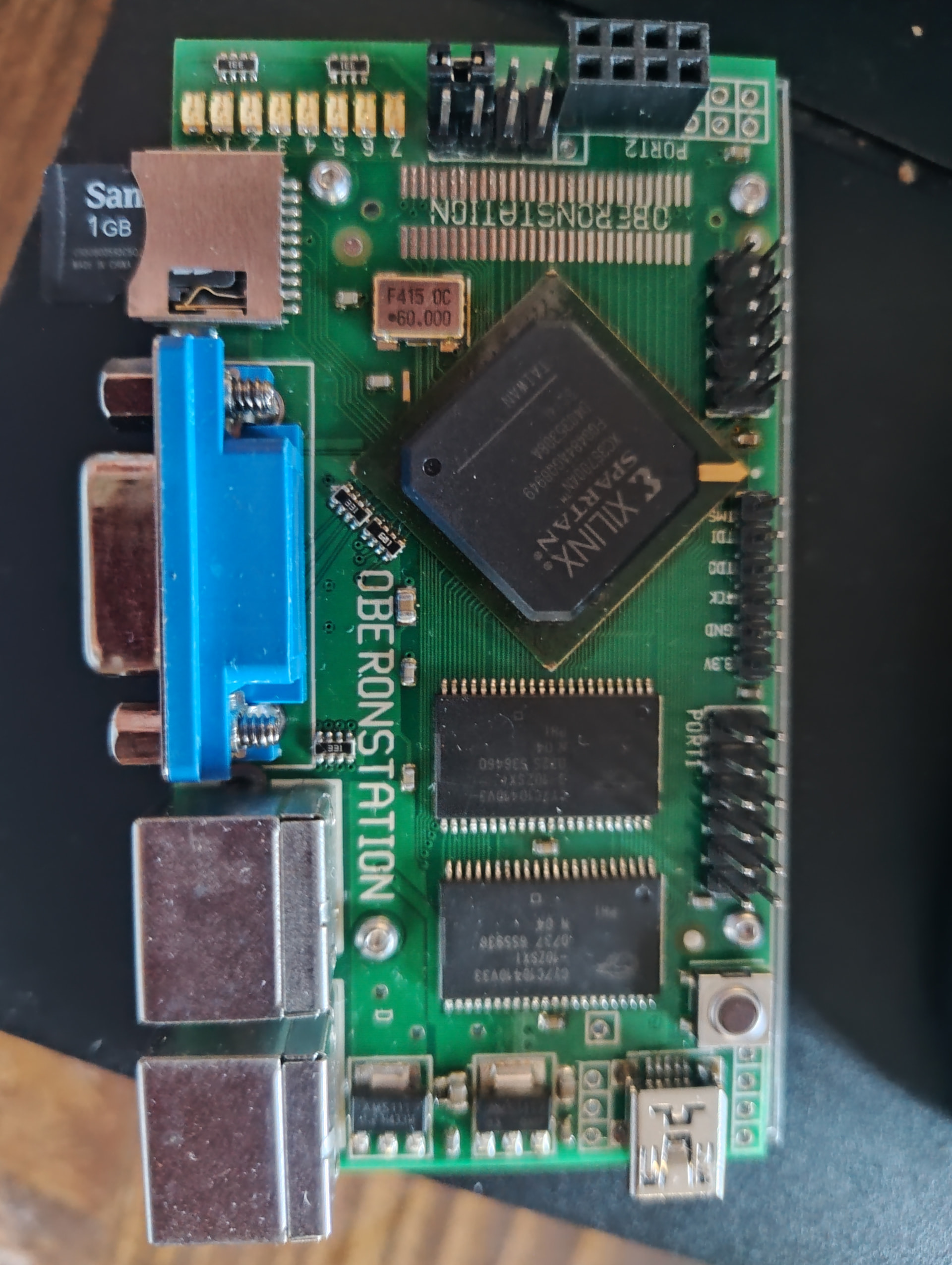
I power it up now and again, but haven’t had much of a chance to use it properly. The last time I tried to boot from AOS or.bluebottle that didn’t work, which is a shame. It was fun having a machine that booted into aos
2 Likes
amenjet 6
Ooh! Which one do you have? I got the name wrong, as you can see above.
oldben 7
I have a pepino 1.1. Alas with it being so small, I seem to missing hardware.
Rochus 8
That’s amazing. Wasn’t aware that it was used anywhere outside of academia. And I neither met an OberonStation in the wild, though I have heard of it.
Do you mean a Papilio?
oldben 10
That is what the card label reads. Think it was $99 or so 10 years ago. I seem to be missing the Wi-FI adapter.
Since any book on Oberon is $150 or over I never did follow up on it.
Web store is here with Oberon. The page is up but not sure if the store is still open.
web store
Rochus 12
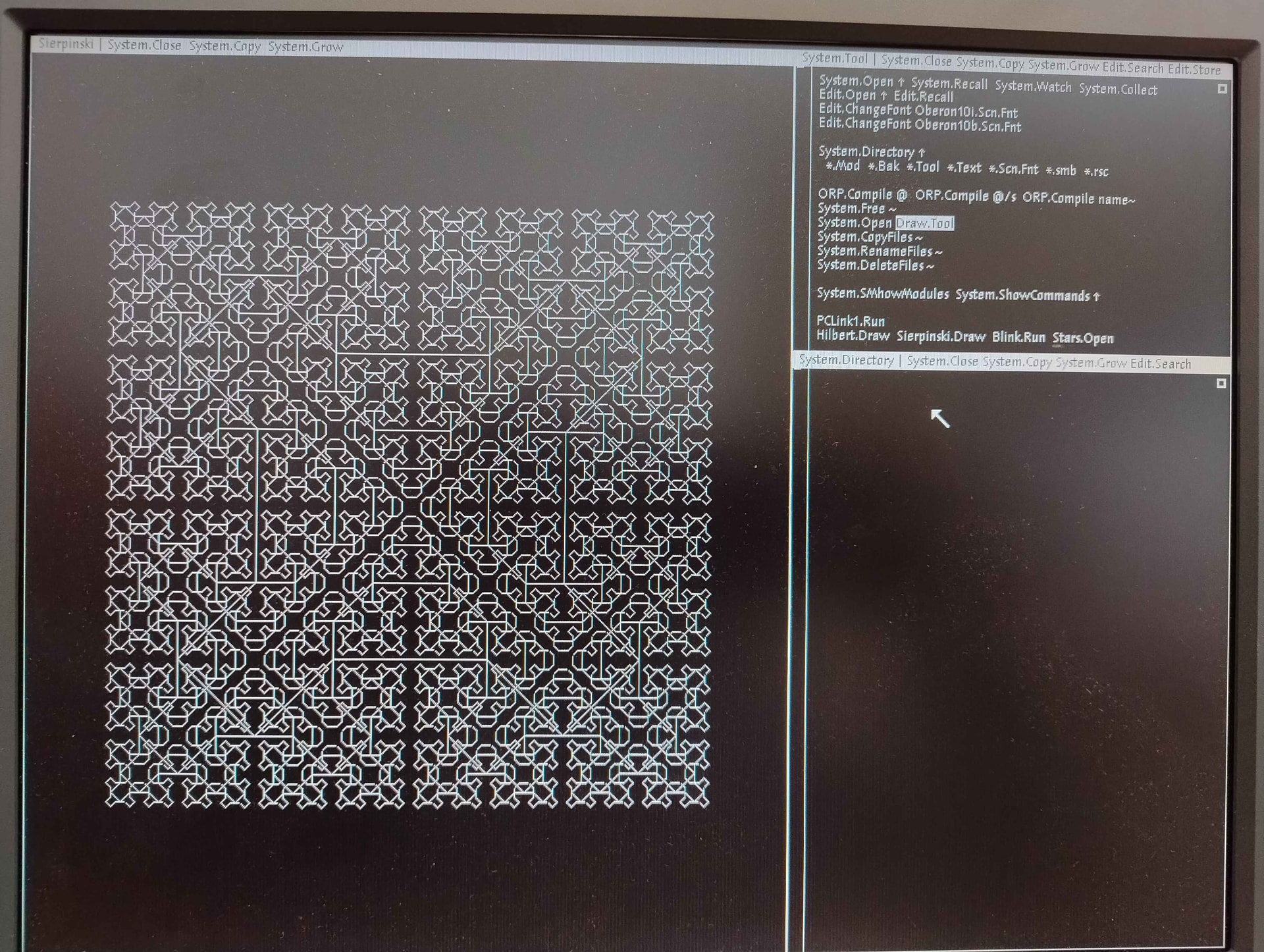
Wow, this is cool. Looking forward to doing the same with my Olimex ESP32-p4-pc board.
Starlet 13
Incredible, also, that font type is really beautiful.
Might you happen to know what it is called?
amenjet 14
I think this is what you are after:
'The most commonly used families are the proportional fonts Oberon and
Syntax, both available in the sizes 8, 10, 12, 14, 16, 20 and 24 points (1/72
inch), and in the styles i (italic), m (medium bold) and b (bold). Oberon is a
family of typefaces that was specifically designed for the Oberon system by
Hans Meier [Caf96]. This typeface combines in a unique manner typical
elements of antiqua and modern typefaces. The Syntax typeface family was also
designed by H. Meier. ’
from:
1 Like
amenjet 15
Also found this while searching for that:
And about Nicklaus Wirth:
“Whereas Europeans generally pronounce his name the right way (‘Nick-louse Veert’), Americans invariably mangle it into ‘Nickel’s Worth.’
This is to say that Europeans call him by name, but Americans call him by value.”
Adriaan van Wijngaarden
IFIP Congress, 1965
I’ve heard it before but it always makes me laugh.
1 Like
scruss 16
Meier was an extremely productive typographer. Samples of most of his work are here: Hans Eduard Meier. Outline versions of the Oberon and Syntax are available from the usual suspects at the usual $$$.
Comments
Nothing yet. Say the first thing.
Sign in to join the conversation.