
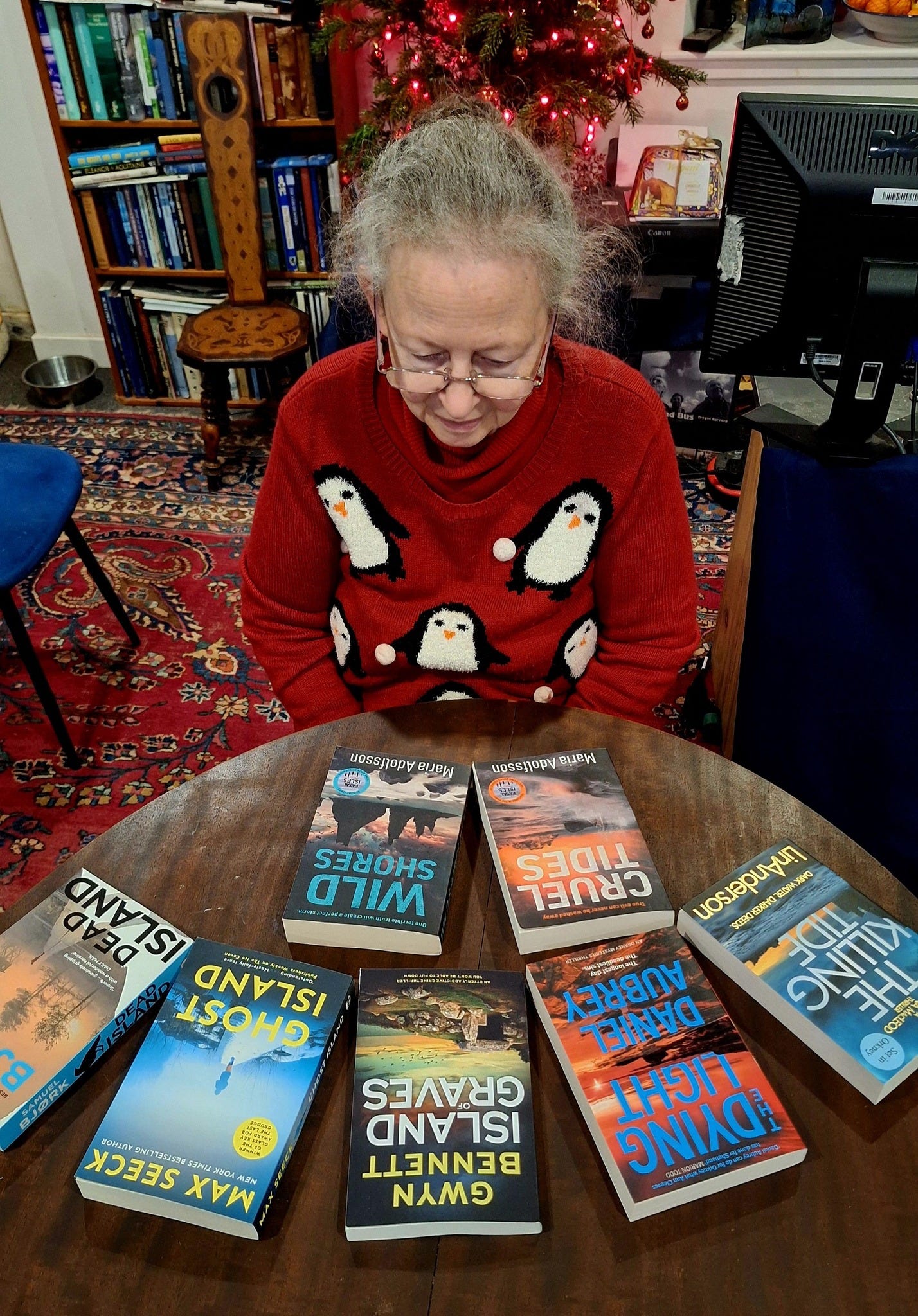
Looking for some reading material? Read on!
The lure of the island is one of the most enduring obsessions in stories, a condition sometimes diagnosed as “islomania.” From the redemptive shores of Robinson Crusoe to the magical thresholds of Shakespeare’s The Tempest, we have long viewed these tiny patches of land as laboratories of the soul. They are places where civilization is stripped away, and characters are forced to decide who they really are.
But if traditional literature sees the island as a place for a “fresh start,” modern crime writers have a much darker idea. In the world of “Island Noir,” particularly across the bone-chilling waters of the North Atlantic and the Baltic Sea, the island isn’t a paradise where you find yourself, it’s a cage where your past finally catches up to you.
Let’s look at how today’s best crime novelists have taken the classic island tropes and turned them into something far more intense, claustrophobic, and addictive!
The Rules of the Island: Why We’re Trapped
To understand why island crime fiction feels so high-stakes, we have to look at the unique “rules” of being on an island. Scholars of “nissology” (the study of islands on their own terms) point out that islands are usually defined by being bounded, remote, and small.
In a classic mystery, these traits create the ultimate “closed place” investigation. While a “locked room” mystery is a clever puzzle, a “closed place” like an island is a psychological nightmare. Because the territory is physically separated from the mainland by a “broiling ocean,” the list of suspects is strictly limited to who is already there. The murderer isn’t a mysterious stranger; they are “one of us”, a neighbor, a friend, or a family member. This proximity turns a beautiful sea view into a daunting trap, especially when the only bridge, ferry, or seaplane is cut off by an approaching storm.
Northern Atlantic Noir: The “Unflinching Gaze”
The Scottish “Tartan Noir” tradition has mastered the use of the island as an active predator in human drama.
Ann Cleeves and the Shetland Illusion: In Raven Black, the opening of her famous Shetland series, Cleeves shatters the myth of island safety. One character claims, “This is Shetland. It’s safe. Everyone knows everyone else.” But Cleeves shows that this “knowing” is actually a claustrophobic “unflinching gaze.” In a small community, every secret is noted and every deviation from the norm is judged. Detective Jimmy Perez, an islander himself, knows that his neighbours can be just as cruel as any mainland criminal. The series has become a massive BBC hit, and Cleeves’ ability to turn the “deceptively alluring landscape” into a scene of gritty crime earned her the CWA Diamond Dagger in 2017.
Peter May’s Hebridean Resentment: In his Lewis Trilogy, Peter May uses the bleak Outer Hebrides as a mirror for the protagonist’s inner turmoil. In The Blackhouse, Detective Fin Macleod returns to the Isle of Lewis only to find that the island’s isolation has bred deep-seated resentments that have simmered for decades. May’s work was so well-received in France that it won the Cezam Prix Litteraire, with critics hailing it as a “masterpiece” for its evocative sense of place.
Daniel Aubrey’s Orkney Secrets: In the recent hit Dark Island, a winter storm on the Orkney coast doesn’t just trap the characters, it exhumes human remains. This forces a neurodivergent reporter into a cat-and-mouse game with a killer watching from the shadows. The book’s authentic atmosphere helped it become a Scottish bestseller and earned it a shortlist spot for the McDermid Debut Award 2024.
The Icelandic Laboratory: From Sagas to “Nordic Blue”
Iceland provides perhaps the most specialized environment for island noir, blending modern police work with ancient sagas and folklore.
Ragnar Jónasson and the One-House Island: In The Island (part of the Hidden Iceland trilogy), Jónasson takes isolation to the extreme by setting the story on Elliðaey, an island accessible only by boat that contains just a single hunting lodge. Four friends visit for a reunion, but only three return. Jónasson uses “reverse storytelling” to show how the island’s secrets are tied to an inescapable past. The novel became a USA Today bestseller, praised for its “Agatha Christie meets Nordic noir” vibe.
Satu Rämö and the “Nordic Blue” Phenomenon: Rämö’s Hildur series, set in the tiny port of Ísafjörður, has introduced a new flavour of crime fiction called “Nordic Blue.” While it deals with dark themes like child abuse and corruption, it is described as “more human” and focused on community bonds. Detective Hildur Rúnarsdóttir surfs the freezing Atlantic waves to cope with the trauma of her sisters’ disappearance 25 years ago. The first book, The Clues in the Fjord, won the 2025 Petrona Award and has sold nearly one million copies worldwide.
Viktor Arnar Ingólfsson and the Manuscript Curse: In The Flatey Enigma, a deserted island off the coast of Iceland in 1960 becomes the site of a gruesome “blood eagle” killing. The mystery is tied to a medieval manuscript riddle, exploring a world where “standard laws do not apply.” The novel was nominated for the prestigious Glass Key Award and adapted into a drama for BBC Alba.
Eva Björg Ægisdóttir’s Forbidden Shores: Set in the harbor town of Akranes, her series (starting with The Creak on the Stairs) uses isolated lighthouses and lava fields to create a “claustrophobic tension.” Her work has won both the Storytel Award and the Blackbird Award for its chilling atmosphere.
The Nordic Atlantic Perimeter: Faroes and Greenland
Chris Ould and the Faroese Clash: In The Blood Strand, an English detective returns to his birthplace in the Faroe Islands to investigate his father. Ould highlights the high-tension conflicts between local traditions, like the controversial whale hunt, and international activists. Reviewers have praised the series for its detailed research into the islands’ rugged geography and history
.
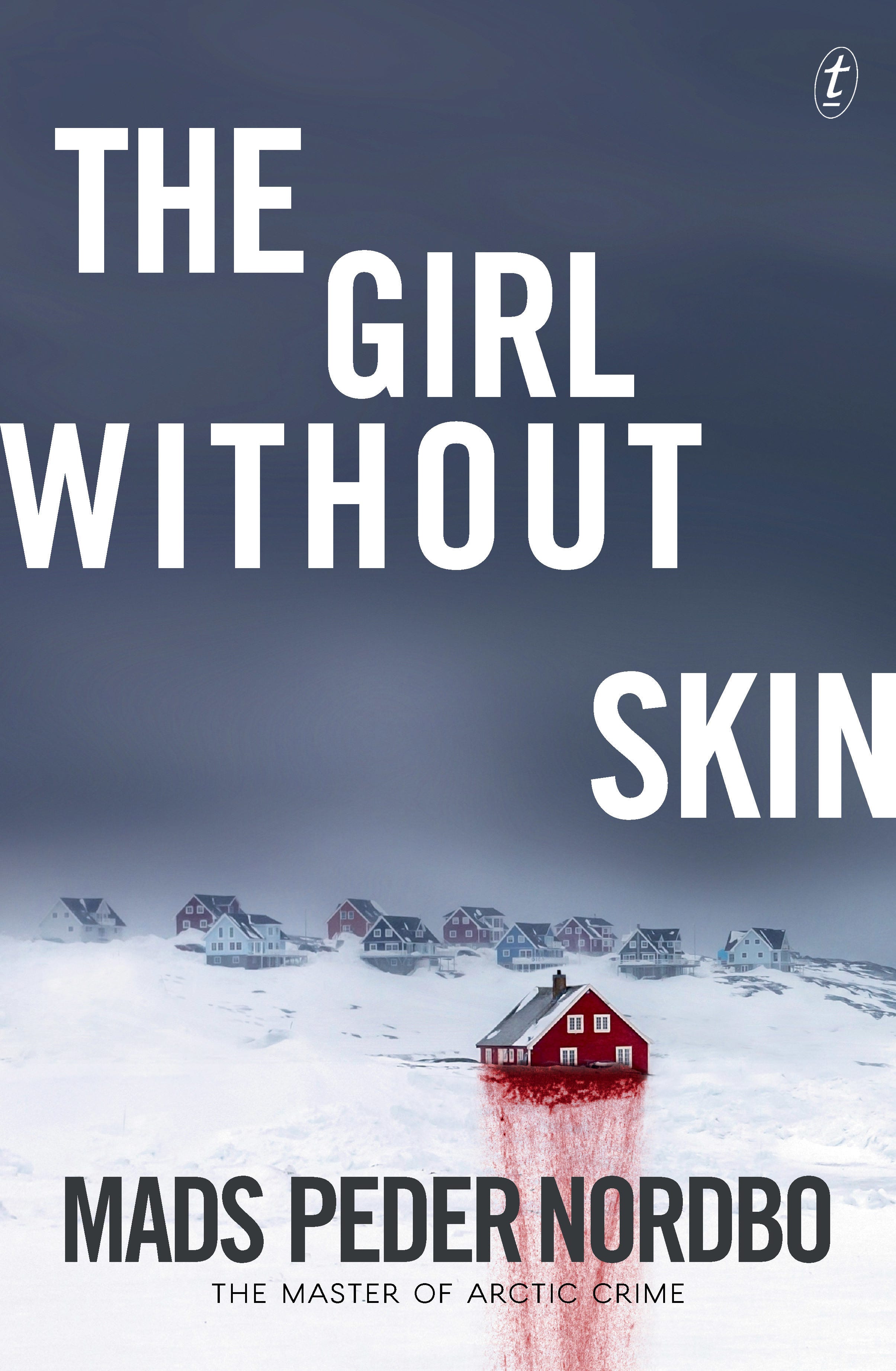
Mads Peder Nordbo and Greenland’s Bloody Snow: Nordbo’s Greenland series (starting with The Girl Without Skin) uses the “unforgiving Arctic environment” to tell stories of brutal violence and political corruption. When a mummified Viking is found on an ice sheet, it triggers a series of flaying murders. Critically acclaimed for its “authentic rendering of Greenlandic society,” the series has been translated into 20 languages and optioned for a TV show.
Baltic Island Noir: The Enclosed Sea
Let’s not forget the islands of the Baltic Sea which offer a unique aesthetic: they are “postcard paradises”, in the summer that transform into deserted, icy wastelands in the winter.
Max Seeck and the Ghost of Åland: In Ghost Island, Seeck takes his popular detective Jessica Niemi to the Åland archipelago. Seeking peace at a historic inn, she instead finds a mystery involving the “birds of spring”, elderly refugees who lived in a local orphanage during WWII. When one is found drowned, Seeck blends hardboiled noir with local legends of a “girl in a blue coat” to create “unbearable claustrophobia.” Seeck is a Glass Key Award winner, and fans love his ability to make their “hearts pound” with his atmospheric writing.
Samuel Bjørk and the Hitra Reckoning: In Dead Island (also known as Hitra), Bjørk relocates his detective duo, Munch and Krüger, from the city of Oslo to the remote island of Hitra. Mia Krüger, who originally went to the island to end her life, is drawn into a cold case involving a missing boy. Bjørk pulls back the island’s “curtain of respectability” to reveal a web of treachery. The series is a global success, with previous instalments hitting #1 on the Der Spiegel bestseller list.
Johan Theorin’s Öland Seasons: Set on the island of Öland, Theorin’s quartet uses the island’s unique topography, limestone quarries, windmills, and lighthouses, to blend local folklore with gritty realism. His novel The Darkest Room won the CWA International Dagger and is noted for its “ghostly ambiguity.”
Viveca Sten’s Sandhamn Murders: This series focuses on the island of Sandhamn near Stockholm. It contrasts the idyllic summer vacation vibe with gruesome, ritualistic crimes. The series has sold over 5 million copies and spawned a TV show watched by 80 million people in Europe.
The Newfoundland Frontier: “GritLit” and North Noir
Heading west to Newfoundland, often called “The Old Rock” (just like Shetland), we find it provides a unique context for a hard-edged brand of noir that explores a world coming undone. This “GritLit” style is brutal, sparse, and deeply rooted in the island’s harsh coastal realities.
Kevin Major and the Sardonic Eye: The definitive Newfoundland crime series features sardonic private eye Sebastian Synard. In One for the Rock, Synard leads a tour along the dangerous cliffs of St. John’s harbor when a member of the group ends up dead. The series utilizes the island’s isolated geography to its fullest; in Four for Fogo Island, Major moves the action to a remote quilt shop where the isolation becomes a weapon. Major’s work captures the “rough man with a big heart” archetype against a backdrop of local history and rugged terrain.
Natalie Carter-Giles and Psychological Survival: Carter-Giles’ debut, Hunting Helena, is a chilling psychological whodunit about a kidnapping survivor whose abductor was never caught. Eight years after escaping her captivity in a dark basement, Helena Douglas must return to her hometown of Deer Lake to stop her crazed captor when a new body is found. Voted a Top Ten contender for the NL Public Libraries 2024 Must-Read Book of the Year, the novel uses a “flashback technique” to reveal how fear “morphs you into someone you don’t recognize.”
Michael Crummey and the Brutal Coast: The Adversary, winner of the 2025 International Dublin Literary Award, is a relentless “North Noir” tale set in the late 1700s fishing port of Mockbeggar. It depicts a brutal struggle between warring siblings in a community marked by hardship and rigid hierarchies. The “merciless sea” and rocky terrain mirror a society where power is maintained through degradation and colonial exploitation, creating a sense of inevitable entrapment.
Kenneth J. Harvey and the Outsider: Harvey’s Inside is the leading example of Newfoundland “GritLit.” It tells the story of Myrden, a violent man released from prison after 14 years into a world of “eviscerated hope.” Written in sparse, staccato sentences without commas, the novel captures the “incredible claustrophobia” of a man who is publicly vindicated but still condemned by the “cycles of revenge” in his old neighbourhood.
Shelly Kawaja and the Violent Past: Winner of the 2022 BMO Winterset Award, The Raw Light of Morning is a powerful study of domestic violence and trauma in western Newfoundland. Fourteen-year-old Laurel commits an unimaginable act of violence that alters her life, forcing her family into housing units in Stephenville. Kawaja explores how the “violent past” eventually catches up to characters in small places where their identity is never truly their own.
Genre-Bending on the Rig
For something truly unique try J.R. McConvey’s False Bodies, a genre-bending noir set on a Newfoundland oil rig. It follows monster hunter Eddie “The Yeti” Gesner as he investigates a mass death on an offshore rig, a case that blends traditional noir tropes like corporate greed with Lovecraftian horror and “squid cults.”
The Perpetual Island: Why We Keep Reading
When we cross-reference general island literature with crime fiction, we see a fascinating evolution of the island archetype. In traditional literature, the sea is often a symbol of life or a spiritual barrier. In island noir, it becomes a mechanical trap that prevents escape. Where a literary island might be a site of discovery and “otherness,” the noir island is a “waiting room for death”.
Perhaps most importantly, the journey changes. In general fiction, characters often undergo a redemptive transformation, moving from a feeling of being a victim of fate to taking charge of their destiny. In island noir, the detective rarely transforms; instead, the escalating pressure leads to a moral reckoning. The goal is not to become someone new, but to “hold the line” and not lose who you already are in a world of corruption.
The island remains a foundational archetype because its physical boundaries mirror the boundaries of the human mind. In traditional stories, the island is a “bridge linking reality and imagination,” offering the hope that we can change ourselves if we just get away from it all. But the massive success of authors like Max Seeck, Ann Cleeves, and Satu Rämö tells us that readers are increasingly drawn to the darker side of this geography. Island Noir transforms the “paradise” into a “punitive place” where the social order is fragile and the “unflinching gaze” of those trapped with you is impossible to avoid.
Whether it’s the “Nordic Blue” of a remote Icelandic fjord, the “GritLit” of a violent Newfoundland outport, or the “Ghost Island” of the Åland archipelago, the island continues to be the ultimate crucible for exploring the fragility of the human mind. As these novels show, the “psychological shoreline” that sets an islander apart is a boundary that no boat can truly cross.
What are you waiting for? Get reading!
No posts
Comments
Nothing yet. Say the first thing.
Sign in to join the conversation.