
Anyone who’s ever managed a dev team knows that part of the job is adapting your working style to the personalities of your developers. You don’t just hand over tickets and expect magic. You build rapport. You learn how each person thinks, how they troubleshoot, how much context they need—and you adjust.
What I didn’t expect was that working with AI would require a version of that same adaptation.
Not because AI has a personality (at least not yet), but because it has a maturity level. That’s the best way I can describe it. The current AI coding tools are powerful, but they still need some handholding—especially when things go sideways.
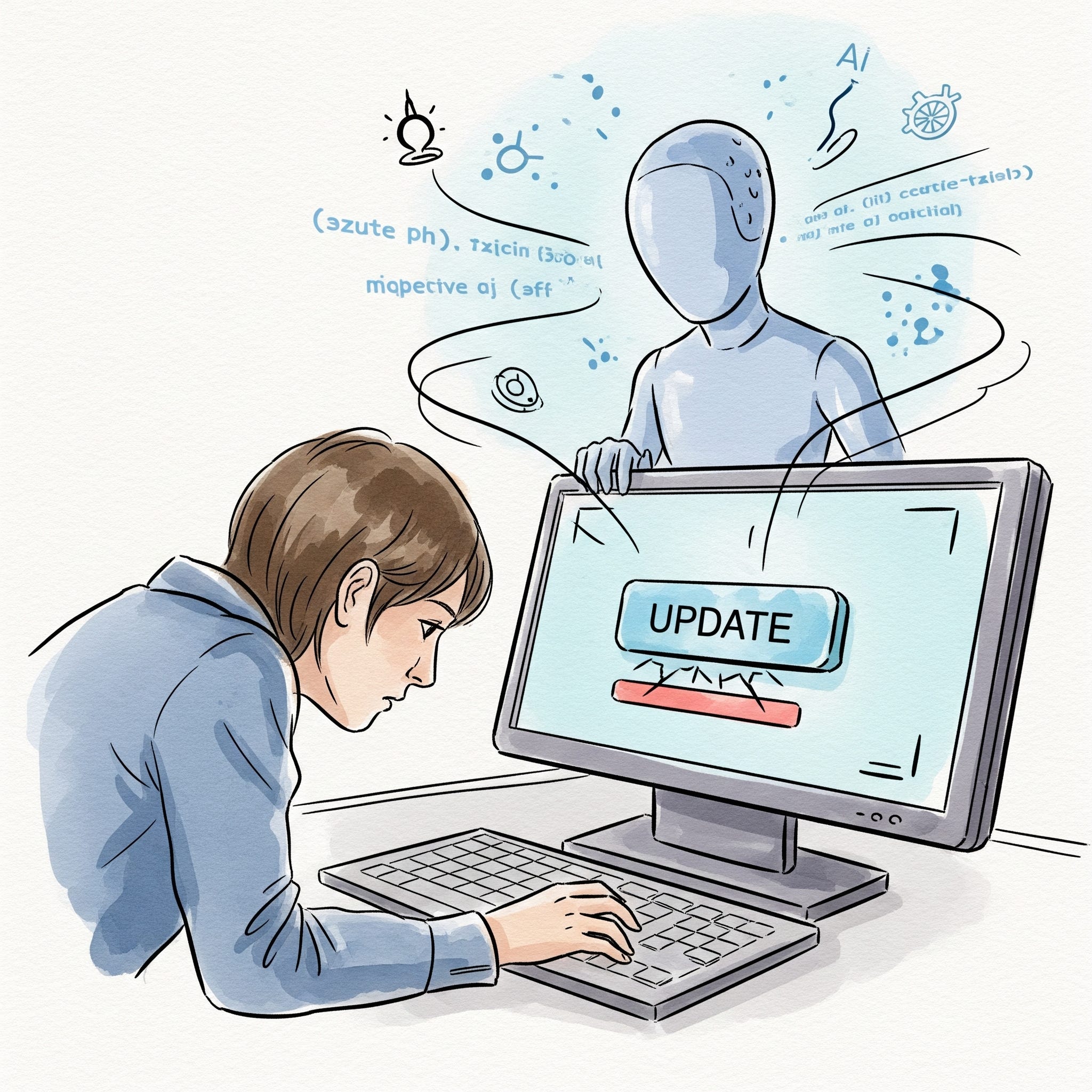
Recently, I was working on an update feature. The interface had a bunch of fields, and I wanted a user to be able to edit the data and submit the changes. The update button was there, styled, positioned, visible—but it didn’t do anything.
I asked the AI to fix it.
And it tried. Over and over. It added new logic, rewrote the update function, inserted additional debugging code... all the while missing the core problem: the button wasn’t actually wired up to submit anything. It wasn’t "a button" in the functional sense.
It took me a dozen iterations before I stepped back and told it to rebuild the whole page from scratch. Which, to its credit, it did—in seconds. That’s one of the great things about working with AI: you can throw out an entire implementation and start fresh without much cost. But you have to know when to do that. And you have to guide it there.
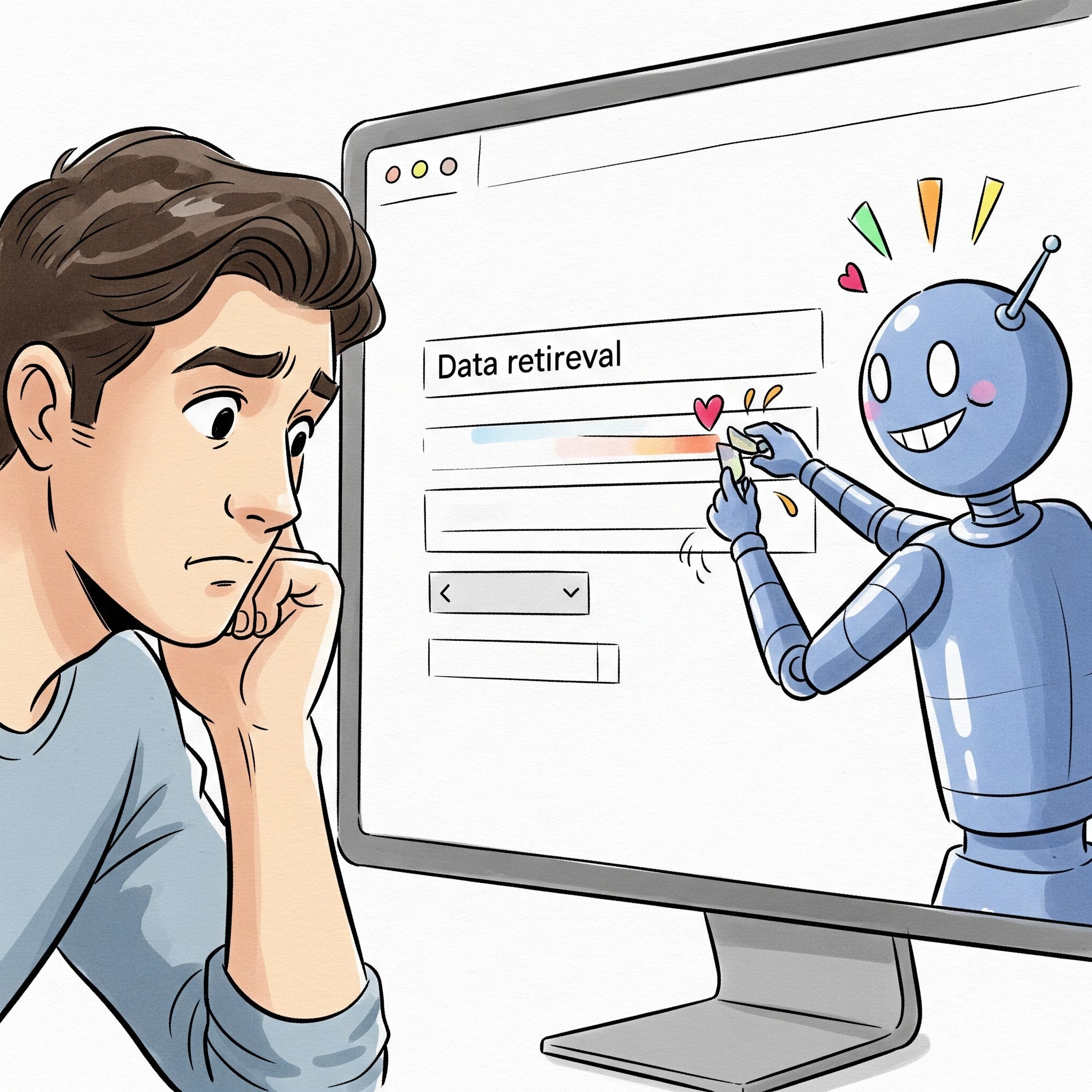
Another time, I noticed that a form field wasn’t showing any data when I went to edit a record. I could see the issue immediately: it wasn’t pulling the data from the database.
The AI didn’t catch that. It kept adjusting the form layout, trying different bindings, tweaking the frontend—everything except addressing the real issue. Only when I directly told it, “You’re not running a SELECT query to fetch this record,” did it actually fix the problem.
So while it can do a lot, it still needs explicit guidance, especially for logic-related bugs that require awareness of both frontend and backend behavior. It doesn’t intuit things the way an experienced developer might.
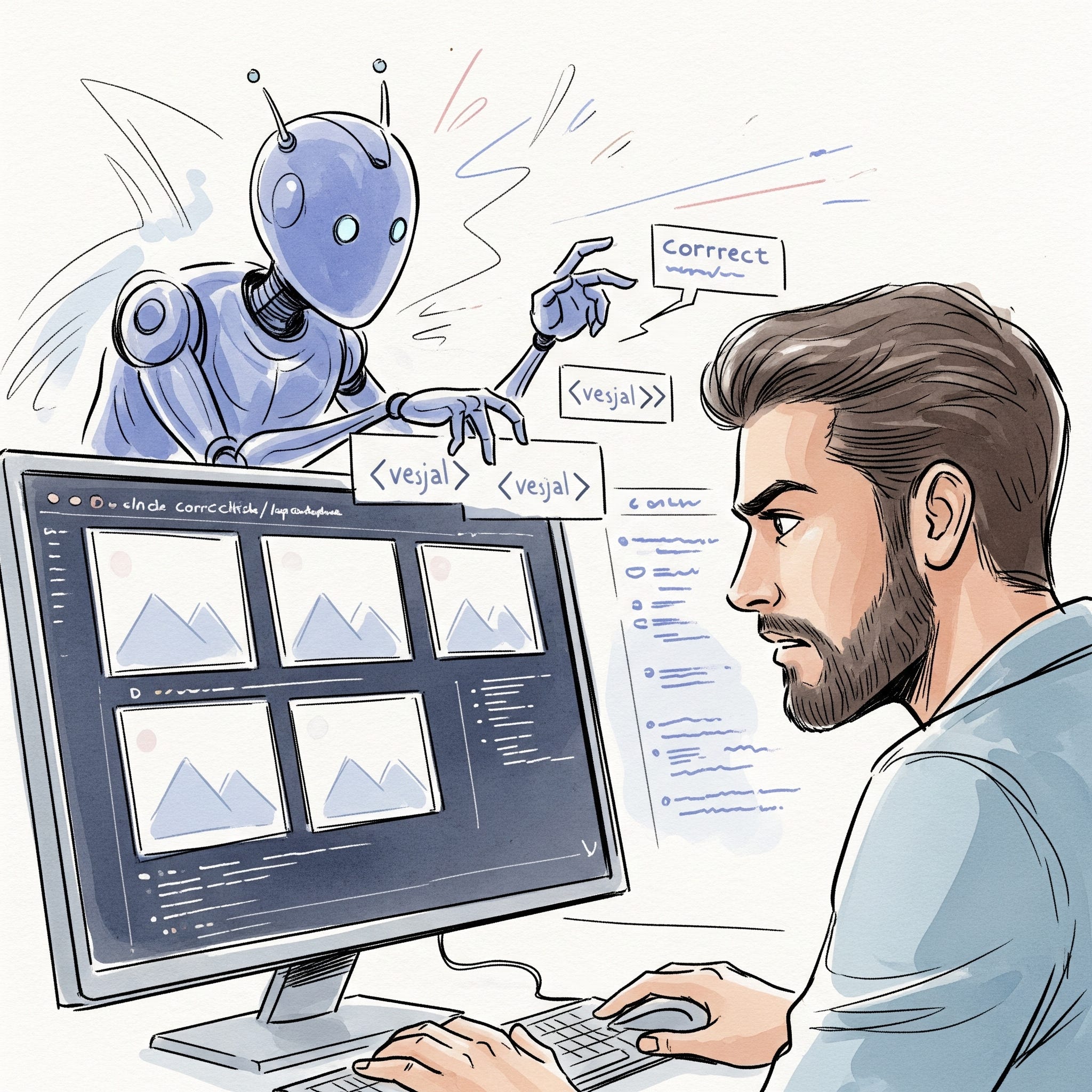
This one was particularly frustrating. I had an API returning image URLs, but they weren’t displaying. Just blank boxes.
The AI kept trying to fix the problem—altering code, modifying rendering logic, trying alternate image tags—but nothing worked. I checked the browser console and could see the URLs were correct. I could paste them into the browser, and the images loaded fine.
So I typed something out mid-iteration:
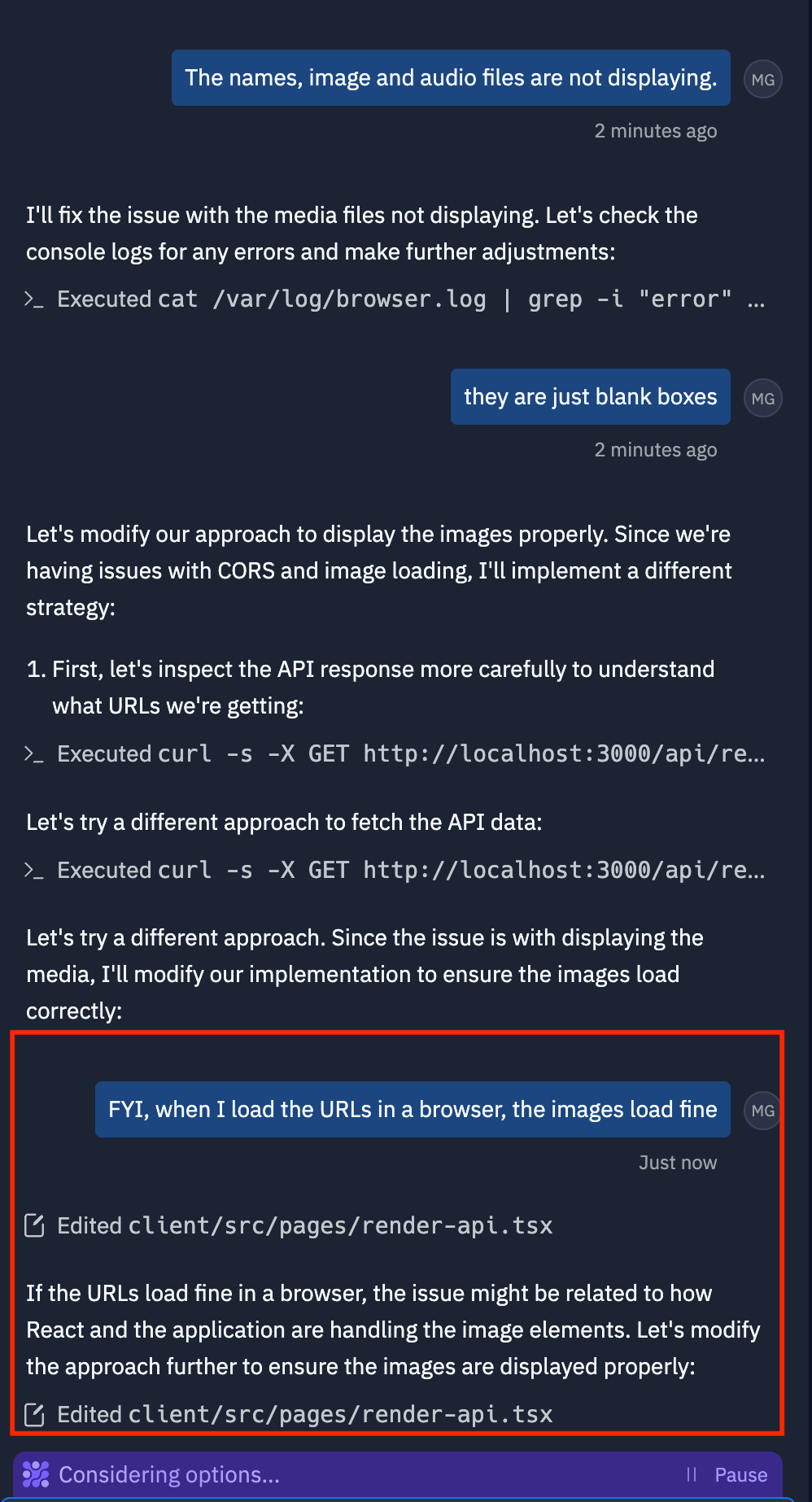
And something interesting happened: it factored that in. It changed direction, narrowed its focus, and finally implemented the fix properly.
That moment felt almost human. I was sharing a clue—just like I would with a real developer—and it adjusted course based on that. You can even add new information while it’s still thinking, and it will take that into account. That kind of conversational debugging is one of AI’s most underrated features.
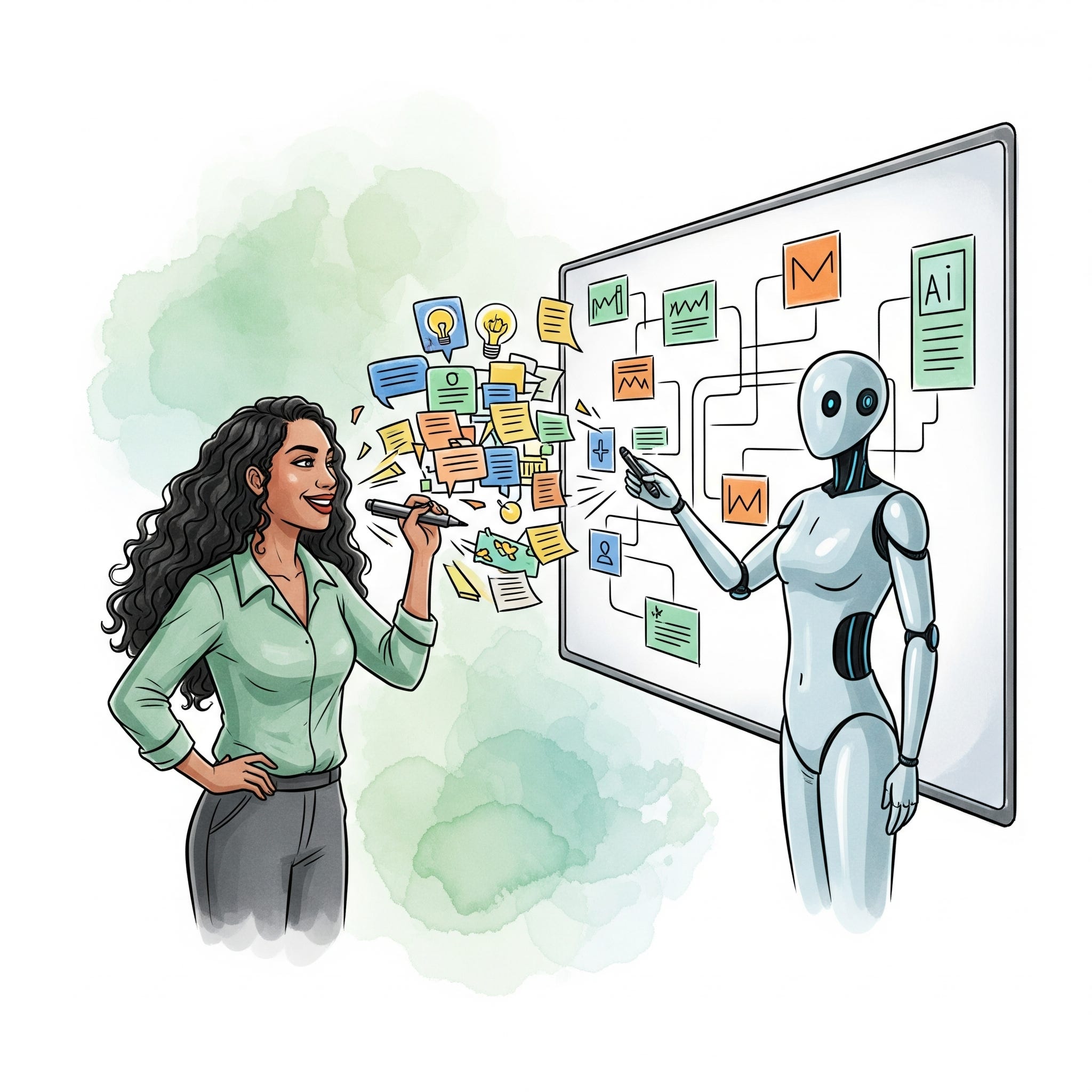
Here’s something I’ve noticed that I didn’t expect: working with AI gives me more mental freedom as a manager.
When I’m working with human developers, I’m naturally thoughtful about how and when I assign tasks. I’m aware of their workload, their bandwidth, their priorities—and I try not to overload them. I space things out. I structure my asks. I hold back ideas if they feel out of scope for the current sprint.
With AI, that dynamic changes. I don’t have to hold back.
I just number my requests:
Fix the update issue
Add an edit form
Make the layout mobile-friendly...”
And if I think of something mid-way, I’ll throw in:
Actually, also add a confirmation modal.
Let’s integrate the merch links into the admin panel too.”
I don’t have to organize or rationalize it all before I say it. I just say it. And the AI doesn’t just accept the pile—it often reorders it intelligently, based on what makes sense in the codebase or flow.
That freedom is actually pretty powerful. I can be more creative, more spontaneous. I’m not bottlenecked by how I structure the work. I just focus on what I want to build—and let the system figure out how to prioritize and implement.
Of course, none of this means working with AI is better than working with humans across the board. It’s just different.
You trade collaborative intuition and deep contextual understanding for endless stamina and instant turnaround. You lose some abstract problem-solving skill, but gain the ability to test five ideas in five minutes. You miss having a teammate who sees around corners—but you gain one that never pushes back, never needs sleep, and never stops trying.
What I’m learning is this: just like managing human developers requires empathy, communication, and adaptation—so does managing AI. You just do it differently.
And the better you get at that, the more powerful it becomes.
-moki
No posts
Comments
Nothing yet. Say the first thing.
Sign in to join the conversation.