
Every month, the Social Security check arrive,. and every month, it seems to disappear a little faster.

For millions of older Americans, retirement was supposed to be a time when life finally slowed down — when the mortgage was paid, the children were grown and the long years of work had earned them some measure of security.
Instead, many seniors are doing something they never expected to be doing in their seventies and eighties:
They are counting dollars at the grocery store, pills in a prescription bottle, how many times they can afford to fill the gas tank. They watch what is left in the checking account after the electric bill, insurance, rent and medical expenses are paid.
And then count the days until the next Social Security payment.
For seniors living primarily on Social Security, there is no easy way to absorb another $20 here or $50 there. There is no second paycheck waiting at the end of the month.
That is what makes the changes taking place in Washington so deeply personal.

President Donald Trump’s administration and congressional Republicans have pursued sweeping changes to Medicaid and other federal spending programs, arguing that government must reduce waste, fraud and spending.
But Democrats say the consequences will fall hardest on Americans who have the least room to absorb them — particularly low-income seniors and people who depend on Medicaid for long-term care.
Trump’s 2025 tax-and-spending law reduces federal Medicaid spending over the coming years. Medicaid is especially important to older Americans because Medicare generally does not cover long-term custodial nursing-home care. Medicaid can become the program that pays for that care when a senior has exhausted other resources.

For a family with an aging parent ,that means the difference between remaining at home with assistance or entering a nursing facility, or whether a nursing home will continue accepting Medicaid patients.
And it can decide whether a son or daughter has to leave work to become a full-time caregiver.
The numbers in a congressional budget bill may be enormous; the consequences can be painfully small and personal:
A daughter cancelling a shift, a husband lifting his wife into a wheelchair.
An elderly woman wondering whether she can afford to stay in her home.

For a senior living on a fixed income, financial hardship doesn’t necessarily arrive as a crisis,. sometimes it arrives quietly.
The grocery bill is five dollars higher-then ten.
The insurance premium goes up. A prescription costs more.
The landlord raises the rent. The furnace needs repair.
A dental appointment gets postponed. Then another.
None of those expenses, by itself, sounds catastrophic-together, they can change a person’s life.
That is why debates over Medicare and Social Security resonate so strongly with older Americans. These programs are not simply line items in the federal budget. They are the architecture of everyday life after a lifetime of work.

The Trump administration has not enacted a general cut to Social Security retirement benefits.
But the Social Security Administration underwent a major restructuring during Trump’s first year back in office, including plans to reduce its workforce. The agency said its goal was to bring staffing down from approximately 57,000 employees to about 50,000 while maintaining essential services.
For someone whose Social Security check is the foundation of their monthly budget, government bureaucracy is not an abstract inconvenience.
A delayed payment can mean a late bill, a problem with a benefit can mean an anxious phone call ,a question that goes unanswered can mean uncertainty about whether there will be enough money next month.
And Democrats have seized on those concerns, warning that the administration’s broader approach could eventually threaten Social Security, Medicare and Medicaid.
They point to proposals and statements from Republican lawmakers and argue that older Americans should be watching closely.
Republicans reject that characterization and say they intend to protect Social Security for those who have earned it—that distinction matters.
But so does the anxiety.
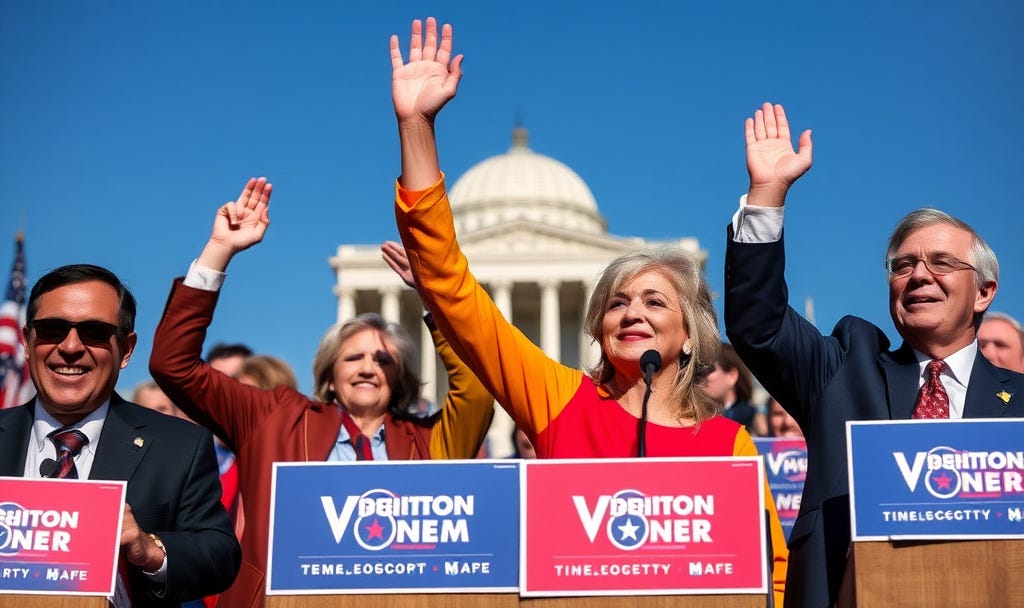
Democrats say they would take a fundamentally different approach to America’s social insurance programs.
Their message to seniors is straightforward— protect Social Security, strengthen Medicare and restore Medicaid funding.
They say they would oppose raising the retirement age, reducing Social Security benefits or turning Medicare into a system in which seniors are forced to shoulder more of their health-care costs.
They also point to Medicare’s ability to negotiate prescription-drug prices as an example of what they believe government should be doing more of — using its purchasing power to reduce costs for seniors.
Those promises, however, are political commitments rather than laws already on the books. Democrats would still need enough votes in Congress to enact many of them.
And the party itself contains disagreements over how aggressively to expand benefits and how to pay for them.
Still, the contrast is unmistakable.
The Trump administration and Republicans have emphasized spending reductions, tighter program rules and changes intended to restrain government costs.
Democrats say they would put greater emphasis on protecting and expanding the programs seniors depend on.
For politicians, the debate is about budgets.
For seniors, it can be about dinner.
It can be about whether there is enough money left for fresh fruit after buying medicine.
Whether the thermostat can be turned up when the house gets cold.
Whether a grandchild can be given a birthday present.
Whether a dental problem can wait another six months.
Whether the car can make it through another winter.
These are the calculations that rarely appear in congressional speeches.
They happen at kitchen tables.
They happen in grocery-store aisles.
They happen late at night, when an older person looks at a stack of bills and quietly adds them up one more time.
America’s seniors have spent decades being told that work would bring security and that the programs they paid into would be there when they grew old.
Now many are watching Washington debate the future of those promises while their own budgets grow tighter.
The political parties offer different answers.
Republicans say government has grown too expensive and programs need reform.
Democrats say the safety net needs protection, not cuts.
But underneath the arguments is a much simpler question — one that has nothing to do with party labels.
How much security should a country give the people who spent a lifetime building it?
For a retiree living on one Social Security check at a time, that isn’t a political question.
It’s the question that arrives every morning with the mail, every week at the grocery store and every month when the bills come due.
Comments
Nothing yet. Say the first thing.
Sign in to join the conversation.