
Directed by Park Chan-wook
South Korea, 2025
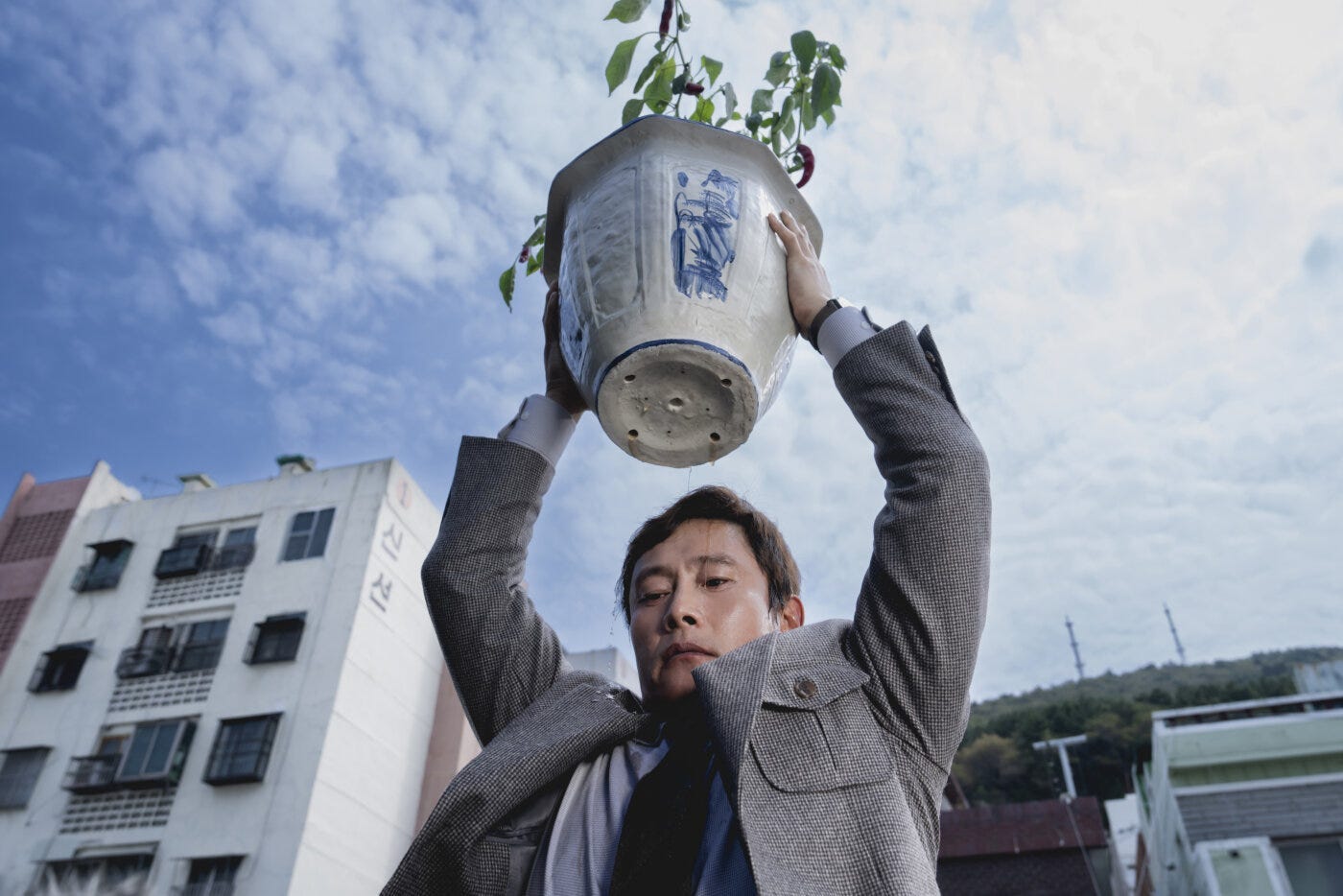
The opening scene of this week’s film is accompanied by a piece of music that will be immediately recognisable to many. The second movement of Mozart’s Piano Concerto No. 23 is achingly mournful – it is Mozart at his most nakedly emotional. And yet there is an irony in its use here as we are watching a man, Man-su (Lee Byung-hun), hosting a celebratory barbecue in his beautiful garden, beside his beautiful house, alongside his beautiful wife (Son Ye-jin) and beautiful children – a veritable Garden of Eden.
“You know what I’m feeling now? I’ve got it all.”
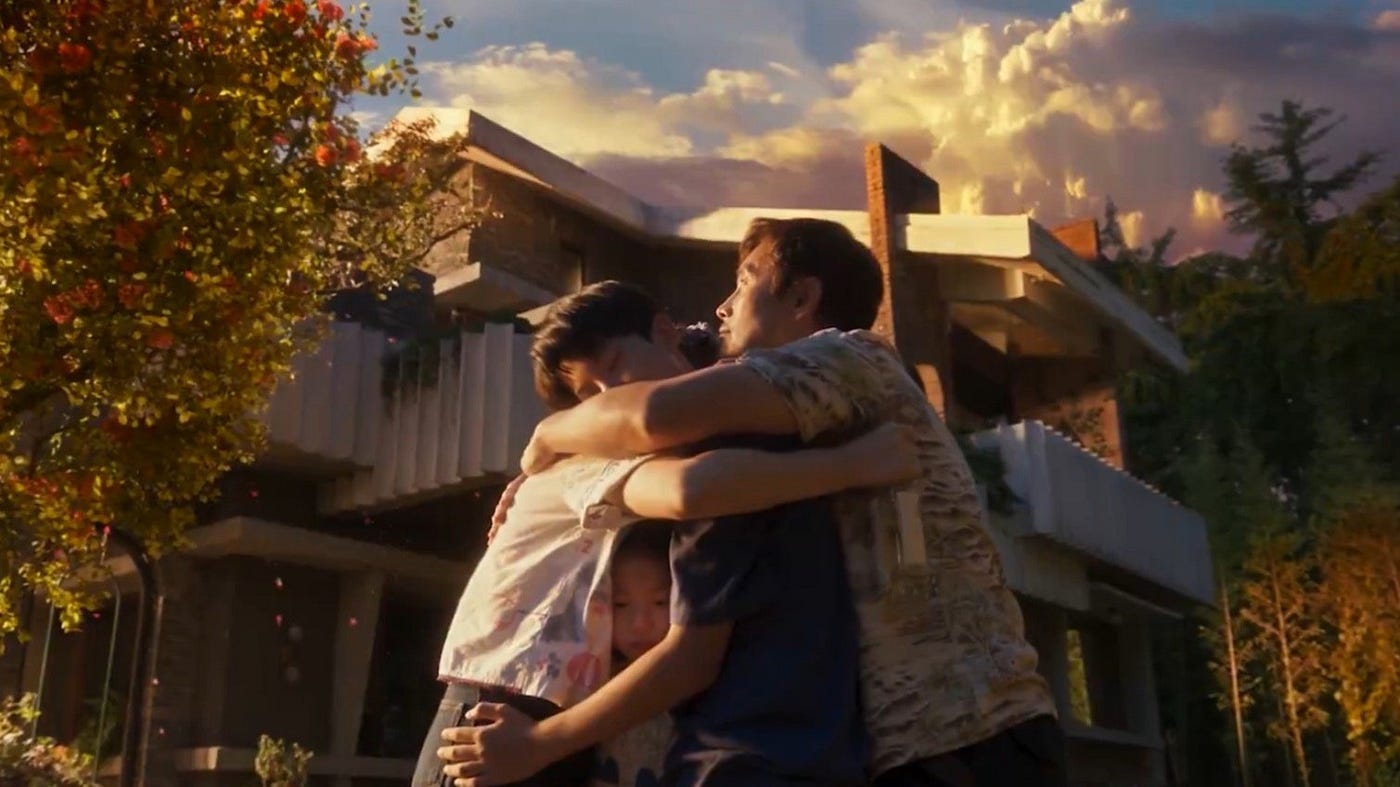
The irony, of course, is of the cruellest kind. After all, No Other Choice is a film by Park Chan-wook, a master of the psychological thriller and, in many ways, the Alfred Hitchcock of the 21st century. So we know that Man-su’s pride must be coming before a pretty sharp fall. Indeed, his Eden is about to be spoiled. After a lifelong career dedicated to the paper manufacturing industry, he has been sent a congratulatory gift by his employers: an eel. Or so he believes. His son mistakes the eel for a snake, and in a sense it is. Solar Paper has fallen victim to a US corporate takeover and the eel is a bizarre consolation for a man about to lose his career.
No Other Choice is an adaptation of The Ax, a 1997 novel by American author Donald Westlake. A blood-soaked satire on corporate downsizing, Park Chan-wook has updated and translated the story to contemporary Korea, but there is no mistaking the director’s singular style. For Man-su, with the exception of his bonsai hobby, papermaking is all he has ever known. The pinnacle of his career in middle-management was being awarded ‘Pulp Man of the Year’ in 2019. Now he has lost his job, and with it not only his career, but his home, the family dogs, his wife’s tennis lessons, and perhaps worst of all, the Netflix subscription. In a world where corporate hierarchy is all, Man-su has truly hit rock bottom.
Everything non-essential must go.
He struggles to find work elsewhere and his blundering failure at a job interview – where the sun’s glare blinds him to his interrogators – is a piece of comic virtuosity. So when a vacancy comes up at rival company, Moon Paper, Man-su believes he has no other choice but to remove the competition. And in order to execute his plan he must literally execute the other applicants for the job.
At this point No Other Choice takes a darkly satirical turn, propelled by a bucket-load of slapstick. Whether it’s a turn for the better or the worse is a matter of taste.
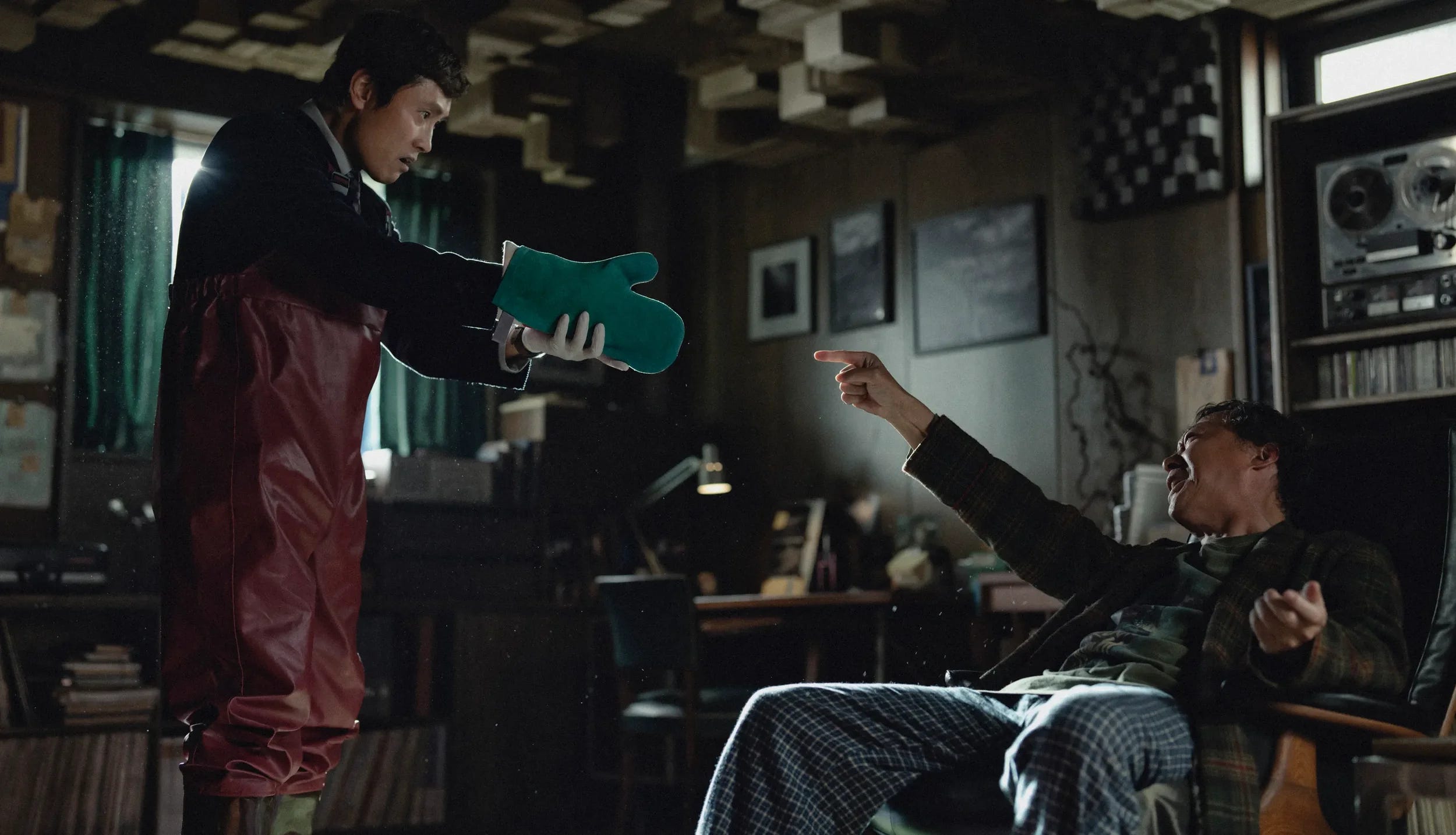
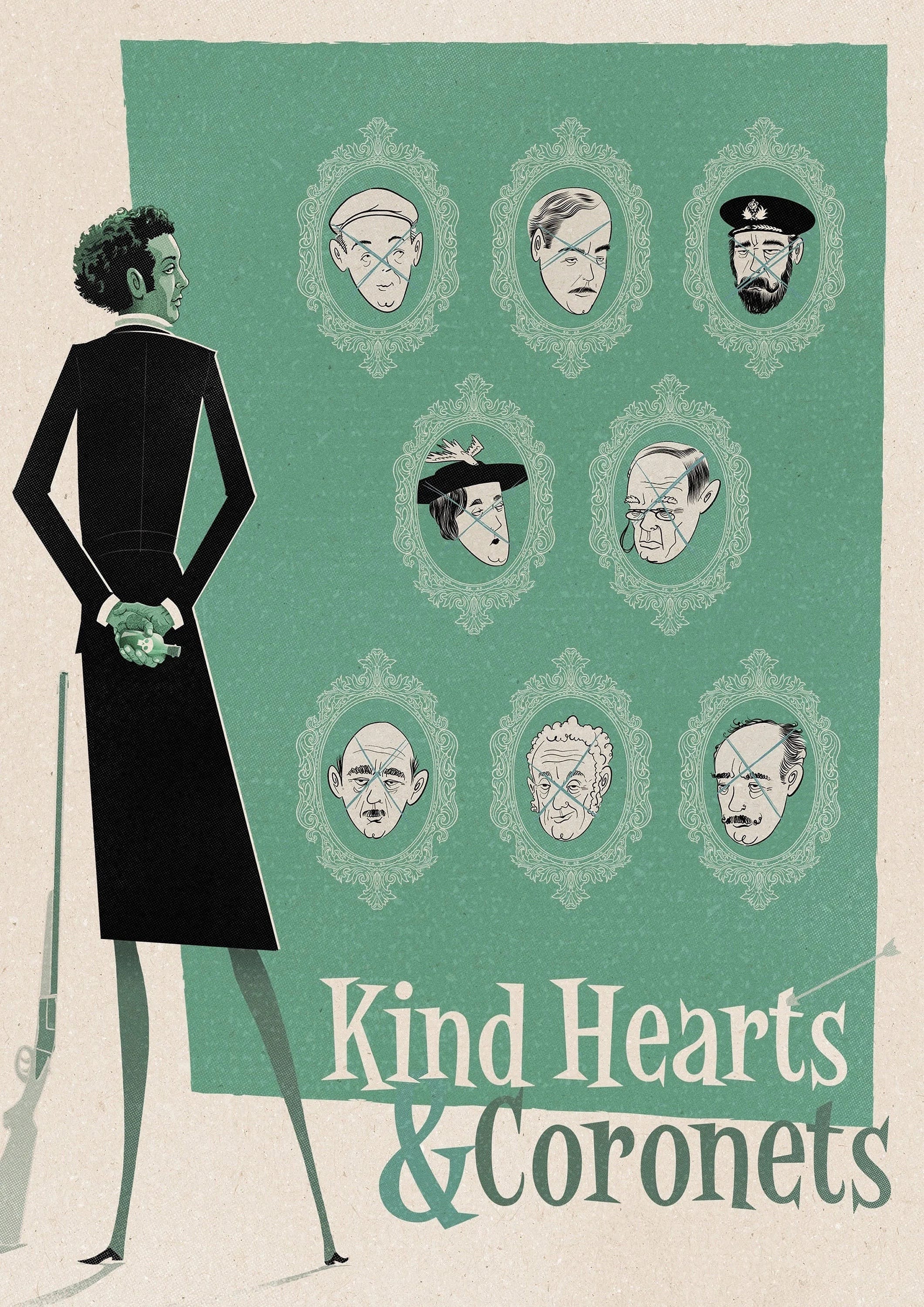
Man-su is no professional assassin. He has to scribble step-by-step instructions in red ink on his palm, and his methods are improvised to say the least. An early attempt involves dropping a heavy planter from a roof on his target below, until he is interrupted by an elderly neighbour who asks if he is ‘weightlifting’. That bleak absurdism brings to mind the string of murders in the classic Ealing Comedy, Kind Hearts and Coronets.
However this is Park Chan-wook, and we may be missing an octopus but there are ample helpings of the lurid, the gruesome, and the sadistic. No Other Choice is also laced with an acid critique of late-stage capitalism.
What better way to represent the violent constraints that capitalism imposes on us – a pile of bodies buried under a flowering garden – N
The obvious comparison, of course, is Bong Joon Ho’s Parasite, but in that film the conflict was vertical – envy and aspiration across class hierarchies. For Park Chan-wook the conflict is horizontal, a darker view of society where we live in a rat race and everyone is out for themselves. It is kill or be killed: you have no other choice. A closer comparison might be Kiyoshi Kurosawa’s Tokyo Sonata (reviewed by ReidsonFilm), a quieter, more grounded study of the journey of a redundant Japanese salaryman and his family, that is no less adroit at treading the line between tragedy and comedy.
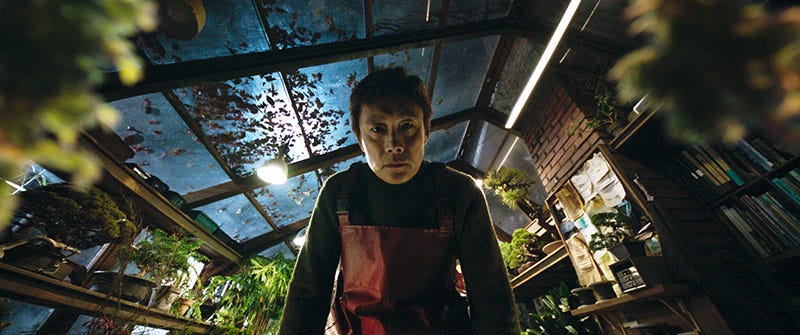
No Other Choice is a film of arresting images and exquisite detailing. The eccentric camera angles, bright plastic colour palette and discombobulating cuts only become more baroque as the plot plays out. The technical craft of Park Chan-wook and cinematographer, Woo-Hyung Kim, is reflected in the craft and control shown by Man-Su in his bonsai glasshouse. And Lee Byung-hun skilfully walks a tightrope performance that shifts from sympathy to comedy to desperation to chilling menace from moment to moment.
Still, for all its strengths, there are so many mini-themes and sub-plots – many of which remain unresolved – packed into the No Other Choice, that along with the flamboyant shifts in tone, the film had an enervating effect on some of ReidsonFilm over the course of its 139-minute runtime. It was hard to avoid the feeling that at times the director was throwing ideas at the wall to see which ones would stick. For all of the visual wit on display, there was a sense of repetition about Man-su’s schemes, and the film lacks the poetry of Park’s later works, The Handmaiden, and Decision to Leave.
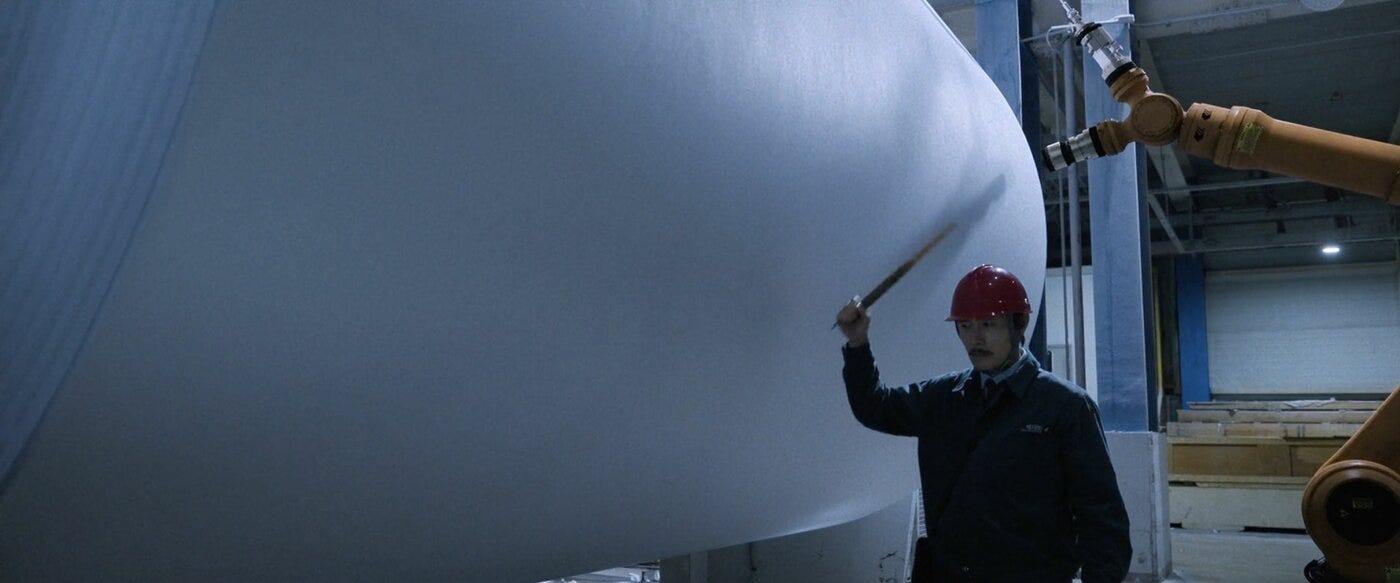
Even so, it is worth holding on to the end where Park saves his sharpest irony for last. Man-su finally returns to a middle management post in a paper factory but the role is very different:
We need you to oversee the test run. It’s fully automated, that’s the whole point of the system. There’s no other choice.
It turns out that all the killing was unnecessary. AI was always going to reduce the headcount, just in a less messy fashion. The closing reprise of Mozart’s concerto couldn’t feel more bittersweet.
We can all agree it dwarfs Parasite – C
Reids’ Results (out of 100)
C - 79
T - 83
N - 82
S - 74
Thank you for reading Reids on Film. If you enjoyed our review please share with a friend and do leave a comment.
Coming next… Long Day's Journey into Night(2018)
No posts
Comments
Nothing yet. Say the first thing.
Sign in to join the conversation.