
When I learned that Joseph Epstein had written an autobiography, I bought it immediately. Then I left it unopened for two years. I was afraid of it.
Epstein is my favorite essayist. He’s not our “greatest living essayist” (as some of his marketing copy unwisely asserts),1 but he’s my favorite because he was the tutelary spirit of my childhood reading. Thanks to him, I began the list of books-to-read that I still work from, a thousand times ramified, refracted, and revised. He led me to Henry James and Henry Adams, William Hazlitt and Michel de Montaigne, George Santayana and Marcel Proust. He inspired my first commonplace book. He taught me to think highly of essays as literature.
Then I grew up and did a whole lot of reading, developed my taste and preferences, collected a few degrees, and started writing and publishing essays of my own. After a decade away from Epstein, in the early 2020s I returned to browse his latest collections, expecting warm nostalgia. Instead I found a startling vein of ideological rancor. A sneering reactionary wore the skin of the essayist I remembered as a savorer of sentences and purveyor of the higher gossip. Was I misremembering his early work? I checked, and I wasn’t. But the rancorous note was already present, a discordance drowned out by louder harmonies. That note became clearer as he aged, and it would have been apparent to me if I’d read his dour one-topic books—on divorce, ambition, snobbery, envy—and not just his marvelous collections of literary and familiar essays, which were mostly collected from the column he wrote under the name ‘Aristides’ in The American Scholar. Eventually, the sourness leaked into the essay collections too. Cheerful anecdotes turned into prosecutorial calumnies. The prevailing mood became contempt. Humor hardened into satire. His political opinions seemed to determine his aesthetic judgments.
I was afraid of the autobiography, because I suspected reading it would be decisive for my relationship to Epstein’s work. It would either re-illuminate my favorite essayist or culminate our estrangement.
This week I decided to stop putting it off. I sat down and read Never Say You’ve Had a Lucky Life: Especially if You’ve Had a Lucky Life.
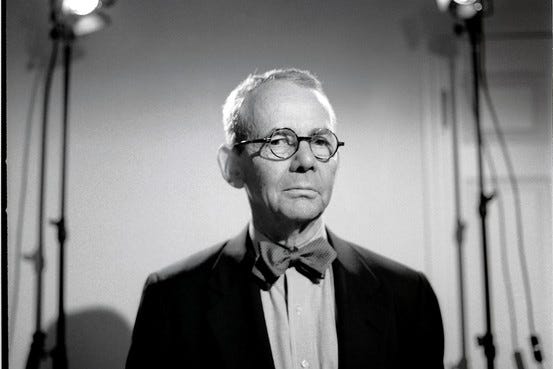
At first, things seemed promising. In Epstein’s laid back opening remarks about autobiographies in general, he mentions that Benvenuto Cellini wrote a great one. I didn’t know that! Onto my reading list it went. This was the writer I so fondly remembered: leisurely, self-deprecating, humorous, scattering book recommendations like handfuls of seed.
He proceeds to offer pen portraits of his parents in the 1930s, then an account of his youth in postwar Chicago. It was a very different world, structured by the visible presence of organized crime. Each chapter is a familiar essay. I’d have it no other way—that’s his writing’s most natural form. He discusses his own actions and his own character with startling and sometimes regretful frankness. He and his buddies “availed themselves of the services of prostitutes.” He was sporty, not bookish. He got into a local college but soon applied to transfer to the University of Chicago—a lucky thing, because shortly after his transfer application went through, he was expelled from the first college for selling test answers. He approached his new university’s famous intellectual seriousness from a position of self-conscious inferiority. It was a second (and a last) chance. He used that sense of inferiority to motivate himself, and the University of Chicago, he says, fundamentally changed his values. It was a classic conversion to the intellectual life:
What I found most exhilarating at the University was the reading. [...] I was swept up by the elegance of Plato, the rigor of Aristotle, the analytical power of Thucydides, the subtlety of Tocqueville, the intellectual connections made by Max Weber, the philosophical tone of Freud in his Civilizations and its Discontents. I took a course in the novel that ran from The Princess of Cleves through Proust. I acquired a love for the culture of Greece and Rome. [...] I had nothing resembling a social life at the University of Chicago, only a reading life.
And then in his last year of schooling, he discovered little magazines. “Other magazines were journalism; the little magazines had pretensions—pretensions often fulfilled—to literature.” This discovery would set his course for life: “I could never hope to write like Plato or Herodotus, Plutarch or Polybius, or other authors in the University of Chicago curriculum, but perhaps it was possible to write as well as the contributors to the little magazines of the current day. For the first time I had the inkling I might become a writer.”
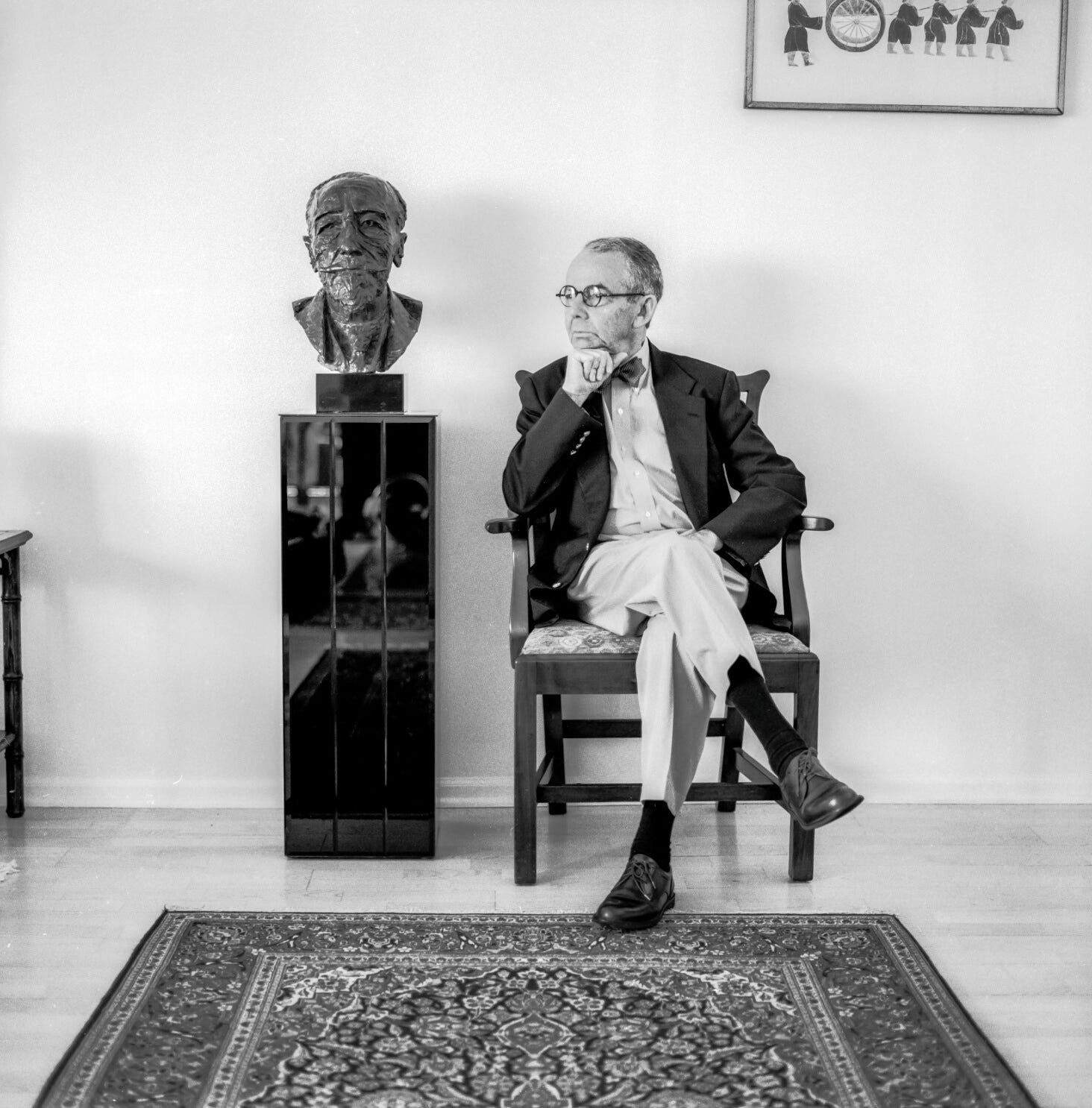
So far so good—I was enjoying this autobiography. Why had I held off reading it for so long? What was I afraid of? Soon we’d get to the really good stuff, the beginning of his career as a writer.
In the introduction to one of his marvelous essay collections (Life Sentences), Epstein once wrote, “I get my education in public by writing about things that, until I actually do write about them, I don’t already really know all that much about. I read up, I think through, I write out, and, the hope is, at the end I am a bit smarter about the subject under study.” This is the process I was hoping to read about. (Not least because I’ve followed a version of it myself.) We had arrived at the point in Epstein’s narrative, after the usual preliminaries—parents, youth, education, acquisition of particular ambition—when the best autobiographies get interesting. His writing career, Epstein asserts, became from the time he encountered those little magazines the real center of his life. And his reading career, too. For a critic and literary essayist like him, university is the smallest portion of their education, a mere preliminary to a lifetime of reading. In an early essay, he wrote: “A biography of any literary person ought to deal at length and in detail with what he read and when, for in some sense, we are what we read.”
But he barely talks about it, the writing or the reading. It just sort of happens in the background. After Epstein graduates, the narrative style of his autobiography changes. It accelerates, grows less personal, less detailed, more focused upon externalities. I suppose this makes a certain sense. Our perception of time does in fact speed up as we age, and we do have to take more trouble over the boring practical things in life. He races through his time in the army, his disastrous marriage to an older woman with two boys from previous marriages, the crackup of their relationship, his years as a single father, his stint editing various magazines, his acquisition of enduring adult friendships (often with older men who would give him invaluable career-boosts as when Irving Howe got him a job teaching literature at Northwestern despite his complete lack of advanced degrees), and finally the late-blooming romance that would lead to his second marriage and happily domestic old age.
All fine and necessary information. But why does Epstein’s intellectual and literary life go subterranean, right when it seemed poised to take center stage? I was baffled by the shift. Is it simply a case of youthful influences and developments retaining a clarity lost by the muddle of middle age? (I couldn’t help but contrast this to the marvelously precise memory of intellectual development exhibited by Peter Brown, which I wrote about here.) It’s not like Epstein is unaware of the narrative significance of the period he elides. From another essay:
One of the great problems for a young writer is how he is to get from, say, age twenty-two to age thirty. Literary talent needs time to ripen. Although there are instances of writers doing splendid things in their early twenties—Turgenev wrote A Sportsman’s Notebook at twenty-three, Rimbaud was even more famously precocious, and, closer to our time, Delmore Schwartz turned out his best poetry before he was thirty—most writers do not burst so brilliantly out of the starting gate. The question then becomes what they can do until they are ready to do their best.
Yes! Exactly! That’s what I want to read about! But I didn’t get to. Not in this book.
One of the book’s last bits of real intellectual memoir concerns a shift in Epstein’s political values. He says that reading Sidney Hook’s Political Power and Personal Freedom converted him from “a liberal veering into radicalism” into “an anti-communist liberal.” Interesting. He doesn’t really expand on this, what it means, or how his political views developed from there. He does mention, later, that he became convinced of the “immitigable” and cultural nature of poverty, after running an anti-poverty program in Little Rock. So I guess, reading between the lines, he ceased to be any kind of liberal and became more of a conservative. That’s fine, I don’t begrudge any writer whose work I love their ideology. But it’s notable to me that this pivot coincides with the disappearance of real intellectual biography in his self-narrative. Is there a connection? Not an obvious one. I’ve read plenty of interestingly self-conscious autobiographies by conservative thinkers. Maybe there is no connection.
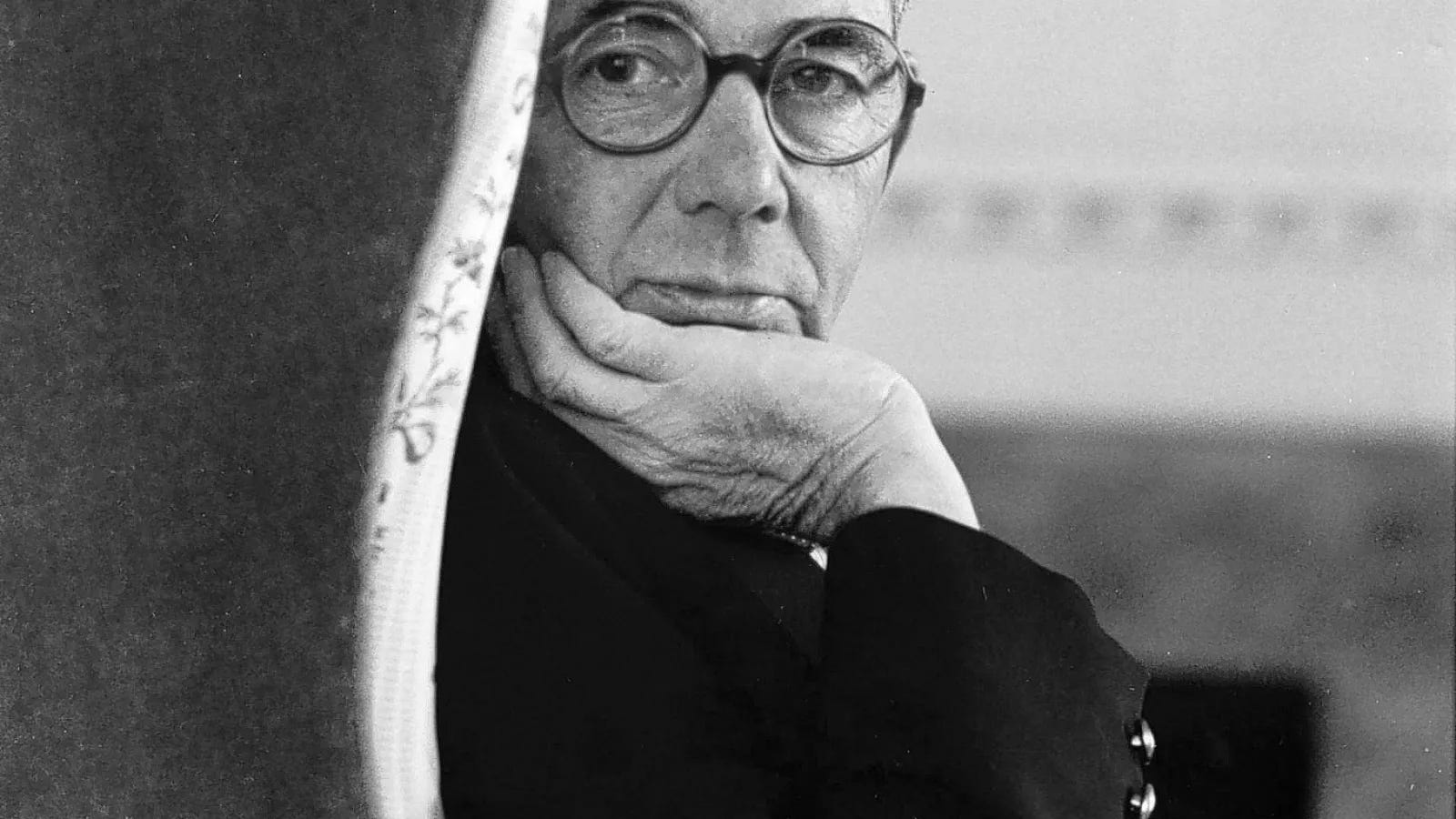
Wikipedia is the hidden scaffold for the second half of the book. What replaces the intellectual autobiography is a series of apologias for the controversies you can find commemorated online.
There’s the essay Epstein wrote for Harper’s Magazine that ended with the line, “If I had the power to do so, I would wish homosexuality off the face of the earth.” There’s the op-ed he wrote in the Wall Street Journal making fun of Jill Biden for using the honorific “Doctor,” which he considered ludicrous since her PhD was in education. There’s his firing by the Phi Beta Kappa senate from the editorship of The American Scholar. He offers various explanations, defenses, or mitigations for all of these things. I didn’t really care one way or the other. Though I have to say his style of apologia is rather sweaty and shifty-eyed and unconvincing, and reminded me of an aphorism from one of his own earlier essays: the ‘fashionable mind,’ he says, “never asks of itself, what do I truly think, what do I truly believe, but instead, what ought I to think, what can I get away with appearing to believe?” Every extended discussion of one of these controversies made me sadder, as he bobbed and weaved, shadow boxing the invisible yet unmistakable antagonist of an internet peanut gallery. It became more and more clear he was not going to discuss what he had earlier called his true life. PR crises do not define the turns and climaxes of an intellectual or literary career. They barely touch it. Yet all he has to say about the excellent literary and familiar essays that made his fame and continue to form the truly significant portion of his literary output, is that in writing them, “I became an essayist.” You don’t say.
I finished the book with a sense of profound disappointment. The remarkable thing about Epstein’s autobiography is how precisely it recapitulates in one volume the arc I had noticed in his larger body of work. The first half is winsome, literary, worldly in the best way—the frank, funny, and even-handed assessment of his childhood and youth, the grateful evocation of the University of Chicago, the humanistic aspirations. Then the second half is scornful, shallowly political, and defensive. It’s more than a change of political ideals. It’s a shift of intellectual style. I don’t know what happened, and I guess I never will. But the same shadow that darkened his evolution as an essayist creeps across the pages of his autobiography.
Never Say You’ve Had a Lucky Life, by Joseph Epstein.
(Free Press: 2024.)
“Who is the greatest living essayist writing in English? That requires no debate at all. It is unquestionably Joseph Epstein. He is not only the best living essayist; he is right up there in the company of Seneca and Montaigne, but one of our own, living in our era and dealing with our pleasures and travails.” — This is from the Amazon blurb of his collection, A Literary Education: And Other Essays. Don’t do this. Don’t let your publicists do this.
No posts
Comments
Nothing yet. Say the first thing.
Sign in to join the conversation.