
It’s time for the monthly reading diary. I finished eleven books in June. Here’s what I thought.
This is an autobiography by one of the better American essayists of the last fifty years. It gives a beautiful overview of his youth and education in Chicago and then a less compelling account of his adulthood, sadly scanting the most potentially interesting thing about him (his mature life as a reader and writer). It spends a good deal of time responding to the controversies he’s gotten himself into, and it provides a handful of anecdotal portraits of various notables he’s known, like Hilton Kramer, Edward Shils, and Saul Bellow. I wrote about the book at greater length earlier in the month.
This is a book-length defense of reading old and influential works of literature. It specifically champions the canon listed in The New Lifetime Reading Plan, and it addresses itself to a hypothetical reader, censorious and suspicious, who comes across as something like the superego of Bluesky. This hypothetical reader is antagonistic to the very concept of great books or classics. Kanakia wishes to convince them that these books can be pleasurable, worthwhile, and unproblematic. Each chapter gives a thoughtful answer to a different hostile question. Even though I’m not the target audience (since I’m already convinced of her thesis), I enjoyed the book as a fan of Naomi Kanakia. (She writes the consistently excellent literary newsletter, Woman of Letters.) From my fannish perspective, I think this book matters in Kanakia’s oeuvre because it fully exploits her strongest literary asset for the first time in print: I mean the seductive voice that was previously restricted to her internet writing. It’s a voice casual yet precise, unselfconsciously nerdy, simultaneously idealistic and cynical—and utterly singular.1 As for the book’s subject matter, apologetics for reading the classics, I have to admit I’m dubious about its persuasive power. Not because of any deficiencies in Kanakia’s reasoning or writing, but because I’m dubious about apologetics of any kind, in the service of any faith, art, or ideology. An apologist’s goal is to reason antagonists into changing their values. I’ve never known that to work. On the other hand, this instance of apologetics has a greater chance of being persuasive than most because there’s a beautiful biblio-memoir hidden inside it, about choosing to read the classics out of the desire to become a great writer only to fall in love with old books for their own sake. And so Kanakia offers a secondary enticement to her hypothetical target reader: the appealing portrait and example of a serious reader’s actual life. That—example, witness—is how you precipitate a conversion! It gave me, the already-converted, a jolt of renewed enthusiasm, which was directly responsible for my impulse to read the next book on this list, a classic I’ve been putting off for years.
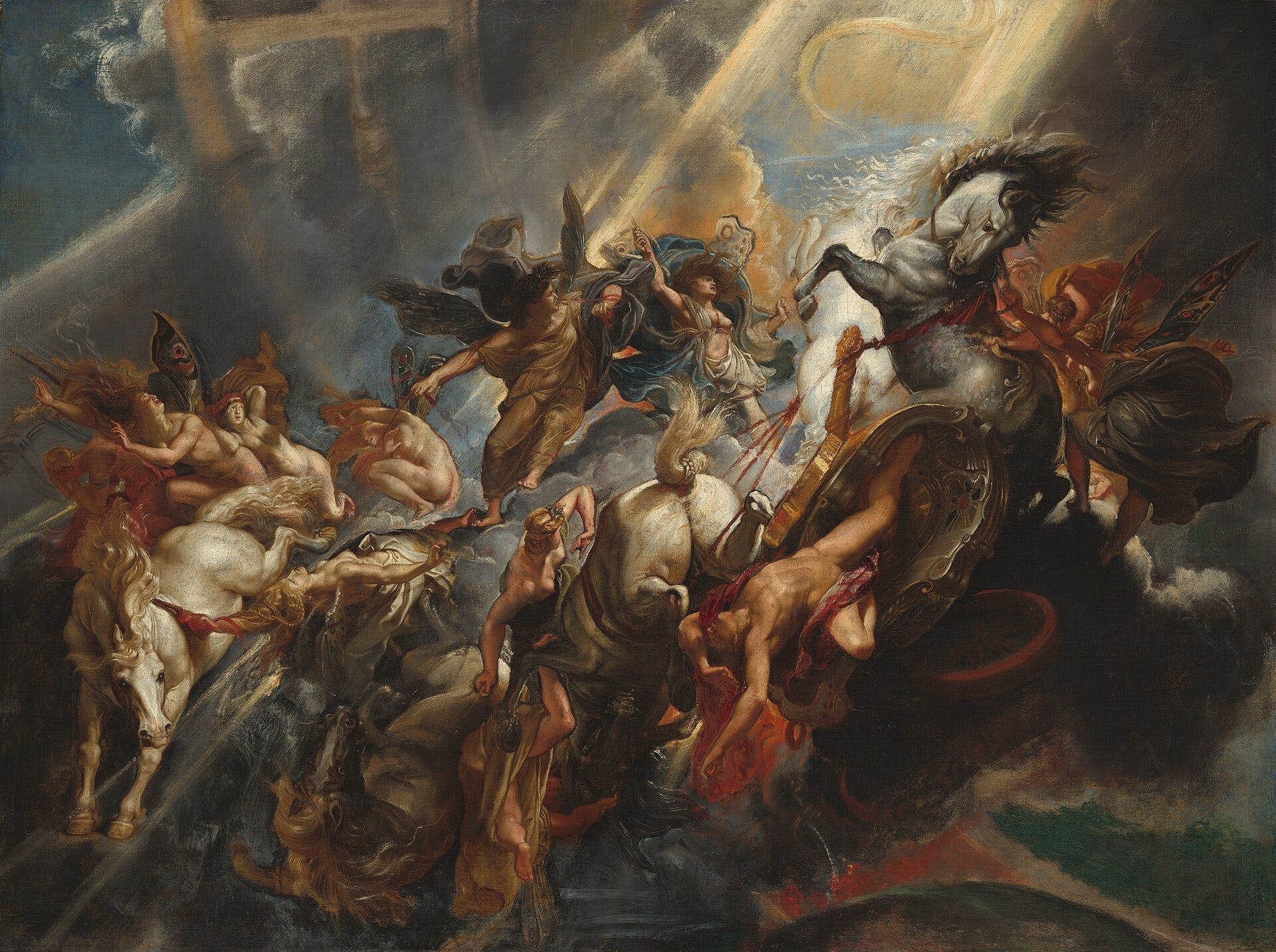
This is an epic poem that retells, in an unusual format, famous myth cycles familiar to us from authors such as Homer, Aeschylus, Sophocles, Euripides, Apollonius of Rhodes, and Virgil. Ovid chose episodes from these myth cycles to illustrate the theme of shape-shifting—and thus Metamorphoses is a kind of themed anthology. Ovid strings his episodes together to traverse the course of history from the beginning of the world to his present day. He forges narrative links between episodes, and the links are as much fun as the episodes themselves. He picks offbeat POV characters and unexpected narrative climaxes within familiar stories, and he trades the drama of straightforward conflict for the drama of desire and decision. When he does bother to describe a fight, it’s a set-piece of slapstick gore that seems intended to make all violence look stupid. In other words, he critically revises and refigures his source material. This extends to the sentence-level writing. His hyper-specific descriptions avoid the Homeric epithet and an elevated tone in favor of telling details. Eyeball kicks and humor abound. And yet Ovid’s themes are not funny. He portrays humans as an unstable order of beings suspended between animals and gods, always moving up or down, in punishment or reward, and he dwells in particular on the plight of women. Sexual violence is a frequent topic, repeatedly and pitilessly dramatized. I noticed over the course of the poem what I began to describe to myself as a “flip-book” effect: he alters a dramatic situation—like that of rape—subtly over its re-presentations, suggesting some sort of commentary. It will take re-readings for me to come to grips with the insights afforded by this commentary-through-variation. The poem was one of the last major blind spots in my grasp of Greek and Roman literature (though I’ve got lots of minor blind spots). I’ve been avoiding it for most of my life because it didn’t sound like something I’d enjoy. But given its centrality to subsequent Western culture (is any book except the Bible more frequently alluded to in art, literature, or music?), I made myself try it in the spirit of eating my vegetables. And I fell in love. It’s now among my favorite works of ancient literature, and I expect I’ll reread it in many translations over the years. On this occasion, I read the most recent Penguin Classics edition, translated by Stephanie McCarter.
This is an essay collection by a writer best known for his presidential biographies of Theodore Roosevelt and Ronald Reagan. It includes all kinds of fascinating material about Kenya (where Morris was born and raised), South Africa (where he went to college), classical music (which he initially intended to make his career), and the art and business of belletristic writing (through which he supported himself before writing his best-selling biographies). He’s always entertaining, full of great aphorisms, good anecdotes, and funny turns of phrase. Moreover, his interests overlap so much with my own he might as well have collected these essays exclusively for me. Now I suppose I need to read his 3-volume biography of Roosevelt.
This is a novel about the doomed baseball career of Roy Hobbs, a natural talent from the depths of the country. He’s discovered by a talent scout as a promising youth, but on his way to the big leagues he meets a femme fatale. She’s in the business of systematically seducing and murdering major athletes. Because he convinces her of his great promise, she (non-fatally) shoots him, ending his career before it can begin. Fast forward a decade, and Roy is back on the scene, trying out for the major league as a rookie, at an age when most players are retiring. In one glorious season, he almost takes his team to the championship, and almost becomes a legend; but ultimately he’s stymied by his own appetites and psychological hangups. He achieves a kind of moral victory (over himself) but it also amounts to a defeat of his concrete hopes. This is the first Malamud I’ve read—as it was the first novel he ever published—and I was hooked. The visionary figurative language gave me goosebumps, the energetic use of historically idiomatic slang cracked me up, and the mashup of classic sports story plotting (indeed, the plot borders on cliche) with clear literary ambition intrigued me. In short, this book launched me on what has turned into a completist project to read Malamud’s entire oeuvre chronologically, a project still underway as this month ends. (As I type this, I’m hip deep in his collected short stories.)
This is a novel about Frank Alpine, a drifter whose incipient career as a stick-up artist is stopped in its tracks by the moral shock of encountering his first victim an impoverished Jewish grocer in Brooklyn. Frank was masked when he held up the grocer, so he comes back around, unmasked, and worms his way into the man’s good graces. Ultimately he gets himself hired as an assistant and even takes a shine to the grocer’s daughter. Inside this strange and precarious arrangement, Frank repeatedly and increasingly harms the grocer and his family, only to feel abashed by their honesty and innocence, and to attempt to reform himself by helping them further with their business. It’s an escalating cycle of moral ambition, recidivism, and repentance, with several horrifying turns and a truly surprising ending. In my opinion, in this novel Malamud learned how to actually plot a long narrative. By contrast, at no point does The Natural truly surprise an experienced reader. Narrative interest is sustained by suspense and surprise, and so it’s incumbent on anyone setting up to be a storyteller, in the most exalted or lowliest sense, to master those tools. In The Assistant, Malamud showed that he could.
This is a novel about Seymour Levin, a young, first-time college lecturer who comes to teach English composition at a small state college in the Pacific Northwest. There Levin runs the gamut, in one school year, of the whole suite of dramatic situations afforded by campus life (and, therefore, by the campus novel): affairs with students and colleagues’ wives; academic politics; academic cheating and its punishment; the eternal struggles between the liberal arts, professional credentialism, and campus sports; a teacher’s frank reckoning with his own capacities as a scholar; the isolations and disappointments of lecturing. It’s a great novel. So far in each new book he published, Malamud seems to have added a whole new technical dimension to his art: in this book, it’s the capacity to evoke a memorable setting, the rain-soaked greenery of the Pacific Northwest. Moreover, Malamud exhibits what seemed to me a new capacity for compression. It’s a novel, so there’s lots of space, but even within that expanse he manages to pack in a surprising number of episodes and sub-arcs and dramatic turning points. Of all the famous campus novels I’ve read—from Lucky Jim to Changing Places to Stoner to Possession to White Noise—this might be the most thorough in its exploration of the dramatic possibilities of the university setting. It is also the most realistic when I compare it to my own experiences as a graduate student and a lecturer at a liberal arts college. It’s by far my favorite Malamud novel so far, and from what I know about his reception, I suspect it’s severely underrated.
This is a collection of essays about paintings and painters. Barnes confines himself mostly to a specific line of late romantic, realist, and modernist French painters from the late 19th to early 20th century: Géricault, Delacroix, Courbet, Manet, Degas, Cézanne, Fantin-Latour, Bonnard, Vuillard, Vallotton. I wanted to like this book because I am interested in the same painters, but I didn’t like it very much. I judge art criticism first by the veracity of its phenomenological description. When the essayist writes, “looking at this painting, we at first think...” or “our eye moves from X to Y...” I test those claims by spending some time looking at the art in question myself. In the case of Barnes, his phenomenological experience of art simply doesn’t conform to my own. My eye does not go where his eye goes. What he finds baffling, I find obvious; what he finds obvious, I find baffling. And so, before long, I find almost no value in the narrative of his looking, and I only skim along reading for the pure historical and technical information he offers. It’s odd, because the two other belletristic critics he quotes most often—Anita Brookner and John Berger—both pass my phenomenological test with flying colors. So I had a bad and baffling time reading this book. I only finished it because despite the (from my perspective) uselessness of his ideas, I find his sentences hyper-palatable. Reading these essays was like eating Doritos: I wasn’t getting anything much out of them, but they tasted good.
This is a novel (translated from Italian by Ann Goldstein) about a middle-aged Italian woman, a wife and mother in the 1950s, who impulsively buys a notebook and keeps, for a while, a secret diary. She lives in a small apartment with her husband and two grown-up children. They are relatively poor. Both of her children are beginning to take paths that distress her. The self-consciousness she cultivates in her notebook awakens her to the dissatisfactions of her life. She takes stock of each of her relationships, attains a painful clarity about her trajectory, and germinates the idea for a change. But ultimately she burns the notebook so nobody in her family will read it, and she flees self-consciousness: “my future days will be, like these pages, white, smooth, cold.” I found it deeply moving, beautiful, and ultimately horrifying.
This is a novel (probably Malamud’s best-known, since it won the National Book Award and the Pulitzer) about a Ukrainian Jew in the early 20th century who is falsely accused of blood libel in Kiev and imprisoned for two and a half years awaiting trial. It’s based in part on the true story of Mendel Beiliss. Its portrayal of anti-semitism in Czarist Russia is horrifying, and the book is a steady march from misery unto misery. If anything, it wallows too long in a prolonged reiteration of miseries, a relentless intensification of one note that began to bore me. I feel almost ashamed to admit that, but it’s true. For the first time in a book by Malamud, I began peeking ahead to see how many pages I had left. The quality of this tedium reminded me (oddly enough) of the doldrums of Theodore Dreiser’s An American Tragedy—but also of its feeling of weighty seriousness. That I was so persistently reminded of Dreiser is odd because Malamud is an infinitely more elegant writer than clod-hopping Dreiser. Also, the sociologically-informed tragedy is lightened, in Malamud, by a persistent vein of verbal humor. The book also contains a few moments of devastating tragic surprise unlike anything else I’ve read by Malamud, moments that left me staring glassy-eyed at the wall with the taste of desolation on my tongue. Something I noticed—that might account in part for the acclamation this book received—is that a few of the characters deliver themselves of speeches that seem to take aim at something more general than the specific historical and geographical setting of this book. These speeches made me wonder if it was in some way intended to be about America. (Sure enough, in a postscript, Malamud explains that, inspired by the civil rights movement, he wanted to write something about the American injustices wrought by slavery, but his search for material took him to Russian anti-semitism. He felt his imagination could do more with that. He writes: “Injustice is injustice.”) I don’t think it’s Malamud’s best novel, but I can understand why it achieved public acclaim.
This is the biography of one of the greatest and most perplexing 20th-century historians, written by another excellent historian. Hobsbawm is best known for a quartet of books that amount to a global history of modernity, The Age of Revolution, The Age of Capital, The Age of Empire, and The Age of Extremes—and for his dogged and notorious loyalty to the communist party across the entire 20th century. This biography is enormous. I got hold of it to supplement something I read last month, a review copy of a more recent biography of Hobsbawm (The Age of Hobsbawm, by Emile Chabal), which felt, to me, like the descant to some other melody. I suspected that other melody was Evans’s biography. I was right. More importantly, I enjoyed all 700 pages of the Evans. I intended to merely glance at it to compare some points with Chabal, but I ended up settling down to read the whole thing cover to cover. Evans provides what I seek from intellectual biography: a focus on the drama of the life of the mind, what his subject read and wrote, how he understood his own intellectual project. I find these things fascinating, more so than institutional contexts, status games, reception history, and so on (which are the focus of the newer biography—Chabal’s book is more the biography of a career than of a man). Beyond Hobsbawm’s eminence as a historian, the most notable thing about him is that he was a card-carrying member of the communist party from his teenage years in Germany before World War 2 until the dissolution of global communism in the 1980s. Evans tries to understand why communism meant so much to Hobsbawm personally and psychologically, even though his open embrace of the party stymied his career, caused some of his early books to be unfairly suppressed, involved him in unwanted and uninvited controversies, led MI5 to closely surveil him for decades, and even set him at odds with the local communist party itself, which seems to have wished he would just leave its ranks and to have contemplated expelling him due to his refusal to follow the party line or abide by its rules. (I would boil down Evans’s answer to this perplexity, which is more complicated and nuanced in the book, to this: basically from the 1950s, Hobsbawm was an inner exile from communism, ever more estranged in his thinking and political beliefs, and he ultimately concluded and publicly proclaimed that 20th century communism was a vast and horrible mistake. But he refused to formally leave the party out of sentimental attachment to the anti-fascist, popular front communism that first politicized him in pre-war Berlin. It formed a partial family substitute after he became an orphan, and he maintained a basically family loyalty to it. This is not a good reason to support a political movement one knows to be a murderous illusion, but it’s consistent with Hobsbawm’s character in other respects as well. Essentially, he was loyal to a fault—and the faults were great. At the same time, the increasingly attenuated Marxism, first acquired due to his communist affiliation, was instrumental in forming the global, analytic, erudite method of research that produced his magisterial historical syntheses.) Evans uses material from the MI5 surveillance file as a kind of Greek chorus in the narrative, including agent reports and transcripts of bugged phone calls and conversations. He also draws a lot on Hobsbawm’s private writings, which are exceptionally vivid. As a result, the book is full of dialogue and scene setting. It’s immersive, one of the most readable 700-pagers I’ve encountered, but also precise and grounded in very thorough use of well-documented sources. Evans, a social democrat without sympathy for communism, does a good job empathetically documenting Hobsbawm’s loyalties and political reasoning, while tersely and tellingly setting the historical record alongside some of his subject’s worst prognostications and rationalizations. Evans also does a great job summarizing the major political events of the 20th century that structured Hobsbawm’s life, drawing on his own historical nous to distill complicated contexts into memorable short explanations. This is just an exceptional book, in no way supplanted or superseded by the newer biography.
If you’d like to check out my previous reading diaries, here they are:
February | March | April 1, 2, 3 | May
One could argue her prior nonfiction book (The Cynical Writer’s Guide to the Publishing Industry) debuted this voice in print—but I think a willingness to get into the intellectual weeds is a key part of the voice, and she held back a bit in that earlier work.
No posts
Comments
Nothing yet. Say the first thing.
Sign in to join the conversation.