
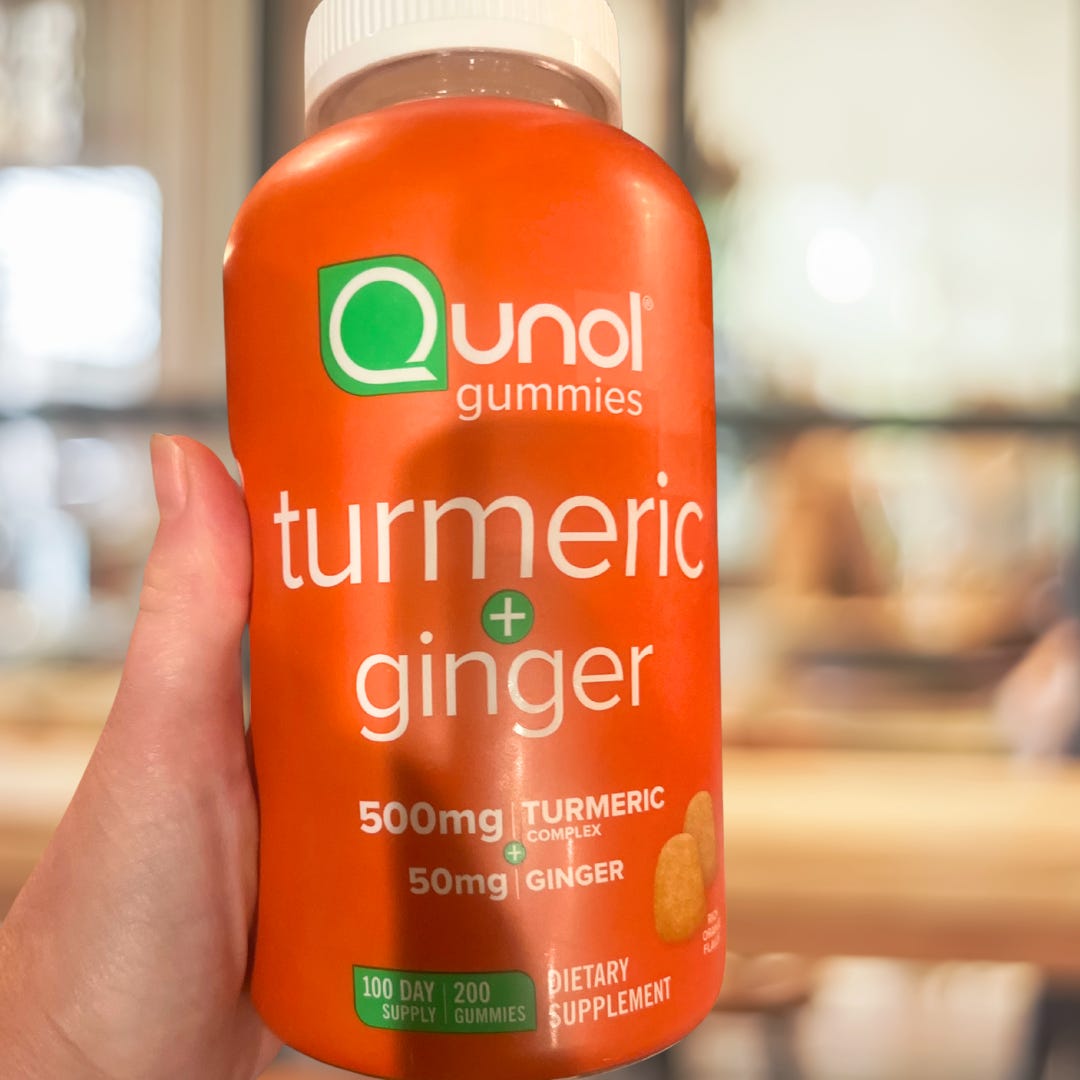
Inspired by a recent conversation with friends about natural remedies for the joint pain that inevitably creeps up later in life (and the discovery of these tasty ginger-turmeric gummies at Costco), I decided to dive into the science behind turmeric, and its often-paired-with cousin, ginger. Similar to my previous exploration of Greens Supplements, this article uncovers the health benefits of turmeric and ginger, their synergistic effects, dosing recommendations, and potential interactions.
If you’ve listened to my podcast for multiple seasons, you’ve probably figured out that I'm exceptionally curious about dietary supplements. I remember being an undergrad studying nutrition at Auburn University and thinking what my life would be like as a future dietitian… researching supplements and helping people determine what to take and what to leave on the shelf.
Little did I know that graduate school and my dietetic internship would NOT prepare me for that life. Instead, the prescribed education was intended to prepare me for a life working in a hospital talking to patients about various “diets.” I don’t think I had one single class or on-the-job work experience in my year-long internship that involved learning more about dietary supplements. And frankly, I wasn’t too happy about it.
I remember getting to the end of my internship, almost ready to take the RD exam, and thinking “what have I done? This career is NOT for me.” I applaud my colleagues who work in hospitals in patient care, but that was never going to be my jam.
Instead, I ended up in the test kitchen and as a food editor at a couple of magazines for my first full-time RD jobs right out of grad school, and loved it! But as much as I loved food media then (and still do… did you know I also write a baking blog?), I’ve never lost my interest in dietary supplements. And as I begin to wind down the more general lifestyle focus of the podcast these last 8 years, you can expect that a lot more of these deep dives into supplements will pop up here on Substack.
What supplements I take and recommend are argubly the number one questions I get from family and friends. There’s so much confusion online, with so many influencers wanting to sell you stuff. And there is a fairly sizable contingent of my own professional group (registered dietitians) that poo-poo the notion that anything other than food is warranted when it comes to optimizing health and wellness.
And while I certainly maintain a healthful, well-balanced diet is the cornerstone of good health, I do believe there are some benefits to be had by choosing wisely and adding a few key supplements to your wellness routine.
For this particular post, I’m unpacking what you need to know about a supplement that I’ve recently gotten a fair number of questions about — turmeric.
Turmeric (Curcuma longa) and ginger (Zingiber officinale) are often sold together in supplement form. So let’s look at both. Staples of traditional medicine in Southeast Asia, they are more than just flavorful additions to curry powder. They share key bioactive compounds with antioxidant properties and are often paired together for their potential health benefits, particularly in addressing chronic inflammation and supporting the digestive system.
Anti-Inflammatory Power: Curcumin, the active ingredient in turmeric, and gingerol, found in fresh ginger, both work as natural nonsteroidal anti-inflammatory drugs (NSAIDs). Studies suggest their combination can help with arthritis pain, particularly in conditions like rheumatoid arthritis and knee osteoarthritis (1).
Enhanced Absorption with Black Pepper: Curcumin supplements often include black pepper to enhance absorption of curcumin, as curcumin has low bioavailability on its own (2).
Exercise Recovery and Muscle Soreness: Turmeric may help in managing exercise-induced inflammation and muscle soreness, enhancing recovery and subsequent performance in active individuals (2).
Cognitive Support and Brain Health: Turmeric and ginger have individually been studied for their effects on cognitive function. Curcumin, the active compound in turmeric, has shown potential in some animal studies to support brain health and may have applications in Alzheimer’s disease research. Ginger, particularly ginger extracts, has been linked to improved cognitive function and memory in some studies. However, the combination of ginger and turmeric has not been widely studied for brain health, and more human studies are needed to determine their collective impact (3).
Digestive and Metabolic Health: Ginger and turmeric support bile production, which helps break down fats and relieve digestive symptoms like abdominal pain, motion sickness, and morning sickness (4).
Cardiovascular Support: Cardiovascular Support: Turmeric has been shown to reduce blood pressure and improve arterial compliance, while ginger exhibits antihypertensive and cholesterol-lowering properties, both contributing to heart health (5).
Turmeric Powder / Turmeric Extract: Turmeric tea or turmeric juice can be beneficial, but for therapeutic effects, higher doses (500–2,000 mg/day of curcumin) are often recommended (6).
Ginger Root / Ginger Supplement: A smaller dose (1–2 grams per day) is typically sufficient to reap the health benefits of ginger (7).
Blood-Thinning Medications: Both turmeric and ginger may interact with blood-thinning medications, so those taking anticoagulants should exercise caution (8).
Tamoxifen and Cancer Medications: A recent study found that high doses of turmeric could interfere with tamoxifen’s effectiveness in treating breast cancer. Patients undergoing treatment should consult a healthcare provider before using turmeric extract or curcumin supplements (9).
Liver Disease: Excessive intake could exacerbate pre-existing medical conditions, particularly for those with liver disease (10).
The combination of ginger and turmeric provides potential benefits for numerous inflammatory conditions, metabolic support, and overall wellness. However, as with any dietary supplements, it’s a good idea to discuss usage with a healthcare professional, especially if you’re taking medication or have existing digestive disorders or chronic inflammation.
Looking to incorporate turmeric and ginger into your daily routine? Check out my fave supplements on Amazon, including high-quality curcumin supplements and ginger supplements that I personally recommend! Shop my favorites here. (Affiliate link – I may earn a commission at no extra cost to you!)
Thanks for reading Regan | This Unmillennial Life! This post is public so feel free to share it.
This article is for informational purposes only and does not constitute medical advice. Always consult a healthcare professional before making any changes to your supplement routine, particularly if you have existing medical conditions or take medications.
Comments
Nothing yet. Say the first thing.
Sign in to join the conversation.