
Friends, I got to meet Robin Wall Kimmerer this weekend! As I write this, we are smack in the middle of that glorious biennial book party here at my university, the Calvin Festival of Faith & Writing. Sponsored by the Calvin Center for Faith & Writing, the Festival brings about 50 authors and 2000 attendees to campus for three days of conversation around all things faith and literature. Kimmerer was our Thursday evening plenary speaker, and I had the wonderful privilege of introducing her. Gah!
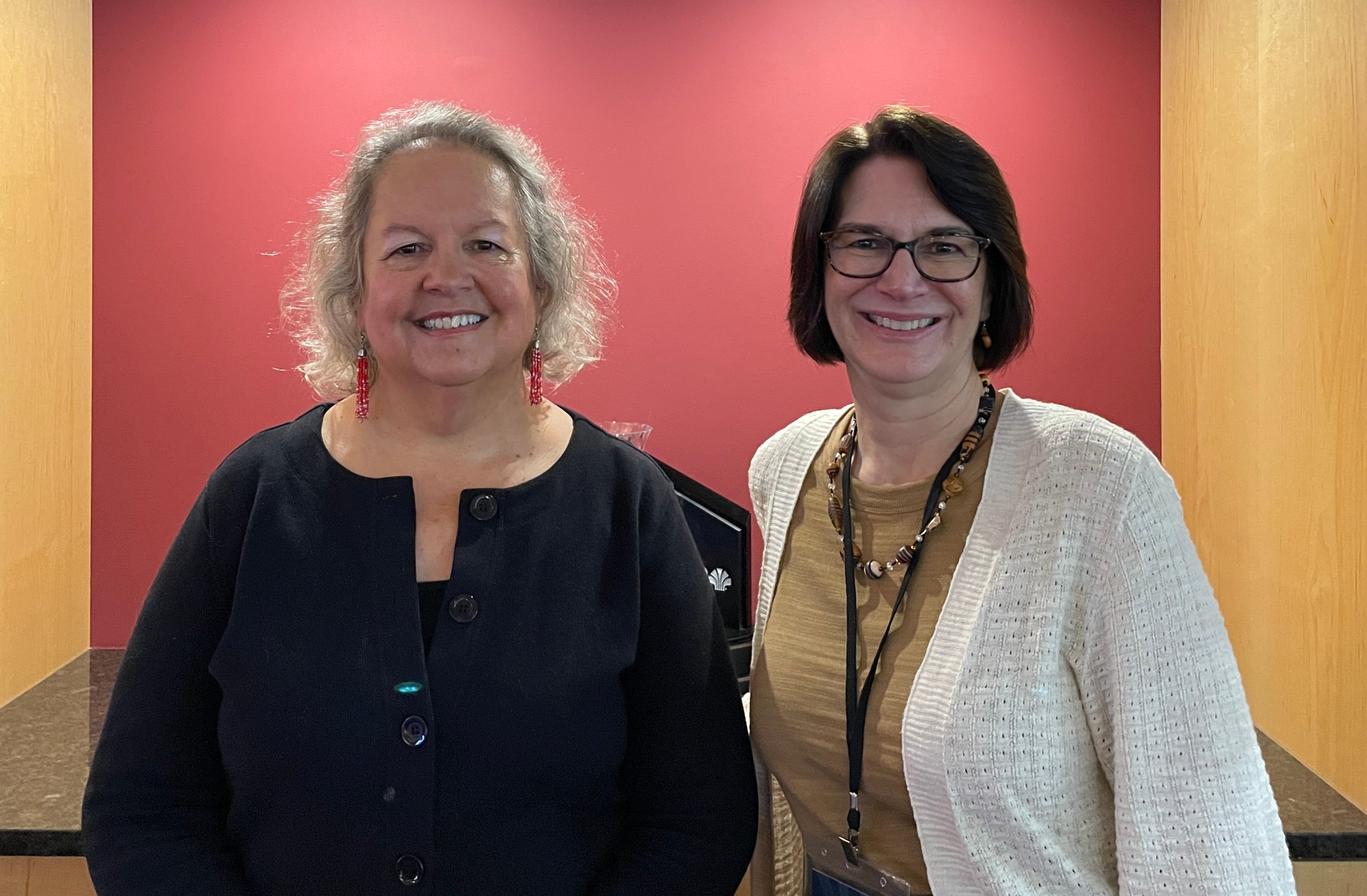
Here we are before her evening lecture, which was, of course, utterly compelling and inspirational. If you can ever hear her speak in person, my suggestion is: do it.
I trust you know all about Kimmerer’s work, but if not, please read Braiding Sweetgrass as soon as you can. She has other marvelous books, too, but Braiding Sweetgrass is, I think, the best way to immerse yourself in her prophetic combination of botany, indigenous wisdom, and storytelling. It is a life-changing book—I know that myself and, as I observed the book-signing line after the talk, I overheard so many people thanking her, hand on heart, for what her work has meant to them. They were positively glowing.
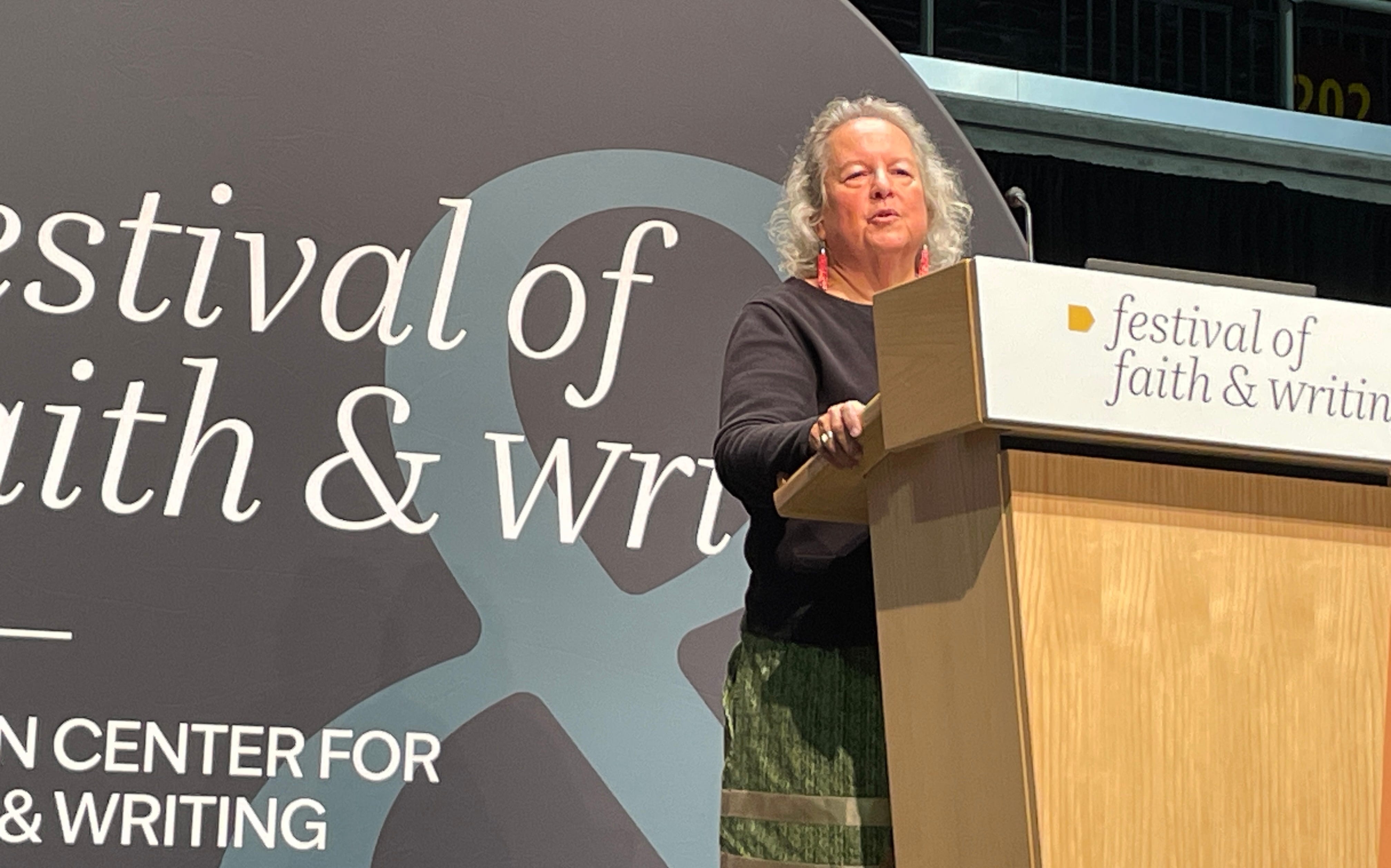
Kimmerer ended her talk by telling a Haudenosaunee story that spoke to living at a dangerous inflection point in history. She had us completely mesmerized.
In another session, I got to moderate a fascinating conversation between Kimmerer (can I call her Robin now?) and my friend Kyle Meyaard-Schaap, author of Following Jesus in a Warming World. We talked about how faith communities (especially Christians) can learn from indigenous wisdom. I’m hoping a recording of the session will eventually be released as an episode of the Center’s podcast ReWrite Radio. I’ll keep you posted.
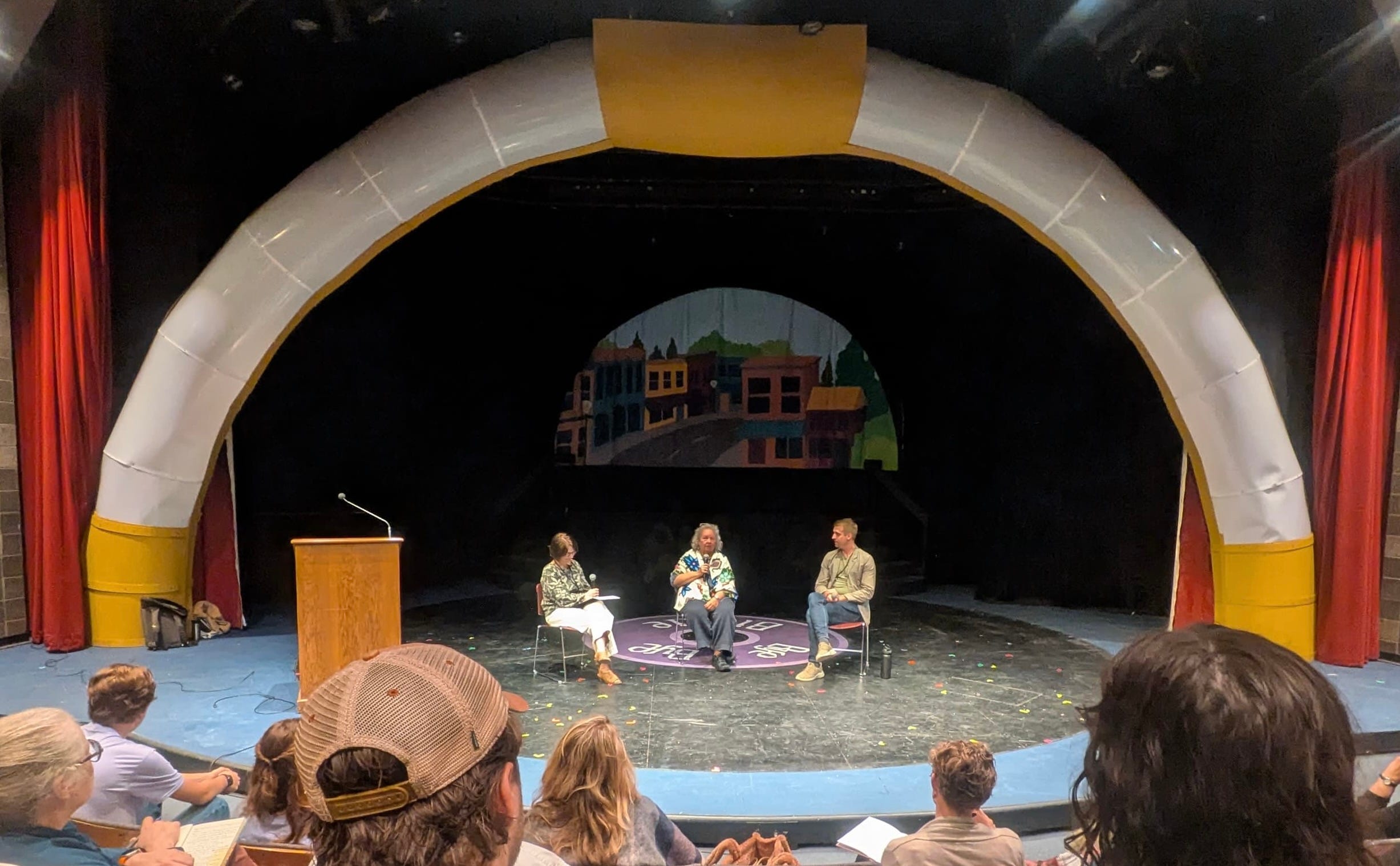
Thanks to Betsy King-MacDonald for the photo. In case you’re wondering about that tube thing: our session took place on the stage where the Calvin students would be performing Bye Bye Birdie that evening. When that tube thing is lit up, it resembles a jukebox. Cool, eh?
Anyhow, it’s always so great to meet someone you admire and find out they are as lovely and kind in person as they seem on the page.
As if that wasn’t enough for one week, I’ll be interviewing Bishop Mariann Edgar Budde on Tuesday evening. Bishop Budde leads the Episcopal Diocese of Washington DC. You might recall her (in)famous sermon during the recent inauguration, in which she pleaded with a certain new (old) president to show mercy to the most vulnerable. The event Tuesday evening (7 pm ET) is free and online, sponsored by Third Act Faith. We’ll be asking Bishop Budde about interfaith friendships and coalitions of moral witness. Come join us!
Since I’m running around campus this weekend trying to help host our big festival, I’m trying to keep this edition of the newsletter short. So here I’ll simply revel again in the photos gifted to us by the crew of the Artemis II mission.
First, let’s recall this incredible photo, “Earthrise,” taken in 1968 by William Anders of the Apollo 8 crew.
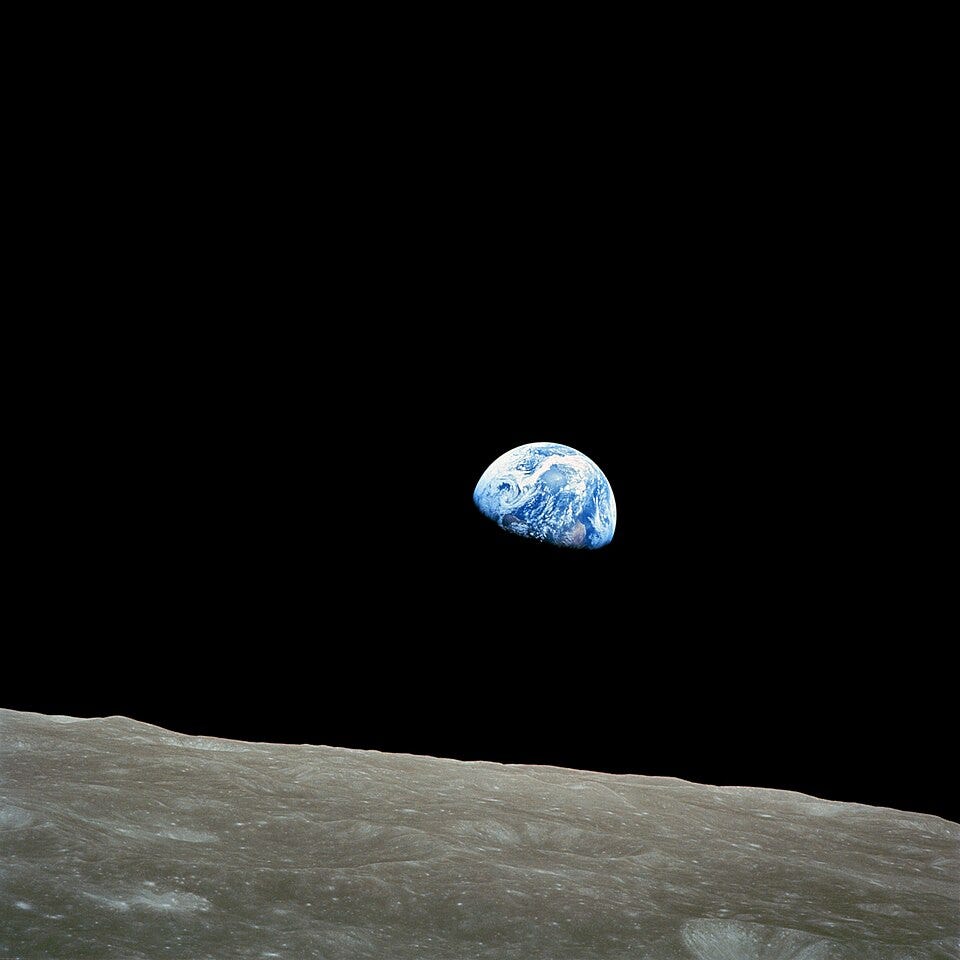
In 1968, humans had never seen their earth like this, as a whole, from a distance. So beautiful. So fragile. So oddly small against even a miniscule framing of space’s vast expanse.
Yes, the photo may have helped catalyze a nascent environmental movement. The “Blue Marble” photo taken in 1972 also became iconic, of course. The reason, though, goes far beyond environmentalism. People understood viscerally perhaps the single most crucial principle humans have been striving to learn: we are all connected, all in this together, woven in a single garment of destiny.
Could these new photos help us review that lesson, at a moment when we so desperately need it?
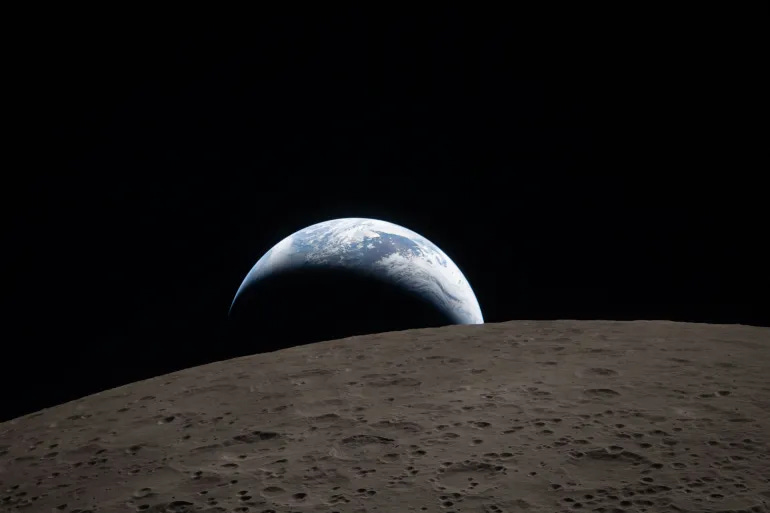
This one is called “Earthset,” which I hope is not prophetic. It was taken on April 6 by Reid Weisman, commander of the Artemis II crew.
It’s been interesting to read what climate communicators are saying about these photos. Katherine Hayhoe, climatologist and consummate climate communicator, focused on Pilot Victor Glover’s words: “As we continue to unlock the mysteries of the cosmos, I would like to remind you of one of the most important mysteries there on Earth, and that’s love. … To all of you down there on Earth and around Earth, we love you from the moon. We will see you on the other side.” Hayhoe remarked that these words gave her goosebumps because “it is so close to what I say about why we need climate action.” [bold original]
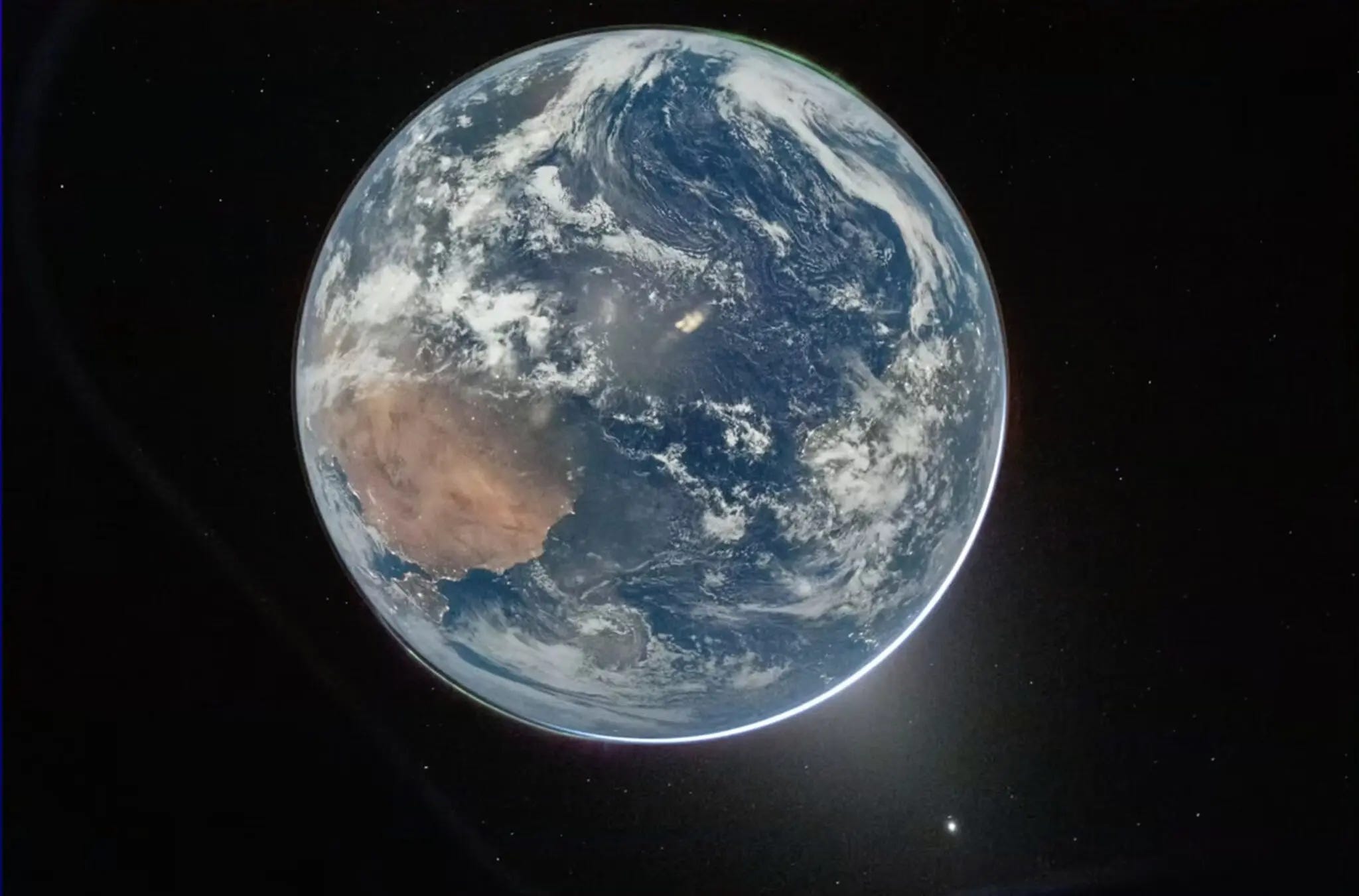
This one is called “Hello, World.” It was taken on April 3. Everyone is agog about the auroras you can see glowing at the earth’s poles (see the green tinge on the upper right).
Ayana Elizabeth Johnson, marine biologist and another consummate climate communicator, also wrote about the Artemis mission, and she quoted another climate scientist, Kate Marvel. Until recently, Marvel worked for NASA, but she resigned on March 24. (I just reviewed Marvel’s latest book here.) Here’s what Marvel said in her resignation letter:
Space should be for everyone who lives on this singular planet, not a playground for the wealthy or a frontier to dominate.... We should remember what we’ve been shown: the beautiful marble, the Earth half in shadow from space, a pale blue dot seen by a little machine sent far from home. The more we learn about the Universe, the more we should cherish our perfect and irreplaceable home.
Besides reveling in the photos, other folks have been wondering why this whole mission made us feel so deeply. One writer, Liz Plank, titled a post “Artemis II is Competency Porn and We Are Starving For It.” Here’s what she wrote:
Did you feel it too? That specific relief that’s hard to name. I found myself trying to understand it. The closest I can get is this: the feeling of watching something go right and realizing, somewhere deep in your body, that you had forgotten things could go right. Because when something actually goes right, when the people in charge do their jobs well, speak in full sentences, make decisions that protect people instead of endangering them, the reaction can feel strangely emotional. What you’re feeling isn’t just relief, it’s grief. Grief for every year you spent bracing. Grief for how normal the bracing became. Grief for how completely you forgot that competence was once ordinary.
That is not a small thing. That is your nervous system coming up for air. I want you to enjoy it.
I don’t usually read Liz Plank, but this essay is worth a look. Unfortunately, as Kate Marvel’s resignation signals, NASA is still in deep trouble from explicit and implicit censorship of their work. You can read more about that here.
And if you want even more reflection on the Artemis II mission, here’s the essay I wrote reflecting on the spiritual implications of seeing our world as one integrated whole in which we are all interconnected. (You might recognize a couple sentences from the essay that ended up in this post… shhhhh…)
For all you forest lovers, we have a bad news/sort-of good news situation here. The bad news is that forests all over the world are under threat, not only from deforestation but from climate change itself. The good news is that biologists continue to gather data to help us understand these threats—and we hope—motivate more strenuous efforts to protect forests.
Bob Berwyn of Inside Climate News published a piece last week describing two recent studies. Summarizing the basic principle of these studies, Berwyn writes:
Climate shocks don’t act in isolation; they can cascade through forest systems and amplify one another, as weaker trees and leaves become more vulnerable to insects and wildfires.
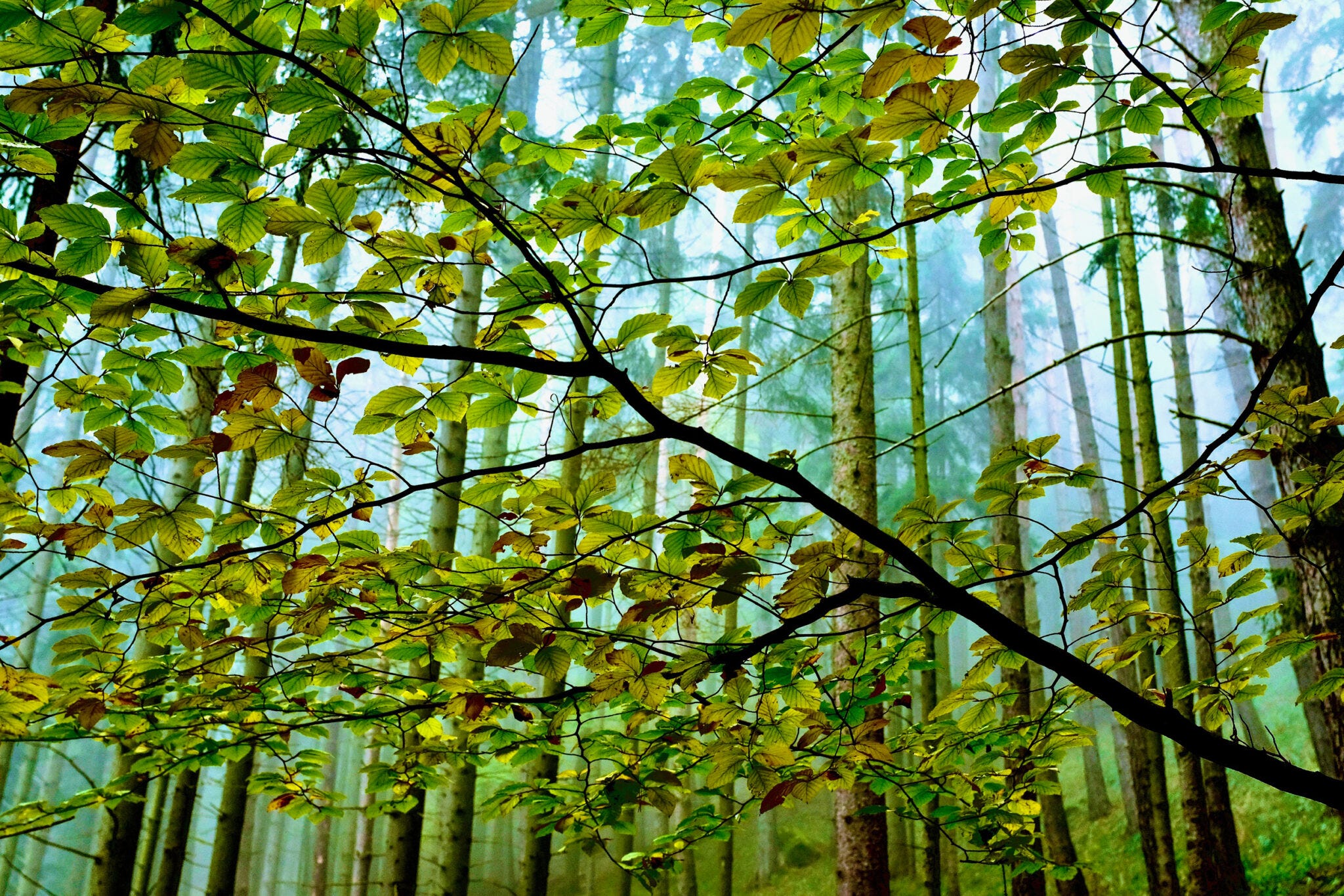
Beech forest in Europe. Image credit: Bob Berwyn via ICN. You’ve got to appreciate a reporter who reads dense scientific studies and takes lovely photos.
Heat and drought, in particular, form a kind of double-whammy that forests have difficulty adapting to. The damage is evident from space:
Recent hot and dry summers [in Europe] have damaged forests on a scale visible from space. Leaves dried, scorched, faded and even died weeks or months ahead of schedule.
To understand the limits of what trees can tolerate, one recent study “identified climate thresholds beyond which leaves are irreversibly damaged.” More technically, the study examined, in lab conditions, the “hydraulic–thermal cascade that defines a critical vulnerability of temperate forests to intensifying hot droughts.”
Meanwhile, another study worked on modeling cascading disturbances in order to develop modeling tools that will help forest managers focus their protection efforts on the most vulnerable areas. The study’s conclusions are not exactly encouraging:
Our results show that forest disturbances will continue to increase throughout the 21st century, with disturbed areas more than doubling relative to the recent past under an unabated continuation of climate change. Wildfires are the main agent driving future disturbance change. Changing disturbances result in an increase in young forests, substantially altering Europe’s forest demography. Because of their profound implications for forest carbon storage and the habitat value of forest ecosystems, disturbances should be a priority of forest policy and management.
Right. The word “unabated” there is key. Everything we do to “abate” climate change helps preserve forests, and we need our forests to be the lungs of the planet, storing carbon, creating habitat, moderating extremes. All our lives depend on the earth’s forest ecosystems.
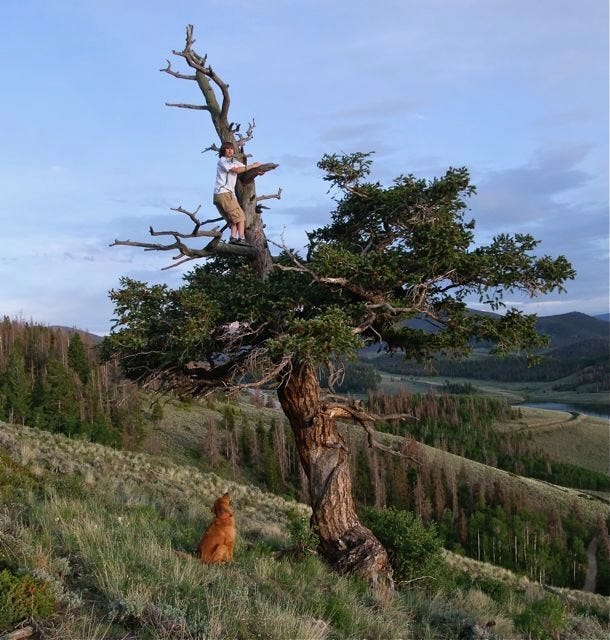
Another great photo by Bob Berwyn of his son in a Douglas fir. Note the dying lodgepole pines in the background—and the refugia still hanging on. Also note that very good dog watching out for his friend.
Heat, drought, wildfire—unfortunately, those factors create ideal conditions for another plague: insects. In a behind-the-scenes piece on Berwyn’s coverage of forest stories, he describes bringing his son along to interview a Forest Service scientist in Colorado to learn more about bark beetle infestations:
It was hot and windless. At one point, the scientist asked us to stop talking and listen. After a few seconds, we heard and felt a faint, pulsing vibration—the sound, she said, of millions of beetles chewing through the nutrient-carrying phloem layer just beneath the bark.
The damage was mostly invisible, but it was happening everywhere at once. The researcher explained that spring had come so early and summer lasted so long that the insects were breeding an entire second generation within the seasonal cycle, something that had never been recorded before the 1980s. That all but guaranteed that the remaining trees would be overwhelmed, and soon after, the mushroom patch would disappear.
Forests will do their best to adapt, but they do have limits. Supporting the work of forest preservation and health is, therefore, good refugia work. In fact, Appalachian forest activist Danna Smith makes an economic argument for resisting the tantalizing prosperity promises now dangled before stressed rural areas: AI data centers. She writes:
Forest protection is a proven economic strategy for rural communities. The outdoor recreation economy generates far more revenue and jobs than the timber industry. Conservation and recreation jobs, ecological restoration, and community‑led development create long‑term prosperity without sacrificing land, water, or health. These sectors keep wealth local, strengthen small businesses, and attract people who want to live in places defined by beauty and belonging—not destruction and noise.
In further celebration of indigenous wisdom and healing, I want to share this incredible story about the Quapaw Nation in northeast Oklahoma who cleaned up a Superfund site. I learned about the story through one of my go-to sources: Alaina Woods’s Good Climate News Substack (highly recommend). Her summary is great, but this article by Todd Price in the Guardian offers even more detail.
The background here is a typical horror show featuring all the injustices perpetrated against Native peoples. Dispossessed Native people were “given” land in northeast Oklahoma and expected to become “civilized” and farm it according to settler methods. Some of the region was then brutally poisoned with iron and zinc mining waste for almost a hundred years. (The mined metals were used—get this—to make bullets and shells.) Naturally, the mining companies abandoned the land when the mines ceased to be profitable. They left behind toxic, nearly dead land and people with severely high incidences of lead poisoning.
Todd Price describes what happened next:
By 1983, the Environmental Protection Agency (EPA) had designated 40 sq miles that include nearly all the Quapaw Nation as the Tar Creek Superfund site, joining the EPA’s list of the most contaminated places in the country. Informally called a “megasite”, Tar Creek remains one of the largest and most complex environmental disasters in the country.
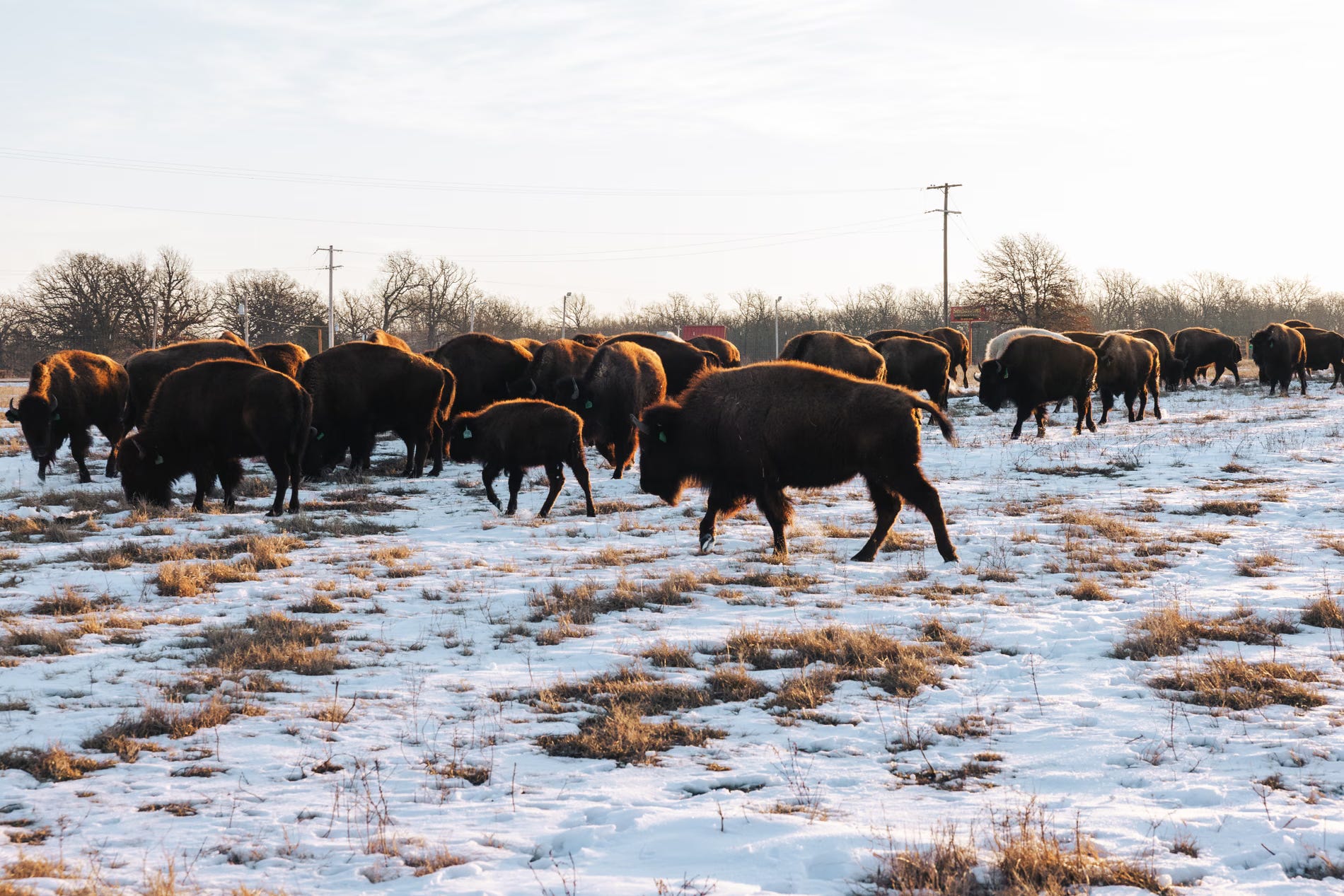
The Quapaw can now graze bison and cattle on restored land, as well as grow crops. Image credit: Thalia Juarez for The Guardian.
The government made a few lame and insufficient efforts at cleanup. Then, in 2013, the Quapaw got permission from the EPA to clean up the land themselves. Basically they said: “We’ll do it, and we’ll send you the bill.” Which is more or less what happened. The tribe has been working to detox, cleanup, and renew the land so that it can be used for agriculture and cattle-grazing. So far, the Quapaw have restored about 600 acres, including a 200-acre parcel called the Laue:
After years of cleanup, the Laue has been cleared of chat [poisoned mining rock waste]. The ground has been restored and tested. The soil is healthy again. Like hundreds of acres across the Quapaw Nation, it has returned to agriculture. And the Quapaw, a community with more than 6,000 members, have led this revitalization themselves as the first and only tribal nation in the country to manage and carry out a Superfund cleanup. By cleaning contaminated ground – a slow process that began 40 years ago and will likely continue for decades – the tribe can expand its farming efforts and food production on its own terms.
The tribe now grazes cattle and bison on the land and they grow wheat, soy, corn, vegetables, and more as part of their food sovereignty programs. This process continues to require enormous ingenuity and dedication from tribal experts and leaders—it’s worth reading the article to learn about the details. It’s another astonishing story of indigenous people, after centuries of brutal and grossly unjust treatment, nevertheless acting as skilled caretakers—working with the land to create refugia spaces.
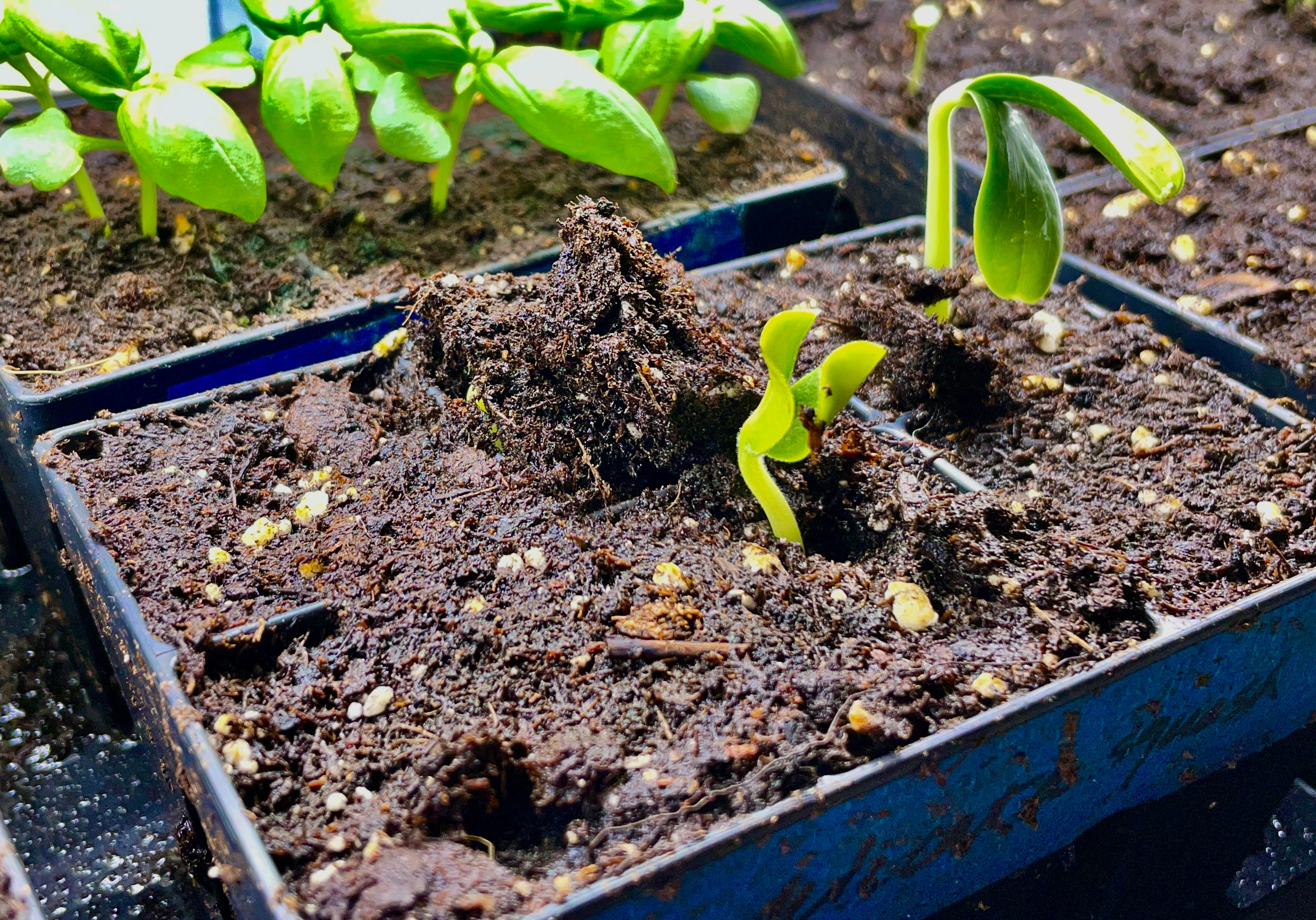
Every year I get more ambitious with my gardening aspirations. I’m still just a beginner, but I’m learning! I thought you might enjoy a glimpse at what’s happening with my seed starts. I saved some delicata squash seeds from a grocery store squash last year, and look! That little sprout in the front? That’s a delicata squash! More special, though, is that powerhouse sprout in the upper right. That’s a Palestinian heirloom seed called a Yakteen Gourd. My friend Linda gifted me with two huge seeds. They’re both sprouting. Notice in the middle-left of the photo how the second Yakteen seed is bursting the soil so powerfully it’s creating a miniature earthquake! If you look closely, you can spot the green sprout. In honor of all new life—and the hope of healing in Palestine and everywhere—thank you, little seeds!
No posts
Comments
Nothing yet. Say the first thing.
Sign in to join the conversation.