
Toasted Ravioli is actually not toasted
The history of The Hill
St. Louis Red Sauce run down
St. Louis is famous for two Italian things. Neither of them is a restaurant.
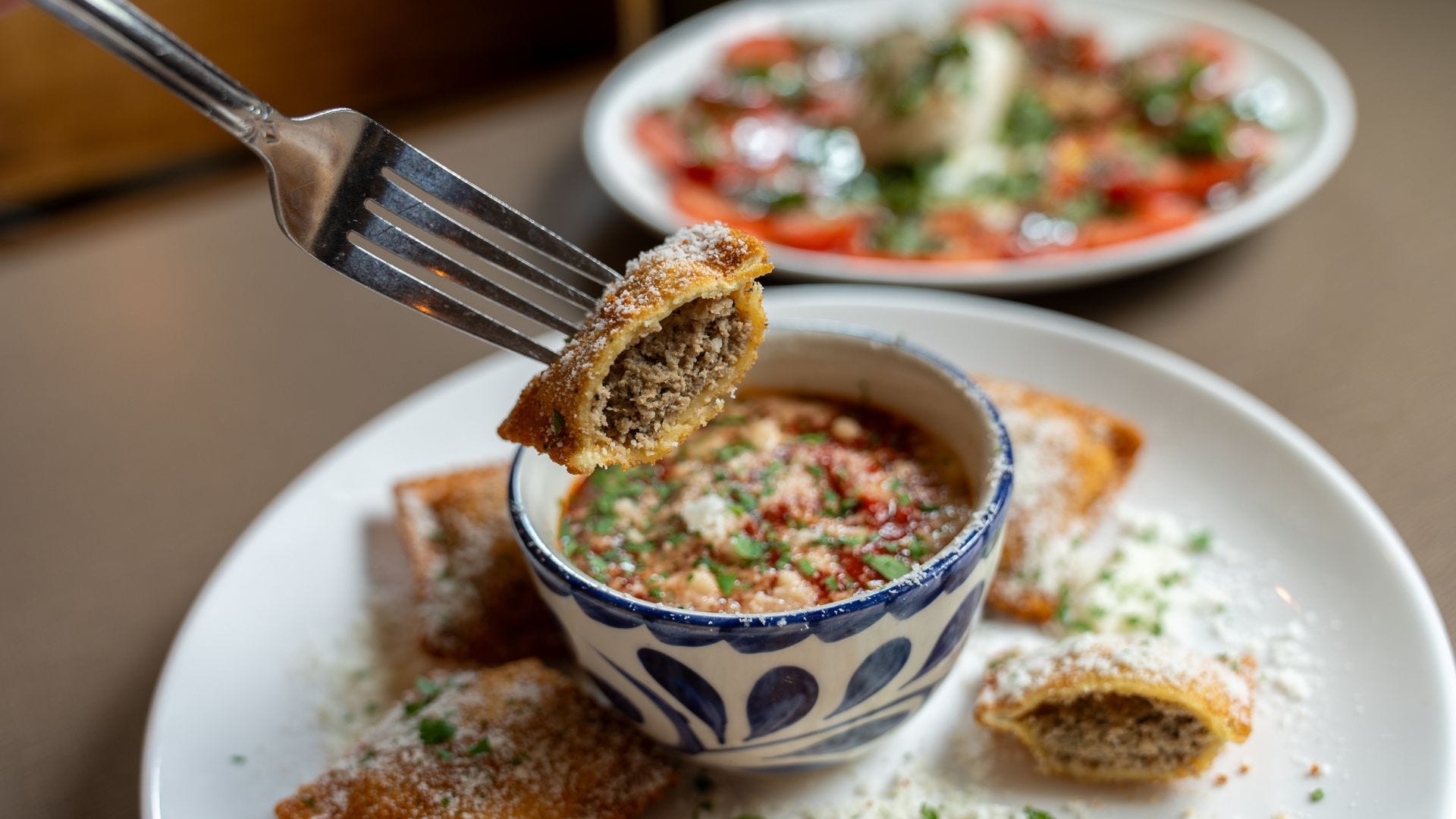
The first is toasted ravioli, which is not toasted. It’s breaded and deep-fried, almost certainly invented by accident in a Hill kitchen sometime in the 1940s when a cook dropped pasta into the wrong pot, and now carries a three-way origin dispute that has outlasted everyone who started it.
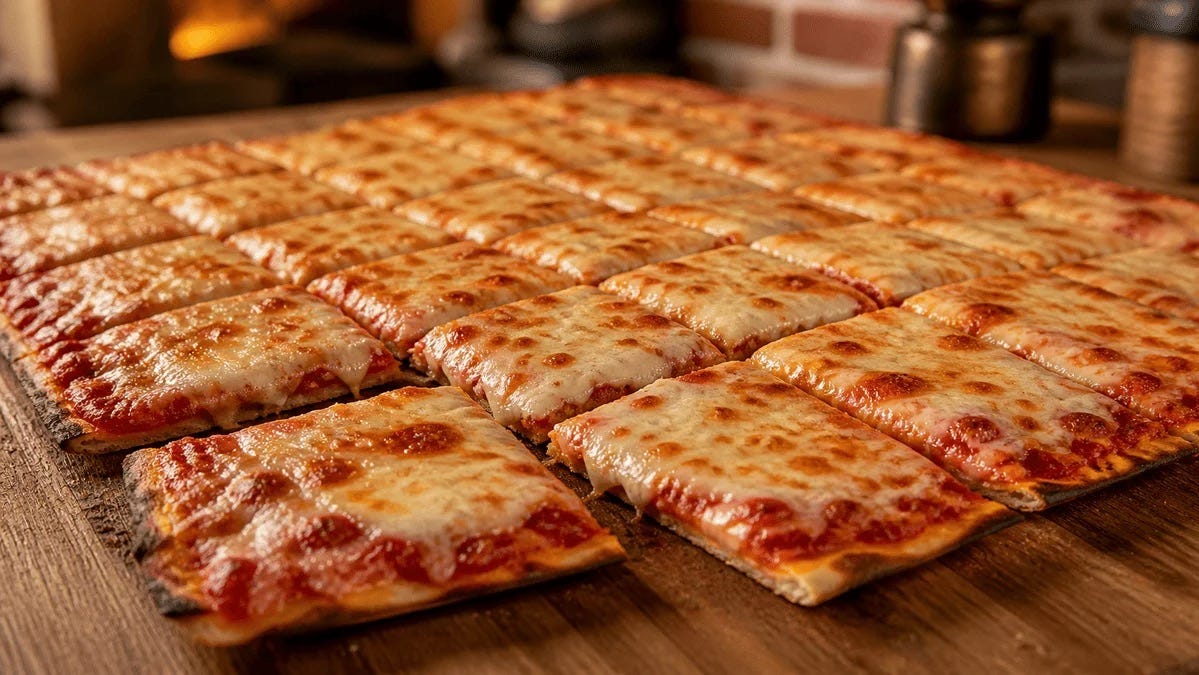
The second is Provel, a processed blend of cheddar, Swiss, and provolone developed on The Hill in the 1940s, smoked, low-melting, and used on the city’s signature square-cut pizza in a way that produces strong opinions in both directions within thirty seconds of the first bite. St. Louis knows these things about itself. It puts them on menus and t-shirts and argues about them at family dinners.
What it doesn’t get credit for, at least not outside its own zip codes, is the neighborhood that produced both of them. The aforementioned Hill.
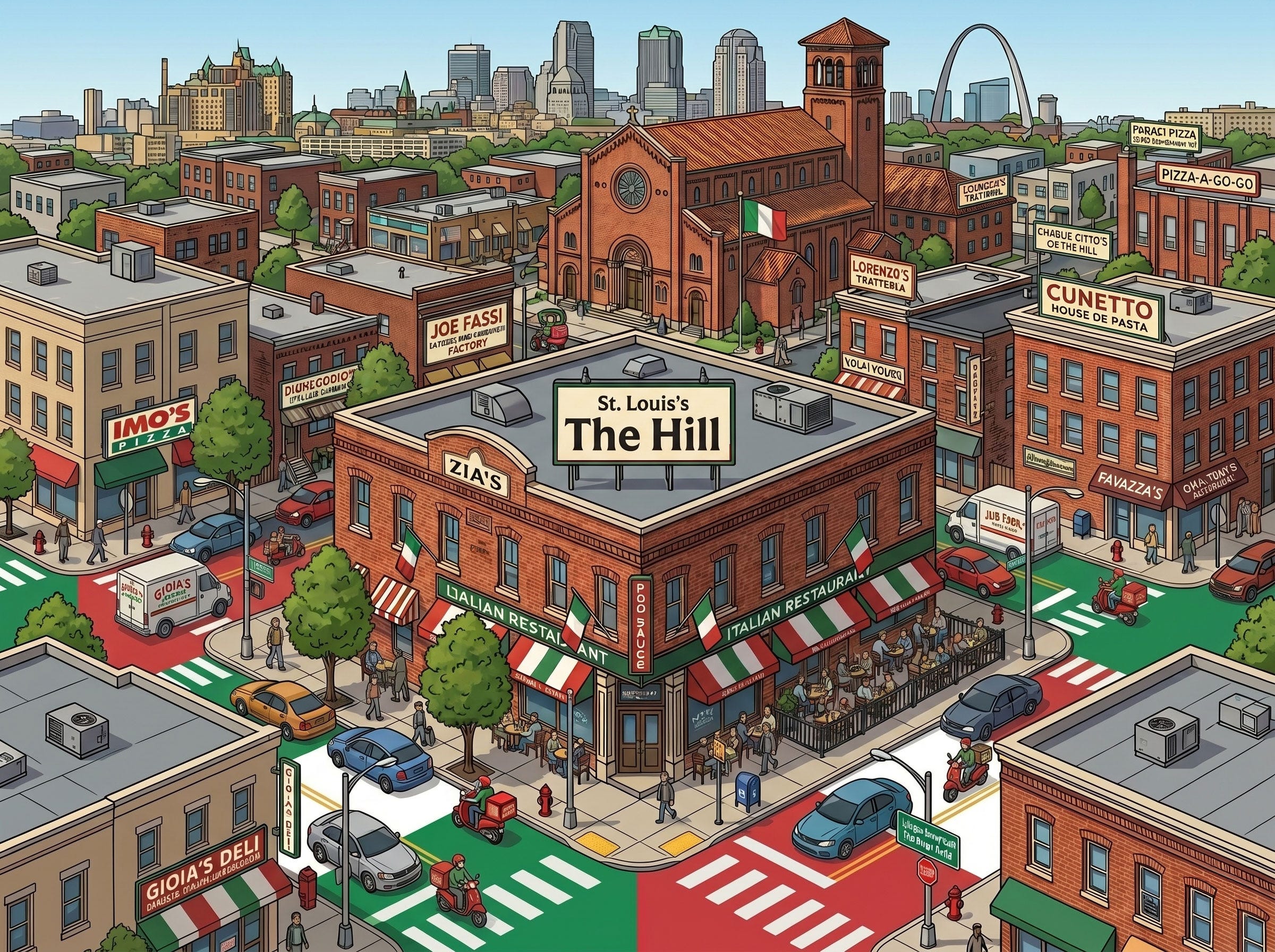
A few weeks ago a reader, referencing The Red Sauce Map, asked whether there were any good red sauce joints in St. Louis. We had an answer BUT had yet to update the map. So this weeks digest is dedicated to answering her question and filling that shameful gap on the map.
The city comes up in conversations about barbecue, The Gateway Arch and, of course, Anheuser-Busch. It doesn’t come up the way New York, New Jersey, Providence, or Chicago do when the conversation turns to Italian-American food culture. We had a gap on the map and we didn’t know how wide it was.
So we went extra deep this week looking for the best Red Sauce Joints, Pizzerias and Italian Delis. What we found was not a gap. It was a neighborhood that has been there the entire time, doing exactly what neighborhoods like this do, which is cooking for the people who live there without much concern for whether anyone outside the zip code has noticed.
Welcome to The Hill.
About fifty blocks of Italian-American St. Louis, built by immigrants who came for the clay mines in the 1880s, stayed after the mines dried up, and turned a working-class enclave into one of the most intact Little Italys left in the country. By the 1920s the neighborhood was self-sustaining. Residents could find everything within walking distance. Many of the businesses were started by former miners who had saved enough to open shops. Some of those shops, improbably, are still open.
This is the rundown. Three categories, because that’s how The Hill, and our Red Sauce Map, actually works. Here we go.
Dominic Galati emigrated from Sicily to the United States in 1964 and opened Dominic’s on the Hill in 1971. The founding story is worth sitting with. To buy Andreino’s, the restaurant at Hereford and Wilson that would become Dominic’s, he and his wife Jackie had to sell the house they had saved for and owned for less than a year. Jackie’s reaction, looking back on it: “I almost divorced him.” They moved in above the restaurant instead.
Jackie built the front-of-house operation and set the tone for how guests were received, making people feel welcome “like you are in our home.” On special occasions, Dominic himself has been known to come to a table and sing. It’s the kind of thing that sounds like a bit until you’re sitting there and it happens, and then it makes sense in the way that only a fifty-year restaurant makes sense.
Vince and Joe Cunetto were pharmacists. In the back of their pharmacy on The Hill, they kept a three-legged, two-burner stove propped up with a coffee cup. They cooked old family pasta recipes on it. Doctors, drug salesmen, and neighborhood people came through for soup or a bowl of whatever was going that day. In 1972 they sold the pharmacy. In October 1974 they opened Cunetto House of Pasta, walked away from one career for another, and apparently never looked back.
The restaurant does not take reservations. Sunday is lasagna. Wednesday is chicken spiedini. Thursday is beef spiedini. It has been this way since 1974.
Founded in 1978 by Vito Favazza, his wife Ellen, and their son Tony. John Favazza, Tony’s brother, started by walking in the back door and washing dishes. The restaurant opened with 75 seats and has grown to fit more than 530 guests across dining rooms, a patio with a fireplace, and a banquet room.
The building carries its own history. It is the old Ruggeri’s, where Frank Sinatra and the Rat Pack ate when they were in St. Louis. Favazza’s replaced it and has since outlasted it by decades, now into a third generation with Tony’s son Mark in the operation. The Sicilian chicken, lightly breaded and charbroiled with olive oil, garlic, and lemon, is the plate three generations of St. Louis families come back for.
The building was Angelo’s before it was Charlie Gitto’s. Charlie Gitto Sr. worked there as a maître d’hôtel. Charlie Gitto Jr. opened the current restaurant in 1981. The toasted ravioli argument lives here, along with every other restaurant on this stretch that wants a piece of it. Order the ravioli and move on.
Zia’s has been on Wilson Avenue for forty years without making a project of it. The menu covers the Hill’s foundational vocabulary like linguine carbonara, chicken spiedini with prosciutto, tuttomare, veal piccata, toasted ravioli. The room is warm in the way dining rooms on this block tend to be warm, which is to say it feels like someone thought about the people who would be sitting in it rather than the people who might write about it. Forty years of that, one table at a time, adds up.
Procopio Catarinicchia emigrated from Sicily in 1972, changed his name to Tony, and opened Gian-Tony’s in 1989 after years working at Giovanni’s on The Hill. For 35 years he grew produce in an on-site garden and worked every service from his kitchen. This one is worth watching because it’s still happening. The Sicilian-born founder handing recipes to a family that spent decades eating in his dining room. The neighborhood absorbing itself, which is what neighborhoods like this do when they’re working.
Brothers Anthony and Rosario Scarato opened in 2003. Their father is Italian, their mother Greek. Both worked with their father Robert Scarato at Athens Café in the 1980s before attending culinary school and opening Anthonino’s with family recipes from both traditions.
The front of the restaurant was built in 1939 as a neighborhood bar. The original bar, hardwood floors, and ornate tin ceiling are still there. The menu runs from pasta and pizza to dolmades, tzatziki, and spanakopita. The pizza dough comes from their grandmother’s recipe, hand-tossed and closer to New York-style than anything else on The Hill. When it opened, Hill regulars pushed back on the thicker crust. It eventually won them over.
A Greek-Italian family on a Sicilian block, making what many people consider the best toasted ravioli in the city, with stuffed grape leaves three tables over. The Hill absorbed it without making a ceremony of it. That’s how it tends to work here.
Everything in the restaurant section above is older than Imo’s. Almost everything in the deli section below is older than Imo’s. Imo’s still wins the conversation. In 1964, Ed Imo, a tile setter, and his wife Margie opened their first parlor at the corner of Thurman and Shaw on a $1,500 investment. Ed continued working his day job while making pizza at night. Margie ran customer service and orders, using a repurposed tackle box as the cash register.
The pizza is St. Louis-style: unleavened cracker crust, edge-to-edge sauce, square-cut, Provel cheese. Provel was created on The Hill, reportedly by Tony Costa of Costa’s Grocery, who worked with a Chicago importer to develop a cheese that would maintain a creamy texture even when it cooled. It’s a blend of cheddar, Swiss, and provolone with a low melting point and a smoke note. People from outside St. Louis tend to have a strong opinion about it within thirty seconds of their first bite. The Imos were devoted Catholics who waited until 11:30 pm on Fridays for meat-topped pizza from restaurants near their home on The Hill. After years of that, they asked themselves why no one delivered. That question became nearly 100 locations across three states.
Frank LaFata opened Pizza-A-Go-Go on February 5, 1967, his birthday, on South Grand. Not on The Hill. Worth noting and worth not caring about, because the pizza has been made the same way since 1967 and that matters more than the address. Frank’s son Paul runs it now. Cash only. The dough goes through a three-day process. The sauce takes hours. The cheese is sliced Provel for even texture, finished with dusted Romano. All meats except pepperoni are boned, cut, ground, and seasoned at the restaurant. The crust is thin but not cracker, from a deck oven, with the kind of crisp, chew, and color only a deck oven produces. It has not changed. Paul says it never will.
Joseph and Dorothy Faraci opened in 1968 in a three-table dining room in Ferguson. After 13 years they bought their own building. Eventually their son Vince opened a second location in Ellisville. Their other son Pete joined him there when the Ferguson location closed in 1998. Also not on The Hill. Out in the suburbs. Vince cooks every pizza that comes out of the kitchen. That sentence is either a logistical impossibility or a commitment statement, and for a pizza that’s been made the same way since 1968, it reads as the latter. The dough, the sauce, the scratch-ground meats, the brick-bottom oven. Same as it was. Mrs. Faraci still comes in occasionally.
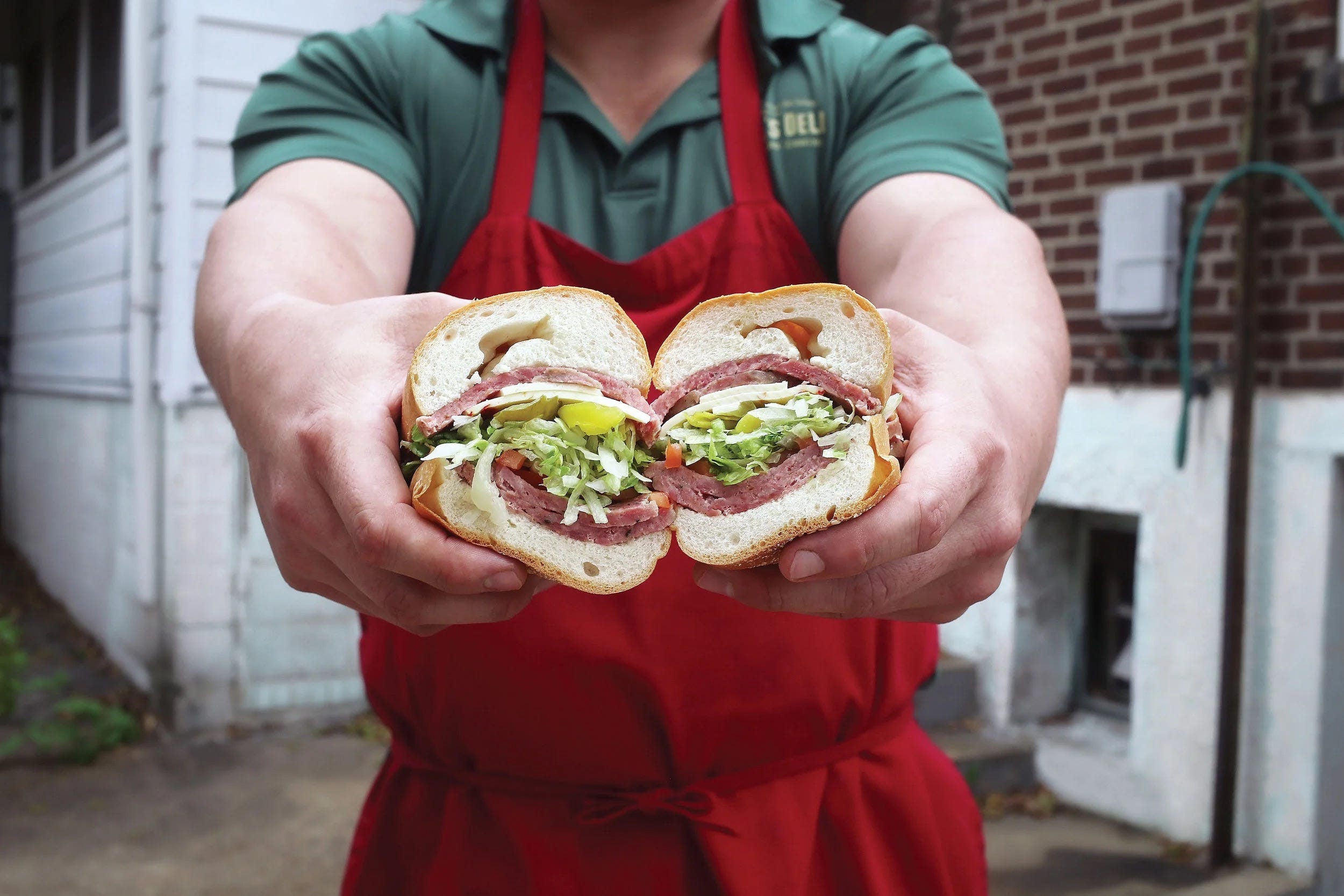
Start here. Charlie Gioia, a native of Marcallo, Italy, opened a grocery in 1918 in a building constructed of brick and wood salvaged from the 1904 World’s Fair. Cathy Donley bought it in 1980, pivoted it from grocery to lunch counter, and the hot salami recipe hasn’t changed since.
The hot salami is not spicy. It is hot as in temperature, and its texture runs closer to coarse pâté than to the sliced cured salami you’re used to. Porky, earthy, a little funky. Sliced thick, laid on bread from Fazio’s Bakery, provolone melted over it. Alex Donley, who now runs the place with his wife Amanda, is the only person currently blending the recipe. The secret ingredients live inside an old safe that sits in plain view among the customers.
Joe Fassi Sausage and Sandwich Factory was founded as a grocery store in 1926 by Paul Fassi. If you were on the Hill forty years ago, it’s quite likely you would have seen an old baby blue Ford van weaving through the neighborhood, hitching up on curbs, while a man named Joe ran an order of sausages into a customer’s ice box. Those sausages had traveled just a few blocks from what was then known as Fassi’s Market on Sublette Avenue, their casings stuffed just that morning by a hand-cranked machine.
During Prohibition, the store served as an ice cream parlor and for a time ran a brisk trade selling sugar to moonshiners on The Hill. Tom Coll’s mother was born in a room above the shop. The midwife who delivered her was Mrs. Volpi, who, it turned out, also had ties to sausage. Tom Coll has run the place since 1992. The sausage, meatball, and salad dressing recipes haven’t changed. There are 28 sandwiches on the menu. The connection between this shop and Volpi Foods, literally around the corner, is the kind of overlap that only a neighborhood this old and this specific produces.
Salvatore “Sam” DiGregorio was born in Lercara Friddi, Sicily in 1932. He and his wife Dora moved to St. Louis in 1954. In June 1971, Sam opened a corner grocery store on The Hill. In 1994, the Italian community organization UNICO named him Man of the Year. In 1998, the Columbus Day parade selected him as Grand Marshal. He distinguished himself as owner for 29 years.
The store is now into its third generation. Dora still greets patrons from behind the register. The counter runs imported cheese, Volpi meats, housemade salsiccia, stuffed pastas including seafood cannelloni and wild mushroom ravioli, olive oil, wine, and more Italian pantry goods than most people know what to do with. DiGregorio’s is where you go before cooking dinner. It’s also where you go when you don’t want to cook dinner and need someone to hand you something good without any additional decisions required.
John Volpi arrived from Milan in 1900 and opened his first store on The Hill in 1902. His first product was cacciatore, a small dried salami sized to fit into the pockets of the local clay miners. He dried the meat by opening and shutting windows to control the air. No electricity, no refrigeration, just knowledge of the process carried over from Italy.
Today, Lorenza Pasetti, Volpi’s grandniece, runs the company. Her father Armando was brought from Italy at age 14 to learn the craft and was still coming into his office at age 90 and getting behind the counter to slice meats on Sundays. The meats still dry-age in caverns beneath the shop, the same underground clay mine tunnels that brought the Italian immigrants to this corner of St. Louis in the first place.
It’s more shop than deli counter in the sandwich sense, but it belongs in this section because without Volpi there is no Gioia’s, no Fassi’s, and no sandwich on The Hill that’s worth ordering. The bread from Fazio’s, the meat from Volpi, the hot salami from whoever keeps the safe at Gioia’s locked.
The answer to the original question? Yes. St. Louis has red sauce joints. It has an entire neighborhood built around them, plus an Italian economy that predates most of the restaurants by decades, and yeah, it invented its own cheese.
The Hill won’t overwhelm you the way Arthur Avenue does, or the way Federal Hill in Providence announces itself. It’s quieter than that. Many Italian-American communities across the United States withered as new generations left for university educations, professional careers, and suburban homes. The Hill chose differently, using family, spirituality, and kinship as an anchor instead. The result is a neighborhood where the same families, or the people they trained, or the people those people trained, are still behind the stove.
To them, there wasn’t a hole in the map. There was a neighborhood that didn’t need the map to know where it was.
A monthly gathering around red sauce, tradition and family.
This map is filled with recommendations from people just like you. If there’s a red sauce joint, pizzeria, or Italian-American institution you love — click here to submit it.
Spread the love. Forward this email to that one Italian who knows all the spots OR send it to your foodie friend who’d love a peek.
More stories coming soon.
More pins every week.
-Janello
No posts
Comments
Nothing yet. Say the first thing.
Sign in to join the conversation.