
Folks using screen readers and anyone who prefers to listen — there’s an audio player bar just below this paragraph, with a play button on the far right. Please let me know if you have any trouble with it.
0:00
-24:25
I ended my last letter to you with an invitation – is there anything you’d like me to write about? Mai Suga asked how I compose my essays. (Thank you for wondering, Mai!) This essay is my attempt at an answer.
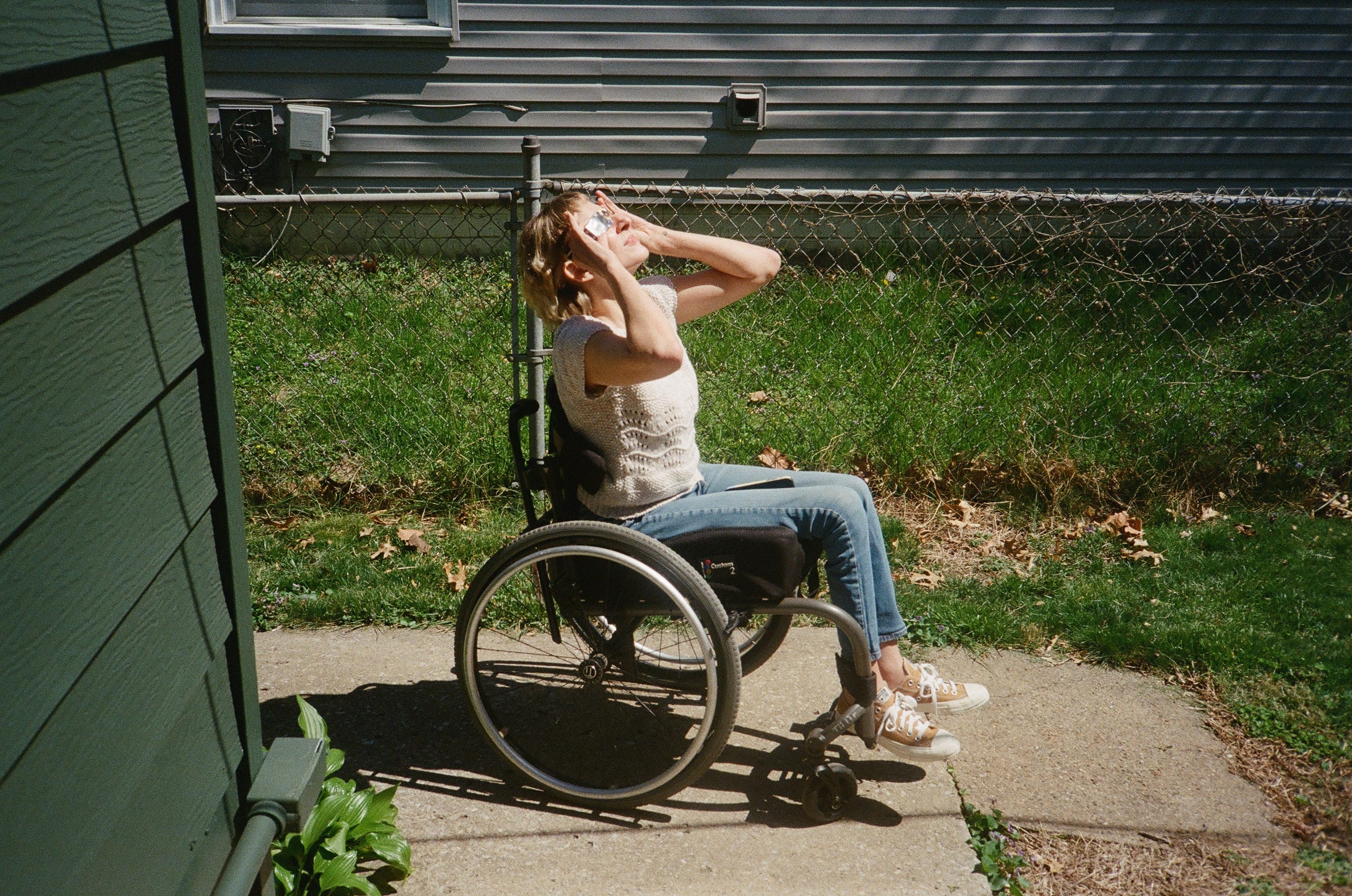
Last week, I sat in a room listening to a group of surgeons rattle off medical terminology like slam poets. They delivered with rhythm and precision – these perky, syncopated, indecipherable words meant something to them! How weird! How spectacular.
And then it was my turn, and I pushed myself up the ramp to the stage. I give talks often, but I was nervous about this one. What stories could I tell that would mean anything to surgeons? I mean, we don’t even speak the same language! Also, to hold the microphone in this room felt like a great privilege and responsibility. What was it I planned to say with my one wild and precious hour?
I began the way I often do when facing a room full of strangers, calling attention to the undeniable truth most of us put considerable energy into ignoring – that for all of the many differences between us, one thing that every single one of us without exception has in common is that we will live our entire lives tethered to one body, those bodies will relentlessly grow, change, and age, and if we live long enough, every single one of us will return to bodies that require care. This time as I conjured all the bodies in the room, it occurred to me that the people in front of me hadn’t moved theirs in an hour, and I said, “Hey, speaking of your bodies, do you want to take 30 seconds to wiggle? To stretch? To shake it out?” They giggled at me and didn’t move. “No, that’s right, you’re surgeons,” I said. “You don’t need to wiggle.”
There are many definitions of ableism, but for this group, I chose Norman Kunc’s – “Ableism is the belief that humans should be non-disabled.” I know! Just saying these words in front of a room full of medical professionals, I felt a little uncomfortable. Like I was murdering their favorite childhood doll right there up on the stage. A gory disruption.
But why?
I’m sorry, it had to be done.
To be clear, this group was gathering with the specific intent to learn how best to support their patients. That’s why they’d invited me of all people to speak – the one who hadn’t spent an hour in medical school. And as I listened to them talk with each other, even in their alien lyrics, I heard them asking great questions – the kinds that consider patients as whole human beings and not just medical specimens. That struck me.
But when I squint at a distance, picturing the great wide profession of Surgeon, I think of the ones who’ve dedicated their entire lives to one grand obsession – fixing the human body. I grew up hearing about the surgeon who operated on my toddler body, twice razor-slicing away the tumor that had wound its way around my spine as thin as pencil led. The second time, he cried as he told my mom he’d wanted to return me to her jumping and skipping. Instead, the cancer was gone and my legs were limp.
It’s in this tension – when one unfixed body bumps into the expectation that it should be nondisabled – that I’m reminded of Mai’s question. It’s usually the wrinkle I can’t stop rubbing my thumb over that prompts the writing.
And disability, I find, has a way of creating these moments of tension. Disability disrupts – expectation, imagination, timeline, the flow of traffic, the arc of narrative. And inside that crack – a question.
I know, I know, so often questions are asked of disability – what happened to you? Why are you in that wheelchair? Have you tried leafy green vegetables? These questions are like little plastic moles popping their heads up in an arcade game. You pay a quarter to play. They’re built to be smashed. They’re not generative, juicy, fruitful.
Disability asks questions that go beneath underground power lines. They go further back where the fossils rest and watch from someplace in the distant future when our great grandchildren wonder why we did what we did.
These are the kinds of questions that compel me to write. To answer Mai’s question, I went back to my notebooks and looked through scattered Google docs, sorting through the seeds I’d gathered. How do I compose an essay? What I found were so many questions.
Questions, like – what are we to each other?
When my son was about three, I wrote these words into a notebook –
My son lines all his bath toys on the edge of the tub, and I say, “That was rough today, when you didn’t want to get in the car.”
“Yeah,” he says, “you were mean.”
“Did my voice sound mean?” He nods.
“I get that. But here’s something I want you to know about that voice – when Mama uses that voice – the one that is loud and firm and urgent – that’s the voice I use when I’m trying to protect you. I will try to only use it when it’s really really important. But I need you to listen when I use that voice – because my job is to keep you safe. My job is to protect you. And your job is to –” he cuts me off.
“My job is to protect you!”
“No,” I say quickly. Trying to clobber the critique often lobbed at disabled parents – ‘Your limitations will put crushing adult responsibilities on your kids’ baby shoulders!’ – before it takes root. “Thank you for wanting to protect me,” I tell him, “but I don’t need you to protect me. I can protect myself.”
And even as I say it, I wonder – is that exactly it? Is that what I mean? You over there and me over here? What is this ebb and flow between us?
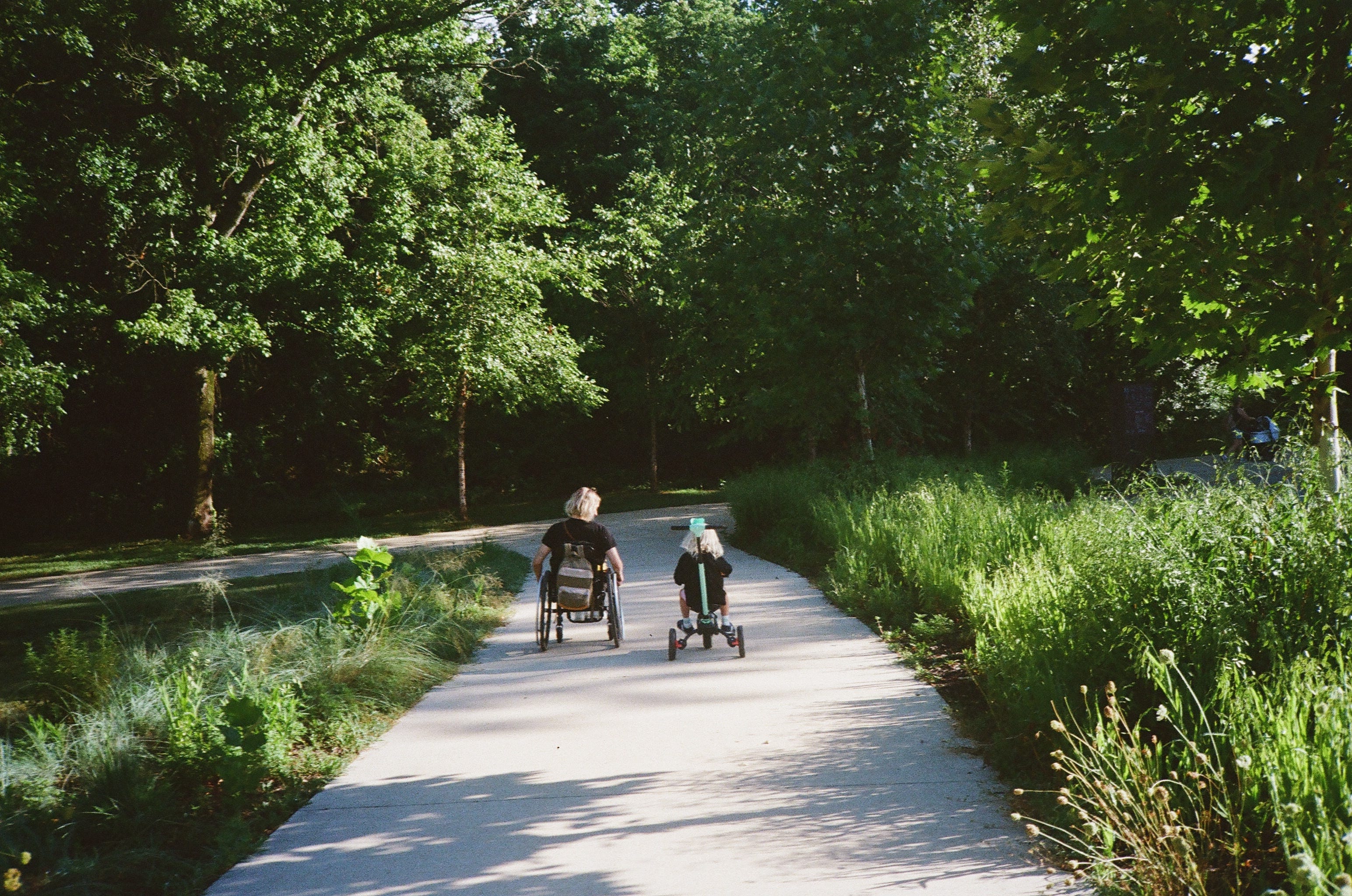
Disability asks questions like – what is failure?
A few pages later, I wrote in the same notebook –
You sat in my lap in front of the computer screen, your body strong and sturdy, quickly catching up to the size of the body that grew you. Together we watched the video of you just one day old, your 6 Ib body screaming and writhing in my arms. Your three year old self watched your brand new self turn bright pink from the full-bodied protest. You watched my face turn to the camera, defeated, helpless, trying to stay calm, trying not to cry. Then, from my lap, you said – “I want to hold him.” How strange to hold you in my arms at all, this whole human unfurling in real time, learning everything at once, from the taste of an onion to the sound of your own infant cries. I remember when you first arrived, my failure to soothe you felt like being melted from the outside in – I handed you over to your dad to pace around the house, lulling you into peace with his bouncing body – and a bomb exploded in my gut, sending parts of myself around the neighborhood, nothing left of me but a scorched spot on the hardwood floor and a thin layer of dust ash that somebody would have to clean up.
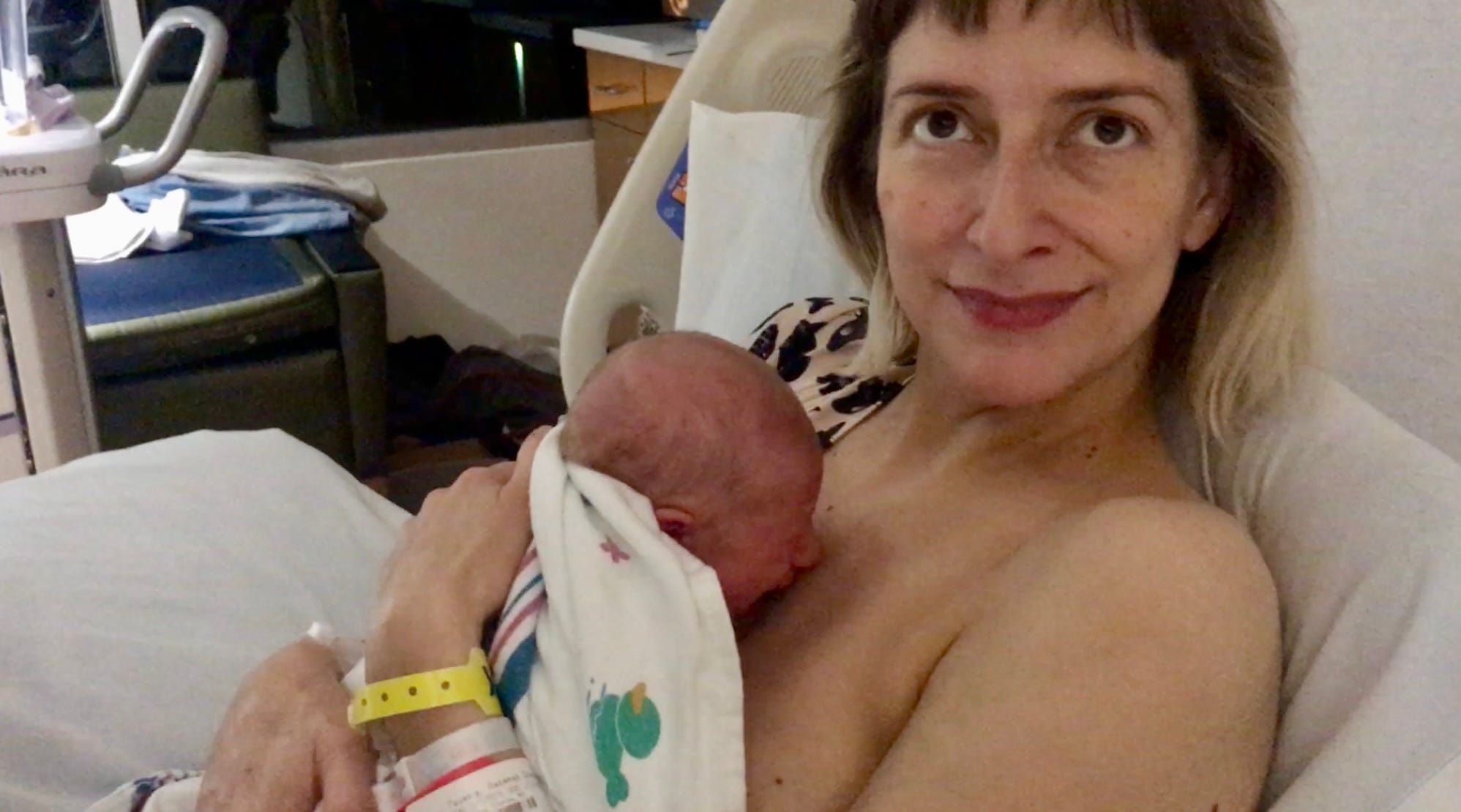
It felt like my failure to be your mom – or, at least, to be your mom in the way I imagined a mom should be – made my presence – made ME – unnecessary. Like ugly Christmas decorations still cluttering the room in summer. But now, holding you in my lap two years, ten months, and 13 days later, I know the violence I felt moving through my body was actually the failure of a storyline – a painful ripping away from the narrative of Mother. My body failed to perform, and we became something else to one another. Without the disruption, I know, I would have tried – so hard – to be your entire sun, your whole moon. Your pancakes and your circus show, your first and second and third best friend. Your playground and classroom and rocket. But we are something stretchy and buoyant, collaborative and wide. A sleepy mother, low to the ground, connected and separate, pointing you back to your own climbing feet while I watch and cheer from here. Where do you want to go next? What do you think? Who are you today?
Maybe biggest of all, disability asks the question – what is the story?
My son is five now, and he’s already learned to expect that every story has a conflict – the tension that keeps us turning the pages. He calls this “the trouble.” When he gets antsy with a slow-boil story, he’ll say, “Where’s the trouble??” Or when we’re just cracking into the first few chapters of a new book, he’s on the lookout, “I wonder if the storm is gonna be the trouble!”
There’s a long tradition of making disability “the trouble” in any given story. I can understand how this happens. Disability is the second ingredient in the recipe for story. Once upon a time, everything was going according to plan, when WHAM. POW. BOOM. Our brains seem primed for the arc of order → disorder → return to new order. Disorder demands an origin and a resolution – the arc of a story. And it will be told, whether you want it to or not. Whether you choose the words or not.
I suppose that’s why I find disability self-narration to be so powerful and difficult. In many ways, these stories have already been written – over and over and over again. The narrative grooves are deep and affect all of us. The writers and the readers. The parents and the kids. The patients and the surgeons. And an important part of the work, at least for me, is being able to recognize the stories that already exist – in and around me. They’re so sneaky, stories. They hide in plain sight, burrowed into mitochondria and coiled deep inside nerve endings. (I don’t actually know if those metaphors make perfect sense. I might not’ve had an hour of medical school, but I did take enough biology in high school to be dangerous.) Once I’m able to name the story – grab its invisible throat and pin the whole body down long enough to look at it – I can revise it.
Like this seed of a draft I dug up from last year –
Here is the story: Get up, get up, you lazy slob! You’re wasting the day, your breath, your life! “A little sleep, a little slumber, a little folding of the hands to rest, and POVERTY WILL COME UPON YOU LIKE A VAGABOND, and WANT LIKE AN ARMED MAN.” Other people have mowed the lawn three times over, while you’re still dreaming in your bed. You’ll never survive if you don’t start chopping and stashing, building shelters, gathering nuts. The scales are tipping – you better give, give, give to balance out all that take, take, take – produce, produce, produce to earn your consume, consume, consume.
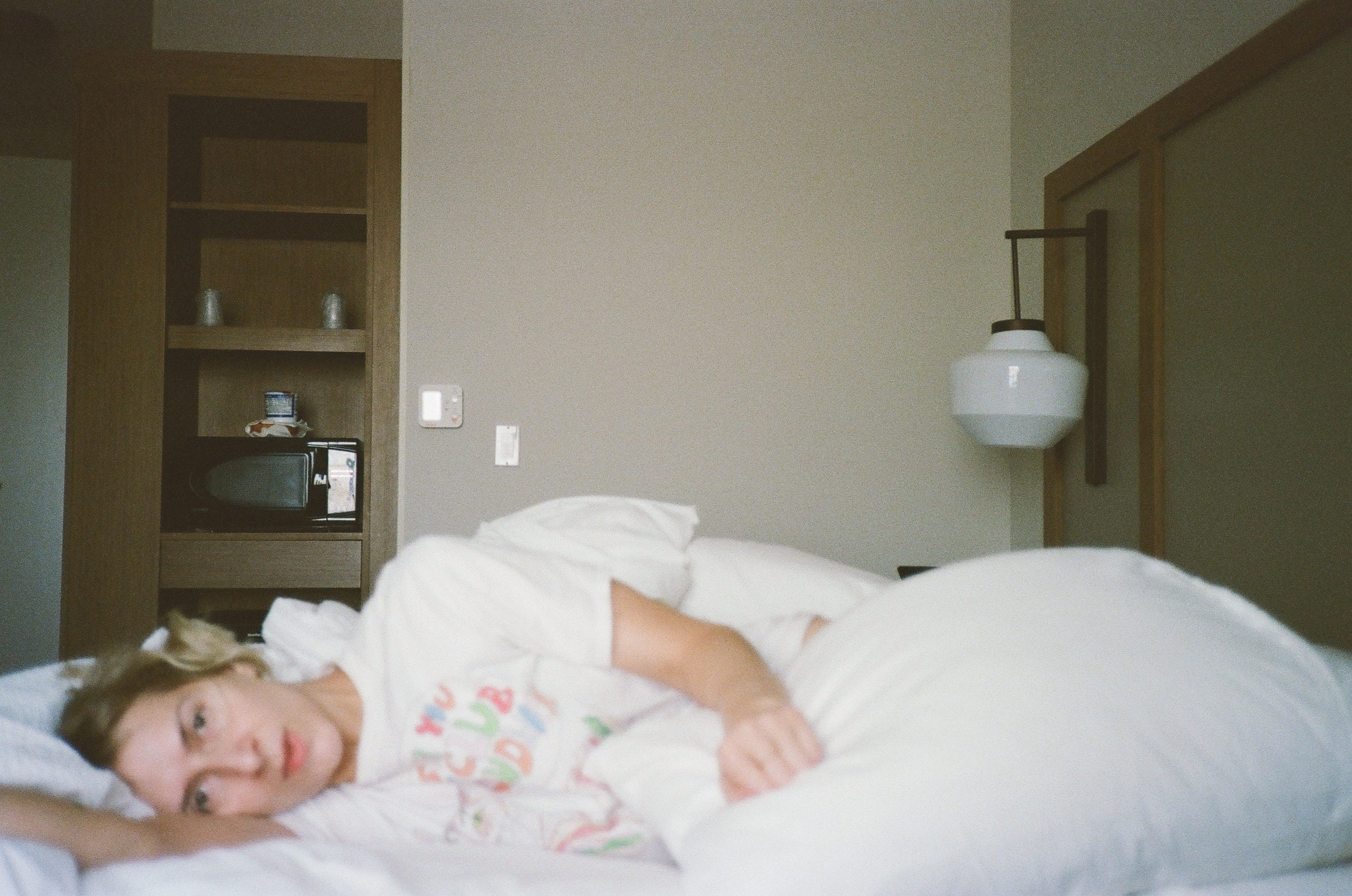
Revision: Let your head sink into the pillow, let your arms rest heavy on the sheets. Rise slow, stretching out as leisurely, luxuriously as a cat. A little sleep, a little slumber, a little folding of the hands to rest, and you might feel steady enough to relish the swing of an ax and hear the crack of splintered wood. You might be close enough to your dreams to imagine a house for birds, a box for love letters, a porch swing where we can sit and feel the breeze on our cheeks. Rest, rest, you sleepy hummingbird, you might just survive your life without even noticing the trees that help you breathe. Scales and clocks were never real. Just lungs and wind, pillow cases and skin, a squeeze from a hand.
I find this last question – what is the story? – to be the most difficult. Most of my life, story was something that lived in my head. I learned the story – learned my part – and then I lived comfortably inside. Stories like – my joy despite disability creates an opportunity to inspire and comfort other people. Or, disability doesn’t define me. Or even, my disability isn’t the problem, ableism is. The wonderful and tricky thing about story is that it creates order, when most of life is not orderly. What a balm! What a liability! Storytelling lends itself to cutting out parts and pieces of the whole tangle. But how else can a person tell a story?
I don’t know exactly, but I can tell you some of the ways I’ve been striving to move stories from my head into my guts and lungs.
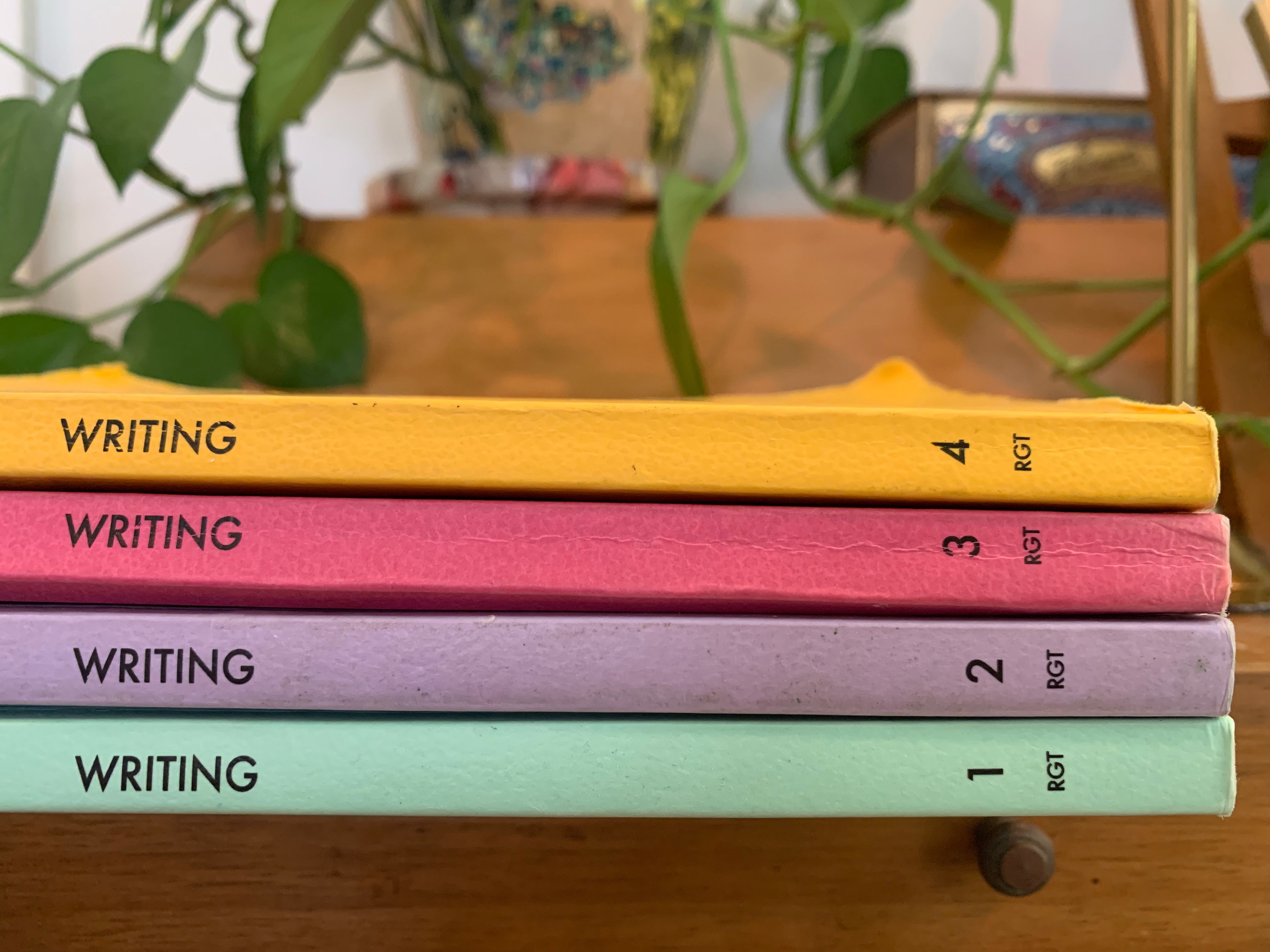
Floppy Notebooks – In 2022, I bought myself a stack of notebooks with vivid colors. They’re floppy enough to write in comfortably, which is important, because the assignment is to jot down 10 sensory/embodied memories from each day. Little flashes. Tiny crinkles. (I think I first started this practice while going through a writing course from Ash Story (@ashparsonsstory)? The exercise has been invaluable to me as a writer. Also as a person.) The memories don’t have to attach to a larger narrative (in fact, bonus points if I can’t figure out where they fit!) – they aren’t evidence to bolster an argument – they don’t have to have deep meaning. But the daily ritual feels like a pin in the map to remember where I’ve been and what it felt like to be there. Doing it for the last four years has primed me to notice my present with more fullness – what are the sights, smells, sounds, tastes, textures?
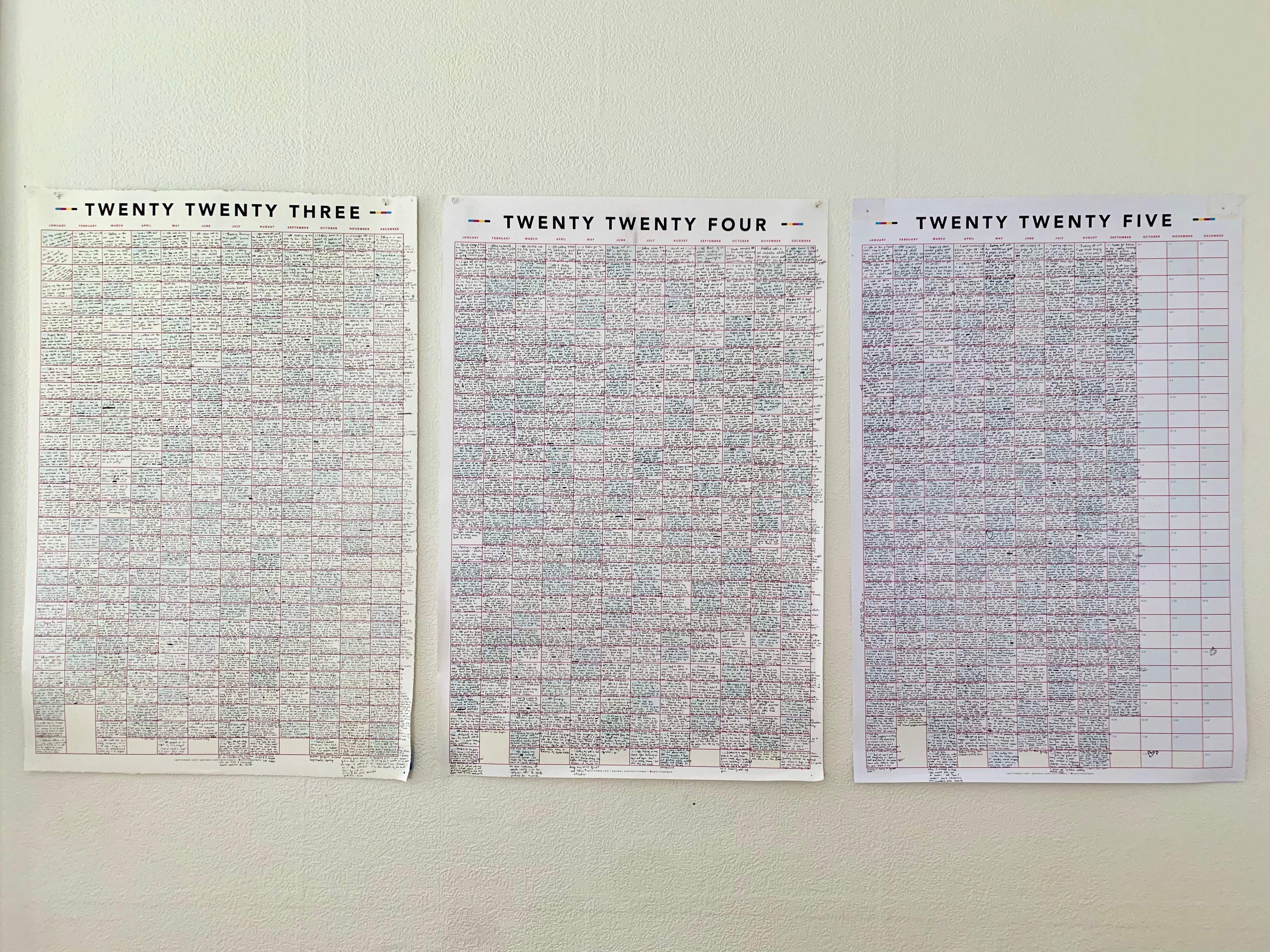
Giant Calendars – There were lots and lots of days when I was too daunted, too tired, too frozen to put 10 moments into my floppy notebook. So in 2023, I ordered a giant wall calendar. You can see the whole year in one glance, and each day takes up about an inch by an inch of space. For the last three years, at the end of every night, I write one embodied moment into one tiny square. There isn’t much space, so the exercise is to focus only on the most vivid details – the precise sound of a sleepy breath, the set of words that kicked my heart to pounding. Sometimes I know the moment as soon as it happens, and I jot it down quickly as soon as I have a chance. More often than not, I sit for long minutes, trying to remember one tiny thing. But this is my lowest stakes practice – such a teeny bite that it does feel possible to do it every day. I like how easy it is to look for patterns. Quick – what did I write on this day three months ago? On Halloween? On September 30th for the last three years? Sometimes the juxtaposition alone creates its own tension – asks its own question.
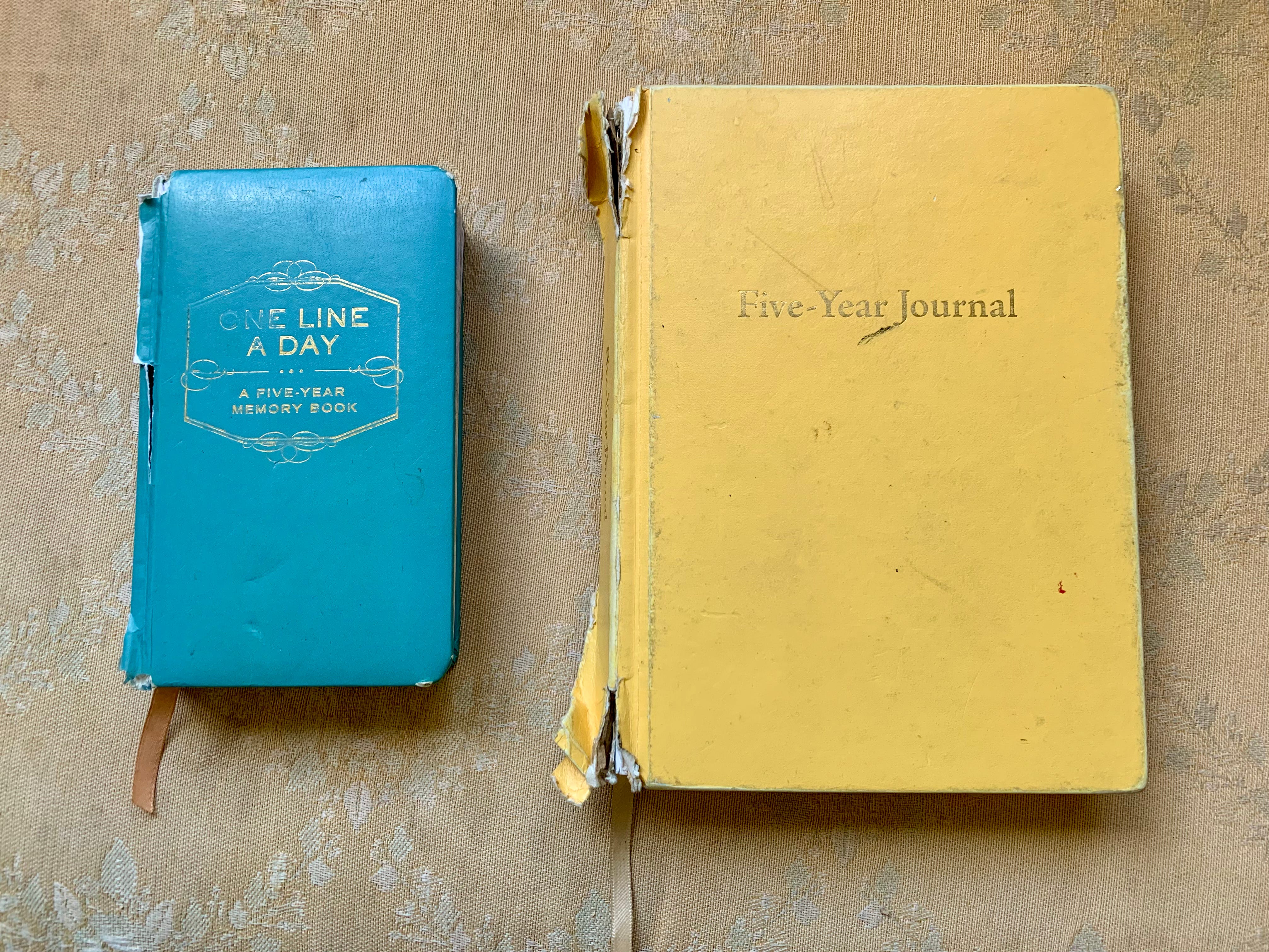
5 Year Journals – Which is exactly why five year journals are so fascinating. For anyone who isn’t familiar, a five year journal has five short entries for every day of the year. If you keep up with it, you can turn to any page and get a glimpse of that day across the years. I’m almost done with the one I started in 2021, and I have one from the years 2011-2015. Looking back at them can feel like a time travel portal, which means anything can happen. The patterns that emerge can be revelatory, distressing, empowering, and unexpected.
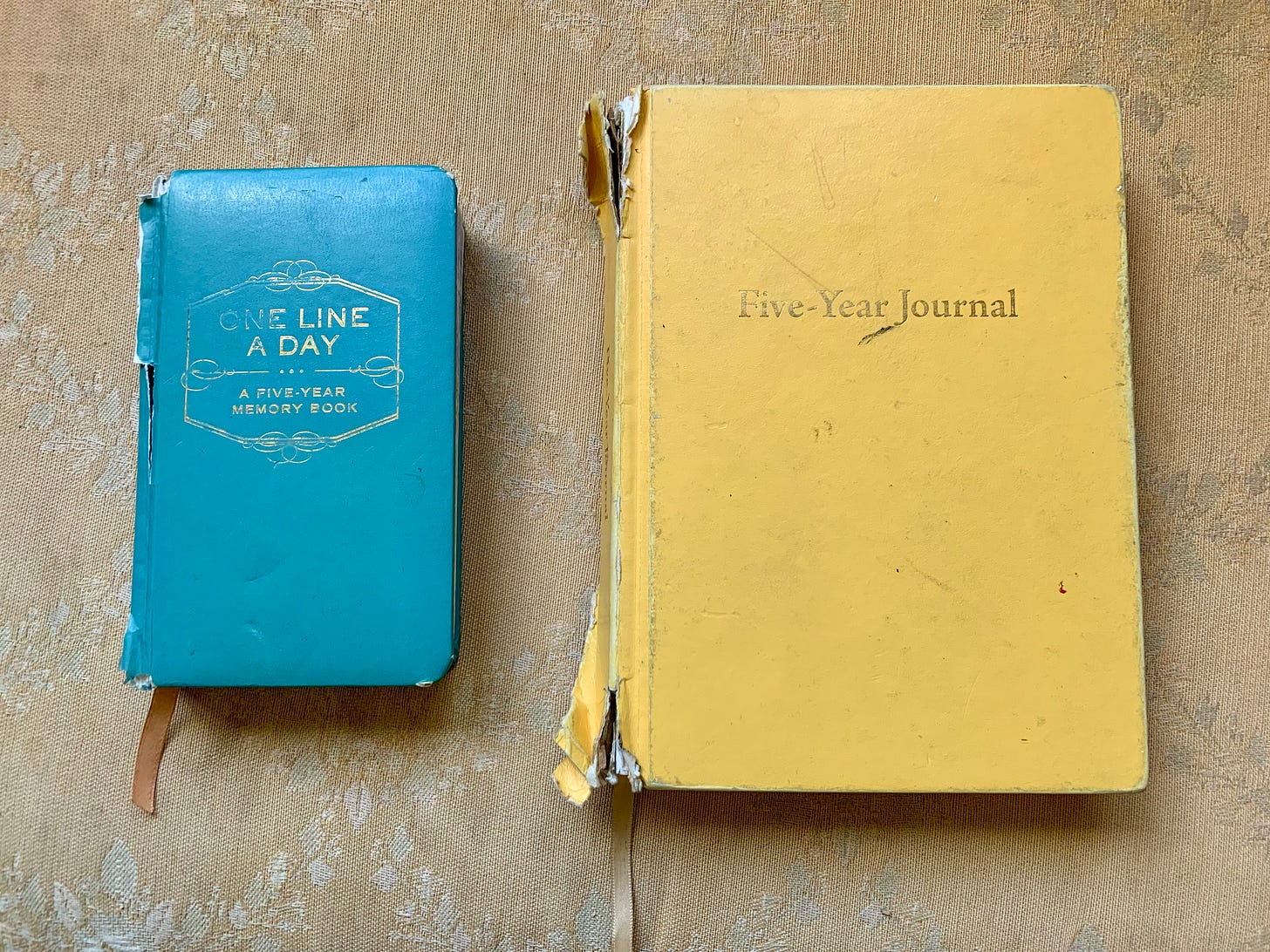
A photo taken from above of two journals against faded orange floral upholstery. On the left, a smaller blue one with the words “One Line A Day: A Five-Year Memory Book” printed on the cover. On the right, a larger yellow journal with the words “Five-Year-Journal” printed on the cover.
Be On the Internet Less – If you are so inclined, you know what to do.
Mai’s question had one final piece. She asked, “How can we share our own personal experiences, our vulnerabilities without fearing it being a burden to others?” This question pokes at me – gently, curiously, painfully as it mashes together two worry-wounds – one from my Writer Self (Why would anyone read my little stories?) and one from my Disabled Self (Does my presence in this family, this friend group, this business, this world make things harder on everyone else?) I think a lot of us hold dark, scary questions. Am I too much? Does anyone care?
The only way I’ve been able to keep writing and sharing what comes out is because of this belief: we are all connected – all out here, rambling through this wild terrain, trying to figure out where we are and where we’re going and how to survive. And when I throw A Story into the ether, I feel like I am throwing up a flag – a holler – “Hey! I just passed through a raging river on my skates and ran into a two-headed snake gopher on the other side – at least, I think that’s what it was? You ever seen one of these? I’m trying to figure out how I feel about it.” It’s all part of one great map. A really messy group project.
I don’t think any story is about just me. Or you. Or them. I think stories – especially the ones that wiggle-whittle their way down to the root of it – usually show us something that goes beyond the single voice or set of voices narrating them in the same way that ancient cave drawings do – stories assembled together with symbols attempting to make sense of what’s inside us by etching into something outside of us so we can look at them and try to understand for the next 51,000 years. This too. This story is one part of the great wide story of us, too. Not every story takes us straight to the bone marrow of it all, and even when it does, not everyone feels it, but when we find one of those stories that gives us a glimpse of something real and human, I think our bodies know it.
After I told the surgeons stories from my unfixed body – after I gave them my disruptive definition of ableism – the ones who’d been sitting for an hour without needing to wiggle stood up and slapped their hands together for stories that complicate traditional disability frameworks. Did their bodies recognize something? I don’t know. You should know that I give talks all the time, and they rarely end in standing ovations. (Also, I just need you to know that my MidWestern heart is cringing itself to death sharing this scene with you. Where I come from, the sounds of bragging are worse than sending back food. Definitely worse than embezzling.) What I want to say is that while not every audience is going to display their approval lavishly, I think every audience has someone who’s body is hungry and ready for living stories that disrupt — that narrate what is instead of what should.
Even if that someone is only me, only you. Even then, I think this work – this practice – is important. I mean, who knows who will see it 51,000 years from now? We are etching new symbols across the walls, breaking apart the oldest, deepest grooves, bending new arcs into the curves of stories that have long felt inevitable. Let’s see what happens when we pause to listen to our disruptive bodies. What questions do they have? What stories do they want to tell?
Speaking of disability storytelling! In July’s letter to you, I mentioned that I would be hosting a virtual event – Human Stories – with The Institute for Human Centered Design (IHCD). That event is now available online! And you can watch it here.
This video features some of my storytelling, as well as stories from five other storytellers, and a hearty Q&A. Many more stories are still making their way onto IHCD’s website, so stay tuned.
I think one of my favorite things about this experience was witnessing all of these overlaps and deviations in our stories. Human beings are unique. It felt important to honor that with our attention – to witness and be witnessed in our vast and particular humanity.
Thank you to everyone who participated in gathering these stories together – the storytellers, those tuning in, and everyone behind the scenes!

CHEWY QUESTIONS – If you want to continue to think through the ideas here, these questions are for you – please feel free to explore this in your personal writing, to talk about it with your people, or to join the conversation on Substack.
What questions does your body prompt?
What is your relationship with writing? (Or is there another form of self-narration you prefer?) Do you find it difficult to compose your own stories? Have you found any tools that have helped?
Thank you for your question, Mai. And thank you, as always, to all of you, for being here.
xo
Rebekah
No posts
Comments
Nothing yet. Say the first thing.
Sign in to join the conversation.