
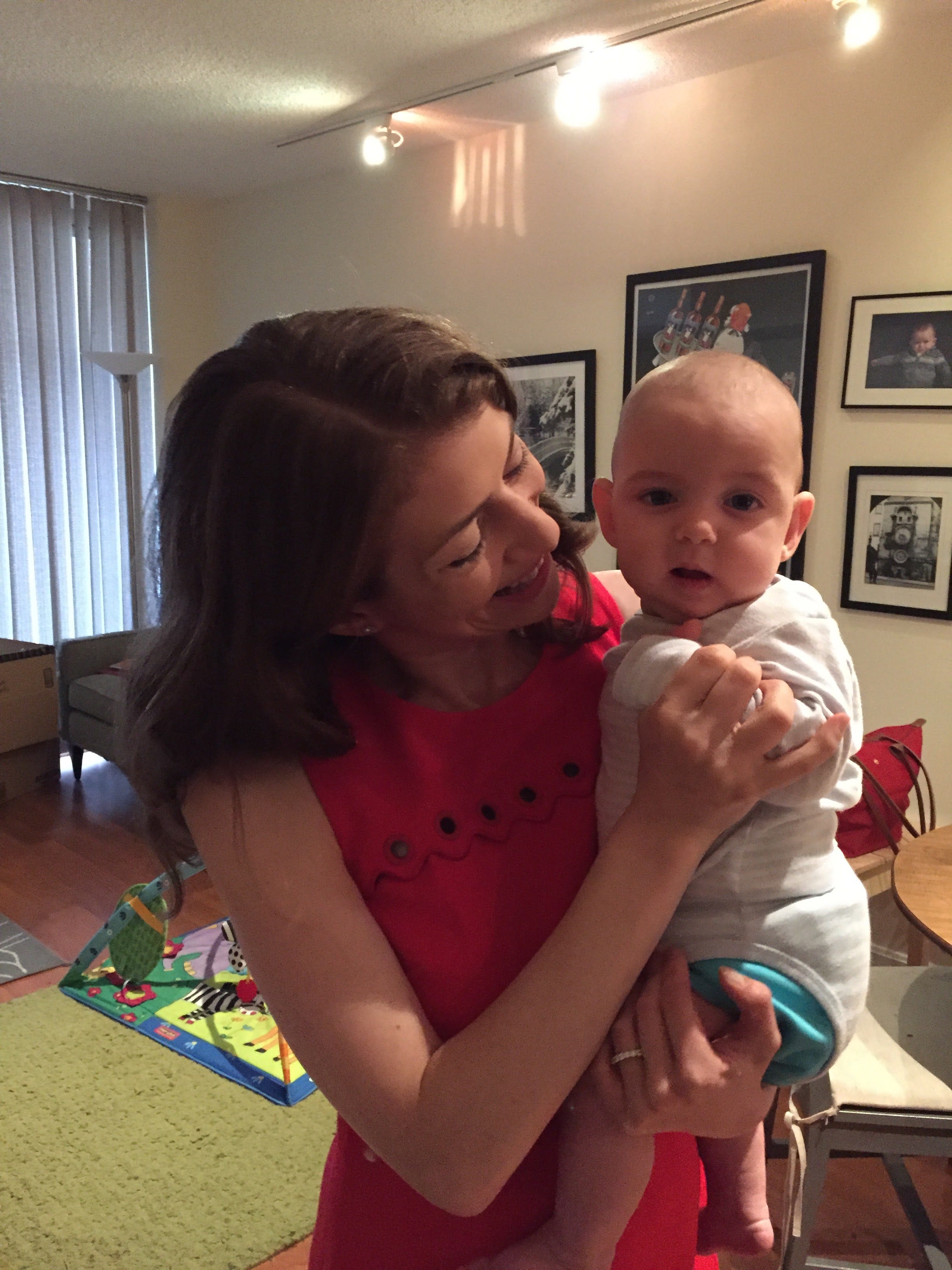
Somewhere during the summer of 2016, my husband and I were both working full time in demanding jobs: he at a law firm, me in the Obama Administration at the Department of Commerce. We had an infant and toddler at home and were stretched thin. Much of what I remember about that period is being hungry and exhausted, and always carrying a notebook with me because if I didn’t write things down I would instantly forget them.
We’re making a change after this year, I recall thinking. Hillary Clinton will win the presidency and then I’ll become a freelance journalist, covering all the major changes her administration will bring. I’ll have more flexibility and we won’t be as stressed. It will be great.
Well, spoiler alert, the HRC part didn’t turn out the way we’d expected. But I did become a freelance journalist. And one of the best places I wrote for was for the team at the Better Life Lab at New America, as a reporting grantee. They loved smart policy journalism and I was thrilled to write for a team that was easy to work with, helped with story placement, and even paid me pretty quickly when it was done. (That last part seems straightforward, but anyone who has written for money will know that it can be hard to get paid in a direct and easy way and the places that do follow through on that are special gems to hold onto forever).
Several years, another child, another two administrations later, and now I work at the Better Life Lab. One of my favorite parts is working with writers on the reporting grants. And I’m here to encourage you, as someone reading this newsletter who thinks they have a story to tell, that you should consider applying. Yes, you.
And here is my list of reasons why:
For the novice reporter: if you feel you have a story on caregiving you want to see out there, or think it should be told - you’re probably right, and it’s worth asking if this is something you want to share. Brigid Schulte, who was the first person to recommend me for reporting grants, also has a phrase I go back to: good stories find homes. If you think you have one, apply. If you’re new to the process, we help you with pitching and placement. We need and want new voices - for narrative change to be effective, it takes many of us at the mic.

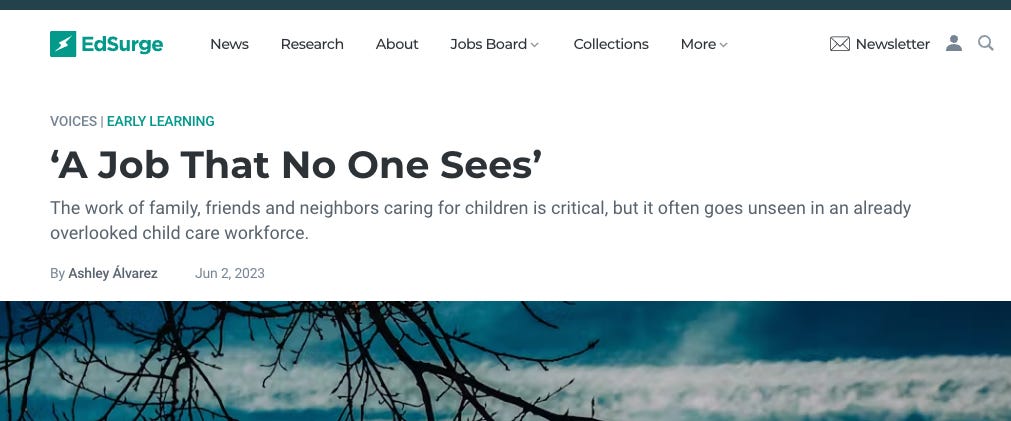
Ashley Alvarez was still in college (!) and jumped at the chance to turn her senior thesis into reported articles. As someone brand new to journalism, she was one of our Better Life Lab reporting grantees and has since gone on to publish much more. For the mid-career reporter: Maybe caregiving or child care or elder care isn’t your beat. Maybe you have dabbled in this topic but you’ve typically focused on other areas. We want to help you expand and cover something new - this is why funds are here, to help give more writers an understanding of the how and way care touches all our lives.
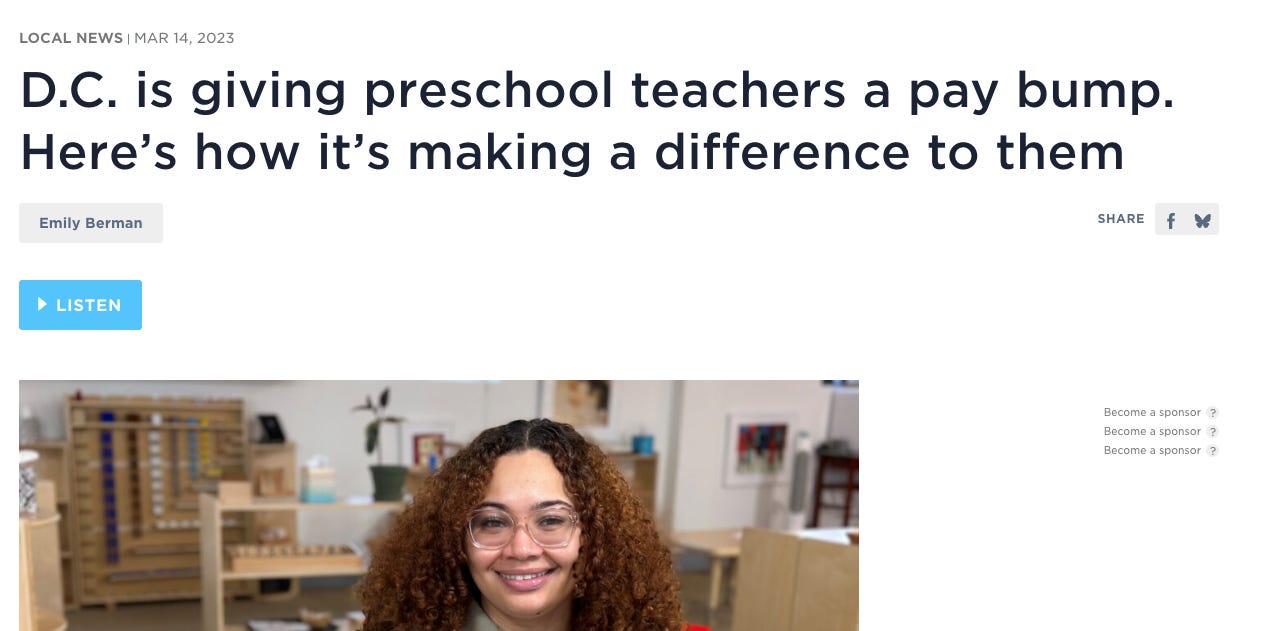
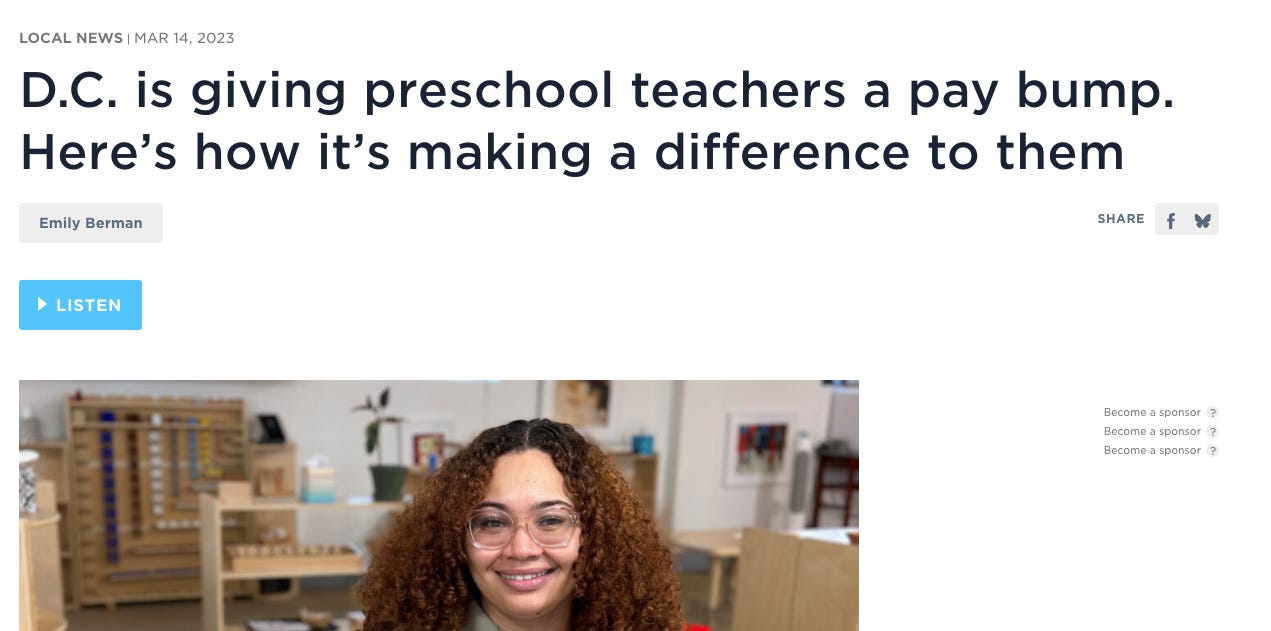
Emily Berman was an experienced radio journalist who hadn’t written a lot of standalone child care stories. As a reporting grantee for our child care reporting grants, she was able to hone in on D.C.’s pay equity fund for an audio story. This piece was even included in Elliot Haspel’s book, Raising a Nation: 10 Reasons Every American Has a Stake in Child Care for All. For the experienced reporter: If this is something you regularly cover, this is a chance to do something different. We’ve had reporters use funds for travel, extra research, pitching “reach” publications or just simply making more money for a quality story.

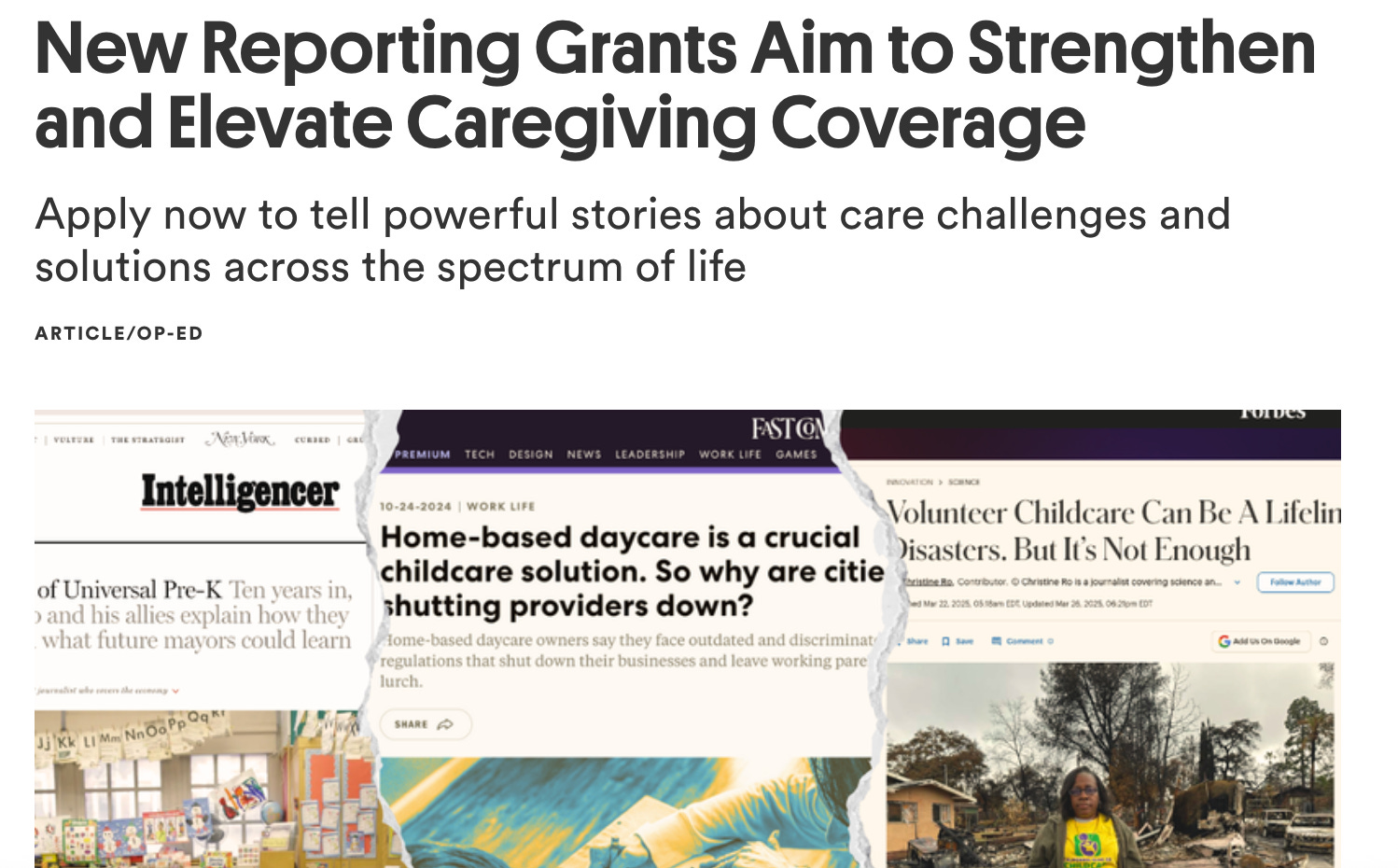
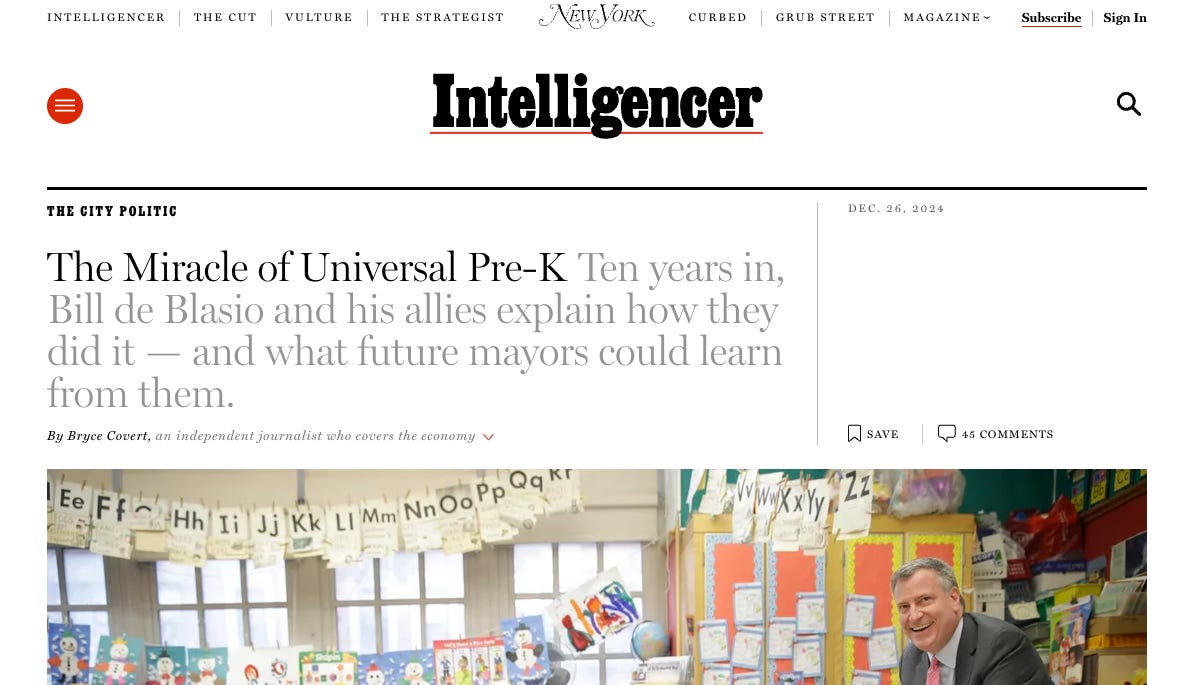
Bryce Covert, who often covers child care in major outlets like NYT and New York Magazine, wrote this piece on universal preK for NY Magazine for one of the Better Life Lab reporting grants. For the designer, illustrator, podcaster, videographer: Stories aren’t print only, and they don’t have to be limited to words. We have funds set aside for multimedia stories, and we’ve been proud to support short documentaries in previous rounds. And it was through our reporting grants that we tried our hand at graphic stories - a medium that I’ve since come to love and hope to do more of.
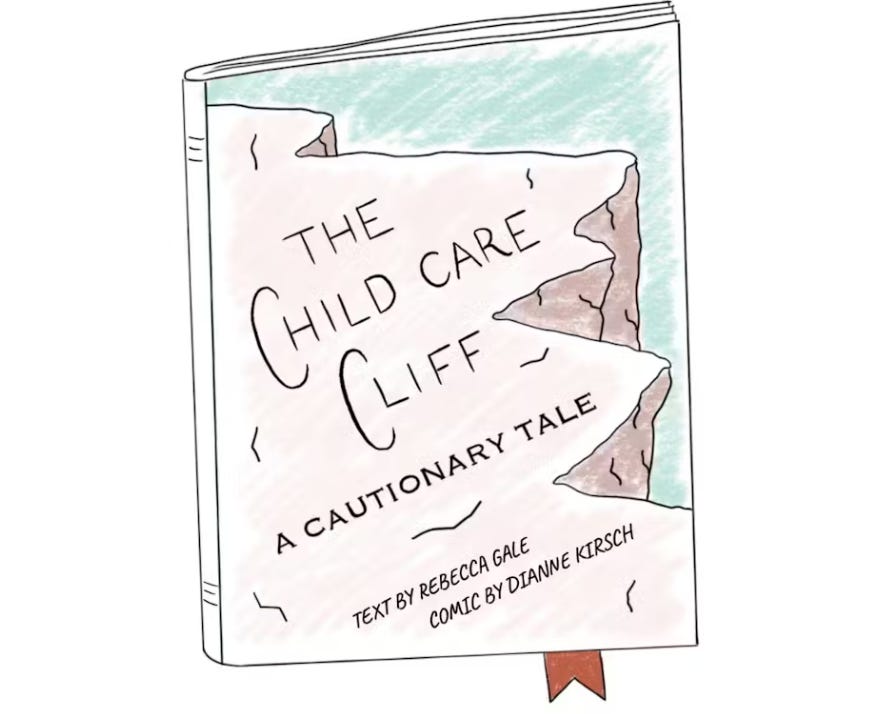
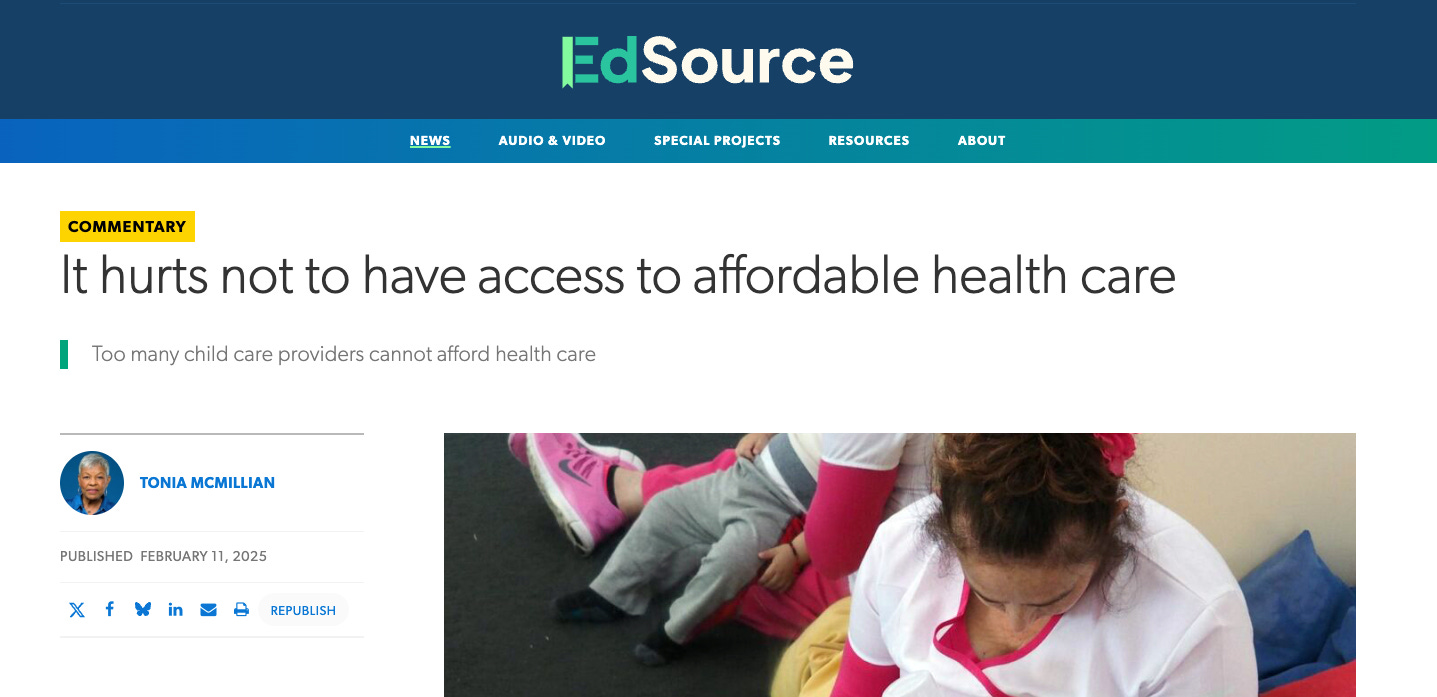
Dianne Kirsch and I teamed up to do graphic stories on child care as part of the Better Life Lab child care reporting grants. And check out our most recent graphic story on the Child Tax Credit. For the caregivers. First person stories are incredibly powerful and they show us how individuals make a difference in this field. One of my favorite reporting grantees’ stories came from Tonia McMillian - a longtime caregiver who wrote about the need for child care providers to have access to health care. Nothing speaks more truth to power than the lived experience.

So what are you waiting for? We are looking for solutions-oriented stories that highlight what’s working—and what’s possible—across the care spectrum. Solutions-oriented stories matter because research shows they resonate more with readers (or viewers) than stories that indicate all doom and gloom without a way forward.
Grants are open to all formats, including print, photo, video, podcast, and more. Selected journalists will receive funding, editorial guidance, and placement support, and join a vibrant reporting cohort. Stories will be commissioned on a rolling basis starting November 2025.
—> You can apply here. Please feel free to forward and share with others. A helpful FAQ is here - and if there is something I missed, drop me a line and let me know.
No posts
Comments
Nothing yet. Say the first thing.
Sign in to join the conversation.